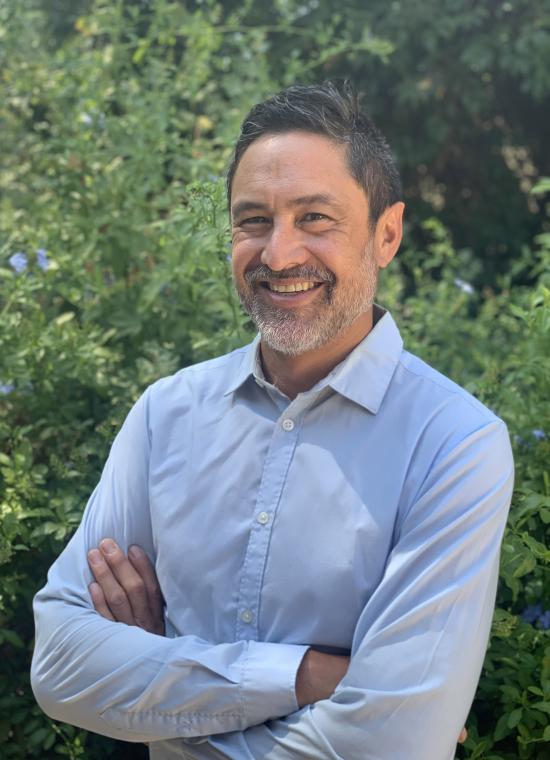
Christopher M. Chinn is a Professor of Classics at Pomona College since 2007, specializing in Augustan and Imperial Roman poetry. He teaches Latin and Greek languages alongside translation courses like Ancient Epic and Introduction to the Greeks and Romans . Research Focus: Roman poetry, ecocriticism, art-text relationships Key Contributions: Studies on Statius, Pliny, and intertextual analysis His work bridges visual art analysis with literary interpretation, particularly in Flavian-era texts. Recent publications address environmental themes in ancient Mediterranean literature and the evolution of ekphrastic techniques. Scientific Awards & Honors Jim Greenfield Dissertation Fellowship (University of Washington, 2001-2002) Downing-Pomona Exchange Fellow (2009) Pomona College Summer Research Grant (2011) His teaching includes advanced language courses and senior seminars on classical studies, reflecting his commitment to both pedagogy and research in ancient literature.
University of North Carolina at Chapel HillUnited States
James J. O’Hara is the George L. Paddison Professor of Latin at the University of North Carolina at Chapel Hill. His academic journey includes a B.A. from the College of the Holy Cross and a Ph.D. from the University of Michigan. He has held significant roles, such as Department Chair (2003-2007), Director of Graduate Studies, and President of the Vergilian Society. His research focuses on Greek and Latin poetry, with a special emphasis on the Augustan period, epic, didactic literature, and satire. Education highlights include studies at the College of the Holy Cross (A.B., 1981) and the University of Michigan (Ph.D., 1986). He taught at Wesleyan University before joining UNC in 2001, where he has contributed extensively to teaching and scholarship. Research interests span Latin poetry, particularly Vergil, Catullus, Lucretius, and Ovid. Notable works include Death and the Optimistic Prophecy in Vergil’s Aeneid (1990), True Names: Vergil and the Alexandrian Tradition of Etymological Wordplay (1996), and Inconsistency in Roman Epic (2007). Current projects explore teaching authority in didactic and satirical works. Publications include over 40 articles and book reviews, with a focus on Vergilian studies, Lucretian analysis, and classical pedagogy. Recent lectures address topics like Aeneid Book 8 and Horace’s Ars Poetica . Grants/Awards: James Gilmore Fletcher Whitton Faculty Fellowship (2012), Loeb Classical Library Fellowship (2015-2016), SUTASA Teaching Award (2013). Students: Directed 15+ M.A. and Ph.D. theses, including works on Lucan, Lucretius, and Vergilian reception. Labs/Teams: Collaborative projects include the Focus-Hackett Aeneid commentary series and editorial work for Vergilius . Active in professional organizations like the Vergilian Society and Classical Association of the Middle West and South.
University of California , Santa Barbara (UCSB)United States
Helen Morales is the Argyropoulos Professor of Hellenic Studies at the University of California, Santa Barbara. She holds a PhD from the University of Cambridge and has taught at institutions including the University of Reading, Arizona State University, and the University of Cambridge. Her research bridges classical antiquity with contemporary issues, focusing on mythology, gender studies, and cultural criticism. She serves as editor of Ramus: Critical Studies in Greek and Roman Literature and is an affiliate of the Feminist Studies Department. Education: PhD in Classics, University of Cambridge. Research Interests: Ancient novels, Greek imperial poetry, sexual ethics, pilgrimage, and the intersection of classical texts with modern themes like race, feminism, and law. Her work emphasizes reclaiming classical myths to challenge patriarchal norms and inspire social justice. Awards & Roles: Fellow of Newnham College (Cambridge), Fellow at the Center for Hellenic Studies (2011 Gail A. Burnett Lecturer), and editor of Eidolon . Current projects include the 2022 Martin Lectures on imperial fiction and sexual politics. Publications: Books include Antigone Rising (2020), Pilgrimage to Dollywood (2014), and edited volumes like New Essays on Homer (2015). Recent articles explore violence in myth, gender dynamics in ancient texts, and the subversive power of classical narratives.
Anthony J. Boyle is Professor of Classics in the Department of Classics at the University of Southern California's Dornsife College of Letters, Arts and Sciences, where he has taught since 1989 after a twenty-year tenure at Monash University in Australia. He earned his undergraduate degree from the University of Manchester and M.A. from the University of Cambridge in the United Kingdom, establishing foundational expertise in classical philology and literary theory. Boyle's research specializes in Roman literature of the late republic and early empire, with particular focus on Virgil, Ovid, and Seneca. His scholarship examines semiotic interplay between texts and cultural contexts across genres including epic, elegy, and tragedy, emphasizing how Roman authors adapted Greek models within imperial political frameworks. He has authored or edited twenty-five books, establishing himself as a leading authority in Senecan studies and Roman literary criticism. His recent publications (2010-2024) demonstrate sustained engagement with Senecan drama through critical editions of Phoenissae (2024), Hercules (2023), and Thyestes (2016), alongside significant contributions to Ovidian scholarship like Ovid and the Monuments (2003). These works consistently explore intersections between literary form, philosophical tradition (particularly Stoicism), and imperial ideology. Boyle serves as founding editor of the journal Ramus: Critical Studies in Greek and Roman Literature , which celebrated its 40th anniversary in 2011 and is now published by Cambridge University Press, providing a major platform for classical scholarship.
James J. Clauss is the Daniel P. Harmon Professor of Classics at the University of Washington, with adjunct roles in Middle Eastern Languages and Cultures, Cinema and Media Studies, and Global Literary Studies. He holds a Ph.D. from UC Berkeley (1983), a M.A. from Fordham University (1976), and a B.A. from the University of Scranton (summa cum laude, 1974). His research focuses on Hellenistic literature, Roman epic, and the intersection of classical mythology with film and popular culture. Education: Ph.D., UC Berkeley; M.A., Fordham; B.A., University of Scranton Affiliations: College of Arts & Sciences; Department of Classics; multiple adjunct roles Notable Roles: Chair of Classics (2002–2007); Academic Director of the Rome Center (2011–2012); Director of Honors (2007–2014) His research interests span Hellenistic Poetry , Roman History and Culture , Film/Cinema , and Mythology . He explores how ancient narratives influence modern media, as seen in his work on films like Clash of the Titans . His scholarship includes co-editing Companion to Hellenistic Literature and translating Rome and Environs . Recent articles analyze Near Eastern influences in Callimachus, myth in films by Yorgos Lanthimos, and intertextuality in classical adaptations. Awards include the University of Washington Distinguished Teaching Award (1996) and the Onassis Senior Visiting Scholar (2008–09). As an academic leader, he advised numerous Ph.D. students, including Rachel Carson and Robin Greene. His grants include a 1991 UW Graduate Research Fellowship. He has reviewed for major journals and served on committees for academic policy, athletics, and departmental reviews. He is affiliated with organizations like the American Philological Association and the National Collegiate Honors Council. His interdisciplinary work bridges classical studies with cinema, education, and global literary studies.
Joseph Farrell is Professor of Classical Studies at the University of Pennsylvania's College of Liberal and Professional Studies. He serves as the Mark K. and Esther W. Watkins Professor in the Humanities and Faculty Advisor for the Post-baccalaureate Program in Classical Studies. With 37 years at Penn since joining in 1984, Farrell teaches courses on Homer, Vergil, Latin literature, and classical influences in modern culture, including his new course "Dangerous Books of Ancient Greece and Rome" (CLST 143). PhD in classics (University of North Carolina at Chapel Hill, 1983) AB in classics (Bowdoin College, 1977) His research focuses on Latin literature and poetry, particularly Republican and Augustan periods, with expertise in Vergilian studies and classical philology. Current projects include editing a three-volume history of Greek and Latin literature with Dee Clayman of CUNY and expanding his commentary on Aeneid Book 9. Farrell is Editor-in-Chief of the American Journal of Philology for a five-year term, working to enhance diversity in classical scholarship. His publications include monographs and edited volumes on Ovid, Ennius, and Latin epic traditions.
Giulio Celotto is an Assistant Professor in the Classics Department at the University of Virginia . His research focuses on Latin literature of the early Empire , particularly the interplay between philosophical frameworks and narrative in Latin epic, and the intersection of gender and genre in Latin poetry. Education : B.A. (2007) and M.A. (2009) from the University of Naples Federico II Ph.D. in Classics (2017) from Florida State University Research period at University of California, Irvine Research Interests center on Lucan's Bellum Civile , its philosophical themes of Love and Strife, and the transformation of epic norms under Imperial critique. He explores gender dynamics in Catullus, Ovid, and Seneca, and directs The Siren Project , which examines women's voices across literature and visual arts. Scientific Awards : 2023 SCS Outreach Prize for The Siren Project Recent Publications analyze intertextual dialogues between Latin authors and later works (Dante, Renaissance literature), with emphasis on ecofeminism , metapoetry , and Roman political critique . His monograph Amor belli: Love and Strife in Lucan’s Bellum Civile (2022) challenges prevailing interpretations of Lucan's epic as fragmentary, arguing for a transformed but coherent narrative structure. Teaching includes courses on Roman Women Writers, Seneca, Juvenal, and other canonical texts, with a focus on thematic exploration of moral philosophy, gender representation, and historical context.
Barbara Graziosi is the Ewing Professor of Greek Language and Literature at Princeton University's Department of Classics. Her research centers on ancient Greek literature and its reception, emphasizing the intersection between classical texts and modern interpretative frameworks including queer theory, machine learning, and material culture. Major projects: Living Poets (ERC-funded), Logion (ML for philology), and Sappho, Networked Education: Trieste, Oxford, Cambridge Graziosi's work bridges philology with critical theory, exploring how ancient texts are recontextualized across time. She applies machine learning to textual criticism through the Logion project, focusing on corruption detection and lacunae reconstruction in classical manuscripts. Key scientific awards include the National Teaching Fellowship (UK) and Excellence in Doctoral Supervision Award . Her public engagement spans BBC programs and TLS reviews, connecting antiquity to contemporary discourse.
R. Scott Smith is Professor of Classics, Humanities, and Italian Studies at the University of New Hampshire (UNH), where he has taught since 2000. He also serves as Chair of the Faculty Senate and as Director of the January-term Study Abroad in Rome Program. Education: Ph.D. Classical Philology, University of Illinois at Urbana-Champaign (2000) A.M. Classics, University of Illinois at Urbana-Champaign B.A. Classics, Mary Washington College (University of Virginia) Research Interests: Smith’s scholarship centres on ancient mythography—the ways Greeks and Romans collected, organised, and interpreted their own myths—and on the philosopher-poet Seneca the Younger . Current major projects include co-editing for Oxford University Press the Oxford Handbook of Greek and Roman Mythography and directing the digital-humanities platform Putting Greek Myth on the Map , which spatially links mythical figures to real-world locations. Recent publications (2015-2022) range from detailed textual studies of Seneca’s tragedies and scientific prose to broad synthetic reviews of mythographic handbooks, reception studies of the Argonautic cycle, and cartographical explorations of Rome. Collectively these works trace a trajectory from micro-level philology to macro-level cultural geography, reflecting a sustained interest in how ancient narratives migrate across genres, media, and centuries. Service & Outreach: President or Chair of multiple state and regional classics organisations Speaker for New Hampshire Humanities Director, UNH January-term Study Abroad in Rome Program Labs & Teams: Smith leads the Putting Greek Myth on the Map digital humanities research group, an interdisciplinary team of students, GIS specialists, and collaborating scholars creating interactive, geolocated mythological data for public and pedagogical use.
Micaela W. Janan is a Professor of Classical Studies at Duke University's Trinity College of Arts & Sciences. Her work focuses on Latin literature, gender and identity in antiquity, and interdisciplinary approaches including psychoanalytic and feminist theory. She holds a Ph.D. from Princeton University (1988) and a B.A. from the University of California, Santa Cruz (1979). Her research explores themes such as Roman and Greek sexuality, the intersection of literature and psychoanalysis, and the political dimensions of classical texts. Notable publications include analyses of Ovid's Metamorphoses, Statius' Silvae, and Augustan elegy. She has received grants and fellowships including the Mellon Assistant Professorship and Lilly Teaching Fellowship. Janan teaches courses like Gender and Sexuality in the Ancient World and Latin Epic , emphasizing critical engagement with classical texts. Her service roles include Director of Graduate Studies in Classical Studies (1997-2000) and leadership in organizations like the Women's Classical Caucus. Key Awards: Franklin Humanities Seminar Fellow, Career Development Award (Utah), Faculty Summer Research Grant (Utah) Professional Service: Organized panels on 'Family Values in Flavian Literature' and 'Psychoanalysis and Antiquity'
Sarah McCallum is an Associate Professor at the University of Arizona , affiliated with the Department of Classics & Religious Studies in the College of Humanities . Her research focuses on Latin and Greek literature, particularly Republican/Augustan poetry, Roman elegy/epic, and intertextuality. She specializes in authors like Vergil, Ovid, Lucretius, and Hellenistic poets such as Homer, Hesiod, and Callimachus. McCallum explores themes like love in Roman poetry, cultural concept evolution, and ancient literary traditions. Recent publications include Elegiac Love and Death in Vergil's Aeneid (2023) and co-edited volumes on classical mythology. She teaches courses like Augustan Literature , Prose of the Roman Republic , and classical language classes. McCallum has received accolades including the 2024 Provost Award for Teaching Innovation and a WAC Faculty Fellowship. Research Interests: Roman elegy, Vergilian studies, Hellenistic poetry, genre theory, intertextuality Teaching: Latin and Greek language courses, Augustan literature seminars Awards: 2024 Distinguished Teaching Award, 2022 Provost Author Support Fund
Caroline Stark is Associate Professor of Classics at Howard University in the Department of Classics, College of Arts & Sciences. She also serves as Director of Interdisciplinary Humanities in the Ancient and Modern Interdisciplinary Studies program. Her academic work bridges classical studies with Renaissance and African diasporic reception, focusing on the enduring influence of antiquity in diverse cultural contexts. BA in Latin, Sweet Briar College MA in Cultural and Intellectual History, Warburg Institute, University of London MA, MPhil, PhD in Classics and Renaissance Studies, Yale University Her research explores ancient cosmology, anthropology, ethnography , and the reception of classical antiquity in Medieval and Renaissance Europe, Africa, and the African Diaspora. She is particularly interested in how classical narratives are reinterpreted across time and space, especially in postcolonial and African American contexts. Her recent publications reveal a strong trend in cinematic and literary reception of ancient texts, such as Spike Lee’s Chi-Raq as a reimagining of Aristophanes’ Lysistrata , and the use of classical rhetoric in W. E. B. Du Bois’s educational philosophy. Her work often engages with humanism, philosophy, art, and science in the Renaissance, and she is currently working on book projects related to Africana receptions of classical heroines and fifteenth-century humanist interpretations of Lucretius. Research Fellow, Harvard’s Center for Hellenic Studies Humanities Writ Large Faculty Fellow, Duke University She is the creator of the Io Project , an online resource on the history and reception of Classics in Africa and the African diaspora, and is co-editing A Companion to Latin Epic 14–96 CE with Wiley-Blackwell. Her advising and scholarly leadership reflect a commitment to interdisciplinary and globally engaged classical scholarship.
Dr. Yurie Hong is Associate Professor of Classics and Gender, Women, and Sexuality Studies at Gustavus Adolphus College, where she also serves as a dedicated educator and mentor. She holds a Ph.D. from the University of Washington, Seattle, and a B.A. from UCLA. Her interdisciplinary work bridges classical antiquity with contemporary social issues, particularly in the areas of gender, reproduction, and civic responsibility. Ph.D., University of Washington, Seattle M.A., University of Washington, Seattle B.A., University of California, Los Angeles Her research focuses on ancient Greek representations of pregnancy, childbirth, and gender roles, exploring how these themes inform both ancient and modern identities. She is particularly interested in how ancient medical and literary texts conceptualize the maternal-fetal relationship and how motherhood was experienced by women of different social statuses in classical Athens. Her teaching reflects this interdisciplinary engagement, connecting Greek literature and historiography to modern questions of trauma, identity, and justice. Dr. Hong’s scholarly work spans ancient medicine, mythology, gender studies, and pedagogy. Her recent publications examine topics such as gender violence in antiquity, the intersection of biology and classical studies, and the relevance of ancient democracy to modern civic life. She emphasizes narrative analysis and close reading, especially in original Greek texts, to foster deep student engagement. Among her notable recognitions is her role as Chair of the 2017 Nobel Conference, highlighting her leadership in academic discourse. She is also deeply committed to social justice, leading community initiatives on inclusion and democratic values. Dr. Hong advises numerous students, supervising honors theses and capstone projects. She has collaborated across disciplines, notably with Biology, through the Möbius Initiative, to integrate classical and scientific perspectives on reproduction. Her mentorship extends beyond the classroom into community activism and civic education. She is actively involved in building interdisciplinary connections across campus and in the wider community, emphasizing that ideas must take root in individuals to effect real-world change. Her work exemplifies the transformative power of the humanities in addressing contemporary challenges.
Chris Eckerman is a Professor of Classics and Director of Graduate Studies in the Department of Classics at the University of Oregon, College of Arts and Sciences. He specializes in ancient Greek and Latin literature, with a focus on epinician poetry and Epicurean thought. Education: PhD and MA in Classical Philology, UCLA BA in Classics and Economics, UC Davis Research Interests: Professor Eckerman is a leading scholar in the works of Pindar, Bacchylides, and Lucretius. His research integrates theoretical approaches such as cultural geography and conceptual metaphor theory to explore how space, identity, and philosophical ideas are constructed in ancient poetry. He has published widely on Greek lyric, epic, and philosophical poetry, as well as on Greek epigraphy and papyrology. Recent Research Trends: His most recent publications focus on Lucretius’ engagement with Epicurean philosophy, particularly the concepts of ataraxia and the critique of rival theories like Empedocles' four-root model. He also explores spatial dynamics in Pindar’s odes, examining how mythical geography reflects real-world patronage and ideology. His work often bridges literary analysis with philosophical and cultural theory. Scientific Awards: No specific awards are mentioned in the provided texts. Advising and Grants: As Director of Graduate Studies, he actively advises MA and PhD theses, particularly on Pindar and Lucretius. He mentors students in classical philology and encourages interdisciplinary approaches. There is no mention of specific grants, but his ongoing research and publication record suggest active scholarly engagement. Labs and Teams: He participates in SAIL Camp, an outreach initiative for ancient languages, and engages with local schools to promote classical studies. While no formal lab is mentioned, he is part of a vibrant Classics department contributing to interdisciplinary research in the humanities.
Anne Mahoney is an Associate Teaching Professor in the Department of Classical Studies at Tufts University, where she has taught since 2004. Her research focuses on meter and poetics , neo-Latin post-Renaissance, and ancient drama . She is deeply involved in teaching historical linguistics, Latin, Greek, and Sanskrit languages, and revived Tufts' course on ancient mathematics . PhD, Boston University (2000) MA, Classical Studies (1996) MA, Mathematics (1985) BA, Mathematics and Economics (1979) Mahoney's publications include reviews of neo-Latin poetry, analyses of Greek and Roman drama, and chapters on meter and song in Aristophanes. Her work bridges classical scholarship with interdisciplinary approaches, emphasizing linguistics , dramatic literature , and ancient mathematics . She is an editor for the Bryn Mawr Classical Review and Classical Outlook , and participates in committees like the University Faculty Senate and Committee on Translation of Classical Authors . Her teaching spans courses like Historical Linguistics , Greek and Roman Tragedy , and Mathematics in Antiquity , reflecting her dual expertise in classics and mathematics. She holds fluency in Latin, Greek, Sanskrit, and modern languages like Spanish and German.