Prof. Ing. Juraj Janák, PhD., is a faculty member at the Slovak University of Technology in Bratislava, affiliated with the Faculty of Civil Engineering and the Department of Theoretical Geodesy and Geoinformatics. His academic work focuses on advanced geodetic methodologies and gravitational studies. Research Interests : Gravity field modeling, geodynamics, gravimetry, GNSS technology, and mathematical modeling in geodesy. Teaching : Courses include Geodynamics, Gravimetry, Physical Geodesy, and Programming. Contact : Email - juraj.janak@stuba.sk , Office Phone: +421 2 32888 537, Office Address: KGGI SvF, Radlinského 11, 81005 Bratislava, Block A, 6th floor (Room A-605). Projects : Led VEGA grants (2008–2020) analyzing global data sources, geodynamic processes, and refining Earth gravity models using satellite and terrestrial measurements.
R. J. Nemiroff is a Professor in the Department of Physics at Michigan Technological University, where he conducts research in astrophysics, particularly in gamma-ray bursts, gravitational lensing, cosmology, and sky monitoring. He is widely recognized as the co-creator of the Astronomy Picture of the Day (APOD), a pioneering public outreach project launched in 1995. His academic work spans theoretical, observational, and computational domains, and he has mentored several PhD students whose theses contributed to major projects like the Night Sky Live network. University: Michigan Technological University School: College of Sciences and Arts Department: Department of Physics Academic Rank: Professor His research interests include: - Gamma-ray burst physics (time dilation, pulse structure, hardness-luminosity relation) - Gravitational lensing (solar lens, microlensing, finite source effects) - Cosmology (Friedmann equations, dark energy, ultralight energy) - Sky monitoring and transient detection (CONCAM, Night Sky Live) - Astronomical data systems (ASCL, PHOTZIP compression) The 15 most recent articles reflect a strong focus on time-domain astrophysics, observational strategies, and innovative instrumentation. Trends include the development of all-sky monitoring networks, theoretical models for GRB emission, and methods to improve data accessibility and reproducibility in astronomy. His work bridges theoretical insight with practical implementation, often leading to falsifiable predictions and widely used tools. Scientific contributions: Co-founded APOD, a landmark science communication platform Founded the Astrophysics Source Code Library (ASCL) Organized modern versions of historic astronomical debates Discovered GRB time dilation signal with Jay Norris Proposed the solar gravitational lens as a future telescope Nemiroff has advised multiple PhD students, including Bijunath Patla, Lior Shamir, and Amir Shahmoradi, whose work advanced projects in lensing, data compression, and GRB physics. He secured NSF funding for the CONCAM/NSL project, which deployed fisheye cameras globally for cloud and transient monitoring. Though the project ended due to funding constraints, it pioneered real-time sky monitoring practices now adopted worldwide. He leads or has led several innovative teams: Night Sky Live (NSL) project team for global sky monitoring APOD editorial team with Jerry Bonnell ASCL development and curation group GRB research group at NASA GSFC and MTU
Dr. Michael Roach is an Adjunct Researcher in Earth Sciences at the University of Tasmania's School of Natural Sciences. His research focuses on geophysics, structural geology, and electromagnetic methods applied to mineral exploration, mine waste management, and environmental geoscience. He has collaborated on projects involving Tasmania's geological structure, tailings dam stability, and geophysical imaging of subsurface features. Education: Doctoral training in geophysics and exploration methods, with expertise in integrating geophysical data with geological mapping and machine learning. Research Interests: Geophysical exploration methods (electromagnetic and gravity/magnetic), structural analysis of ore deposits, geotechnical assessment of mine tailings, and environmental applications of geophysics. His work bridges academic research with industry needs in mineral exploration and environmental remediation. Key Projects: Geophysical characterization of mine tailings dams for stability assessment 3D modeling of granite intrusions in Tasmania Immersive visualisation tools for field-based geoscience education Environmental monitoring of legacy mine sites using geophysical techniques Supervision & Teaching: Advised over 15 PhD and MSc students on topics ranging from mineral exploration methods to geophysical inversion techniques. Contributed to educational grants advancing geoscience visualization and fieldwork pedagogy. Labs/Teams: Collaborates with the ARC Centre of Excellence in Ore Deposit Research and industry partners like GHD Pty Ltd on tailings management and geophysical innovation.
Professor Jean-Pierre St. Maurice is a leading academic at the University of Saskatchewan specializing in atmospheric and space physics. His research focuses on ionospheric processes, plasma turbulence, and the interaction between plasma and neutral gases. He holds roles such as Scientific Program Chair for the 2008 COSPAR General Assembly and membership in the Canadian Space Agency’s Science Advisory Committee on Solar-Terrestrial Relations. His research integrates theoretical plasma physics with experimental radar and satellite data, particularly using the AMISR radar at Resolute Bay and the SuperDARN radar network. Key interests include ion velocity distributions, neutral wind circulation, Joule heating, and internal gravity wave generation. He explores how small-scale plasma processes influence large-scale atmospheric dynamics and magnetosphere-ionosphere coupling. Publications since 2001 highlight studies on ionospheric irregularities, Farley-Buneman instabilities, and equatorial electrojet dynamics. His work bridges kinetic theory with observational techniques, contributing to understanding plasma turbulence and energy redistribution in Earth’s upper atmosphere. Scientific contributions include advancements in radar data interpretation (e.g., HAIR echoes) and theoretical frameworks for ionospheric instabilities. His advisory roles reflect expertise in space science policy and international collaboration.
Dr. Ben Maybee is a Research Fellow in Tropical Meteorology at the School of Earth and Environment, University of Leeds. His research focuses on atmospheric dynamics, particularly the physics of deep convection and Mesoscale Convective Systems (MCSs) in km-scale models. He investigates how MCSs interact with their environment and influence processes like tropical cyclone formation and climate change impacts. He contributes to major projects such as NERC Huracan, Met Office UPSCALE, and DRENCH. His work bridges high-resolution modeling and climate science, addressing hazards and climate variability. Education: PhD in Theoretical Particle Physics (University of Edinburgh), MPhys and BSc in Theoretical Physics (University of Leeds). Professional Memberships: Institute of Physics, Royal Meteorological Society. Research interests include MCS dynamics, tropical cyclogenesis, and upscale impacts of convection. He collaborates on projects like the LMCS global MCS tracking intercomparison (MCSMIP) and flood forecasting initiatives in Yorkshire. His interdisciplinary work spans atmospheric science, climate modeling, and hydrology. Dr. Maybee’s contributions to initiatives like FOREWARNS and HyCristal highlight his focus on climate predictability and societal impacts. He actively supervises PhD/MSc projects and is affiliated with the Atmospheric and Cloud Dynamics group and the Institute for Climate and Atmospheric Science. His GitHub repository MCS_shear_evaluation supports his 2024 paper on wind shear effects in convection-permitting models, emphasizing entrainment processes and tropical circulation links.
Vincenzo Vitagliano is an Associate Professor at the Department of Mechanical, Energy, Management and Transport Engineering (DIME) of the University of Genoa. His research spans theoretical physics and applied mathematical modeling, with recent publications on quantum field theory in curved spacetime, tidal heating mechanisms, and stochastic epidemiological simulations. His academic activities include teaching courses such as Mathematical Physics I, Mathematical Methods for Engineering, and Mathematical Modeling for Energy Systems. Research keywords include Quantum Field Theory, Applied Mathematics, and Stochastic Processes. Selected publications highlight interdisciplinary work across physics, engineering, and public health domains. Contact: vincenzo.vitagliano@unige.it
Per Knudsen is a Professor at the Department of Space Research and Technology within the Technical University of Denmark (DTU) . His work focuses on geodesy, Earth observation, and satellite altimetry, addressing critical climate science challenges such as sea-level rise, ice sheet dynamics, and ocean mass budget analysis. Research Interests Earth’s Gravity Field and Geoid Modeling Climate Change Impacts on Greenland and Antarctic Ice Sheets Integration of GNSS, Satellite Altimetry, and Tide Gauge Data Advanced Data Products for Ocean and Climate Monitoring Computational Methods in Geodetic Network Optimization Future Satellite Missions (SWOT, GOCE, CryoSat) Scientific Leadership includes supervising PhD projects on 3D Surface Displacements in Greenland Marine Geodesy using SWOT satellite data UAV-based Positioning Algorithms His publications (185) span oceanography, climate modeling, and geodetic measurement techniques, with recent emphasis on SWOT mission performance and GRACE-derived sea-level budgets.
Robert Washington-Allen serves as Associate Professor in the Department of Agriculture, Veterinary and Rangeland Sciences at the University of Nevada, Reno. His research integrates remote sensing and GIS technologies to address critical challenges in dryland sustainability, ecological restoration, and pastoral system resilience across global arid ecosystems. His educational background includes: Hamilton Township H.S. (1978) B.S. from The Ohio State University (1983) M.S. from Utah State University (1994) Ph.D. from Utah State University (2003) Washington-Allen's research focuses on dryland ecosystem dynamics using cutting-edge geospatial technologies. His work spans landscape ecology , erosion processes , carbon accounting , and vegetation monitoring , with particular emphasis on rangeland sustainability and pastoral communities. Key methodologies include satellite remote sensing, LiDAR, and ground-based sensor networks for quantifying environmental change. Recent publications (2020-2025) reveal strong thematic continuity in dryland resource monitoring , with increasing focus on groundwater depletion, fire impacts, and precision agriculture applications. His work demonstrates methodological evolution from traditional field sampling toward integrated sensor networks and machine learning approaches for large-scale ecological assessment. No scientific awards were documented in the provided source material. Washington-Allen actively mentors undergraduate researchers through projects like the 2011 NSF REU site in Costa Rica's tropical cloud forests. His grant portfolio includes studies on dryland carbon dynamics, rangeland monitoring, and ecological restoration, though specific funding amounts were not disclosed. His fieldwork spans diverse dryland ecosystems including Mozambique's miombo woodlands, Nevada's sagebrush steppe, and Texas rangelands. Current research emphasizes sensor integration for real-time monitoring of dryland degradation processes and climate adaptation strategies for pastoral communities.
Jens H. Gundlach is a Professor in the Department of Physics at the University of Washington, where he has been a faculty member since 1993, progressing from assistant professor (1993-1998) to associate professor (1998-2004) and full professor (2004-present). He is a member of the University of Washington's Center for Experimental Nuclear Physics and Astrophysics (CENPA) since its founding in 2000 and also participates in major collaborations including LIGO and LISA (Laser Interferometer Space Antenna). Gundlach's research spans two major fields: experimental gravitational physics and biophysics. In gravitational physics, he is renowned for developing precision torsion balance techniques to measure the gravitational constant and test fundamental principles of gravity. His 2000 measurement of G became the basis for the CODATA value since 2006. His work with the Eöt-Wash Group has tested the equivalence principle and searched for deviations from Newtonian gravity that might indicate new physics. Since approximately 2002, he has pioneered research in biophysics, particularly developing nanopore sequencing technology using the MspA protein. His group demonstrated DNA sequencing capabilities with this technology in 2008 and 2012, enabling single-nucleotide resolution analysis. His recent publications show continued activity in both fields, with gravitational physics work focusing on dark matter detection and equivalence principle tests, while his biophysics research advances nanopore technology for DNA sequencing, protein analysis, and single-molecule enzyme studies. His nanopore work has evolved into a sophisticated platform called SPRNT (Single-molecule Picometer Resolution Nanopore Tweezers) that can track molecular movements at unprecedented resolution. Scientific Awards Francis M. Pipkin Award of the American Physical Society (2001) Elected Fellow of the American Physical Society (2009) for "contributions to precision mechanical measurements and our quantitative understanding of the strength of gravity" Breakthrough Prize in Fundamental Physics (2021) jointly with Eric Adelberger and Blayne Heckel for "precision fundamental measurements that test our understanding of gravity, probe the nature of dark energy, and establish limits on couplings to dark matter" Gundlach leads an active research group that bridges physics and biology, securing grants from both physical science and biomedical funding agencies. His laboratory work combines precision mechanical measurements with single-molecule biophysics, creating innovative tools that have applications across multiple scientific disciplines. The group maintains strong connections with both the physics and bioengineering communities at the University of Washington. The Gundlach laboratory operates state-of-the-art facilities for both gravitational physics experiments (including torsion balances operating in high vacuum) and biophysics research (advanced nanopore instrumentation). His team collaborates extensively with other research groups at the University of Washington and internationally, particularly in the LIGO and LISA collaborations for gravitational physics work, and with biotechnology companies for nanopore sequencing applications.
Greg Landsberg , the Thomas J. Watson, Sr. Professor of Physics at Brown University, is a leading experimental particle physicist specializing in high-energy collider phenomenology. Since joining Brown in 1998, he has played pivotal roles in the CMS experiment at the CERN LHC, including serving as Physics Coordinator during the Higgs boson discovery and convener of key analysis groups. Brown University Faculty Member (1998-present) CERN Associate (2019-2020) Divisional Associate Editor, Phys. Rev. Lett. Advisory Board Member for international conferences Education: PhD (1994), State University of New York at Stony Brook MS (1992), State University of New York at Stony Brook Research Interests: Professor Landsberg's research focuses on experimental particle physics at energy frontiers, particularly searching for new physics phenomena beyond the Standard Model. His work includes studies of the Higgs boson, dark matter signatures, extra dimensions, and microscopic black hole production at colliders. He has made significant contributions to understanding flavor anomalies and electroweak symmetry breaking. Scientific Awards: National Science Foundation CAREER Award (2003-2008) Arthur P. Sloan Research Fellowship (2001-2005) Salomon Faculty Research Award (2000) Aditya Sambamurti Memorial Award (1997) Fellow of the American Physical Society (since 2009) Notable Contributions: As a member of the CMS collaboration, he contributed to the discovery of the Higgs boson (2012-2013) and led seminal research on its properties across multiple decay channels. His 2001 paper on black hole production at colliders has become a TOPCITE 500+ article.
Dr. Mathew Smith is a Lecturer in Astrophysics at Lancaster University's Department of Physics. His research focuses on understanding the Universe through observations of Type Ia Supernovae, which serve as standard candles for measuring cosmic distances. He is a core member of major international experiments including the Dark Energy Survey (DES), the Zwicky Transient Facility (ZTF), and the Legacy Survey of Space and Time (LSST). Dr. Smith's research spans cosmology and astrophysics, with particular emphasis on Type Ia Supernovae as tools for measuring the expansion history of the Universe. He investigates the physical processes behind these explosions and their use in determining cosmic evolution. His work extends to studying superluminous supernovae, gravitational wave transients, and applying astronomical techniques to medical fields such as skin cancer detection and cardiovascular medicine. His approach combines observational data analysis with computational methods including machine learning for data classification. His recent publication record shows a concentrated effort on Type Ia supernovae research through the ZTF SN Ia Data Release 2 (DR2), with numerous papers exploring environmental dependencies, light curve properties, spectral features, and cosmological applications. These works demonstrate sophisticated analysis of large datasets and address systematic effects that impact cosmological measurements. Dr. Smith actively supervises PhD students Melzie Ghendrih and Samuel Shilling in Observational Astrophysics. His research projects include measuring the 3D distribution of matter in the nearby Universe and studying the most extreme astrophysical explosions using data from upcoming surveys like LSST, which will begin operations in 2026 and discover millions of transients annually. He collaborates extensively with international researchers across France, Germany, Sweden, Ireland, and the USA.
Andrew Cameron is a Professor at the School of Physics and Astronomy , University of St Andrews, and a founding member of the St Andrews Centre for Exoplanet Science. His research focuses on stellar magnetic fields and extrasolar planet discovery, particularly through radial-velocity and transit methods. Education: B.Sc. and Ph.D. in Physics/Astronomy from University of Canterbury Key Projects: Principal Investigator for the €9.5m ERC Synergy Grant 'REVEALing Habitable Worlds', Co-I of the WASP project, UK Co-PI for the HARPS-North spectrograph, and member of the CHEOPS satellite science team Research Trends: Recent publications emphasize M dwarf stars, super-Earths, and overcoming stellar activity noise in radial-velocity measurements. His work spans from 2013 datasets on hot Jupiters to 2025 studies on Earth-mass planet detection techniques. Scientific Recognition: Elected Royal Society of Edinburgh (2002) George Darwin Lectureship (2012) RAS Group Achievement Award for WASP (2010) Teaching: Developed exoplanet courses and advanced data analysis modules. Currently teaches observational astrophysics and stellar structure.
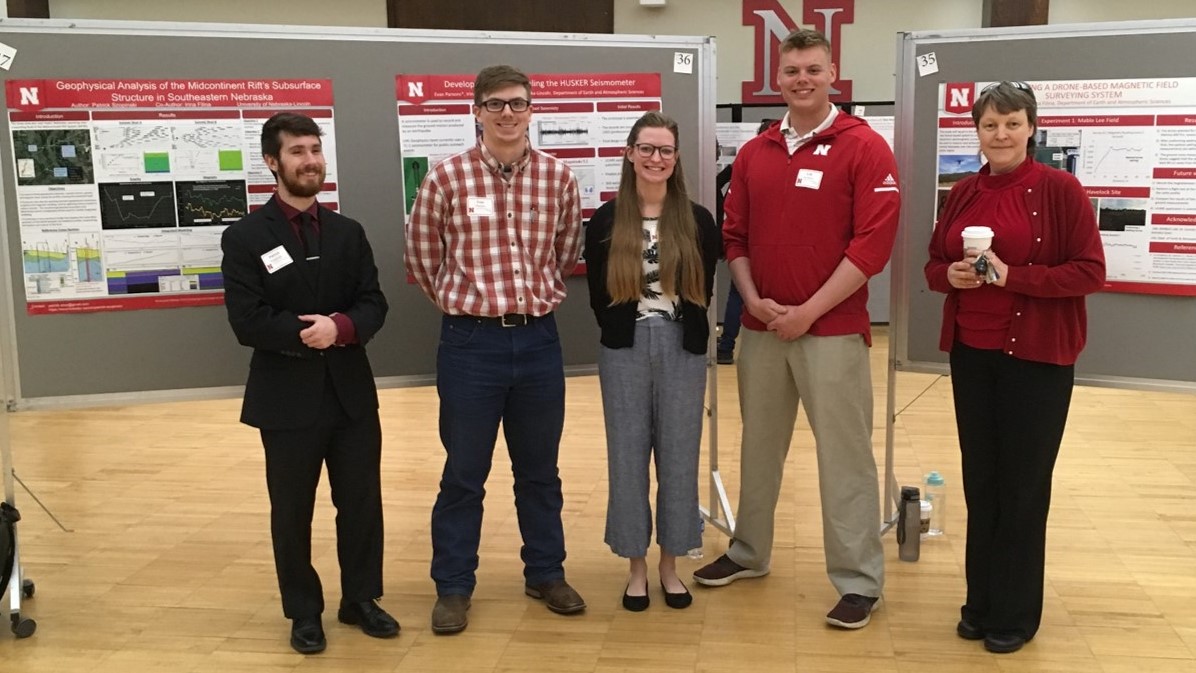
Irina Filina is an Associate Professor in the Department of Earth and Atmospheric Sciences at the University of Nebraska-Lincoln, leading the UNL Geophysics Research Group since 2016. She specializes in integrative geophysical analysis combining seismic, gravity, and magnetic data with geological constraints to study subsurface structures across diverse regions. Education: PhD in Geophysics (2007) from the University of Texas at Austin Industry Experience: 8 years in the petroleum sector before academia Research Interests span: Tectonic evolution of passive continental margins (Gulf of Mexico, Northern Atlantic, Tyrrhenian Sea) Cascadia subduction zone crustal heterogeneities and seismicity Intraplate seamounts in the central Atlantic Nebraska aquifer dynamics via microgravity and seismic surveys Her work leverages public domain datasets and field campaigns (e.g., IODP Expeditions 396/402) to resolve tectonic puzzles and inform environmental monitoring. Students in her group have won Best Student Awards at the Nebraska Academy of Sciences annually since 2017 and presented at AGU, GSA, and AAPG. She teaches Geophysics , Advanced Geophysics , and Exploration Geophysics , emphasizing hands-on learning through projects like Football-Induced Seismicity . Her outreach initiatives include summer camps and school collaborations using drone-based magnetic surveys and seismic demonstrations for K-12 engagement.
Rosario Iaria serves as an Associate Professor in the Department of Physics and Chemistry at the University of Palermo, Italy, where he maintains active teaching and research responsibilities. His academic profile demonstrates continuous engagement with the university since at least 2011, teaching specialized courses including High Energies Astrophysics with Laboratory and Planetary Volcanism across Physics and Georisks programs. His research expertise spans several critical domains in modern astrophysics: High energy phenomena in X-ray binary systems Neutron star physics and accretion processes Cyclotron line formation and variability in pulsars Time-domain analysis of transient cosmic events Development of machine learning techniques for X-ray spectral analysis Multi-messenger approaches to gamma-ray burst studies Analysis of his recent publications (2024-2025) reveals a strong methodological focus on spectral and timing techniques applied to extreme astrophysical environments. His work frequently utilizes data from major observatories including NICER, NuSTAR, XMM-Newton, and Fermi, with particular emphasis on orbital dynamics in X-ray binaries, cyclotron line physics, and reflection spectroscopy in compact object systems. Dr. Iaria's contributions extend to instrumental development projects such as HERMES (Gamma-ray burst and gravitational wave counterpart hunter) and theoretical investigations into quantum gravity phenomena. His research bridges observational data analysis with theoretical modeling, advancing our understanding of matter under extreme gravitational and magnetic fields.
Shoichi Yamada is a Professor at the Faculty of Advanced Science & Engineering in Waseda University . With a PhD from the University of Tokyo, his research spans astrophysics, high-energy physics, and computational methods for core-collapse supernovae and compact object formation. Key research areas: Core-collapse supernova mechanisms Neutrino flavor conversions Rotating star equilibria Boltzmann neutrino transport Gravitational wave sources Multi-dimensional hydrodynamics His 245+ peer-reviewed publications (h-index 51) focus on neutrino transport algorithms, supernova explosion dynamics, and flavor instability analysis. Recent work (2025) involves subgrid modeling for neutrino flavor conversions and machine learning applications to radiation hydrodynamics. Major research contributions include: Development of the W4 method for nonlinear equation solving Systematic studies of collisional neutrino instabilities First-principles simulations with full Boltzmann neutrino transport Investigations into muon-induced flavor instabilities Quantum mechanical radiation modeling Multi-dimensional stellar structure formulations