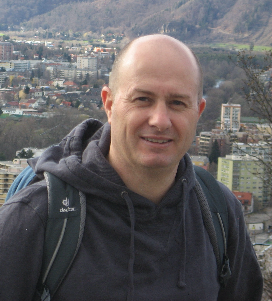
Fabio Biancalana is an Associate Professor at Heriot-Watt University's School of Engineering & Physical Sciences and leads the Nonlinear Photonic Nanostructures group. He holds affiliations with the Institute of Photonics and Quantum Sciences. His research focuses on nonlinear optics, photonic crystal fibers, graphene-based photonics, and theoretical models of relativistic systems. He earned his Laurea in Theoretical Particle Physics from the University of Roma III (2001) and a PhD in nonlinear optics from the University of Bath (UK). Notable awards include the Deryck Chesterman Medal (2005), IRCSET Postdoctoral Fellowship (2006), and EPSRC Fellowship (2007). Research interests span nonlinear phenomena in photonic nanostructures, quantum optics, and condensed matter systems. Recent work includes studies on graphene's nonlinear properties, epsilon-near-zero regimes in optical fibers, and gravitational analogues in combinatorial systems. His publications explore topics like optical fission, soliton dynamics, and frequency conversion in novel materials. Awards and recognitions highlight his contributions to photonics and theoretical physics. He collaborates internationally, with recent work addressing black hole analogs and topological photonics. His group's activities include experimental and theoretical studies on advanced optical materials and devices.
Andrew Neitzke is a Professor of Mathematics at Yale University, where he holds the Kline Tower office (KT 913). His research focuses on the intersection of string theory, supersymmetric field theory, and geometry, with notable contributions to spectral networks, Hitchin systems, and quantum field theory applications. He has taught advanced mathematics courses at both Yale and the University of Texas at Austin, including Vector Analysis, Differential Geometry, and Quantum Field Theory-related topics. His work bridges theoretical physics and pure mathematics, particularly in understanding geometric structures through quantum field theory frameworks. Key contributions include studies on WKB asymptotics, Stokes phenomena, and the interplay between spectral curves and topological strings. He maintains an active role in both research and education, with a prolific publication record in high-impact journals.
Associate Professor Sara Baratchi heads the Mechanobiology and Microfluidics Laboratory at the Baker Heart and Diabetes Institute and co-leads the Heart Attack Research Program. She holds academic appointments as a supervisor at RMIT University and the University of Melbourne, and is the Alice Baker and Eleanor Shaw Gender Equity Fellow. Her interdisciplinary work bridges engineering, immunology, and clinical science to address cardiovascular pathologies through innovative bioengineering approaches. Dr. Baratchi's research centers on mechanotransduction in vascular and immune cells, particularly how hemodynamic forces and extracellular matrix stiffness regulate cellular behavior in diseases like atherosclerosis and calcific aortic valve disease. She pioneers organ-on-a-chip platforms that replicate human vascular systems under pathological conditions, integrating microfluidics, single-cell omics, and patient-derived samples to develop ethical alternatives to animal testing and identify novel therapeutic targets. Her recent publications demonstrate a cohesive research trajectory focused on Piezo1-mediated mechanosensing, microfluidic device innovation, and the pathophysiological impact of altered hemodynamics. Key themes include endothelial cell responses to shear stress, substrate stiffness effects on vascular cells, and the development of dynamic flow systems for cardiovascular modeling, all aimed at translating mechanobiological insights into clinical interventions. Dr. Baratchi has received significant recognition including: Australian Vascular Biology Society Achievement and Career Development Award (2023) Alice Baker and Eleanor Shaw Gender Equity Fellowship (2023) ARC Discovery Early Career Researcher Award (2017-2020) Best Basic Research Award at Baker Institute (2020) RMIT University Established Researcher Award (2022) She has secured over $2.5 million in competitive funding from ARC and NHMRC, mentoring 20+ PhD researchers who now lead in academia and industry. As President Elect of the Australian Society for Mechanobiology and committee member for MicroTAS 2024-2025, she actively shapes the field through leadership and international collaboration. Her laboratory develops cutting-edge microfluidic platforms adopted globally, collaborating with institutions across 11+ disciplines. Current work focuses on dissecting how matrix stiffness and hemodynamic alterations in cardiovascular conditions drive pathological cellular crosstalk, aiming to establish foundational knowledge for non-invasive disease-modifying therapies.
David Mohrig is a Professor in the Department of Earth and Planetary Sciences at the Jackson School of Geosciences, University of Texas at Austin, holding the Peter T. Flawn Centennial Chair in Geology. His research focuses on sedimentary deposits, transport processes, and the evolution of terrestrial and submarine landscapes. He employs laboratory experiments, field studies, and remote sensing to investigate channel formation, sediment dynamics, and subsurface deposits. Research Interests: Sedimentary Geology and Stratigraphy Geomorphology of Rivers, Deltas, and Coastlines Submarine Channels and Sediment-Gravity Currents Basin Analysis and Seismic Interpretation Key Contributions: Mohrig’s work integrates experimental methods with field observations to understand sediment transport mechanisms and their preservation in geological records. His research group has advanced understanding of fluvial and submarine processes, including deltaic deposits on Mars and coastal dynamics on Earth. Advising & Grants: Mohrig has advised numerous doctoral, master’s, and undergraduate students. He acknowledges support from grants like the IHS Markit Educational Grant for geoscience software. His lab facilities include state-of-the-art flumes and wind tunnels for sediment dynamics studies. Labs/Teams: The Mohrig Research Group uses specialized facilities such as the Deep Tank and 2D Wind Tunnel to simulate sediment transport and depositional processes. Collaborations span geology, engineering, and planetary science.
Gourab Ray is an Associate Professor in the Department of Mathematics and Statistics at the University of Victoria, Faculty of Science. He holds a PhD from the University of British Columbia, Vancouver. His research focuses on the intersection of probability theory, geometry, and mathematical physics, particularly large-scale patterns in stochastic models inspired by physics. Key areas include random planar maps, random walks, lattice spin models, dimer models, Gaussian free field properties, and Liouville quantum gravity. Recent work emphasizes establishing Gaussian free field-like behaviors in dimer models across various graphs and surfaces. He teaches courses such as MATH 236: Introduction to Real Analysis and MATH 555: Topics in Probability. His publications span leading journals including Inventiones Mathematicae , Annals of Probability , and Probability Theory and Related Fields . Notable contributions include studies on unimodular hyperbolic triangulations, half-planar map classifications, and conformal invariance in dimer models. No specific awards are listed for Dr. Ray, though his work has been recognized in peer-reviewed venues. He actively contributes to academic service, including roles on graduate committees and research collaborations. His research group engages with theoretical and applied aspects of probability theory, often bridging discrete and continuous mathematical frameworks.
Renate Loll is a Professor in Theoretical Physics at Radboud University Nijmegen, The Netherlands. She is a co-founder of Causal Dynamical Triangulations (CDT) , a groundbreaking nonperturbative path integral approach to quantum gravity. Her research focuses on the intersection of gravity, geometry, and quantum systems, with a strong emphasis on understanding the quantum structure of spacetime, the origin of the universe, and nonperturbative quantum field theory techniques. Education : Habilitation (1998) and PhD (1989) in Theoretical Physics, with additional degrees from Imperial College London (Diploma, 1986) and Freiburg University (Baccalaureus, 1984). Research Impact : Leads one of Europe's largest research groups in quantum gravity, with over 120 professional publications (76 in peer-reviewed journals). Leadership Roles : Chair of Perimeter Institute's Scientific Advisory Committee, Member of FOM's Board of Governors, and editorial roles at Living Reviews in Relativity and General Relativity and Gravitation . Her work spans fundamental physics, integrating concepts like quantum foam and wormholes into rigorous mathematical frameworks. She has secured over 6 million euros in external funding, coordinated European networks (ENRAGE, Eurogrid), and served as Scientist-in-Charge for multiple Marie Curie Fellowships. Loll's contributions to science communication include TV/radio appearances and international media coverage. Awards : VICI Award (2005), Heisenberg Fellowship (1999), Lise Meitner Lecturer (2012), DAAD Scholarship (1984). Service : Co-organized 7 international conferences, referee for funding agencies across 6 countries, and invited plenary speaker at 25+ events in recent years.
Matthias Gaberdiel is a Full Professor at the Department of Physics, ETH Zurich, where he has been working since 2003 (initially as Associate Professor, then promoted to Full Professor in 2007). His research focuses on theoretical physics, particularly string theory and conformal field theory. Dr. Gaberdiel earned his Diploma in 1992 from the Universitaet Hamburg under Professor Klaus Fredenhagen, followed by a PhD from Cambridge University in 1995 with a thesis on conformal field theory supervised by Professor Peter Goddard. His academic journey included positions as Research Fellow at Jesus College, Cambridge, Research Associate at Harvard University, College Lecturer at Fitzwilliam College, Cambridge, and holder of a Royal Society University Research Fellowship at King's College London. Professor Gaberdiel's research primarily centers on string theory and conformal field theory, with a particular focus on the AdS/CFT correspondence for the case of AdS3/CFT2. He has made significant contributions to identifying the world-sheet theory dual to the symmetric orbifold CFT2, which has allowed for a proof of the AdS/CFT duality in this specific example. His work bridges theoretical physics with mathematical structures, exploring the deep connections between string theory, quantum gravity, and conformal field theories. The mathematical sophistication of his research has implications for understanding quantum aspects of spacetime and black holes through holographic principles. Analysis of Professor Gaberdiel's recent publications reveals a sustained focus on AdS3/CFT2 correspondence, with particular attention to symmetric orbifold constructions, tensionless string limits, and integrability structures. His work demonstrates a progression from foundational aspects of conformal field theory toward increasingly sophisticated explorations of holographic duality in lower-dimensional settings. The mathematical depth of his research connects string theory with representation theory, algebraic structures, and advanced geometric concepts. Royal Society University Research Fellowship Professor Gaberdiel leads a research group at ETH Zurich focused on theoretical aspects of string theory and conformal field theory. His group investigates the mathematical structures underlying quantum gravity and holography, with particular emphasis on the AdS3/CFT2 correspondence. Through collaborations with researchers worldwide, including notable partnerships with Rajesh Gopakumar, Lorenz Eberhardt, and other leading theorists, his work continues to advance our understanding of string theory's mathematical foundations and physical implications.
Steffi Colyer is a Senior Lecturer in Biomechanics at the Department for Health, University of Bath. She is affiliated with the Centre for Health and Injury and Illness Prevention in Sport and the Bath Institute for the Augmented Human. Her research is supported by major grants from EPSRC and ESA, focusing on elite athletic performance, rehabilitation, and motion analysis technologies. Her research interests center on biomechanics of athletic performance, particularly in sports such as skeleton, badminton, and sprinting. She investigates the kinetic and kinematic determinants of elite performance, develops markerless motion capture systems for real-world analysis, and applies musculoskeletal modelling to understand internal loading and adaptation in normal and simulated gravity environments. Her work bridges sports science, engineering, and rehabilitation. The recent trend in her publications shows a strong focus on markerless motion analysis, pose estimation, musculoskeletal modelling, and the biomechanics of sprinting and racket sports. She leverages advanced computational methods, including deep learning and in silico simulations, to improve performance analysis and injury prevention. Her scientific awards include: ISBS New Investigator Award finalist (oral) (co-author), 2022 Departmental Staff Award for Innovation in Learning and Teaching, 2025 She has supervised multiple research students and projects, including PhD and postdoctoral work, and is actively involved in peer review for journals such as Journal of Sports Sciences , Scientific Reports , and Journal of Biomechanics . She leads the IAA project on markerless motion capture for skeleton push-start analysis and contributes to the CAMERA initiative, a major interdisciplinary research center focused on motion analysis and virtual reality applications. Her research is conducted within the Centre for the Analysis of Motion, Entertainment Research and Applications (CAMERA), where she collaborates with computer scientists, engineers, and sports scientists to develop and apply cutting-edge motion capture technologies in real-world settings.
Thomas G. J. Chandler is an Assistant Professor in the Department of Mathematics at the University of North Carolina at Chapel Hill, with his office located in Phillips Hall 396. Prior to joining UNC Chapel Hill, he was a Van Vleck Visiting Assistant Professor in the Department of Mathematics at the University of Wisconsin-Madison. Dr. Chandler completed his MMath and DPhil in the Oxford Centre for Industrial and Applied Mathematics at the Mathematical Institute, University of Oxford. His doctoral research, supervised by Prof. Dominic Vella, explored the mechanics of thin elastic materials and their interaction with soft matter. His postdoctoral research at Wisconsin, supervised by Prof. Saverio Spagnolie, focused on the interaction of anisotropic fluids with soft matter. Dr. Chandler's research focuses on solving physically motivated problems using applied mathematics techniques, particularly asymptotic, numerical, and complex analysis. His primary research areas include fluid dynamics (especially nematic liquid crystals and active matter), solid mechanics (particularly thin elastic materials), and mathematical biology. He investigates how active stresses in anisotropic fluids interact with deformable bodies, how geometry affects the rigidity of thin elastic sheets, and how turgor pressure influences cellular structures in biological systems. His research combines analytical methods, particularly complex variable techniques, with numerical simulations to address problems at the intersection of mathematics, physics, and biology. Dr. Chandler's work has revealed fundamental insights into phenomena such as curvature-induced rigidity in thin elastic materials, the mechanics of pressurized cellular sheets, and the interaction of deformable bodies with active nematic fluids. Dr. Chandler has published extensively in high-impact journals including Physical Review Research, Journal of Fluid Mechanics, SIAM Journal on Applied Mathematics, and Proceedings of the Royal Society A. His research demonstrates a consistent trajectory from fundamental mathematical theory to applications in materials science and biological systems. As an educator, Dr. Chandler teaches a variety of mathematics courses at UNC Chapel Hill. In Fall 2025, he will be teaching Math 383: First Course in Differential Equations. His previous teaching includes courses in Linear Algebra, Differential Equations, Applied Dynamical Systems, and The Theory of Single Variable Calculus. At the University of Oxford, he served as a Class Tutor and Teaching Assistant for graduate-level courses in Fluid Mechanics, Elasticity, and Solid Mechanics.
Prof. Dr.-Ing. Annette Eicker is a Professor of Geodesy and Adjustment Calculations at the HafenCity University Hamburg (HCU), where she has been serving since 2016. Prior to her current position, she was an Academic Councillor at the Institute of Geodesy and Geoinformation at the University of Bonn (2014-2016), and has held visiting research positions at NASA's Jet Propulsion Laboratory in Pasadena, USA (2015) and the University of Rennes 1 in France (2014). Her research focuses on satellite gravimetry, particularly utilizing GRACE (Gravity Recovery and Climate Experiment) and GRACE-FO (Follow-On) mission data to monitor terrestrial water storage, study climate-related mass changes, and develop advanced methods for gravity field recovery. Her work bridges geodesy, hydrology, and climate science, with significant contributions to understanding global water cycle dynamics and developing next-generation gravity missions like MAGIC (Mass-change And Geosciences International Constellation). Analysis of her recent publications reveals a strong emphasis on improving the accuracy and applications of satellite gravity data for hydrological monitoring, with increasing focus on next-generation missions and daily gravity field solutions. Her research spans from fundamental method development (e.g., GROOPS software toolkit) to practical applications for water resource management and climate change monitoring. Prof. Eicker's work demonstrates leadership in the field of satellite gravimetry, with numerous publications in high-impact journals addressing critical challenges in Earth observation and climate monitoring. Though specific awards aren't mentioned in the provided materials, her extensive publication record and leadership in major projects like MAGIC indicate significant recognition within the geodetic and hydrological communities. Her research has strong implications for understanding climate change impacts on water resources, with applications in drought monitoring, flood risk assessment, and sustainable water management. She maintains active collaborations with international institutions including NASA's Jet Propulsion Laboratory and has contributed to major initiatives like the GlobalCDA Project, which integrates geodetic and remote sensing data with hydrological models.
Dr. Steven Cummer is the William H. Younger Distinguished Professor of Engineering and Associate Chair of Faculty Affairs in the Department of Electrical and Computer Engineering at Duke University's Pratt School of Engineering. He is also recognized as a Bass Fellow at Duke University. Dr. Cummer received his educational foundation at Stanford University, earning his B.S.E.E. in 1991, M.S.E.E. in 1993, and Ph.D. in Electrical Engineering in 1997. After completing his doctorate, he spent two years at NASA Goddard Space Flight Center as an NRC postdoctoral research associate before joining Duke University in 1999. B.S.E.E. Stanford University, 1991 M.S.E.E. Stanford University, 1993 Ph.D. Stanford University, 1997 Dr. Cummer's research focuses on theoretical and experimental electromagnetic problems related to geophysical remote sensing and engineered electromagnetic materials. His work spans multiple disciplines, including lightning physics, terrestrial gamma-ray flashes, acoustic metamaterials, and transformation optics. He has made significant contributions to understanding the connection between lightning discharges and high-energy atmospheric phenomena, particularly terrestrial gamma-ray flashes (TGFs). His research in acoustic metamaterials has pioneered new approaches to sound manipulation and control, with applications in medical imaging, underwater acoustics, and noise control. Analysis of Dr. Cummer's recent publications shows a continued focus on atmospheric electricity phenomena, particularly lightning and terrestrial gamma-ray flashes, while simultaneously advancing the field of acoustic metamaterials. His work integrates experimental observations with theoretical modeling, often using sophisticated radio frequency and optical measurement techniques. The interdisciplinary nature of his research bridges electrical engineering, atmospheric science, and physics. Dr. Cummer has received numerous prestigious awards for his research contributions: National Science Foundation CAREER award (2001) Presidential Early Career Award for Scientists and Engineers (PECASE) (2001) Fellow of the Institute for Electrical and Electronics Engineers (2011) Stansell Family Distinguished Research Award from the Pratt School of Engineering (2018) As an educator, Dr. Cummer has taught a range of courses in electrical and computer engineering, including Fields and Waves, Waves in Matter, and various project-based courses. His research group has been consistently supported by grants from the National Science Foundation and other agencies, enabling both fundamental research and student training. Dr. Cummer has mentored numerous graduate students who have gone on to successful careers in academia and industry. Dr. Cummer leads a research laboratory that combines experimental and theoretical approaches to study electromagnetic phenomena. His team utilizes sophisticated radio frequency measurement systems, optical instrumentation, and computational modeling to investigate lightning physics, atmospheric electricity, and acoustic metamaterials. Recent field campaigns have included airborne observations of gamma-ray emissions from thunderstorms.
Dr. Dibakar Ghosal is an Associate Professor in the Department of Earth Sciences at the Indian Institute of Technology Kanpur (IIT Kanpur). He leads the Crustal Imaging Laboratory (CIL) which is equipped with state-of-the-art seismic data acquisition setup and processing software for both land and marine seismic datasets. His research spans exploration seismology, tectonic studies, and algorithm development for subsurface imaging across diverse geological settings. Dr. Ghosal's educational background includes: PhD in Geophysics (2008-2013) from Institut de Physique du Globe de Paris (IPGP), France M.Sc. in Geophysics (2004-2006) from Indian Institute of Technology Kharagpur, India B.Sc. in Geology, Mathematics and Physics (2001-2004) from Jadavpur University, India His research focuses on three major themes: (1) Tectonic studies across Himalaya, Sumatra-Andaman, and Bay of Bengal using high-resolution seismic datasets; (2) Development of algorithms for petrophysical parameter estimation of hydrocarbon and ore reserves; and (3) Ambient Noise and earthquake data analysis. His work integrates field data acquisition, computational modeling, and advanced algorithm development to address fundamental questions in Earth sciences, with particular emphasis on crustal architecture and resource exploration. His recent publications demonstrate expertise in crustal imaging techniques, tectonic analysis of subduction zones, and algorithm development for seismic data processing. The research spans diverse geographical regions including the Himalayas, Sumatra-Andaman region, Bay of Bengal, and Southern Indian Ocean, with applications to hydrocarbon exploration, tectonic studies, and crustal architecture analysis. Dr. Ghosal has received several prestigious fellowships and awards: 2023: Scientific High Level Visiting Fellowship (SSHN) from French Institute in India (IFI) 2022: INSA visiting scientist fellowship 2019: Visiting Faculty at IPG Paris, France 2019: Visiting Faculty at NTU Singapore 2014-2015: Postdoctoral fellowship, Geocentrum, Uppsala University, Sweden 2008-2012: PhD fellowship, IPG Paris, France Dr. Ghosal actively mentors students and has supervised numerous PhD, MTech, and BS-MS students. His research is supported by multiple sponsored projects from DST-SERB, MoES, ONGC, and other funding agencies. He has successfully completed projects on topics including seismic imaging of the Himalayan foothills, gas hydrate reservoir modeling, and petrophysical property estimation. He leads the Crustal Imaging Laboratory (CIL) at IIT Kanpur, which conducts field work across various regions of India including the Himalayas and offshore areas. The laboratory is equipped with RAUs, 3C Tromino sensors, seismic thumpers, and advanced processing servers. He collaborates with national institutions including NIO Goa, IISER Pune, and NGRI, as well as international institutions such as IPG Paris, Uppsala University, and Texas A&M University.
Cynthia Yan is a Visiting Professor in the Physics Department at Stanford University, affiliated with the School of Humanities and Sciences. Her academic appointment was noted for the 2019 academic year. Her research focuses on theoretical physics with an emphasis on quantum gravity, string theory, supersymmetry, and black hole physics. She explores topics such as BPS black hole microstates, entanglement in quantum systems, and holographic dualities. Her work bridges advanced mathematical techniques with foundational questions in high-energy physics, including studies on wormholes, topological quantum field theories, and the interplay between QCD effects and particle physics observables like the Z boson forward-backward asymmetry. While specific grants or awards are not listed, her publications reflect engagement with cutting-edge theoretical frameworks and interdisciplinary methods. Though no student advisees are explicitly documented here, her contributions to areas like matrix theory and emergent spacetime suggest involvement in graduate-level research training. Contact information specific to her role is not provided in the available data.
Prof. Jürgen Müller is a Full Professor at the Institute of Geodesy, Leibniz University Hannover, leading research in physical geodesy, satellite gravimetry, and relativistic geodesy. He holds positions as Executive Director of the Institute and contributes to global geodetic initiatives like the Global Geodetic Observing System (GGOS). His work focuses on advancing quantum technologies for Earth observation, including cold atom interferometry and optical clocks, to enhance gravity field measurements and test fundamental physics principles. Research Interests: Müller's expertise spans gravimetric Earth observation, lunar laser ranging (LLR), relativistic geodesy, and the application of quantum sensors in space missions. His team explores novel sensor concepts for future satellite gravimetry, such as hybrid accelerometers and gravity gradiometry systems, addressing challenges in climate monitoring and Earth system dynamics. Publications Overview: His recent work emphasizes quantum accelerometers for satellite missions, deployable solar panels for GRACE-like satellites, and LLR-based tests of general relativity. Key contributions include improving Earth rotation parameter estimation and exploring optical clock networks for height system unification. Grants & Collaborations: Müller collaborates on international projects like the CARIOQA quantum pathfinder mission and the GENESIS space observatory. He leads teams in simulating quantum sensor performance and analyzing LLR data for lunar and Earth dynamics studies. Labs/Teams: As head of the Institute of Geodesy, he oversees research groups working on quantum gravimetry, space geodesy, and geodetic reference systems, leveraging facilities like the 10-meter atom interferometer at Hannover.
Mick Filmer is a Senior Lecturer at Curtin University's School of Earth and Planetary Sciences (EPS) within the Faculty of Science and Engineering. He serves as Curtin's representative on the Land Surveyors Licensing Board of Western Australia and holds a PhD (Curtin University) and a Bachelor of Geoinformatics and Surveying (University of South Australia). His research focuses on InSAR technology, vertical land motion, height systems, and coastal sea surface topography, with over 30 peer-reviewed publications since 2007. Teaching responsibilities include Survey Law Ethics Practice, Cadastral Surveying, and Applied Geodetic Surveying. Research contributions span geodetic datum development (e.g., AUSGeoid09), InSAR deformation analysis, and land subsidence monitoring in the Perth Basin and Latrobe Valley. He collaborates with organizations like the International Association of Geodesy and European Geosciences Union. Key projects include evaluating Australia’s AUSHYDROID vertical datum model (2024), integrating InSAR with terrestrial reference frames (2021), and analyzing ocean tide signals in coastal zones (2023). His work bridges geodesy, remote sensing, and hydrogeology, addressing challenges in vertical land motion monitoring and geodetic infrastructure planning.