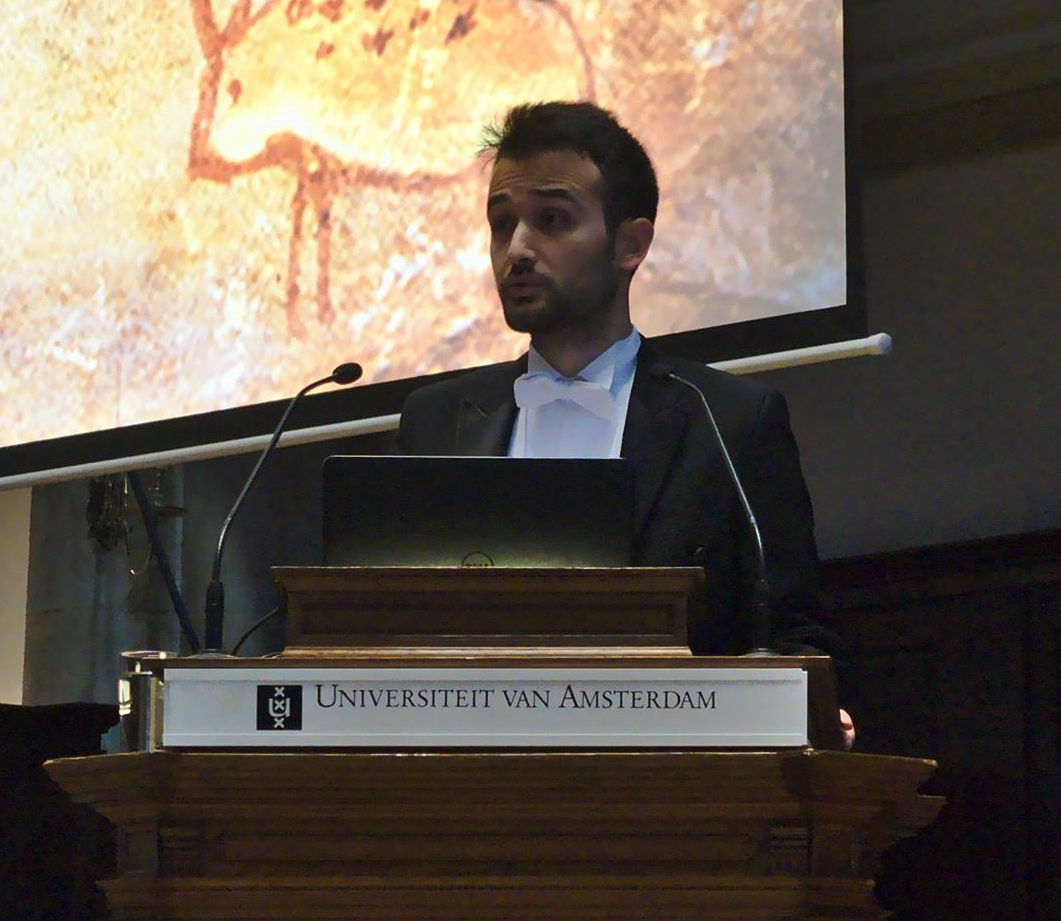
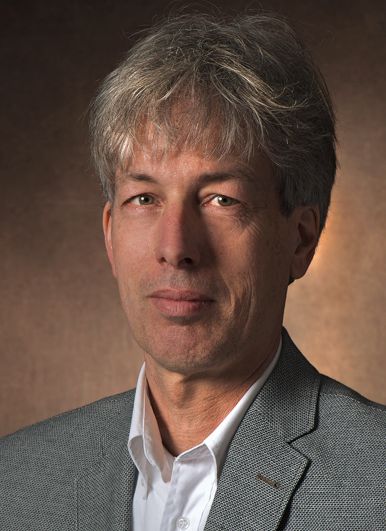
Lourens Waldorp is an Associate Professor at the University of Amsterdam within the Faculty of Social and Behavioural Sciences , specifically the Department of Psychological Methods . His research focuses on network theory, causal inference, and statistical modeling in psychology and neuroscience. University of Amsterdam IAS Fellow (2024) His research interests include: Network psychometrics Causal inference in psychological models High-dimensional statistical methods Dynamical systems in psychopathology Graph theory applications Signal processing for biophysical data The trends in his recent publications center on causal modeling, network analysis of psychopathology, and statistical techniques for time-series data. He has developed methods for perturbation graphs, moderated network models, and dynamic intervention frameworks. Notable scientific awards : IAS Fellowship for 6 months (2024) He advises PhD students like Kyra Evers and collaborates with researchers across disciplines, including J. Haslbeck , D. Borsboom , and O. Ryan . His work intersects with network theory and clinical psychology .
Jan Draisma is a full professor of Mathematics at the University of Bern and a part-time full professor of Applied Algebra and Geometry at Eindhoven University of Technology (TU/e), where he is affiliated with the Department of Mathematics and Computer Science, specifically in Discrete Algebra and Geometry and Coding Theory and Cryptology. He obtained his Master's and Ph.D. degrees from TU/e cum laude and held a postdoctoral position at the University of Basel (2002–2005). He returned to TU/e as an assistant professor, later advancing to associate professor (2011–2016), and served as a part-time full professor at VU Amsterdam (2015–2016). His research focuses on the interplay between combinatorics, statistics, and algebraic geometry. Key areas include tropical geometry, algebraic statistics, symmetric systems of polynomial equations in infinitely many variables, and representation stability. His work often explores the structure of infinite-dimensional algebraic objects and their finite approximations. The most recent publications highlight trends in polynomial functors, topological Noetherianity, amoebas of linear spaces, and the geometry of tensor representations. These works reflect a deep integration of algebraic geometry with combinatorics and category theory, emphasizing stabilization phenomena and symmetry in algebraic structures. NWO Vici Award: Stabilisation in Algebra and Geometry (2015) NWO Vidi Award: Finite thanks to symmetry (2010) Draisma has received significant research funding, including the NWO Vidi and Vici grants, and two NWO Free Competition grants (2008, 2012). He has supervised 16 students and is actively involved in the academic community as an associate editor for Experimental Mathematics, SIAM Journal on Applied Algebra and Geometry, and Linear and Multilinear Algebra. He has held leadership roles in major conferences such as MEGA 2015 and SIAM AG 19. He is affiliated with the research groups in Discrete Algebra and Geometry and Coding Theory and Cryptology at TU/e and leads research activities centered on algebraic methods in discrete mathematics and statistics.
Tom Verhoeff is an Assistant Professor at the Faculty of Mathematics and Computing Science of Eindhoven University of Technology (TU/e) , working within the Software Engineering & Technology group. His research focuses on Model-Driven Engineering (MDE) , Domain-Specific Languages (DSLs) , and the intersection of mathematics, computing, and the arts . He teaches courses in data analytics, programming, algorithms, theoretical computer science , and logic . Verhoeff earned both his MSc and PhD in Technical Science (Mathematics and Computer Science) from TU/e. He is actively involved in promoting mathematics and informatics through initiatives like the annual Bridges conference , and serves as board member and treasurer of the Dutch Mathematics Olympiad , as well as chair of the Koos Verhoeff MathArt foundation . He has also held roles as guest lecturer in Lithuania and Finals Director for the ACM International Collegiate Programming Contest . Research Interests: Verhoeff’s work spans Model-Driven Engineering , domain-specific language development , and 3D geometric modeling . His scholarship often explores symmetry, recursion, and mathematical visualization , particularly through computational art and algorithmic puzzles . Recent publications highlight 3D rotation methods , knot theory , and mathematical art using lattice paths and geometric transformations . Scientific Awards: ACM ICPC European Founders Award (2004) IOI Distinguished Service Award (2007) Second Place in the 2022 Wolfram Computational Art Contest Notable Collaborations and Affiliations: He is affiliated with the Esprit Working Group on Asynchronous Circuit Design (ACiD-WG) , WIRE (TUE Mathematics Alumni) , ACM (Senior Member) , CSTA , IEEE Computer Society , and Royal Dutch Mathematical Society (KWG) .
Sezer Karaoglu is a Lecturer and part-time postdoctoral researcher at the Computer Vision Group, Informatics Institute, University of Amsterdam. He is also the CTO and Co-Founder of 3DUniversum, a technology spin-off of the University of Amsterdam that provides state-of-the-art 2D/3D computer vision solutions. Additionally, he has co-founded other startups including Scanm and 3DHealthScan. Dr. Karaoglu received his PhD from the Computer Vision Group, Informatics Institute, University of Amsterdam, with research funded by the COMMIT project. His educational background includes a double master's degree: an optics, image and vision master's degree from University Jean Monnet in France and a media technology master's degree from Gjovik University College in Norway. He completed his undergraduate studies with honors at Istanbul Technical University in Telecommunication Engineering. His research focuses on Artificial Intelligence and 3D Computer Vision, with specific interests in SLAM, re-localization, 3D reconstruction, 3D object detection and segmentation, synthetic media, generative AI, deep fake creation and detection, and VR/AR technologies. His work has significant applications in healthcare, particularly in using deepfake technology for therapy for victims of sexual violence-related PTSD and moral injury, as documented in a Frontiers in Psychiatry article. Analyzing his recent publications reveals a strong trend toward neural scene reconstruction, intrinsic image decomposition, and the application of diffusion models to computer vision problems. His research increasingly integrates 3D scene understanding with language models, as evidenced by his work on language-to-3D scene generation. The applications span from healthcare (deeptherapy.ai) to media authenticity (deepfake detection) and industrial applications. ICT.OPEN Poster Award (3rd Position), Oct'13 Pascal VOC'12 Classification challenge, 2nd Position, Sep'12 Pascal VOC'12 Detection challenge, 3rd Position, Sep'12 Best project award at Nokia and CIMET project competition Outstanding reviewer at CVPR'21 PROVADA Future Startup Battle winner Best Dutch AI startup by Valuer Dr. Karaoglu has supervised numerous PhD, Master's, and Bachelor's students, demonstrating his commitment to academic mentorship. His research has attracted significant media attention, with features on Dutch national TV programs including NPO, VPRO, RTL, and international outlets like BBC News. He has received research funding through the COMMIT project during his PhD studies and has successfully translated his research into commercial applications through his startups. His work on deepfake technology has been applied in innovative therapeutic contexts through DeepTherapy.ai, showing the real-world impact of his research. Dr. Karaoglu leads research efforts at the Computer Vision Group Amsterdam and through his company 3DUniversum, which has developed applications like weScan, DeepTherapy, and FairFake.ai. His team collaborates with various institutions including the Netherlands Film Academy for grief therapy applications using deepfake technology. The DeepTherapy project represents a particularly impactful application of his work, using deepfake technology to help victims of sexual violence confront perpetrators in therapeutic settings.
Bert de Vries is a Professor at the Signal Processing Systems Group at Eindhoven University of Technology (TU/e), where he has been employed since January 2012. He maintains a dual career, also working at GN Hearing in the hearing aids industry since April 1999, where he holds both research and managerial roles. His academic journey began at TU/e, where he earned his MSc in Electrical Engineering in 1986, followed by a PhD from the University of Florida in 1991. Between 1992 and 1999, he worked at Sarnoff Research Center in Princeton, NJ, contributing to diverse signal and image processing projects. Professor de Vries's research centers on Bayesian Machine Learning, with particular focus on the Free Energy Principle and its applications to engineering problems. His work bridges theoretical neuroscience with practical signal processing systems, especially in biomedical applications. He directs the BIASlab research team at TU/e, which develops probabilistic programming tools including RxInfer.jl, ForneyLab.jl, GraphPPL.jl, ReactiveMP.jl, and Rocket.jl. His research spans active inference, variational message passing, probabilistic programming, and Bayesian neural networks, with applications ranging from hearing aids to multi-agent systems. Analysis of his recent publications reveals a strong trend toward practical implementations of Bayesian inference frameworks, particularly through Julia-based probabilistic programming tools. His work shows increasing focus on active inference applications, message passing algorithms, and the intersection of Riemannian geometry with probabilistic modeling. The research demonstrates consistent progression from theoretical foundations toward real-world engineering applications, particularly in biomedical signal processing and autonomous systems. Professor de Vries teaches a graduate-level course on Bayesian Machine Learning at TU/e and actively contributes to open-source software development through his GitHub profile (bertdv), with recent activity as recent as August 2025. His research team has developed several influential probabilistic programming libraries that have gained significant attention in the machine learning community. The BIASlab research group continues to advance the state of the art in Bayesian inference methods with applications in hearing technology, robotics, and signal processing.
Patrick J.F. Groenen is a full Professor of Statistics at the Erasmus School of Economics (ESE), Erasmus University Rotterdam , and currently serves as its Dean. His academic career spans leadership roles, including Director of the Econometric Institute (2014-2020) and President of the International Association for Statistical Computing (2015-2017). He has held visiting positions at Stanford University and contributed extensively to multidimensional scaling (MDS), data science , and statistical genetics . His research focuses on numerical algorithms for MDS, support vector machines , and optimization techniques applied to diverse fields. He is a founding editor of the open-access journal Journal of Data Science, Statistics, and Visualisation and has authored major textbooks including Modern Multidimensional Scaling and Applied Multidimensional Scaling and Unfolding . His work appears in top journals like Nature Genetics , Psychometrika , and Journal of Machine Learning Research . Recent publications highlight advancements in convex clustering , genomic prediction , and robust statistical methods . He has developed influential R packages such as GenSVM , SVMMaj , and smacof for multiclass classification and MDS software. His supervisory record includes 14 PhD students across economic psychology, genetics, and data science. Academic activities include editorial roles at Advances in Data Analysis and Classification and Psychometrika , alongside organizing international conferences like CARME 2007 on correspondence analysis. His contributions to nonlinear biplots and response style modeling have advanced visual data interpretation in social sciences.
Bram C.M. Cappers is a University Lecturer in the Department of Mathematics and Computer Science at Eindhoven University of Technology. His work focuses on visual analytics, cybersecurity, and predictive analytics applied to dynamic heterogeneous networks. He holds a Master’s (2014) and PhD (2018) in Computer Science from TU/e, with doctoral research on security visual analytics for cyber threat analysis. Education: Bachelor in Software, Algorithms, Control Systems (Eindhoven University of Technology, 2012) Master in Software, Algorithms, Control Systems (Eindhoven University of Technology, 2014) PhD in Computer Graphics (Interactive Visualization of Event Logs for Cybersecurity, 2018) Research Interests: Developing predictive models for energy networks, visual analytics tools for cybersecurity incident response, and anomaly detection in complex systems. His work extends to applying these techniques in healthcare, finance, and energy sectors through startups like CodeNext21 and TIBO Energy. Key Contributions: Eventpad: Award-winning visual analytics framework for malware analysis and network intrusion detection Predictive analytics for VoIP fraud prevention (KPN partnership) Co-founder of two ventures commercializing academic research Awards: ICT.Open Award (2018) for traffic data anomaly detection Elsevier’s 30 onder de 30 (2020) for innovation leadership European Venture Program Best Executive Summary (2018) Grants & Activities: Received €150K Demonstrator grant (2018) Contributed to SECREDAS EU project (2018-2021) Speaker at Blackhat USA 2018 and multiple invited talks on cybersecurity
Marc Jochen Uetz is a Full Professor at the Mathematics of Operations Research department and affiliated with the Digital Society Institute. His research spans operations research and computer science, focusing on scheduling, game theory, and optimization problems. PhD in Mathematics from Technische Universität Berlin Research Interests: Active in algorithmic game theory and stochastic scheduling, he investigates equilibrium models, price of anarchy, and efficient resource allocation in transportation and network systems. His work contributes to UN Sustainable Development Goals related to education and infrastructure. Publication Trends: Recent work combines game theory with two-stage facility location, network routing, and stochastic scheduling of Bernoulli-type jobs. Key keywords include Nash equilibrium, approximation algorithms, and dynamic programming. Scientific Recognition: Excellent Reviewer Award (2017) Teaching Award (2018) Academic Activities: Currently chairs Platform Wiskunde Nederland, contributes to editorial work, and delivers invited talks at international conferences like IJCAI 2024.
Remco Veltkamp Professor of Game and Media Technology at the Faculty of Science, Utrecht University. His research focuses on game technology, 3D analysis, video/image recognition, AR/VR interaction, and applications of serious games in health and education. He coordinates the Utrecht Center for Game Research and leads the Dynamics of Youth Hub's 'Play = Healthy Growing Up' initiative, exploring gaming's role in supporting chronically ill children. Additionally, he teaches Game Programming and co-founded the Serious Game Society. He serves as editor for International Journal of Serious Games and Graphical Models . Affiliations: AI Labs, Human-Centered Artificial Intelligence, Integrative Bioinformatics, Life Sciences (LS) Research Themes: Game design for education/training, virtual worlds, biofeedback through heart/brain measurements, narrative design in games Active in both academic research and applied data science initiatives, including the Utrecht Platform for Applied Data Science. Office: Minnaert Building, Room 4.03, Utrecht.
Professor Remco Veltkamp holds a faculty position at Utrecht University's Faculty of Science with a focus on Game and Media Technology . As Scientific Director of AI Labs and coordinator of the Utrecht Center for Game Research , his work bridges serious games, virtual reality, and human-centered AI applications. He leads the Dynamics of Youth Hub 'Healthy Play, Better Coping' exploring gaming's role in pediatric chronic illness management. Academic leadership in gaming technology Director of Utrecht's AI Labs Founder of Serious Game Society Editor of International Journal of Serious Games Research spans game design, AR/VR interaction, 3D object recognition, and multimedia systems with applications in: Healthcare gamification Energy conservation Bioinformatics Social behavior analysis Computer vision Recent work includes: 2025: Developing fatigue management therapy games 2024: Analyzing protest dynamics through social media 2023: Creating equine pain assessment systems 2022: Gamification in food sustainability As educator, he teaches Game Programming and Small Project Game and Media Technology , while pioneering applications of gaming in healthcare and education sectors.
Jeremiah van Oosten serves as a Lecturer at the Academy for AI, Games & Media in Breda, Netherlands, focusing on game engine development and graphics programming within the institution's Frontier building location. His research spans critical areas in interactive technology: Game Engine Architecture and Optimization GPU-Accelerated Parallel Computing (CUDA) Cross-Platform Graphics Rendering (OpenGL) Mathematical Foundations for 3D Systems Immersive Therapy Applications (VR/AR) Van Oosten's influential 2012 publications on 3dgep.com established comprehensive resources for game engine programming, emphasizing practical implementation of GPU techniques, real-time rendering pipelines, and mathematical frameworks. His work bridges theoretical computer graphics with industry-ready development practices, particularly benefiting independent game developers. Scientific recognition includes: No major awards or fellowships documented in current sources He actively contributes to healthcare innovation through research collaborations: ARET Project (2022-2024): Co-Investigator for Augmented Reality Exposure Therapy targeting Alcohol Use Disorder RECOVRY Project (2019-2021): Co-Investigator developing Virtual Reality solutions for alcohol addiction treatment VIBE Project (2018-2022): Co-Investigator creating virtual human systems for economic applications These EU and nationally funded initiatives demonstrate his commitment to applying game technology in therapeutic contexts through interdisciplinary teams spanning computer science, psychology, and healthcare.
Petr van Blokland (born 1956 in Gouda) is a type designer, typographer, graphic designer and lecturer at the Royal Academy of Art in The Hague (KABK), where he teaches in the Master Type and Media program. He co-founded Type Network and releases typefaces under the TYPETR label. His studio, Buro Petr van Blokland + Claudia Mens, was established in 1980. His research interests focus on the intersection of traditional typography and digital innovation. Van Blokland explores typeface design , design automation , and creative methodologies that bridge historical practices with contemporary digital tools. His work emphasizes expansion contrast typography, flourished letterforms , and variable font technology , creating type systems that function across diverse media contexts while maintaining typographic integrity. His publication history shows consistent innovation across decades, with recent work focusing on variable font technology (Presti, 2023), display typography (PowerLift, 2018), and historical analysis of type technology (2024 phototypesetting article). His typefaces demonstrate a progression from traditional text faces (Proforma, Productus) to experimental digital forms (Bitcount) and finally to sophisticated variable systems that incorporate historical techniques with digital flexibility. ATypI's Charles Peignot Prize (1988) As a lecturer in the Master Type and Media program, van Blokland guides students through advanced type design projects that integrate historical knowledge with cutting-edge technology. His approach to teaching emphasizes practical application through live design games and collaborative workshops that simulate professional design environments. His studio work with Buro Petr van Blokland + Claudia Mens provides real-world context for his academic instruction, creating a seamless connection between professional practice and educational theory. Van Blokland leads TYPETR, a type foundry that develops sophisticated type systems with extensive OpenType features. His work on Presti demonstrates particular innovation with floating flourishes that can be attached to letters in multiple positions, sizes, and directions, creating a highly customizable typographic system that maintains historical authenticity while embracing digital possibilities.
Dr. Flora Roberts is an Assistant Professor in Cultural History at the Department of History and Art History , Utrecht University. Specializing in Environmental History and the Cultural History of Iran and the Persianate World , her work examines the intersection of nature and culture in Soviet Central Asia, particularly through water management and dam construction. Research Institutes: Member of the Humanities Research Institute for History and Art History Projects: Pathways to Sustainability (Water, Climate and Future Deltas), RedGold Legend Project , Biophilia Project (2024 USO-funded) Her research integrates archival documents in Russian, Persian/Tajik, and Uzbek with oral histories from Tajikistan and the Russian Federation. She explores how Soviet-era environmental transformations shaped social inequality and how post-Soviet societies negotiate ecological legacies. Recent works analyze transboundary rivers in Eurasia, environmental satire in USSR, and neopatrimonial governance in Central Asia. Roberts co-organizes the Network for Environmental Humanities at Utrecht and serves on the editorial board of the Journal of Central Asian History .
Jiří Kosinka is an Associate Professor (Tenure Track) at the University of Groningen, affiliated with the Faculty of Science and Engineering and the Bernoulli Institute. He leads the Scientific Visualization and Computer Graphics research group. His roles include coordinating and lecturing in Computer Graphics and Advanced Computer Graphics courses, as well as serving as an editor for journals like Computer-Aided Design and Graphical Models . Academic Position: Associate Professor, Tenure Track Affiliations: Bernoulli Institute, Faculty of Science and Engineering Research Group: Scientific Visualization and Computer Graphics Education PhD in Mathematics (2006), Charles University, Prague MSc in Mathematics (2002), Charles University, Prague Research Interests Kosinka's work focuses on geometric modeling, computer graphics, and image processing. He develops algorithms for subdivision surfaces, numerical quadrature, and fluid simulation, with applications in surgical planning and medical visualization. His research bridges theoretical contributions with practical implementations in CAD systems and real-time rendering. Conference Contributions Co-organizer of DGMM 2025 (Discrete Geometry and Mathematical Morphology) in Groningen Program Chair for AniNex 2022/2023 (Next Generation Computer Animation) IPC member for SGP, SPM, Pacific Graphics, and other key conferences Editorial Roles He serves on the editorial boards of Computer-Aided Design and Graphical Models , and has guest-edited special issues in Computer Aided Geometric Design . Labs & Teams He leads the Scientific Visualization and Computer Graphics group, collaborating on projects like BoneStory (3D surgical planning) and fluid dynamics simulations. His lab focuses on advancing geometric algorithms and their real-world applications.
Prof. Marc van Kreveld is a Professor and Head of the Department of Computer Science at Utrecht University since February 2023. His research focuses on computational geometry, geometric algorithmics, and their applications in GIScience, cartography, and puzzle design. He leads the Geometric Computing group and has made significant contributions to algorithms for trajectory data, geometric similarity, and spatial data analysis. Education: PhD in Computer Science from Utrecht University (1992). Research Interests: Computational geometry, GIScience, graph drawing, LIDAR point cloud reconstruction, and geometric puzzle analysis. His work bridges theoretical foundations and real-world applications, such as route data analysis and environmental modeling. Publications: Over 290 peer-reviewed papers, including foundational work on Fréchet distance algorithms, geometric spanners, and trajectory grouping. Recent contributions include advancements in collision detection for modular robots and mobility data science. Awards & Editorial Roles: Editor-in-Chief of Computing in Geometry and Topology , and editorial board member of Journal of Computational Geometry . Active in program committees for conferences like GIScience and SoCG. Teaching: Specializes in computational geometry and its applications, with a focus on algorithm design and geometric computing. Labs & Teams: Leads the Geometric Computing group at Utrecht University, collaborating on projects like braided river network modeling and automated puzzle generation.