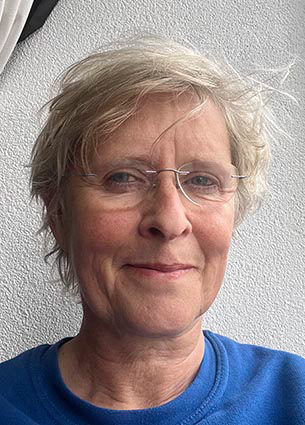
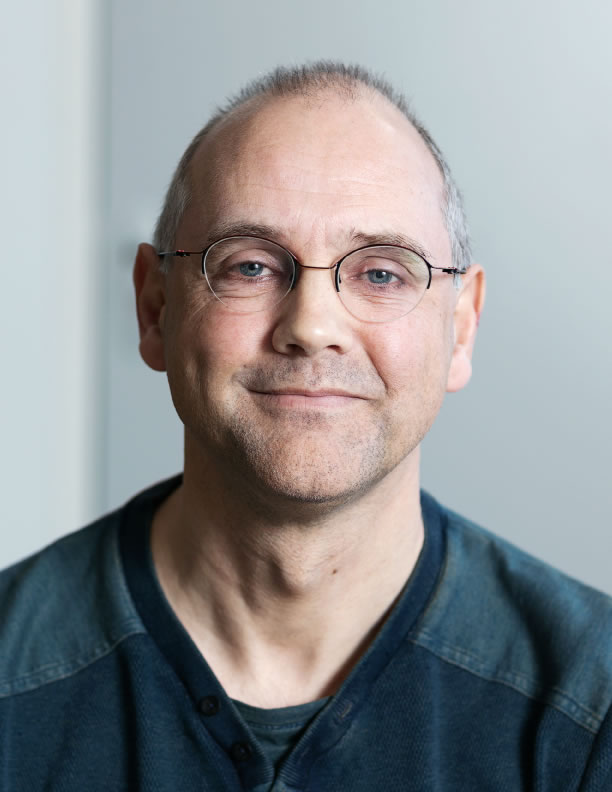
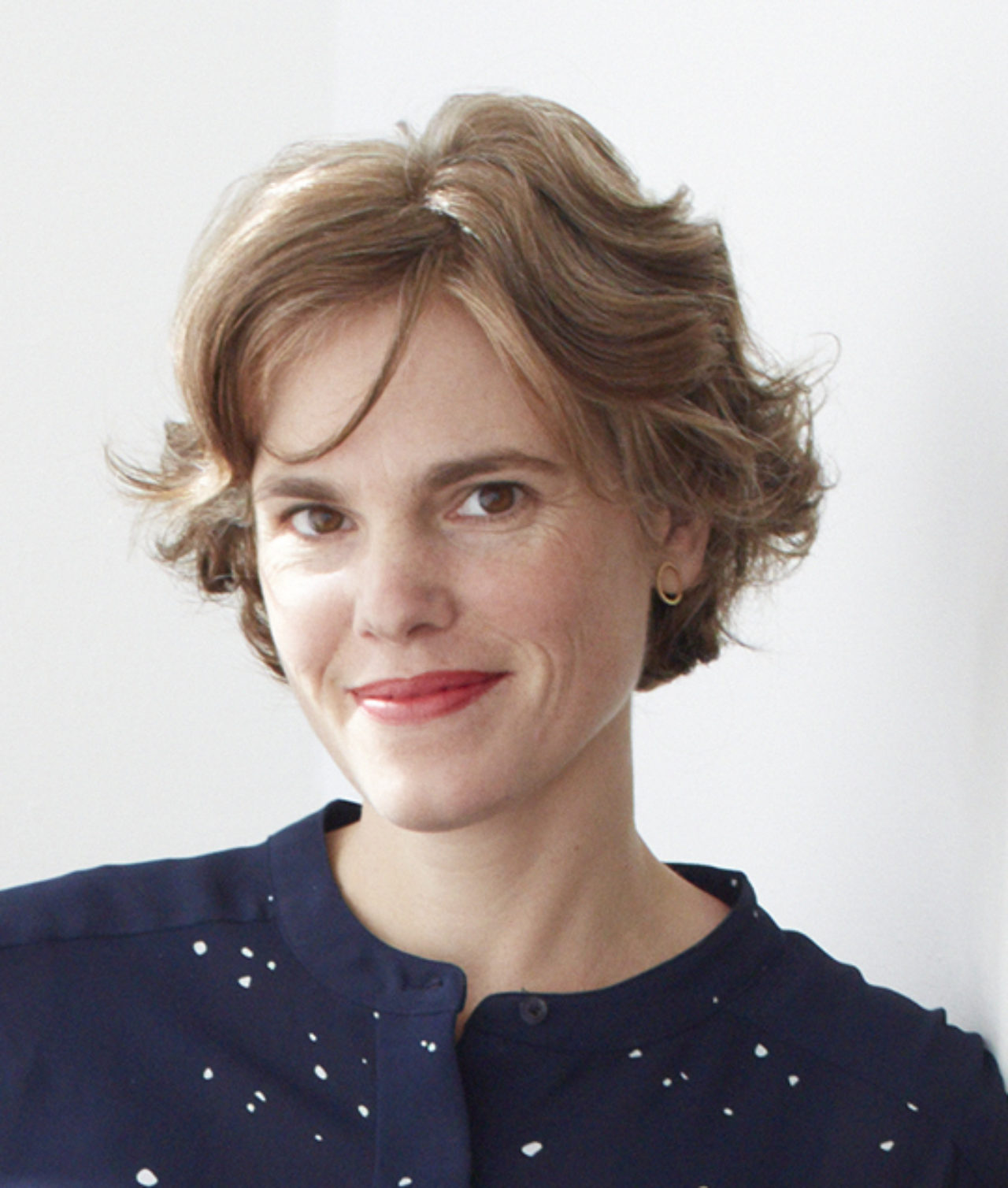
Harma Staal serves as a Tutor at the Willem de Kooning Academy, Rotterdam University of Applied Sciences. Within the academy, she is active in the Research Station and the Master Design program, where she functions as both a tutor and developer of educational materials. Her professional focus lies in Graphic Design, Information Design, Design Research, and Art Education. She specializes in structuring complex information and translating it into accessible visual formats for both the creation of artistic works and the communication necessary to position these works within relevant networks and media. Her educational contributions include designing curricula and resources that guide students through research, making, documentation, and reporting processes. As an educator, Harma approaches teaching as a design practice, creating frameworks that foster student inquiry and creative development in art and design contexts.
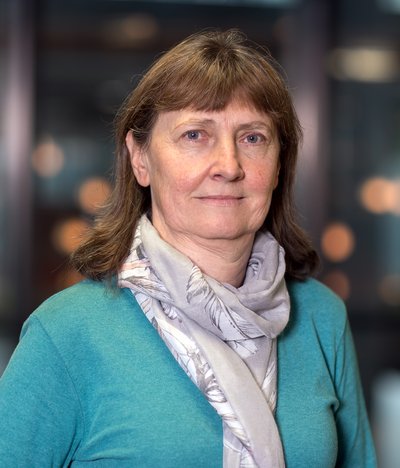
Asia van de Mortel-Fronczak is an Assistant Professor at the Mechanical Engineering Department of Eindhoven University of Technology (TU/e) , where she has been since 1997. Her work focuses on model-based engineering and synthesis of supervisory control systems , with applications in cyber-physical systems like wafer scanners, high-volume printers, vehicles with ADAS, and dynamic traffic infrastructure (e.g., water locks, moveable bridges, tunnels). Academic Background : MSc (1982) and PhD (1993) in Computer Science from AGH University of Science and Technology and TU/e, respectively. Research : Formal models for supervisory control, synthesis-based engineering (SBE), and verification techniques using tools like mCRL2. Her work bridges discrete-event control theory with real-time industrial implementations. Recent Trends : Recent articles highlight her focus on distributed supervisory controllers , communication delay robustness , and dynamic traffic management using formal methods like ACP and ILP. Teaching : Offers courses on supervisory control, model-based systems engineering, and cyber-physical systems. Collaborations : Works with Rijkswaterstaat and ASML, applying her research to real-world systems like ship locks and road tunnels.
Maarten Cornel serves as a Lecturer at the Royal Academy of Art, The Hague (KABK), where he has taught since 2008. Affiliated with the Bachelor Graphic Design program and the academy-wide Common Ground curriculum (formerly Research & Discourse), he develops philosophy courses integrating artistic practice with theoretical inquiry. His institutional roles include co-organizing cross-European dialogues on collectivity and problem-solving since 2020. Cornel holds a Master's degree in Philosophy from Vrije Universiteit Amsterdam, specializing in aesthetics, ethics, and antiquity/archaeology, complemented by art history studies and independent research into historical art materials. His academic journey reflects a deliberate fusion of continental philosophical traditions with practical artistic engagement. His research traverses interdisciplinary terrain where philosophical discourse intersects with artistic creation. Key focus areas include cognitive investigations of aesthetic experience, ethical frameworks in art practice, and socio-political dimensions of knowledge production. Recent work centers on collective dialogue methodologies through the 'Politics of Knowledge' lectorate research group. As an educator, Cornel has shaped KABK's foundational curriculum for over a decade, transitioning from the Research & Discourse program to the current Common Ground initiative in 2024. His collaborative projects with Ingrid Grünwald foster transnational academic exchange, emphasizing articulation skills and collective problem-solving within European art education contexts.
Vincent van Baar is a graphic designer and lecturer affiliated with the Bachelor Photography program at the Royal Academy of Art, The Hague (KABK), where he has taught since 2004. He also taught graphic design at the Design Academy Eindhoven from 2003 to 2010. His design practice focuses on typography, systematic design, editorial and wayfinding design, and visual identity systems, informed by his experience at Studio Dumbar and through Buro Van Baar, which he founded in 2008. He collaborates with the Stedelijk Museum Amsterdam on collection registration and contributes to the Association of Dutch Designers (BNO) via co-organizing monthly design cafés. His work emphasizes interdisciplinary connections, particularly through his establishment of an artist collective with alumni from his early teaching years, which published 'Salvo, Periodical for Photography.'
Sanne Willems serves as an Assistant Professor in the Methodology & Statistics department within Leiden University's Institute of Psychology. Her academic journey began with Mathematics studies at Utrecht University followed by Statistics at Leiden University, culminating in a PhD in Applied Statistics from Leiden's Mathematical Institute in 2020. In 2021, she transitioned to her current position in the Psychology faculty, where she bridges statistical methodology with psychological research on communication. Dr. Willems' research focuses on the critical intersection of statistical communication and public understanding. She investigates how statistical uncertainties and risk information are interpreted by diverse audiences, with particular attention to the cognitive and emotional impacts of different communication formats. Her work addresses fundamental challenges in statistics communication, including the problematic interpretation of probability phrases (like 'likely' or 'rarely') which her research demonstrated vary dramatically between individuals, creating significant risks for miscommunication in medical, policy, and everyday contexts. Analysis of her recent publications reveals a consistent trajectory toward practical applications of statistics communication research. Her articles increasingly focus on debunking misleading visualizations through the 'Grafiekpolitie' (Graph Police) initiative, examining how common graphical distortions in media and official communications affect public understanding. This work spans consumer statistics (examining misleading 'value pack' marketing), medical communication (interpreting survival probabilities), and public policy (referendum design flaws). Kiem grant, Leiden University (2024) Project Grant, Leiden University Fund / Gratama-Stichting/LUF (2023) YAL Outreach Grant (2022) LUF Lustrum Subsidy (2020) IOPS Best Poster Award (2019 and 2015) Through her outreach activities, Willems has significantly expanded the societal impact of statistics communication research. As co-founder of the Statistics Communication section of the VVSOR (Netherlands Society for Statistics and Operations Research), she established both the society's statistics blog and a regular reading group on statistics communication and (in)numeracy. Her 'Grafiekpolitie' collaboration with Nieuwscheckers.nl provides regular public debunking of misleading graphs in Dutch media. She has developed teaching packages on misleading statistics and engages in national radio discussions to improve statistical literacy. Willems also coordinates the Communication Advisory Board for Statistics Netherlands and organizes events to increase diversity in mathematics, particularly targeting minority groups considering PhD studies.
Prof. Kiene Brillenburg Wurth holds a dual role as Professor of Literature and Comparative Media at Utrecht University and Section Head of Comparative Literature. She leads the Modern and Contemporary Literature research group (ICON) and directs the MSc Medical Humanities program. Her academic journey includes a PhD (cum laude) in literature, music, and philosophy, and she has held leadership roles such as Head of Humanities at University College Utrecht (2017–2020) and Director of Graduate Studies (2013–2017). Education: MA (cum laude) in Literature & Film, PhD (cum laud) in Literature, Music, and Philosophy. Research focuses on intermediality, digital humanities, and East Asian philosophical approaches to creativity. Her work bridges literature with music, visual arts, and digital media through projects like the NWO-funded VIDI 'Back to the Book' (2011–2016). Research Interests: Literature in media contexts, experimental writing, Daoist/Zen philosophy in literary theory, and creativity in education. Notable works include Musically Sublime (2009) and Crazy Literature (forthcoming), plus edited volumes on book history and creativity paradoxes. She co-founded UPCE, an interdisciplinary platform empowering creativity across education levels. Teaching includes R/MA courses on comparative media and creativity, as well as BA seminars on literary theory and East Asian philosophy. Her work has been showcased in international venues like Harvard University and the Ghetto Fighter's House Museum, with public engagements including radio shows and documentary contributions.
Dmitry Bagaev is a Researcher at Eindhoven University of Technology's Signal Processing Systems department, specializing in Bayesian inference and probabilistic programming. His work develops computational tools like RxInfer.jl and ReactiveMP.jl for scalable probabilistic modeling. Research spans Bayesian inference frameworks, reactive programming architectures, and applications in computational immunology. Recent publications focus on probabilistic programming languages (GraphPPL.jl), multi-agent trajectory planning, and SARS-CoV-2 T-cell receptor databases. Articles demonstrate consistent innovation at the intersection of computational statistics, biological data analysis, and real-time systems engineering. Awards and advising roles are not documented in available records. Research occurs within the BIASLab group, focusing on signal processing systems and probabilistic AI.
Atze van der Ploeg is an Assistant Professor at the Vrije Universiteit Amsterdam's Faculty of Science, within the Theoretical Computer Science department. He is also affiliated with the Network Institute. His research focuses on interdisciplinary topics at the intersection of computer science and computational biology, with expertise in algorithm design, bioinformatics tools, and programming languages. He holds an MSc and a PhD, though specific academic details about his degrees are not provided in the text. His teaching responsibilities include courses such as Introduction to Programming (PYTHON), Object-Oriented and Functional Programming, and Systems Programming Project. These courses reflect his commitment to foundational programming skills and advanced software development practices. Key research interests include developing tools for bioinformatics (e.g., the PRALINE alignment toolkit), functional reactive programming, and visualization systems. His work emphasizes practical, principled approaches to solving complex computational problems. Though no specific grants or awards are listed, his publications span topics like type-safe dynamic typing, modular language implementation, and algorithm optimization, showcasing contributions to both theoretical and applied computer science.
Joey Relouw is a Lecturer at the Academy for AI, Games & Media, Breda University of Applied Sciences. He serves as Art Lead in the Cradle Research & Development team, focusing on innovative technologies like VR/AR environments, photogrammetry, and 3D printing. His work spans serious games, virtual productions, and creative media solutions. Education: Master's in Media Innovation (2020), Breda University of Applied Sciences; 3D Game Art (2016), 2D Graphic Media Design (2012) - both from SintLucas. Research interests include virtual production workflows, digital human creation, and the intersection of art and technology. Notable projects involve procedural content generation, virtual stage setups, and EU-funded initiatives like VP: Virtual Production and ILIAD. Collaborations include Mo-Sys and industry partners through Erasmus+ programs. Active in conferences, hosting industry experts, and organizing workshops on creative education and innovation.
Niels Schrader is the Head of the Master Non Linear Narrative (NLN) program and a tutor in Information Design at the Royal Academy of Art, The Hague (KABK). He is a concept-driven information designer and founder of Mind Design, focusing on the intersection of digital technologies and their societal/environmental impacts. Previously, he co-headed the BA Graphic Design program (2013–2021) and co-founded the NLN MA program (2017–2021). Education: Studied Communication Design at the University of Applied Sciences in Düsseldorf and the Sandberg Institute, Amsterdam. Research Interests: Explores hidden infrastructures of digital communication, environmental consequences of data storage, and collaborative research methodologies. His project Acid Clouds investigates data centre impacts, presented in exhibitions and publications. Labs/Teams: Member of the Design Lectorate Research Group (2018), co-founder of the Queer Computing Consortium (QCC).
Dr. Karlijn van den Broek is an Assistant Professor at the Copernicus Institute of Sustainable Development, Utrecht University, specializing in environmental psychology. Her research focuses on mental models of environmental problems, decision-making, and pro-environmental behavior. She developed the M-Tool, a standardized app to capture mental models across stakeholders, enabling dialogue and system understanding. She founded the Sustainable Behaviour Group to study human dimensions of sustainable transitions. Key research areas include eco-anxiety among youth, policymakers’ interpretation of IPCC graphics, and media exposure’s impact on mental health. She is an associate editor of Global Environmental Psychology and an alumnus of the Postdoc Academy for Transformational Leadership. Her expertise spans environmental psychology, with affiliations to the Pathways to Sustainability initiative and Water, Climate, and Future Deltas programs. She teaches courses on environmental communication and sustainable business research methods. Her work bridges environmental psychology with sustainability transitions, emphasizing participatory approaches and interdisciplinary collaboration.
Tanja Vos is a Full Professor at the Faculty of Science , Department of Computer Science , specializing in Software Testing , Automated Testing , and Behavior-Driven Development (BDD) . Her work extends to Gamification in Education and Artificial Intelligence (AI) in Learning Systems . Research Program: Towards High-quality and Intelligent Systems (THIS) Active in Graphical User Interface (GUI) Analysis and Test Automation Research Interests : Vos focuses on advancing software testing methodologies through AI-driven solutions , particularly in 3D game testing , chatbot applications , and gamified educational platforms . Her work bridges theoretical research with industrial implementation . Recent Article Trends : Her publications emphasize automated testing frameworks (e.g., iv4XR ), GUI regression analysis , and AI chatbots for personalized learning . Subfields include evolutionary algorithms , dynamic interface testing , and gamification mechanics . Supervision & Collaboration : Vos leads projects like TESTOMAT and AI Study Coach , collaborating with institutions such as Universidad Politecnica de Valencia .
Peter Achten is an Assistant Professor at the Department of Software Science, Radboud University Nijmegen, Faculty of Science. His academic work focuses on functional programming, interactive systems, and programming education. Teaches courses like Imperative Programming, Bachelor Thesis, and Advanced Programming Developed the Soccer-Fun educational framework for teaching functional programming Coordinates the bachelor program in computer science since 2015 Active in functional programming research (GUIs, iTask system, TOP paradigm) His research explores high-level specifications for interactive applications, verification techniques for functional programs, and enhancements to programming workflows. As co-organizer of conferences like TFP and IFL, he contributes to academic community-building. The iTask system and Soccer-Fun library showcase his practical applications of theoretical concepts. His teaching portfolio spans over a decade, covering algorithms, functional programming, software engineering, and compiler design. The Soccer-Fun framework enables programming footballer brains through functional programming exercises, with collaborations extending across Dutch programming language circles.
Esther de Vries serves as a Skills tutor in Graphic Design at the Royal Academy of Art, with specific involvement in the Master Interior Architecture (INSIDE) program. She maintains an active independent design practice based in Amsterdam, specializing in book design through close collaborations with visual artists, designers, and cultural institutions. Her research interests focus on the intersection of graphic design and narrative construction, particularly how books can translate artistic concepts while maintaining their essential character. She approaches each project with an open process that begins with discovering hidden narratives within subject matter, creating designs where content determines form rather than applying a consistent personal style. Her work emphasizes creating space for readers to discover meaning while staying true to the core of each assignment. De Vries graduated from the Rietveld Academy in 1998 and has since developed a distinctive approach to book design that has resulted in numerous appreciated projects included in museum collections. Her design philosophy treats books as autonomous experiences that offer alternative ways to engage with artistic work, as demonstrated in her acclaimed design for Paul Noble's "Nobson" publication.
Katrin Korfmann is a German artist, photographer, and Senior Tutor at the Royal Academy of Art, The Hague (KABK), where she teaches Image in the Bachelor Graphic Design program and Post-Photography in the Master Non Linear Narrative program. She has been a faculty member since 2010 and is currently pursuing a PhD in artistic research at PhDArts ACPA, Leiden University, focusing on temporality in photography. Korfmann's artistic practice centers on urban spaces and public interaction, challenging conventional photographic perspectives. She transforms public spaces into evolving studios, where the urban environment becomes integral to her creative process. Her work examines how people claim and reinterpret urban spaces according to their interests and needs, as seen in her documentation of surfers in Munich's Eisbach river and freerunners navigating Amsterdam's architecture. Korfmann's research explores photographic temporality across three aspects: the 'temporality of making,' the 'temporality of representing,' and the 'temporality of experiencing,' questioning what photographic time means in the age of AI and machine learning. Her major works, including 'Augenblick,' 'Back Stages,' and 'Ensembles Assembled,' examine the relationship between individuals and their urban environments, challenging Henri Cartier-Bresson's concept of the 'Decisive Moment' through layered visual narratives that collapse multiple temporal dimensions. Korfmann's work has been exhibited internationally in galleries and museums worldwide, including the Photography Museum Rotterdam, GEM Museum of Contemporary Art, Kemper Museum of Contemporary Art, and Aperture New York. Prix de Rome (2nd) Mama Cash Award Esther Kroon Award (NL) Bieler Fototage Prize (CH) Mondriaan Fund Stipend for established artists Korfmann has realized numerous public art commissions for institutions including the Ministry of Finance, Rijksgebouwendienst, Schiphol Airport, and University medical centers. She is currently creating a new art commission for the renovated Radiology Department of Leiden University Medical Centre, bridging art and science. Her work is held in prestigious collections including the Würth Foundation, European Patent Office, Robert Bosch Foundation, and various Dutch art collections.