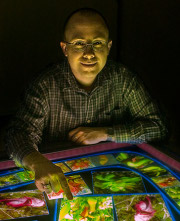
Jack van Wijk is a Full Professor in Visualization at Eindhoven University of Technology (TU/e). He holds a MSc (1982) and PhD (1986) in Computer Science from Delft University of Technology. His research focuses on information visualization, visual analytics, and mathematical visualization, with notable contributions to flow visualization and cartographic projections. He has co-authored over 160 papers and served as program co-chair for multiple IEEE Visualization conferences (2003–2023). Awards include the IEEE Visualization Technical Achievement Award (2007), Eurographics 2013 Outstanding Technical Contributions Award, and the VGTC Lifetime Achievement Award (2021). In 2023, he was honored with the Order of the Netherlands Lion. He co-founded MagnaView BV and SynerScope BV, and served as Scientific Director of the Data Science Center Eindhoven (2018–2021). Notable projects include SequoiaView (disk visualization), myriahedral projections, and IBFV (Image-Based Flow Visualization).
Thijs van de Laar is an Assistant Professor at the BIASlab (Bayesian Intelligence and Autonomous Systems Laboratory) within the Department of Electrical Engineering at Eindhoven University of Technology. His research bridges advanced computational principles with real-world applications in uncertainty modeling. Education: PhD in Machine Learning (2019), Eindhoven University of Technology MSc in Natural Sciences (2010), Radboud University Nijmegen Research Focus: Bayesian machine learning, active inference, and probabilistic programming, with applications in autonomous agent control, hearing loss compensation, and efficient real-time decision-making systems. His work integrates insights from physics and neuroscience to develop novel computational frameworks. Software Contributions: Key contributor to ForneyLab.jl, a Julia toolbox for automated Bayesian inference through message passing on factor graphs. Also developed Herring.jl, a Poisson node extension for probabilistic modeling. Publications: His 15 most recent articles focus on variational message passing, active inference agents, epistemic value in graphical models, and factor graph-based algorithm design. These works span disciplines including artificial intelligence, control theory, and biomedical engineering.
Just van Rossum (born 1966) is a Lecturer at the Royal Academy of Art, The Hague, teaching type design and programming in the Graphic Design department for both the Bachelor Graphic Design program and Master Type and Media program. As an independent type designer, graphic designer, and software developer, he bridges academic instruction with professional practice in visual communication design. Education Graduated from the Royal Academy of Art, The Hague in 1989 under Gerrit Noordzij Research Interests Type Design Typography Graphic Design Software Development for Design Computational Design Coded Animations His work pioneers the integration of programming with type design, creating influential tools that transform digital typography workflows while exploring experimental visual forms through coded animation and generative design systems. Scientific Awards Permanent collection of MoMA, New York (for FF Beowolf typeface) Collaborations and Creative Practice LettError collaboration with Erik van Blokland producing award-winning typefaces Lowlands Festival Identity project with Hansje van Halem Dailydrawbot.tumblr.com generative art initiative Academic Contributions He shapes design education through specialized instruction in type programming and experimental typography, mentoring students in the intersection of traditional design principles and computational techniques within the Graphic Design department's curriculum.
Dr. David Baneke is an Associate Professor at the History and Philosophy of Science Department of Utrecht University . His research explores the cultural and political contexts of modern science, focusing on the history of weather forecasting , astronomy and space exploration , the moral economy of international scientific cooperation , and the role of universities in society . He teaches the Master’s course History of Knowledge and supervises multiple theses annually. Research Themes : History of Weather Forecasting (1860–Present) International Science Collaboration (Large Telescopes, IAU) Dutch Space Science (Cold War, Industry Relations) Science Education and Societal Modernity Moral Economy of Scientific Expertise Scientific Awards : Teylers Gold Medal (2009) for Synthetisch Denken Guggenheim Fellowship (2010) Advising and Research : Baneke co-supervises PhD projects on postwar European science collaboration, satellite infrastructures, and statistical graphics. His recent publications analyze energy transitions, space culture, and storm warning systems. He is affiliated with Utrecht’s Descartes Centre and contributes to the Institutions for Open Societies (IOS) and Pathways to Sustainability (PtS) research programs.
Dr. David Shim is a Senior Lecturer (UD1) at the Faculty of Arts, University of Groningen, specializing in visual politics within International Relations. He holds a PhD in Political Science (International Relations) from the University of Hamburg (2012) and a Habilitation from Bundeswehr University Munich (2022). His research explores the intersection of visual media and global politics, with particular focus on comics, memorials, film, photography, and satellite imagery in geopolitical contexts. His work has examined representations of North Korea, climate activism, military recruitment, and peacebuilding practices. Key article trends show engagement with visual analysis across multiple domains: from 2013's examination of North Korean visual politics to 2024-2025 studies of climate activist visual strategies on TikTok/Instagram. He investigates how digital imagery shapes peacebuilding (2025), how satellite imagery constructs geopolitical imaginaries (2014), and how popular media like comics affect geopolitical understanding (2017). He serves on the Research Committee – Visual Politics, as Board Member for the International Political Science Association, and as Advisory Board member for the German Association for Asian Studies. His teaching focuses on International Relations theory and East Asian politics.
Martin Roa-Villescas is a Doctoral Candidate and Teaching Assistant in the Department of Electronic Systems within the Electrical Engineering school at Eindhoven University of Technology (TU/e). He also holds an external position as a Docent (Lecturer) at Fontys University of Applied Sciences since August 2023. His educational background includes a B.Sc. in Electronic Engineering from the National University of Colombia (2010) and an M.Sc. in Embedded Systems from TU/e (2013). Between 2013 and 2018, he worked as an embedded software designer at Philips Research in Eindhoven. Roa-Villescas' research focuses on probabilistic graphical models, Bayesian machine learning, and tensor network applications. His work spans both theoretical advancements in probabilistic inference algorithms and practical implementations in open-source software. He has made significant contributions to optimizing message passing algorithms and developing efficient execution schedules for Bayesian inference. His recent publications demonstrate a clear trajectory toward improving the scalability and efficiency of probabilistic inference methods, with applications spanning audio signal processing, robotics, and hearing aid technology. The development of TensorInference, a Julia package for tensor-based probabilistic inference, represents his commitment to open-source tools that advance the field. As a researcher involved in the STW Zero Autonomous Acoustic Systems project (2017-2024), he has contributed to advancing acoustic sensing technologies through probabilistic modeling approaches. His work aligns with UN Sustainable Development Goals related to technology innovation and accessibility.
Pol Grootswagers is an Assistant Professor in Nutritional Biology at Wageningen University , focusing on plant-based nutrition and muscle health during aging. His research bridges nutritional science with clinical applications through collaborations across Europe. Active in NHANES data analysis Co-promotor in multiple PhD projects Recipient of James Lind Prijs 2021 Research interests center on protein intake optimization in older adults, plant-based diet impacts , and biological aging markers . Current projects examine resistance training interventions, sustainable protein sources, and AI applications in nutritional assessment. Scientific contributions include developing the Meal Protein Quality Score tool and analyzing telomere length relationships with dietary patterns. Media frequently cites his work on omega-3's anti-aging effects and plant protein adequacy . James Lind Prijs 2021
C.F.J. Pols is a Professor in the Science & Engineering Education Group at Delft University of Technology's Faculty of Applied Sciences . Their work focuses on advancing physics education through innovative teaching methodologies, practical work design, and integration of emerging technologies like generative AI. Key areas include quantum physics education, inquiry-based learning, and assessment frameworks for scientific inquiry. Research interests span physics education innovation , student conceptual understanding , laboratory pedagogy , and maker culture integration . They have pioneered tools such as the Scientific Graphic Organizer and redesigned physics lab curricula to enhance procedural/conceptual knowledge. Recent work explores generative AI’s role in teacher training programs and quantum mechanics education through hands-on activities. Over 41 publications demonstrate contributions to educational technology, practical work frameworks, and assessment rubrics. Awards include the prestigious TUD Education Fellow (2022) for impactful teaching innovations. Active in international conferences since 2020, Pols has presented on topics like open inquiry experiments and pandemic-resilient lab courses. Media engagement includes public columns on educational resources and interactive physics books like Show the Physics .
Bram De Jonghe (born 1985 in Ostend, Belgium) is a contemporary artist who lives and works in The Hague, Netherlands. He is affiliated with the Royal Academy of Art, The Hague (KABK) as a lecturer, where he has contributed to the Bachelor Fine Arts program. De Jonghe's practice centers on sculptural interventions that transform exhibition spaces through architectural modifications and spatial reconfigurations. His educational background includes a Master's in Free Visual Arts (Sculpture) and a Master's in Visual Design (Graphic Design) from Sint-Lucas College for Science and Art in Ghent, Belgium (2003-2009). De Jonghe approaches his work from a sculptural perspective, working both on location within exhibition spaces and in his studio, with principles including the language of sculpture, molds and their negatives, isolation of actions, and associative thinking. De Jonghe's artistic methodology emphasizes that imagination should not have a fixed point but can gravitate around areas of strong interest. His work combines disparate elements to create something that 'humanizes a coded beauty,' favoring the visual residue of do-it-yourself spirituality. He embraces complex ideas that lend themselves to clumsy visualizations, positioning himself as a 'practical dreamer' who stimulates intuitive wisdom in viewers. His sculptural language flirts with the temporary by confirming the permanent, often using materials like steel, shrink-plastic, and found objects to create spatial interventions that challenge conventional exhibition experiences. Notable among his achievements is winning the Volkskrant Beeldende Kunstprijs in 2015. His exhibitions often transform gallery spaces in unconventional ways, using architectural elements that are typically considered irritants to the 'white cube' experience as significant components of his work. He has exhibited extensively across Europe, with solo shows in Antwerp, The Hague, Amsterdam, Ghent, and internationally in Moscow, Beijing, and Turin. Volkskrant Beeldende Kunstprijs (2015) As an educator, De Jonghe has served as a guest lecturer at KABK (2014, 2015), LUCA School of Arts in Ghent (2015), and the Faculty of Architecture and Engineering at TU Delft (2014). His teaching practice complements his artistic work, emphasizing the connection between conceptual thinking and material exploration. In his studio practice, De Jonghe maintains a mobile workshop with five stations for different aspects of fabrication, reflecting his hands-on approach to material and form.
Bente van Bourgondiën is a Lecturer in the Interactive Media Design (I/M/D) department at Leiden University's Academy of Creative and Performing Arts. She has been teaching coding to bachelor students at the Royal Academy of Art, The Hague (KABK), since 2016, with a focus on integrating software and hardware for interactive installations in educational and cultural environments. Affiliated with Bachelor Graphic Design and Bachelor Interactive Media Design programs Research Interests: Bente specializes in creating interactive and connected installations using technologies like touchscreens, RFID readers, and heartbeat sensors. Her work bridges technical innovation with creative applications, evolving from her background in mainframe programming to modern frontend/backend development.
Alex Clay is a Tutor at the Royal Academy of Art, The Hague (part of Leiden University), affiliated with the Bachelor Graphic Design program. Originally from Norway, he co-founded design studios Lesley Moore and Gorilla Collective , focusing on visual identities for cultural institutions and editorial design for De Groene Amsterdammer . Research & Professional Focus His work centers on creating visual identities as "new universes" that shape client narratives, collaborating with leading Dutch institutions like: Dutch National Opera & Ballet Centraal Museum Utrecht Design Museum Den Bosch He also views teaching as a "collective expedition" into the possibilities of graphic design.
Till Miltzow is an Assistant Professor in the Department of Algorithms and Complexity at the Faculty of Science, Utrecht University. His research primarily focuses on computational geometry, algorithms, and complexity theory, with particular expertise in the existential theory of the reals (ER) and its applications to geometric problems. Dr. Miltzow has established himself as a leading researcher in computational geometry, particularly known for his work on the Art Gallery Problem, where he and his collaborators proved the problem is ER-complete. His research spans a wide range of topics including geometric embeddings, Hausdorff distance computations, token swapping problems, and the complexity of various geometric decision problems. His research interests include: Computational Geometry and Algorithm Design Complexity Theory, particularly the Existential Theory of the Reals (ER) Geometric Embeddings and Representations Art Gallery Problems and Polygon Guarding Computational Topology and Shape Analysis Algorithmic Game Theory Dr. Miltzow's publications demonstrate a consistent focus on establishing the computational complexity of geometric problems, often showing ER-completeness for problems previously thought to be NP-hard. His work bridges theoretical computer science with practical geometric applications, contributing significantly to our understanding of the boundaries between tractable and intractable problems in computational geometry. Among his notable achievements is the proof that the classic Art Gallery Problem is ER-complete, which resolved a long-standing open question about the problem's complexity. His research has been published in top-tier venues including the Journal of the ACM, SIAM Journal on Computing, and proceedings of major conferences like FOCS and SoCG. Dr. Miltzow maintains an active research program with numerous collaborations across Europe and has made significant contributions to understanding the complexity landscape of geometric problems. His work has implications for computer graphics, robotics, and computer vision, where geometric decision problems frequently arise.
Jelle Koper serves as a Media & Materials tutor in the Bachelor department of Interior Architecture and Furniture Design at the Royal Academy of Art in The Hague (KABK), a position he has held continuously since 2016. Concurrently, he maintains an active professional practice as a graphic designer specializing in socially conscious branding. His educational background includes Graphic Design studies at the Royal Academy of Art in The Hague, completed prior to establishing his independent design practice in 2013. In 2020, he expanded his professional engagement by joining JUST, a design studio focused on brands contributing positively to society. Koper's research and professional practice centers on minimalist communication through bold typography and strategic reduction of visual clutter. He specializes in developing brand identities that translate core messages across print and digital media for social and cultural organizations, with particular emphasis on typographic expression and material application. This philosophy directly informs his pedagogical approach in media and materials instruction. As a tutor, Koper mentors students in the BA Interior Architecture and Furniture Design program, integrating real-world design methodology with academic curriculum. His industry experience at JUST provides students with practical insights into socially responsible design processes and professional workflows. Koper maintains dual professional affiliations: within the academic sphere at KABK's Interior Architecture and Furniture Design department, and in the professional design sector through his ongoing work at JUST studio. This hybrid career model bridges theoretical education with contemporary design practice in the social impact space.
Bart de Smit is a Professor of Algebra and Number Theory at the Mathematical Institute of Leiden University's Faculty of Science. He serves as Vice Dean and Director of Education for the Faculty of Science, where as a member of the Faculty Board he is responsible for bachelor's and master's education within the faculty. His research spans multiple domains in mathematics with a distinctive focus on: Algebraic Number Theory Geometric Transformations Mathematical Analysis of Visual Art Conformal Mappings and Symmetry De Smit is internationally recognized for his groundbreaking work on Escher's Print Gallery , where he applied mathematical principles to analyze and complete Escher's artwork that contained a mysterious blank spot. His research revealed the mathematical structure behind what's now known as the 'Droste effect' in Escher's work - a recursive visual phenomenon involving scaling symmetry. This interdisciplinary research culminated in a significant publication in the Notices of the American Mathematical Society in 2003. The publication and related work demonstrate de Smit's innovative approach that bridges pure mathematics with visual arts, using a five-step mathematical process to unravel, redesign, tile, convert, and complete Escher's work. His methodology combined complex analysis, image processing, and geometric transformations to solve what had been an artistic mystery. As an academic leader, de Smit oversees educational programs while maintaining active research involvement with the ALGANT (Algebra, Geometry, And Number Theory) program and the Intercity seminar ABC focusing on the ABC conjecture. His academic mentorship includes supervising PhD candidates such as Pavel Solomatin and Qijun Yan in advanced mathematical research.
Tobias Isenberg is a Senior Research Scientist (Directeur de recherche) at Inria's AVIZ project group in Saclay, Université Paris-Saclay. He is affiliated with the Johann Bernoulli Institute for Mathematics and Computer Science at the University of Groningen, Netherlands. His research focuses on interactive scientific visualization, illustrative rendering techniques, and human-computer interaction in non-traditional environments like AR/VR. He has pioneered methods for blending dynamic data physicalizations with virtual content and enhancing collaborative AR learning. Key contributions include machine learning-driven visualization tools for cell lineage analysis and perceptually grounded evaluation frameworks for visualizations. His work spans medical visualization, educational AR systems, and reproducibility in visualization research. He has collaborated with institutions such as the Interactive Media Lab Dresden and led projects like Naviscope (Inria) and tVISt (ANR/DFG). Recent awards include the 2024 SciVis Test-of-Time Award for his 2012 selection techniques paper and a Best Paper Award at CHI 2025 for AR transition techniques. He currently seeks a PhD student to advance interactive 3D dataset exploration methods. Notable grants include the tVISt collaboration grant (2024) and institutional funding from Inria. His lab, AVIZ, develops open-source tools like LineageD+ for biological data analysis and interactive physicalization systems. Recent publications emphasize cross-reality visualization, human-AI collaboration, and reproducibility in visualization research.