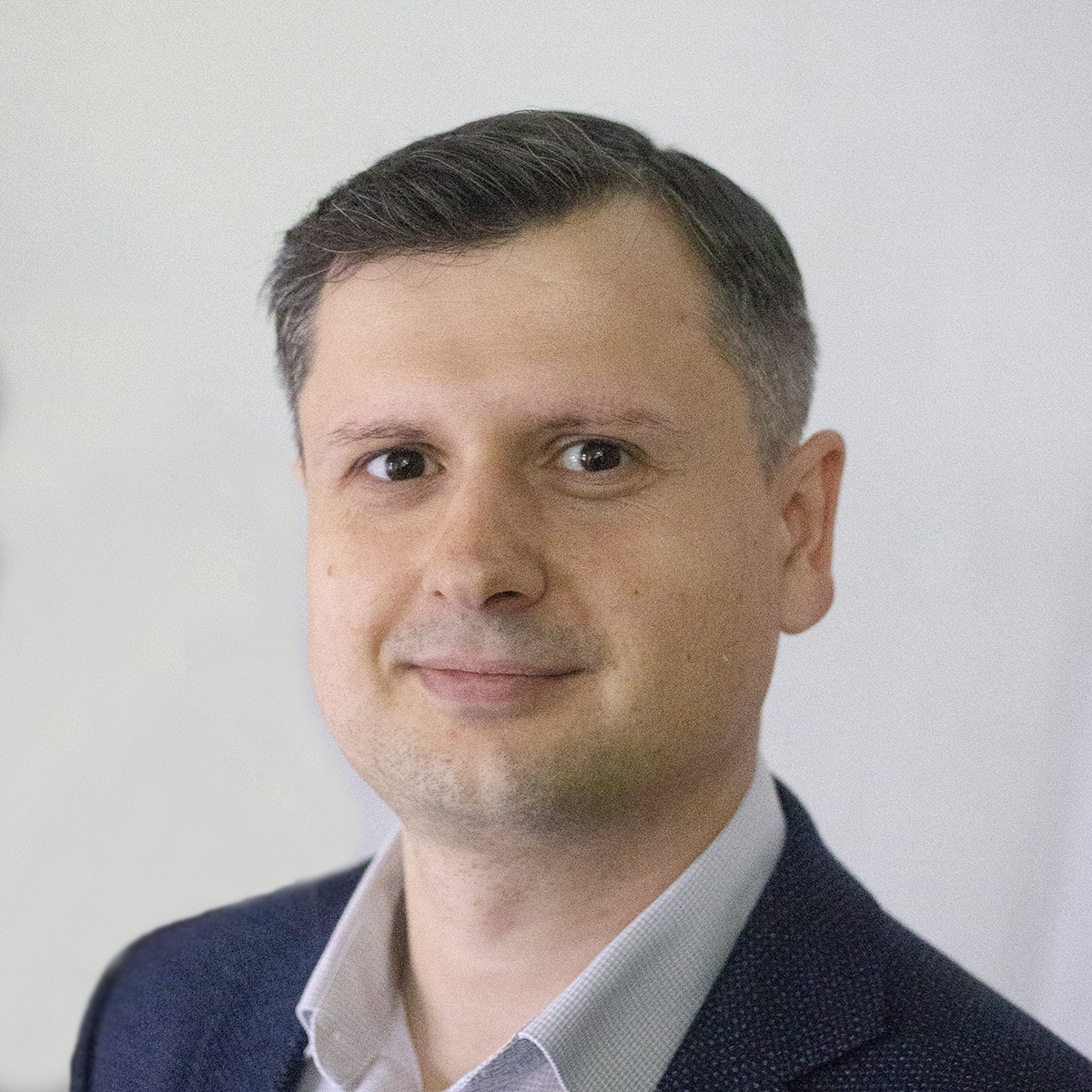
Dr. Tomasz Jurek is an Assistant Professor at the Faculty of Graphic Arts and Visual Communication, University of the Arts Poznań. He holds a PhD in Art and currently runs the 5th Graphic Arts Studio specializing in Bookbinding and Book Art. His academic roles include Vice-Dean of the Faculty of Graphic Arts since 2024 and Rector's Plenipotentiary for Education Quality for the 2024–2028 term. Active in both creative practice and education, Jurek bridges traditional craftsmanship with contemporary artistic research. Education: Poznań Academy of Fine Arts (2008), Academy of Fine Arts and Design in Bratislava (CEEPUS exchange) His research focuses on Visual Arts and Art Conservation , particularly in bookbinding and printmaking. His artistic projects like Binding Zone (2021) and LUKA! (2019) demonstrate interdisciplinary approaches combining traditional techniques with modern visual communication. Recent awards include a Highly Commendable Award for Foil Tooling at OPEN•SET 2025. Professional affiliations include membership in Group 404, the Association of Polish Bookbinders, and Designer Bookbinders. His work spans both physical book art (e.g., The First Men in the Moon binding) and digital installations, reflecting a hybrid practice that informs his teaching and administrative leadership in education quality initiatives.
Michael L. Rivera is an Assistant Professor at the ATLAS Institute and the Department of Computer Science at the University of Colorado Boulder. He leads the Utility Research Lab, a highly interdisciplinary group that invents and investigates digital fabrication technology, tools, and techniques with the goal of advancing science and engineering while positively impacting people, society, and the environment. Dr. Rivera completed his Ph.D. and M.S. in Human-Computer Interaction at the Human-Computer Interaction Institute of Carnegie Mellon University, where he was advised by Scott Hudson as part of the DevLab. Before Carnegie Mellon, he earned a M.S.E in Computer Graphics and Game Technology and a B.S.E in Digital Media Design from the University of Pennsylvania. He also previously worked as a software engineer at Facebook. His research spans the intersection of digital fabrication, human-computer interaction, and material science. Dr. Rivera's work focuses on developing novel fabrication techniques such as desktop biofibers spinning, electrospinning, and sustainable material processing with everyday waste products like coffee grounds. His research has significant implications for sustainable manufacturing, tangible interfaces, and accessible technology design. Analysis of his recent publications reveals a consistent focus on making digital fabrication more accessible, sustainable, and interdisciplinary. His work bridges computer science, material engineering, and design, with particular emphasis on open-source hardware development, computational design tools, and applications for social good. The research demonstrates a progression from fundamental fabrication techniques toward more applied, socially conscious applications. CRA/CCC Computing Innovation Fellowship Google - CMD-IT Dissertation Fellowship Carnegie Mellon University Sansom Endowed Presidential Fellowship Adobe Research Fellowship Honorable Mention Xerox Technical Minority Scholarship Dr. Rivera is currently recruiting PhD students to join the Utility Research Lab. His research has been supported by various fellowships and grants throughout his career, including industry partnerships with Google and Adobe. His work demonstrates strong potential for future funding in sustainable manufacturing and accessible technology. The Utility Research Lab, directed by Dr. Rivera, is a highly interdisciplinary research group focused on inventing and investigating digital fabrication technology. The lab has developed several notable projects including the Desktop Biofibers Spinning Machine (presented at CHI 2024), desktop electrospinning technology (CHI 2019), and systems for 3D printing with spent coffee grounds. The lab maintains an active GitHub presence with numerous open-source repositories related to their research.
Peng Wang is a researcher at Adobe, focusing on applied research in computer graphics and visual generative AI. He earned his PhD from the University of Hong Kong (HKU) under Prof. Wenping Wang and Prof. Taku Komura, with a research vision to bridge artistic creativity and technical innovation by enabling immersive, interactive environments that evoke nostalgia and humanistic care. Education: PhD in Computer Science at HKU. Professional Experience: [2018.03–2018.05] Intern at Tencent under Jiajun Yu [2019.06–2019.08] Intern at Pony.ai under Zhixin Li [2022.06–2023.05] Visiting student at NTU S-Lab under Prof. Ziwei Liu [2023.06–2023.09] Intern at Adobe Research under Dr. Kai Zhang [2023.10–2024.04] Part-time intern at VAST under Dr. Yanpei Cao Research Focus: Tools for democratizing digital content creation through generative AI and computer graphics. Contact: totoro97@outlook.com
Aneta Postek is a Lecturer in the Department of Film and Media at Solent University. She leads the Virtual Production Unit and has over 15 years of experience as a creative director, graphic designer, and virtual production practitioner. Her teaching spans media and film production, media theory, animation, and virtual production at institutions like Bournemouth University and Arts University Bournemouth. Her research focuses on philosophical dimensions of realism and formalism in film, using phenomenological approaches to analyze virtual production workflows and animatronics integration. She explores the hermeneutic aspects of communication between the film industry, TV, and creative technologies, emphasizing practitioners' perceptions of traditional and digital techniques. Aneta actively connects students with industry professionals through events and networking opportunities. She advocates for curricula aligned with industry standards and emphasizes technical skill development alongside industry collaboration. Beyond academia, she enjoys painting, scuba diving, swimming, and music. Her work bridges theoretical and practical domains, fostering innovation in virtual production and maintaining engagement with global media practices.
Anastasiia Belyaeva is an Assistant Professor in Communication Skills and Academic Writing at the Center for Strategy, Organization & Leadership at Nyenrode Business University. Her primary role focuses on developing students' critical thinking, communication effectiveness, and problem-solving skills for academic and professional settings. Previously, she served as an Assistant and Associate Professor at Zaporizhzhia National University, Ukraine, where she taught English for Business, Professional Purposes, and Academic Writing for over 15 years. Expertise: Business Communication, Language Pedagogy, Contrastive Linguistics Research Focus: Cognitive Semantics, Corpus Linguistics, Discipline-Specific Language Instruction Her teaching philosophy emphasizes equipping students with tools to navigate communication challenges in both academic and corporate environments. Belyaeva designs specialized classroom materials to bridge language competencies with professional applications in fields like graphic design and IT. She actively contributes to language education through blogs like AllProfessionalEnglish , focusing on interactive learning methods and coding for educators. Publications highlight her work in contrastive linguistics and corpus-based approaches, with notable contributions to journals like Nova filolohiya and Diacrítica . Her books provide structured curricula for graphic design students, integrating language skills with creative disciplines.
Zoe McCarthy is a Lecturer in Fashion Graphics/Fashion Media at the School of Art and Music, Solent University. Her role involves teaching and research in fashion design technologies and media applications within the creative industries. Research interests include the intersection of digital media with fashion design, graphic design methodologies in apparel, and innovative visual communication techniques. Her work focuses on contemporary practices that bridge traditional fashion disciplines with emerging digital tools. No publications or grants are listed in the provided information. She has not been noted as receiving scientific awards. No laboratory affiliations or student advising details are available in the current data.
Mai Salmenkangas is a Lecturer at Metropolia University of Applied Sciences, affiliated with the Wellbeing Team. She teaches in the English-taught Degree Program in Social Services (AMK) and the Creativity and Arts in Social and Health Fields (CRASH YAMK) programs. Her work focuses on promoting equality, language awareness, and experiential learning through creative pedagogical approaches. Salmenkangas holds a Master of Science in Sociology and demonstrates multilingual proficiency: Finnish (native), English (excellent), Swedish (good), Turkish and French (average), and basic Spanish. Her research interests include strengthening active citizenship, internationality in education, and innovative uses of online learning environments. Her publications explore themes such as gender equality tools, creative workshop design, and playful approaches to professional tasks. She has contributed to projects like 'Come on, have a nice cake!' and 'Unhurried guidance workshops,' emphasizing collaborative and inclusive methods. Her work bridges sociological theory with practical educational strategies. Salmenkangas' teaching philosophy integrates functionality with creativity, advocating for pedagogy that combines game-based learning and hands-on experiences. She actively engages in developing infographics and other visual tools to enhance educational accessibility and cross-cultural understanding.
Prof. George Tsekouras is a Professor in the Department of Cultural Technology and Communication at the University of the Aegean since 2002. His research focuses on artificial intelligence, cultural informatics, and expert systems, with over 100 publications in journals and conferences. He has contributed to projects involving machine learning fairness, blockchain sustainability, healthcare monitoring systems, and cultural heritage preservation. Research interests include AI applications in cultural heritage (e.g., 3D asset quality, art recoloring for color blindness), ethical AI in criminal justice systems, energy-efficient blockchain technologies, and environmental monitoring via machine learning. His work bridges computational methods with societal challenges, emphasizing interdisciplinary approaches. Notable trends in his publications include leveraging graph neural networks for healthcare (e.g., Parkinson’s disease monitoring), exploring ChatGPT for hospitality personalization, and developing hybrid machine learning models for disaster prediction. His contributions span technical innovation and social impact, such as improving accessibility through image recoloring algorithms and reducing blockchain’s environmental footprint. No scientific awards are listed. Advising and grants details are unavailable, but his extensive publication record indicates active research collaboration. His work often integrates cultural data with computational tools, reflecting his department’s mission at the University of the Aegean.
Matti Kurkela serves as a Staff Scientist at Aalto University's Department of Built Environment, specializing in advanced 3D measurement technologies and geospatial applications. His work integrates laser scanning, photogrammetry, and mobile mapping systems for environmental and built environment analysis. His educational background includes a Doctoral degree in Engineering and Technology from Aalto University (awarded December 30, 2022), a Licentiate degree from the same institution (December 17, 2013), and a Master's degree in Arts and Design from the University of Lapland (December 17, 2007). Research focuses on terrestrial laser scanning (100% fingerprint match), mobile mapping (50%), photogrammetry (37%), point cloud processing (34%), and vegetation analysis (31%). His work contributes to UN Sustainable Development Goals through environmental monitoring and sustainable development applications. Recent publications show strong emphasis on photorealistic visualization, educational technology, and infrastructure analysis. National Open Science Award (2019) for collaborative open data initiatives Key contributor to EU-funded projects including RADIAL (construction digitalization) and Co-creation of Autonomous Future Active in organizing academic workshops on 3D measurement technologies and has participated in international collaborations including University College London visits. His datasets on Zenodo demonstrate practical applications in lighting analysis and pavement measurement. Current research integrates laser scanning with emerging technologies for urban and environmental challenges.
Henry Smith is a Lecturer and Assistant Fabrication Manager in the Department of Design at The University of Texas at Austin. He specializes in blending traditional and modern technologies to foster holistic creative education. Since 2019, he has managed the Rob Roy Kelly American Wood Type Collection, a vital 19th-century archive used by students and faculty to explore design history. This collection deeply influences his research and commercial/personal creative work. Education: B.F.A. in Studio Art from The University of Texas at Austin (2017). Research focuses on preserving and recontextualizing historical design artifacts, particularly wood type, while advancing interdisciplinary approaches to teaching. His practice bridges material craftsmanship with contemporary digital tools. No notable scientific awards or grants are listed. His advising record is currently unspecified. The Rob Roy Kelly Collection serves as a central hub for collaborative projects and innovation in design education.
Denise Shade is an Adjunct Professor in Fashion at Albright College, where she has taught since 2006. She holds a BFA in Communication Design from Kutztown University. Her professional career spans over two decades in the graphic arts industry, including roles as a design consultant for Vigilant Internet Services and independent contractor providing graphic design services to clients like Rodale Press and Offset Impressions. She also served as Production Coordinator at William Fox Munroe, Inc. In her academic role, Denise co-teaches Fashion Communications and Apparel Product Development , focusing on developing students' technical and creative design skills through projects involving magazine layouts, retail catalogs, and advertising. She emphasizes integrating computer design tools with marketing strategies. Denise's industry experience enriches her teaching, combining practical expertise with academic instruction. Her work in graphic design for educational materials and corporate clients demonstrates her versatility across print and digital media.
Björn Hartmann is an Associate Professor in the Department of Electrical Engineering and Computer Science (EECS) at the University of California, Berkeley . His research focuses on Human-Computer Interaction (HCI) , Artificial Intelligence (AI) , and Programming Systems , with a particular emphasis on tools for design, end-user programming, and crowdsourcing systems. He is affiliated with the Berkeley Institute of Design , Jacobs Institute for Design Innovation , and CITRIS , where he explores embodied cognition in AR/VR environments through systems research. Education: Ph.D., Computer Science, Stanford University (2009) MSE, Computer and Information Science, University of Pennsylvania (2002) BSE/B.A., Digital Media Design/Communication, University of Pennsylvania (2001) His research spans creating interactive systems like 3D scene editors , crowdsourced feedback platforms , and AI-driven design tools , often combining controlled experiments with systems research . Recent publications highlight LLM applications in code design, VR-based creative workflows, and ethical frameworks for AI in art-making. His work has earned NSF CAREER and Sloan Research fellowships, as well as Best Paper awards at UIST and CHI. Key scientific contributions include developing methodologies for interactive vector graphics , asymmetric communication in VR , and AI-assisted UI feedback . He has also led educational initiatives such as the Berkeley Certificate in Design Innovation and courses like CS 160 and CS 260A .
Helen Miles is a Senior Lecturer in the Department of Computer Science at Aberystwyth University. She holds a BSc and PhD in Computer Science from Bangor University and has been with Aberystwyth since 2014, initially as a Postdoctoral Research Associate before being promoted to Lecturer in 2015. Her research is centered on visual computing, with expertise in computer graphics, virtual environments, virtual reality, visual perception, data visualization, and human-computer interaction. Research Interests: Visual Computing and Computer Graphics Virtual and Augmented Reality Data and Scientific Visualization Virtual Reconstruction Image Processing and Multispectral Imaging Applications of VR in Social and Health Contexts Planetary Science Data Analysis and Visualization Recent Research Trends: Her recent publications and projects show a strong focus on developing virtual reality tools for scientific data analysis—particularly in planetary science (ExoMars, PanCam, Enfys instruments). She has also pioneered VR applications for training in domestic abuse response and stroke rehabilitation. Her work on open-source software for multispectral image processing (PCOT) supports reproducibility in geoscience. These efforts reflect a blend of technical innovation and societal impact. Scientific Awards: Shortlisted for Times Higher Education Awards 2021 'Knowledge Exchange/Transfer Initiative of the Year' for the ESF Advanced Media Production project. Supervision and Grants: Helen supervises several postgraduate students in computer science and collaborates widely. She has led externally funded projects from the UK Space Agency, Science and Technology Facilities Council (STFC), and Welsh Government, including the £2.4m ESF Advanced Media Production initiative. She has also served as Principal Investigator on multiple research grants focused on space instrumentation and VR applications. Labs and Teams: She is a key member of Aberystwyth University’s ExoMars team and leads software operations for the Enfys instrument. She also contributes to public engagement and digital skills development through initiatives like the Institute of Coding in Wales.
Marek Oziewicz is a Professor in the Department of Curriculum and Instruction at the University of Minnesota, where he serves as Department Chair and Director of the Center for Climate Literacy. He holds the Sidney and Marguerite Henry Professorship in Children’s and Young Adult Literature, focusing on literature’s role in shaping cultural consciousness around ecological and social justice issues. His research intersects cultural work of story systems, Anthropocene literary studies, speculative fiction, and climate literacy education. As Director of the Center for Climate Literacy, he advocates for narrative-driven approaches to accelerate ecological civilization transitions. Key methodologies include cognitive literary studies, ecocriticism, and interdisciplinary education frameworks. Oziewicz’s recent work centers on climate justice narratives, wealth inequality in YA fiction, and the CLICK framework for climate literacy. His publications span journal articles, edited collections, and book chapters across environmental education, speculative literature, and trauma fiction analysis. Mythopoeic Society Scholarship Award (2010) Fulbright Senior Research Award (2005) Faculty Contribution to Honors Education Award (2017) He teaches literature-based pedagogy courses, emphasizing hands-on projects to explore narrative impacts on individual and societal transformation. His professional associations include the Association for the Study of Literature and the Environment and the International Research Society for Children's Literature.
Rachel McCoppin, Ph.D., is a Professor at the University of Minnesota Crookston in the Humanities, Social Sciences, and Education Department. Her work spans mythology, comparative literature, and ecocriticism, with a focus on gender and environmental themes. Education: B.A. (University of Michigan-Flint), M.A. (Northern Michigan University), Ph.D. (Indiana University of Pennsylvania) Research Interests : World Mythology Goddess Studies Feminism and Religion Ecocriticism Existential Literature Postmodernism Article Trends : Her publications explore intersections of mythology with gender dynamics, environmental ethics, and existential themes. Recent works analyze ecological symbolism in indigenous narratives and feminist reinterpretations of ancient deities. Scientific Awards : 2013 Horace T. Morse Alumni Association Award for Outstanding Contributions to Undergraduate Teaching 2019 Distinguished Scholar Award 2015 & 2010 Outstanding Educator Awards 2006 Most Creative Use of Technology Award 2005 Outstanding Service Learning Faculty Award