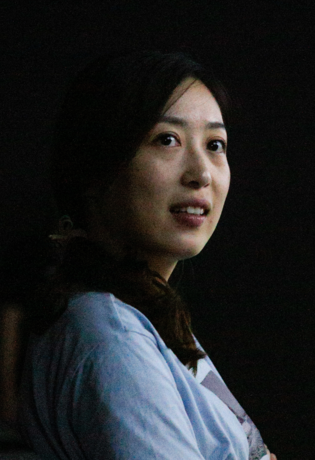
Dr. Daniel Berio is a researcher at Goldsmiths, University of London, specializing in computational models for human-like movement in digital art and robotics. His work bridges computer graphics, cognitive psychology, and robotic manipulation, focusing on stylized stroke generation, graffiti analysis, and kinematic modeling. He collaborates with Frederic Fol Leymarie and Rejean Plamondon, utilizing the Sigma Lognormal model to simulate human handwriting dynamics. Education : Doctoral thesis on AutoGraff (2021), exploring computational understanding of graffiti and calligraphy. Research Themes : Human-like motion in digital art, kinematic reconstruction from static traces, robotic graffiti generation, and perceptual fluency in aesthetic evaluation. Publications : 15+ works since 2015, spanning ACM Transactions on Graphics, British Journal of Psychology, and conferences like MOCO and IROS. Applications : Font stylization tools, synthetic graffiti generation, compliant robot control, and semantic typography systems.
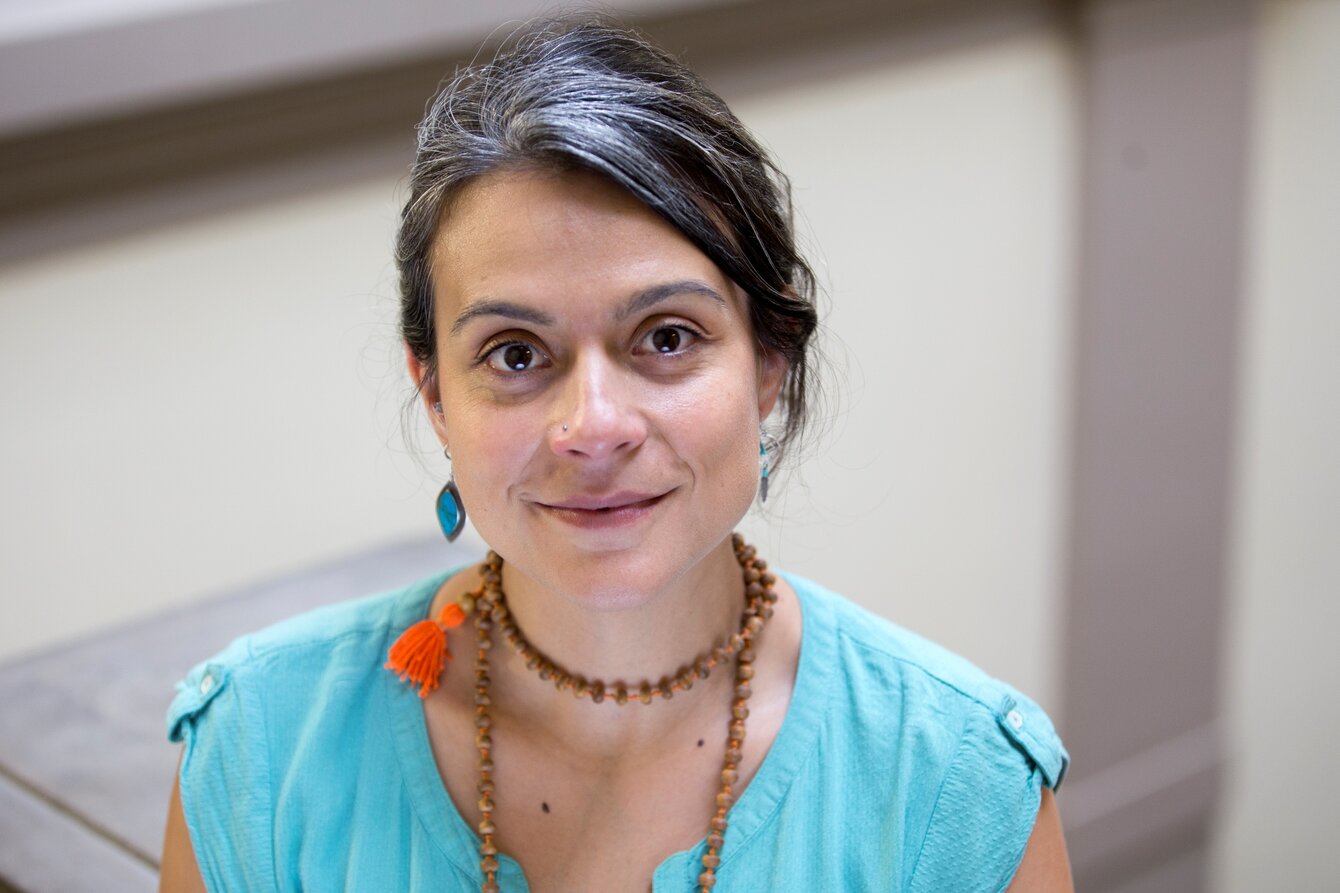
Luisa Arango is an Associate Professor at the Institute of Ethnology, Faculty of Social Sciences, University of Strasbourg, where she also serves as Director of Studies for the Bachelor's program in Anthropology and Ethnology in Distance Learning (EàD). She is based at the MISHA building and is affiliated with the SAGE Laboratory (UMR 7363). Her academic work spans research, teaching, and interdisciplinary collaboration, with a strong focus on urban anthropology and environmental issues. Her research centers on urban environments, water and land resource management, identity dynamics in cities, and the anthropology of techniques, with fieldwork conducted in the Nile Valley (Sudan) and the Colombian Caribbean. She explores themes such as urbanization processes, spatiality and power, local perceptions of climate change, and alternative ethnographic methods. Her work often engages with political ecology, interdisciplinary environmental research, and the social dimensions of nature and resources. Luisa Arango’s recent publications (2013–2024) reflect a consistent focus on hydrosocial systems, urban water governance, land appropriation, and knowledge production in Africa and Latin America. Her articles appear in journals such as Canadian Journal of African Studies , Espaces et Sociétés , Autrepart , and Sources . She has also contributed to interdisciplinary dialogues on climate change, artistic ethnography, and field drawing as research tools. Knowledge about nature in Africa Urban water management in Khartoum and Cartagena Land rights and ethnic identity in Colombia Interdisciplinary approaches to climate and urban planning Ethnographic and artistic methodologies Luisa Arango is actively involved in research networks such as WATERLAT-GOBACIT and GAIA (University of Antioquia, Colombia). She has supervised academic projects and contributed to methodological innovations in ethnographic research. She teaches courses on ethnographic methods, urban anthropology, and research forums for distance-learning students. Her work emphasizes the political dimensions of resource access, the transformative power of collective action, and the importance of integrating social and material realities in understanding urban and environmental change. She has no listed scientific awards in the provided text, but her sustained publication record and leadership roles indicate significant scholarly impact. She is also engaged in public-facing research, including graphic works and documentaries on anthropological practice.
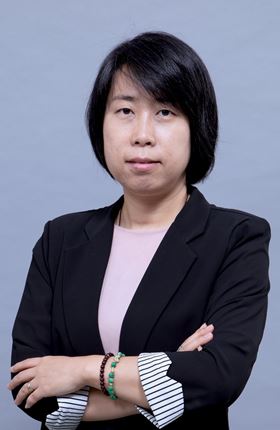
Prof. Yan Tina Luximon is a Full Professor and Associate Dean (Research) at the School of Design, The Hong Kong Polytechnic University. She chairs the School Research Committee, leads the Asian Ergonomics Design Lab, and serves as Deputy Discipline Leader for BA (Product Design). Her work bridges ergonomics, AI design tools, and 3D human modeling in cross-cultural contexts. Education: PhD in Ergonomics from The Hong Kong University of Science and Technology Research interests span Ergonomics in product design 3D digital human modeling for AI applications Anthropometry and cultural design differences Statistical modeling for head/face product development Human-computer interaction and AI visualization Recent publications focus on AI-enhanced 3D head modeling, ergonomic healthtech products, and cross-cultural design psychology, with applications in robotics, mobile technology, and medical devices. Scientific awards include: Gold Medal with jury congratulations at Geneva Inventions 2024 Silver Award at IDEA 2023 for adaptive eyewear design Best Innovation Award at ACED Japan 2017 She supervises postgraduate research and leads projects funded by the General Research Fund (RGC GRF) and Laboratory for AI in Design, including AI Powered Ergonomic Product Design (2025) and 4D Head Movement Prediction (2024).
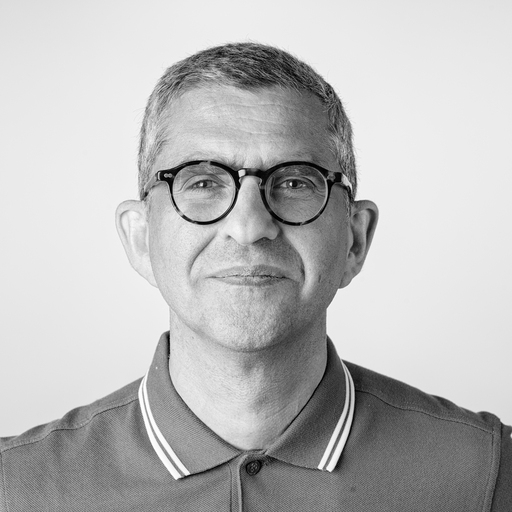
Dr. Paul Ruvolo is a Professor of Computer Science at Olin College in Needham, MA. His research focuses on developing assistive technologies for people with sensory and motor impairments, leveraging machine learning, robotics, and computer vision. He holds a Ph.D. and M.S. in Computer Science and Engineering from the University of California San Diego, and a B.S. in Computer Science from Harvey Mudd College. Key research areas include creating systems that learn through imitation and experience, such as navigation aids for the visually impaired and educational tools for orientation and mobility. He leads projects like Co-Designing Assistive Apps with Students Who Are Blind, emphasizing participatory design. His work integrates Bayesian statistics, numerical optimization, and linear algebra to solve complex sensorimotor tasks. Education: Ph.D., Computer Science and Engineering, UC San Diego M.S., Computer Science and Engineering, UC San Diego B.S., Computer Science, Harvey Mudd College Awards: NSF IGERT Fellowship for 'Learning and Vision in Humans and Machines' Recent publications highlight innovations in AR navigation systems, smartphone-based SLAM for indoor environments, and educational tools for blind users. His work bridges computational methods with real-world accessibility challenges, emphasizing interdisciplinary collaboration and user-centric design. Dr. Ruvolo’s lab, linked at occam.olin.edu , focuses on assistive technologies. He actively contributes to Teach Access and other initiatives promoting inclusive technology education. His research has applications in robotics, healthcare, and educational technology.
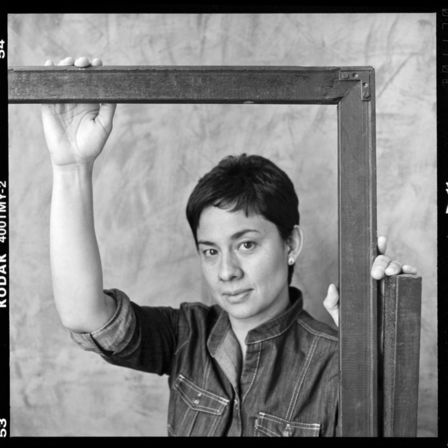
Tania de León Yong is a Mexican visual artist and academic currently serving as Assistant Professor in Experimental Animation at the Academy of Media Arts Cologne (Kunsthochschule für Medien Köln) while also holding a tenured professorship at the Faculty of Arts and Design (FAD UNAM) in Mexico City. Her career spans institutions including Universitat Jaume I (Spain) and Tecnológico de Monterrey (ITESM). Bachelor's in Visual Arts (UNAM) Master's in Multimedia Internet Production (UPV Spain) PhD in Fine Arts (UPV Spain 2005) Master's in History of Art (UNAM) As a specialist in experimental animation theory and practice, her work explores time perception through installations and films using traditional techniques like engraving alongside emerging technologies like VR. She has exhibited in 11 solo shows and over 50 collectives across Canada, Germany, Mexico, and other countries. Key publications include 2020 research on VR drawing and 2017 analyses of Kentridge/Yamamura's work. Her 2018 award-winning Chronography series investigates temporal structures through animation loops and interactive installations. Grants include PAPIME UNAM for VR environments and PECDAT 2019 for artistic books. Scientific Awards: 2013 National Acknowledgment for Young Academic (UNAM) 2018 International Silent Film Festival Experimental Prize She has mentored over 25 animation students in postgraduate programs and developed educational media for Mexico's National University Open Learning platform. Her research bridges traditional media like etching with digital innovation, focusing on expanded animation formats and temporal storytelling.
Dr Gregory Leplatre serves as a Lecturer at Edinburgh Napier University's School of Computing Engineering and the Built Environment. He is actively involved with two major research groups: the Centre for Interaction Design and the Centre for Algorithms, Visualisation and Evolving Systems. His work spans across multiple interdisciplinary domains where technology meets human experience. Leplatre's research interests focus on the intersection of sound, visualization, and human interaction. He has made significant contributions to audio-visual interface design, particularly in developing tools that translate sound into visual representations through cymatics. His work extends to therapeutic applications, especially in using real-time 3D graphics to enhance music therapy sessions for individuals on the autism spectrum. Leplatre also investigates speech articulation, soundscape mapping, and multimodal interfaces that create natural cross-modal mappings between visual inputs and sound synthesis. His publication record reveals a consistent trajectory exploring how visual representations of sound can enhance user experience and therapeutic outcomes. Over the past decade, his research has increasingly focused on therapeutic applications for autism spectrum disorder, while maintaining strong foundations in sound synthesis techniques and interface design principles. The work demonstrates a progression from theoretical exploration of audio-visual correspondences to practical implementations with real-world impact. As an academic supervisor, Leplatre has directed or co-supervised numerous doctoral projects, including research on sketching interfaces for sound synthesis, real-time 3D graphic augmentation of music therapy, and emotion recognition in conversational agents. His grant portfolio includes projects like 'Micro-phonics' funded by the Scottish Funding Council and 'Personalisation and the ATM' funded by Innovate UK, demonstrating his ability to secure research funding across different domains. Within the Centre for Interaction Design and the Centre for Algorithms, Visualisation and Evolving Systems, Leplatre contributes to a vibrant research ecosystem focused on creating meaningful human-computer interactions through innovative visualization and sound techniques. His work bridges artistic expression with technical innovation, creating tools that make sound visible and tangible for both therapeutic and creative purposes.
Prof. Svetoslav Kosev is a faculty member at the Faculty of Fine Arts of the University of Veliko Tarnovo St. Cyril and St. Methodius. His research bridges computer technology with visual arts , focusing on 3D modeling , digital media , and interactive art . He actively explores the ethical implications of AI in art and integrates augmented reality into classical graphic works. Fields of Interest : Computer technology in fine arts, 3D graphics, interactive multimedia, digital humanities Projects : Founder of the annual Vision Forum for 3D graphics, leader in digitization initiatives, and developer of digital art platforms Research Focus : Kosev investigates how digital tools like AR and 3D printing transform traditional art practices. His work spans artistic innovation and educational technology , particularly in training future artists through interdisciplinary methods . Google Scholar entries reflect his engagement with AI ethics , algorithmic art , and technological aesthetics . Publications highlight collaborations between Bulgarian and Polish institutions , with applications in VR technologies , calligraphy , and interactive visual works . He has contributed to academic discourse through edited volumes and conference proceedings.
Dr. Wenyu Guo serves as Assistant Professor of Literacy Studies in the College of Education at the University of South Florida, specializing in transnational literacy practices of immigrant youth of Color and their families. Her community-engaged research promotes anti-oppressive multiliteracies education across schools, homes, and digital spaces using critical theories of literacy and decolonization frameworks. Her educational background includes: Ph.D. in Teaching & Learning, University of South Carolina Certificate of Graduate Study in Qualitative Research, University of South Carolina Dr. Guo's research centers on two primary goals: (1) examining how transnational youth of Color engage in sociopolitical learning through literacies, and (2) investigating immigrant parents' family literacy practices and ethnic-racial socialization. She employs participatory action research and multi-sited ethnography to develop justice-oriented literacy interventions that challenge systemic oppression in educational contexts. Her recent publications reveal consistent thematic focus on anti-Asian racism through children's literature, transnational family literacy, and multiracial solidarity development. Methodologically, her work combines critical discourse analysis with community-based participatory design, often centering Chinese American communities in the Southern U.S. and leveraging digital platforms for transnational knowledge exchange. Professional recognition includes: Early Career Educator of Color Leadership Fellow, NCTE (2024-2025) Outstanding Undergraduate Teaching Award, USF (2025) Outstanding International Graduate Student Award, USC (2023) Research funding comprises: ACTFL Research Grant (2023) : Co-PI for $5,000 project on antiracist translanguaging pedagogy using Asian American children's literature SPARC Graduate Research Grant (2020) : PI for $2,900 study on Asian American children's bicultural identity negotiation She co-founded Tampa Bay's Community Literacies Lab, providing biweekly workshops for immigrant families that integrate cultural storytelling, digital literacy, and critical race discussions to foster equitable language practices and unpack transnational experiences.
Assoc. Prof. Kalina Hristova is a dedicated academic and artist at New Bulgarian University's School of Arts and Design, serving in the Department of Fine Arts. With a robust background in visual arts and graphic design, she has established herself as a significant figure in Bulgaria's contemporary art scene through both scholarly work and extensive exhibition participation across Europe. Her expertise spans visual communication, digital media in art education, and the social impact of artistic expression. Dr. Hristova's academic journey reflects deep commitment to artistic excellence: 2017: Achieved the academic title of "Associate Professor" in Visual Arts (Graphic Design, Graphics, and Illustration) 2014: Appointed "Senior Assistant" in Visual Arts 2012: Earned her Doctorate with dissertation "Photography and Drawing in Advertising Posters" 2003: Master's degree in "Graphic and Spatial Design" from New Bulgarian University 2002: Bachelor's degree in "Graphics" from National Academy of Art Her research explores the intersection of traditional art forms and digital technologies, with special focus on poster design as a medium for cultural communication and social commentary. Dr. Hristova examines how visual elements impact audience perception in urban environments and digital spaces, bridging theoretical understanding with practical applications in advertising, branding, and social issues. Her work consistently addresses contemporary challenges in creative industries and art education. Analysis of her recent publications reveals growing emphasis on art-technology intersections, particularly examining AI's impact on creative industries, digital communication strategies in visual arts, and artistic adaptation during global crises. Her scholarship demonstrates how visual communication transcends traditional boundaries while addressing pressing social and technological issues through both theoretical frameworks and practical applications. Dr. Hristova has held significant administrative roles including Erasmus Coordinator for the Department of Arts and Design, member of the Master's Faculty Council, and served as Department Head from 2020-2024. Her extensive exhibition record demonstrates active engagement with the art community, with over 100 solo and group exhibitions across Bulgaria, Romania, Austria, France, and Iceland. She has participated in numerous international residencies including Cite Internationale Des Arts in Paris and collaborative projects like "Postcards for Seyðisfjörður" in Iceland. Her professional engagement extends to membership in the Bulgarian Section of Graphic Design and The International Society for Education Through Art (InSEA), demonstrating commitment to advancing art education and practice nationally and internationally. Dr. Hristova currently teaches Visual Corporate Identity and maintains active creative practice alongside her academic responsibilities, with exhibitions scheduled through 2025.
Tem Frank Andersen is a Teaching Associate Professor at Aalborg University’s Department of Communication and Psychology, within the Faculty of Social Sciences and Humanities. His research focuses on digital leisure, encompassing comic books, e-sports, and superhero cultures, analyzed through media theory, fandom studies, and ideology critique. He leads projects like ‘Digital consumer culture & mental health’ and ‘ComixCraft’, emphasizing interactive media and experience design. His work intersects with UN Sustainable Development Goals related to climate awareness and cultural sustainability. Education: PhD in ICT and Learning (Youth and Computer Culture, 2006). Key research areas include digital media’s role in youth culture, sports technology, and climate discourse. He has published over 279 works, including articles on comics as climate communication tools and the psychological impacts of lightsaber fencing. Research interests span media ethnography, play theory, and the domestication of technology. His projects often bridge academia and public engagement, such as the ‘DiFUA’ initiative for digital research dissemination. He is affiliated with the InDiMedia Centre and the SSH Children and Youth Research Network. Recent activities include guest lectures on lightsaber fencing’s mental health benefits and peer reviews on animation challenges. Media contributions address societal issues like social media’s impact on youth and cultural preservation.
Sarah Goodwin is an academic affiliated with Monash University in Australia, specializing in data visualization, immersive analytics, and human-computer interaction. She holds a PhD in Visualisation for Household Energy Analysis from City University London (2015). Her research focuses on developing innovative visualization techniques for complex data, particularly in energy systems, healthcare, and geographic information. Key contributions include the Australian Cancer Atlas project (2024), which addressed geostatistical uncertainty visualization, and work on mixed-reality technologies embedding human values (2025). She collaborates extensively with researchers like Tim Dwyer and leads the Data Visualisation and Immersive Analytics Research Lab at Monash. Her publications span journals like IEEE Transactions on Visualization and Computer Graphics and conferences such as CHI and IEEE VAST. Research highlights include gaze analytics tools (VETA), tangible immersive systems (Uplift), and energy consumption visualization frameworks.
Maziar Raein is an Associate Professor at the Oslo National Academy of the Arts (KHiO) , specializing in Graphic Design and Methodology. He holds a BA (Hons) in Fine Art and an MA in Independent Film from Central Saint Martins (CSM). Before moving to Oslo, he taught on the BA Graphics course at CSM, leading the Context programme, and founded Codex Design, a brand identity agency that worked with companies like Lastminute.com. Research Focus : Visual and spatial ability, reflective practice, typographic archives, and audience engagement in music performance. Leadership Roles : Director of KHiO's Typographic Archive and Senior Advisor in Research at CEMPE (Centre of Excellence in Music Performance Education). His publications and projects explore interdisciplinary methodologies, asemic writing, and craftsmanship. Recent work includes the Radical Interpretations research program reinterpreting musical works for percussion. Scientific Contributions : Co-developed the landmark Writing-PAD project with Julia Lockheart. Recognized by HEFCE-FDTL for advancing creative writing models in art & design.
Dr. Can Liu is an Assistant Professor at the School of Creative Media, City University of Hong Kong, where she leads the ERFI Lab (Laboratory of Empirical Research for Future Interfaces). Her research focuses on designing future interfaces for ubiquitous technologies through empirical understanding of human cognition and behavior, with emphasis on multimodal interaction combining physical and digital elements. Education: PhD in Human-Computer Interaction, Université Paris-Sud (France), INRIA labs ex)situ and ILDA MSc in Media Informatics, RWTH Aachen University (Germany) Dr. Liu's research spans three primary domains: AI-assisted Input (using LLMs/NLP to enhance text manipulation and speech interfaces), Spatial Computing (multimodal interfaces for AR/VR and large displays), and Hybrid/Remote Collaboration (supporting intuitive remote interaction through understanding collocated collaboration). Her work integrates empirical user studies with real-world system deployments in public spaces. Recent publications demonstrate strong trends toward LLM-integrated interfaces, wearable computing applications, and novel interaction techniques for foldable devices. Her team consistently publishes at top venues including CHI, UIST, and CSCW, with increasing focus on practical AI integration for everyday tasks. Awards and Recognition: Best Paper Award at ACM CHI 2014 (top 1%) Honourable Mention at ACM CHI 2012 (top 5%) Dr. Liu actively mentors PhD students and researchers while securing substantial research funding including Google Faculty Research Awards, National Natural Science Foundation grants, and RGC Early Career Schemes. She serves on numerous program committees including ACM CHI (Associate Chair 2024, 2022, 2021, 2020, 2019, 2017) and co-organizes research initiatives like the HCIX Summer Research Program. Her laboratory ecosystem includes the ERFI Lab, affiliation with the Augmented Materiality Lab and Kowloon Interaction Center, and active participation in the Greater Bay HCI community, supporting both fundamental research and industry collaboration with partners including Google, Huawei, and Lenovo.
Brian Cairns is a Senior Lecturer and Programme Leader for Postgraduate Communication Design at The Glasgow School of Art (GSA). His academic work bridges illustration, design education, and cultural studies, with leadership roles including directing the Communication Design postgraduate program. He actively contributes to interdisciplinary research through the Offset Research Cluster, which exhibited work in the 2023 'Offset Research Cluster Work in Progress Exhibition'. His research explores cultural inclusion in education, agile adaptation strategies during crises, traditional craftsmanship in digital contexts, and critical pedagogy in studio environments. Key themes include internationalization of curriculum design, reflective teaching methodologies, and the evolution of illustration as a discipline. Publication analysis reveals consistent focus on: cultural diversity in design education (2021-2023), illustration pedagogy fundamentals (2020), and industry-responsive artistic practice (2015-2018). Recent outputs emphasize pandemic-era educational innovation and cross-cultural teaching frameworks. Awards and honors include: Society of Illustrators of New York Gold Medal (2004) Art Directors Club of New York recognitions (2003, 2004) D&AD Global Awards (2006, 2010) American Illustration annual inclusions (2004, 2009, 2010) 3x3 International Awards (2011) Creative Review Annual Awards (2003-2004) He leads research initiatives and exhibitions, notably coordinating the Post-it Show series (2015-2019) and contributing to the 2018 '20 Years of Penguin Essentials' exhibition at Ditchling Museum.
David Hovemeyer is an Associate Teaching Professor at the Whiting School of Engineering, Johns Hopkins University . He holds a PhD (2005) and MS (2001) in Computer Science from the University of Maryland and a BA (1994) from Earlham College. Prior to joining JHU in 2019, he taught at Vassar College and York College of Pennsylvania. Education : PhD, MS, and BA in Computer Science Research : Focuses on static analysis , systems software , and computer science education Projects : FindBugs, CloudCoder, ProgSnap2, FunWithSound His recent work includes frameworks for declarative autograders , formats for programming process data , and tools for educational software development . He has been recognized with Excellence in Teaching Awards and contributes to open-source educational platforms like GitHub. Scientific Awards : 2024 Whiting School Teaching, Advising, and Mentoring Award Excellence in Teaching Award (multiple years) David maintains an active role in the academic community through peer instruction , programming contests, and recommendation letter advising . He also develops tools like FreePoll and Declarative Autograder Framework to enhance teaching efficiency.