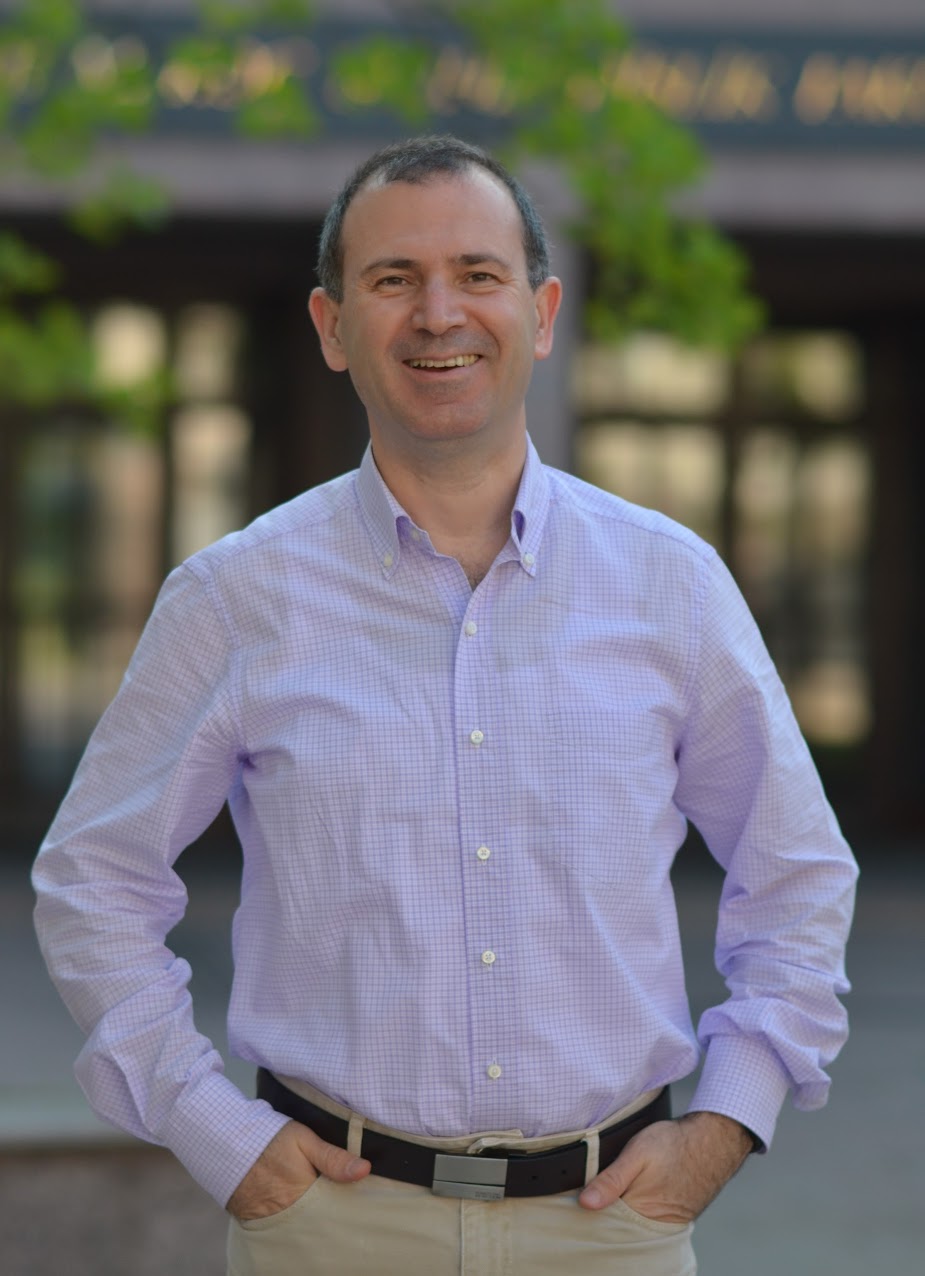
Engin Erzin is a Professor at Koç University's College of Engineering, leading the KUIS AI Lab and Multimedia, Vision and Graphics Lab . His research focuses on AI-driven human-centric systems, affective computing, and multimodal interaction analysis. He has contributed extensively to robotics, speech processing, and human-robot interaction through over 70 peer-reviewed publications since 2008. Research interests include: Affective computing and emotion recognition from speech/gestures Human-robot interaction and socially engaging agents Speech-driven animation and gesture synthesis Multimodal data fusion for interaction analysis Deep learning applications in robotics and biomedical engineering Recent work emphasizes: Developing adaptive pHRI controllers for manufacturing tasks Creating engagement measurement frameworks for human-machine interfaces Advancing Turkish speech recognition through self-supervised learning Designing multimodal databases for interaction studies Labs: KUIS AI Lab : Focuses on AI applications in robotics and human-computer interaction Multimedia Lab : Specializes in vision, graphics, and audiovisual analysis
Prof. Helmut Grabner is a Professor at the Zurich University of Applied Sciences (ZHAW), leading the Visual Intelligence and Applications Group and the Entrepreneurship initiatives within the School of Engineering. His work bridges computer science, medical technology, and visual communication, with a focus on Extended Reality (XR), surgical training simulations, and AI-driven decision making. Education: PhD in Computer Science (Graz University of Technology, 2008), Master's in Computer Science (2008), and a Certificate of Advanced Studies in Higher Education (ZHAW, 2021). Prior to academia, he held roles including CTO at Logitech and co-founder of upicto, applying computer vision in industry and startups. Research spans augmented reality medical training tools, NMR spectrum analysis via deep learning, and understanding visual engagement in advertising. Awards include the prestigious Koenderink Prize (2018) for contributions to computer vision. Projects include Immersive Education frameworks, bias-mitigation in venture capital algorithms, and surgical proficiency measurement systems. Teaching includes courses on Visual Computing, Machine Learning, and Deep Learning. His work integrates academic research with practical applications in healthcare, education, and entrepreneurship.
Siamak Ravanbakhsh is an Associate Professor at McGill University's School of Computer Science and a Canada CIFAR AI Chair at Mila. His research focuses on machine learning, particularly representation learning with an emphasis on geometry, symmetry, and probabilistic inference. He has held academic positions at the University of British Columbia and was a postdoctoral fellow at Carnegie Mellon University. Education: B.Sc. in Computer Science, Sharif University of Technology M.Sc. and Ph.D. in Computer Science, University of Alberta (supervised by Russ Greiner) Postdoctoral Fellowship at Carnegie Mellon University (with Barnabás Póczos and Jeff Schneider) His research interests span geometric deep learning, equivariant networks, reinforcement learning, and AI for scientific applications. Notable contributions include work on symmetry-aware models, diffusion processes, and equivariant representation learning. Publications highlight advancements in causal abstraction, diffusion-based anomaly detection, and equivariant architectures for crystals and hierarchical structures. His work often bridges theory and application, emphasizing symmetry principles. Advising & Grants: Supervised over 20 graduate students and postdocs, including recent PhD graduates Daniel Levy and Mehran Shakerinava Active in mentoring M.Sc. and internship students He contributes to academic leadership roles at Mila and McGill, fostering interdisciplinary collaborations in AI research.
MICHEL SANNER is a Professor of Molecular Biology at the Department of Integrative Structural and Computational Biology at Scripps Research. He holds a PhD in Computer Science from the University of Haute Alsace, France (1992). His research focuses on computational methods for molecular interactions, molecular graphics, and component-based software development. Notable contributions include the AutoDock suite (for molecular docking), PMV (a molecular visualization environment), and Vision (a visual programming tool). His research group develops tools like AutoDock CrankPep for peptide docking and F2Dock for protein-protein interactions. These tools are widely used in drug discovery and structural biology. His work emphasizes software engineering principles to create adaptable computational pipelines for analyzing macromolecular structures and simulating interactions. Publications span topics like peptide-docking methodologies, ligand-binding site prediction, and GPU-accelerated docking algorithms. His articles highlight advancements in computational methods for understanding protein-ligand interactions, with applications in anticoagulant research and HIV/FIV protease inhibition. Collaborations include work with Arthur J. Olson and David S. Goodsell on docking methodologies.
Dana S. Nau is a Professor in the Department of Computer Science and a member of the Institute for Systems Research at the University of Maryland. He is renowned for his contributions to automated planning and game theory, including landmark algorithms like SHOP and foundational studies on game-tree pathology and strategic planning in computer bridge. With over 500 refereed publications and an H-index of 61, his work bridges theoretical computer science and practical applications in multiagent systems and evolutionary game theory. His research interests include hierarchical task network (HTN) planning, Bayesian network inference techniques, and the evolution of social norms through evolutionary game theory. Recent work focuses on spatial evolutionary games, surrogate Bayesian models, and strategic communication in multiagent environments. Awards: AAAI Fellow (202?), ACM Fellow (202?) Key Collaborations: Co-authored papers with leaders like Malik Ghallab (LAAS-CNRS), Satyandra K. Gupta (USC), and Vincent Hsiao (Bayesian networks research). Grants/Advising: Supervised students including Sunandita Patra (17+ joint papers) and Ruoxi Li, contributing to HTN planning and reinforcement learning advancements. His labs and research teams actively explore AI planning systems, probabilistic reasoning, and the intersection of game theory with social science phenomena like gossip evolution.
Bert de Vries is a Professor at the Signal Processing Systems Group at Eindhoven University of Technology (TU/e), where he has been employed since January 2012. He maintains a dual career, also working at GN Hearing in the hearing aids industry since April 1999, where he holds both research and managerial roles. His academic journey began at TU/e, where he earned his MSc in Electrical Engineering in 1986, followed by a PhD from the University of Florida in 1991. Between 1992 and 1999, he worked at Sarnoff Research Center in Princeton, NJ, contributing to diverse signal and image processing projects. Professor de Vries's research centers on Bayesian Machine Learning, with particular focus on the Free Energy Principle and its applications to engineering problems. His work bridges theoretical neuroscience with practical signal processing systems, especially in biomedical applications. He directs the BIASlab research team at TU/e, which develops probabilistic programming tools including RxInfer.jl, ForneyLab.jl, GraphPPL.jl, ReactiveMP.jl, and Rocket.jl. His research spans active inference, variational message passing, probabilistic programming, and Bayesian neural networks, with applications ranging from hearing aids to multi-agent systems. Analysis of his recent publications reveals a strong trend toward practical implementations of Bayesian inference frameworks, particularly through Julia-based probabilistic programming tools. His work shows increasing focus on active inference applications, message passing algorithms, and the intersection of Riemannian geometry with probabilistic modeling. The research demonstrates consistent progression from theoretical foundations toward real-world engineering applications, particularly in biomedical signal processing and autonomous systems. Professor de Vries teaches a graduate-level course on Bayesian Machine Learning at TU/e and actively contributes to open-source software development through his GitHub profile (bertdv), with recent activity as recent as August 2025. His research team has developed several influential probabilistic programming libraries that have gained significant attention in the machine learning community. The BIASlab research group continues to advance the state of the art in Bayesian inference methods with applications in hearing technology, robotics, and signal processing.
Stuart Shieber is the James O. Welch, Jr. and Virginia B. Welch Professor of Computer Science in the School of Engineering and Applied Sciences at Harvard University. He is a prominent researcher in computational linguistics and natural language processing, with significant contributions across multiple related fields including theoretical linguistics, computer-human interaction, automated graphic design, and the philosophy of artificial intelligence. Professor Shieber's research interests focus primarily on computational linguistics, examining natural language from the perspective of computer science. His work spans scientific and engineering goals, utilizing foundational formal and mathematical tools. He has made significant contributions to grammar formalisms, psycholinguistics, semantics, and synchronous grammars with applications in machine translation and sentence compression. Beyond computational linguistics, his research extends to automatic layout of charts and maps, novel interaction techniques for document reading and diagram layout, online auction mechanisms, library book access prediction, biological evolution tree reconstruction, and the philosophical basis for Turing's test for machine intelligence. His recent publications demonstrate a continued focus on neural language models, syntactic agreement mechanisms, readability assessment, conversational understanding, and bias detection in language models. His research has evolved from traditional grammar formalisms to incorporate modern neural network approaches while maintaining a strong theoretical foundation. The trend shows increasing attention to ethical considerations in NLP, particularly around bias detection and mitigation, alongside continued theoretical work on language structure. Presidential Young Investigator award (1991) Presidential Faculty Fellow (1993) John L. Loeb Associate Professorship in Natural Sciences (1993) Harvard College Professorship (2001) Fellow of the American Association for Artificial Intelligence (2004) Fellow of the Association for Computing Machinery (2014) Fellow of the Association for Computational Linguistics (2017) Professor Shieber has advised numerous PhD students who have gone on to successful careers at institutions including UCSD, Cornell University, Microsoft Research, Google, and various academic institutions. His work on open access and scholarly communication policy, particularly his development of Harvard's open-access policies, led to his appointment as the first director of the university's Office for Scholarly Communication. He is also the founding director of the Center for Research on Computation and Society and a faculty co-director of the Berkman Center for Internet and Society. His laboratory work has focused on advancing computational linguistics through both theoretical and applied research, with numerous patents and co-founding of Cartesian Products, Inc., a high-technology research and development company. His future work appears to be focusing on the intersection of neural network approaches with traditional linguistic theory, particularly in understanding and mitigating bias in language models, while continuing his long-standing interest in the theoretical foundations of language processing.
Christopher Bishop is a Microsoft Technical Fellow and Director of Microsoft Research AI for Science, concurrently serving as Honorary Professor of Computer Science at the University of Edinburgh and Fellow of Darwin College, Cambridge. His distinguished career spans theoretical physics, neural computing, and leadership in AI research. Fellow of the Royal Academy of Engineering (2004) Fellow of the Royal Society of Edinburgh (2007) Fellow of the Royal Society (2017) Founding member of UK AI Council Member of Prime Minister's Council for Science and Technology (2019) Delivered Royal Institution Christmas Lectures (2008) His research focuses on probabilistic models and machine learning, with significant contributions to AI for scientific discovery. Bishop pioneered the concept of the fifth paradigm of scientific discovery , where AI transforms traditional research methodologies across natural sciences. His work bridges theoretical computer science with practical applications in fusion energy, materials science, and computational biology. Analysis of his recent publications reveals a strategic shift toward AI-driven scientific infrastructure , with emphasis on machine learning foundations that endure technological evolution. His 2024 textbook became Springer Nature's top-selling publication, demonstrating exceptional impact in both academic and industrial contexts. Deep Learning: Foundations and Concepts (2024) Pattern Recognition and Machine Learning (2006) Neural Networks for Pattern Recognition (1995) Bishop leads Microsoft's global AI for Science initiative, establishing research teams in Berlin and coordinating interdisciplinary projects that apply machine learning to climate science, fusion energy, and molecular biology. His leadership in the Prime Minister's Council shapes national AI strategy while maintaining active engagement in public science communication through lectures and media appearances.
Peter Kazanzides is a Research Professor in the Department of Computer Science at the Whiting School of Engineering, Johns Hopkins University, where he joined the faculty in 2002. His research focuses on robotics, medical robotics, augmented reality, and computer-assisted interventions with primary applications in computer-integrated surgery. His educational background includes multiple degrees from Brown University: ScB (1983) in Electrical Engineering AB (1983) in Computer Science ScM (1985) in Electrical Engineering ScM (1987) in Applied Mathematics PhD (1988) in Electrical Engineering Kazanzides is a member of the Robotics, Vision, and Graphics research group and directs the Sensing, Manipulation, and Real-Time Systems (SMARTS) laboratory. His work spans surgical robotics, mixed reality, and systems engineering, with emphasis on computer-assisted surgery in extreme environments including minimally invasive surgery, microsurgery, and space teleoperation. The SMARTS lab develops real-time sensing systems, augmented/mixed reality interfaces using head-mounted displays, high-performance motor control, and sensor fusion technologies, with strong focus on system integration and open-source platforms like the da Vinci Research Kit (dVRK). Analysis of his recent publications (2024-2025) reveals dominant trends in surgical robotics autonomy, augmented reality navigation, force estimation, and digital twin technologies. Key themes include AI-driven task automation, haptic feedback enhancement, real-time instrument segmentation, and simulation environments for surgical training, primarily leveraging the da Vinci Research Kit framework. As director of the SMARTS lab within the Laboratory for Computational Sensing and Robotics (LCSR), Kazanzides leads a collaborative ecosystem including the Computer Integrated Interventional Systems (CIIS) Lab, Advanced Medical Instrumentation and Robotics (AMIRO) Lab, Dynamical Systems and Controls Lab (DSCL), Computer Aided Medical Procedures (CAMP) Lab, Medical UltraSound Imaging & Intervention Collaboration (MUSiiC) Lab, and Photoacoustic & ULtrasonic Systems Engineering (PULSE) Lab. His lab maintains responsibility for the development and support of the open-source da Vinci Research Kit, a critical resource for surgical robotics research worldwide.
Bo Chen is a Professor in the Department of Mechanical Engineering – Engineering Mechanics and the Department of Electrical & Computer Engineering at Michigan Technological University. She directs the Intelligent Mechatronics and Embedded Systems (IMES) Laboratory, focusing on advanced controls, optimization, and artificial intelligence for connected and autonomous vehicles, electric vehicle–smart grid integration, and smart mobility. PhD in Mechanical and Aeronautical Engineering from the University of California, Davis (2005) Visiting Professor at Argonne National Laboratory (2014–2015, 2016) Sabbatical at Oak Ridge National Laboratory (2022–2023) Dr. Chen's research spans Mechatronics , Embedded Systems , Hybrid Electric Vehicles , and Cyber-Physical Systems . Her work includes vehicle-to-grid integration , battery control systems , and cybersecurity for automotive systems . Recent publications highlight advancements in predictive control algorithms for hybrid vehicles, consensus-based frequency regulation , and plausibly deniable encryption systems for mobile devices. Funded by the National Science Foundation, Department of Energy, and industry partners, her research has secured over $10 million in grants. ASME Fellow Best Paper Award (2008 IEEE/ASME MESA Conference) Top Cited Article Award (Journal of Computers & Graphics) Best Survey Paper Award (IEEE Transactions on ITS) Co-recipient of four Best Student Paper Awards Dr. Chen has held leadership roles as Chair of the Technical Committee on Mechatronics and Embedded Systems (IEEE ITS Society), Chair of the ASME Design Engineering Division's Technical Committee, and Associate Editor for IEEE Transactions on Intelligent Transportation Systems (2012–2019). She organized multiple international conferences and co-edited special issues on intelligent transportation systems.
Ramón Luis Rizo Aldeguer is a University Professor in the Department of Computer Science and Artificial Intelligence at the Higher Polytechnic School of the University of Alicante. He has held this position since 1996 and continues to be actively involved in teaching and research as recently as 2025. He previously served in various leadership roles including Director of the Department of Computer Science and Artificial Intelligence (1997-2004) and Deputy Director of the Institutional Projects Area at the University of Alicante (2012-2020). His educational background includes a PhD in Computer Science from the Polytechnic University of Valencia (1992) and a degree in Mathematics from the University of Valencia (1977). He has been a member of the Spanish Association for Artificial Intelligence since 1990 and has held leadership positions within the organization. Rizo Aldeguer's research focuses on artificial intelligence with particular emphasis on swarm robotics, UAV deployment, and deep reinforcement learning. His work bridges theoretical foundations with practical applications in robotics and autonomous systems. He has made significant contributions to educational methodologies, particularly in integrating computational tools into engineering education. His publication record shows a consistent trajectory in swarm intelligence and robotics, with recent publications (2018-2023) demonstrating increasing sophistication in applying deep reinforcement learning to complex multi-agent systems. His research spans both theoretical advancements and practical implementations in robotics and autonomous systems. Fifteen five-year research periods (trienios) Six teaching merit periods Five six-year research periods (sexenios) President of Organizing Committee of VI Conference of Spanish Association for Artificial Intelligence (1995) President of Scientific Committee of CAEPIA (1999) Rizo Aldeguer has supervised 14 doctoral theses, with many receiving the highest honors (SOBRESALIENTE CUM-LAUDE). He has participated as a researcher in over 30 competitive public research projects, serving as principal investigator in 12 of them. His educational projects include innovative teaching methods and the development of computational tools for engineering education. He has been instrumental in the design and implementation of computer science programs at both the University of Alicante and the Polytechnic University of Valencia. He is a founding member of the University Institute for Computer Research and directed the Industrial Computing and Artificial Intelligence research group from 1992 to 2004. His current research continues to focus on swarm robotics and intelligent systems, with active participation in the Valencian Graduate School and Research Network of Artificial Intelligence since 2021.
Denny Yu is an Associate Professor at the Edwardson School of Industrial Engineering, Purdue University. His work bridges human factors, neuroergonomics, and healthcare safety through advanced sensor systems and AI. Primary Affiliation : Edwardson School of Industrial Engineering, Purdue University Research Themes : Surgical ergonomics, autonomous vehicle human factors, cognitive workload assessment, multimodal physiological sensing Dr. Yu's research focuses on neuroergonomics and human-robot interaction , particularly in surgical and transportation contexts. His team develops sensor-based systems for workload monitoring, including: EEG-eye tracking fusion for situation awareness Wearable exoskeletons for surgical posture support Computer vision tools for lifting task risk analysis Smart infusion pump usability frameworks AI-driven surgical coaching systems Recent publications emphasize deep learning applications in soft tissue deformation estimation and real-time adaptive systems for robotic surgery augmentation. His work spans both occupational health (veterinary surgeons, airport workers) and medical device innovation domains.
Sune Darkner is a Professor at the Department of Computer Science (DIKU) at the University of Copenhagen, specializing in the Image Analysis, Computational Modelling, and Geometry research section. His work focuses on medical image processing with particular emphasis on neuro-imaging data including MRI and PET scans. His primary research interests include Image Registration, Segmentation and Classification of Medical Image Data , with a specific focus on estimation of image similarity as his main research interest. Darkner strongly believes that the implementation of image processing algorithms should be thoroughly tested and reflect the theoretical properties as accurately as possible. His work primarily centers on neuro-imaging data such as MRI and PET. His recent publications (2024-2025) reveal a strong focus on medical image analysis, with particular emphasis on tumor volume delineation, deformable image registration with physics constraints, and applications of deep learning in medical imaging. His work spans both theoretical foundations of image processing and practical clinical applications. Darkner previously held a Post Doc position at the Technical University of Denmark from February 2009 to January 2010, demonstrating his longstanding engagement with image analysis research in the Danish academic community.
Petra Bozsoki is a Lecturer at the Institute of Hungarian Literature and Cultural Studies , Eötvös Loránd University, Budapest. She serves as an editor for the Verso Journal of Literary History and contributes to academic discourse on 19th-century Hungarian women's literature and intellectual history. Her research focuses on women's history-writing , gender roles , and feminist theory , particularly analyzing the works of Emília Kánya, Hungary's first female journal editor. Her publications explore the intersection of gender , national identity , and market strategies in 19th-century Hungarian periodicals. Key trends in her 2023–2013 publications include: methodological innovations in women's history gendered editorial strategies cultural memory of feminist pioneers analysis of patriotic women's roles critique of gender narratives in literature
Nicholas Wright serves as the NERSC Chief Architect and Advanced Technologies Group Lead at Lawrence Berkeley National Laboratory's National Energy Research Scientific Computing Center (NERSC) since 2009. He holds a PhD in Chemistry from the University of Durham, United Kingdom. Role: Focuses on evaluating emerging technologies for scientific computing Key Contributions: Chief architect for NERSC-10 procurement (2026), optimized Perlmutter machine architecture His research explores performance analysis of HPC applications and architectural evaluation for future technologies. Recent publications address: GPU frequency optimization using DNN-based models FPGA acceleration for HPC workloads Quantum computing cost scaling Disaggregated memory system evaluation Scientific workflow characterization Scientific awards include: Co-investigator on SDCI HPC Improvement grant (2007-2012) His work bridges computer architecture and energy-efficient computing through rigorous performance modeling and technology evaluation for NERSC's diverse scientific users.