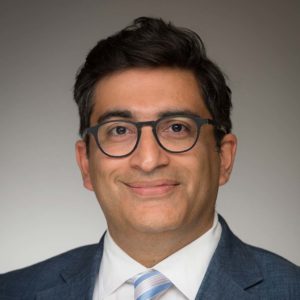
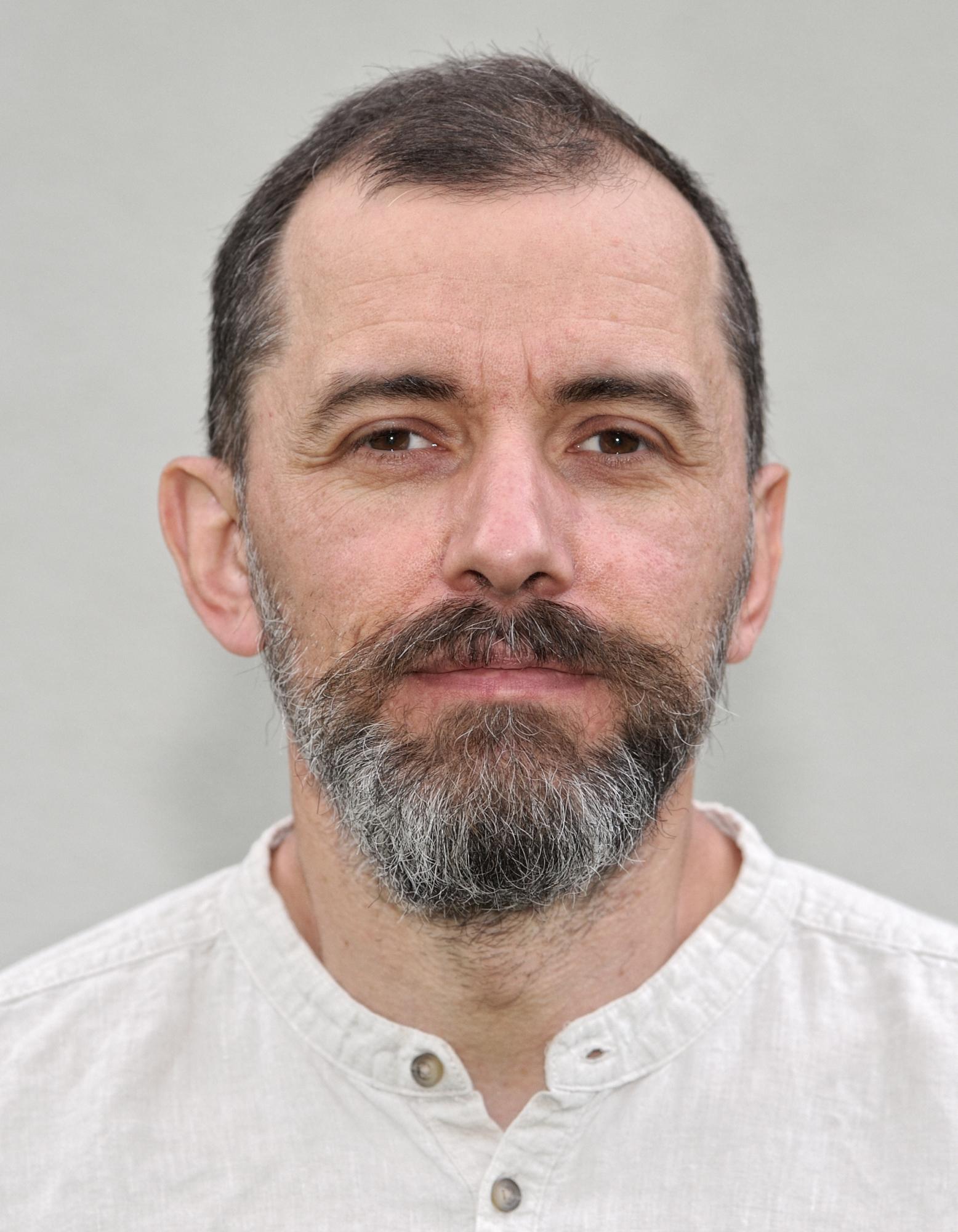
Shuichi HiraharaView profile
Associate Professor
Shuichi Hirahara is an Associate Professor at the National Institute of Informatics (NII), Japan, within the Principles of Informatics Research Division. He holds a Ph.D. from the University of Tokyo and has held research positions at the University of Warwick and Nagoya University. His work lies at the intersection of theoretical computer science and cryptography, focusing on foundational questions in computational complexity. Educational Background: Ph.D. in Computer Science, Department of Computer Science, Graduate School of Information Science and Technology, The University of Tokyo (2016–2019) His research centers on meta-complexity , a field probing the complexity of problems about computational complexity itself, such as the Minimum Circuit Size Problem (MCSP). He investigates average-case complexity , Kolmogorov complexity , and circuit minimization , aiming to understand the limits of efficient computation and to establish secure cryptographic foundations. His work often reveals unexpected hardness results and bridges worst-case and average-case complexity. The recent publications highlight a strong trend toward using meta-complexity to understand cryptographic primitives such as one-way functions and to unify hardness conjectures like the Planted Clique problem. His results have significant implications for proving the security of cryptography based on average-case hardness. Scientific Awards: Young Scientists' Award from MEXT (2024) Yamato Scientific Award (2024) Microsoft Informatics Research Award (2024) Complexity Result of the Year 2022 Funai Research Encouragement Award (2022) Machtey Award (FOCS 2018) Academic Encouragement Award (IEICE, 2019) Hirahara has been actively involved in research funding and academic service. He is the principal investigator of a JSPS Challenging Research (Pioneering) grant on average-time NP-completeness and has participated in several JST and JSPS projects on complexity theory and quantum algorithms. He serves on the program committees of major conferences including STOC, FOCS, and CCC. He is a frequent invited speaker at international workshops and seminars, contributing to the global discourse on computational complexity and cryptography. While no formal advisees are listed, his leadership in research projects suggests an active mentoring role. Labs and Research Teams: He is affiliated with the Informatics Principles Research Division at NII, a leading center for theoretical informatics in Japan. His work is highly collaborative, involving researchers from institutions like JST, University of Tokyo, and international partners.