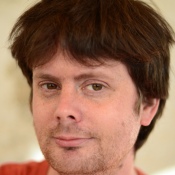
Vadim Lozin is a Professor of Mathematics at the University of Warwick, affiliated with the Department of Mathematics within the School of Mathematics. His research interests span graph theory, combinatorics, and discrete mathematics, focusing on areas such as clique-width, Ramsey numbers, and structural graph theory. He has held visiting positions at institutions including the Université Paris-Dauphine, EPFL, and KAUST. Lozin has received several accolades, including the Best Paper Award for 'Linear Ramsey numbers' in 2018 and a 2024 award at the International Symposium on Algorithms and Computation. His work involves collaborations with global researchers and contributions to conferences like IWOCA and WG. Lozin serves on editorial boards for journals such as Discrete Applied Mathematics and Electronic Notes in Discrete Mathematics . His research explores foundational problems in graph theory, with applications in algorithm design and complexity analysis. Lozin’s publications include studies on union-closed sets, functional graph properties, and algorithmic approaches to graph parameters. He has also contributed to books like Words and Graphs , bridging formal language theory with graph structures. His grants focus on clique-width and stability in graphs, reflecting his commitment to advancing theoretical and applied discrete mathematics.
Michał Pilipczuk is an Associate Professor at the Institute of Informatics, Faculty of Mathematics, Informatics and Mechanics of the University of Warsaw. His research focuses on theoretical computer science, particularly algorithms on discrete structures, parameterized algorithms, structural graph theory, and logic in computer science. He leads the ERC-funded project "BOBR: Decomposition Method for Discrete Problems" and previously led a grant on optimality in parameterized complexity funded by the Polish National Science Center. His research interests include parameterized algorithms , structural graph theory , graph algorithms , and computational complexity . He has made significant contributions to the understanding of problems such as Independent Set in restricted graph classes, graph editing problems, and structural decompositions. The recent publications highlight a strong focus on structural graph theory and exact algorithms . Key themes include quasi-polynomial time algorithms for Independent Set in claw-free graphs, diameter computation in bounded genus graphs, and kernelization in trivially perfect graphs. His work often bridges combinatorial insights with algorithmic applications, particularly in the context of parameterized complexity. Principal Investigator, ERC Grant BOBR: Decomposition Method for Discrete Problems (2021–2026) Principal Investigator, Polish National Science Center Grant on Optimality in Parameterized Complexity (2014–2017) He has advised or collaborated with several researchers, including Marcin Wrochna and Marcin Pilipczuk. His work is published in top venues such as STOC, SODA, ESA, and ICALP.
Yuguo Chen is a Professor in the Department of Statistics at the University of Illinois at Urbana-Champaign (UIUC), serving as Interim Department Chair and Director of the Illinois Statistics Office. He holds affiliations with the Department of Computer Science, Information Trust Institute, Coordinated Science Lab, and Illinois Informatics Institute. Chen earned his PhD in Statistics from Stanford University (2001) and a B.S. in Mathematics from the University of Science and Technology of China (1997). His research focuses on Monte Carlo methods, network data analysis, state space models, bioinformatics, and Bayesian inference. Key interests include scalable network estimation, community detection, and applications in public health, education, and computational biology. Recent work highlights include advancements in dynamic network modeling, Bayesian latent class models for cognitive diagnosis, and statistical methods for analyzing multi-layer networks. His contributions have been recognized through awards such as the American Statistical Association Fellowship (2018) and the Charles Edison Lectureship (2018). Editorial Roles: Associate Editor of Journal of the American Statistical Association , Journal of Computational and Graphical Statistics , and Journal of Algebraic Statistics . Grants & Consulting: Directs the Illinois Statistics Office, providing interdisciplinary research support. Active in collaborative projects involving healthcare, education, and computational infrastructure. Labs & Teams: Leads initiatives at the Coordinated Science Lab and Information Trust Institute, integrating statistical methods with cybersecurity and data-driven decision-making.
Yulan Qing is an Assistant Professor in the Department of Mathematics at the University of Tennessee, Knoxville (UTK), part of the College of Arts and Sciences. She holds a Ph.D. in Mathematics from Tufts University. Her research focuses on low-dimensional topology, geometric group theory, asymptotic properties of groups, and big mapping class groups. Notable projects include studies on Gromov boundaries, genericity in groups, and curve graphs. She has published extensively in journals like Geometry & Topology and the Journal of the London Mathematical Society. Dr. Qing has organized conferences such as the 53rd Barrett Memorial Lectures and the GGTea Webinar, fostering collaboration in geometric group theory. She has taught courses like Honors Topology at UTK and supervised graduate students including Sagnik Jana and Alex Squires. Her work bridges theoretical foundations with applications in topology and geometry. Recent invited talks include presentations at the University of Virginia, Caltech, and the 2nd China-Russia Conference on Topology. She actively mentors undergraduate and graduate students, contributing to initiatives like the Math Circle programs at Tufts and MIT's RSI Summer Program.
Dr. Konstantin Bauman is an Associate Professor in the Department of Management Information Systems at Temple University's Fox School of Business. He holds a PhD in Mathematics (Geometry and Topology) from Moscow State University and dual Master’s degrees in Mathematics and Machine Learning from prestigious Russian institutions. His research focuses on machine learning, data science, and context-aware recommender systems, emphasizing novel methods for predicting customer preferences and designing personalized recommendation frameworks. Education: PhD in Mathematics (Geometry and Topology), Moscow State University MS in Mathematics, Moscow State University MS in Machine Learning, Moscow Institute of Physics and Technology/Yandex School of Data Analysis Research Interests: Data Science and Analytics Machine Learning and Recommender Systems Context-Aware Systems and Text Mining Technology-Enhanced Learning Recent Work Trends: His publications emphasize context-aware recommendation algorithms, privacy concerns in personalized systems, and applications of hyperbolic embeddings. He also explores device impact on employee feedback and cryptocurrency investor behavior using multimodal data analysis. Awards: None explicitly listed in the provided materials. Advising/Grants: No formal advisees listed; his work at Yandex and NYU involved leading machine learning teams and tackling large-scale data science challenges. Labs/Teams: Active in the MIS department at Temple, contributing to research on adaptive learning systems and enterprise machine learning applications.
Maria Chudnovsky is a Professor in the Department of Mathematics at Princeton University. Her research focuses on structural graph theory, particularly in areas such as graph decomposition, induced subgraphs, and algorithmic applications of graph structure. She is renowned for her contributions to understanding perfect graphs, even-hole-free graphs, and the Erdős–Hajnal conjecture. Her work often explores the interplay between graph structure and algorithmic efficiency, with applications in combinatorial optimization and theoretical computer science. Notable contributions include foundational results on tree decompositions, chromatic number bounds, and the structure of metrizable graphs. Recent research trends include investigations into induced subgraph obstructions, tree independence numbers, and the properties of sparse graphs. She has published extensively on topics such as clique-stable set separation, rainbow matchings, and the complexity of graph coloring problems in restricted graph classes. Chudnovsky has been involved in significant collaborative projects, including work funded by the DMS-EPSRC grant 'The Power of Graph Structure' (2021). Her research frequently bridges theoretical insights with practical algorithm design, contributing to both fundamental and applied areas of discrete mathematics.
Nicolò Cesa-Bianchi is a Professor of Computer Science at the University of Milan, where he serves as head of the Computer Science programs. He is also associated with the Department of Electronics, Information and Bioengineering (DEIB) at Politecnico di Milano. Cesa-Bianchi holds significant leadership roles including Board member, Fellow and co-director of the Milan unit of the European Laboratory for Learning and Intelligent Systems (ELLIS), and membership in the prestigious Accademia Nazionale dei Lincei. He is also involved with The European Lighthouse on Secure and Safe AI (ELSA), The European Lighthouse of AI for Sustainability (ELIAS), and The FAIR foundation. Professor Cesa-Bianchi's research focuses on the theoretical foundations of machine learning, with special emphasis on sequential decision making and online learning algorithms. His work spans multiple areas including multi-armed bandit problems, regret analysis, prediction with expert advice, and learning on graphs. He has made significant contributions to understanding the theoretical limits of learning algorithms and developing efficient methods for various learning scenarios. His research has important applications in online markets, social networks, and bioinformatics. His monographs 'Prediction, Learning, and Games' and 'Regret Analysis of Stochastic and Nonstochastic Multi-armed Bandit Problems' are considered seminal works in the field. His recent publications demonstrate continued leadership in advancing the theoretical understanding of machine learning, with 2024-2025 papers covering cooperative online learning, multitask learning, fair trade mechanisms, and refined analyses of bandit algorithms. The research shows increasing focus on practical economic applications while maintaining strong theoretical foundations. Google Research Award Xerox Foundation UAC Award Member of the Accademia Nazionale dei Lincei ELLIS Fellow Cesa-Bianchi has been deeply involved in academic service, having served as action editor for the Machine Learning Journal, IEEE Transactions on Information Theory, and the Journal of Machine Learning Research. He currently serves as associate editor for the Journal of Information and Inference and TheoretiCS. He has held leadership positions including President of the Association for Computational Learning and member of the steering committee for the EC-funded Network of Excellence PASCAL2. He was program chair of the 13th Annual Conference on Computational Learning Theory and the 13th International Conference on Algorithmic Learning Theory. He leads the Laboratory for AI and Learning Algorithms (ALGA) at the University of Milan, which focuses on theoretical and applied research in machine learning. His international collaborations are extensive, with visiting positions at UC Santa Cruz, Graz Technical University, Ecole Normale Supérieure in Paris, Google, and Microsoft Research. As an educator, he teaches advanced courses including Reinforcement Learning and Statistical Methods for Machine Learning, and has supervised numerous students through the years.
Olga Veksler is a Professor at the University of Waterloo's Department of Computer Science, part of the Faculty of Mathematics. She holds a Ph.D. and M.Sc. from Cornell University (1999) and a B.A. from New York University (1995). Her research focuses on computer vision, machine learning, and discrete optimization, with notable contributions to image segmentation, graph algorithms, and deep learning integration. Her work emphasizes semantic segmentation, salient object detection, and efficient optimization techniques for graphical models. Education: Ph.D. in Computer Science, Cornell University, 1999 M.Sc. in Computer Science, Cornell University, 1999 B.A. in Computer Science, New York University, 1995 Her research explores intersections between machine learning and traditional computer vision challenges, particularly leveraging graph-based optimization and CRF models. Recent trends in her work include weakly supervised learning, sparse non-local CRF applications, and test-time adaptation strategies for salient object detection. She has pioneered methods for shape priors in multi-object segmentation and efficient graph-cut algorithms. Her advising and grant activities are foundational to her research, though specific grant details are not listed here. She maintains a lab focused on advancing computer vision through algorithmic innovation, with contributions to both theoretical frameworks and practical applications in medical imaging and scene understanding.
Kord Eickmeyer is a Lecturer at Technische Universität Darmstadt in the Department of Mathematics, specializing in the mathematical logic group. He holds a PhD in mathematics from Humboldt University Berlin and has held postdoctoral positions at TU Darmstadt (2011–2017) and the National Institute of Informatics in Tokyo (2011–2013). His research focuses on finite model theory, graph structure theory, and computational complexity, particularly in descriptive and parameterized complexity, as well as randomization and derandomization techniques. Research interests include exploring the boundaries of computational complexity through logical frameworks, analyzing graph structures for efficient algorithm design, and investigating the role of randomness in computation. His work bridges theoretical computer science and mathematical logic, with applications in algorithm design and formal methods. Publications span topics from model-checking on ordered structures to gap-planar graphs and randomized logics. Collaborations include prominent institutions like the National Institute of Informatics and Humboldt University Berlin. No scientific awards are explicitly listed, but his extensive academic contributions reflect a strong research trajectory. Advising and grants are not detailed in the provided text, though his academic career includes supervision roles during his PhD and postdoctoral phases. His involvement with the mathematical logic group at TU Darmstadt highlights collaborative research efforts in foundational areas of computer science and mathematics.
Prof Lars Olsen is a Professor in the School of Mathematics and Statistics at the University of St Andrews, based in the Mathematical Institute. His research focuses on fractal geometry, dynamical systems, and analysis, with particular emphasis on multifractal theory and metric number theory. He has supervised PhD student Luke Derry and has published extensively in peer-reviewed journals such as Monatshefte für Mathematik , Mathematische Zeitschrift , and Acta Mathematica Hungarica . His work explores intricate mathematical structures such as fractal dimensions, measure-theoretic properties of metric spaces, and applications to number theory. Recent studies include analyses of digit frequencies in infinite iterated function systems, exponential densities of integer subsets, and average distances in self-similar fractals. These contributions bridge pure mathematics with applications in understanding complex natural phenomena through geometric and analytic frameworks. Prof Olsen’s research portfolio demonstrates a strong focus on advanced mathematical analysis, with over 30 peer-reviewed publications since 2017 alone. His investigations into Hewitt-Stromberg measures and Gromov-Hausdorff-Prohoroff spaces exemplify his commitment to advancing foundational theories in fractal geometry and measure theory. Collaboration with international researchers has yielded multidisciplinary insights into topics like Lq-dimension analysis and topological dynamics of continuous functions.
Édouard Bonnet is a CNRS researcher at the Laboratoire de l'Informatique du Parallélisme (LIP) in the MC2 team at École Normale Supérieure de Lyon. His research focuses on algorithmic and structural graph theory, representing significant contributions to theoretical computer science. Dr. Bonnet serves as principal investigator of the ANR JCJC grant TWIN-WIDTH (2021-2025), demonstrating recognition of his research excellence. He coordinates the ENS Lyon computer science master 2 internships, playing a key role in graduate education. His involvement in multiple thesis defense committees scheduled for July 2025 confirms his active mentorship role. Within the broader academic community, Bonnet serves on the board of GT CoA (Complexité et Algorithmes) and acts as local correspondent for both GT CoA and GT Graphes, highlighting his standing in the French theoretical computer science community. His habilitation thesis represents a significant scholarly achievement in the French academic system. While specific publications aren't detailed in the provided information, his research focus suggests contributions to graph algorithms, graph classes, parameterized complexity, and structural graph theory, with particular relevance to the twin-width parameter development that has gained prominence in recent years.
Elette Boyle is an Associate Professor at Reichman University (IDC Herzliya) and a Senior Scientist at NTT Research . She holds a Ph.D. in Mathematics from MIT (advised by Shafi Goldwasser and Yael Tauman Kalai) and an undergraduate degree from Caltech . Education Ph.D. in Mathematics, MIT B.S. in Mathematics, Caltech Her research focuses on cryptographic solutions for secure data processing , particularly in secure multi-party computation , function/homomorphic secret sharing , and distributed point functions . Recent work explores topology-hiding communication , memory checking complexity , and sublinear-communication MPC . Key trends in her publications include: Advancements in Function Secret Sharing for branching programs and sparse vectors. Efficient Secure Multi-Party Computation protocols with preprocessing. Information-theoretic and computational Topology-Hiding Broadcast schemes. Optimized Oblivious Transfer with constant computational overhead. Scientific Awards European Research Council (ERC) Award Israeli Science Foundation (ISF) Grant United States Air Force Office of Scientific Research (AFOSR) Grant Google Research Scholar Award International Association for Cryptologic Research (IACR) Recognition As Director of the Foundations & Applications of Cryptography (FACT) Research Center , she leads collaborative work with institutions like Technion Israel , Cornell University , and NTT Research . Her students include Pierre Meyer (Ph.D.) , Matan Hamilis (Ph.D.) , and D'or Banon (MSc.) .
Melanie Weber is an Assistant Professor of Applied Mathematics and Computer Science at Harvard University's John A. Paulson School of Engineering and Applied Sciences (SEAS), leading the Geometric Machine Learning Group. Her research focuses on leveraging geometric structures in data for designing efficient machine learning and optimization algorithms with theoretical guarantees. She holds a PhD from Princeton University (2021) and has held fellowships at the Mathematical Institute of Oxford, Brasenose College, and the Simons Institute. Her work bridges geometry, optimization, and machine learning, with funding from NSF, Sloan Foundation, and Harvard initiatives. Education : PhD in Applied Mathematics, Princeton University (2021) BSc/MSc in Mathematics and Physics, University of Leipzig (2016) Research Interests : Dr. Weber's research integrates geometric principles into machine learning and optimization, focusing on non-Euclidean spaces, graph structures, and manifold-based methods. Key areas include optimization on Riemannian manifolds, curvature-based analysis (e.g., Ricci curvature), and developing algorithms resilient to data geometry challenges like over-smoothing in graph neural networks. Her work emphasizes theoretical foundations while addressing practical scalability in high-dimensional data. Awards & Recognition : 2024 Sloan Research Fellowship 2023 Leslie Fox Prize in Numerical Analysis 2023 NSF Grant for Geometric Optimization Grants & Funding : Supported by National Science Foundation (NSF), Alfred P. Sloan Foundation, Aramont Foundation, Harvard Dean’s Fund, and Harvard Data Science Initiative. Labs & Collaborations : Leads the Geometric Machine Learning Group at SEAS, collaborating with institutions like MIT, Max Planck Institute, and industry labs (Facebook, Google, Microsoft). Active in organizing workshops on geometric methods and curvature analysis.
Alan Hammond is a Professor in the Department of Statistics at the University of California, Berkeley. His research focuses on rigorous mathematical probability techniques applied to problems in statistical mechanics, including percolation theory, polymer models, and random growth processes. He has contributed to understanding critical phenomena, phase transitions, and universality classes in stochastic systems. Hammond's work spans topics such as KPZ universality, Brownian motion, and the geometry of random media. He has investigated models like last passage percolation, self-avoiding walks, and tug-of-war games, often uncovering deep connections between stochastic processes and nonlinear PDEs. His teaching includes courses on stochastic processes and statistical theory at both graduate and undergraduate levels. Notable research highlights include studies on fractal properties of Airy processes, stability in dynamical last passage percolation, and the behavior of geodesics in random environments. His contributions bridge probability theory with applications in physics and combinatorics.
Nathan Reading is a Professor in the Department of Mathematics at North Carolina State University (NCSU). He holds a Ph.D. in Mathematics from the University of Minnesota (2002) and a B.S. in Physics from Stanford University (1995). His research focuses on algebraic and geometric combinatorics, particularly in Coxeter groups, cluster algebras, and lattice-theoretic approaches. He has been actively involved in organizing the Triangle Lectures in Combinatorics, a biannual research conference. His research interests include noncrossing partitions, cluster scattering diagrams, and the lattice theory of torsion classes. Recent work explores connections between Coxeter groups and combinatorial structures on surfaces. Reading has authored numerous papers on topics such as semidistributive lattices, scattering diagrams, and Cambrian frameworks. He teaches advanced combinatorics courses (e.g., MA 724: Combinatorics II) and has advised graduate students. His work has been supported by grants from the National Science Foundation (NSF), including DMS-1500949. Reading maintains an active presence in the mathematics community through publications, conference organization, and pedagogical contributions.