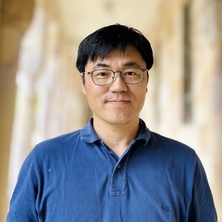
Prof Raphaël Phan is a Professor and Deputy Head of the School of IT at Monash University Malaysia. His expertise spans security, cryptography, malicious AI, emotion recognition, motion analysis, and generative AI. He has published over 220 papers and led significant projects including privacy-preserving data mining funded by UK MoD and Malaysian government grants exceeding RM4 million. He co-designed the BLAKE hash function (SHA-3 finalist) and has an h-index of 50. Education: PhD in Cryptography (Multimedia University, 2005), MEngSci (2001), BEng (Hons) Computer Engineering (1999). Research focuses on adversarial AI, brain networks, and secure systems. Current projects include Æmbience: emotion-aware virtual assistants using motion magnification. Supervised 15 PhD graduates and 19 current students. Professional affiliations: Chartered Engineer (IET, UK), HEA Fellow, Board of Engineers Malaysia. Recent work emphasizes causal bias detection in micro-expressions, brain tumor detection via advanced YOLOv8, and generative adversarial networks for medical imaging. His work bridges cybersecurity with neuroscience applications.
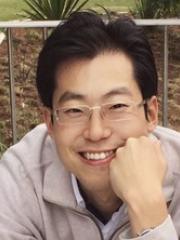
Associate Professor Dan Dongseong Kim is Deputy Director of UQ Cybersecurity and an Associate Professor at The University of Queensland (UQ), Australia. Previously, he held permanent academic positions at The University of Canterbury (UC), New Zealand (2011-2018) as a Senior Lecturer and Lecturer. His research focuses on Cybersecurity and Dependability for AI, IoT, Autonomous Vehicles, Cloud Computing, and Moving Target Defenses (MTD). Doctor of Philosophy in Computer Engineering from Korea Aerospace University Postdoctoral Research at Duke University (2008-2011) Visiting Scholar at University of Maryland (2007) Dan's work explores Graphical Security Models , Moving Target Defense for proactive resilience, and AI-Driven Cybersecurity with emphasis on adversarial robustness and interpretable models. His recent publications (2024-2025) span journals like IEEE Transactions on Dependable and Secure Computing and conferences such as DSN , addressing automated defense, evolving attacks, and hardware-aware security frameworks. He has advised 15 Ph.D. graduates, including researchers now at institutions like RMIT University, La Trobe University, and CSIRO's Data61. Current supervision includes projects on Automated Penetration Testing , AI-Based Intrusion Response , and Moving Target Defense . Dan's research is funded by agencies including the Republic of Korea's Agency for Defence Development and US Army Research Lab . His professional roles include Associate Editor for IEEE Communications Surveys and Tutorials and Steering Committee Chair for IEEE PRDC .
Yong-Bin Kang is a Senior Data Science Research Fellow at the ARC Centre of Excellence for Automated Decision Making and Society (ADM+S) at Swinburne University of Technology, affiliated with the School of Social Sciences, Media, Film and Education. He holds a PhD in AI from Monash University and leads numerous transdisciplinary research projects applying artificial intelligence to address complex societal challenges. Education: PhD in Faculty of IT, Monash University, Australia Dr. Kang's research focuses on Responsible AI and Society, with specific interests in developing Societal-AI platforms that integrate social data with ethical principles. His work spans healthcare, humanitech, education, financial planning, environmental health, and justice domains. He investigates how AI can enhance decision-making processes while promoting societal well-being, with particular attention to ethical implementation and human-centered approaches. His expertise encompasses AI, natural language processing, machine learning, and decision-making optimization. Analysis of Dr. Kang's recent publications reveals a strong trajectory toward socially responsible AI applications across diverse domains. His work consistently bridges technical AI capabilities with social implications, particularly focusing on ethical frameworks, community-centered design, and addressing societal inequalities through technology. The publications demonstrate increasing collaboration across disciplines including criminology, environmental science, mental health, and education. Dr. Kang is actively involved in significant research funding initiatives, with multiple ongoing projects that address critical societal challenges through AI. His supervision availability includes Doctorate (PhD) candidates, indicating his commitment to mentoring the next generation of researchers in AI and data science fields. Current Flagship Areas: Digital Capability Innovative Society Manufacturing Futures Sustainable Development Goals: Good Health and Well Being (SDG 3) Industry, Innovation and Infrastructure (SDG 9) Affordable and Clean Energy (SDG 7)
Professor David Taubman is a distinguished academic serving as Professor and Deputy Head of School (Research) at the School of Electrical Engineering and Telecommunications (EE&T) at the University of New South Wales (UNSW) in Sydney, Australia. He is also co-director of Kakadu Software Pty. Ltd. and its affiliates Kakadu R&D and Kakadu GPU. With a career spanning over three decades, Professor Taubman has made significant contributions to the field of image and video compression, most notably as the author of the EBCOT coding algorithm adopted in the JPEG2000 international standard. Professor Taubman earned his B.Sc. in Mathematics and Computer Science (1986) and B.E. (Medal) in Electrical Engineering (1988) from the University of Sydney, followed by an M.Sc. (1992) and Ph.D. (1994) in Electrical Engineering from the University of California at Berkeley. His professional journey includes engineering work at the Electricity Commission of N.S.W. (1988-1990), research positions at Hewlett-Packard Laboratories in Palo Alto (1994-1998), and an academic career at UNSW where he progressed from Senior Lecturer (1998-2003) to Associate Professor (2004-2009) and finally to Professor (2009-present). He has held various leadership roles including Head of the EE&T Telecommunications Research Group (2003-2014), Head of the EE&T Signal Processing Research Group (2014-present), Director of Research for the School of EE&T (2011-2016), and Deputy Head of School (Research) since 2017. Professor Taubman's research interests center on image and video compression, with particular expertise in JPEG2000 standards and implementations. His work spans signal processing, wavelet transforms, scalable video coding, motion modeling, and multimedia systems. He has pioneered numerous compression algorithms and frameworks, including the EBCOT coding algorithm that became central to the JPEG2000 standard. His recent research focuses on efficient motion modeling with cuboidal partitioning, learned lifting-based transform structures, and high-throughput implementations of JPEG2000 for video applications. His work bridges theoretical foundations with practical implementations, as evidenced by the commercially successful Kakadu Software tools that have garnered around 500 commercial licensees. Analysis of Professor Taubman's recent publications reveals a consistent focus on advancing compression technologies with particular emphasis on scalability, efficiency, and adaptability. His work spans traditional image compression (JPEG2000 extensions), video coding (cuboid-based partitioning for UHD/360-degree video), and emerging applications (nanopore sequencing data compression). A notable trend is the integration of machine learning techniques with traditional compression frameworks, as seen in his work on learned lifting-based transform structures. His research maintains strong connections to real-world applications across diverse domains including medical imaging, astronomical data processing, and genomic sequencing. IEEE Fellow Engineers Australia Fellow (by invitation) Professor Taubman has served as Associate Editor for the IEEE Transactions on Image Processing for two four-year appointments (2003-2005 and 2010-2013). He has been actively involved in numerous research grants focused on image and video compression technologies, particularly those related to the JPEG2000 standard and its extensions. His work has received significant industry support, reflected in his consultancy with various U.S., Japanese, and Australian corporations. He has also contributed to international standards development as a member of Standards Australia Technical Committee MS-065 (mirroring ISO TC42 on Digital Photography) and as a constitutional member of Standards Australia Technical Committee IT-029 (Coded Representation of Picture, Audio and Multimedia/Hypermedia Information). Professor Taubman co-directs Kakadu Software Pty. Ltd. and its research affiliates Kakadu R&D and Kakadu GPU, which have developed the commercially successful Kakadu Software tools for JPEG2000. His research group at UNSW focuses on advanced image and video compression techniques, with particular expertise in wavelet-based methods, scalable coding, and motion modeling. The group maintains strong industry connections and has contributed significantly to the development and standardization of image compression technologies worldwide.
SangHyung Ahn is a Lecturer at the School of Civil Engineering , University of Queensland (UQ), since 2017. He joined UQ as a postdoctoral research fellow in 2015 after earning his PhD in Civil Engineering (Construction Engineering and Management) from Purdue University, USA. Prior to his academic career, he worked as an assistant manager at Hyundai Engineering and Construction Co., Ltd. (2003-2007) and holds an MBA in international business from Hanyang University and a B.Sc in Civil Engineering from Korea University. Research Focus: Construction process modelling with virtual reality, decision support systems for construction, automation of data-driven simulation modelling, sensor-based operations analysis, and integration of Building Information Modelling (BIM). Teaching: Coordinates undergraduate courses Introduction to Project Management (CIVL3510) and Construction Engineering Management (CIVL4522) . Research Trends: His recent publications highlight interdisciplinary work in transportation engineering, structural design, and AI-driven simulation tools. Key themes include application of machine learning to car-following models, drone-based vehicle identification, and optimization of public transport systems using agent-based simulations. Supervision: Available for supervision, with completed supervision of PhD and Master’s theses on topics such as BIM-LCA integration, pedestrian trajectory analysis, and AI-driven driving behavior models.
Dr. Teresa Wang is a Senior Lecturer in Data Science at Monash University's Faculty of Information Technology, specializing in entity/user modeling, relational/structural machine learning, and graph/network analysis. She holds a Ph.D. from the University of Queensland and degrees from Nanjing University. Currently, she directs the Master of Data Science Program and teaches courses like FIT5201 Machine Learning. Her research focuses on social, e-commerce, and health data modeling, with notable projects including the Knowledge Enriched Approach for Effective Personalization (2025–2027) and collaborations on AI in Mental Health and Site Safety. Dr. Wang has co-authored over 59 publications, emphasizing areas like ontology matching and multimodal data analysis. She actively supervises PhD students and contributes to initiatives like the CSIRO Next Generation Graduates Program for clean energy and sustainability. Education: Ph.D. in Computer Science (2017), University of Queensland Master of Computer Science (2013), Nanjing University Bachelor of Software Engineering (2010), Nanjing University Research Interests: Entity modeling, spatio-temporal data analysis, graph mining, recommender systems, and health/medical records mining. She explores applications in social media, e-commerce, and healthcare sectors. Projects: "Knowledge Enriched Approach for Effective Personalization" (2025–2027) "AI for Clean Energy and Sustainability" (2023–2027) "CSIRO Next Generation Graduates Program: AI in Mental Health" (2023–2027) "Large-scale multimodal knowledge management" (2022–2025) Grants & Collaborations: Engaged with CSIRO, Crank Group, and Pola Practice Pty Ltd. Her work aligns with UN SDGs in education and sustainable energy systems. Labs/Teams: Part of the Monash Energy Institute and Monash Data Futures Institute, contributing to interdisciplinary AI and energy research.
Professor Karin Verspoor is the Dean of the School of Computing Technologies at RMIT University in Melbourne, Australia. She previously held roles as Director of Health Technologies and Deputy Head of the School of Computing and Information Systems at the University of Melbourne, and as Scientific Director of Health and Life Sciences at NICTA's Victoria Research Laboratory. Her research focuses on applying artificial intelligence methods to biomedical discovery and clinical decision support, particularly through natural language processing of clinical texts and biomedical literature. Affiliations: RMIT University (STEM College), Australian Alliance for Artificial Intelligence in Health (Victorian Node Lead) Industry Experience: Intelligenesis/Webmind Corp., Applied Semantics, Los Alamos National Laboratory, National ICT Australia Research Interests: Artificial Intelligence in Medicine Biomedical Natural Language Processing Health Informatics Computational Biology Cheminformatics Her work emphasizes cross-modal data integration, EHR analytics, and AI-driven clinical tools to address challenges in healthcare outcomes, musculoskeletal disorders, and infectious disease surveillance. Advising & Grants: Supervises research on AI-based decision-making frameworks, EHR data quality, and chemical knowledge extraction. Leads projects funded by initiatives like CANAIRI (Collaboration for Translational AI in Healthcare). Labs & Collaborations: Co-founder of the Australian Alliance for AI in Health, advancing national AI healthcare policy and translational research.
Chung-Hsing Yeh is an Associate Professor at Monash University's Faculty of Information Technology, Department of Data Science & AI. He holds a visiting professorship at National Cheng Kung University, Taiwan, and has extensive experience in academic roles including Chief Examiner and Lecturer for numerous IT and business-related courses. His research focuses on multicriteria decision analysis, applied artificial intelligence, fuzzy logic, neural networks, and sustainable operations management. He has led collaborative projects on e-waste recycling, supply chain optimization, and public health policy, funded by organizations like the Ministry of Science and Technology (Taiwan) and the Australian Research Council. Education: PhD in Operations Research/Information Systems, Monash University (1988) MSc in Management Science, National Cheng Kung University (1982) BSc (Engineering) in Industrial Design, National Cheng Kung University (1977) Research Interests: His work spans decision support systems, optimization modeling, transport research, and recycling operations. Notable contributions include algorithms for production scheduling, AI-driven solutions for healthcare, and sustainable e-waste management strategies. Awards: Listed in Marquis Who's Who in the World Listed in Who's Who in Finance and Industry Listed in Who's Who in Science and Engineering Grants & Projects: Led 6 major projects, including 'Maximizing E-waste Recycling Profitability' (2019–2020) and 'Smoke-Free Policy Effectiveness' (2007–2010). Active in grant review roles for ARC and the Netherlands Organisation for Scientific Research. Teaching: Overseeing courses such as Fundamentals of Artificial Intelligence, Business Intelligence Modelling, and Management Information Systems.
Dr. Ben Swift is a Senior Lecturer at the School of Cybernetics, ANU, specializing in AI, computational art, and cybernetics. He leads the Cybernetic Studio, an interdisciplinary collective exploring cybernetic systems through hardware/software/people collaborations. As a livecoding artist, he performs globally and co-founded the ANU Laptop Ensemble. His research spans generative AI, open-source tools like Extempore, and UX design. Education: PhD in Computer Science (ANU) Projects: Australia's Digital Economy (2022), The Augmented Web (2019) Research focuses on AI creativity, biofeedback interfaces, and computational music. His work bridges technical innovation with artistic expression, evident in projects like TSPNet and adversarial camera systems. Key contributions include Extempore’s development and studies in live coding disruption. Awards unspecified but recognized internationally for interdisciplinary impact.
Kok Sheik Wong is a Professor and Deputy Head (Research) at the School of Information Technology, Monash University Malaysia. He holds a Doctor of Engineering from Shinshu University, Japan, and Master’s and Bachelor’s degrees in Computer Science and Mathematics from Utah State University, USA. His academic leadership and research excellence are central to his role at Monash. B.S. Computational Mathematics, Utah State University (2002) M.S. Computer Science, Utah State University (2006) M.S. Mathematics, Utah State University (2004) Doctor of Engineering, Shinshu University, Japan (2009) His research focuses on multimedia signal processing and cybersecurity , particularly in data hiding , reversible data hiding , coverless steganography , and multimedia encryption . He is also expanding into digital health , applying AI to mental health in workplace environments. His work aligns with UN SDGs, particularly in health and education. The recent publication trends show a strong emphasis on reversible data hiding , image watermarking , and AI-driven health applications . His interdisciplinary work spans computer science, engineering, and public health, with increasing focus on real-world impact through EU and national grants. He has received several honors, including: Academic of Science Malaysia - Young Scientist Network (2020) Best Paper Award, IWDW 2019 ITEX 2021 Gold Medal for BAITRADAR School of IT Excellence in Research Award (2022) Dr. Wong actively supervises PhD students and leads major research projects, including the EU-funded WAge project. He has served as an associate editor for IEEE Signal Processing Letters and the Journal of Information Security and Applications, and is a member of IEEE IFS and APSIPA technical committees. His grants reflect strong external collaboration and funding in cybersecurity and digital health. He is involved in key research labs and teams through Monash University and international consortia, particularly in the areas of multimedia security and digital health innovation. His leadership in the WAge project connects him with European and Asia-Pacific research networks, enhancing global impact.
Dr. Siqi Ma is a Senior Lecturer at the UNSW Institute for Cyber Security (IFCYBER) within the School of Systems & Computing at the University of New South Wales (UNSW). He previously served as a Lecturer at the University of Queensland's School of Information Technology and Electrical Engineering (ITEE). He holds a Ph.D. in Information Systems from Singapore Management University (2018) and was a Postdoctoral Research Fellow at Data61, CSIRO. He also visited Carnegie Mellon University (CMU) in 2015. Current Role: Senior Lecturer, UNSW Institute for Cyber Security Former Role: Lecturer, University of Queensland Education: Ph.D. (Singapore Management University), Postdoc (Data61, CSIRO) His research spans automated vulnerability detection, mobile security, IoT security, network authentication, and graph-based adversarial robustness. Recent work focuses on drone configuration bugs, Android malware analysis via GNNs, federated learning privacy, and credential leakage in open-source projects. Key trends in his 2024-2025 publications include automated security analysis for embedded systems, deepfake detection in multimedia, and privacy-preserving mechanisms for distributed networks. He collaborates with institutions like Purdue University, Singapore Management University, and CSIRO Data61.
Prof Ghassan Beydoun is a Professor and Head of Discipline (Information Systems) at the School of Computer Science, University of Technology Sydney (UTS). He leads the Information Systems discipline and is affiliated with the Centre for Advanced Modelling and Geospatial Information Systems (CAMGIS). His research focuses on AI-driven systems, agent-based modelling, ontologies, and disaster management, with notable contributions to knowledge graphs, enterprise architecture, and IoT applications. Beydoun actively supervises Masters and PhD students in these domains. His research interests span metamodelling, agent systems, and AI applications in disaster management (e.g., flood, landslide, and earthquake risk assessment), health systems, and smart infrastructure. He has pioneered frameworks for reproducible machine learning solutions, digital identity systems, and cloud migration strategies. Beydoun’s work integrates interdisciplinary methods, such as bibliometric analysis for journal evolution and XAI for spatial hazard prediction. Recent publications highlight his expertise in AI for climate-induced hazard modelling, agent-based knowledge transfer mechanisms, and metaverse applications in education. His funded projects include AI-powered circular economy initiatives, smart beach safety systems, and health data querying frameworks. Beydoun collaborates with industry partners like CSIRO, Capsicum Business Architects, and Data Zoo, translating research into practical solutions for enterprise architecture, cybersecurity, and public health.
Dr. Maxime Cordeil is a Senior Lecturer in Human Centred Computing at the School of Electrical Engineering and Computer Science, The University of Queensland. His research focuses on Virtual and Augmented Reality technologies for data interaction, interactive visualization systems, and AR interfaces for industry applications. He has authored over 60 publications in top-tier venues such as ACM CHI and IEEE VR, and was nominated as Australia's Field Leader in Computer Graphics in 2021 and 2022. Research Interests: Data visualization, immersive analytics, medical imaging, collaborative systems, and human-computer interaction. Current Projects: Includes embedded visualizations for sports performance, interactive machine learning in 3D environments, and mixed-reality applications in forensic science. PhD Supervision: Actively guiding students in topics like immersive gesture exploration, AR for digital health, and collaborative VR systems. His work bridges theory and practice, with tools like IATK (Immersive Analytics Toolkit) and the MADE-Axes hardware system. He collaborates with industry partners like Raytracer and CSIRO, focusing on applications in space exploration, underwater training, and remote operations. Awards: Multiple best paper recognitions at ISS and CHI, plus industry-driven research grants. Labs: Leads the Immersive Analytics research group at UQ, specializing in embodied interaction and spatial computing.
Yuan-Fang Li is an Associate Professor in the Department of Data Science & AI at Monash University's Faculty of Information Technology. He also serves as Associate Dean International. His research focuses on knowledge graphs, natural language processing, multimodality, and graph representation learning. He holds a PhD from National University of Singapore (2006) and a Bachelor of Computing (Honours) from the same institution (2002). Affiliations: Monash University (since 201?), National University of Singapore (PhD 2002-2006) Key Projects: Leading research on neuro-symbolic systems (HARNESS project), large-scale multimodal knowledge management, and maritime knowledge graphs Teaching: Taught courses including FIT4002, FIT4004, and supervised over 20 PhD students Research interests include complex question answering over knowledge graphs, knowledge extraction from text/images, and structural/temporal graph learning. He has published 152+ works with notable contributions to scene graph generation, event extraction, and LLM-based reasoning. Key awards include the 2020 Best Student Paper Award and 2017 Kurzweil Prize. Grants: ARC Discovery Projects, industry collaborations (e.g., Outotec Oy) Labs/Teams: Active in Monash's Data Science & AI research groups, leading neuro-symbolic AI initiatives
Professor Marius Portmann is the UQ-Cisco Chair of Network Security at the School of Electrical Engineering and Computer Science (EECS), University of Queensland. His expertise spans Cybersecurity, IoT, and Applied AI. He holds a PhD from ETH Zurich (2003) and has led research in Software Defined Networking (SDN), blockchain, and energy-harvesting IoT systems. Education: PhD in Electrical Engineering from Swiss Federal Institute of Technology (ETH Zurich), 2003. Research focuses on securing IoT networks, AI-driven intrusion detection, and sustainable sensor systems. He has pioneered self-powered IoT systems using energy harvesters and developed frameworks like FlowTransformer for network analysis. His work bridges theoretical advancements with practical applications in smart tourism, energy efficiency, and edge computing. Recent publications highlight innovations in DDoS detection (P4-Secure), sensor-based environmental monitoring (EcoShower), and graph-based anomaly detection (XG-BoT). His datasets (e.g., NF-ToN-IoT-v3) are widely used in ML-based cybersecurity research. Collaborations include industry partners like Cisco and institutions like RMIT. Grants and leadership roles in interdisciplinary projects underscore his impact. He advises on IoT security standards and contributes to open-source tools for network research. Current projects explore edge-AI integration and sustainable sensor networks.