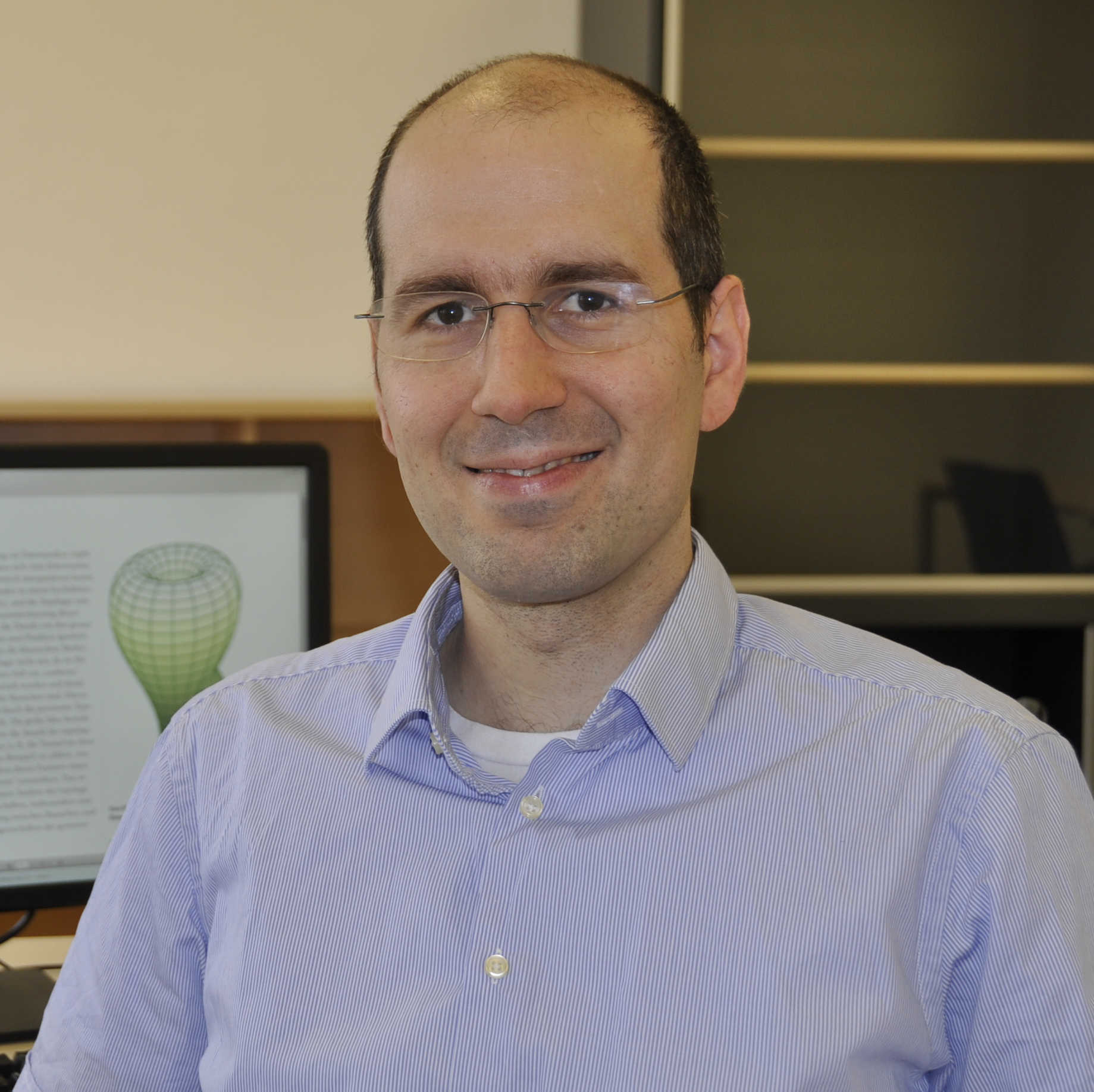
Michael Wimmer is a Full Professor at TU Wien, leading the Rendering and Modeling Group and directing the Center for Geometry and Computational Design. He holds a M.Sc. (1997) and Ph.D. (2001) from TU Wien. His research focuses on real-time rendering, procedural modeling, computational design, and point-based graphics. He has co-authored over 200 papers and the book *Real-Time Shadows*. He serves as Co-Editor-in-Chief of Computer Graphics Forum , chairs SIGGRAPH Asia 2025, and received the Eurographics Outstanding Technical Contributions Award (2023). Education: M.Sc. in Computer Science (1997), TU Wien Ph.D. in Computer Science (2001), TU Wien Research Interests: Real-time rendering and visualization Procedural modeling and computational design Point-based graphics and neural rendering Applications in computer games and urban environments Awards: Eurographics Outstanding Technical Contributions Award (2023) Wolfgang Straßer Award (Best Paper, 2022) Eurographics Fellow (2018) Outstanding Service Award (2012) Advising & Grants: Coordinator of the Special Research Programme Advanced Computational Design Key researcher at VRVis Research Center Labs & Teams: Rendering and Modeling Group Center for Geometry and Computational Design
Birgit Öhlinger is a Research Associate and Co-Excavation Director of the Monte Iato Project at the Leopold Franzens University of Innsbruck . Her work focuses on the archaeology of the ancient Mediterranean, particularly social transformation processes in cultural contact zones and identity formation through material culture, with a regional emphasis on Sicily. Education: Doctoral studies in Classical and Provincial Roman Archaeology (2010–2014), University of Innsbruck Master’s in Ancient History and Classical Studies (2005–2009), University of Innsbruck Master’s in Classical and Provincial Roman Archaeology (2002–2008), University of Innsbruck Research Interests: Öhlinger specializes in the archaeology of cultural contact zones, ritual and religious practices, and ceramic studies in the Archaic Mediterranean. Her methodological expertise includes digital excavation documentation, experimental archaeology, and material culture analysis, particularly focusing on Monte Iato in Western Sicily. Recent Publications: Her work examines technological choices in local ceramic production, neutron activation analysis applications in Mediterranean archaeology, and ritual consumption practices. She has contributed to debates on cultural hybridity, social identity, and the role of sanctuaries in elite formation. Awards: Anniversary Prize of Böhlau Verlag Vienna (2015) Prize of the Principality of Liechtenstein (2015) Merit Scholarship (2003–2007), University of Innsbruck Doctoral Scholarship (2013–2014), University of Innsbruck Professional Activities: Öhlinger leads projects like "Monte Iato Pots - Experimental Study on Organic Residue Analysis" and "Crime Scene Monte Iato around 500 BC: Microbiological Forensics" . She organizes international conferences and contributes to public outreach through media appearances and exhibitions.
Thomas Gärtner is a Professor at the Institute of Logic and Computation within the Faculty of Informatics at Vienna University of Technology, leading the Machine Learning research group (E194-06). His work bridges theoretical machine learning with practical applications in chemistry, biology, and network analysis. His primary research focuses on graph neural networks (GNNs) and geometric deep learning, with significant contributions to GNN expressivity, graph transformations, and kernel methods for structured data. He explores fundamental questions about the limitations of message-passing architectures while developing practical enhancements like path-based extensions and expectation-complete representations. His chemical informatics work applies these techniques to binding affinity prediction, reaction classification, and solvent selection, demonstrating real-world impact in computational chemistry. Analysis of his 15 most recent publications (2023-2025) reveals three dominant research thrusts: theoretical GNN advancements (35% of articles), chemical informatics applications (40%), and novel learning frameworks (25%). The theoretical work increasingly addresses expressivity limitations through graph transformations and path-based approaches, while chemical applications show growing sophistication in molecular representation. Recent publications also indicate expanding interest in foundation models for graphs and robustness verification. He actively supervises master's students including Fabian Traxler (binding affinity prediction), Maximilian Plattner (SGD optimization), Fabian Jogl (graph transformations), and Thomas Schmied (reinforcement learning). His research is conducted through the Network Lab at TU Wien, where he serves as Principal Investigator for the Structured Data Learning with Generalized Similarities project.
Franz Wotawa is a Professor of Software Engineering at Graz University of Technology. He holds a M.Sc. (1994) and PhD (1996) from Vienna University of Technology. He has served as head of the Institute for Software Technology from 2003–2009 and since 2020. His research focuses on model-based reasoning, software testing, autonomous systems, and diagnosis, with over 390 peer-reviewed publications. He founded Softnet Austria (2006) to bridge research and industry. He leads the Christian Doppler Laboratory for Quality Assurance Methodologies for Autonomous Cyber-Physical Systems since 2017 and has supervised 90+ master and 36+ PhD students. His awards include the 2016 Lifetime Achievement Award from the International Diagnosis Community. He is a member of Academia Europaea, IEEE, and AAAI. **Education**: M.Sc. in Computer Science, Vienna University of Technology, 1994 PhD, Vienna University of Technology, 1996 **Research Interests**: Model-based reasoning, qualitative reasoning, theorem proving, mobile robotics, verification/validation, software testing/debugging, AI, and autonomous systems. **Notable Projects**: A-IQ Ready (2022–2026): Quantum sensing for autonomous systems. ALFA (2024–2027): AI for smart diagnosis in building automation. Bilateral AI (2024–2029): Combining symbolic and sub-symbolic AI. VARCOS (2025–2028): Vehicle-road cooperative systems for autonomous driving. **Awards & Memberships**: Lifetime Achievement Award (2016, International Diagnosis Community) Senior Member, AAAI Member of Academia Europaea, IEEE, ACM, and Austrian Computer Society **Labs/Teams**: Christian Doppler Laboratory for Quality Assurance Methodologies (since 2017). Active in Cluster of Excellence “Bilateral AI” at TU Graz.
Stefan Lengauer is a Senior Researcher at the Institute of Visual Computing (IVC), Graz University of Technology. His work bridges cultural heritage analysis and health informatics through advanced visualization techniques. PhD in Computer Science (2022), Graz University of Technology MSc in Space Sciences (2018), TU Graz BSc in Computer Science (2014-2022) and Aviation (2015), FH JOANNEUM Research focuses on visual analytics , 3D object retrieval , and cross-modal search , with applications in: Medical domains (diabetes care, health information systems) Cultural heritage (pottery analysis, fragment matching, digital restoration) Pattern recognition (geometric motifs, surface textures) Recent publications highlight trends in adaptive visualization (2024-2025) and 3D cultural heritage analysis (2021-2023). Key projects include: HEREDITARY (2024-present): HORIZON Europe project on gut-brain interaction A+CHIS (2020-present): FWF research group on adaptive health information systems CrossSAVE-CH (2019-2022): Cross-modal search in cultural heritage Scientific recognition includes: Best Challenge Entry (2024) Honorable Mention (2020) PhD distinction (2022) Mentored 12+ students in topics ranging from medical chatbots to 3D pottery analysis . Reviewing activities span journals like Springer Nature and conferences including WSCG.
Florian Windhager is a Senior Researcher at the Center for Cultures and Technologies of Collecting at the University for Continuing Education Krems. His work focuses on Information Visualization , Mental Models , and Cultural Heritage Data , with a strong emphasis on Digital Humanities . He leads projects such as Bibliotheca Eugeniana Digital and Zukunft Kulturpool Visuell , funded by institutions like the Austrian Academy of Sciences (ÖAW). Research interests include: Visual reasoning for cultural and historical data Uncertainty-aware visualization techniques Narrative visualization of biographies and objects Design of scalable visualization frameworks Key projects include: Developing tools for analyzing Prince Eugene of Savoy’s library ( Bibliotheca Eugeniana Digital ) Exploring visual methods for digital cultural preservation Fostering interdisciplinary approaches to cultural data analysis Teaching areas include Information Visualization, Philosophy of Science, and Qualitative Methods. He actively contributes to organizations like the Alliance of Digital Humanities Organizations (ADHO) and the International Big History Association (IBHA) .
Hsiang-Yun Wu is a Research Fellow at the Computer Graphics department of Vienna University of Technology (TU Wien), actively contributing to information visualization and visual analytics. Her work spans biological network visualization, graph drawing, schematic network maps, and data physicalization, with a focus on interactive techniques and human-centric design. Projects: ArtVis (2022–2027) , SANE (2024–2027) , SMGV-Esprit (2024–2027) , and HumAlgo (2018–2023) . Affiliations: Member of the Visualization Group at TU Wien. Her recent publications emphasize uncertainty visualization, network physicalization, and dynamic graph representations. Notably, she received the EuroVis 2019 Honorable Mention Award for optimizing stepwise animations. Wu supervises diploma theses in areas like metabolic pathway visualization and semantic-aware character animation. Key research trends include integrating biological data with urban-style schematic maps ( Metabopolis ), physicalization workflows for anatomical education ( Slice and Dice ), and mixed labeling strategies in 3D environments.
Andreas Manfred Pointner is an Assistant Professor at FH Hagenberg , specializing in interdisciplinary research at the intersection of computer science, healthcare informatics, and software engineering. He leads research in graph databases, process mining, and attribute grammars with applications in healthcare IT and automated data systems. His affiliations include the Web Intelligence and Innovation Laboratory , AIST Center of Excellence , and Medical Engineering/TIMed Center . He has contributed to projects such as RiskAI (risk management in enterprises), PASS (plan analysis automation), and REPO (radiology e-health platforms). Research Interests: Graph database optimization, interoperability in healthcare systems (HL7 standards), fuzzing techniques for software testing, and process mining for audit event analysis. His work bridges theoretical formal methods with practical applications in clinical workflows and automated data cleansing. Notable Contribution: Developed a graph transformation framework for complex data structures Recipient of the Best Paper Award 2022 for contributions to intelligent systems Collaborative Projects: Focus on AI-driven solutions for enterprise risk management and healthcare interoperability He actively participates in international conferences and has supervised projects involving 3D model analysis, contour extraction, and global disease monitoring systems.
Johannes Peter Wallner is an Associate Professor at Graz University of Technology (TU Graz), working in the Institute of Software Engineering and Artificial Intelligence within the Faculty of Computer Science and Biomedical Engineering. He leads the Knowledge Representation and Reasoning (KRR) research group and has previously been a researcher at TU Wien's DBAI group and the Constraint Reasoning and Optimization group at the University of Helsinki. Dr. Wallner's research focuses on knowledge representation and reasoning, artificial intelligence, argumentation, abduction, belief change, inconsistency handling and measurement, computational social choice, computational complexity, Boolean satisfiability, and answer set programming. His work bridges theoretical foundations with practical applications, particularly in developing computational models for argumentation systems. He has made significant contributions to structured argumentation frameworks, including assumption-based argumentation and ASPIC+. His recent publications demonstrate a strong trend toward advancing algorithmic approaches to probabilistic argumentation, abstraction techniques in argumentation systems, and applications of argumentation in domains like healthcare. He has been particularly active in exploring the computational complexity of various argumentation semantics and developing efficient algorithms for reasoning tasks. Dr. Wallner has received multiple prestigious awards including being selected for the IJCAI 2024 Early Career Track (only 12 researchers globally selected), being named a Top Scholar by ScholarGPS in 2024 (top 0.5% worldwide in AI), and receiving the AI 2000 Most Influential Scholar Honorable Mention in Knowledge Engineering in 2021 and 2022. As Principal Investigator, Dr. Wallner has secured significant research funding from the Austrian Science Fund (FWF), including two major projects: "A Novel Computational Workflow for Argumentation in AI" (grant P 35632, 358,848 €) and "Extending Belief Change to Advance Dynamics in Argumentation" (grant P30168-N31, 353,438 €). He is highly active in the academic community, serving on program committees for major AI conferences including AAAI, IJCAI, KR, and ECAI, and was a member of the Program Committee Board of IJCAI (2022-2024). He leads the Knowledge Representation and Reasoning (KRR) research group at TU Graz, which develops both theoretical foundations and practical implementations for computational argumentation systems. The group has contributed to several software systems including CEGARTIX (a SAT-based argumentation system), Vispartix (visualization of argumentation frameworks), ADFsys (an ASP-based argumentation system for abstract dialectical frameworks), and others that implement various argumentation frameworks.
Silvia Miksch is a Full University Professor of Visual Analytics at TU Wien's Faculty of Informatics, leading the CVAST Center. She holds a PhD from the University of Vienna and has held roles including Head of the Department of Information and Knowledge Engineering at Danube University Krems. Her research focuses on Visual Analytics, Information Visualization, Temporal Data Analysis, and Medical Informatics. She has supervised numerous PhD and Master’s students, with notable advisees including Ignacio Baltazar Pérez Messina and Davide Ceneda. Her work bridges theory and practice, addressing challenges in Visual Analytics for healthcare, business intelligence, and digital humanities. Awards include the IEEE VGTC Technical Achievement Award (2023) and induction into the IEEE Visualization Academy (2020). She actively contributes to conferences like IEEE VIS and EuroVis as program chair and steering committee member. Her projects, such as 'VisuExplore' and 'DisCo', have received recognition for advancing visualization in medical and cultural domains. Key research areas include guidance-enriched systems, network visualization, and temporal reasoning. She explores applications in fraud detection, cultural heritage analysis, and pandemic data visualization. Her lab's tools, like 'Hermes' and 'COVIs', exemplify task-driven design for real-world data challenges.
Michael Kerber is a Professor at Graz University of Technology, Institute of Geometry, specializing in computational topology and geometry. His research bridges mathematical theory with applications in data analysis, focusing on persistent homology and geometric algorithms. PhD from Max Planck Institute for Informatics (2009) Postdoc positions: Max Planck Institute, Stanford University, IST Austria His work centers on designing efficient algorithms for topological data analysis, particularly: Persistent Homology 2-Parameter Persistence Geometric Filtrations Algebraic Curve Analysis High-Dimensional Sphere Packing Recent publications emphasize: Improved Delaunay bifiltration methods NP-hardness of interleaving distance computation Sparse Čech filtrations for big data Integration with graph neural networks He has co-developed key software tools: PHAT DIPHA HERA SOPHIA
Dr. Martin Loidl is a researcher in Geoinformatics at the University of Salzburg's Department of Geoinformatics - Z_GIS, part of the Faculty of Digital and Analytical Sciences. His work focuses on GIS applications in mobility, urban planning, and cartography. Key projects include developing tools like NetAScore for assessing bikeability and walkability, and frameworks for analyzing transportation networks. He has authored over 75 publications, with recent work emphasizing spatial analysis for sustainable urban mobility. His research integrates agent-based modeling, spatial data science, and real-world transportation challenges. Education: Dr., MSc in Geoinformatics. Key Projects: GISMO Study on active commuting, Bike Sharing System Planning, Digital Twins for Urban Sustainability. Research Interests: GIS and mobility optimization, cartography, agent-based simulations, and spatial data science for urban planning. His contributions include software tools like NetAScore and frameworks for bicycle infrastructure analysis. Grants & Awards: Secured funding from various research initiatives; part of interdisciplinary teams addressing urban mobility challenges. Labs/Teams: Mobility Lab | UNIGIS, collaborating on projects like the Bicycle Observatory and spatial network analysis.
Florian Grassinger is a Junior Researcher at the Institute of Creative Media/Technologies, Department of Media and Digital Technologies at Fachhochschule St. Pölten (University of Applied Sciences St. Pölten). He has been working in the Media Computing Research Group since July 2016, focusing on data visualization, visual analytics, and interactive systems. His educational background includes: Bachelor's degree in Industrial Simulation (2010-2014) from FH St. Pölten Master's degree in Digital Healthcare (2014-2016) from FH St. Pölten Grassinger's research focuses on making data more accessible and understandable through innovative visualization techniques. His work spans data visualization, visual analytics, and visualization onboarding, with particular emphasis on multimodal data representation (making data visible, audible, and tangible). He explores how to effectively guide users in understanding complex visualizations through educational theories and interactive systems design. His research has applications in diverse domains including healthcare (particularly dementia care), facility management, and data journalism. His publication record shows a strong focus on visualization onboarding techniques, data physicalization, and multimodal data representation. Over the past several years, his work has increasingly addressed practical applications of visualization in real-world contexts such as dementia care counseling and facility management systems. He frequently collaborates with researchers like Wolfgang Aigner and Christina Stoiber on advancing visualization literacy and developing more intuitive visualization interfaces. Grassinger is actively involved in numerous research projects including the Josef Ressel Center Industrial Data Lab, IoT4LAC, Dataskop, and SEVA (Self-Explanatory Visual Analytics). These projects focus on applying visualization techniques to solve practical problems in domains ranging from community IoT applications to data-driven journalism.
Jasmin Wachter is a Researcher at the Institute for Artificial Intelligence and Cybersecurity at Alpen-Adria-Universität Klagenfurt. Her work focuses on interdisciplinary research at the intersection of cybersecurity, machine learning, and game theory. She holds a Diplom-Ingenieur (Dr.) and dual undergraduate degrees (BSc, BA), reflecting her multidisciplinary background. Her research interests span critical areas such as IT security, data science, cryptology, and risk management. She contributes to advancing methodologies for secure systems, adversarial modeling in cybersecurity, and ethical AI frameworks. Her recent publications highlight innovations in attack graph modeling, security game theory applications, and human-robot collaboration safety protocols. While currently affiliated with the Faculty of Technical Sciences, her work emphasizes both foundational research and practical solutions for modern cybersecurity challenges. She is actively involved in the institute's research initiatives, though no specific awards or student advisement roles are documented in the provided materials.
Daniel Weghuber is Professor and Department Chair at Paracelsus Medical University's Department of Pediatrics. His research focuses on pediatric obesity management, metabolic disorders, and pharmacotherapy. Research areas include: Anti-obesity medications for youth Neonatal laboratory diagnostics Clinical guideline development Metabolic function in inflammatory bowel disease Publications emphasize evidence-based obesity management, novel therapeutic approaches, and optimization of pediatric care protocols. Recent works address medication efficacy in adolescents and minimally invasive diagnostics. He leads projects on mitochondrial function in IBD and EURAS (epilepsy research). Current research examines climate impacts on migration through machine learning models.