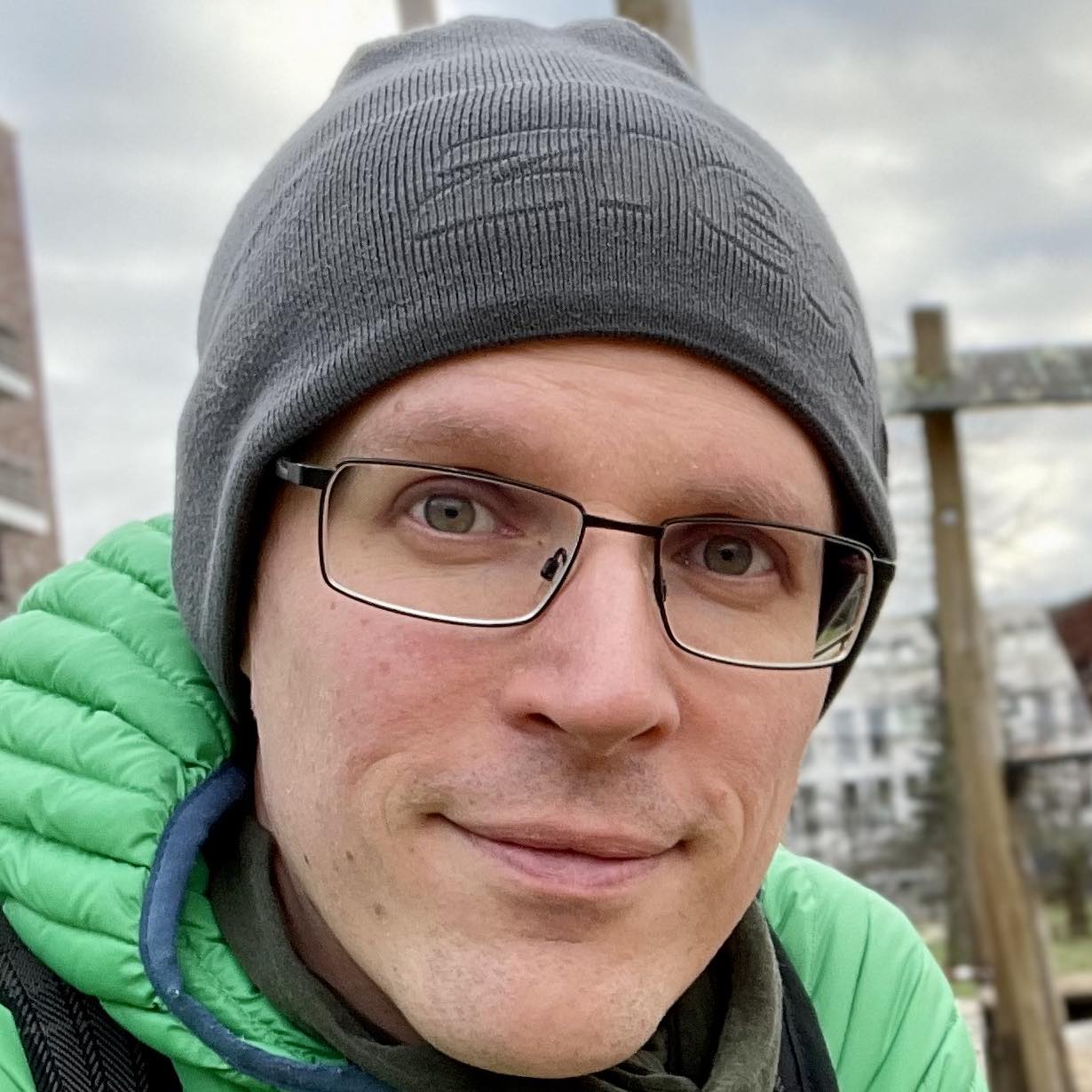
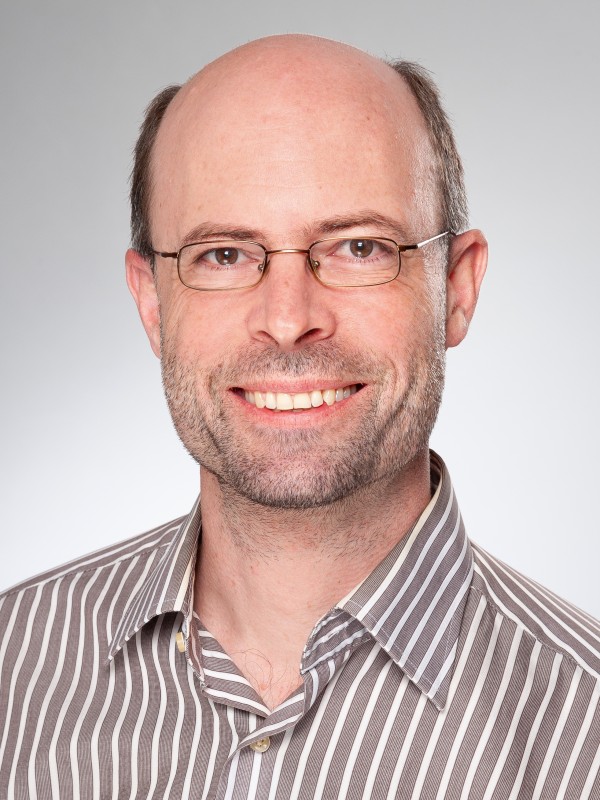
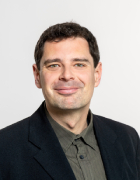
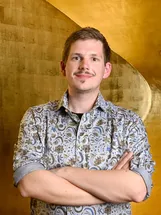
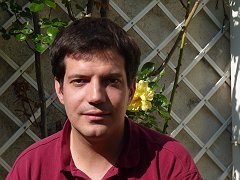
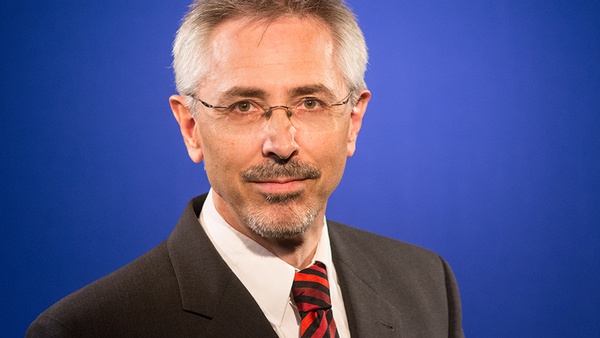
Henrik Walter is a Full Professor (W3) of Psychiatry with a focus on Psychiatric Neuroscience and Neurophilosophy at Charité – Universitätsmedizin Berlin. He serves as Director of the Mind and Brain Research Division and Deputy Medical Director (Research) at the Department of Psychiatry and Psychotherapy, Charité Campus Mitte. Walter is also a faculty member at the Berlin School of Mind and Brain , a faculty member of the Bernstein Computational Center Berlin , and a principal investigator at the Berlin Center for Advanced Neuroimaging . Clinical expertise: Schizophrenia and affective disorders Empirical research: Working memory, volition, reward mechanisms, emotion regulation, mentalization, imaging genetics, connectomics Philosophical research: Philosophy of mind, neurophilosophy, neuroethics, philosophy of psychiatry Research trends in his 15 most recent publications (2009-2024) emphasize connectome-based machine learning , dynamic network reconfiguration , self-control mechanisms , and predictive models for psychiatric relapse . His work explores the intersection of neural network organization , emotional processing , and philosophical frameworks in mental health. Walter oversees major projects including environMENTAL (data harmonization in large cohorts) and FOR5187 PREACT (personalized psychotherapy). His team actively trains students and researchers through internships, theses supervision, and doctoral programs.
Arne Meier is a Professor at Leibniz Universität Hannover, affiliated with the Faculty of Electrical Engineering and Computer Science and the Institute of Theoretical Computer Science. He heads the Algorithms research group, focusing on theoretical aspects of computer science with applications to artificial intelligence and database systems. Meier obtained all his academic degrees—Bachelor's, Master's, PhD, and Habilitation—at Leibniz Universität Hannover, establishing a strong foundation in theoretical computer science. His academic journey at the same institution reflects his deep commitment to advancing research in computational theory. Meier's research spans several interconnected areas in theoretical computer science. His primary focus is on complexity theory, particularly the parameterized complexity of problems in non-classical logics with applications to AI. He also investigates enumeration algorithms and the logical foundations of artificial intelligence. His work bridges theoretical computer science with practical applications in knowledge representation and reasoning systems. He has a notable interest in LaTeX and typography, having developed the 'timeline' package for creating timelines in LaTeX documents. His recent publications (2023-2025) demonstrate a consistent focus on the intersection of logic, complexity, and artificial intelligence. Meier's work shows progression from foundational research in dependence and team logics toward more applied areas in argumentation theory and database systems. His research increasingly addresses computational challenges in AI systems, particularly in reasoning under uncertainty and handling inconsistent information. Meier actively contributes to the academic community through extensive program committee service for major conferences including AAAI (2021, 2023, 2024, 2025), IJCAI (2021-2025), and FoIKS (2024 as Co-Chair, 2026). He has also served as a reviewer for numerous conferences and journals in theoretical computer science and artificial intelligence. His current research projects include the DAAD-funded 'Applications and Complexity of Logics in Semiring-Team-Semantics' (2024-2025) and the DFG project 'Team Logics: New Bridges to Database Repairs' (2023-2026). Previously, he led the DFG project 'Nonclassical logics: parametrised and enumeration complexity' (2013-2022) and the MWK project 'Innovation Plus: Komplexität von Algorithmen' (2020-2022). Meier leads the Algorithms research group at Leibniz Universität Hannover, which focuses on theoretical aspects of algorithms with applications to logic and artificial intelligence. The group's work spans complexity theory, logical formalisms, and their applications to computational problems in knowledge representation and database systems.
Bodo Rosenhahn is a Full Professor at Leibniz University Hannover, heading the Institute for Information Processing since September 2008. His research focuses on automated image interpretation with profound expertise in Computer Vision, Machine Learning, and Big Data Analysis. He has established himself as a leading researcher through extensive contributions to the field and successful industry transfer of his work. Rosenhahn received his Computer Science education at the University of Kiel, earning his Dipl.-Inf. in 1999 and Dr.-Ing. in 2003. His academic journey included a postdoctoral position at the University of Auckland (2003-2005), funded by the German Research Foundation, followed by senior researcher work at the Max-Planck Institute for Informatics in Saarbruecken (2005-2008). His research interests span multiple cutting-edge areas including Computer Vision, Machine Learning, 3D Human Pose Estimation, Motion Capture, Object Tracking, Anomaly Detection, and Reinforcement Learning. His work bridges theoretical foundations with practical applications, particularly in medical imaging, autonomous systems, and industrial quality control. The group he leads has developed innovative approaches for video-based motion capture, semantic scene analysis, and multi-object tracking that have achieved state-of-the-art results in numerous challenges. His most recent publications demonstrate strong trends toward explainable AI systems, uncertainty quantification in vision models, robust multi-model fitting techniques, and the integration of quantum principles with machine learning. These works reflect his commitment to developing both theoretically sound and practically applicable computer vision solutions that address real-world challenges in industry and medicine. DAGM-Prize 2002 Dr.-Ing. Siegfried Werth Prize 2003 DAGM-Main Prize 2005 ERC-Starting Grant 2011 (EUR 1.43 million) CVPR 2017 Multi-Object Tracking Challenge PhysRev-A Editors Suggestion 2023 TÜV-Süd Innovation award 2018 As head coach of the LUH AI competition team, Rosenhahn has mentored numerous students who have achieved success in international competitions. His research has been supported by prestigious grants including the ERC Starting Grant and POC Grant. He has also received the Erskine Fellowship for research at the University of Canterbury. Since 2023, he serves as associate editor for IEEE TPAMI, the highest-ranked journal in computer science. Rosenhahn leads a vibrant research group focused on automated image interpretation with multiple ongoing projects including Multiple People Tracking, Relational Object Tracking, Physics-based modeling, Video-based Motion Capture, and Quantum Learning. His group has developed significant datasets such as the Multimodal Motion Capture Indoor Dataset (MPI08) and Multimodal Motion Capture Dataset (TNT15) that have become valuable resources for the computer vision community. The group maintains strong industry connections, successfully transferring research into practical applications while continuing to push the boundaries of fundamental research in computer vision and machine learning.
Thomas Brox is a Professor for Pattern Recognition and Image Processing at the University of Freiburg , where he has headed the Computer Vision Group since 2010. He holds a PhD in computer science from Saarland University (2005) and has held postdoctoral positions at UC Berkeley, TU Dresden, and University of Bonn. Research Interests Education Publications & Awards Teaching & Leadership Roles His research focuses on computer vision and deep learning , particularly visual representation learning , video analysis , and training deep networks without manual supervision . He investigates how deep networks learn capabilities and applies these insights to action-perception cycles in robotics . Recent publications highlight trends in vision-language models , diffusion-based 3D generation , and anomaly detection . His work includes U-Net (seminal biomedical image segmentation) and FlowNet (optical flow estimation). Koenderink Prize (2014) ERC Starting Grant (2011) Longuet-Higgins Best Paper Award (2004) Multiple GCPR/ICCV/CVPR Best Paper Honors He teaches courses in Optimization , Statistical Pattern Recognition , and Computer Vision . He has served as Dean of Studies , Director of Computer Science Department , and will become Dean in 2026. His lab mentors 25+ PhD/MSc students and collaborates with institutions like Amazon (2020-2024).
Prof. Dr. Robert T. König is an Associate Professor at the Technical University of Munich (TUM) , holding the Professorship of Theory of Complex Quantum Systems in the TUM School of Computation, Information and Technology and Department of Mathematics. His research focuses on quantum information theory, with particular emphasis on mathematical methods for quantum communication, fault-tolerant quantum computing, and quantum many-body systems. Education: Diploma in Theoretical Physics, ETH Zurich (1998–2003) PhD in Applied Mathematics and Theoretical Physics, University of Cambridge (2005–2007) Key research areas include quantum communication theory , fault-tolerant quantum information processing , and quantum computation , with significant contributions to topological quantum computing, quantum error correction, and quantum channel capacity analysis. His recent work explores hybrid quantum-classical algorithms, non-abelian anyon manipulation, and bosonic code optimizations. Scientific awards include Swiss National Science Foundation Fellowship (2010) Smith/Rayleigh-Knight Prize, Cambridge (2006) ETH Medal and Willi-Studer Prize (2003) Pólya Prize, ETH Zurich (2003) He co-leads the Quantum Information Theory research group with Prof. Michael Wolf at TUM, supported by grants like the ERC Consolidator Grant 'Enhanced quantum information processing targeting the near term (EQUIPTNT)' and the Munich Quantum Valley initiative . His work has applications in quantum hardware design, noise resilience strategies, and fundamental limits of quantum communication.
Prof. Dr. Andreas Wiese is an Associate Professor at the Technical University of Munich (TUM), affiliated with the TUM School of Computation, Information and Technology and the Department of Mathematics. He previously held academic positions at the Vrije Universiteit Amsterdam (2021-2022), Universidad de Chile (2016-2021), and the Max-Planck-Institut für Informatik (2012-2016). Andreas Wiese earned his PhD in Mathematics from TU Berlin (2008-2011) and studied Mathematics and Computer Science at TU Berlin (2002-2008). His research focuses on combinatorial optimization , approximation algorithms , and geometric problem-solving , particularly for NP-hard problems in packing, scheduling, and network flow. His recent work includes A 2024 SODA publication on outlier-aware minimum sum of radii approximation A 2023 STOC paper improving weighted flow time minimization Foundational contributions to unsplittable flow and geometric knapsack problems with consistent appearances at top-tier conferences like STOC, FOCS, and SODA. Andreas Wiese leads the Discrete Optimization research group at TUM, supervising PhD students Alexander Armbruster, Elisa Dell'Arriva, and Sandy Heydrich. He has organized major conferences including LATIN 2024 and ADFOCS 2015 , and served on program committees for STOC, FOCS, and SODA.
Michael Rinderle is a researcher at the Technical University of Munich, affiliated with the TUM School of Computation, Information and Technology. He works under the Associate Professorship of Computational Photonics (headed by Prof. Jirauschek) and the Associate Professorship Simulation of Nanosystems for Energy Conversion (headed by Prof. Alessio Gagliardi). His research focuses on computational modeling of optoelectronic materials and devices, integrating machine learning with multiscale simulations. Research Interests: Michael specializes in applying machine learning techniques to materials discovery and simulation, particularly for organic semiconductors, perovskite solar cells, and electrocatalytic systems. His work bridges computational methods like kinetic Monte Carlo, density functional theory, and graph neural networks with practical applications in photovoltaics, IoT energy autonomy, and nanoscale device engineering. Teaching Roles: He contributes to courses including Computational Photonics Laboratory , Python for Engineering Data Analysis , and Simulation of Quantum Devices . His teaching emphasizes practical skills in programming, device simulation, and data visualization for engineering students. Projects: Involved in DFG e-Conversion clusters (I-III), TUM Innovation Network ARTEMIS, EU Lion-Hearted, and BMWi-funded initiatives, focusing on interfaces, energy conversion, and machine learning-driven materials optimization.
Dr. Henry Förster is a Post-Doc researcher at the Technical University of Munich (TUM) within the Chair of Efficient Algorithms, working under Prof. Stephen Kobourov. His research focuses on graph embeddings and network visualization , with applications in computer engineering, economics, and everyday contexts like metro maps. Ph.D. (Dr. rer. nat.) in Computer Science, summa cum laude, University of Tübingen (2020) M.Sc. in Computer Science, University of Tübingen (2016) B.Sc. in Engineering & Computing, TU Bergakademie Freiberg (2014) His work explores algorithmic efficiency , theoretical bounds for aesthetic criteria , and practical solutions for visualizing relational data. He has contributed to domains such as VLSI layouting, floor planning, and UML/Petri net diagram generation. Henry has received multiple accolades, including: Best Paper Award at GD 2024 First Place in GD Contest Live Challenges (2018–2022) Best Presentation Award at GD 2022 He actively contributes to academic communities as a PC member for GD2025, WG2025, and SafeToC advocate for GD. His teaching includes courses like Advanced Algorithms and Practical Course on Network Visualization .
Christian Scheideler is a Professor at the Institute for Computer Science (Theory of Distributed Systems) within the Faculty of Electrical Engineering, Computer Science, and Mathematics at the University of Paderborn. He serves as institute director, advisory committee member of SPAA, and associate editor for Journal of the ACM and Journal of Computer and System Sciences . His editorial and leadership roles extend to managing Journal of Interconnection Networks and steering committees for conferences like DISC, SIROCCO, and ALGOSENSORS. Director, Institute for Computer Science Advisory Committee, SPAA Associate Editor, Journal of the ACM and Journal of Computer and System Sciences Managing Editor, Journal of Interconnection Networks Steering Committee member for DISC, SIROCCO, ALGOSENSORS His research focuses on distributed algorithms, data structures, security in distributed systems, randomized algorithms, stochastic processes, network theory, and discrete mathematics . Notably, he investigates hybrid programmable matter systems, self-stabilizing overlay networks, and robust distributed protocols under adversarial conditions. Recent publications (2021-2025) highlight work on 3D programmable matter shape formation , low-diameter graph decompositions , reconfigurable circuits in amoebot models , and blockchain lightweight state replication . Topics span distributed computing, computational geometry, and network security. Scientific awards include the 2022 Edsger W. Dijkstra Prize in Distributed Computing for foundational work in self-stabilization and overlay networks. He has served as PC Chair (DISC 2022) and organized numerous conferences (SPAA, SSS, SIROCCO).
Dr. Toni Volkmer is a researcher affiliated with the Faculty of Mathematics at Chemnitz University of Technology. His work focuses on computational mathematics and signal processing, particularly in high-dimensional data analysis and sparse Fourier transforms. His research intersects numerical analysis, approximation theory, and algorithm design for efficient data processing. Key research areas include Sparse spectral estimation Rank-1 lattice sampling Multivariate function approximation High-dimensional data analysis Fast matrix-vector operations Graph Laplacian computations His publications demonstrate expertise in developing sublinear-time algorithms for harmonic analysis and creating efficient numerical methods applicable to modern data science challenges. While no formal awards are listed, his contributions to scientific computing have been documented in multiple peer-reviewed publications since 2012.
Dr. Michael Johannes Barz is an Associated Member at the Deutsches Forschungszentrum für Künstliche Intelligenz (DFKI) in Saarbrücken, Germany, where he conducts research within the Ubiquitous Media Technology Lab (UMTL). His work bridges human-computer interaction with artificial intelligence, focusing on gaze-based interaction, eye tracking, and interactive machine learning systems. Dr. Barz has established himself as a significant contributor to the field with over 50 publications spanning from 2015 to 2024. His research interests center on gaze-based interaction , mobile eye tracking , user modeling , and interactive machine learning , with recent work expanding into cognitive load measurement using digital pen technology and mixed reality applications for industrial training. Dr. Barz has developed influential tools like IMETA for eye tracking annotation and pEncode for visualizing pen signals, demonstrating his commitment to creating practical research methodologies. Dr. Barz's publication record shows consistent contributions to top-tier conferences including ACM ETRA, IEEE VR, and the International Conference on Intelligent User Interfaces. His 2022-2024 work reveals increasing focus on making AI systems more transparent and interactive, with publications on explaining machine learning model explanations and interactive deep learning frameworks. His research often involves interdisciplinary collaboration across computer science, cognitive science, and educational technology. Special recognition for an outstanding review at ACM ETRA 2020 Active conference reviewer for IJCAI, ACM IUI, KI, ACM ETRA, and IEEE VR Journal reviewer for Journal of Eye Movement Research Dr. Barz has contributed to teaching as an assistant for 'Intelligent User Interfaces' at TU Kaiserslautern and 'Artificial Intelligence' at Saarland University. His current research suggests strong engagement with both theoretical advancements in interactive machine learning and practical applications in educational and industrial contexts, particularly through the MASTER-XR project for mixed reality manufacturing training. The Ubiquitous Media Technology Lab provides the collaborative environment where Dr. Barz develops his innovative approaches to human-AI interaction.
William Pettersson is a Researcher at the University of Glasgow in the School of Computing Science , contributing to the Formal Analysis, Theory and Algorithms group. His work focuses on algorithm development and optimization for kidney exchange programs, supported by EPSRC grants. Current projects: KidneyAlgo (EP/X013661/1), Multilayer Algorithmics to Leverage Graph Structure (EP/T004878/1) Key tools: kep_solver software package, web-interface for kidney exchange demonstration Research Interests span mathematical algorithm design, graph theory, computational topology, and integer programming. His work bridges theoretical computer science with practical healthcare applications in organ transplantation. Technical expertise includes full-stack software development across multiple languages (assembly to Python) and open-source contributions. Additional Contributions : Maintainer of Gentoo Linux packages ( app-text/xapers , dev-python/latexcodec , etc.), developer of educational tools like The Kidney Exchange Game and twin-width graph visualization software.
Dr. Mikko Lauri is a Postdoctoral Researcher at the Department of Informatics, University of Hamburg, working in the Computer Vision Research Group. His research focuses on decision-making under uncertainty, active perception, and computer vision, with particular emphasis on multi-agent systems for cooperative tasks in robotics applications. His research interests include: Multi-agent decision-making under uncertainty Active perception and information gathering Computer vision for mobile robots Partially Observable Markov Decision Processes (POMDPs) Object pose estimation and visual object search Deep learning applications in robotics Lauri's recent work has focused on advancing theoretical frameworks for teams of agents to act cooperatively. His survey paper on POMDPs in robotics provides a comprehensive overview of decision-making under uncertainty in robotic systems. His research has practical applications in autonomous robots, including exploration, object pose estimation, and visual object search, with techniques that balance theoretical rigor with real-world implementation. Scientific contributions: Developed novel approaches for multi-agent active perception with prediction rewards Created methods for multi-sensor next-best-view planning using submodular optimization Advanced techniques for 6D object pose estimation using point clouds and deep learning Contributed to audio-visual signal processing for sound source separation Lauri collaborates extensively with researchers in the Computer Vision Research Group at the University of Hamburg and has worked with international collaborators from institutions including Aalto University (Finland) and the National University of Singapore. His work bridges theoretical foundations in decision-making under uncertainty with practical robotics applications.
David Monniaux is a senior researcher (directeur de recherche) at CNRS and an adjunct professor at École polytechnique. He works at VERIMAG, a computer science laboratory jointly operated by CNRS and the University of Grenoble. Dr. Monniaux obtained his PhD in 2001 from Université Paris Dauphine under Professor Patrick Cousot, with a dissertation on the static analysis of probabilistic programs by abstract interpretation. He later earned his habilitation in computer science in 2009 from Université Joseph Fourier, Grenoble, and also holds an agrégation in mathematics. Monniaux's research focuses on program verification, with particular emphasis on proving software correctness. His work spans theoretical foundations in computability theory and practical applications in safety-critical systems. He has made significant contributions to abstract interpretation, static analysis, and the verification of numerical properties in programs. His research bridges computer science theory with practical engineering challenges, particularly in the context of critical embedded systems where software failures can have severe consequences. His work connects to diverse fields including game theory, algebra, and convex optimization. His recent publications demonstrate a strong focus on improving the precision and efficiency of static analysis techniques. Key themes include polyhedral approximation, program analysis with local policy iteration, abstraction of arrays and maps, synthesis of ranking functions, and computing worst-case execution times. These works collectively advance the field of program verification by addressing challenges in handling nonlinear constraints, branching, and complex data structures while maintaining computational feasibility. Monniaux has supervised several students including Julien Henry, Alexis Fouilhé, George (Egor) Karpenkov, and Alexandre Maréchal (now at LIP6), with current students Hang Yu and Valentin Touzeau. He has led significant research projects including VERASCO (2012-2015), which aimed at integrating a static analyzer into the CompCert certified compiler, and STATOR (2012-2017), an ERC starting investigator grant exploring advanced techniques for automatic inference of program invariants. At VERIMAG, Monniaux is part of a vibrant research community focused on critical systems. His work connects with broader efforts in formal methods, with applications in aviation, automotive systems, and other safety-critical domains where software reliability is paramount.
Luitpold Babel is a Professor of Mathematics and Computer Science at the Faculty of Business Administration, University of the Federal Armed Forces Munich. He has been serving in this position since 2007 and continues to be actively involved in teaching and research as evidenced by his Spring Term 2025 course offerings including Fundamentals of Computer Science, Scientific Computing with Matlab, and Engineering Mathematics tutorials. His educational background includes: 1982-1987: Studied mathematics at the Technical University of Munich 1987: Diploma (with distinction) 1990: Doctorate (with distinction) 1997: Habilitation Professor Babel's research has evolved significantly over his career, beginning with theoretical work in discrete mathematics and graph theory before transitioning to applied defense technology research. His current focus spans operations research applications in military technology, particularly UAV route planning, missile guidance systems, and logistics optimization. He has developed expertise in translating complex mathematical concepts into practical engineering solutions for defense applications, with particular emphasis on kinematic constraints in path planning and risk assessment in navigation. An analysis of his publication trends reveals a clear shift from pure graph theory (1990-2005) toward increasingly applied research in aerospace engineering and defense technology (2010-present). His recent work demonstrates sophisticated integration of mathematical optimization with real-world constraints in military applications, with growing emphasis on cooperative systems, real-time replanning, and decentralized decision-making for missile and UAV fleets. His contributions have been recognized with: Teaching Award of the University of the Bundeswehr Munich (2015), awarded by the Student Convention Study Award of the German Society for Defense Technology eV Professor Babel has supervised over 30 master's and bachelor's theses, primarily focusing on defense-related applications of mathematics and computer science. His research has been supported by substantial external funding from the Federal Ministry of Defense and through multiple industry partnerships with major defense contractors including MBDA Deutschland GmbH and RAM-System GmbH. Current projects include Decentralized Flight Path Planning (2023-2025) and Studies on Technical-Logistical Tasks (2021-2024), demonstrating his continued active engagement in cutting-edge defense research.