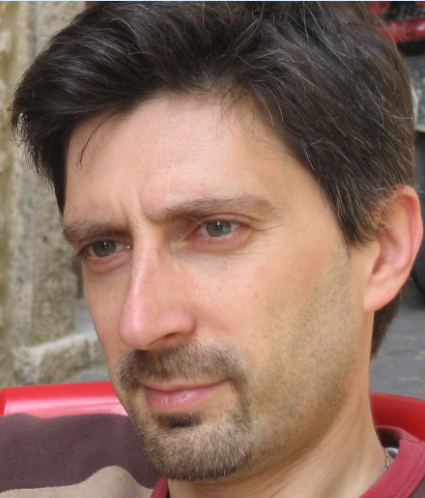
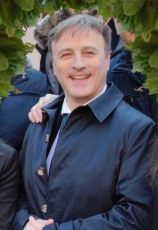
Walter Didimo is a Full Professor of Computer Engineering at the University of Perugia, with a career spanning over two decades. His expertise lies in Graph Drawing, Network Visualization, and Algorithm Engineering, contributing to advancements in Computational Geometry and Big Data. Researcher in Graph Algorithms (1996-2000) Assistant Professor (2001-2004), Associate Professor (2005-2024), Full Professor (2024-) Director of Research Unit CINI (2019-2022) His research focuses on hybrid graph visualization models (e.g., ChordLink), distributed graph processing (e.g., GiViP), and practical applications in cultural heritage (e.g., CHIP) and web analytics (e.g., COWA). Recent work includes scalable algorithms for heterogeneous networked data and visual analytics for genomics (GGB Consortium). Scientific Awards: Best Paper Award - Track 2, Graph Drawing 2021 He has been instrumental in technology transfer, co-founding Vis4 Srl (2009) and contributing to the GGB Consortium. His editorial roles include Associate Editor of IEEE Access and guest editorships for CGTA and JGAA.
Gabriele Tolomei is an Associate Professor of Computer Science at Sapienza University of Rome. He leads the HERCOLE Lab (Human-Explainable, Robust, and Collaborative Learning) and focuses on advancing AI systems that are interpretable, robust, and decentralized. His research spans machine learning, computer security, and adversarial learning. PhD in Computer Science, Ca' Foscari University of Venice (2011) MSc in Computer Science, University of Pisa (2005) BSc in Computer Science, University of Pisa (2002) His research interests are centered on Explainable AI , Robust Machine Learning , and Collaborative Learning . He has contributed to areas such as counterfactual explanations for graph neural networks, community membership privacy, and fairness in graph algorithms. His work intersects Web Search and Mining with Computational Advertising , emphasizing user engagement and post-click satisfaction. He teaches courses like Operating Systems for BSc Computer Science and Big Data Computing for MSc Computer Science. Current PhD students under his supervision include Edoardo Gabrielli, Fabiano Veglianti, Flavio Giorgi, Matteo Silvestri, and Vittoria Vineis. The HERCOLE Lab, established in 2021, promotes interdisciplinary research on human-centered AI, adversarial resilience, and edge computing. Collaborators include Fabrizio Silvestri (Full Professor), Federico Siciliano (Postdoctoral Researcher), and Ziheng Chen (Research Scientist at Walmart Labs).
Dr. Rino Ragno is a Full Professor at the Department of Chemistry and Pharmaceutical Technology , Sapienza University of Rome. His academic career spans decades of innovation in drug design , computational chemistry , and machine learning applications for chemical-biological systems. He teaches courses like Pharmaceutical and Toxicological Chemistry I and Computational Medicinal Chemistry , accessible via elearning.uniroma1.it. Research focuses on small molecule design , natural product analysis , and predictive modeling Developed the 3D-QSAR PORTAL for molecular modeling and drug discovery Active in essential oil characterization for antimicrobial, anticancer, and anti-inflammatory applications Recent publications emphasize machine learning classification models for essential oil activity prediction, anti-Bcl-2 cancer therapies , and AI-driven drug discovery . His lab employs multidisciplinary approaches combining experimental data with computational analysis to identify bioactive compounds and optimize drug candidates. The 3D-QSAR PORTAL, a free non-profit web platform, enables conformational analysis , molecular docking , and 3D-QSAR modeling accessible across electronic devices. Current projects include essential oil-based biocides for cultural heritage conservation and nanoemulsion formulations for drug delivery systems.
Aris Anagnostopoulos is a Professor at the Department of Computer, Control, and Management Engineering (Dipartimento di Ingegneria Informatica, Automatica, e Gestionale) at Sapienza University of Rome since April 2012. His academic journey includes a Marie-Curie fellowship at Sapienza University and a postdoctoral position at Yahoo! Research in Santa Clara, CA. His educational background includes: Ph.D. in Computer Science, Brown University, Providence, RI Sc.M. in Applied Mathematics, Brown University, Providence, RI Sc.M. in Computer Science, Brown University, Providence, RI Diploma in Computer Engineering and Informatics, University of Patras, Patras, Greece Professor Anagnostopoulos's research focuses on the design and analysis of algorithms with applications in data mining and data science. His work spans stochastic analysis of dynamic processes, social network modeling and mining, WWW algorithms, randomized and approximation algorithms, information retrieval, and information security. His research has evolved to address contemporary challenges in federated learning, knowledge graphs, and ethical AI considerations in recommendation systems. His recent publications demonstrate a strong trend toward addressing real-world applications of data science and machine learning, particularly in healthcare, social media analysis, and privacy-preserving techniques. His work shows increasing interdisciplinary collaboration, especially with medical researchers, while maintaining strong theoretical foundations in algorithm design. Among his notable scientific awards are: Google Focused Research Award (1 of 6 PIs), 1M USD Junior Fellow, School for Advanced Studies, Sapienza University of Rome Personal research grant, Swedish Research Foundation, 200K euro, 2011 (declined) Best Poster Award, 4th International Conference on Web Search and Data Mining (WSDM 2011) Marie Curie International Incoming Fellowship, 160K euro, 2010 Paris Kanellakis Fellowship, Brown University Runner Up, Best Paper Award, 14th International World Wide Web Conference 2005 (WWW 2005) Professor Anagnostopoulos serves as the academic responsible for mobility (RAM) for the Data Science master's program and has developed comprehensive teaching materials for data science education. He teaches courses including Social Networks and Online Markets, Algorithmic Methods of Data Mining, Data Mining, and Algorithm Design. His teaching approach emphasizes both theoretical foundations and practical applications, with extensive use of AWS and Python-based tools to prepare students for industry certification.
Emmanuela CARBÉ is an Associate Professor in the Department of Humanities at Ca' Foscari University of Venice, specializing in Contemporary Italian Literature (SSD: LICO-01/A). She is a member of the Venice Centre for Digital and Public Humanities (VeDPH) and teaches courses in the Master's Degree in Digital and Public Humanities, including Modeling and Visualizing Textual Data, Digital Literary Studies, Textual Heritage and Digital Preservation, and Storytelling for Hospitality. Her educational background includes Modern Philology studies at the University of Pavia, where she worked as a research fellow for the Pavia Digital Archives project (2013-2017). Prior to joining Ca' Foscari, she worked at the University of Siena from 2018 to 2025 in various research roles. Dr. CARBÉ's research focuses on the intersection of digital technologies and literary scholarship. Her work spans: Digital Humanities methodologies for literary analysis Preservation and study of literary archives in digital formats Authorial philology in the digital age Modern and Contemporary Italian Literature Textual criticism and digital editions Native digital literary archives Her publications and projects demonstrate a strong commitment to advancing digital approaches to literary scholarship, particularly in creating semantic catalogs for literary archives and studying digitally created literary materials. She has directed major projects including the BiGraFo semantic catalog of Franco Fortini's bibliography and the recovery of native digital material from Franco Fortini's last computer stored on floppy disks. Her notable awards include: AIUCD Giuseppe Gigliozzi Award (2020) for the ELA - Eurasian Latin Archive project Gemma Biroli prize (2015) for her doctoral thesis on Cialente's unpublished war diary Dr. CARBÉ actively contributes to the academic community through editorial roles and research leadership. She serves on the editorial boards of "Strumenti critici" and "L'Ospite ingrato" journals, and is the director of ALDiNa (Native Digital Literary Archives). She has secured research funding for projects including Biblio-graph, SCRIPTA, and SOS-DH, demonstrating her ability to lead significant scholarly initiatives. She also serves on the scientific committee of the Franco Fortini Research Center and the Technical-Scientific Committee of the Manuscript Center of the University of Pavia. Her current research involves the study of native digital literary archives and the development of digital methodologies for literary scholarship, continuing her work on digitally created literary archives through her monograph "Digitale d'autore. Macchine, archivi, letteratura" (2023).
Domenico Amato is a Researcher (INFO-01/A) at the University of Palermo in the Department of Mathematics and Computer Science . He holds regular office hours on Mondays from 3:00 PM to 4:00 PM at Via Archirafi 34, Room 203, Second Floor. His research focuses on machine learning, biomedical image analysis, and data structure optimization. His recent work includes: Explainable AI for medical imaging (brain MRIs, histopathology) Graph Neural Networks in biomedical applications Development of Learned Indexes and efficient search algorithms Deep learning applications in data analysis and classification The trends in his publications show a strong emphasis on: Medical imaging analysis (gliomas, diabetic maculopathy, histopathology) Neural network interpretability and transparency Optimization of data structures through machine learning techniques Applications of AI in both healthcare and fundamental computer science
Maurizio Patrignani is a Full Professor of Computer Science at the Department of Civil, Computer and Aeronautical Engineering at Roma Tre University, where he has served since May 2017. Since November 2022, he has also held the position of Chair of the Computer Science and Engineering Faculty Board. His academic journey began with a "Laurea" degree in Electronic Engineering from the University of Rome "La Sapienza" in 1996, followed by a Ph.D. in Computer Science from the same institution in 2001. Patrignani's research spans multiple areas within computer science, with a strong focus on graph-related disciplines. His primary research interests include Computer Networks, Graph Drawing, Information Visualization, and Computational Geometry. He has developed expertise in Dynamic Graph Drawing, Orthogonal Drawings, Planarity and Planar Graphs, Upward Planarity, and Data Center Networking. His work often bridges theoretical computer science with practical applications, particularly in network visualization and analysis. The analysis of Patrignani's recent publications reveals a consistent focus on graph theory and its applications. His work demonstrates expertise in planar graph embeddings, orthogonal drawings, and upward planarity. Recent publications show increasing attention to practical applications of graph theory in network visualization, data center networking, and route planning. His research combines theoretical algorithm design with experimental validation and user studies, reflecting a comprehensive approach to solving complex problems in graph drawing and network analysis. Patrignani has been actively involved in numerous research projects throughout his career, including EU-funded initiatives like DELIS (Dynamically Evolving, Large Scale Information Systems) and GraDR (Graph Drawings and Representations), as well as national projects funded by MIUR. His collaborative work spans multiple institutions and researchers across Europe and beyond, demonstrating his significant role in the international computer science community. He has served on numerous program committees for major conferences in graph drawing and visualization, including the International Symposium on Graph Drawing (GD) where he was co-chair for GD 2008 and GD 2012. His organizational contributions extend to the Summer Workshop on Graph Drawing (SWGD) where he has been a member of the organizing committee since 2021. Patrignani's teaching portfolio at Roma Tre University includes courses on Algorithms and Data Structures, Computer Networks, Information Visualization, and Big Data Algorithms.