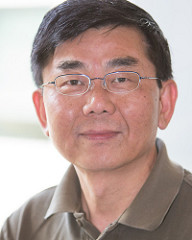
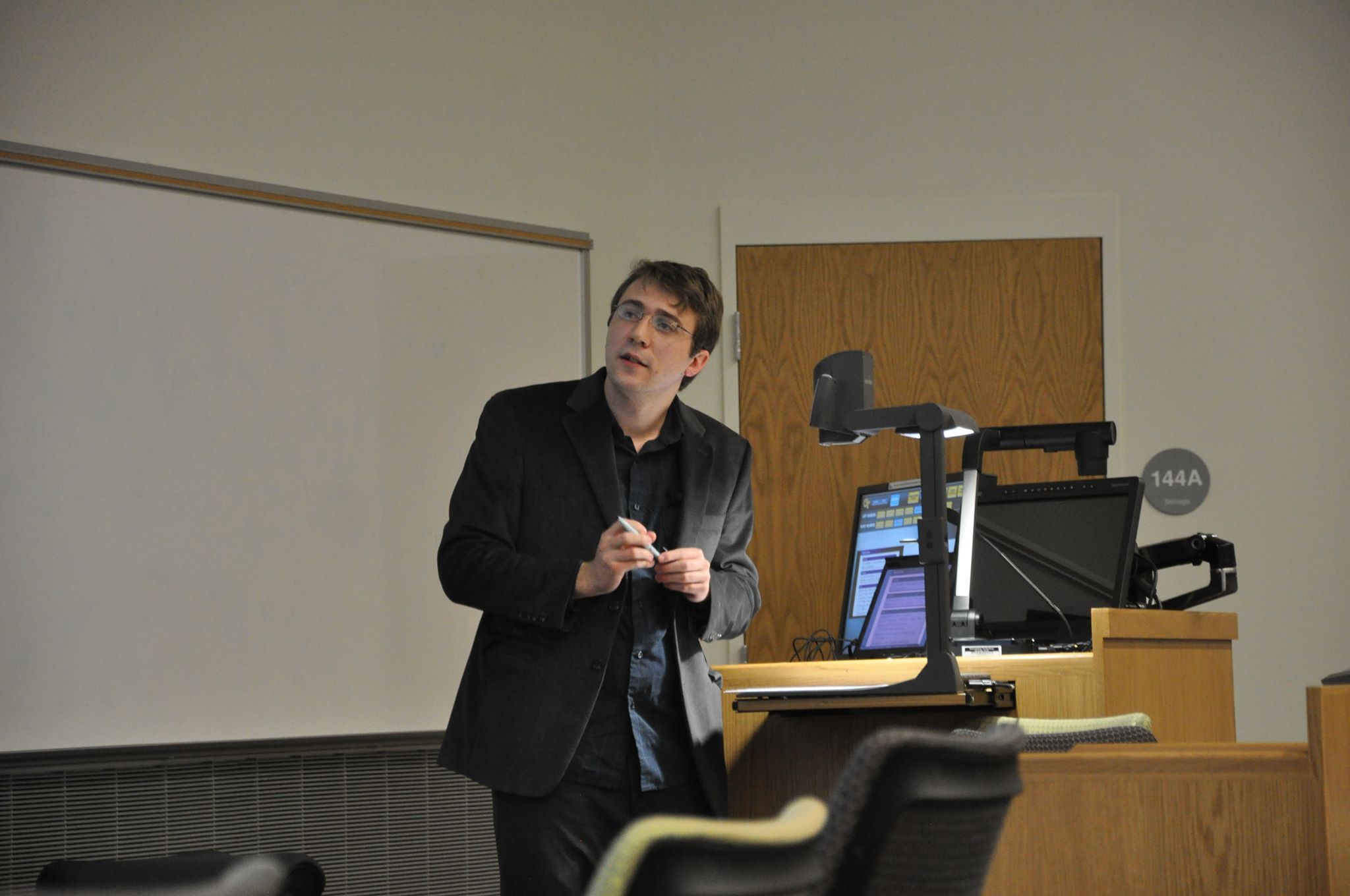
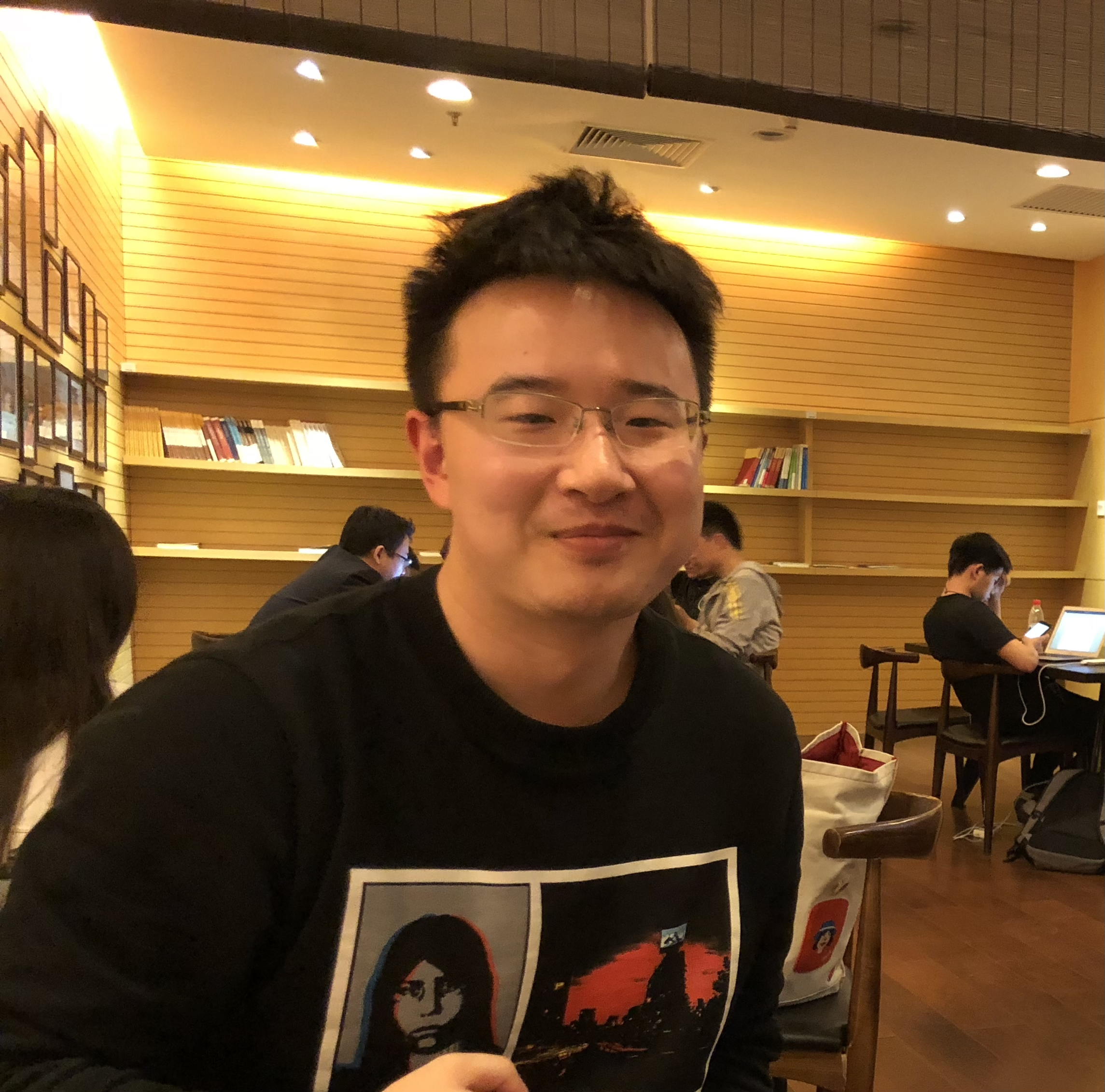
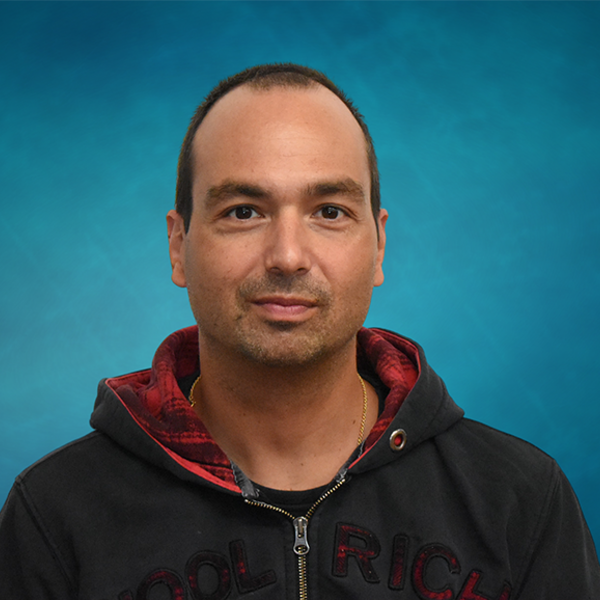
Henry Wilton is a Professor of Topology and Group Theory at the University of Cambridge's Department of Pure Mathematics and Mathematical Statistics (DPMMS), and a Fellow of Trinity College. His research focuses on geometric group theory, topology, and low-dimensional topology, with particular emphasis on hyperbolic groups, 3-manifold groups, and residual properties of groups. He has contributed extensively to understanding limit groups, profinite completions, and decision problems in geometric topology. Wilton has taught courses including Part III Geometric Group Theory (2024), Part II Riemann Surfaces (2023), and Part III Mapping Class Groups (2021). He co-organizes the Groups and Geometry in the South East seminar series and actively contributes to academic communities through blogs (e.g., Low-Dimensional Topology) and collaborations with institutions like MSRI. His recent work addresses topics such as the congruence subgroup property for mapping class groups, rational curvature invariants in 2-complexes, and coherence of one-relator groups. He has published in high-impact journals like the Journal of the American Mathematical Society, Inventiones Mathematicae, and Duke Mathematical Journal. Wilton's research also explores profinite rigidity, virtual properties of 3-manifolds, and algorithmic problems in geometric topology. He collaborates with leading mathematicians such as Martin Bridson, Daniel Groves, and Pavel Zalesskii on projects spanning geometric group theory, hyperbolic geometry, and algebraic topology.
Yann Ponty is a tenured CNRS Researcher at the Computer Science Department (LIX) of École Polytechnique (Institut Polytechnique de Paris, France). He leads the AMIBio team and serves as Deputy Director of LIX. His work focuses on developing bioinformatics methods at the intersection of computer science, mathematics, and molecular biology, particularly for RNA structure prediction, design, and evolution. He holds leadership roles in the ISCB Board of Directors (2025-2027) and the HDR referent for the IDIA department (CS&Interactions) at IP Paris. Research Interests: RNA folding/design/evolution, RNA-RNA/RNA-protein interactions, random generation, enumerative combinatorics, discrete algorithms, parameterized complexity, RNA visualization Key Contributions: Developed algorithms for RNA inverse folding, pseudoknot modeling, and dynamic programming optimization Collaborations: Partnerships with institutions like Simon Fraser University, Boston College, and Université Paris-Saclay His recent publications (15 most recent) span RNA structure prediction, pseudoknot partition functions, linear-time inverse folding algorithms, and parameterized sampling techniques. The work emphasizes dynamic programming, combinatorial approaches, and integration of experimental data for improving RNA modeling. Scientific awards include election to the ISCB Board of Directors (2025-2027) and leadership roles in academic networks like GdR BIM. He actively contributes to software development (VARNA, RNANR, SPARCS, IncaRNAtion, RNARedPrint) and serves as Associate Editor for Bioinformatics (OUP). Teaching engagements include graduate-level courses in combinatorial optimization, RNA bioinformatics, and algorithms at Université Paris-Saclay and École Polytechnique.
Xin Wang is a Professor at Fudan University's School of Computer Science, specifically within the Department of Communication Science and Engineering and affiliated with the State Key Laboratory of ASIC and System in Shanghai, China. With 185 publications spanning two decades (2003-2025), Wang maintains an exceptionally active research profile, particularly evident in recent high-output years including 22 publications in 2019, 19 in 2021, and 13 in 2024. The research portfolio demonstrates deep collaboration networks, most notably with Yang Chen (45 co-authored papers), Yangfan Zhou, and Qingyuan Gong. Wang's research spans multiple critical areas in computer science, with significant contributions to networking systems (particularly CDN optimization, HTTP/3 implementation, and IPv6 infrastructure), software engineering (focusing on work rhythms, testing methodologies, and GUI analysis), mobile applications (including healthcare implementations and accessibility features), and security (especially account security and fraud detection in e-commerce). The interdisciplinary nature of the work is evident through applications in healthcare, e-commerce, campus safety, and IoT systems. Analysis of recent publications (2023-2025) reveals a strong trend toward practical system implementations addressing real-world challenges. The research demonstrates a consistent pattern of moving from theoretical foundations to deployable solutions, with particular emphasis on optimizing performance in networking systems, enhancing security in digital platforms, and improving user experience across diverse application domains. The work frequently incorporates machine learning techniques to solve complex system problems while maintaining practical applicability. While specific grant information isn't detailed in the publication records, the extensive collaboration network spanning multiple institutions in China and internationally suggests substantial research funding support. The consistent publication output across top venues including IEEE/ACM Transactions, INFOCOM, SIGCOMM, and ICSE indicates sustained research productivity and impact.
Thomas Zaslavsky is a Professor in the Department of Mathematics and Statistics at Binghamton University . His research focuses on graph theory, matroid theory, hyperplane arrangements, and signed graphs. Recent publications highlight his work on projective rectangles, signed graph clustering, gain signed matrices, and matroid extensions. His studies often integrate combinatorial geometry with algebraic structures. Key themes in his work include the analysis of signed distance metrics, consistency in biased graphs, and the interplay between graph theory and matroid theory. His theoretical explorations span topics like cobiased graphs, Rhodes semilattices, and topological hyperplane arrangements.
Dr. Jun Le Goh is an Assistant Professor in the Department of Mathematics at the National University of Singapore (NUS). His research focuses on mathematical logic, set theory, computational complexity, computability theory, and combinatorics. He holds a Bachelor of Science (Honors, Class 1) from NUS (2013) and a Ph.D. in Mathematics from Cornell University (2019). His work bridges foundational areas of mathematics with computability theory, particularly in reverse mathematics and Weihrauch reducibility. Notable contributions include analyzing the complexity of Halin's infinite ray theorems, studying descending sequences in ill-founded linear orders, and exploring enumeration oracles in PA relativization. His research often intersects with proof theory, recursion theory, and algorithmic information theory. Dr. Goh collaborates with institutions globally, publishing in journals like the Journal of Mathematical Logic, Annals of Pure and Applied Logic, and Computability. His preprints and conference proceedings further highlight his engagement with cutting-edge topics in computability and logic.
Dr. Jing Huang is a Professor in the Department of Mathematics and Statistics at the University of Victoria. He holds a PhD from Simon Fraser University. His research focuses on graph theory, algorithms, and computational complexity, with a particular emphasis on graph structures and their algorithmic applications. Notable contributions include the lexicographic method for graph orientations and a dichotomy theorem for list homomorphism problems. Education: PhD, Simon Fraser University Research interests span structural graph theory, orientation algorithms, and algorithmic characterizations of graph classes such as interval graphs, chordal graphs, and circular arc graphs. Recent work addresses orientation completion problems and cocomparability graph properties. Courses taught include discrete mathematics and graph theory. His work bridges theoretical insights with practical algorithm design, often involving collaboration with leading researchers in the field. Advising & Grants: No student advisees listed; grants and collaborations are central to his research trajectory. His lab focuses on advancing graph theory through algorithmic innovation.
Peter Nelson is an Associate Professor in the Department of Combinatorics and Optimization at the University of Waterloo, Canada. He currently serves as the Associate Chair for Undergraduate Studies, coordinating academic advising and managing departmental operations. His research focuses on structural and extremal matroid theory, graph theory, and their connections to coding theory, additive combinatorics, and finite geometry. He holds an NSERC Discovery Grant and has contributed to foundational work on matroid minors, binary matroid classification, and combinatorial enumeration. His recent interests include formalizing proofs in the LEAN theorem prover. Education: Ph.D. in Mathematics (University of Waterloo, 2008) with a thesis titled *Exponentially dense matroids*. His academic journey includes postdoctoral research and teaching roles prior to his current position. Research Interests: Structural matroid theory (e.g., minor-closed classes, forbidden configurations) Binary matroid extremal problems Applications to coding theory and additive combinatorics Formal proof systems like LEAN Advising & Grants: As Associate Chair, he oversees undergraduate academic advising via coundergrad.officer@uwaterloo.ca . His NSERC grant supports investigations into matroid density and extremal configurations. He has collaborated extensively with institutions globally, including co-authoring over 40 peer-reviewed publications. Labs/Teams: Active member of the Combinatorics and Optimization research group at Waterloo, contributing to collaborative projects on matroid theory and discrete mathematics.
Dr. Luke Postle is a Canada Research Chair in Graph Theory and a Professor in the Department of Combinatorics and Optimization at the University of Waterloo. His research focuses on Graph Coloring, Graph Decompositions, Topological and Structural Graph Theory, Extremal and Probabilistic Combinatorics, and Matroids. He has received the 2021 Coxeter-James Prize for his contributions to combinatorics. His work includes theoretical advancements in graph coloring, decomposition algorithms, and structural properties of graphs on surfaces. He teaches courses on Graph Theory and Probabilistic Methods, with lecture series available on YouTube. Postle’s research has been published in top journals such as Journal of Combinatorial Theory Ser. B , Journal of Graph Theory , and Transactions of the American Mathematical Society . His articles address problems in list coloring, cycle counting, matroid structure, and probabilistic graph decomposition. Key Awards: 2021 Coxeter-James Prize Teaching: Graph Theory and Probabilistic Methods courses on YouTube Research Themes: Structural Graph Theory, Combinatorial Optimization, Probabilistic Methods
Leonard J. Schulman is a Professor of Computer Science at the California Institute of Technology (Caltech), where he has been on the faculty since 2000. He is affiliated with the Caltech Center for the Mathematics of Information (which he directed from 2003 to 2017) and the Institute for Quantum Information and Matter. His academic appointments have included positions at UC Berkeley, the Weizmann Institute of Science, the Georgia Institute of Technology, and the Mathematical Sciences Research Institute. Schulman received his BSc in Mathematics in 1988 and his PhD in Applied Mathematics in 1992, both from the Massachusetts Institute of Technology (MIT). Schulman's research spans several overlapping areas in theoretical computer science and applied mathematics. His work focuses on algorithms and communication protocols , combinatorics and probability , coding and information theory , and quantum computation . More recently, his research has expanded into causal inference and machine learning , particularly in the areas of mixture models, causal discovery, and structure learning. His approach combines deep theoretical insights with practical applications across multiple domains. An analysis of Schulman's recent publications (2019-2025) reveals a strong focus on causal inference and machine learning, particularly in the areas of mixture models, causal discovery, and structure learning. His work bridges theoretical computer science with statistical learning, often developing novel algorithms with provable guarantees. He has also maintained his foundational work in coding theory, algorithms, and quantum computation, demonstrating remarkable breadth across theoretical computer science. IEEE Schelkunoff Prize (2004) ACM Notable Paper (2012) UAI Best Paper Award (2016) FOCS Test of Time Award (2022) S. A. Schelkunoff Transactions Prize Paper Award (2004) SIAM Fellow NSF CAREER award NSF mathematical sciences postdoctoral fellowship MIT Bucsela prize in mathematics Schulman has advised numerous PhD students and postdoctoral researchers who have gone on to successful careers in academia and industry. His former students and postdocs include notable researchers such as Ashwin Nayak, Yaoyun Shi, Sean Hallgren, Jie Gao, and Michael Langberg. He served as Editor-in-Chief of the SIAM Journal on Computing from 2013 through 2018 and has been on the editorial boards of several prestigious journals including the Journal of the ACM, ACM Transactions on Algorithms, and SIAM Journal on Discrete Mathematics. Schulman directs the Caltech Center for the Mathematics of Information, a research center focused on the mathematical foundations of information processing, communication, and computation. His work often involves interdisciplinary collaborations across computer science, mathematics, physics, and economics.
Xiusi Chen is a Postdoctoral Research Fellow in the Blender Lab at the University of Illinois Urbana-Champaign (UIUC), working under Prof. Heng Ji. His research focuses on improving reasoning, alignment, and decision-making capabilities of Large Language Models (LLMs). Previously, he completed his Ph.D. in Computer Science at UCLA under Prof. Wei Wang, and earned M.S. and B.S. degrees in Computer Science from Peking University under Prof. Jun Gao. His educational background includes: Ph.D. in Computer Science, University of California, Los Angeles (UCLA), advised by Prof. Wei Wang M.S. in Computer Science, Peking University, advised by Prof. Jun Gao B.S. in Computer Science, Peking University, advised by Prof. Jun Gao Dr. Chen's research program targets three interconnected areas: advancing Large Language Models (particularly in low-resource reasoning and alignment), developing NLP applications for AI in Science and recommendation systems, and modeling complex decision-making processes in sports domains. His work bridges theoretical foundations with practical implementations, resulting in numerous publications in top-tier conferences including ACL, ICML, ICLR, and KDD. Analysis of his recent publications reveals a strong focus on making LLMs more efficient, reliable, and capable of complex reasoning tasks across diverse domains. His significant academic contributions include: 2023 Best Poster Award (Honorable Mention) at SDM 2023 2023 SIAM Student Travel Award 2021 and 2022 SIGIR Student Travel Grants from ACM SIGIR Multiple academic scholarships from Peking University Co-creation of the widely adopted Amazon Reviews'23 dataset (500k+ HuggingFace downloads) Dr. Chen actively serves the research community as Workshop Organizer for KDD 2025, Program Committee member for major conferences (KDD, WSDM, ICML, NeurIPS, ICLR, AAAI), and journal reviewer. He maintains a strong commitment to mentoring, offering dedicated time for students (especially from underrepresented groups) to discuss research and career development. Starting Fall 2025, he will be seeking academic positions to continue his research on language agents and decision-making systems. Currently based in the Siebel Center for Computer Science, Dr. Chen collaborates with the Blender Lab team on advancing NLP and LLM capabilities. His work has practical impact through widely adopted resources like the Amazon Reviews'23 dataset and theoretical contributions through his publications on reasoning frameworks and alignment techniques.
Dr. Arie Levit is a Senior Lecturer (tenure track) in the Department of Theoretical Mathematics at Tel Aviv University's School of Mathematics, a position he has held since 2021. Previously, he served as a Gibbs Assistant Professor at Yale University from 2017. His academic career centers on pure mathematics with emphasis on structural properties of discrete groups and dynamical systems. His educational background includes: B.A in Mathematics from the Hebrew University of Jerusalem (2004) M.A in Mathematics from the Hebrew University of Jerusalem (2012) Ph.D. in Mathematics from the Weizmann Institute of Science (2017) under Prof. Tsachik Gelander Levit's research spans discrete groups, geometric and analytic group theory, and ergodic theory, with significant contributions to lattice theory, invariant random subgroups, character rigidity, and group stability. His work integrates algebraic, geometric, and probabilistic frameworks to solve fundamental problems in classification and rigidity of group actions, particularly in non-Archimedean and hyperbolic settings. Analysis of his 14 publications (2014-2024) reveals evolving focus from foundational lattice theory toward contemporary stability phenomena and character theory, with 60% of recent work (2022-2024) addressing permutation stability, Hilbert-Schmidt representations, and ergodic properties of group actions. Key methodological threads include the application of ergodic theory to group-theoretic classification and the development of analytical tools for stability problems. His scholarly recognition includes: Klein Prize (2017) ISF-BSF research grant (2020) As principal investigator of the ISF-BSF grant, Levit leads research on group stability and ergodic theory. His extensive collaborations with Gelander, Lubotzky, and Lazarovich demonstrate active mentorship within the global mathematics community. His work is conducted within Tel Aviv University's Theoretical Mathematics department, which maintains strong international partnerships in geometric group theory and dynamics.
Violetta Lonati is an Assistant Professor at the University of Milan 's Department of Computer Science since 2005. Her research spans Formal Languages and Automata (operator precedence languages, Wang automata, tiling systems) and Computer Science Education . She co-authored over 15 publications in theoretical computer science and education, focusing on 2D language recognition, logic characterization of automata, and pattern statistics in stochastic models. Education : PhD in Computer Science (2005) and Laurea in Mathematics (2001) from University of Milan Research Groups : ALaDDIn Lab for Didactics and Dissemination of Informatics, Bebras International Initiative Her work on Wang automata established their equivalence to tiling systems while introducing deterministic variants. In education, she designed workshops for schools and contributed to Italy's national computing curriculum proposal (2019). She held leadership roles at ACM ITiCSE (WG5 leader 2022), served as Associate Program Chair (2019-2022), and reviewed for top venues like ICER and SIGCSE TS. She received Google CS[4]HS and Informatics Europe awards for her educational contributions. Key Publications (2017-2001): Input-driven locally parsable languages (TCS 2017) Operator precedence logic characterization (SICOMP 2015) Snake-deterministic tiling systems (MFCS 2009) Graph fibrations and PageRank (RAIRO 2006) Pattern statistics in rational models (STACS 2005) Scientific awards include Google CS[4]HS (2011, 2017, 2019) and the Informatics Europe Best Practices in Education (2016). As part of ALaDDIn, she developed teacher training programs and graduate courses on computing education. Her teaching experience covers Algorithms & Data Structures (2013-2023), Computer Science Teaching (2014-2023), and courses for Biotechnology and Geological Sciences programs (2005-2007).
Giorgio Scorzelli is a researcher at the University of Utah, serving as Director of Software Development for the Center for Extreme Data Management, Analysis, and Visualization (CEDMAV) and the National Science Data Fabric (NSDF) . He specializes in extreme data management, scientific visualization, and computational topology, with a focus on scalable solutions for climate science, materials science, and neuroscience datasets. His work emphasizes democratizing data access through platforms like OpenVisus , enabling efficient analysis of petascale and exascale data. Key contributions include orchestrating cyberinfrastructure, optimizing parallel I/O, and developing real-time visualization systems for heterogeneous resources. Notable scientific contributions include the NSF Grant #2127548 for NSDF development . His projects integrate cloud computing, geo-distributed storage, and FAIR digital objects to lower barriers to data democratization. Giorgio's research spans multi-resolution algorithms , computational topology , and 3D geometric modeling , with applications in infrastructure security, archaeological reconstruction, and biomedical imaging. His work bridges abstract mathematical frameworks (e.g., Boolean algebras, chain complexes) with practical software solutions.
Zhaozheng Yin is an Associate Professor in the Department of Biomedical Informatics and Department of Computer Science at Stony Brook University, affiliated with the College of Engineering and Applied Sciences. His research focuses on biomedical image analysis, computer vision, machine learning, and human-robot collaboration in smart manufacturing contexts. Ph.D. in Computer Science and Engineering from Pennsylvania State University (2009) M.S. in Electrical and Computer Engineering from University of Wisconsin-Madison B.S. in Automation from Tsinghua University Active in advancing microscopy image analysis through novel algorithmic approaches, Dr. Yin's work bridges theoretical computer science with practical applications in healthcare and industrial automation. His research emphasizes: Intelligent human-robot collaboration systems Cyber-physical sensing and augmented reality for manufacturing Medical image segmentation and classification techniques Temporal action localization and counting algorithms His publications demonstrate expertise in domain adaptation, vision-language integration, and graph-based modeling. Grant-funded projects include NSF CAREER support for microscopy analysis and NRI/CPS grants for collaborative robotics research. Best Doctoral Spotlight Award, CVPR 2009 Young Scientist Awards at MICCAI (2010-2015) NSF CAREER Award recipient (2014) Best Paper Awards at CVPR workshop (2015) and IISE (2018)
Teresa Cristina de Freitas Gonçalves is an Associate Professor at the Department of Informatics, School of Sciences and Technology, University of Évora, where she has been employed since 1999. She serves as an integrated researcher at the ALGORITMI research centre and is the Director of the VISTA Lab (Video, Image, Speech and text Analysis Lab), the unit of the ALGORITMI research centre at University of Évora. Her leadership roles include Director of the Master programme in Informatics Engineering and deputy Director of both the Master programme in Artificial Intelligence and Data Science and the Doctoral program in Computer Science. She earned her PhD in Computer Science from University of Évora and a MSc degree in Informatics Engineering from New University of Lisbon. Her academic journey at University of Évora has included significant leadership positions including Head of the Computer Science Department (2011-2015), Director of the Bachelor programme in Informatics Engineering (2016-2021), and Deputy Director roles for various undergraduate and graduate programs. Dr. Gonçalves' research focuses on intelligent systems, particularly Machine Learning approaches, with substantial contributions in evolutionary algorithms, information extraction and retrieval, and supervised learning across multiple data modalities including tabular data, text (in both Portuguese and English), and images (medical and satellite). Her work bridges theoretical advances with practical applications in healthcare, remote sensing, and natural language processing. She has successfully supervised 6 doctoral theses, 19 master theses, and 3 postdocs, and currently mentors 5 doctoral and 6 master students from diverse international backgrounds including Bangladesh, Cabo Verde, Nepal, Philippines, India, Sri Lanka, China, Mongolia, and Portugal. Her publication record includes over 100 scientific articles indexed by Scopus with 640 citations and an h-index of 12, demonstrating significant international impact with 56% of her work involving international collaboration. Her recent research shows a strong trend toward applying advanced machine learning techniques to healthcare applications, information retrieval systems, and remote sensing analysis, with particular emphasis on transformer networks, learning-to-rank methodologies, and multimodal data analysis. Dr. Gonçalves has made substantial contributions to the academic community through her service as a reviewer for over 50 articles in prestigious international journals and conferences, and as chair for major international conferences including IDEAL 2023, PROPOR 2020, SKIMA 2017 and 2018, and CLEF 2016. She serves on the board of APRP (Associação Portuguesa de reconhecimento de Padrões) and as a jury member for APRP prizes for best MSc and PhD theses. Her current research portfolio includes coordination of the Horizon Europe MSCA Staff Exchange HarmonicAI project and local coordination of WP6 in the NewSpace Portugal mobilising agenda. She is also actively involved in numerous other international research initiatives including Interreg VI-B Sudoe SenforFire, PRR CANTE, La Caixa INCOME, Erasmus+ KA220-HED REDINEST, Interreg POCTEP TID4AGRO, and ATTRACT DIH projects. Previously, she led the FCT AI in the Public Administration SNS24.Scout.IA project and coordinated the FEDER R&D NIIAA project. As Director of the VISTA Lab, Dr. Gonçalves leads a dynamic research team focused on video, image, speech, and text analysis. The lab serves as the Évora hub of the ALGORITMI research centre and has established strong international collaborations. Under her leadership, the VISTA Lab has developed innovative approaches in medical image analysis, natural language processing for Portuguese, and satellite image classification, with applications spanning healthcare, environmental monitoring, and public administration.