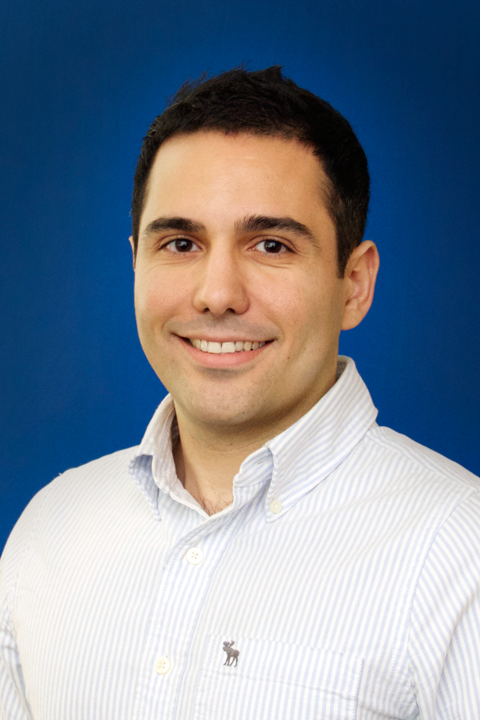
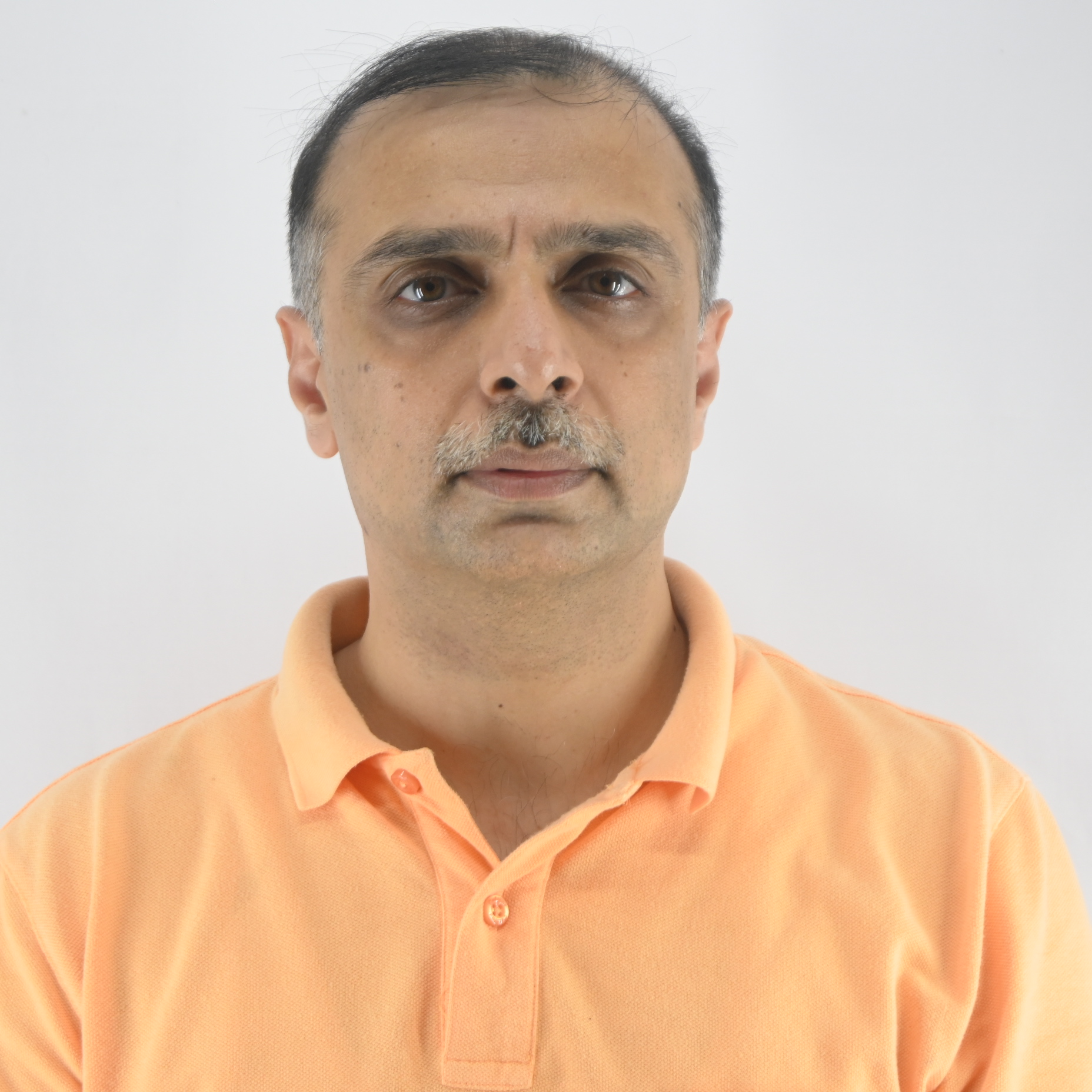
Jiaxuan You is an Assistant Professor at the Siebel School of Computing and Data Science, University of Illinois at Urbana-Champaign, leading the U Lab focused on achieving Artificial General Intelligence (AGI) in digital environments. His research spans graph neural networks (GNNs), relational data, foundation models, and machine learning systems. PhD and MS in Computer Science from Stanford University (2021) Developed GraphGym and PyTorch Geometric (PyG) for graph learning Core member at Kumo AI (2021-2023) His research explores: Graph-enhanced LLMs: Integrating relational structures into foundation models AGI Development: Self-optimizing AI agents and tool utilization ML Systems: Scalable architectures and redundancy-free computation Interdisciplinary Applications: Financial networks, crop yield prediction, and metro systems Recent publications focus on temporal reasoning, multi-agent dynamics, and hybrid architectures for LLMs. He actively develops open-source tools like DBGYM and GraphRouter. Scientific recognition includes: JPMC PhD Fellowship Baidu Scholarship Best Student Paper at AAAI 2017 World Bank Big Data Innovation Challenge winner He mentors PhD and intern students, emphasizing machine learning systems expertise. His lab collaborates on AGI workshops (e.g., ICLR 2024) and industry projects.
Osman Yağan is a Research Professor in the Department of Electrical and Computer Engineering at Carnegie Mellon University (CMU), with affiliate faculty status in the School of Computer Science. He is also a core member of CyLab Security and Privacy Institute. Prior to joining CMU in 2013, he was a Postdoctoral Research Fellow at CyLab. He holds a Ph.D. in Electrical and Computer Engineering from the University of Maryland (2011) and a B.S. from Middle East Technical University (2007). His research focuses on modeling, analysis, and optimization of computing systems, leveraging applied probability, network science, data science, and machine learning. Key areas include multi-armed bandits, resilient machine learning, contagion processes in networks, and cybersecurity. Research Interests include Machine Learning, Data Science, Network Science, Cybersecurity, and Robustness in Cyber-Physical Systems. He has advised numerous students, including current PhD candidates Yurun Tian, Orkun İrsoy, and Ishank Juneja, as well as notable alumni such as Mansi Sood (now at MIT) and Jun Zhao (Assistant Professor at Nanyang Technological University). Key Awards include the CIT Dean's Early Career Fellowship, IBM Academic Award, and Best Paper Awards at ICC 2021, IPSN 2022, and ASONAM 2023. His work spans theoretical contributions (e.g., contagion models in multi-layer networks) and applied research (e.g., mitigating cascading failures in power systems). He leads or co-leads grants from ONR, NSF, and ARO, focusing on resilient machine learning, network robustness, and pandemic modeling.
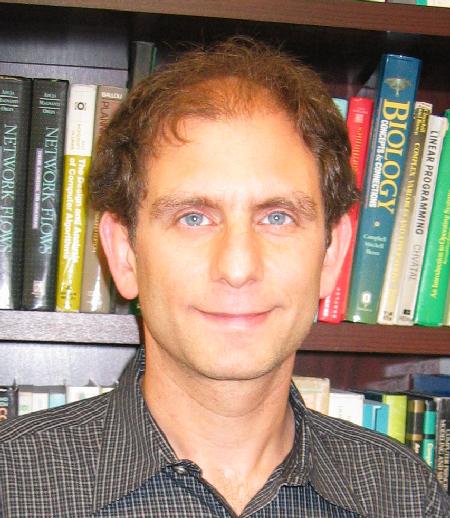
Clifford Stein is a Professor of Industrial Engineering and Operations Research (IEOR) and Computer Science at Columbia University, and Associate Director for Research at the Data Science Institute. He holds a Ph.D. (1992), M.S. (1989), and B.S.E. (1987) from MIT and Princeton University, respectively. His research focuses on algorithms, combinatorial optimization, operations research, scheduling, and computational biology. A co-author of the best-selling textbook Introduction to Algorithms , Stein has published widely in top venues and holds prestigious awards like ACM Fellow and NSF Career Award. His work includes foundational contributions to minimum cut algorithms, scheduling theory, and network optimization, supported by NSF and Sloan Foundation grants. Stein has advised over 40 graduate and undergraduate students, many now in academia and industry.
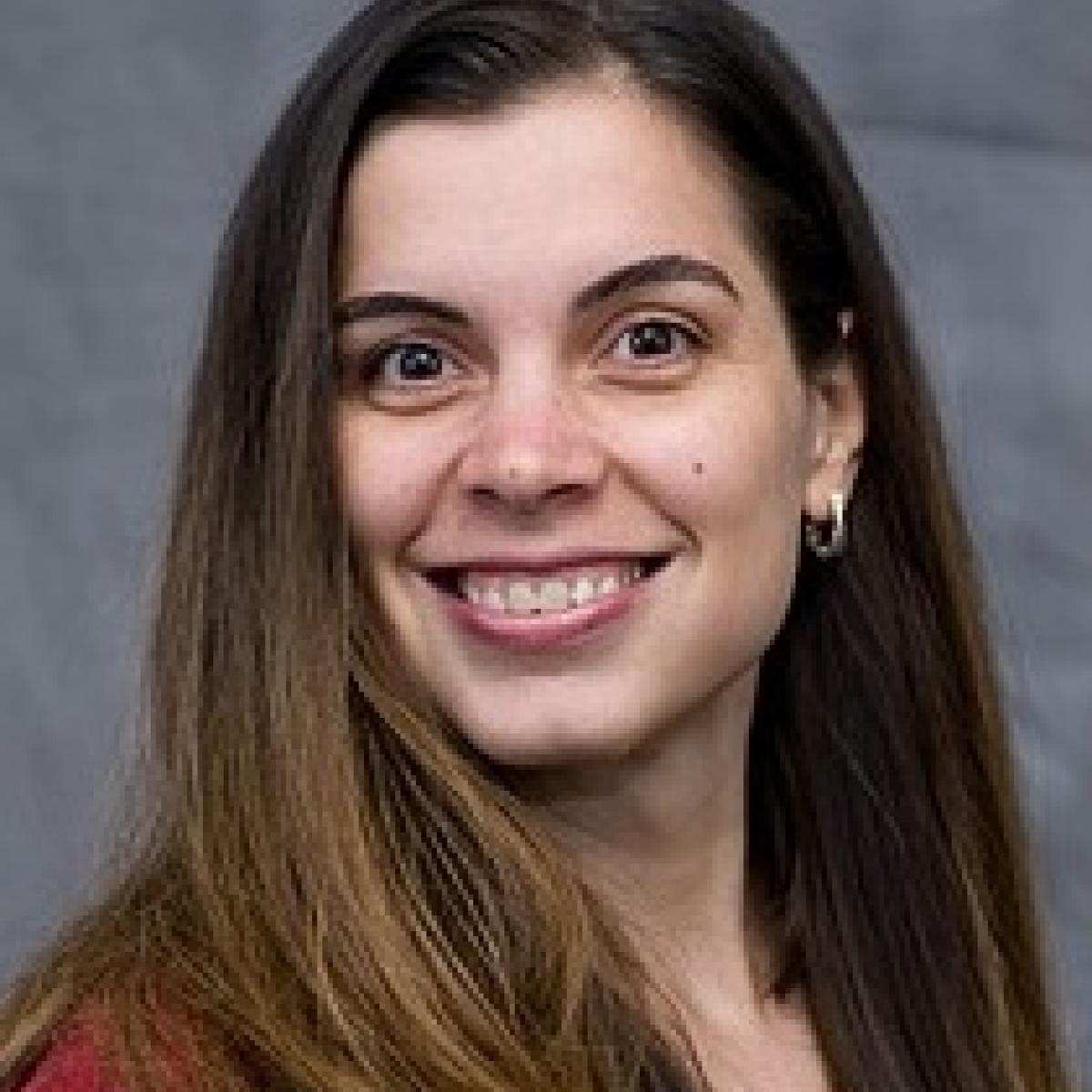
Bei Wang Phillips is an Associate Professor in the School of Computing and a faculty member at the Scientific Computing and Imaging (SCI) Institute at the University of Utah. She holds a Ph.D. in Computer Science from Duke University and an undergraduate degree from the University of Bridgeport. Her research focuses on Topological Data Analysis (TDA), data visualization, computational topology, and machine learning, with applications in scientific data exploration and analysis. She has received prestigious awards including the NSF CAREER Award (2022) and the PECASE Award (2025). Her work spans projects funded by NSF, NIH, and DOE, including multiparameter TDA and topology-aware data compression. She advises numerous students and collaborates on interdisciplinary initiatives in astrophysics, climate science, and AI fairness. Education: Ph.D. in Computer Science, Duke University (2010) B.S. in Computer Science and Mathematics, University of Bridgeport (2003) Research Interests: Topological techniques for large-scale data analysis Integration of topological, geometric, and machine learning methods Applications in visualization, bioinformatics, and network analysis Key Projects: NSF-funded TDA research (DMS-2301361, OAC-2313124) DOE project on topology-preserving data compression Collaborations with NASA, Argonne National Lab, and Carnegie Institution of Washington Awards: Presidential Early Career Award for Scientists and Engineers (2025) NSF CAREER Award (2022) DOE Early Career Research Program (2020) Advising and Grants: Mentored over 30 students and postdocs Recipient of multiple NSF and DOE grants totaling millions
Daniel Dominic Kaplan Sleator is a Professor of Computer Science at Carnegie Mellon University's School of Computer Science. He maintains an office in the Gates-Hillman Center (7205 Gates-Hillman) and teaches various courses in algorithms and theoretical computer science. Professor Sleator's research spans several areas of theoretical computer science and algorithms. His primary interests include: Algorithms and Data Structures Amortized Analysis and Competitive Analysis Persistent and Self-Adjusting Data Structures Computational Geometry and Combinatorial Optimization Combinatorial Game Theory and Mathematical Games Music Analysis using Computational Methods His extensive publication record shows a consistent focus on efficient data structures and algorithms. Over the years, his work has evolved from foundational data structures like splay trees and skew heaps to applications in diverse areas such as music analysis and combinatorial games. A notable trend in his work is the development of self-adjusting data structures that achieve excellent amortized performance without maintaining explicit structural constraints. His papers on splay trees, skew heaps, and persistent data structures have become classics in the field. Professor Sleator has made significant contributions across multiple domains of computer science. His work on competitive algorithms for paging and list update problems has been particularly influential, establishing fundamental results in online algorithms. His research extends beyond traditional computer science into interdisciplinary areas like computational music theory, demonstrating the broad applicability of algorithmic thinking. He teaches a variety of courses including Algorithms 15-451/651, Competition Programming 15-295, and specialized topics like mathematical games.
Florentina Bunea is a Professor in the Department of Statistics and Data Science at Cornell University’s Bowers College of Computing and Information Science, and an active member of the Graduate Fields of Statistics, Applied Mathematics, and Computer Science. She also serves on the Diversity and Inclusion Council of her college, championing workforce diversity in data-science disciplines. Education & Institutional Roles Professor, Department of Statistics and Data Science, Cornell University Member, Graduate Fields of Statistics, Applied Mathematics, Computer Science Member, Diversity and Inclusion Council, Bowers College of Computing and Information Science Research Interests Professor Bunea’s research lies at the intersection of statistical machine-learning theory and high-dimensional inference. She develops rigorous methodology supported by sharp theoretical guarantees to tackle core problems in modern data science. Recent themes include: Soft-max mixtures for understanding large-language-model/AI algorithms Optimal transport for high-dimensional mixture distributions Wasserstein-distance inference for sparse mixing measures in topic models Latent-space clustering and cluster-based inference in high dimensions Network modeling and hidden-structure inference Applications spanning genetics, systems immunology, neuroscience, sociology, and economics Research Funding & Awards Her work is supported by grants from the National Science Foundation (NSF-DMS). She is a Fellow of the Institute of Mathematical Statistics and a recipient of the IMS Medallion Award. Editorial & Service Contributions Associate Editor: Annals of Statistics, Bernoulli, JASA, JRSS-B, EJS, Annals of Applied Statistics Co-Editor: Chapman & Hall/CRC Statistics and Applied Probability Monograph Series Advising & Collaboration Professor Bunea has mentored numerous doctoral and post-doctoral researchers, including Xin Bing, Shuyu Liu, Seth Strimas-Mackey, and Yang Ning, among others. Collaborative projects extend across Cornell and external institutions, producing widely-used software packages and high-impact publications. Contact Office: 1184 Comstock Hall, Cornell University Email: fb238@cornell.edu Phone: (607) 255-8449
Andreas Vlachos is a Professor of Natural Language Processing and Machine Learning at the Department of Computer Science and Technology, University of Cambridge, and holds the Dinesh Dhamija Fellowship at Fitzwilliam College. His research spans dialogue modeling, automated fact-checking, imitation learning, semantic parsing, biomedical text mining, and trustworthiness in AI systems. PhD in Computer Science, University of Cambridge (supervised by Ted Briscoe and Zoubin Ghahramani) Lecturer at University of Sheffield Postdoctoral roles at UCL, University of Cambridge (NLIP group, Stephen Clark), and University of Wisconsin-Madison (Mark Craven) Current research focuses on evaluating and mitigating biases in language models, advancing fact-checking methodologies, and improving model robustness through interpolation, reinforcement learning, and causal reasoning. His work integrates natural logic, knowledge graphs, and multimodal evidence for verification tasks. Recent publications address uncertainty quantification, temporal planning benchmarks, and ethical framing of NLP artifacts. Grants from ERC, EPSRC, Facebook, Google, and the Alan Turing Institute fund his research team. Collaborations include Sebastian Riedel, Stephen Clark, and Mark Craven. Key projects explore disinformation detection, long-form generation, and confidence calibration in AI systems.
Nina Balcan is a Professor at Carnegie Mellon University and holds the Cadence Design Systems Professorship in Computer Science. She is affiliated with the School of Computer Science, specifically the Machine Learning Department (MLD) and Computer Science Department (CSD). Her research spans foundational aspects of machine learning, artificial intelligence, theoretical computer science, algorithmic game theory, and interdisciplinary connections in learning theory. Machine Learning Artificial Intelligence Theoretical Computer Science Algorithmic Game Theory Multi-Agent Systems Data-Driven Algorithm Design Her recent work focuses on advancing algorithm design through machine learning, robustness in adversarial environments, and economic modeling. Key contributions include Learning to Branch (JACM 2024), Regret Minimization in Stackelberg Games (NeurIPS 2024), and Learning Accurate Decision Trees (UAI 2024, Outstanding Student Paper Award). She has pioneered novel approaches to data-driven optimization, semi-supervised learning, and privacy-preserving clustering. Nina has received prestigious accolades including ACM Fellow AAAI Fellow Simons Investigator 2019 ACM Grace Murray Hopper Award Her teaching at CMU includes graduate courses on machine learning, advanced machine learning, and specialized topics like algorithmic game theory.
Ajit Rajwade is a Professor at the Department of Computer Science and Engineering , Indian Institute of Technology Bombay. His research spans Artificial Intelligence , Compressed Sensing , and Medical Imaging , with affiliations to the Centre for Machine Intelligence and Data Science and the Koita Centre for Digital Health . Education : PhD in Computer and Information Science and Engineering, University of Florida (2010) MSc in Computer Science, McGill University (2004) BTech in Computer Engineering, University of Pune (2002) His research interests focus on intelligent data acquisition, particularly in neural network analysis , graph signal processing , and medical imaging . He develops compressed sensing algorithms for inverse problems like tomography and MRI reconstruction , alongside applying group testing to pandemic response. Scientific awards include the Prof. S. P. Sukhatme Award (2024) and Departmental Teaching Excellence (2019). His publications demonstrate expertise in image restoration , noise modeling , and epidemiological algorithms . He has advised PhD students like Sabyasachi Ghosh and Jerin Geo James , with a focus on computationally efficient methods in medical imaging and machine learning .
Lexing Xie is a Professor in Computer Science at the Australian National University. He leads the ANU Computational Media Lab ( http://cm.cecs.anu.edu.au ) and the ANU Integrated AI Network. His work focuses on the intersection of machine learning, social media analysis, and multimedia understanding. Dr. Xie's research broadly focuses on innovative design and use of machine learning algorithms, especially on large-scale graph data and collective behaviour. His recent work spans several key areas: Popularity in social media -- understanding, predicting, and optimization Multimedia knowledge graphs, vision and language integration Humanising machine intelligence through better understanding of social dynamics His publications reveal a strong trend toward understanding information diffusion patterns in social media, particularly through visual content. He has made significant contributions to the study of visual memes, popularity prediction using point processes, and multimodal learning that connects vision with language. His work often bridges theoretical machine learning with practical applications in social media analysis. Dr. Xie has received recognition for his research, including an Honourable Mention at CSCW 2019 for his work on attention flow in online video networks. His research has been supported by collaborations with major institutions including IBM Research and Columbia University. As an advisor, Dr. Xie has mentored numerous students who have gone on to contribute significantly to publications in top-tier conferences. His lab, the ANU Computational Media Lab, serves as a hub for interdisciplinary research connecting computer science with social sciences.
Teo Chung Piaw is the Stephen Riady Professor and Executive Director of the Institute of Operations Research and Analytics (IORA) at the National University of Singapore (NUS). He holds a PhD in Operations Research from MIT (1996) and has held academic positions including Head of Department and Acting Deputy Dean at NUS Business School. His research focuses on optimization under uncertainty, supply chain management, and combinatorial optimization. He serves as a department editor for Management Science and has led strategic initiatives in Singapore's Smart Nation Program. Teo's educational journey includes a Bachelor of Science (Honors) in Mathematics from NUS (1990). His corporate experience spans roles at Unilever, Hewlett Packard, and PSA International. He has received prestigious awards including the NUS Faculty Outstanding Researcher Award (2003, 2006) and has been a Fellow of the Singapore-MIT Alliance Program. His research addresses operational challenges in smart cities, healthcare scheduling, and supply chain resilience. Notable contributions include work on appointment scheduling under patient no-show behavior, disruption risk mitigation in supply chains, and flexible production network design. He has authored over 100 publications and serves on editorial boards of leading journals like Operations Research and Management Science .
Jacob Fox is a Professor at Stanford University, specializing in Combinatorics and Probability. His research focuses on extremal combinatorics, Ramsey theory, graph theory, and additive combinatorics. He advises students like Maya Sankar. His work explores structural and enumerative aspects of graphs, hypergraphs, and combinatorial configurations. Recent studies include advancements in Ramsey numbers, sumset theory, and probabilistic methods in discrete mathematics. Key research areas include Ramsey numbers for sparse structures, hypergraph properties, and applications of combinatorial geometry. His publications often bridge theoretical insights with algorithmic applications. No scientific awards are listed in the provided text. His advising includes Maya Sankar, with research aligned to combinatorial problems. Collaborative projects involve extremal graph theory and probabilistic combinatorics. No labs or dedicated research groups are explicitly mentioned.
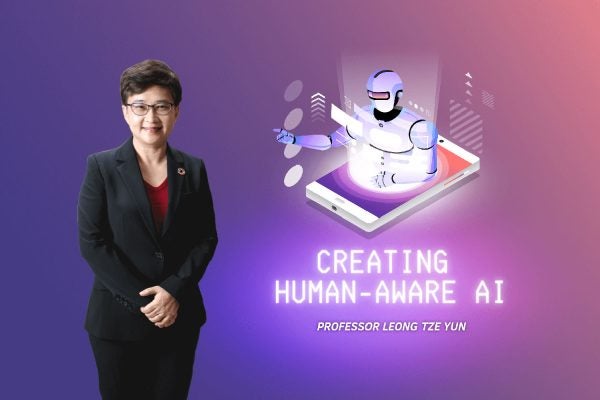
LEONG Tze Yun is a Professor in the Department of Computer Science at the School of Computing, National University of Singapore (NUS). She holds S.B., S.M., and Ph.D. degrees in Computer Science from the Massachusetts Institute of Technology (MIT). Her academic career spans both research and industry experience, with significant contributions to the fields of artificial intelligence and health informatics. Dr. Leong's educational background includes: Ph.D. in Electrical Engineering & Computer Science, Massachusetts Institute of Technology S.M. in Electrical Engineering & Computer Science, Massachusetts Institute of Technology S.B. in Computer Science & Engineering, Massachusetts Institute of Technology Her primary research interests focus on responsible AI, dynamic decision-making, neurocognitive modeling, reinforcement learning, artificial general intelligence, and biomedical and health informatics. Her work bridges the gap between theoretical AI development and practical healthcare applications, with an emphasis on ethical considerations and human-centered design. She directs the Medical Computing Laboratory at NUS, a multidisciplinary research program exploring human-aware decision modeling in complex environments. Analysis of her recent publications reveals a strong trend toward responsible AI development, with significant contributions to reinforcement learning techniques, causal inference methods, and applications of AI in healthcare. Her work increasingly integrates ethical considerations with technical AI development, particularly evident in her 2024 publications on medical AI and human values. Her scientific recognition includes: Fellow of the American College of Medical Informatics (ACMI) Founding Fellow of the International Academy of Health Sciences Informatics (IAHSI) Member of Eta Kappa Nu (Honor Society for Electrical Engineers) Dr. Leong has supervised numerous doctoral and master's students throughout her career, many of whom have gone on to prominent positions at institutions like Google, Netflix, Mayo Clinic, and academic institutions worldwide. Her advisory work extends to significant policy development, including contributions to WHO guidance on ethics and governance of AI for health. She currently serves on the World Health Organization (WHO) Expert Group on Ethics and Governance of AI for Health, the World Economic Forum (WEF) AI Governance Alliance, and the Advisory Council on AI in Uzbekistan. Her laboratory work focuses on developing adaptive systems that evolve with changing technical functionalities, system infrastructures, usage patterns, and operational contexts, with applications spanning prediction and decision analytics, human-aware robotics, game artificial intelligence, personalized education, and assistive care for elderly with neurocognitive disorders.
Pierre Vandergheynst is a Full Professor at the Swiss Federal Institute of Technology Lausanne (EPFL) in the Department of Electrical Engineering, with a courtesy appointment in Computer and Communication Sciences. He serves as EPFL’s Vice-Provost for Education since 2015 and leads the Signal Processing Laboratory 2 (LTS2). His research spans harmonic analysis, sparse approximations, mathematical data processing, and applications in signal/image processing, computer vision, machine learning, and graph-based data analysis. PhD in Mathematical Physics (1998), Université catholique de Louvain Postdoctoral Researcher at EPFL (1998-2001) Assistant Professor at EPFL (2002-2007) His research explores geometry/symmetry in high-dimensional data, redundant dictionaries for dimensionality reduction, and computational harmonic analysis on manifolds. Recent work focuses on protein structure modeling, geometric deep learning, and graph-based signal processing. Key article trends include graph neural networks for protein analysis, geometric deep learning in neuroscience, and structured knowledge priors in neural models. His 2023-2025 publications emphasize interpretable AI, long-range dependencies in graphs, and molecular representation learning. Scientific Awards: IEEE Signal Processing Magazine Best Paper Award (2023) Signal Processing Society Best Paper Award (2022) Apple ARTS Award (2007) De Boelpaepe Prize, Royal Academy of Sciences of Belgium (2009-2010) He has supervised over 30 PhD theses and contributed to foundational work in graph signal processing, compressive sensing, and geometric deep learning. His lab develops tools for data science on non-Euclidean structures, with applications in medicine, astronomy, and wireless systems.
Srijan Kumar is an Assistant Professor in the School of Computational Science and Engineering at Georgia Institute of Technology's College of Computing. His research focuses on data science, AI for security, and online safety, addressing challenges in detecting malicious users, misinformation, and enhancing AI robustness. His work has been deployed in platforms like Flipkart and Wikipedia, and recognized through awards such as the NSF CAREER and Forbes 30 Under 30. Education: B.Tech from Indian Institute of Technology, Kharagpur Ph.D. in Computer Science from University of Maryland, College Park Postdoctoral training at Stanford University Research Interests: Multi-modal/multi-lingual detection of harmful content and users Adversarial robustness of AI models Graph and network analysis for early detection Responsible recommender systems Awards & Grants: NSF CAREER Award (2023) Kavli Fellow (2022) Facebook/Adobe Faculty Awards NSF Convergence Accelerator Phase II grant ($5M) Advising & Labs: Leads the CLAWS Lab, advising over 20 students. Active in mentoring through conferences and NSF-funded projects.