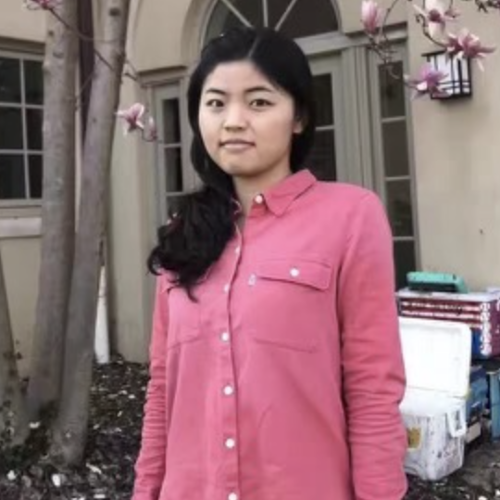
Jiong He is a researcher affiliated with Nanyang Technological University, Singapore, focusing on optimizing database systems and data processing through heterogeneous computing architectures. PhD thesis (2016) on high-performance databases using CPU-GPU coupling Key research areas: GPU/FPGA acceleration, real-time analytics, stream processing His work bridges hardware-software co-design with 15+ peer-reviewed publications in top venues like SIGMOD, VLDB, FPGA, and ICDCS since 2013. 2022: Micro-architecture analysis for OLAP on persistent memory 2020: Heterogeneity-aware scheduling for cloud analytics 2019: Frameworks for stream processing and DNN mapping to FPGAs
Varish Mulwad is a Senior Scientist at GE Research with 14 years of experience in algorithm development and knowledge graph construction from structured/unstructured data. He holds a Ph.D. and M.S. in Computer Science from the University of Maryland, Baltimore County (UMBC), where he worked under Prof. Tim Finin and collaborated with Prof. Anupam Joshi, and a B.E. in Computer Engineering from University of Mumbai. Ph.D. & M.S. in Computer Science (UMBC) B.E. in Computer Engineering (University of Mumbai) His research focuses on semantic interpretation of tabular data through linked data frameworks, information extraction from unstructured text, and knowledge graph population using probabilistic reasoning and graphical models. He has pioneered domain-independent systems for table interpretation and developed novel methods for cloud SLA automation and cybersecurity threat detection via social media analysis. Recent work trends include: Context-aware web table annotation Relational table representation learning Linked data generation from spreadsheets Pre-training/fine-tuning paradigms for web tables Application of semantic web standards to cybersecurity He has led 3-4 member project teams in developing production-ready solutions, contributed to 19 peer-reviewed publications, and secured 7 patents with 900+ citations. During his academic tenure at UMBC's Ebiquity Research Lab, he co-developed the TABEL framework for table semantics inference and produced the first interactive system for meta-analysis report generation from linked data.
Roger Granada is a researcher at the Department of Computer Science, Pontifical Catholic University of Rio Grande do Sul, Brazil, with a focus on computer vision, semantic web technologies, and deep learning. His work spans synthetic data generation, face recognition systems, ontology alignment, and activity recognition in video streams. Key Research Areas: Face recognition, 3D modeling, synthetic data analysis, semantic relation extraction, and information retrieval Notable Collaborations: Works extensively with institutions like SIBGRAPI, WACV, and CVPR Recent Trends: His 2023-2025 publications emphasize synthetic data applications for biometric systems, diffusion models for 3D face generation, and privacy-preserving recognition techniques. These works often integrate cross-modal analysis and contextual constraints. Academic Contributions: Granada has co-authored 55+ publications since 2006, including journal articles in Information Fusion , conference papers at AAAI, IJCNN, and SIBGRAPI. His 2015 PhD thesis evaluated taxonomic relation extraction methods.
Inge Li Gørtz is a Professor in the Department of Applied Mathematics and Computer Science at the Technical University of Denmark (DTU), where she leads research in algorithms and data structures. She is affiliated with the Algorithms, Logic and Graphs section and has been a principal investigator on externally funded research projects. She also serves as chairman of the Danish Society for Computer Science since 2009. Research Interests: Her work centers on the design and analysis of algorithms, with a focus on approximation algorithms, pattern matching, graph algorithms, and compressed data representations. She investigates efficient query processing, string indexing, and algorithmic challenges in highly repetitive data, including applications in bioinformatics and data streams. The recent publications highlight a strong trend in theoretical and practical algorithm design, particularly in string indexing, compressed automata, and dynamic data structures. These works span venues like SOFSEM and STACS, emphasizing innovations in sublinear query time, sliding window models, and memory-efficient representations. Postdoc stipend from Carlsberg Foundation (2006–2008) for 'Approximation of Transportation on Demand Problems', kr 865,183 Advising and Grants: She actively supervises multiple PhD students on projects such as biomedical image segmentation using graph cuts, hierarchical compression of DNA data, and dynamic graph algorithms. She has served as main or co-supervisor in several funded PhD projects. She has been principal investigator on a Carlsberg Foundation grant and has participated in multiple Danish Council for Independent Research projects. Labs and Teams: She is a core member of the Algorithms, Logic and Graphs (ALG) section at DTU, contributing to a vibrant research environment focused on theoretical computer science and algorithmic problem solving.
Georgios Giannakis is a Professor in the Department of Electrical and Computer Engineering at the University of Minnesota. His research spans communications, networking, signal processing, and machine learning with applications to wireless systems and networks. Professor Giannakis' research interests include: Signal Processing and Analysis Wireless Communications and Networking Machine Learning for Signal Processing Graph Signal Processing Bayesian Optimization and Inference Federated and Distributed Learning His current research focuses on complex-field and network coding, cooperative wireless communications, cognitive radios, cross-layer designs, mobile ad hoc networks, and wireless sensor networks. Recent work has expanded into graph learning, Bayesian optimization, and federated learning approaches for communication systems with applications to 5G/6G networks, Internet of Things, and wireless sensor networks. Professor Giannakis has received significant research funding, including multiple NSF grants such as "Resonant-Beam based Optical-Wireless Communication," "Robust Learning over Graphs," "Learning-driven Models for 5G Internet Measurements," and "Online Learning for IoT Monitoring and Management." His fingerprint analysis reveals key research areas including fading channels (81%), sparsity (71%), multiuser systems (66%), wireless sensor networks (56%), and transmitter technologies. His scientific contributions include over 1,188 research outputs with consistent productivity across decades, demonstrating his sustained impact in the field. His recent publications show a clear trend toward integrating machine learning techniques with traditional signal processing for next-generation communication systems that require robustness, efficiency, and adaptability in dynamic environments.
Ruoming Jin is an Associate Professor in the Computer Science Department at Kent State University. He earned his Ph.D. from Ohio State University in 2005 and is based at the Kent campus. His office is located in MCS 264, and he can be reached at rjin1@kent.edu or (330)672-9063. Ph.D., Ohio State University, 2005 Dr. Jin's research focuses on Data Mining, Database Systems, Biomedical Informatics, and Cloud Computing, with a particular emphasis on Big Data and Graph Data analysis. His work develops novel algorithmic and system solutions for managing and analyzing massive graph and network data. His research has significant applications in semantic web, social networks, biomedical informatics, and transportation systems, bridging theoretical foundations with practical implementations. His publication record demonstrates a strong trajectory in graph data management, with recent work spanning network science, uncertain graphs, and graph databases. Key themes include reachability computation, distance queries, subgraph discovery, and privacy-preserving techniques, showing both theoretical depth and practical applicability across multiple domains. While specific details about advising and grants aren't provided in the available information, Dr. Jin maintains an active research program with consistent high-impact publications in top venues including KDD, SIGMOD, VLDB, and ICDM, indicating ongoing research projects and likely supervision of graduate students. Dr. Jin leads a research group dedicated to developing solutions for managing and analyzing massive graph and network data. His team works on both theoretical algorithms and practical system implementations, focusing on scalability challenges presented by modern big graph data applications across various domains.
Alex Pothen is a Professor of Computer Science at Purdue University, affiliated with the Department of Computer Science within the College of Science. He joined Purdue in Fall 2008 and is a distinguished academic with fellowships from SIAM (2018), ACM (2022), and AMS (2024), as well as the George Pólya Prize in Applied Combinatorics (2021). His research focuses on combinatorial scientific computing (CSC), parallel algorithms, graph theory, and bioinformatics, with applications in computational surgery, power grid modeling, and quantum computing. Education : Ph.D., Applied Mathematics and Computer Science, Cornell University (1984) Master's Degree in Chemistry, Indian Institute of Technology, New Delhi (1978) Research Interests : Alex's work bridges discrete mathematics and computational science. Key areas include: - CSC : Applying combinatorial methods to solve engineering and scientific problems. - Graph Algorithms : Developing efficient parallel algorithms for matching, coloring, and partitioning. - Bioinformatics : Analyzing flow cytometry data and immunophenotyping. - Algorithmic Differentiation : Innovations in Jacobian/Hessian computation. - Quantum Computing : Exploring quantum annealing for optimization problems. Awards and Recognition : SIAM Fellow (2018) ACM Fellow (2022) AMS Fellow (2024) George Pólya Prize in Applied Combinatorics (2021) Graduate Mentoring Award (Purdue University) Named 'Most Inspiring Teacher' by students Grants and Leadership : - Directed the CSCAPES Institute (2006–2012), a DOE-funded initiative enabling petascale simulations. - Co-PI on the ExaGraph Project , funded by the DOE's Exascale Computing Program. - Editor of journals including the SIAM Journal on Scientific Computing and the Journal of the ACM.
Madhu Sudan is the Gordon McKay Professor of Computer Science at Harvard University's John A. Paulson School of Engineering and Applied Sciences (SEAS), where he also serves as Director of Graduate Studies. He holds a B.Tech. from IIT Delhi (1987) and a Ph.D. from UC Berkeley (1992). Prior to Harvard, he was at MIT (1997–2015), IBM Research (1992–1997), and Microsoft Research (2009–2015). His research focuses on the theories of computation and communication, with notable contributions to probabilistically checkable proofs (PCP theorem), list-decoding algorithms for error-correcting codes, and sublinear-time algorithms. Education: B.Tech., Indian Institute of Technology Delhi, 1987 Ph.D., University of California, Berkeley, 1992 Research Interests: Communication and computing under errors Coding theory and its applications Property testing and sublinear algorithms Algebraic methods in computation Awards and Honors: Nevanlinna Prize (2002) IEEE Hamming Medal (2016) Member, National Academy of Sciences (2017) Infosys Prize in Mathematical Sciences (2018) Fellow of ACM, IEEE, and AMS Teaching and Service: Current courses: Algebra and Computation , Coding Theory Directed Graduate Studies in Computer Science at Harvard Editorial roles: Foundations and Trends in Theoretical Computer Science , Theory of Computing Research Groups: Member of Harvard's Theory of Computation group, collaborating on projects in coding theory, complexity theory, and distributed computing.
Varun Kanade is an Associate Professor in the Department of Computer Science at the University of Oxford. He holds a Tutorial Fellowship at Lady Margaret Hall, where he contributes to undergraduate teaching and academic governance. His research focuses on theoretical computer science and machine learning, with particular emphasis on algorithms, computational learning theory, and the theoretical foundations of deep learning. Key research areas include: Artificial Intelligence and Machine Learning, Algorithms and Complexity Theory, and their intersections with topics like transformers, robust learning, and algorithmic fairness. He actively explores foundational issues such as in-context learning in transformers, representational capabilities of neural architectures, and statistical learning theory. Varun’s work has been published in top venues across machine learning and theoretical computer science. His recent research trends emphasize understanding the theoretical underpinnings of modern AI systems, including their generalization properties, robustness to adversarial attacks, and fairness considerations. He has also contributed to algorithmic advancements in areas like matrix completion, online clustering, and distributed learning. Varun currently advises PhD students Satwik Bhattamishra and Charles London, building on a track record with past students such as Bryn Elesedy and Pascale Gourdeau. His academic contributions span over two decades, with publications ranging from foundational studies in computational learning to applications in distributed systems and evolutionary algorithms.
Seda Ogrenci is a Professor of Electrical and Computer Engineering and Computer Science at Northwestern University. She holds affiliations with the McCormick School of Engineering and leads the Ogrenci-Memik Lab. Her research focuses on thermal-aware design, edge AI/ML acceleration, and energy-efficient computing systems. She teaches courses like EECS 303 (Advanced Digital Design), EECS 355 (FPGA Design), and EECS 459 (VLSI Algorithmics). Education includes a PhD in Computer Science from UCLA, MS in Electrical and Computer Engineering from Northwestern, and BS from Bogazici University. Her work spans thermal management, 3D stacked memory systems, and reconfigurable architectures. She authored the book Heat Management in Integrated Circuits (2016) and holds patents on thermal sensors and energy harvesting. Recent projects include ML-based real-time control at the edge, FPGA-accelerated ML monitoring, and in-pixel AI for X-ray detectors. Awards include the NSF CAREER Award (2006) and EECS Best Teacher Award (2013). She advises students like Dawei Li and Yingyi Luo and contributed to grants on thermal-aware HPC systems.
Pablo D Robles Granda is a Teaching Professor at the University of Illinois at Urbana-Champaign's Department of Computer Science, part of the Grainger College of Engineering. He holds a PhD in Computer Science from Purdue University (2017). His research focuses on machine learning applications in health informatics, wearable technology, and educational analytics, with notable work on brain plasticity modeling, citation networks, and multimodal sensing of human behavior. Recent awards include a second-place honor at the ASEE New Engineering Educators division for analyzing student interactions in engineering courses via modern mathematical methods. His work often intersects with large-scale longitudinal studies, such as the Tesserae Project examining information workers' behaviors through multimodal sensing. Research interests span machine learning, network science, and human-computer interaction, with publications addressing topics like sleep pattern analysis, job performance prediction, and connectome-based intelligence modeling. Collaborations include projects on emergency call analysis and nutrient-brain data integration. Education background: PhD in Computer Science (Purdue University, 2017).
Ren Tan is an Assistant Teaching Professor in the Department of Russian and East Asian Languages and Cultures at Emory University. She specializes in transnational Japanese studies, focusing on early modern Japanese intellectual history and Sino-Japanese cultural interactions. With a Ph.D. from the City University of Hong Kong, she emphasizes integrating cultural components into second language learning and teaching. Education: Ph.D., City University of Hong Kong Research Interests: Her work bridges interdisciplinary scholarship in transnational contexts, exploring how cultural dynamics influence language acquisition. She advocates for language as both a product and symbol of culture, shaping innovative pedagogical approaches. Publications: Recent works span computational methodologies in networks and geometry, including algebraic algorithms for graph analysis and applications of machine learning in public health, alongside foundational research in geometric measure theory. Awards: No scientific awards explicitly noted in the provided materials. Advising & Grants: No student advisement or grant details provided in the text.
Professor Wanqing Li is a leading academic in machine learning and 3D computer vision at the University of Wollongong, where he serves as Director of the Advanced Multimedia Research Lab (AMRL). He holds a B.Sc. and M.Sc. from Zhejiang University and a Ph.D. from The University of Western Australia. His career includes roles at Motorola Labs (Senior/Principal Researcher) and visiting stints at Microsoft Research. His research focuses on 3D multimedia signal processing, human activity understanding, and medical image processing, with applications in aged care and health monitoring. He has published over 250 papers in top venues like TIP, CVPR, and AAAI, and his work has been recognized with awards including the Motorola CTO’s Award (2003). He currently leads the Centre for Artificial Intelligence (CAI) at UOW and is a co-founder of the Centre for Multimedia Signal Processing and Content Management. Education: B.Sc. (Zhejiang University), M.Sc. (Zhejiang University), Ph.D. (University of Western Australia). Research Interests: Machine Learning (statistical/deep learning), 3D computer vision (human motion analysis, 3D reconstruction), medical imaging, free-viewpoint video systems, and applications in healthcare. He pioneered 3D data-driven human activity understanding, now a cornerstone of modern computer vision. Awards & Recognition: Motorola CTO’s Award (2003), Australia’s top multimedia researcher (2021–2023), elected Associate Editor of IEEE Transactions on Image Processing (2022). Labs/Teams: Director of Advanced Multimedia Research Lab (AMRL), co-founder of CAI and Multimedia Signal Processing Centre.
Shuvra Bhattacharyya is an Affiliate Professor at the University of Maryland, holding appointments in the Department of Computer Science (CS), the University of Maryland Institute for Advanced Computer Studies (UMIACS), and the Department of Electrical and Computer Engineering (ECE). His research focuses on AI and Robotics, IoT and Wearables Technology, and Computer Vision and Machine Perception, with a strong emphasis on embedded systems, real-time processing, and interdisciplinary applications. Key research interests include optimizing neural networks for resource-constrained environments, developing gait recognition systems using pose estimation, and exploring synthetic data applications in aerial surveillance and VR content creation. He has contributed to frameworks for adaptive digital predistortion systems, dynamic data-driven hyperspectral video processing, and collaborative UAV-based human detection benchmarks like Archangel. His work often bridges theoretical computer science with practical engineering challenges, such as scheduling algorithms for real-time systems, energy-efficient IoT deployments, and interpretable AI models for criminal justice applications. Bhattacharyya collaborates across disciplines to address challenges in edge computing, wearable technology, and sustainable industrial processes. Notable projects include the HoloCamera system for cinematic VR capture and the Flydeling framework for CNN acceleration on heterogeneous platforms. His research also addresses fairness in predictive models and dynamic memory optimization techniques for dataflow-based applications.
Edwin Ren is an Associate Professor in the School of Computing Sciences at the University of East Anglia (UEA), UK. His research focuses on Internet of Things (IoT), 5G/6G networks, cloud computing, and cybersecurity. He holds a PhD in Information Communication Technology from the University of Agder, Norway, and has held postdoctoral positions at National Chiao Tung University, Taiwan. Ren is a member of the Cyber Intelligence and Networks and Data Science & AI groups at UEA. **Education**: - PhD in Information Communication Technology, University of Agder, Norway (2012) - Postdoctoral Fellow at National Chiao Tung University (2012–2017) **Research Interests**: - IoT and Smart Systems - Network Function Virtualization (NFV) and SDN - Blockchain-based Security Protocols - Mobile Edge Computing and 5G/6G Architectures - Privacy-Preserving AI and Federated Learning **Key Achievements**: - Best Paper Award at IEEE MDM 2012 - Active in interdisciplinary projects like the Training DIGIT initiative (EPSRC-funded) and Smart Environments Research Facility **Grants & Collaborations**: - EPSRC-funded projects on Digital Innovation and Cyber-Physical Systems - Royal Society-supported AIoT platform research **Labs/Teams**: - Leads the Cyber Intelligence and Networks research group at UEA - Involved in the Smart Environments Research Facility, a multidisciplinary EPSRC project