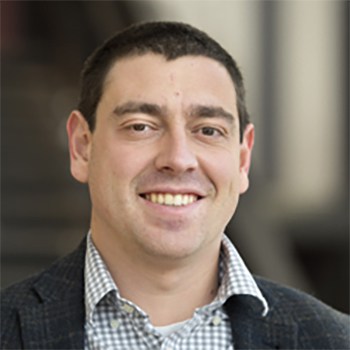
Georg Krempl is Lecturer at Utrecht University's Department of Information and Computing Sciences. His research develops adaptive learning algorithms for data streams with concept drift and verification latency. He specializes in probabilistic active learning methods and statistical approaches to data stream mining. Research Focus : Krempl's work addresses challenges in evolving data environments, particularly developing robust classification under delayed label scenarios and concept drift. Recent projects include generative adversarial networks for domain adaptation and Bayesian methods for anticipatory classification. Professional Activities : Organizer of the Interactive Adaptive Learning workshop series (ECML PKDD) and editorial board member for multiple machine learning journals. His group focuses on both theoretical foundations and practical applications in data stream mining.
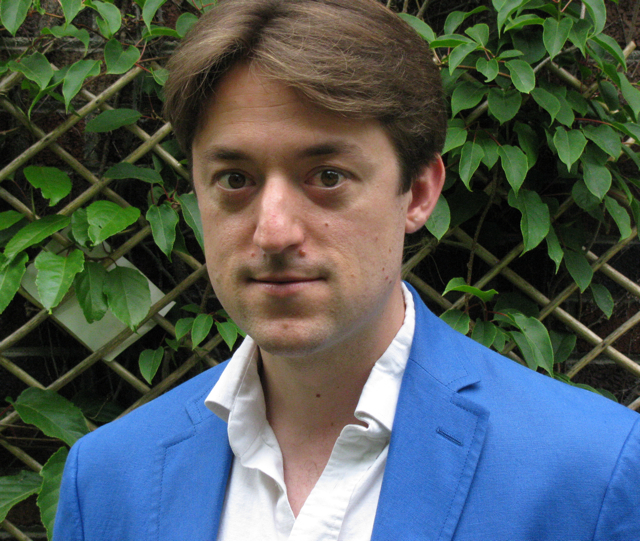
Dr. Richard Clegg is a Senior Lecturer in Technology Management at Queen Mary University of London, within the School of Electronic Engineering and Computer Science. He is affiliated with the Centre for Networks, Communications and Systems. His research focuses on temporal networks, complex systems, and graph software development, particularly through the Raphtory project. He holds a PhD and has extensive experience in network analysis, blockchain applications, and AI-driven network optimization. Research Interests: Dr. Clegg investigates temporal networks across social, transactional, and computer networks, emphasizing their mathematical and statistical foundations. He develops tools like Raphtory (www.raphtory.com) for analyzing dynamic graphs in Rust and Python. His work spans cryptocurrency transaction networks, email communication hierarchies, and energy-efficient radio access networks. Key Contributions: His recent work analyzes the Luna-Terra collapse using temporal multilayer graphs and explores social mobility in temporal networks. He has published widely on network statistics, sensor data privacy, and cloud-assisted video conferencing. Current research includes AI-ready energy modeling for next-gen networks and fraud detection in cross-chain cryptocurrency ecosystems. Grants & Collaborations: He secured grants from Cisco, Moogsoft, and the Alan Turing Institute for projects on graph analysis, network fraud detection, and temporal mobility studies. Collaborators include industry leaders like Pometry Limited and academic partners like the University of Cambridge. Labs/Teams: Leads the Raphtory software initiative and advises PhD students in network science and AI. His team includes researchers like Cheick Ba and former students Ben Steer and Naomi Arnold.
Xiaowei Jia is an Assistant Professor in the Department of Computer Science at the University of Pittsburgh, affiliated with the School of Computing and Information. He holds a Ph.D. from the University of Minnesota (supervised by Prof. Vipin Kumar) and B.S./M.S. degrees from the University of Science and Technology of China and SUNY Buffalo. His research focuses on integrating scientific theory with machine learning to address societal challenges in environmental science, hydrology, and climate modeling. Key research interests include physics-guided machine learning, spatio-temporal data mining, and fairness-aware models. He has developed frameworks like Physics-Guided Neural Networks (PGNN) and Spatial-Net for heterogeneous data, addressing issues in stream temperature prediction, crop yield modeling, and climate change projections. His work has been recognized with awards including the Best Dissertation Award (Minnesota) and multiple Best Paper awards in top conferences. Dr. Jia teaches advanced machine learning courses, emphasizing knowledge integration into AI systems. His lab collaborates extensively with domain scientists to advance applications in agriculture, hydrology, and environmental monitoring. Ongoing projects include high-resolution methane emission datasets (X-MethaneWet) and fairness-aware learning for resource distribution.
Anders Jonsson is a full professor and head of the Artificial Intelligence and Machine Learning research group at Universitat Pompeu Fabra (UPF). He holds a Ph.D. in Computer Science from the University of Massachusetts Amherst (2005), supervised by Professor Andrew Barto. His research focuses on sequential decision problems, multi-agent systems, hierarchical planning, and reinforcement learning. Key interests include combining RL with automated planning, exploiting structural properties of decision problems, and analyzing computational complexity. His work bridges theoretical foundations and practical applications in wireless networks, medical diagnostics, and urban systems. Jonsson’s research addresses challenges in decentralized spatial reuse in wireless networks, optimal power control for cell-free systems, and interpretable machine learning for clinical decision-making. His interdisciplinary approach integrates AI with telecommunications, environmental science, and healthcare. He has contributed to conference and journal articles exploring topics such as bisimulation metrics, reward machine exploration, and hierarchical average-reward MDPs. His lab actively develops algorithms for efficient exploration, generalized planning, and real-world deployment of AI solutions.
Nick Duffield is a Professor in the Department of Electrical and Computer Engineering at Texas A&M University, holding the Royce E. Wisenbaker Professorship I and serving as Director of the Texas A&M Institute of Data Science. He specializes in data science and network science, focusing on applications of probability, statistics, and machine learning to large-scale datasets in networks and beyond. His research bridges foundational data science with practical applications in transportation, hydrology, and network resilience. Education: B.A. (Cambridge, 1982), M.Math. (Cambridge, 1983), Ph.D. (University of London, 1987). Research Interests: Graph stream sampling, network measurement, machine learning for traffic prediction, soil moisture analysis, and public safety data science. He leads initiatives like the Texas A&M Data Science Bootcamp and collaborates on projects such as AI in construction and precision agriculture. Recent Articles Highlight: Focus on machine learning-driven solutions in agriculture (e.g., UAV-based cotton yield prediction), transportation (e.g., electric truck feasibility studies), and disaster response (e.g., social media analysis for damage estimation). Awards: ACM, IET, IEEE, and AT&T Fellowships; co-recipient of ACM Sigmetrics Test of Time Award (2012/2013). Grants/Advising: Over $20M in funding from NSF, NIH, and industry. Advises on 10+ student projects, including work on graph neural networks and hydrology. Labs/Teams: Texas A&M Institute of Data Science (TAMIDS), collaborations with Texas Transportation Institute, and hydrology teams analyzing soil moisture via machine learning.
Dmitri Loguinov is a Professor in the Department of Computer Science & Engineering at Texas A&M University, affiliated with the Dwight Look College of Engineering. His research focuses on big-data computing, graph algorithms, network measurement, and cybersecurity. He holds a PhD from the City University of New York (2002) and a B.S. from Moscow State University (1995). Education: Ph.D. Computer Science, City University of New York (2002) B.S. Computer Science (with honors), Moscow State University (1995) Research interests span stochastic analysis of networks, peer-to-peer systems, congestion control, and large-scale web crawling. His work includes the IRLbot project, scaling to 6 billion web pages, and influential contributions to OS fingerprinting (e.g., Faulds and Hershel systems). Key publications address triangle enumeration algorithms, distributed systems synchronization, and high-performance streaming frameworks like Vortex. He has received multiple awards including the Best Paper Award at IEEE P2P 2009 and WWW 2008. Advising over 40 graduate and undergraduate students, Loguinov has led NSF-funded projects on data streaming (CNS-1717982), web crawling (CNS-1017766), and P2P churn analysis (CNS-0720571). His labs focus on extreme-performance systems and scalable network measurement.
Professor Sampath K. Kannan is the Henry Salvatori Professor in the Department of Computer and Information Science at the School of Engineering and Applied Science, University of Pennsylvania. His research focuses on algorithms, computational biology, program checking, and network security. ACM Fellow (2013) ACM SIGACT Distinguished Service Award (2012) Outstanding Faculty Advising Award (2005) Ford Foundation 'Best Advisor' Award (2004) His research spans algorithms (massive data processing, shortest-path optimization), computational biology (evolutionary tree reconstruction, phylogenetic analysis), and program checking (runtime verification, trust management). Recent work involves data stream algorithms and healthcare scheduling optimization . He has taught advanced courses in algorithms and complexity theory since 1994, including CIS 677 (Complexity Theory) and GCB 537 (Computational Biology). His publications bridge theoretical computer science and applied systems research , with a focus on scalability, correctness, and security.
Edith Cohen is a Research Scientist at Google and a Visiting Full Professor in the School of Computer Science at Tel Aviv University, where she contributes to academic research and teaching. Her career spans leading industrial research labs, including AT&T Bell Labs, Microsoft Research, and Google Research. Undergraduate and M.Sc.: Tel Aviv University (1985, 1986) Ph.D.: Stanford University, Computer Science (1991) Her research centers on scalable algorithms for massive data, with key contributions in sketching (e.g., MinHash, HyperLogLog), sampling techniques, graph mining (centrality, influence, similarity), data streams, and differential privacy. She designs principled algorithmic solutions that balance accuracy, speed, and storage in large-scale systems. The recent articles highlight a strong focus on robustness and privacy in streaming and learning systems, particularly under adversarial or adaptive settings. Her work bridges theoretical rigor with practical impact, applying advanced statistical and algorithmic methods to real-world data challenges. ACM Fellow (2017) IEEE Communications Society William R. Bennett Prize (2007) ISF and NSF Research Grants She has advised several students and interns at AT&T and Google, and has served on program committees and editorial boards of top computer science venues. Her work has led to numerous patents in data summarization, network routing, and query processing. She actively collaborates with researchers across institutions and continues to publish in premier conferences such as STOC, KDD, ICML, and PODS.
Dr. Alexander Shestopaloff is a Senior Lecturer in Statistics at the School of Mathematical Sciences, Queen Mary University of London, and a Fellow of the Alan Turing Institute. He holds a PhD in Statistics from the University of Toronto (2016). His research focuses on Bayesian statistics, network science, quantitative finance, and empirical market microstructure, with a particular emphasis on cryptocurrency exchanges like Binance and Bybit. He develops computational methods for Bayesian inference, including online learning algorithms, and explores statistical procedures to detect network structures. Education: PhD in Statistics, University of Toronto (2016) Research Interests: Bayesian computational methods and modeling Network science and statistical graph analysis Quantitative finance, market microstructure, and high-frequency trading Online learning and high-dimensional time series analysis Grants and Funding: Research Fellowship: Cross-sectional forecasting of high-dimensional time series (£112,358), Delphia Technologies Inc (2023–2026) Innovate UK KTP: Wise (£219,928), Innovate UK (2022–2025) Key Contributions: Advances in robust Kalman filtering and Bayesian online learning Statistical analysis of network structures and graph algorithms Analysis of cryptocurrency market dynamics using high-frequency data Affiliations: Centre for Probability, Statistics and Data Science at Queen Mary University of London.
Alex Gorodetsky is an Associate Professor of Aerospace Engineering at the University of Michigan , part of the College of Engineering . His research focuses on autonomous decision-making under uncertainty , leveraging applied mathematics and computational science. Key areas include uncertainty quantification, machine learning, control systems, and tensor decompositions. He leads the Gorodetsky Group , which develops algorithms for high-fidelity simulations and scalable digital twins. Education: PhD (2016) and SM (2012) from MIT in Aeronautics/Astronautics; BSE (2010) in Aerospace Engineering from the University of Michigan. Research Interests: Innovating methods for managing uncertainty in complex systems like autonomous aircraft and electric propulsion, with applications in aerospace, bioengineering, and climate modeling. Techniques include Bayesian inference, multi-fidelity surrogate modeling, and compressed data analytics. Notable Contributions: Developed the MFNETS framework for efficient multi-fidelity surrogate networks. Recipient of the NSF CAREER Award (2023) and Air Force Young Investigator Award (2018) . Active in NASA-funded initiatives like the Joint Advanced Propulsion Institute (JANUS) . Recent Work: Focus on GPU-accelerated plasma simulations, automated statistical estimation, and low-rank tensor methods for high-dimensional problems. Over 50 peer-reviewed articles, with recent highlights in Computer Methods in Applied Mechanics and Engineering , SIAM Journal on Scientific Computing , and Journal of Computational Physics . Teaching & Mentorship: Advises over 20 graduate and undergraduate students, with emphasis on interdisciplinary training in computational methods and AI-driven science.
George Pallis is a Professor in the Department of Computer Science at the University of Cyprus, where he also serves as Associate Director of the Laboratory of Internet Computing. He is a programme director for the Master in Data Science and leads major international research initiatives funded by the European Commission, national agencies, and industry partners such as Google. His academic foundation includes a BSc and PhD in Informatics from Aristotle University of Thessaloniki, Greece. PhD, Department of Informatics, Aristotle University of Thessaloniki, Greece, 2006 BSc, Department of Informatics, Aristotle University of Thessaloniki, Greece, 2001 Dr. Pallis’s research focuses on Distributed and Internet Computing , with specialized interests in Big Data Analytics, Cloud/Edge/Fog Computing, Content Delivery Networks, and Online Social Networks . His work bridges theoretical innovation and practical deployment, particularly in scalable and energy-efficient computing infrastructures. He has contributed to international standards through the German Institute for Standardization (DIN) and has developed frameworks for cloud elasticity, fog emulation, and misinformation detection. His 15 most recent publications reflect a strong trend in edge and fog computing, AI-driven analytics, privacy-preserving data processing, and misinformation detection . These works span high-impact venues such as IEEE IC2E, IEEE/ACM SEC, IEEE CloudCom, and IEEE BigData, with increasing integration of machine learning and human-in-the-loop systems. Dr. Pallis has received multiple scientific awards, including: Best Paper Award, IEEE CloudCom 2024 Best Paper Award (2nd place), IEEE/ACM UCC 2023 Best Paper Award, IEEE IoTDi 2022 Best Student Paper, IEEE ISCC 2022 Best Paper, IEEE BigData 2016 Best Paper, ICSOC 2014 Best Demo Award, ACM/IEEE SEC 2020 World’s Top 2% Scientists (Stanford) Golden Core Member, IEEE Computer Society He has supervised several PhD students in areas such as fog computing emulation, big data in entrepreneurship, and polarization detection. His research is supported by over 5.5 million euros in grants from the European Commission (e.g., RAINBOW, UNICORN, ICARUS), the Research Promotion Foundation in Cyprus, and industry. He has served as General Chair of IEEE/ACM SEC 2024 and IEEE IC2E 2024, and as Editor-in-Chief of IEEE Internet Computing (2019–2023), now holding the Emeritus title. He is currently Associate Editor for the Computing Journal (Springer). Dr. Pallis leads the Laboratory of Internet Computing, a hub for research in cloud, edge, and social computing. The lab develops tools like Fogify for emulation, RAINBOW analytics, and Check-It for fake news detection, fostering collaboration across academia and industry.
Seth Pettie is a faculty member in the Department of Electrical Engineering and Computer Science (EECS) at the University of Michigan. His research focuses on algorithms, graph theory, distributed computing, and data structures, with significant contributions to problems like minimum spanning trees, Davenport-Schinzel sequences, and energy complexity in radio networks. Research Interests : Algorithms, graph theory, distributed systems, combinatorics, and computational complexity. Students : Mentored numerous PhD students and postdocs, including Dingyu Wang, Shang-En Huang, and Yi-Jun Chang, some of whom have won prestigious awards like the Principles of Distributed Computing Doctoral Dissertation Award. Scientific Contributions : Authored over 15 recent articles (2021–2025) on topics spanning connectivity labeling, fraud detection, extremal combinatorics, and energy-efficient distributed algorithms. His work often bridges theoretical insights with practical applications in databases and network optimization. Awards : Recipient of the Outstanding Dissertation Award (2004) and Best Student Paper Award at ICALP 2002. His students have also received recognition for their work. Professional Service : Organized workshops (e.g., Dagstuhl, Bertinoro) and served on steering/editorial/program committees for major conferences like SODA, STOC, and PODC.
Robert Krauthgamer is the Harry Weinrebe Professor of Computer Science and currently serves as Department Head in the Department of Computer Science & Applied Mathematics at the Weizmann Institute of Science , within the Faculty of Mathematics and Computer Science . He is a leading researcher in theoretical computer science, particularly in the analysis of algorithms. Research Interests: His research focuses on Analysis of Algorithms , with deep expertise in Data Analysis and Massive Data Sets , Combinatorial Optimization , Approximation Algorithms , Hardness of Approximation , Embeddings of Finite Metrics , and Routing and Peer to Peer Networks . He also maintains a broad interest in Discrete Mathematics and High-Dimensional Geometry . His recent publications highlight work in graph algorithms, parameterized complexity, streaming algorithms, and metric embeddings. Publication Trends: His most recent work, including papers from SODA 2016, demonstrates a strong trend in the design and analysis of efficient algorithms for fundamental problems in graph theory, optimization, and data streams. Key themes include kernelization and sampling techniques for dynamic graph streams, subexponential parameterized algorithms, deterministic derandomization of the polynomial method, and structural results for graph modification problems. His research often bridges theoretical insights with applications in computational biology and network science. Service and Recognition: Journal Editorial: Editor-in-Chief of SIAM Journal on Computing (2019–2025), Associate Editor (2012–2017); Managing Editor of Theory of Computing (2007–2018), and current Editorial Board Member. Conference Leadership: Program Committee Chair for SODA 2016 and HALG 2018; Steering Committee member for SODA, ESA, and HALG; and committee member for the Gödel Prize (2019–2021). Workshops: Organizer of numerous workshops on sublinear algorithms, fine-grained complexity, and high-dimensional data. Teaching and Mentorship: He regularly teaches advanced courses such as Randomized Algorithms and Sublinear Time and Space Algorithms . He advises a large group of MSc and PhD students and hosts postdoctoral researchers, demonstrating a strong commitment to training the next generation of computer scientists. His former students have gone on to successful academic and research careers. Laboratories and Research Groups: He is a key member of the Foundations of Computer Science (theory) seminar at Weizmann and has organized the TheoryLunch and Reading Group in Algorithms, fostering a vibrant research community within the department.
Anqi Liu (Angie) is an Assistant Professor in the Department of Computer Science at the Whiting School of Engineering, Johns Hopkins University. She is affiliated with the Data Science and AI Institute, Mathematical Institute for Data Science (MINDS), and Institute for Assured Autonomy (IAA). Her research focuses on developing principled machine learning algorithms for reliable, trustworthy, and human-compatible AI systems in high-stakes applications. PhD in Computer Science from University of Illinois Chicago Postdoctoral Research at Caltech's Department of Computing and Mathematical Sciences Her work emphasizes robustness to changing data environments, uncertainty quantification, and human-AI interaction. Key methodologies include distributionally robust learning, active learning, safe exploration, fair machine learning, and conformal prediction. Applications span healthcare (NIA/NIH-funded), robotics, and computational social science. Amazon Research Award Johns Hopkins + Amazon Initiative for AI Faculty Research Johns Hopkins Discovery Award Institute for Assured Autonomy Challenge Grant She advises PhD candidates in AI safety and fairness, with students co-advised by faculty in Human-Robot Interaction and Computational Linguistics. Collaborations include Center for Language and Speech Processing (CLSP) and Laboratory for Computational Sensing and Robotics (LCSR).
Kshitij Jerath serves as Associate Professor in the Department of Mechanical and Industrial Engineering, Robotics at the Francis College of Engineering, University of Massachusetts Lowell. His research focuses on self-organized dynamics in complex systems, multi-agent control, and robotic swarms, with significant contributions to traffic flow theory and sensor characterization. He directs the Emergent Dynamics, Control and Analytics Labs (EXALABS), advancing bottom-up control algorithms for minimal-intervention system guidance. Dr. Jerath's academic background includes: Ph.D. in Mechanical Engineering from Pennsylvania State University (2014), dissertation: 'Influential subspaces in self-organizing multi-agent systems' M.S. in Electrical Engineering from Pennsylvania State University (2011), thesis: 'Sensor noise modeling, characterization and simulation: An Allan variance tutorial' M.S. in Mechanical Engineering from Pennsylvania State University (2010), thesis: 'Impact of adaptive cruise control on the formation of self-organized traffic jams on highways' Bachelor's equivalent in Mechanical and Automation Engineering from Amity School of Engineering and Technology, India His research spans self-organized dynamics , multi-agent systems , and robotic swarm control , applying statistical mechanics principles to model emergent behavior in transportation networks and complex systems. Current work focuses on influencing macro-scale dynamics through minimal intervention by small agent subsets, with extensions to social ensembles and neural systems. His methodologies integrate control theory, network science, and machine learning for real-world applications in autonomous vehicles and system reliability. Recent publications (2023-2025) reveal strong trends in relational network applications for multi-agent learning, adaptive data granulation techniques, and human-swarm interaction frameworks. Key developments include database-inspired algorithms for sensor characterization, renormalization group approaches to traffic modeling, and fault-tolerant recovery mechanisms for robotic teams. These works demonstrate increasing convergence of control theory, database systems, and reinforcement learning in addressing complex system challenges. Dr. Jerath has received notable recognition including: Two Best Presentation awards at American Control Conference (2014, 2012) Kulakowski Travel Award from Penn State (2014) National Merit-cum-Means Scholarship from Indian Government (2013) 2nd place in ITS America Student Essay Competition (2012) His research is supported by grants including the CPS: Medium project 'Automated Discovery of Data Validity for Safety-Critical Feedback Control in Connected Vehicles' (2019) and a Graduate Teaching Fellowship from Penn State (2013). EXALABS maintains active collaborations with transportation agencies and robotics researchers to translate theoretical advances into practical applications. The Emergent Dynamics, Control and Analytics Labs (EXALABS) develops frameworks for modeling, quantifying, and influencing collective behavior across scales. Current projects include human-guided swarm control in virtual reality, traffic flow optimization using connected vehicle networks, and adaptive granulation techniques for large-scale sensor data. The lab employs interdisciplinary approaches combining control theory, statistical mechanics, and machine learning to solve problems in robotics, transportation, and system reliability.