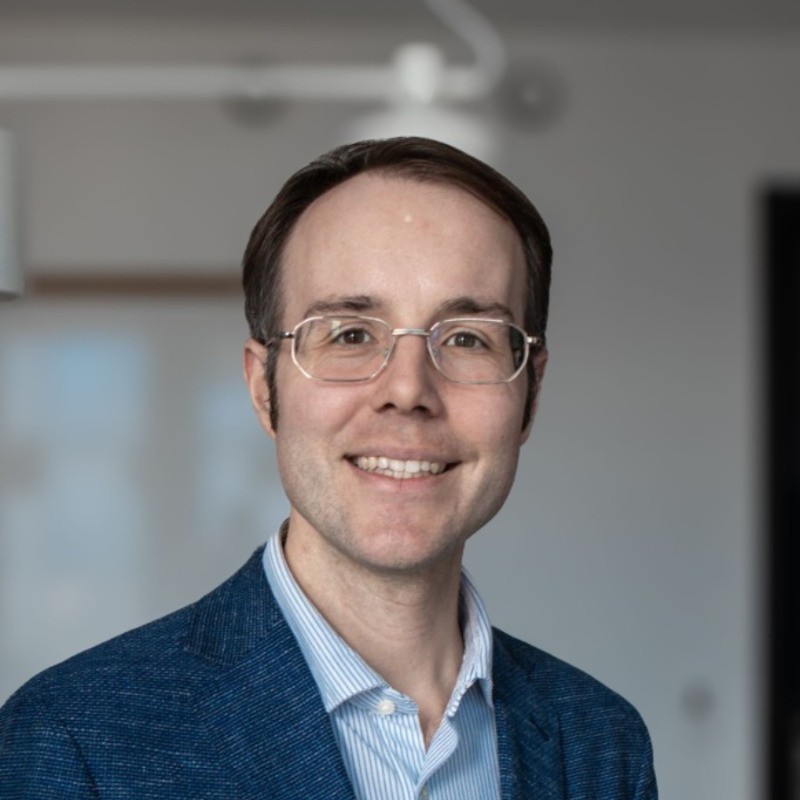
Pierre-Henri ParisView profile
Associate Professor
Pierre-Henri Paris is an Associate Professor (Maître de Conférences) at Paris-Saclay University since September 2024. Previously, he worked as a Postdoctoral Researcher at Telecom Paris (Institut Polytechnique de Paris) from September 2020 to August 2024. His academic journey includes a PhD in Artificial Intelligence from Sorbonne University and CNAM (Conservatoire National des Arts et Métiers) completed in 2020. Education: PhD in Artificial Intelligence, 2020, Sorbonne University and CNAM M.Sc. in Artificial Intelligence, 2016, CNAM M.Sc. in Mathematics, 2008, CY Cergy Paris University (incomplete) Pierre-Henri Paris's research focuses on the intersection of artificial intelligence, knowledge representation, and natural language processing. His work particularly emphasizes knowledge graphs, entity linking, and data quality. He has made significant contributions to projects like YAGO 4.5, which enhances knowledge bases with cleaner, logically consistent structures, and MAFALDA, a benchmark for fallacy classification. His research often bridges theoretical foundations with practical applications, particularly in how knowledge can be effectively represented, extracted, and utilized in complex systems. His recent publications reveal a strong focus on knowledge graph enhancement, semantic representation, and natural language understanding. The work on YAGO 4.5 demonstrates his commitment to creating more robust knowledge bases, while MAFALDA shows his interest in the intersection of language understanding and logical reasoning. His research trajectory indicates a consistent exploration of how structured knowledge can be integrated with linguistic analysis to create more intelligent systems. Advising: PhD students: Simon Coumes (2022-), Chadi Helwe (2022-2024), François Amat (2022-) Master's students: Syrine El Aoud (2021), Ayoub Mountassir (2013-2015) Bachelor's students: Khalil Halloul (2013-2014) Pierre-Henri Paris is actively involved in teaching at Paris-Saclay University, where he instructs courses including Introduction to Machine Learning, Introduction to Neural Networks, Algorithms for Data Science, Databases, and Data Warehousing. His teaching reflects his research expertise, providing students with both theoretical foundations and practical applications in artificial intelligence and data science.