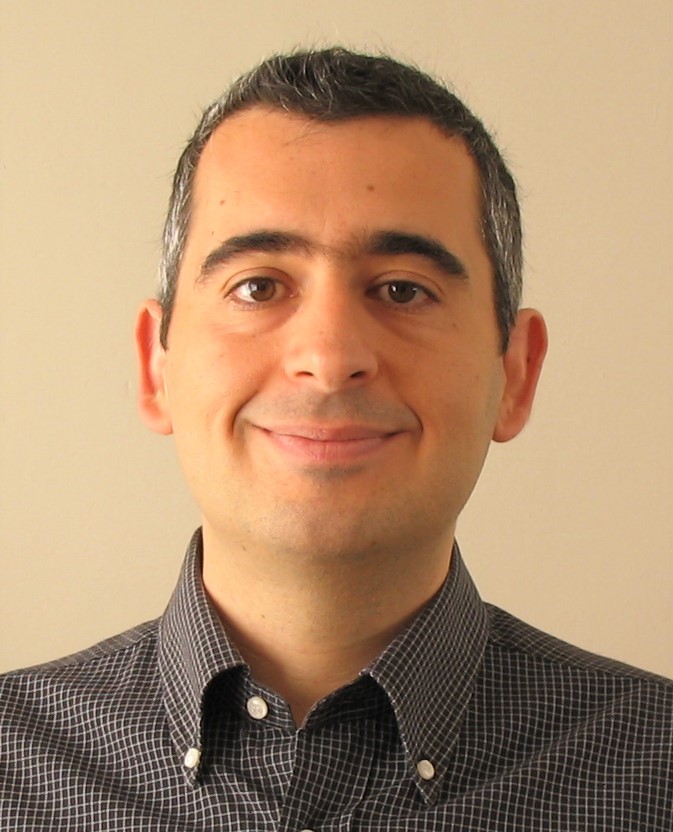
John Paparrizos is an Assistant Professor of Computer Science and Engineering at The Ohio State University's College of Engineering, where he directs The DATUM Lab (Data Analytics, Understanding, Mining, and Management Lab). He maintains an adjunct affiliation with the School of Informatics at Aristotle University of Thessaloniki. His research spans databases, data science, machine learning, and artificial intelligence , with focus areas including: Time-series analysis (clustering, anomaly detection) Scalable data mining for structured/unstructured data Adaptive algorithms for resource-constrained environments Foundational technologies for data-intensive applications His work addresses real-world challenges across relational, time-series, multimedia, text, graph, web, and IoT data domains. Notable recognition includes: 2025 ACM SIGMOD Test-of-Time Award for k-Shape time-series clustering 2023 IEEE TCDE Rising Star Award ACM SIGMOD Research Highlight Award NetApp Faculty Award His research has been featured in New York Times (front page), Washington Post , Forbes , and adopted by Fortune 500 companies (Exelon, Nokia) and the European Space Agency. He actively serves on program committees for premier conferences including ACM SIGMOD, VLDB, IEEE ICDE, ACM SIGKDD, and NeurIPS. His open-source tools have exceeded 100,000 downloads and are integrated into academic curricula at Brown, Columbia, Purdue, and University of Chicago.
Professor Eleni Kokkinou holds a position at the Hellenic Mediterranean University (HMU) as a Professor of Environmental Geology and Geotechnology, with an affiliation to the Institute of Computer Science at FORTH. She earned her Geology degree from Aristotle University of Thessaloniki, followed by a postgraduate diploma and PhD in Applied Geophysics from the Technical University of Crete. Her research focuses on environmental geology, geotechnical studies, geodata modeling, and coastal vulnerability. She has pioneered work in remote sensing for agricultural management, oil spill modeling in the Eastern Mediterranean, and precision agriculture using UAV technology. She has supervised over 73 diploma dissertations, 5 ongoing theses, and examined multiple international M.Sc. theses in Egypt and Cyprus. Teaching includes courses on GIS, geotectonics, and geoscience software at HMU and TEI Crete. She actively contributes to committees like the Research Management Board of HMU and is a licensed UAV pilot with expertise in geophysical prospection. Her work integrates geomatics, environmental monitoring, and civil protection strategies for coastal and marine systems. Key collaborations include Cairo University and the Technical University of Crete. She has developed decision-support systems for irrigation optimization and participated in major projects like the Nereids oil spill risk assessment initiative.
Angelos Alexopoulos is an Assistant Professor at the Department of Economics , Athens University of Economics and Business . He has held Research Associate positions at the University of Cambridge, University College London, and University of Exeter in the UK. PhD: Athens University of Economics and Business Research Focus: Computational Statistics, Econometrics, Bayesian Analysis, Network Modelling Publications span Bayesian inference, epidemic forecasting, machine learning for fraud detection, and econometric methodology. Key journals include Journal of the Royal Statistical Society , Journal of Computational and Graphical Statistics , and Statistics and Computing . 2024: Gaussian invariance in MCMC 2024: Epidemic nowcasting models 2023: VAT fraud detection with ML Awards include certifications in Deep Learning (Coursera), Blockchain (edX), and Object-Oriented R Programming (DataCamp).
Georgios Amanatidis is an Assistant Professor at the Department of Informatics of Athens University of Economics and Business (AUEB) since December 2024. He is also a Lead Researcher at the Archimedes Unit of the Athena Research Center (since February 2023). Previously, he held roles including Senior Lecturer (2023-2024) and Lecturer (2020-2023) at the University of Essex, UK; Research Associate (2020-2021) at the University of Amsterdam; Senior Postdoctoral Researcher (2019-2020) at Sapienza University of Rome; and Postdoctoral Researcher (2017-2019) at CWI, Netherlands. Education: PhD in Computer Science (2017), AUEB: Thesis titled "Algorithmic and mechanism design aspects of problems with limited—or no—payments" . MSc in Mathematics, Georgia Institute of Technology, USA. Diploma in Applied Mathematics, National Technical University of Athens. His research focuses on algorithmic intersections of Discrete Mathematics, Computer Science, and Economics, emphasizing fair division, mechanism design, and graph sampling. Despite no listed publications here, his work bridges theoretical computer science with economic applications. He has no recorded scientific awards but maintains an active academic trajectory through multiple postdoctoral and teaching roles. Advising and grants details are not specified in the provided text. His current affiliation with AUEB and Athena Research Center suggests involvement in collaborative research projects, though specifics are absent.
Panagiotis Liakos is a Researcher at the University of Athens (Department of Informatics and Telecommunications), specializing in graph mining for large-scale networks. He holds a Ph.D. in Distributed and Streaming Graph Processing (2015-2018), an M.Sc. in Computer Systems Technology (2008-2011), and a Ptychion in Informatics and Telecommunications (2004-2008), all from the University of Athens. His research focuses on developing scalable algorithms for graph processing, compression, and community detection in dynamic networks. Research interests include: Graph mining : Community detection, temporal graph analysis Large-scale systems : Distributed processing, cloud-based solutions Data optimization : Lossless compression, storage efficiency Stream processing : Real-time network analysis, dynamic algorithms His publications demonstrate strong focus on graph algorithms and data efficiency, with recent work on time-series compression (Chimp, Sim-Piece) and temporal graph processing. He has received multiple awards including: IEEE Big Data Travel Grants (2016, 2017) SIGIR Travel Grant (2016) WSDM Data Challenge 1st Place (2013) Greek State Scholarship (2006-2007) He has supervised 9 Master's students on topics spanning recommendation systems, MongoDB optimization, sports analytics, and traffic modeling. Contributed to European projects including GALENA, Interact, EarthServer, iMarine, and PERNASVIP. Leads the Hive Server project for distributed services and teaches Large Scale Data Management .
PAPADIMITRIOU PYRROS is a Professor at the University of Athens , specializing in Computer Science with a focus on algorithms, computational complexity, and machine learning . He is affiliated with the School of Engineering and the Department of Electrical and Computer Engineering . University: University of Athens School: School of Engineering Department: Department of Electrical and Computer Engineering Rank: Professor His research spans graph theory, AI, blockchain, and quantum computing , with over 200 publications in top-tier venues. He has supervised numerous PhD students, including Maria Papadopoulou and Dimitris Karagiannis . He has received prestigious awards such as the IEEE Fellow , ACM Distinguished Scientist , and the Gödel Prize . His work has been funded by ERC Advanced Grants and NSF . Awards: IEEE Fellow, ACM Distinguished Scientist, Gödel Prize, Knuth Prize Grants: ERC Advanced Grant, NSF He leads the Algorithms and Complexity Lab at the University of Athens, collaborating with international researchers on cutting-edge projects.
Mihalis Kolountzakis is Professor of Mathematics at the University of Crete, Greece, specializing in harmonic analysis, additive number theory, combinatorics, and tiling theory. Since 2006 he holds the rank of Professor in the Department of Mathematics and Applied Mathematics, after serving as Associate Professor from 2000–2006. He has also held visiting positions at Georgia Tech, UIUC, and the Institute for Advanced Study. Education PhD in Mathematics, Stanford University (1994) Graduate study in Mathematics, University of Crete (1988–1989) BSc in Computer Science, University of Crete (1984–1988) Research Interests His work centers on the interplay between Fourier analysis and discrete geometry. Major themes include: Tiling and spectral sets: investigating when a domain admits an orthogonal basis of exponentials (Fuglede’s conjecture) and studying translational tilings by functions and sets. Additive combinatorics & number theory: problems on sumsets, Sidon sets, and additive energy using probabilistic and harmonic-analytic methods. Discrepancy theory: distribution of points and line segments in checkerboard and geometric settings. Computational aspects: algorithms for deciding tiling properties, graph algorithms, and learning symmetric Boolean functions. Publications With over 100 refereed papers, his recent output (2022–2025) continues to advance tiling theory, spectral questions, and additive combinatorics, often combining analytic techniques with discrete methods. Teaching and Service He has taught a wide range of courses including Measure Theory, Harmonic Analysis, Probability, and Discrete Mathematics at both undergraduate and graduate levels. He served as Chair of the Department of Mathematics at the University of Crete during 2013. Contact Email: kolount@gmail.com Office: Γ-213, Department of Mathematics, University of Crete, 70013 Heraklion, Greece Phone: +30-2810393834
Konstantinos Kotis is an Associate Professor at the Department of Cultural Informatics and Communication, University of the Aegean, and a Research Associate at the AI Lab of the University of Piraeus. He serves as Director of Postgraduate Studies in Cultural Informatics and leads the Semantic Web of Things research group. He holds a B.Sc. in Computation from University of Manchester (UMIST) and a Ph.D. in Information Management from University of the Aegean. His research focuses on: Knowledge engineering methodologies and ontology evolution Semantic Web technologies and linked data applications IoT semantics and semantic sensor networks Intelligent systems for cultural heritage and digital twins AI chatbots and conversational interfaces His publication portfolio demonstrates significant contributions to semantic data integration, with recent work emphasizing ontology engineering, RDF generation from streaming data, and maritime domain applications. Research consistently addresses knowledge representation challenges in distributed environments. Awards include: ERCIM 'Allain Bensoussan' Post-Doctoral Fellowship (2011-2012) He directs the postgraduate program in Cultural Informatics and leads multiple research projects including GreenHeritage (Erasmus+), RE-SAMPLE (H2020), and datACRON (H2020). Manages research teams at the Intelligent Systems Lab (i-lab) and contributes to European projects on semantic interoperability and digital culture.
Dimitrios Fotakis is a Professor at the School of Electrical and Computer Engineering at the National Technical University of Athens (NTUA), where he has been serving since February 2009. He also collaborates with the "Archimedes" research unit as an experienced researcher since 2023. His academic journey includes previous positions as a Senior Research Scientist at Yahoo Research (2017-2019), Assistant Professor at the University of the Aegean (2004-2009), and Postdoctoral Researcher at the Max-Planck Institut für Informatik (2001-2003). National Technical University of Athens (2009-present): Professor "Archimedes" Research Unit (2023-present): Collaborating Senior Researcher Yahoo Research (2017-2019): Senior Research Scientist University of the Aegean (2004-2009): Assistant Professor Max-Planck Institut für Informatik (2001-2003): Postdoctoral Researcher Education: He holds a Diploma (1994) and a PhD (1999) from the Department of Computer Engineering and Informatics at the University of Patras, Greece. Dimitrios Fotakis specializes in Theoretical Computer Science with a focus on Algorithmic Game Theory and Approximation Algorithms. His research centers on the algorithmic properties of congestion games, the design of approximate mechanisms without monetary exchanges, and direct algorithms with emphasis on service location problems. His work has produced significant results including optimal algorithms for service location problems, potential functions for generalizations of congestion games, and optimal approximate truth-based mechanisms. With over 120 publications in major international conferences and journals and more than 3,000 citations according to Google Scholar, his research has had substantial impact in the field. His recent publications (2023-2025) demonstrate a continued focus on cutting-edge topics at the intersection of algorithms, game theory, and machine learning. These works span diverse areas including learning-augmented algorithms, graph neural networks, facility location problems, mechanism design, opinion dynamics, and fairness in ranking systems. The breadth of his research shows his ability to bridge theoretical computer science with practical applications in energy systems, social networks, and AI ethics. Teaching: Professor Fotakis teaches courses including Algorithms and Complexity, Discrete Mathematics, Computer Programming, Algorithmic Game Theory, Network Algorithms and Complexity, and Convex Optimization with Applications in Machine Learning. Research Leadership: He has served as Principal Investigator for several significant research projects including BALSAM (Beyond Worst-Case Analysis in Approximation Algorithms and Mechanism Design, 2019-2023), LEADAlgo (Learning-Augmented and Data-Driven Online Algorithms, 2020-2022), and Selfish Resource Allocation through Game Theoretic Models (2009-2021). He has also contributed as a Senior Researcher to multiple THALES projects through the years. Mentorship: Professor Fotakis has supervised numerous PhD students who have gone on to prestigious postdoctoral positions at institutions including MIT, Stanford, Yale, and UT Austin. His academic lineage extends through many successful students now working in top universities and research institutions worldwide.
Panagiotis Patsilinakos is a PSL Junior Research Chair (Post-Doctoral Researcher-Teacher) at LAMSADE, Paris Dauphine-PSL University, where he focuses on learning-augmented algorithmic mechanism design and computational social choice. His work bridges algorithmic game theory, mechanism design, and computational complexity. Education: PhD in Computer Science (2023) from the National Technical University of Athens (NTUA), School of Electrical and Computer Engineering. MEng in Computer Engineering (2016) from the University of Patras, School of Engineering. His PhD thesis explored algorithmic game theory and mechanism design under information scarcity. Research interests include randomized algorithms, approximation algorithms, and the intersection of learning theory with mechanism design. Notable contributions involve online budget-feasible auctions, learning-augmented NP-hard problem solutions, and distortion analysis in voting systems. Teaching includes courses on 'Beyond Worst-Case Analysis' at Paris Dauphine and 'Algorithmic Game Theory' at AUEB/NTUA. Previously served as a teaching assistant for undergraduate/graduate courses at NTUA, including Algorithms and Complexity, and mentored 8 undergraduate theses. Labs/Teams: Member of NTUA's Computation and Reasoning Laboratory. Active contributor to LAMSADE's research initiatives in algorithmic mechanisms and social choice theory.
Andreas Göbel is a Professor and Chair of Algorithm Engineering at the Hasso Plattner Institute (HPI). His research focuses on computational counting, randomness in computation, computational complexity, graph theory, and stochastic processes. He has contributed extensively to understanding diffusion processes, clique structures in networks, and algorithmic approaches to statistical physics problems. His work bridges theoretical computer science with practical algorithm design. Recent contributions include analyzing SIRS process survival times, clique dynamics in geometric random graphs, and non-linear information diffusion models. He has published widely in top-tier conferences such as IJCAI, AAAI, and SODA. Göbel teaches courses including Probability and Computing, Algorithmix, and Theoretical Foundations of Cryptography. His research group explores both foundational aspects of algorithms and real-world applications, particularly in network science and combinatorial optimization.
Christos Tzamos is an Associate Professor in the Department of Informatics and Telecommunications at the National and Kapodistrian University of Athens, and a researcher at Archimedes AI. He received his PhD from MIT and BS from National Technical University of Athens. His research bridges computer science, machine learning, statistics, and algorithmic economics. Research Focus: Machine learning theory, algorithmic mechanism design, optimization, and statistical methods with applications to economics. Current projects include active learning, adaptive information acquisition, and robust algorithm design. Awards: NSF CAREER Award (2022), NeurIPS Outstanding Paper Award (2019), George Sprowls Award for best CS PhD thesis at MIT (2017), multiple programming competition medals. Student Advising: Currently advising 4 PhD students and 1 postdoc, with 3 graduated PhD students now at Georgia Tech, Yale, and UT Austin.
Georgios Amanatidis is an Assistant Professor at the Department of Informatics, Athens University of Economics and Business, and Collaborating Senior Researcher at the Archimedes Research Unit. His research specializes in algorithmic problems at the intersection of discrete mathematics, computer science, and economics, with particular focus on fair division, algorithmic mechanism design, and graph sampling. Research Areas: Algorithmic game theory, computational social choice, fair resource allocation, approximation algorithms, submodular optimization, and mechanism design without payments. Current Projects: ARCHIMEDES project on game theory and multi-agent learning; Algorithmic Fair Division in Dynamic, Socially Constrained Environments (NWO Veni Grant); Combinatorial Reverse Auctions for crowdsourcing markets (COMRADE HFRI Grant).
George Ioannou is a Professor of Production Management and Business Processes at the Athens University of Economics and Business, where he leads the MBA International Postgraduate Program and the Center for Business Processes and ERP Systems at the Laboratory of Management Science. Previously, he served as Assistant Professor at Virginia Tech's Department of Production and Systems Engineering. His academic journey includes a B.Sc. in Mechanical Engineering from National Technical University of Athens, an M.Sc./DIC in Industrial Robotics/Production Automation from Imperial College London, and a Ph.D. in Mechanical Engineering from the University of Maryland. Current Academic Roles: Professor, Director of MBA Program, Head of ERP Systems Center Prior Academic Roles: Assistant Professor at Virginia Tech Education: B.Sc., M.Sc./DIC, Ph.D. His research focuses on integrating web-based technologies with operational research to optimize production systems, business processes, and supply chains. This spans applications in plant spatial planning, ERP systems, and cultural heritage digitization. He has secured research funding from global organizations including NSF, European Commission, and private sector leaders like Microsoft. Scientific awards include Microsoft's Excellence in Education Award and multiple teaching excellence recognitions for MBA programs. Ioannou serves on the Technical Chamber of Greece (TEE) and the editorial board of Production Planning & Control , with extensive consulting experience for public and private sector entities.
Ntoulas Alexandros is an Assistant Professor at the National and Kapodistrian University of Athens, affiliated with the Department of Informatics and Telecommunications. His research focuses on data science, machine learning, distributed systems, web technologies, and information retrieval. He has contributed to advancements in federated learning frameworks, graph analysis, and privacy-preserving techniques. His work spans both theoretical and applied domains, including optimization of mobile content delivery, real-time data processing, and community detection in network streams. Key research interests include federated deep learning (e.g., DeepReduce), efficient communication protocols for distributed systems, and scalable algorithms for graph stream analysis. He has published widely in conferences like PAKDD and journals focusing on data mining and distributed computing. His research also addresses practical challenges such as server-to-server integration, content similarity detection, and privacy in search logs. Notable contributions include methods for rapid community detection in dynamic networks and innovative approaches to content curation from social activity streams. While no awards are explicitly listed, his active publication record reflects sustained academic engagement in high-impact areas of informatics.