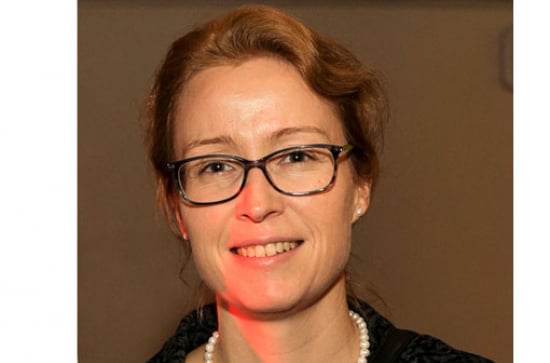
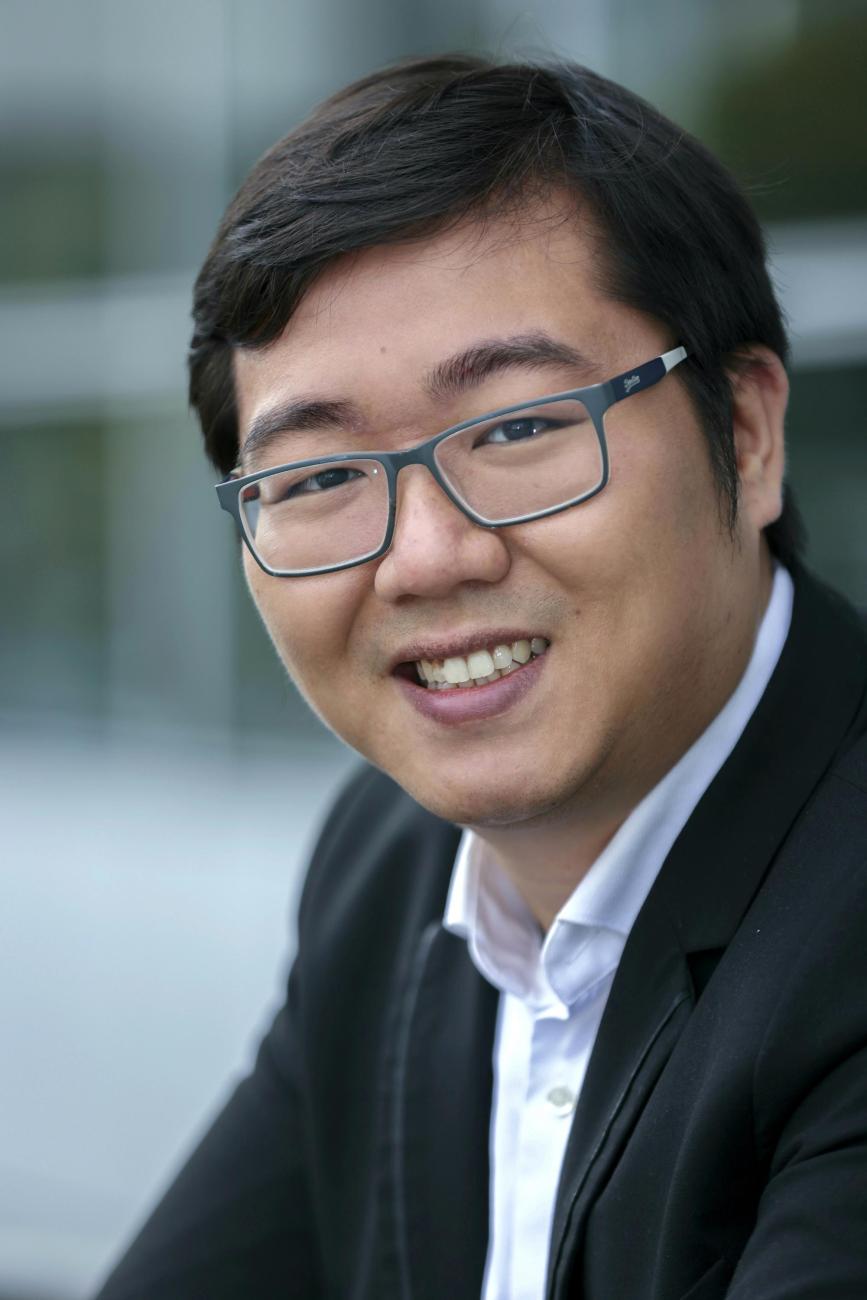
Prof. Anya Belz is Full Professor of Computer Science at Dublin City University's School of Computing and Science Lead at ADAPT Research Centre. A leading NLP researcher with PhD-level expertise, she specializes in natural language generation, evaluation methodologies, and multimodal systems. Recipient of multiple best paper awards and NAACL Test of Time Award nomination. Research innovations include foundational work on statistical language generation (deployed in weather forecasting systems), comparative evaluation frameworks, vision-language integration, and reproducibility quantification. Current EPSRC-funded ReproHum project coordinates 20 global labs studying evaluation consistency. Achievements : Developed industry-deployed generation systems for accessibility applications Pioneered cross-modal alignment techniques for image description Authored 100+ publications spanning generation, evaluation, and reproducibility
Rozenn Dahyot is a Professor of Computer Science at Maynooth University within the Faculty of Science & Engineering. She previously held roles as Assistant and Associate Professor in Statistics at Trinity College Dublin (2008-2021) and Lecturer in Computer Science (2005-2008). Her research interests bridge Digital Signal Processing, Computer Vision, Machine Learning, and Statistical Analysis. She organized the European Signal Processing Conference (EUSIPCO2021) in Dublin and served as President of the Irish Pattern Recognition and Classification Society (IPRCS) from 2014-2020. Her work spans topics like semantic scene understanding, CNN compression, and medical image segmentation. Key contributions include advancements in graph-based image analysis, reinforcement learning optimization, and AI-driven systems for disaster management. Dahyot is a member of IEEE, ACM, and EURASIP, contributing to both academic and industrial collaborations.
Ralf Bierig joined Maynooth University's Computer Science Department in 2017, teaching topics including information retrieval, software testing, interaction design, and virtual reality. He is the programme director of the Higher Diploma in Human-Computer Interaction (HCI) and User Experience (UX). He earned his BSc (2002) from University of Furtwangen and PhD (2008) from Robert Gordon University. Research Interests His work spans information retrieval, interactive information retrieval, personalisation, information search behavior, usability (UX), and virtual reality (VR). Recent publications focus on multimodal concept indexing, hybrid IR approaches, and contextual adaptation in search systems. Publication Trends His research combines statistical semantics, graph modeling, and multimodal data analysis across academic collaborations in Austria, Germany, and international venues like ECIR and SIGIR.
Arash Joorabchi is an Assistant Professor at the Department of Electronic and Computer Engineering, Faculty of Science and Engineering, University of Limerick, Ireland. His research focuses on the intersection of machine learning, educational technology, and digital library systems, with particular emphasis on automated assessment, text mining, and knowledge organization techniques. Research Trends: Analysis of his publications reveals sustained contributions to automated short-answer grading, Arabic text classification, and semantic integration of Wikipedia with academic resources. Key methodologies include sentence transformers, hybrid text representation models, and citation-based indexing techniques. Technical Domains: His work spans natural language processing, educational data mining, metadata management, and semantic web technologies. Specific applications include Q&A platform analysis, library resource discovery, and curriculum development systems.
John Breslin is a Personal Professor in Electronic Engineering at the College of Science and Engineering, University of Galway, serving as Director of the TechInnovate and AgInnovate programmes. Associated with two Taighde Éireann – Research Ireland Centres, he is a Principal Investigator at Insight Centre for Data Analytics (specializing in data analytics) and a Funded Investigator at VistaMilk (Agri-Technology), while also leading the EDIH Data2Sustain project. With an h-index of 50, over 12,000 citations, and 300+ peer-reviewed publications including seminal books on the Social Semantic Web, he ranks among Ireland's most influential researchers in digital technologies. Breslin's research fundamentally bridges Semantic Web technologies, AI-driven data analytics, and practical innovation. His co-creation of the SIOC framework—implemented across 65,000+ websites by entities like Yahoo and Boeing—demonstrates real-world impact in social data interoperability. Current work leverages blockchain and federated learning for sustainable Agri-Technology through VistaMilk, while his TechInnovate programmes translate academic research into commercial ventures across healthcare, smart manufacturing, and energy systems. Analysis of his 15 most recent publications reveals dominant themes in AI-enhanced security (35% of works), blockchain applications for sustainability (27%), and multimodal AI for healthcare (20%). His team pioneers privacy-preserving techniques for IoT and medical devices, neurosymbolic visual reasoning frameworks, and federated learning architectures addressing data heterogeneity—directly supporting his roles in national research infrastructures like Insight and VistaMilk. John has received several prestigious awards: IIA Net Visionary Award (twice) ITAG Outstanding Contribution to the ICT Sector Award Galway Chamber President’s Award Best Irish-Published Book Award (2020 for Old Ireland in Colour) Multiple Best Paper Awards He leads major research initiatives funded by Taighde Éireann – Research Ireland: Insight Centre for Data Analytics (as Principal Investigator) VistaMilk SFI Research Centre (as Funded Investigator) EDIH Data2Sustain (as Principal Investigator) His entrepreneurial programs TechInnovate and AgInnovate have mentored 200+ startups, securing €50M+ in follow-on funding. Breslin co-founded PorterShed (Galway City Innovation District) and serves on Scale Ireland's Steering Group, creating Ireland's most active regional innovation ecosystem outside Dublin. He maintains active industry partnerships with Vodafone, Boeing, and agricultural cooperatives through VistaMilk's testbed facilities.
Dr. Georgiana Ifrim is an Associate Professor at the School of Computer Science, University College Dublin , where she serves as Director of Graduate Research and Co-Lead of the SFI Centre for Research Training in Machine Learning (ML-Labs). She holds concurrent appointments as an SFI Funded Investigator at the Insight Centre for Data Analytics and VistaMilk SFI Research Centre . Her academic journey includes postdoctoral research at Insight Centre, Cork Constraint Computation Centre (4C), and Aarhus University's Bioinformatics Research Centre (BiRC). Education: BSc in Computer Science, University of Bucharest, Romania MSc and PhD in Informatics, Max-Planck Institute for Informatics, Germany Dr. Ifrim specializes in scalable predictive modeling for diverse applications including: Sequence learning (DNA analysis, time series) Real-time prediction for streaming data (news/social media, energy) Interpretable machine learning models Knowledge graph exploitation (WordNet/Yago, Naga) Wearable sensor data analysis (sports science, health monitoring) Energy price forecasting for sustainable systems Her recent publications focus on time series explainability (TSHAP, tsCaptum), multivariate analysis (scalable channel selection), and healthcare applications (fall detection, walking speed estimation). Key contributions include open-source tools like SEQL (sequence learner) and Twitter-Topics (event detection). Scientific Awards: Winner of SNOW@WWW14 Data Challenge As Director of Graduate Research, she oversees advanced academic training while leading funded projects at the intersection of machine learning , real-time analytics , and domain-specific applications in agriculture, healthcare, and digital journalism. Her research group maintains active GitHub repositories with open-source implementations.
Prof Noel O'Connor is a Full Professor at Dublin City University's School of Electronic Engineering, specializing in cutting-edge research at the intersection of artificial intelligence (AI), medical imaging, robotics, and smart city technologies. His work spans applications such as cardiac MRI reconstruction, robotic manipulation using reinforcement learning, and the development of the Smart DCU Digital Twin for autism-friendly university environments. Research interests include AI-driven medical diagnostics, multimodal data fusion, and adaptive systems. His contributions to cardiac MRI reconstruction and transformer-based medical imaging analysis reflect a strong focus on healthcare innovation. He also explores ethical AI practices to reduce social bias in foundation models. Recent work emphasizes smart infrastructure projects, such as optimizing parking recommendations for electric vehicles and enhancing accessibility through digital twin frameworks. His research often integrates real-time sensor data and multi-agent systems to address complex urban challenges. No scientific awards are listed. Collaborations include the ASU-DCU International Research Program on Sensors and Machine Learning. Advising details and grant information are not explicitly provided.
Dr. Muhammad Intizar Ali is an Assistant Professor in the School of Electronic Engineering at Dublin City University (DCU). He holds a PhD (with distinction) from Vienna University of Technology, Austria (2011) and has held roles including Adjunct Lecturer and Research Fellow at the Insight Centre for Data Analytics, NUI Galway. His primary research focuses on IoT, Data Analytics, Machine Learning, and Knowledge Graphs with applications in Smart Cities, Manufacturing, Farming, and Healthcare. Education: PhD in Computer Science, Vienna University of Technology (2007-2011) Research Interests: IoT and Edge Analytics Federated and Distributed Machine Learning Semantic Web and Knowledge Graphs Smart Manufacturing and Industry 4.0 Stream Processing and Real-Time Systems Recent Work Trends: His publications emphasize federated learning frameworks, IoT-enabled adaptive intelligence, and knowledge graph applications in industrial contexts. Recent projects include digital twin systems for predictive maintenance and ontology-driven manufacturing solutions. Grants & Projects: Lead Investigator in SFI-funded projects like MultiRoof (2025-2029) and Neuro-Symbolic AI for Building Management EU/Industry collaborations including Terrain-AI and Bentley-funded initiatives Labs & Teams: Active in DCU's Data Analysis and Machine Learning research groups, leading projects like Smart DCU Digital Twin for campus optimization.
Dr. Rob Brennan is an Assistant Professor in the School of Computer Science at University College Dublin. With 25 years of academic and industry experience, he specializes in data governance, AI ethics, and cybersecurity. His research integrates socio-technical systems analysis, data protection frameworks, and healthcare risk management. He leads the Value and Risk research challenge within the ADAPT Centre's Transparent Digital Governance initiative and coordinates projects like the ARK platform for risk governance. Education: BSc in Physics, Dublin City University MSc, Queen's University Belfast PhD in Governance, Dublin City University Professional Diploma in University Teaching and Learning, University College Dublin Research Interests: Data Governance & AI Accountability GDPR Compliance & Privacy Engineering Healthcare Risk Management Knowledge Graphs & Linked Data Cybersecurity & Incident Response Key Contributions: Co-PI of Science Foundation Ireland's Empower Data Governance project Coordinator of the €4M H2020 ALIGNED project on software/data engineering Developed the ARK platform for risk governance in healthcare and cybersecurity Grants & Awards: Best Paper Award at Extended Semantic Web Conference 2023 Principal Investigator for grants including the ARK-Virus platform (SFI-funded) Teaching & Mentorship: Coordinates courses on Cyber Risk Assessment, Incident Response, and Data Protection Supervises PhD students focusing on data governance and AI ethics Co-developed the MA in Data Protection and Privacy Law with Computing Professional Activities: Member of FAccT 2023 Program Committee Co-chair of the Irish Conference on Artificial Intelligence and Cognitive Science Contributor to international standards (OMG, IETF, 3GPP)
Hadi Tabatabaee is an Assistant Professor at the School of Computer Science, University College Dublin (UCD), leading the Sustainable Orchestration in Computing Continuum (SOC² Lab). His research focuses on sustainable orchestration of services across edge-cloud environments, emphasizing energy efficiency, carbon-aware systems, and AI-driven applications like large language models (LLMs). Key roles include Associate Editor for IEEE Access and Management Committee member of COST Action CA22151 (CYPHER). He holds a PhD in Computer Engineering from the University of Isfahan and has held academic positions at Maynooth University, Shahid Beheshti University, and Trinity College Dublin's CONNECT research program. Education: PhD (Computer Engineering, University of Isfahan), MSc (Computer Engineering), with a research visit at TU Delft (2010-2011). Certifications include Epigeum's Research Leadership and Research Integrity courses. Languages: Persian (fluent), Azerbaijani (spoken). Research Interests: Edge-cloud continuum, dynamic service placement, distributed AI workloads, LLM optimization, and sustainable resource management. Recent work includes zero-trust vehicular networks, parallel algorithms for recommender systems, and geospatial event processing. Awards: None explicitly listed, though his contributions include over 20 journal articles in IEEE/Elsevier/Springer venues. Professional Activities: IEEE Senior Member, TPC member for IEEE conferences, and reviewer for multiple journals. Teaching: Coordinates/teaches Cloud Computing, Computer Networks, and Principles of Computer Organization at UCD.
Rem Collier is an Associate Professor in the School of Computer Science at University College Dublin (UCD). He holds a PhD in Computer Science from UCD (2001) and has held academic roles including Assistant Lecturer (2004), College Lecturer (2005–2018), and his current position since 2018. His research focuses on Multi-Agent Systems (MAS), Agent-Oriented Software Engineering (AOSE), Hypermedia MAS, Digital Twins, and applications in smart agriculture and urban simulation. He leads the CONSUS project (2022–2024) and collaborates on CAMEO (2021–2024). Education: BSc (Pure/Applied Mathematics, University of Bristol, 1994), MSc (Computation, UMIST, 1995), MPhil (UMIST, 1996), PhD (UCD, 2001). Research interests include Agent Factory Framework, ASTRA programming language, and integrating MAS with microservices. Notable achievements include the CIA System Innovation Award 2003 (ACCESS architecture) and Best Paper Awards at EMAS2020 and Mobile Learning 2006. His work spans over 150 peer-reviewed publications and grants such as HOTAIR (2004–2005) and SIFT (2008–2011). Teaching includes modules on Multi-Agent Systems, Distributed Systems, and Security. He has coordinated courses at UCD and the Joint UCD-Fudan program in Beijing and Sri Lanka. Labs/Teams: Active in Hypermedia MAS Simulation, collaborating on projects like CONSUS and CAMEO, emphasizing smart agriculture and distributed knowledge graphs.
Patrick Denny is an Associate Professor at the University of Limerick, affiliated with the Department of Computer Science & Information Systems, the Centre for Sustainable Digital (Re)Manufacturing, and Lero – the Research Ireland Centre for Software. His research focuses on computer vision, automotive systems, and medical imaging, with notable contributions to object detection, instance segmentation, and image processing in autonomous vehicles and healthcare. He holds patents in automotive camera systems and has authored over 38 research papers. His work addresses challenges such as rain impact on automated vehicle perception, medical image classification using graph neural networks, and optimizing camera exposure for automotive applications. He collaborates extensively on projects involving V2X communications and intelligent transportation systems. Denny’s research also extends to waste management through computer vision and medical imaging innovations. Patents: Over 10 patents in automotive imaging, including systems for calibrating image-capturing devices and thermal infrared sensors. Key Research Themes: Automotive perception, computer vision algorithms, medical image analysis, and sensor optimization. He actively engages in interdisciplinary projects, combining machine learning with real-world applications in transportation and healthcare.
Honghui Du serves as a Research Fellow at the Insight Centre for Data Analytics, a leading Irish research institution specializing in data science with nodes across multiple universities. The role centers within the Decision Making research group, focusing on algorithmic solutions for dynamic environments. Research spans transfer learning in non-stationary data streams , recommender systems (notably news personalization using LLMs and diffusion models), and medical imaging under label scarcity. Key emphases include handling concept drift, optimizing active learning for medical diagnostics, and developing generative approaches for user-item interaction modeling. Emerging work explores gamification for sustainable behavior change and entity resolution via language models. Recent publications (2023-2025) reveal accelerating integration of diffusion models and transformers into recommendation frameworks, while maintaining core expertise in transfer learning for evolving data streams. Medical imaging research increasingly addresses practical constraints like limited annotations through adaptive curriculum strategies. The work operates within the Decision Making research group at the Insight Centre, which investigates algorithmic decision processes under uncertainty and dynamic conditions.
Dr. Tai Tan Mai is an Assistant Professor at Dublin City University's School of Computing. He holds a PhD from DCU funded by the Irish Research Council and an MSc in Business Information Systems from University College Cork (2016) where he graduated as top-performing student. His research integrates data mining, learning analytics, and complex systems theory with applications in educational technology and business process management. Research interests focus on: Educational data mining and learning analytics Cryptocurrency market analysis using graph-based methods AI applications in education and societal risk assessment Complex systems approaches to programming education Prior to academia, he developed Business Process Management solutions for Vietnam's banking/financial sector.
Dr. Abdul Shahid is a Lecturer in Business Information Systems at the School of Business, South East Technological University (SETU), Waterford campus. He holds a PhD in Computer Science from Capital University of Science and Technology, Islamabad, and has previously served as a Lecturer at the National College of Ireland and a Postdoctoral Researcher at the University of Galway, contributing to EU Horizon 2020 projects such as Polifonia and InsiDE PRI. Research Interests: Dr. Shahid's research lies at the intersection of data science, large language models (LLMs), scientometrics, and applied AI. His work emphasizes the development of intelligent systems for decision-making in logistics, cybersecurity, and semantic computing. He is particularly focused on citation analysis, contextual embeddings, and the deployment of Retrieval-Augmented Generation (RAG) frameworks in industrial applications. Recent Research Trends: His recent publications reflect a strong emphasis on natural language processing for scientific literature analysis, including in-text citation identification, intent classification, and semantic modeling. These works integrate machine learning with knowledge engineering to extract and structure scientific knowledge from academic texts. Scientific Awards: No specific awards mentioned in the provided text. Advising and Grants: Dr. Shahid is currently accepting PhD students. His research has been supported through participation in high-impact EU-funded projects such as Horizon 2020’s Polifonia and InsiDE PRI, which involved data-driven analysis of scientific collaboration and knowledge graph applications in cultural heritage. Labs and Research Teams: He has been affiliated with research teams at the University of Galway working on EU Horizon 2020 initiatives. At SETU, he contributes to research in applied AI and business information systems, particularly in developing intelligent solutions for logistics and document understanding.