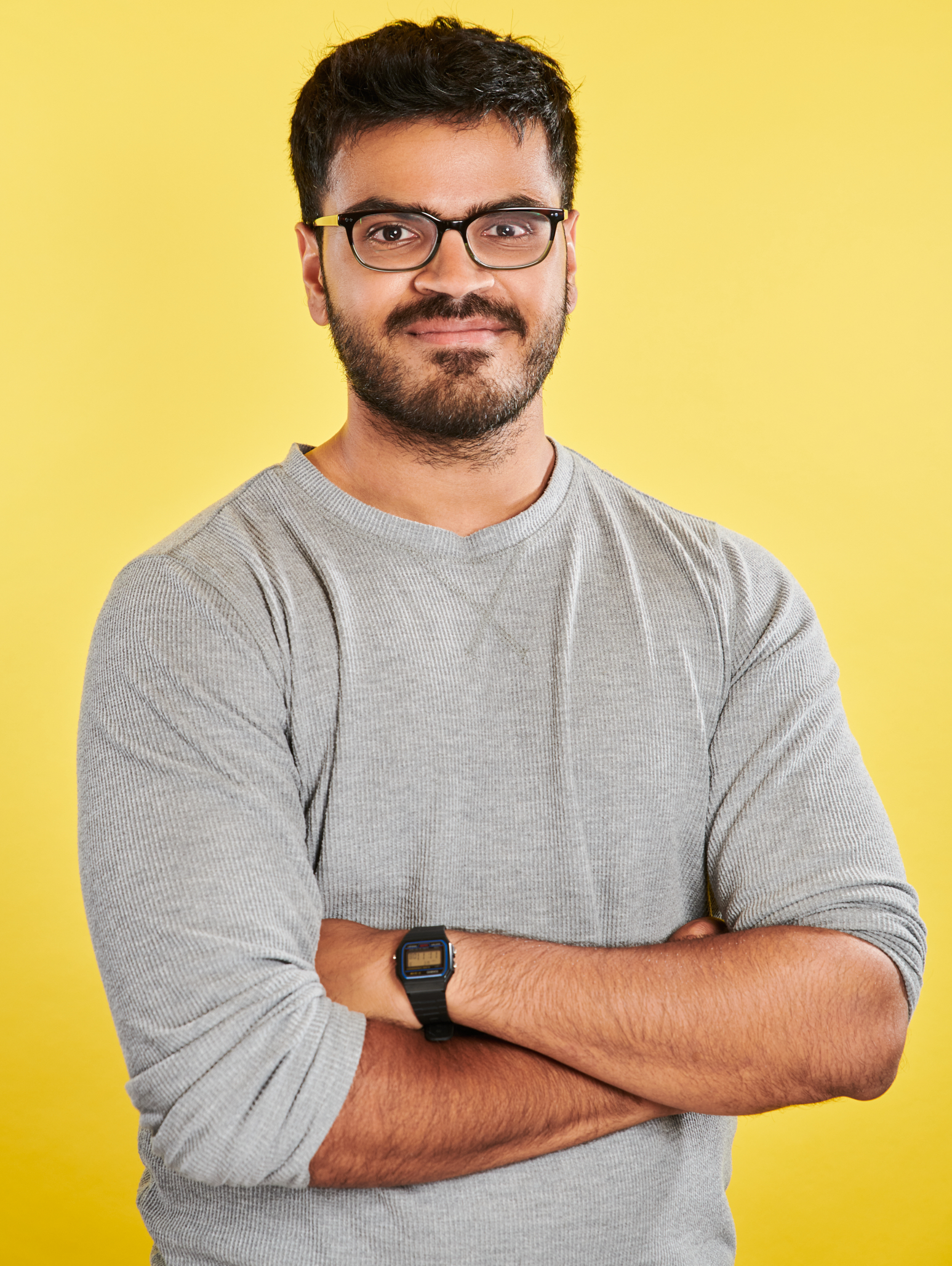
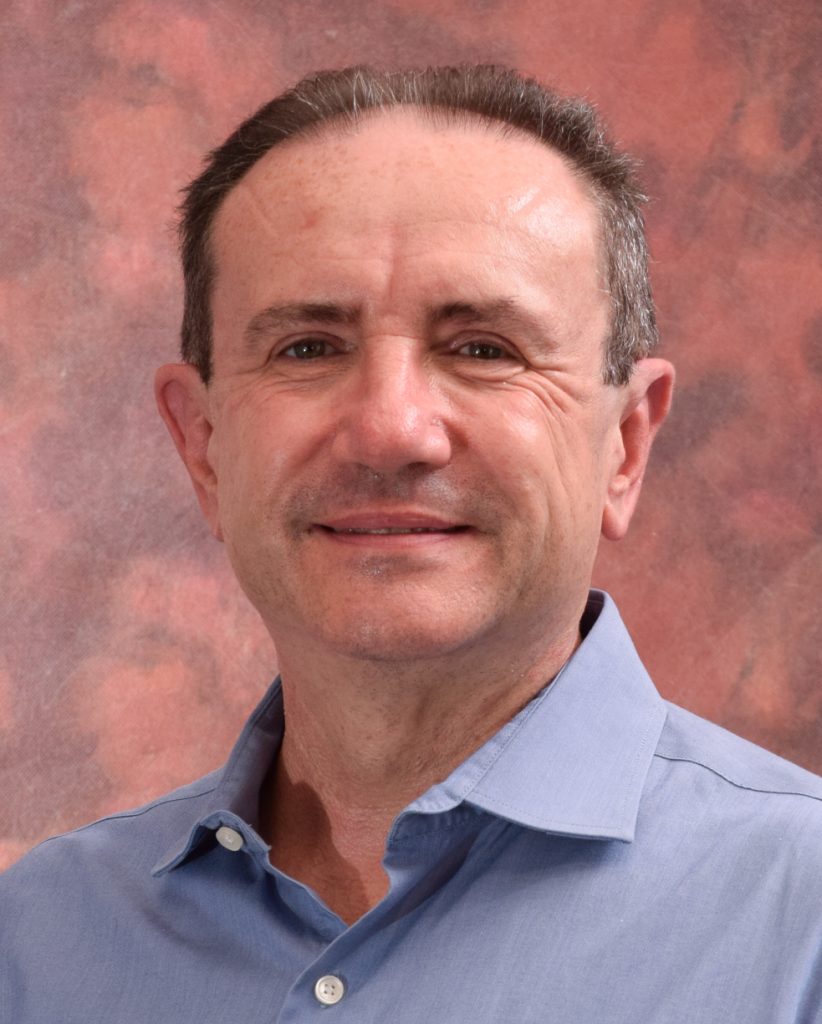
Oswald Lanz is a tenured full professor at the Faculty of Engineering of the Free University of Bozen-Bolzano , leading the Visual Computing Lab . He holds a Ph.D. in Computer Science and a Mathematics degree from the University of Trento. Prior to his current role, he was a researcher and head of research at FBK Trento. He is an endowed professor collaborating with Covision Lab , an AI hub in Bressanone, and coordinates the board of professors for the PhD in Computer Science program since 2025. His research focuses on Computer Vision, Deep Learning, and Video Analytics , with applications in sports technology, medical imaging, and industrial automation. Key achievements include the Amazon AWS Machine Learning Research Award (2020) , ACM Multimedia Best Paper (2015) , and Best Student Paper at ICIAP (2007) . He co-organized the ELLIS-VISMAC Winter School (2025) and chaired ICIAP 2019 . His work spans novel view synthesis, action recognition, and anomaly detection, supported by patents in video tracking and detection. He teaches courses like Deep Learning and Artificial Intelligence in undergraduate and graduate programs. Recent projects such as 5VREAL integrate 5G, edge computing, and AI for sports analysis. His collaborations bridge academia and industry, exemplified by his role in Covision Lab and multidisciplinary initiatives like DSS4LCO for food supply chains. Lanz’s publications emphasize spatiotemporal modeling, neural architecture search, and hybrid machine vision systems.
Mirco Musolesi is a Full Professor of Computer Science at both University College London (UCL) and the University of Bologna. He leads the Machine Intelligence Lab at UCL, part of the UCL Centre for Artificial Intelligence. His research focuses on Machine Learning, Generative AI, and computational models of human behavior, with applications in ubiquitous systems and societal impacts of AI. Education: PhD in Computer Science from UCL (2007) and Laurea in Electronic Engineering from the University of Bologna (2002). Previous roles include positions at the University of Birmingham, Dartmouth College, and the Alan Turing Institute. Research spans multi-agent systems, reinforcement learning, and AI ethics. Notable awards include ACM UbiComp 10-Year Impact Award (2020/2024) and the NetExplorateur/UNESCO Top 100 Innovations (2011). His work on EmotionSense and CenceMe applications has been recognized with Test-of-Time awards. Recent publications (2024-2025) address moral alignment in AI agents, multi-agent environmental policy simulations, and creativity in LLMs. His labs explore AI-driven solutions for urban systems and ethical decision-making frameworks.
Neil Shah is a Lead Research Scientist at Snap Inc., leading initiatives in user modeling, personalization, and trust and safety across Snapchat. His research focuses on advancing machine learning algorithms for large-scale structured data, including graph and sequential representations, with applications to recommendation systems and social platform security. PhD in Computer Science, Carnegie Mellon University (2017), advised by Christos Faloutsos B.S. in Computer Science, North Carolina State University Current research interests span: Graph Neural Networks (GNNs) for real-time inference and scalable training Cross-domain recommendation systems and generative modeling Test-time augmentation and hyperbolic geometry in representation learning Explainability methods for GNNs and fairness-aware outlier detection Recent publications highlight productionized GNN frameworks (GiGL), multimodal graph benchmarks, and novel approaches to link prediction and collaborative filtering. His work has appeared at top venues like KDD, ICLR, NeurIPS, and WWW. Scientific recognition includes: Outstanding Service Award at WSDM 2022 Best Paper Honorable Mention at CHI 2019
Pietro Liò is a Full Professor in the Department of Computer Science and Technology at the University of Cambridge, where he is also a member of the Artificial Intelligence group. His work bridges computer science and biomedical applications, with a strong focus on advancing AI methods for healthcare. Research Interests: His research is centered on developing Artificial Intelligence and Computational Biology models to unravel the complexity of diseases and support personalized and precision medicine. A current emphasis is on Graph Neural Network modeling, leveraging topological data structures to represent biological and medical systems. His interdisciplinary background enables innovative approaches at the intersection of machine learning and life sciences. The trends in his research, though no specific articles are listed, indicate a strong focus on AI-driven biomedical discovery, particularly using deep learning on structured data for health applications. This includes modeling biological networks, disease mechanisms, and patient-specific conditions through advanced neural architectures. Scientific Awards: As a principal investigator and academic leader, Pietro Liò likely supervises PhD and postdoctoral researchers and secures research grants in AI for health, though specific advisees and funding details are not mentioned in the text. His dual PhD background and affiliation with a leading AI group suggest a robust research program with significant grant involvement. He is associated with AI research activities at Cambridge, including seminars and software development, possibly contributing to or leading a research lab or initiative focused on AI applications in biology and medicine, though no formal lab name is provided beyond the general AI group membership.
Michele Salvi is an Associate Professor in Mathematics at Università degli Studi di Tor Vergata in Rome. He previously held a Marie Skłodowska-Curie fellowship, conducting research in Berlin, Munich, and Paris. His work focuses on Probability Theory, with emphasis on random processes in random media, random graphs, and statistical mechanics, bridging applications in Physics, Computer Science, and Biology. Random processes in random media Random graphs Mathematics of Neural Networks Stochastic homogenization Mixing times for Markov chains Statistical mechanics Salvi’s recent publications highlight interdisciplinary trends, particularly in the spectral analysis of deep neural networks, scale-free percolation dynamics, and spanning tree geometry in random environments. His collaborations span Europe, with projects involving probabilistic models in epidemiology, reinforcement learning, and stochastic homogenization. He has received the Marie Skłodowska-Curie fellowship, reflecting his international research experience. His work is aligned with the Department of Mathematics at Tor Vergata, which holds the "Department of Excellence" MatMod@TOV 2023-2027 grant.
Luciano Lavagno is a Full Professor at the Department of Electronics and Telecommunications, Polytechnic University of Turin, with over two decades of academic and research contributions. His work bridges hardware acceleration, low-power electronics, and intelligent system design. Research Focus: Hardware-accelerated machine learning, high-level synthesis (HLS) for FPGA/ASIC, heterogeneous CPU/GPU/FPGA platforms Key Projects: SPACE (predictable acceleration), REBECCA (secure AI acceleration), HPC-National Center (quantum computing), and oral history preservation via "Ti racconto una storia" initiative His recent publications analyze CNN inference optimization, subgraph isomorphism, and superword-level parallelism exploitation. Lavagno supervises multiple PhD students working on FPGA acceleration, neural network hardware, and embedded systems. As Principal Investigator for national and EU-funded projects (PRIN, JTI-ECSEL, PNRR), he drives advancements in sustainable computing infrastructure. His patented technologies include MIx&Latch timing methodology, capacitive sensing innovations, and 5G acceleration frameworks.
Giacomo Fiumara is an Associate Professor at the University of Messina, Department of Mathematical and Computer Sciences, Physical Sciences and Earth Sciences. He holds academic rank since October 2021. Previously, he served as a Permanent Researcher (2008–2021) and secondary school teacher (1997–2008). He earned a Doctorate in Physics (1993) and a Degree in Physics (1989), both from the University of Messina. He is an associate member of the Accademia Peloritana dei Pericolanti and qualified as an associate professor in INF/01 and ING-INF/05 sectors. His research focuses on social network analysis, network science, data science, criminal networks, knowledge representation, bioinformatics, and computational modeling. He has supervised over 170 theses and advised PhD students in Mathematics and Computational Sciences. Key collaborations include work with Prof. Pasquale De Meo on criminal networks and complex systems, and international projects with institutions in the US, UK, China, and Australia. Teaching includes courses on Algorithms, Data Structures, Bioinformatics, and Machine Learning across Computer Science, Engineering, and Medical programs since 2000. He also contributed to international programs at Lviv Polytechnic, Birzeit University, Cluj-Napoca, and Murcia. His editorial roles include Associate Editor of IEEE Access and Academic Editor of Complexity. He holds a patent for predictive analysis of criminal organizations' social structures and has received FFABR research funding. Key awards include FFABR funding (2017) and recognition in the FFABR Unime 2020 II edition. He organized conferences like Crimenet 2014 and participated in high-profile events such as the 2022 Complex Networks conference in Palermo, presenting on quantum walks for criminal network analysis.
Enrico Magli is a Full Professor at the Department of Electronics and Telecommunications (DET) at Polytechnic University of Turin, Italy. He serves as Director of the Image Processing and Learning group and Coordinator of the 'ICT for Smart Societies' M.Sc. degree program. Additionally, he is a committee member of the PhD program in Electrical, Electronic and Communications Engineering and a member of the Interdepartmental Center SmartData@PoliTO - Big Data and Data Science Laboratory. Professor Magli's research focuses on applying machine learning and deep learning methods to satellite imaging, with applications to onboard processing and image analysis on the ground. His work spans deep learning for image and video analysis, image and video compression, compressive sensing, satellite imaging, and graph signal processing. He has published over 90 journal papers with 5900+ citations and an h-index of 40 on Google Scholar. His recent publications demonstrate a strong focus on developing deep learning architectures for satellite image processing, particularly for onboard applications. His research addresses challenges in hyperspectral image compression, super-resolution, change detection, and efficient neural network architectures suitable for resource-constrained satellite environments. There's also significant work on secure authentication systems using deep learning techniques and neural network optimization for edge devices. Elevated to IEEE Fellow (2017) 'for contributions to compression and communication of remotely sensed imagery' IEEE Geoscience and Remote Sensing Society 2011 Transactions Prize Paper Award IEEE Multimedia 2019 Best Paper Award Best Paper Awards at IEEE ICIP (2015, 2019) ERC Starting grant (consolidator type) and ERC Proof-of-Concept Grant recipient Multiple Best Paper Awards Francesco Carassa (2011, 2013, 2014) Professor Magli actively supervises numerous PhD students working on cutting-edge topics in deep learning for satellite imaging, image processing, and secure authentication systems. His research is supported by significant grants including ERC projects and multiple commercial contracts with space agencies and technology companies. He leads the Image Processing and Learning (IPL) Group at Politecnico di Torino, which focuses on developing innovative solutions for satellite image analysis and compression.
Damiano Piovesan is Associate Professor in Bioinformatics (SSD BIO/10) at the Department of Biomedical Sciences , University of Padua , Italy. Since March 2022 he has held this rank, having previously served as Assistant Professor (2022) and PostDoc researcher (2019) in the same department. Education 2013 – PhD in Biotechnology, Pharmacology and Toxicology, University of Bologna 2009 – MSc in Bioinformatics, University of Bologna 2007 – BSc in Biotechnology, University of Bologna Research Focus Piovesan’s research integrates machine-learning approaches with structural bioinformatics to advance understanding of intrinsically disordered proteins (IDPs) and protein function prediction . He develops widely used resources such as MobiDB for disorder annotation, DisProt for functional curation of disordered regions, and RING for residue interaction networks. Additional interests include tandem repeat proteins , cancer-related IDP targets , and community benchmarking initiatives (CAFA, CAID, CAGI). Publication Trends His 2024–2025 output is dominated by updates to flagship databases ( InterPro , DisProt , MobiDB ), next-generation disorder predictors leveraging deep learning ( PredIDR , MobiDB-lite 4.0 ), and large-scale genomics challenges ( CAGI6 ). Across the decade, recurring themes include methodological advances in disorder prediction, creation of interoperable bioinformatics platforms, and rigorous benchmarking to ensure community-wide reliability. Scientific Awards No specific awards are listed in the provided materials. Advising & Grants No individual students or grant details are explicitly supplied; however, his leadership in multi-institutional consortia (e.g., InterPro, DisProt, CAFA) implies substantial supervisory and funding coordination roles. Labs & Teams Piovesan is affiliated with the BioComputingUP Lab ( https://biocomputingup.it/ ) at the University of Padua, a hub for computational biology and bioinformatics tool development.
Marco Ghislieri is an Assistant Professor at the Department of Electronics and Telecommunications (DET) of Politecnico di Torino, Italy. He is a member of the Interdepartmental Center PolitoBIOMed Lab and teaches in the Biomedical Engineering program, including courses like Neuroengineering and Design of Programmable Biomedical Devices . His research spans Artificial Intelligence, Biomedical Signal Processing, Neuroscience, and Rehabilitation Engineering . PhD in Bioengineering and Medical-Surgical Sciences (2017-2021) at Politecnico di Torino Thesis: Muscle Synergy Assessment during Cyclic and Non-Cyclic Movements His research focuses on muscle synergy analysis in Parkinson’s Disease (PD) patients post- Deep Brain Stimulation (DBS) , AI-driven gait analysis for fall prevention, and wearable sensor applications for stress-cognitive decline monitoring. He leads the S-CoDe and OMNIA-PARK projects, and contributes to PRIN as a team member. Recent publications highlight advancements in machine learning for intraoperative DBS targeting , statistical gait analysis , and neurorehabilitation tools . He serves as Associate Editor for Scientific Reports and Applied Bionics and Biomechanics , and Guest Editor for Frontiers in Neural Circuits . Awards include the Carlo J. De Luca Award (2022) , GNB Doctoral Award (2022) , and the Best Poster Award at M. Grattarola Summer School (2022) . He supervises Fabrizio Sciscenti (PhD candidate) and collaborates on neuroengineering and biomedical device design courses. His work addresses Goal 3 (Good Health) and Goal 4 (Quality Education) of the UN SDGs.
Fabrizio Falchi is a researcher at the Artificial Intelligence for Media and Humanities (AIMH) Lab of the Institute of Information Science and Technologies (ISTI) within Italy's National Research Council (CNR). He also maintains an associate position at the Biorobotics Institute of Scuola Superiore Sant'Anna. His work focuses on developing advanced multimedia retrieval systems, with the VISIONE platform being his most notable contribution, which has won international competitions including the Video Browser Showdown in 2024 and placed second in 2023. Falchi's educational background includes: Ph.D. in Information Engineering from University of Pisa (Italy) Ph.D. in Informatics from Faculty of Informatics of Masaryk University of Brno (Czech Republic) M.B.A. from Scuola Superiore Sant'Anna in Pisa His research spans deep learning, convolutional neural networks, deep features extraction, similarity search algorithms, distributed indexing systems, multimedia information retrieval, computer vision applications, and peer-to-peer systems. Falchi has made significant contributions to fine-grained visual understanding, cross-modal retrieval (particularly image-text matching), and robustness of deep learning systems against adversarial attacks. His work demonstrates a strong focus on practical applications of these technologies, particularly in video retrieval systems and safety monitoring solutions. Analysis of Falchi's recent publications reveals a strong focus on video and image retrieval systems, with the VISIONE platform being central to his work. His research shows increasing emphasis on fine-grained understanding in computer vision, cross-modal retrieval, and addressing practical challenges like cross-resolution face recognition. Recent work demonstrates innovation in making these systems more efficient through techniques like knowledge distillation (ALADIN) and leveraging virtual worlds for training data. His publications consistently bridge theoretical advances with practical applications in surveillance, safety monitoring, and multimedia search. Falchi's work has received significant recognition: Best paper award at CBMI 2024 for 'Is ClLIP the main roadblock for fine-grained open-world perception?' VISIONE 2024 won the Video Browser Showdown competition in Amsterdam VISIONE obtained second place at Video Browser Showdown 2023 in Bergen Best Paper Award for 'Learning Safety Equipment Detection using Virtual Worlds' at CBMI 2019 Falchi collaborates extensively with researchers at ISTI-CNR, particularly within the AIMH Lab. His work on VISIONE involves collaboration with Giuseppe Amato, Paolo Bolettieri, Fabio Carrara, Claudio Gennaro, Nicola Messina, Lucia Vadicamo, and Claudio Vairo. As co-chair of Ital-IA 2023, the 3rd National Conference on Artificial Intelligence, he plays an active role in the academic community. He is a member of ACM (since 2012), the Computer Vision Foundation, the Italian Association for Computer Vision Pattern Recognition and Machine Learning (CVPL), and the CINI Lab on Artificial Intelligence and Intelligent Systems. Falchi is a key member of the Artificial Intelligence for Media and Humanities (AIMH) Lab at ISTI-CNR, where he leads research on video retrieval systems. The lab has developed the award-winning VISIONE platform, which combines multiple scientific results in content-based video retrieval. His team focuses on developing systems that enable users to search for target videos using textual prompts, drawing objects and colors, or images as query examples. The lab's work demonstrates strong interdisciplinary collaboration, bridging computer science with practical applications in media, safety monitoring, and urban environments.
Andrea Passerini is a Full Professor in the Department of Information Engineering and Computer Science at the University of Trento, Italy, where he also serves as Coordinator of the PhD programme in Information Engineering and Computer Science (Ministerial Decree 45/2013). His academic footprint spans multiple departments including Mathematics, Sociology, Cellular Biology, and Industrial Engineering, reflecting deep interdisciplinary engagement across computational sciences and life sciences. His research centers on Machine Learning and Data Mining with specialized expertise in Neuro-Symbolic AI , Probabilistic Reasoning , and Statistical Relational Learning . He pioneers methods for graph-based learning, medical AI applications, and explainable systems, with significant contributions to bioinformatics (particularly RNA-protein interactions) and healthcare diagnostics. His work bridges theoretical rigor with practical implementations in critical domains. Analysis of his 2025 publications reveals dominant trends in neuro-symbolic integration for graph data, human-AI collaboration in medical decision-making, and robust recommender systems. His research increasingly focuses on interpretable AI for high-stakes applications like surgical planning and physician support, while advancing foundational techniques in graph neural networks and concept-based modeling. As PhD programme Coordinator, Professor Passerini mentors doctoral candidates across AI and computer science disciplines. His collaborative network extends to medical researchers at CIBIO (Cellular, Computational and Integrative Biology department) and industrial partners, though specific lab structures aren't documented in available materials. Current projects emphasize medical AI validation, temporal network modeling, and LLM integration with structured reasoning frameworks.
Emma Colamarino is a Researcher at the Department of Computer, Control and Management Engineering "Antonio Ruberti" of Sapienza University of Rome. She holds an M.Sc. in Biomedical Engineering (2014, cum laude) and a Ph.D. in Bioengineering (2019). Since 2015, she has been a research collaborator at the Neuroelectrical Imaging and Brain-Computer Interfaces Lab of IRCCS Fondazione Santa Lucia in Rome and served as a Visiting Ph.D. student at Imperial College London (2018). From 2019 to March 2023, she was a Post-Doctoral Fellow at Sapienza University. Her research focuses on Advanced electroencephalographic (EEG) and electromyographic (EMG) signal processing Brain-Computer Interface (BCI) protocols for cerebral function recovery Machine learning in neurorehabilitation Hybrid BCIs integrating cortico-muscular networks Recent publications address stroke rehabilitation, BCI design, spectral graph theory, and EMG-EEG integration. Her work spans biomedical data analysis, neuroengineering, and rehabilitation technology validation. Scientific awards include multiple grants from Sapienza University and the Italian Ministry of Health, a Student Award at the 7th International BCI Meeting (2018), and recognition as a Subject Expert (2019). She has supervised/co-supervised 18 MD theses across Biomedical, Management, and Robotics Engineering disciplines.
Roberto Giorgi is an Associate Professor of Computer Engineering at the Department of Information Engineering, University of Siena, Italy. He has held this position since October 1, 2006, following his tenure as an Assistant Professor since March 15, 1999. His educational background includes a Ph.D. in Computer Engineering from the University of Pisa (1999) with a thesis on coherence protocols for shared-memory multiprocessors, and an Electronic Engineering degree (1995) with a thesis on trace-driven performance evaluation of multiprocessors. Giorgi's primary research focuses on Computer Architecture , particularly on multiprocessor/multicore issues including processor design, coherence protocols, programmability, and energy efficiency. His work spans both theoretical and practical aspects of computer architecture, with emphasis on real-world implementations and educational tools. He has coordinated significant EU-funded projects including AXIOM (2014-2018) on Smart Cyber-Physical Systems and TERAFLUX (2009-2014) on Many-Cores. His recent publications (2022-2025) demonstrate a strong progression toward practical applications of computer architecture research, with particular emphasis on RISC-V architecture, FPGA-based acceleration, dataflow computing models (especially DF-Threads), and graph processing. Many of his papers address educational tools for computer architecture education, real-time object detection on embedded platforms, and novel execution paradigms for edge computing and HPC. IEEE Senior Member ACM Lifetime Member Coordinator of EU-funded AXIOM project (2014-2018) on Smart Cyber-Physical Systems Coordinator of EU-funded TERAFLUX project (2009-2014) on Many-Cores Giorgi has been actively involved in securing research funding and building collaborations, particularly in high-performance computer architecture research with emphasis on scalable architectures and embedded systems. He leads the Computer Architecture Lab (ROOM 223) at the University of Siena, which was established in 2007, and has been instrumental in developing practical implementations of architectural concepts including the AXIOM platform for cyber-physical systems.
Fabrizio Riguzzi is a Full Professor at the Department of Mathematics and Computer Science of the University of Ferrara, Italy. His academic career spans over two decades at the same institution, having served as Associate Professor (2014-2020) and Assistant Professor/Ricercatore (1999-2014). He is an active researcher in the fields of Logic Programming and Statistical Relational Artificial Intelligence with numerous publications and leadership roles in international conferences. His educational background includes: PhD in Electronic and Computer Engineering from the University of Bologna (1999) Laurea in Computer Engineering from the University of Bologna (1995) Riguzzi's research focuses on probabilistic approaches to artificial intelligence, particularly probabilistic logic programming and statistical relational AI. His work bridges symbolic reasoning with probabilistic methods, developing frameworks for uncertain knowledge representation and reasoning. He has made significant contributions to probabilistic answer set programming, neuro-symbolic integration, and applications in areas like network intrusion detection and knowledge graph completion. His research demonstrates how logical formalisms can be enhanced with probabilistic reasoning to tackle real-world problems with uncertainty. An analysis of his recent publications reveals a strong trend toward integrating neural and symbolic approaches in AI, with significant work on probabilistic answer set programming frameworks. His research spans theoretical foundations of probabilistic logic programming, practical implementations, and applications in cybersecurity, knowledge graphs, and decision-making under uncertainty. The interdisciplinary nature of his work connects computer science theory with practical AI applications. His notable awards include: Alain Colmerauer 10-Year Test-of-Time Award at ICLP 2021 Best Paper Award for "BUNDLE: A Reasoner for Probabilistic Ontologies" at RR-2013 Highly Commended Paper Award for "Probabilistic declarative process mining" at KSEM 2010 Riguzzi has supervised several PhD students to completion, including Elena Bellodi, Riccardo Zese, and Giuseppe Cota, who have gone on to win prestigious awards for their theses. He has served in numerous editorial roles, including Associate Editor of the Journal of Artificial Intelligence Research and Editor in Chief of Intelligenza Artificiale. His leadership extends to organizing major conferences like ILP 2018 and serving on program committees for top AI venues including IJCAI, AAAI, and ECAI. He is a member of the ML@unife research group and has developed several online systems including cplint, TRILL, and an Online AUC calculator. His work has fostered collaborations across the AI research community, particularly in the areas of probabilistic logic programming and neuro-symbolic AI.