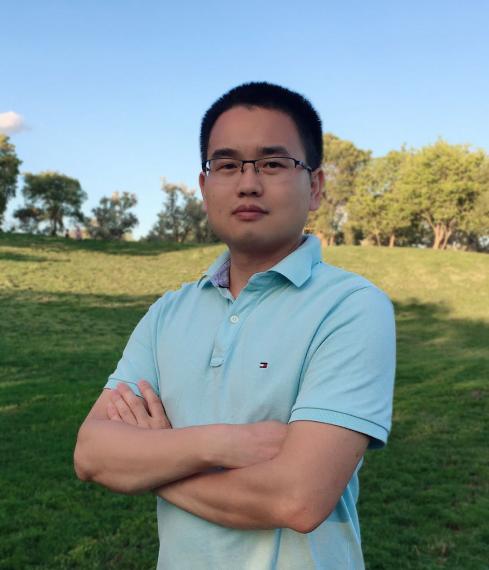
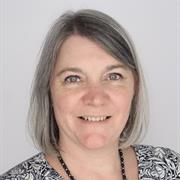
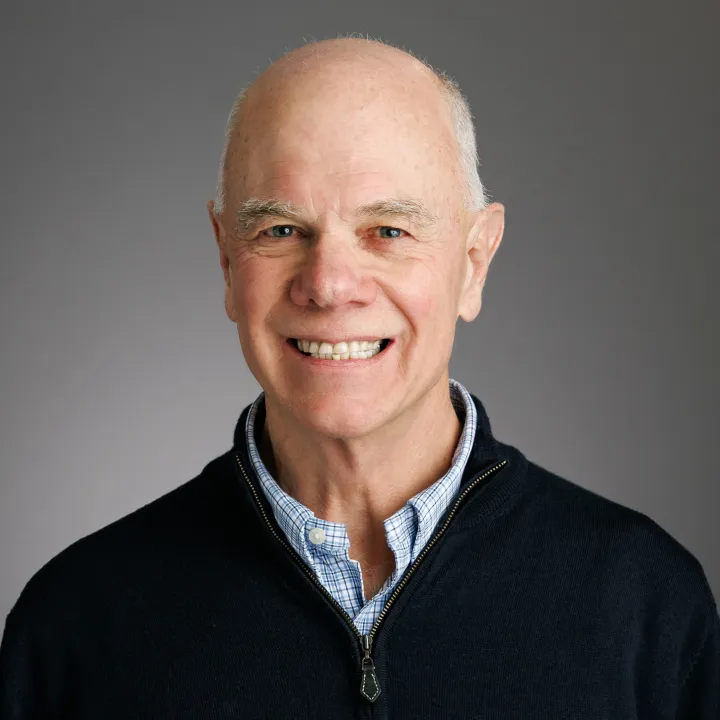
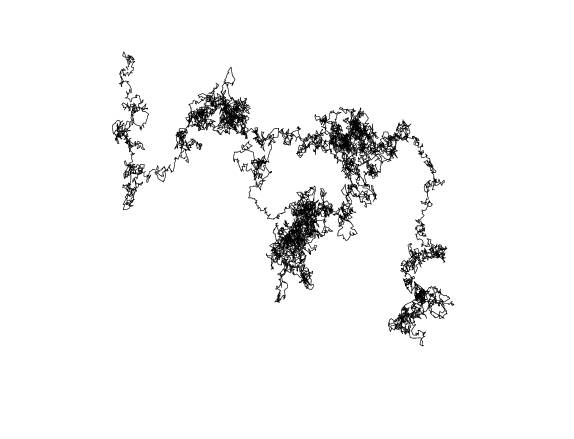
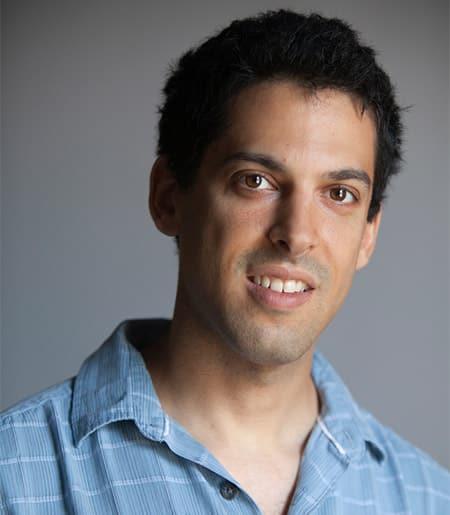
Ting He is a Professor in the Department of Computer Science and Engineering, specializing in interdisciplinary research at the intersection of network sciences, energy systems, and cybersecurity. Their work addresses critical challenges in network tomography, software-defined networking, and cyber-physical systems, with a strong emphasis on advancing edge computing and decentralized learning paradigms. NSF-funded research on Distributed Edge Intelligence (2024–2025) Collaborative projects on Overlay Networks and Adversarial Reconnaissance in SDN Recent publications analyze network topology inference, energy-efficient decentralized learning, and secure cloud file systems. Their research aligns with UN SDGs through contributions to sustainable energy systems and secure IT infrastructure. Key collaborations with Silvestri, La Porta, and Chaudhuri Active in Smart Grid resilience and cascading failure mitigation
John van de Wetering is an Assistant Professor at the Theoretical Computer Science group of the Informatics Institute, University of Amsterdam, working with the QuSoft research center. He co-authored the open-access book Picturing Quantum Software and developed the PyZX quantum compiler. His research spans quantum computation and quantum foundations, focusing on diagrammatic methods like the ZX-calculus and ZH-calculus. Quantum circuit optimization and verification Quantum foundations via algebraic/compositional methods Co-creator of PyZX His recent publications explore multi-qutrit systems, completeness of graphical calculi, and quantum state representations. Supervises students in quantum computing, including Lia Yeh and Sarah Li. Directs the new Master's program in Quantum Computer Science at UvA. Actively contributes to open-source projects and international conferences. Notable collaborations include Aleks Kissinger, Neil J. Ross, and QuSoft researchers. Uses GitHub for DiZX development (qudit extension of PyZX). No explicit scientific awards mentioned.
Dustin Scheinost is an Associate Professor at Yale School of Medicine, affiliated with the Department of Radiology & Biomedical Imaging, Yale Child Study Center, Department of Statistics, and Yale Biomedical Imaging Institute. His research focuses on connectomics , machine learning , and neuroinformatics through the Multi-modal Imaging, Neuroinformatics, & Data Science (MINDS) Lab. Radiology & Biomedical Imaging (Primary) Child Study Center (Secondary) Statistics (Secondary) Wu Tsai Institute Yale Stress Center Research Interests include developing novel statistical and machine learning methods for functional connectivity in big neuroscience data, leading the BioImage Suite Web (BISWeb) platform, and advancing early life neuroimaging through the Fetal, Infant, Toddler Neuroimaging Group (FIT’NG). His work is supported by grants from NIMH, NIAA, NIDA, and NHLBI. Selected Scientific Contributions span functional connectivity in laterality preferences, anti-racist AI governance in psychiatry, self-citation trends in neuroscience, and predictive modeling of mood disorders. He collaborates extensively with Todd Constable and others on multimodal neuroimaging studies.
Xieyuanli Chen is an Associate Professor at the National University of Defense Technology (NUDT), China. He holds a Dr.-Ing. (summa cum laude) from the University of Bonn (2022), a Master's in Robotics from NUDT (2017), and a Bachelor's in Electrical Engineering from Hunan University (2015). His research focuses on robot learning, perception, and navigation, with an emphasis on LiDAR-based SLAM, autonomous systems, and semantic perception. Education: PhD: University of Bonn, 2018-2022 (supervised by Prof. Cyrill Stachniss) Master's: NUDT, 2015-2017 Bachelor's: Hunan University, 2011-2015 Research interests include robotics, autonomous systems, computer vision, and LiDAR perception. He has authored over 90 papers in top venues like TRO, RSS, ICRA, and CVPR. He serves as an Associate Editor for IEEE RA-L, ICRA, and IROS, and is a member of the RoboCup Rescue Robot League Technical Committee. Awards include the RSS Pioneer Award (2021), Best-in-Class RoboCup awards, and recognition as a World’s Top 2% Scientist (2024). His work spans LiDAR localization, moving object segmentation, and efficient semantic mapping. He advises students in robotics and autonomous systems. Labs/Teams: Active in the PRBonn group (University of Bonn) and leads research at NUDT on LiDAR-based perception systems.
Geoffrey Wodtke is a Professor in the Department of Sociology at the University of Chicago, where he also serves as Associate Director of the Stone Center for Research on Wealth Inequality and Mobility. He holds multiple committee appointments including the Committee on Quantitative Methods in the Social, Behavioral, and Health Sciences, the Committee on Environment, Geography, and Urbanization, and the Committee on Education. Additionally, he is a Research Associate at the Population Research Center and a Faculty Affiliate with the Program in Computational Social Science. Wodtke earned his Ph.D. in Sociology from the University of Michigan in 2014, where he also completed an M.A. in Statistics in 2011. His undergraduate education began at the University of Wisconsin-Milwaukee before transferring to the University of Wisconsin-Madison, where he received his B.A. in Sociology with a concentration in analysis and research. His research program spans four interconnected areas: neighborhood effects and urban poverty, group conflict and racial attitudes, class structure and income inequality, and methods of causal inference in observational research. Wodtke's work on neighborhood effects has particularly focused on the temporal and developmental dimensions of how neighborhood poverty impacts child development, with findings suggesting more severe effects than previously documented, especially during adolescence for children from poor families. His recent publications reveal a clear trajectory from substantive neighborhood effects research toward increasingly sophisticated causal methodology development. This evolution includes integrating machine learning approaches with traditional causal inference frameworks, as seen in his forthcoming work on "Deep Learning with DAGs." His methodological contributions focus on handling treatment-induced confounding and developing regression-with-residuals approaches for causal mediation analysis. Leo Goodman Award for contributions to sociological methodology (2020) Reviewer Award, Sociology of Education (2016) Mark Chesler Award for best graduate student paper (2014) Student Paper Award honorable mention (2011) Jane Addams Award for best article (2011) Wodtke has secured significant research funding including a $300,264 NSF grant for "Why Neighborhoods Matter" (2020-2023) and an $87,819 SSHRC Canada grant for "Neighbourhoods, Schools, and Environmental Health Hazards" (2018-2022). He has advised numerous graduate students and developed specialized courses on causal mediation analysis. Wodtke co-hosts The Inequality Podcast produced by the Stone Center and has developed several software packages for causal inference including MedFlow, RcGNF, cGNF, and RWRMED.
Pierre Marion is a Researcher at INRIA Paris, working within the Sierra research team since September 2025. His work focuses on the theoretical foundations of deep learning and he is beginning to explore applications of AI in mathematics. Marion has established collaborations across multiple institutions including EPFL, Sorbonne Université, and Google DeepMind. His educational background includes: Engineering degree from École polytechnique (2015-2018) with specialization in Applied Mathematics Master's degree from Sorbonne Université (2019-2020) PhD from Sorbonne Université (2020-2023) under the supervision of Gérard Biau and Jean-Philippe Vert Postdoctoral research at EPFL (2024) supervised by Lénaïc Chizat Marion's research interests primarily focus on the theory of deep learning, where he investigates the optimization and statistical properties of various neural network architectures. His work spans from shallow networks to complex generative models, with a particular emphasis on understanding the mathematical foundations that govern deep learning performance. Recently, he has begun exploring applications of AI in mathematical research, aiming to bridge the gap between theoretical machine learning and mathematical discovery. His research often combines rigorous theoretical analysis with practical implications for training deep neural networks. Analysis of Marion's recent publications reveals several key trends in his research. He has made significant contributions to understanding the role of large learning rates in optimization dynamics, demonstrating how they can accelerate convergence in logistic regression and prevent memorization in score-based generative models. His work on attention mechanisms has provided theoretical guarantees for their effectiveness in specific tasks like single-location regression and clustering. Additionally, Marion has extensively studied the connections between residual networks and neural ordinary differential equations , establishing generalization bounds and exploring scaling properties in the large-depth regime. His earlier work included contributions to natural language processing and quasi-Monte Carlo methods, reflecting a broad mathematical foundation that informs his current deep learning research. Marion has received several notable scientific awards: Runner-up PhD Award of AFIA (French Association for Artificial Intelligence) in 2024 Google PhD Fellowship in 2022 Ecole polytechnique Grand Prize of Research Internships in 2018 As an advisor, Marion currently supervises PhD student Yu-Han Wu (since 2024), with whom he has co-authored multiple publications on large learning rates and denoising score matching. Previously, he co-supervised several Master's students including Seorim Park, Yerkin Yesbay, and Nathan Doumèche. Marion has been actively involved in the machine learning community through conference organization (NeurIPS@Paris meetups), session chairing (ICSDS 2022), and extensive reviewing activities. He has served as a reviewer for top journals including JASA and Annals of Statistics, and conferences including NeurIPS and ICLR, where he was recognized as a top reviewer at NeurIPS 2023. Marion is a member of the Sierra research team at INRIA Paris, which focuses on machine learning theory and applications. He has also collaborated with researchers at CREST (Center for Research in Economics and Statistics), as evidenced by his participation in seminars organized by Anna Korba and Karim Lounici. His work often bridges theoretical computer science, statistics, and applied mathematics, reflecting the interdisciplinary nature of modern machine learning research.
Timothy Harris is an Affiliated Lecturer at the University of Cambridge's Department of Computer Science and Technology, where he jointly teaches courses on multicore semantics and programming. Currently, he works at OpenAI, focusing on performance optimization for GPU inference of large language models, including the Azure OpenAI Service. Previously, he held roles at Microsoft, AWS, Oracle Labs, and was a faculty member at the University of Cambridge (2000–2004). His research spans distributed systems, runtime systems, operating systems, and high-performance computing, with an emphasis on scalability and performance. He contributed to projects like the Xen hypervisor and the Barrelfish research OS. Key research interests include distributed training of PyTorch models in the ONNX runtime, large-scale storage performance with Amazon S3, and runtime systems for in-memory graph analytics. His work often bridges 'big data' and high-performance computing techniques. Notable contributions include the book Transactional Memory (2010) and the Barrelfish OS, alongside numerous publications in top-tier conferences like SOSP, ASPLOS, and EuroSys. He has served as PC chair for ISMM 2025, VEE 2017, and EuroSys 2015, reflecting his leadership in the systems research community. His awards include a Best Paper Award at PACT 2010. Beyond academia, Harris is an avid hiker, aiming to complete the UK coastline, and maintains a photography portfolio at tlhphotography.uk .
Dr. Sheng Yang is an Assistant Professor in the School of Engineering at the University of Guelph. He leads the Design Innovation and Intelligent Manufacturing (DIIM) lab, focusing on advancing additive manufacturing, generative design, and smart manufacturing technologies. His research integrates IoT, big data analytics, and bio-inspired design to address challenges in aerospace, green energy, and healthcare. Key areas include computational design for additive manufacturing, data-driven mass customization, and digital twin-based optimization. Education: Ph.D. in Mechanical Engineering from McGill University (2019), followed by a Postdoctoral Fellowship at McGill (2019–2020). Joined University of Guelph in 2020. Research interests span energy efficiency, complex system optimization, and personalized healthcare products. Recent work emphasizes digital twin synchronization in robotics, machine learning for quality prediction, and sustainable additive manufacturing processes. Notable awards include the 2019 Association of Commonwealth Universities Blue Charter Fellowship and 2018 ASME Best Paper Award. His lab actively seeks partnerships in personalized healthcare, product design, and smart manufacturing. Grants and collaborations focus on advancing manufacturing technologies and sustainability. No formal advisees listed, but active in graduate training through lab projects. The DIIM lab explores cutting-edge solutions for industrial and societal challenges through interdisciplinary approaches.
Professor Karin Verspoor is the Dean of the School of Computing Technologies at RMIT University in Melbourne, Australia. She previously held roles as Director of Health Technologies and Deputy Head of the School of Computing and Information Systems at the University of Melbourne, and as Scientific Director of Health and Life Sciences at NICTA's Victoria Research Laboratory. Her research focuses on applying artificial intelligence methods to biomedical discovery and clinical decision support, particularly through natural language processing of clinical texts and biomedical literature. Affiliations: RMIT University (STEM College), Australian Alliance for Artificial Intelligence in Health (Victorian Node Lead) Industry Experience: Intelligenesis/Webmind Corp., Applied Semantics, Los Alamos National Laboratory, National ICT Australia Research Interests: Artificial Intelligence in Medicine Biomedical Natural Language Processing Health Informatics Computational Biology Cheminformatics Her work emphasizes cross-modal data integration, EHR analytics, and AI-driven clinical tools to address challenges in healthcare outcomes, musculoskeletal disorders, and infectious disease surveillance. Advising & Grants: Supervises research on AI-based decision-making frameworks, EHR data quality, and chemical knowledge extraction. Leads projects funded by initiatives like CANAIRI (Collaboration for Translational AI in Healthcare). Labs & Collaborations: Co-founder of the Australian Alliance for AI in Health, advancing national AI healthcare policy and translational research.
James S. Duncan is the Ebenezer K. Hunt Professor of Biomedical Engineering at Yale University, with additional appointments in Electrical & Computer Engineering and Radiology & Biomedical Imaging. His research focuses on biomedical image processing, quantitative image analysis using geometrical models, and applications in cardiac function and neuro-structure analysis. He has pioneered image-guided interventions and developed computational frameworks for medical imaging challenges. He holds a Ph.D. from the University of Southern California. His work integrates AI, deep learning, and statistical decision-making to advance medical imaging technologies. Notable contributions include advancements in 3D image segmentation, deformable models, and MRI-based tumor response assessment. Dr. Duncan has received prestigious awards, including IEEE Fellow (2001) and induction into the American Institute for Medical and Biological Engineering (2000). His recent research spans AI-driven hemodynamics modeling, trustworthy healthcare AI guidelines, and molecular MRI innovations in immunotherapy monitoring. He collaborates across disciplines to address challenges in cardiovascular, neuroimaging, and oncological applications.
Perla Sousi is a Professor of Probability at the University of Cambridge's Statistics Laboratory, part of the Department of Pure Mathematics and Mathematical Statistics (DPMMS). She is also a Fellow of Emmanuel College. Her research focuses on Probability Theory, Stochastic Processes, and their applications, including Random Walks, Brownian Motion, Mixing Times of Markov Chains, Percolation Theory, and Dynamical Systems. Notably, she explores phase transitions in stochastic models, cutoff phenomena in Markov chains, and the interplay between geometry and probability. Her work often involves collaboration with leading researchers in the field, addressing questions in both theoretical and applied stochastic processes. She has taught courses such as Probability IA, Percolation and Random Walks on Graphs, Advanced Probability, and Applied Probability. Her research has been published in top-tier journals like Annals of Probability , Probability Theory and Related Fields , and Communications in Mathematical Physics . Key contributions include studies on mixing times in dynamic environments, phase transitions in random walks, and capacity analysis in high-dimensional settings. Her articles highlight advancements in understanding stochastic systems' behavior, with a focus on cutting-edge topics like dynamical percolation, branching processes, and cutoff phenomena in complex networks. She actively contributes to both foundational theory and applications in stochastic modeling.
Lionel Levine is a Professor in the Department of Mathematics at Cornell University, affiliated with the College of Arts and Sciences. His academic research focuses on abelian networks, interacting particle systems, and the emergence of complex patterns from simple rules. He has held prestigious fellowships, including the Simons Fellowship and Sloan Research Fellowship, and has been honored with an endowed professorship. Levine's work bridges probability theory, combinatorics, and statistical physics, with notable contributions to the study of sandpile models and internal diffusion-limited aggregation (IDLA). Education: Ph.D. in Mathematics (2007), University of California, Berkeley. Research Interests: Applied Mathematics, Combinatorics, Probability, Abelian Networks, Sandpile Models, and their intersections with computer science and statistical physics. His research explores how local rules generate large-scale structures, such as in abelian networks and sandpile models. Awards and Honors: Simons Fellowship, Sloan Research Fellowship, Endowed Professorship in the College of Arts and Sciences. Teaching: Courses include Probability Theory (MATH 6710/6720), Topics in Probability: Math for AI Safety (MATH 7710), and undergraduate mathematics courses like Strategy, Cooperation, and Conflict (MATH 1340). Grants and Funding: Supported by the National Science Foundation (NSF), Simons Foundation, Sloan Foundation, and Institute for Advanced Study. Collaborations: Collaborates with prominent researchers such as Yuval Peres, Cris Moore, and Jim Propp. His work has been published in leading journals like the Annals of Probability and Duke Mathematical Journal. Future Work: Continues investigating AI safety, causal models, and multi-agent learning, including research on mathematical frameworks for transformer circuits and hidden incentives in AI systems.
Alex Shestopaloff is a Lecturer in Statistics at Queen Mary University of London (QMUL), affiliated with the School of Mathematical Sciences. Previously, he was a Research Fellow at the Alan Turing Institute (2017–2020) and a Junior Research Fellow at Campion Hall, Oxford. He holds a PhD in Statistics from the University of Toronto (2016), supervised by Radford M. Neal. His research focuses on developing efficient MCMC methods, high-dimensional time series analysis, network science, and applications in financial market microstructure. Education: PhD in Statistics, University of Toronto (2016) Supervisor: Radford M. Neal Research Interests: Bayesian online learning in non-stationary environments Limit order book modeling and trading strategies Graph clustering and network analysis Statistical methods for high-dimensional data Algorithmic trading and cryptocurrency markets His recent work spans financial engineering, machine learning, and statistical methodologies. Notable contributions include cluster-based trading strategies (ClusterLOB), generalized Bayesian filtering frameworks, and scalable graph analysis techniques. Collaborations with industry partners (e.g., Wise Plc) highlight applied research in financial systems. Advising & Alumni: Current advisees include Yichi Zhang (Oxford), Maria Fernanda Pintado (QMUL), and Dave Lui (Oxford) Alumni: Gerardo Duran-Martin (Postdoc at Oxford-Man Institute), Claudio Bellani (Citadel Securities) Labs/Teams: Leads interdisciplinary projects at QMUL and collaborates with the Alan Turing Institute on financial and network science initiatives.
Dr. Oscar Meruvia-Pastor is a faculty member in the Department of Computer Science at Memorial University of Newfoundland, within the Faculty of Science. He holds a B.Sc. from ITESM-Monterrey, Mexico, an M.Sc. from the University of Alberta, and a Ph.D. from Otto-von-Guericke Universität Magdeburg, Germany. His research focuses on interactive 3D graphics, non-photorealistic rendering, and biomedical visualization, with applications in telepresence systems, augmented reality (AR), and virtual reality (VR). He has developed tools like OMARC for respiratory condition training and GeNET for gene co-expression network analysis. Dr. Meruvia-Pastor has supervised numerous graduate students and contributed to over 50 publications. His work includes evaluating stereo correspondence methods in AR, robot arm manipulation via depth sensors, and smartphone integration in immersive VR. He has been recognized with awards such as the Best HCI Poster at Graphics Interface 2014 and a semi-finalist poster at SIGGRAPH 2015. He teaches courses in computer science, including computer graphics, multimedia development, and introductory science modules. His research lab focuses on 3D telepresence, medical visualization, and human-centered VR/AR solutions. His academic contributions span software tools for medical imaging analysis, interactive visualization systems, and educational technologies. He actively collaborates with health professionals to advance telemedicine and remote procedural training through AR platforms. His work bridges computer graphics with real-world applications in healthcare, education, and environmental advocacy.
Francisco Camara Pereira is a Professor and Head of Section at the Department of Technology, Management and Economics at the Technical University of Denmark (DTU). His research focuses on Intelligent Transportation Systems, Machine Learning, and Data-Driven Decision-Making in transportation contexts. He actively contributes to advancing transportation science through interdisciplinary approaches combining simulation, optimization, and AI techniques. His work addresses challenges in public transport analysis, charging infrastructure planning, and multimodal demand prediction. Recent projects include developing graph-based optimization methods for electric vehicle networks and causal discovery frameworks for transportation systems. He supervises multiple PhD students in areas like federated learning for cyclist safety, causal graph neural networks, and socially aware AI models. Key contributions include publications on smart card data analysis for travel surveys, stochastic infrastructure expansion models, and transfer learning for bike-share systems. His research aligns with UN Sustainable Development Goals related to sustainable cities and innovation. Dr. Pereira collaborates internationally on transportation policy and infrastructure projects. His lab focuses on translating theoretical advancements into practical solutions for urban mobility challenges.