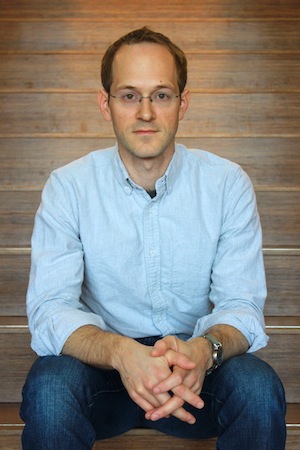
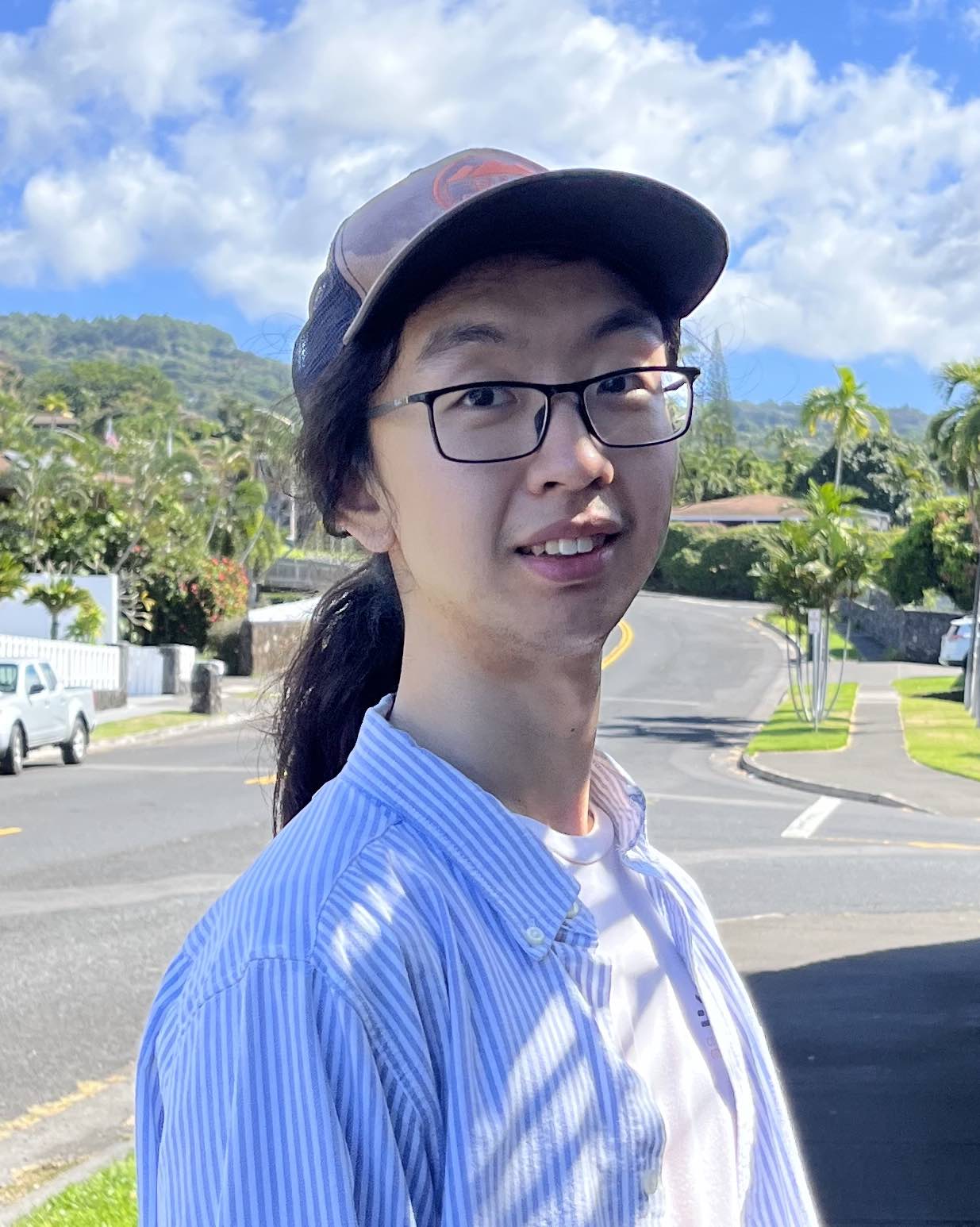
Renjie Feng is a Research Fellow in Mathematics and AI at the School of Mathematics and Statistics and the Sydney Mathematical Research Institute , University of Sydney. His work bridges probability theory, statistics, and applications in machine learning, deep learning, and artificial intelligence. His research interests focus on probability theory and its applications to machine learning , random matrix theory , and statistical physics . He investigates extreme value problems, spectral properties of random matrices, and topological features of random fields over Riemannian manifolds. Recent publications highlight trends in random matrix theory (GUE, GOE, GSE), extreme gap problems , determinantal point processes , and Wiener chaos . Collaborative works with F. Götze, D. Yao, and R. Adler emphasize U-statistics , multivariate linear statistics , and random topology inspired by Poisson point process studies.
Olga Sorkine-Hornung is a Professor of Computer Science at ETH Zurich and head of the Institute of Visual Computing. She leads the Interactive Geometry Lab, focusing on theoretical and practical advancements in digital content creation, geometry processing, and shape modeling. Current position: ETH Zurich, Department of Computer Science Previous roles: Courant Institute (NYU), Technical University of Berlin Education: BSc and PhD from Tel Aviv University, postdoc at TU Berlin Her research spans shape representation, digital fabrication, computer animation, and fundamental geometry processing. Key contributions include Laplacian surface editing, as-rigid-as-possible deformation, and generalized winding numbers. She works on applications in VR, AR, and autonomous systems. Awards include Test of Time Awards (2024), ACM Fellow (2020), ERC Consolidator Grant (2020), and EUROGRAPHICS Young Researcher Award (2008). She has supervised numerous students and co-developed software libraries like libigl and Instant Meshes . Co-chair roles for SIGGRAPH, Eurographics, and Pacific Graphics Editorial board member for ACM Transactions on Graphics and other journals Keynote speaker at VMV, CVPR, and SIAM conferences Her work bridges mathematical rigor with practical implementation, advancing computer graphics and geometry processing through intuitive algorithms that maintain surface detail while enabling efficient computation.
Andrew Childs is a Professor at the University of Maryland, affiliated with the Department of Computer Science and the Institute for Advanced Computer Studies (UMIACS). He serves as Director of the NSF Quantum Leap Challenge Institute for Robust Quantum Simulation (RQS) and is a Fellow at the Joint Center for Quantum Information and Computer Science (QuICS). His research focuses on quantum algorithms for simulating physical systems, algebraic problems, and quantum walk protocols, with applications in quantum computing and computational complexity. University of Maryland Institute for Advanced Computer Studies (UMIACS) Joint Center for Quantum Information and Computer Science (QuICS) NSF Quantum Leap Challenge Institute for Robust Quantum Simulation Childs' research spans quantum simulation, quantum Fourier transform, phase estimation, and Hamiltonian dynamics. He has developed techniques to reduce quantum computational resources for simulating quantum systems and explored limitations of quantum computers through hidden subgroup problems and non-unitary dynamics. His publications cover diverse areas including quantum walk optimization, Hamiltonian simulation methods, and applications to cryptography and condensed matter physics. Recent works address spatial search algorithms, product formulas for commutators, and quantum routing protocols. As an educator, Childs has taught courses on quantum algorithms and information processing at both the University of Maryland and University of Waterloo, with lecture notes and materials spanning multiple years. Contact: amchilds@umd.edu | Office: ATL 3359 | Affiliated with University of Maryland's quantum research institutes.
Zongyi Li is a Research Fellow at Massachusetts Institute of Technology , hosted by Kaiming He. They are currently pursuing a Ph.D. in Computing and Mathematical Sciences at Caltech (2019-2025), mentored by Anima Anandkumar and Andrew Stuart. Ph.D. candidate: Computing and Mathematical Sciences, Caltech (2019-2025) B.Sc. in Computer Science and Mathematics with a Jazz minor from Washington University in St. Louis (2015-2019) They focus on Neural Operators for learning solution operators in Partial Differential Equations (PDEs) , particularly in fluid mechanics and earth science . Their work models physical simulations with chaotic behaviors and complex geometries, showing applications in weather forecasting , carbon storage , and aerodynamics simulation . Publications emphasize resolution-invariant models , chaotic systems , and zero-shot super-resolution capabilities. Their research combines Fourier analysis , graph networks , and physics-informed loss functions to achieve state-of-the-art performance in PDE solving with up to 1000x speedup over traditional solvers. Fellowships: Kortschak Scholarship PIMCO Fellowship Amazon AI4Science Fellowship Nvidia Fellowship MIT Novo Nordisk AI Fellowship Code & Open-Source: Co-developer of the NeuralOperator library Implementations for Fourier Neural Operators , Graph Neural Operators , and Tensorized Neural Operators Media Recognition: Quanta Magazine MIT Tech Review NVIDIA Features Towards Data Science
Illya V. Hicks is a Professor in the Computational and Applied Mathematics Department at Rice University. He holds a PhD from Rice University (2000) and a BS from Texas State University (1995). His research focuses on combinatorial optimization, integer programming, graph theory, and matroid theory, with applications in social networks, cancer treatment, and network design. He has advised numerous doctoral, post-doctoral, and masters students. Education: PhD and MA in Computational and Applied Mathematics, Rice University, 2000 BS in Mathematics, Texas State University, 1995 Research Interests: Utilizing graph decomposition techniques to solve NP-complete problems, including branch decompositions and matroid circuit problems. Applications include sensor network design, healthcare logistics, and algorithmic graph theory. Awards: Recognized with the 2015 Presidential Mentoring Award (Rice University), 2010 Forum Moving Spirit Award (INFORMS), and the 2005 Optimization Prize for Young Researchers. Grants and Projects: Includes NSF-funded research on branch decomposition techniques, submodular optimization, and healthcare service distribution. Active in promoting minority participation in operations research through travel grants and mentoring initiatives. Labs/Teams: Engaged in collaborative research on graph algorithms, combinatorial optimization, and interdisciplinary applications in healthcare and engineering.
Sophie Spirkl is an Associate Professor (with tenure) in the Department of Combinatorics and Optimization at the University of Waterloo. Previously, she held postdoctoral positions at Princeton University (as an NSF postdoc and instructor, supervised by Maria Chudnovsky) and at Rutgers University (under Jeff Kahn). She earned her PhD from Princeton University under the guidance of Maria Chudnovsky and Paul Seymour. Her research focuses on graph theory and combinatorics, with notable contributions to induced subgraphs, tree decompositions, chromatic number properties, and structural graph theory. She is a recipient of the 2023 Sloan Research Fellowship and co-founded the diamond open-access journal Innovations in Graph Theory . Education: PhD in Mathematics, Princeton University (2016–2020) Postdoctoral Fellowships: Princeton (2020–2022), Rutgers (2018–2020) Research Interests: Dr. Spirkl’s work spans multiple areas of combinatorics, including structural graph theory, extremal graph theory, and algorithmic graph theory. She has published extensively on topics such as induced subgraph obstructions, χ-boundedness, tree decompositions, and the Erdős–Hajnal conjecture. Her research often intersects with theoretical computer science, particularly in parameterized complexity and graph colorings. Awards & Recognition: 2023 Sloan Research Fellowship Contributions to the Innovations in Graph Theory journal Academic Contributions: Her articles address foundational problems in graph theory, such as the Erdős–Hajnal conjecture for C₅, logarithmic treewidth in even-hole-free graphs, and induced saturation for cycles. She collaborates with leading researchers like Maria Chudnovsky and Paul Seymour, advancing the field through rigorous combinatorial analysis. Community Engagement: She coordinates the Women in Math Directed Reading Program at Waterloo, supporting underrepresented groups in mathematics. Her spouse, Logan Crew, is a Research Assistant Professor at the same institution.
Howie Choset is a Professor of Robotics at the Robotics Institute, Carnegie Mellon University. He directs the Undergraduate Robotics Minor and leads the Biorobotics Laboratory, where his research focuses on snake robots, motion planning, and medical robotics. He is also affiliated with the Manufacturing Futures Institute. Ph.D., Mechanical Engineering, California Institute of Technology (1996) M.S., Mechanical Engineering, California Institute of Technology (1995) B.S.E., Computer Science and Engineering, University of Pennsylvania (1990) B.S., Economics, The Wharton School of Business (1990) Choset's research centers on robotics for confined and complex environments, particularly through the development of snake robots. His work integrates mechanism design, path and motion planning, and estimation to enable applications in surgery, manufacturing, infrastructure inspection, and search and rescue. He is a pioneer in medical robotics and has co-founded Medrobotics to commercialize minimally invasive surgical robots. His recent publications highlight a strong focus on ergodic exploration, multi-agent systems, motion planning under uncertainty, and medical robotics. Themes include optimizing robot trajectories for information gathering, solving complex path planning problems with dynamic obstacles, and advancing autonomous systems for disaster response and space exploration (e.g., the EELS robot for Enceladus). MIT Technology Review Top 100 Innovators under 35 (2002) Best Paper Award, RIA (1999) Best Paper Award, ICRA (2003) Best Paper, IEEE Bio Rob (2006) Best Video, ICRA (2011) Nominations for best papers at ICRA, IROS, and CLAWAR Choset has advised numerous students, many of whom have won top awards. His lab has received significant funding for robotics research, including projects in surgical robotics, additive manufacturing, and autonomous exploration. He is the lead author of the textbook Principles of Robot Motion and is actively involved in educational innovation through custom robotics labs. He leads the Biorobotics Laboratory at CMU, which develops advanced robotic systems like snake robots and the EELS (Exobiology Extant Life Surveyor) robot for NASA missions. The lab collaborates with industry and government agencies on applications ranging from surgery to space exploration.
Mirjana Stojilovic is a Researcher at École Polytechnique Fédérale de Lausanne (EPFL) in the School of Computer and Communication Sciences (IC), specifically within the Institute of Computer Engineering (IINFCOM) and the Parallel Systems Architecture Laboratory (PARSA). She also serves as a Lecturer in the SSC - Teaching department at EPFL. Her office is located at INJ 235, Station 14, 1015 Lausanne, Switzerland. Mirjana Stojilović received her Dipl. Ing. and Ph.D. degrees from the School of Electrical Engineering, University of Belgrade, in 2006 and 2013, respectively. Her academic journey includes collaborating with the Processor Architecture Laboratory at EPFL as a Guest Researcher from 2010 to 2013, working at the University of Applied Sciences Western Switzerland as a senior researcher from 2013 to 2016, and joining the Parallel Systems Architecture Lab at EPFL in October 2016. Dr. Stojilovic's research spans field-programmable technology, electronic design automation (EDA), and electrical-level attacks and countermeasures for reconfigurable hardware. Her work bridges the gap between hardware design and security, with a particular focus on vulnerability analysis and protection mechanisms for FPGA-based systems in cloud environments. She has made significant contributions to understanding side-channel attacks, fault injection techniques, and secure multi-tenancy solutions for shared hardware resources. Her extensive publication record reveals a clear research trajectory from traditional FPGA design and EDA topics toward increasingly security-focused investigations. Recent work demonstrates deep expertise in power analysis attacks, hardware trojans, and countermeasures for cloud-based FPGA systems, reflecting the growing importance of hardware security in distributed computing environments. Scientific Awards and Recognitions: Best Paper Award at 2016 International Symposium on Electromagnetic Compatibility (EMC Europe 2016) Young Scientist Award at 33rd International Conference on Lightning Protection (ICLP2016) Young Author Best Paper Award at the 20th Telecommunication Forum in Belgrade (TELFOR 2012) EPFL School of Computer and Communication Sciences (IC) Teaching Award (2015) Nominated for Best Paper Award at the International Conference on Field-Programmable Technology (FPT) (2020) Dr. Stojilovic has advised numerous PhD students including Coulon Louis, Pirayadi Rouzbeh, and Shrivastava Shashwat, along with past EPFL PhD students Glamocanin Ognjen and Mahmoud Dina. She has supervised dozens of semester and diploma projects focusing on hardware security, FPGAs, design automation, side-channel attacks, and cloud computing. Her service to the academic community includes serving on program committees for FPGA, FCCM, FPL, and DATE conferences, reviewing for multiple IEEE and ACM journals, and acting as associate editor for IEEE ESL and ACM TRETS. As a member of the Parallel Systems Architecture Laboratory at EPFL, Dr. Stojilovic leads research projects investigating security aspects of reconfigurable hardware systems. Her team works at the intersection of computer architecture, electronic design automation, and hardware security, with particular emphasis on vulnerabilities and protections for shared FPGA resources in cloud environments.
Nathan (Nati) Linial is a Professor at the School of Computer Science and Engineering at the Hebrew University of Jerusalem, where he has been a faculty member since completing his postdoctoral period at UCLA. He earned his undergraduate degree in mathematics from the Technion and his PhD in graph theory from the Hebrew University. His research spans multiple areas of theoretical computer science and mathematics, with primary focus on combinatorics, theoretical computer science, and bioinformatics. Linial's work has made significant contributions to high-dimensional combinatorics, expander graphs, metric embeddings, and computational molecular biology. His research often bridges geometry, analysis, and combinatorial structures, demonstrating deep connections between seemingly disparate mathematical fields. Linial's recent publications reveal a strong trend toward high-dimensional combinatorial structures, including simplicial complexes, hypertrees, and high-dimensional permutations. His work frequently employs probabilistic methods, linear programming techniques, and geometric approaches to solve fundamental combinatorial problems. The breadth of his research is evident in both pure mathematical contributions and applications to computational biology. Fellow of the American Mathematical Society ISI Highly Cited Researcher Conant Prize (2008) for the influential survey paper "Expander graphs and their applications" Linial has served on the editorial boards of several prestigious journals including the Israel Journal of Mathematics (as Chief Editor 2013-2017), Random Structures and Algorithms, and Combinatorica. His academic leadership extends to organizing conferences and workshops in combinatorics and theoretical computer science. He has mentored numerous students whose work spans theoretical computer science, combinatorics, and computational biology. Linial is associated with research projects including ProtoNet (for protein sequence classification) and EVEREST (for evolutionary conserved protein domains), demonstrating his commitment to interdisciplinary research that bridges computer science with molecular biology.
Maria Chudnovsky is a Professor in the Department of Mathematics at Princeton University. Her research focuses on structural graph theory, particularly in areas such as graph decomposition, induced subgraphs, and algorithmic applications of graph structure. She is renowned for her contributions to understanding perfect graphs, even-hole-free graphs, and the Erdős–Hajnal conjecture. Her work often explores the interplay between graph structure and algorithmic efficiency, with applications in combinatorial optimization and theoretical computer science. Notable contributions include foundational results on tree decompositions, chromatic number bounds, and the structure of metrizable graphs. Recent research trends include investigations into induced subgraph obstructions, tree independence numbers, and the properties of sparse graphs. She has published extensively on topics such as clique-stable set separation, rainbow matchings, and the complexity of graph coloring problems in restricted graph classes. Chudnovsky has been involved in significant collaborative projects, including work funded by the DMS-EPSRC grant 'The Power of Graph Structure' (2021). Her research frequently bridges theoretical insights with practical algorithm design, contributing to both fundamental and applied areas of discrete mathematics.
Professor Alexander Scott is a faculty member at the University of Oxford, holding positions as Professor of Mathematics and Dominic Welsh Tutor in Mathematics at Merton College. His research focuses on combinatorics, probability, algorithms, and graph theory, with a particular interest in the interplay between local and global structures in networks. He has organized the Oxford Combinatorics Seminar and co-founded the online Oxford Discrete Mathematics and Probability Seminar, fostering collaboration in these fields. Professor Scott’s work bridges theoretical foundations with applications in statistical physics and algorithmic design. He has supervised numerous graduate students in combinatorics and regularly teaches undergraduate courses in analysis and discrete mathematics. His contributions include advancements in extremal graph theory, probabilistic methods, and structural combinatorics, with over 150 publications in prestigious journals. He actively organizes academic events such as the annual One-Day Meeting in Combinatorics, hosting speakers from around the world. Despite the absence of explicit awards noted, his prolific research output and academic leadership reflect significant contributions to the field. His current interests continue to explore the Erdős-Hajnal conjecture, induced subgraph densities, and algorithmic challenges in combinatorial structures.
Konstantinos Karapiperis is a Tenure Track Assistant Professor at EPFL's Laboratory of Multiscale Modeling of Materials (LMD), within the School of Architecture, Civil and Environmental Engineering (ENAC). His research integrates mechanics , multiscale modeling , and data science to study geomaterials and structural materials. PhD in Applied Mechanics (minor in Applied Mathematics), Caltech Postdoctoral Researcher & Lecturer, ETH Zürich (Marie Skłodowska-Curie Fellowship) Research focuses on granular materials , architected materials , and nonlocal modeling using techniques like Level-Set Discrete Element Method (LS-DEM) and machine learning . Recent work explores fracture control via graph neural networks and thermodynamics-informed models. Selected scientific award: Marie Skłodowska-Curie Fellowship Teaches courses in Soil Mechanics and Multiscale Modeling . PhD students include Thomas Henzel and Hrishikesh Gopakumar Menon. His Data-Driven Mechanics Laboratory (LMD) develops predictive tools for granular and structured material behavior.
Kord Eickmeyer is a Lecturer at Technische Universität Darmstadt in the Department of Mathematics, specializing in the mathematical logic group. He holds a PhD in mathematics from Humboldt University Berlin and has held postdoctoral positions at TU Darmstadt (2011–2017) and the National Institute of Informatics in Tokyo (2011–2013). His research focuses on finite model theory, graph structure theory, and computational complexity, particularly in descriptive and parameterized complexity, as well as randomization and derandomization techniques. Research interests include exploring the boundaries of computational complexity through logical frameworks, analyzing graph structures for efficient algorithm design, and investigating the role of randomness in computation. His work bridges theoretical computer science and mathematical logic, with applications in algorithm design and formal methods. Publications span topics from model-checking on ordered structures to gap-planar graphs and randomized logics. Collaborations include prominent institutions like the National Institute of Informatics and Humboldt University Berlin. No scientific awards are explicitly listed, but his extensive academic contributions reflect a strong research trajectory. Advising and grants are not detailed in the provided text, though his academic career includes supervision roles during his PhD and postdoctoral phases. His involvement with the mathematical logic group at TU Darmstadt highlights collaborative research efforts in foundational areas of computer science and mathematics.
Camillo J. Taylor is the Raymond S. Markowitz President’s Distinguished Professor in the Department of Computer and Information Science at the University of Pennsylvania , where he has been a faculty member since 1997. He also serves as Associate Dean for Diversity, Equity, and Inclusion at the School of Engineering and Applied Science. His research focuses on Computer Vision and Robotics , particularly in 3D reconstruction, semantic mapping, and autonomous navigation. Education: A.B. in Electrical Computer and Systems Engineering, Harvard College (1988) M.S. and Ph.D. in Computer Science, Yale University (1990, 1994) Research Interests: Dr. Taylor’s work bridges Computer Vision and Robotics to enable autonomous systems to perceive and navigate complex environments. Key themes include semantic SLAM, event camera applications, and meta-learning for adaptive controllers. His projects often integrate vision, physics, and multi-agent collaboration, as seen in systems like EvMAPPER and OCCAM . Recent Article Trends: His 2024–2025 publications focus on semantic mapping , event-based vision , and multi-agent LLM systems , reflecting his lab’s emphasis on real-time perception, physics-informed reconstruction, and rational decision-making in robotics. These works span applications from solar eclipse imaging to wildfire analysis and natural hazard resilience. Awards: NSF CAREER Award (1998) Lindback Minority Junior Faculty Award (2001) IEEE WACV Best Paper Award (2012) Lindback Distinguished Teaching Award (2012) Advising and Service: Dr. Taylor has advised numerous PhD students, including Jason Hughes and Bowen Jiang. He has served as a Program Chair for CVPR (2006, 2017) and General Chair for ICCV (2021). His contributions to the GRASP Laboratory have advanced autonomous micro-UAVs and semantic SLAM.
Sepehr Hajebi is a Mathematics Instructor at Princeton University and a Postdoctoral Scholar at the University of Waterloo, where his position is funded by Sophie Spirkl. He completed his PhD in Combinatorics and Optimization at the University of Waterloo between 2020 and 2024 under the supervision of Sophie Spirkl. His research focuses on combinatorics and graph theory, particularly structural aspects such as induced subgraphs, graph minors, and algorithms. He also explores topology, number theory, and category theory. Education: PhD in Combinatorics and Optimization, University of Waterloo (2020–2024) Research Interests: His work delves into structural graph theory with applications to induced subgraphs, algorithmic problems, and graph minors. He investigates foundational questions in topology, number theory, and category theory, reflecting a commitment to interdisciplinary mathematical inquiry. Advising and Grants: His postdoctoral funding at Waterloo is provided by Sophie Spirkl, though no specific grants or advisees are detailed.