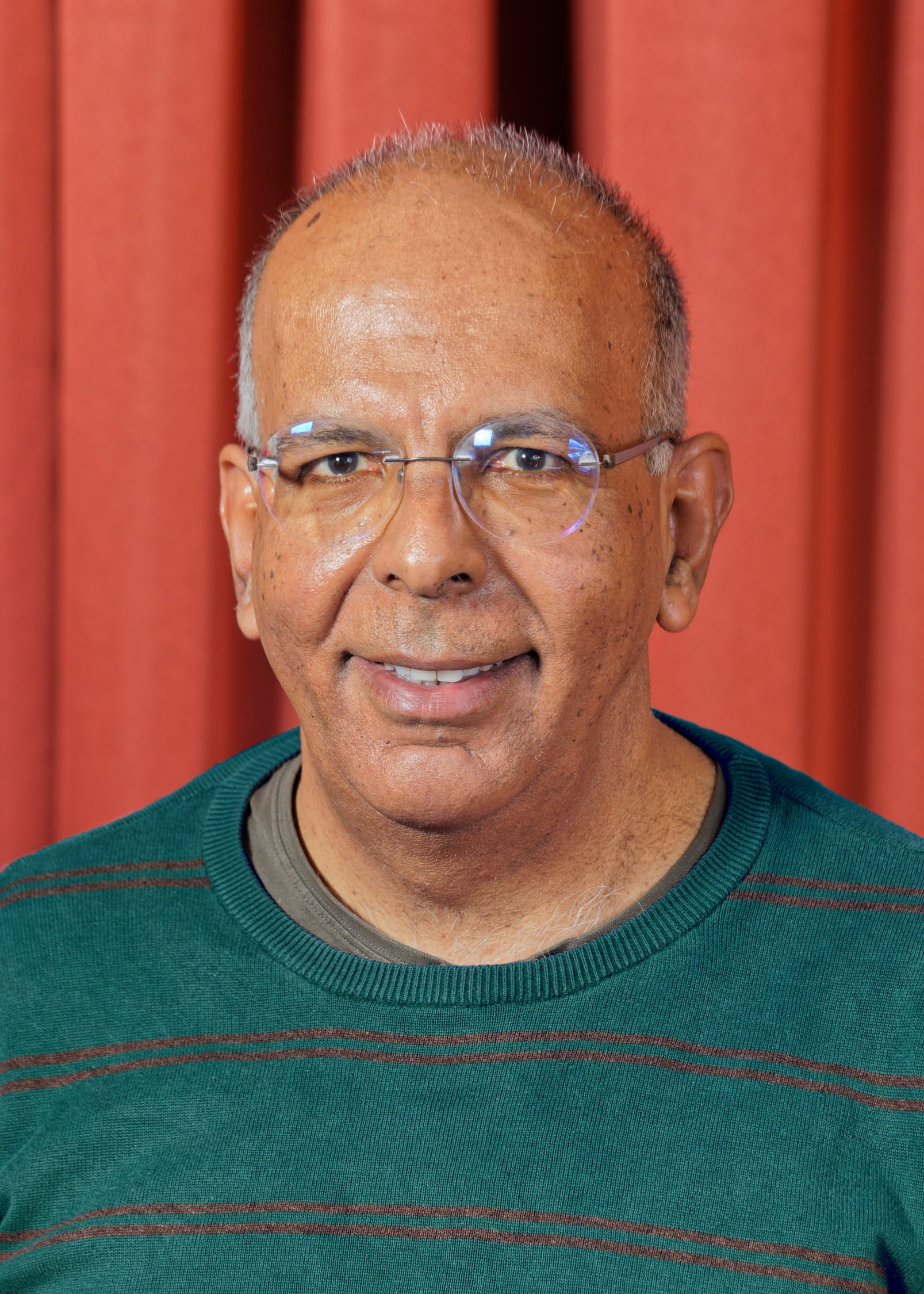
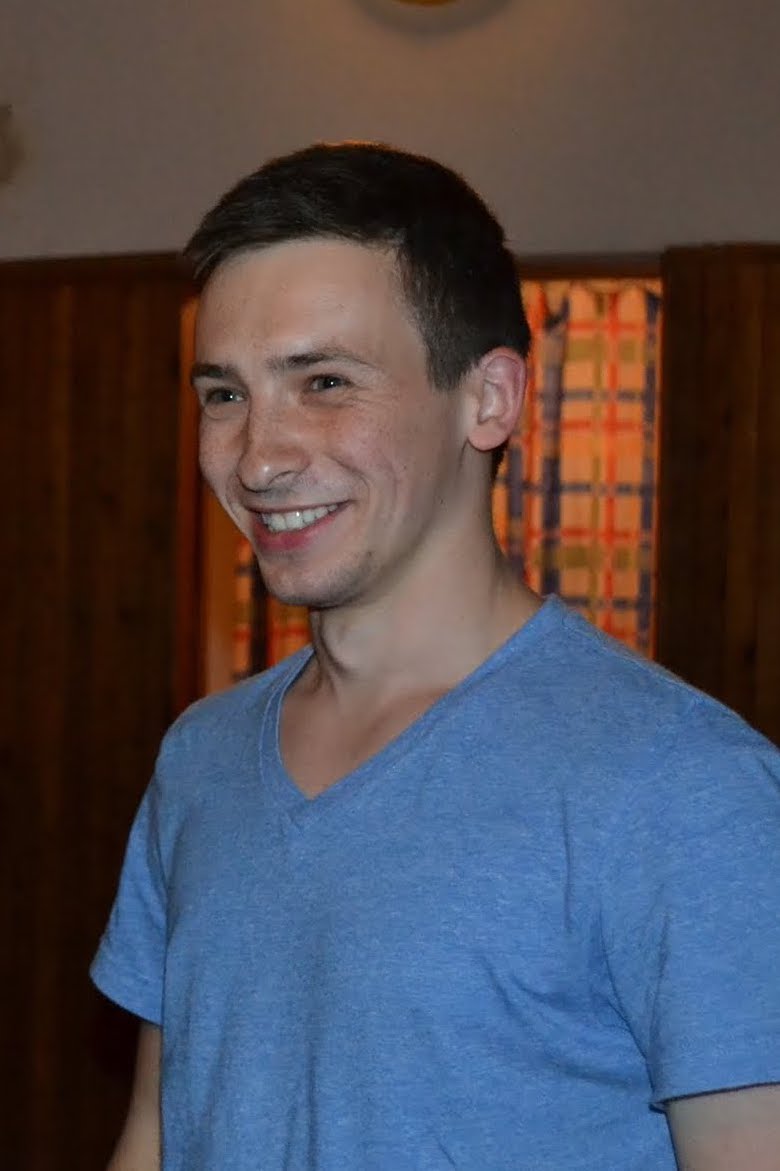
Pierluigi Nuzzo is an Associate Professor in the Department of Electrical Engineering and Computer Sciences at the University of California, Berkeley. His research focuses on high-assurance design of cyber-physical systems, including methodologies for AI, autonomous systems, secure hardware, and electronic design automation. He holds faculty positions at Berkeley and previously at the University of Southern California, where he co-directed the Center for Autonomy and Artificial Intelligence. Education: Ph.D. (UC Berkeley, 2015), M.S./B.S. (University of Pisa and Sant'Anna School) Affiliations: Berkeley Artificial Intelligence Research Lab (BAIR), Berkeley Wireless Research Center (BWRC), Industrial Cyber-Physical Systems Center (iCyPhy) Research interests span compositional methods, system design, and certification frameworks. His work integrates formal verification, optimization, and machine learning to ensure safety and trustworthiness in complex systems. Recent projects include DeFacto (cyber-physical production systems) and secure logic locking for ICs. Awards include the NSF CAREER Award, DARPA Young Faculty Award, and multiple best paper awards. His teaching includes EECS C249B on cyber-physical system design principles.
Marthe Bonamy is a CNRS researcher at LaBRI (Laboratoire Bordelais de Recherche en Informatique) in Bordeaux, France, holding a permanent research position since December 1, 2015. She is a member of the CombAlgo team, head of the Graphes et Optimisation research group, and also a member of the AlgoDist group. Her research focuses on combinatorics and graph theory, particularly planar graphs, algorithms, graph decompositions, and reconfiguration problems. Dr. Bonamy is actively involved in the academic community, serving as vice-Editor-in-chief of the European Journal of Combinatorics since January 2021, a member of the Board of Editors of Discrete Mathematics since January 2021, an editor of Innovations in Graph Theory since August 2023, and an associate editor of the SIAM Journal of Discrete Mathematics since January 2024. She is also part of the scientific board of the GT COA and the steering committee of STACS. Her research interests span various aspects of combinatorics and graph theory, with a particular emphasis on structural graph properties, coloring problems, and reconfiguration processes. She has made significant contributions to understanding graph recoloring, Kempe changes, and various decomposition techniques for graphs. Her work often bridges theoretical computer science and pure mathematics, providing both theoretical insights and algorithmic applications. Dr. Bonamy has supervised numerous PhD students, both currently and in the past, demonstrating her commitment to mentoring the next generation of researchers in combinatorics and graph theory. Her students have gone on to academic positions and industry roles, reflecting the breadth of applicability of their research. She has received recognition through prestigious editorial positions and research grants, including her current involvement in the ANR Project ENEDISC (2024-2027) and previous leadership of multiple research projects. Dr. Bonamy maintains an active research agenda with numerous publications in top-tier journals and conferences, reflecting her standing as a leading researcher in combinatorics and graph theory.
Patric Östergård is a Professor at Aalto University's Department of Information and Communications Engineering. His research focuses on fundamental problems in discrete mathematics and information theory, utilizing combinatorial algorithms and massive computations to study existence and classification of mathematical structures with applications in ICT. Department: Information and Communications Engineering Institution: Aalto University His key research areas include coding theory, design theory, graph theory, and Shannon theory. He leads a high-performance computing cluster Medusa for computational work. His research is supported by the Academy of Finland's project 'Construction and Classification of Discrete Mathematical Structures' (2015–2019). Notable trends: Steiner triple systems, Hadamard matrices, and error-correcting codes Collaboration: Active in international partnerships, particularly in combinatorics and coding theory Scientific Awards Kirkman Medal (1997) for contributions to combinatorial research Doctor et Professor Honoris Causa from University of Pécs, Hungary (2013) He has supervised 7 doctoral theses and actively participates in academic service through editorial board memberships, conference committee roles, and hosting visiting scholars.
Petr Hliněný is a Professor at the Faculty of Informatics, Masaryk University in Brno, Czech Republic, where he also serves as the Vice-dean for research, development, and doctoral studies. He is affiliated with the Department of Computer Science and leads the Discrete Methods and Algorithms (DIMEA) research group. His research interests span Graph Theory , Discrete Mathematics , Theoretical Computer Science , with a focus on structural and topological graph theory, parameterized complexity, logic in computer science, twin-width, crossing numbers, and discrete geometry. His recent work includes structural results on planar graphs, visibility graphs, and logical aspects of graph classes. His recent publications exhibit a strong trend in analyzing structural width parameters such as twin-width and clique-width, their logical transductions, and algorithmic implications. He has published extensively on planar graphs, crossing numbers, and geometric graphs, often in top venues like European Journal of Combinatorics , Journal of Combinatorial Theory , and LIPIcs conference proceedings. Professor, Faculty of Informatics, Masaryk University Vice-dean for Research, Development and Doctoral Studies Head of DIMEA Research Group Guarantor of Doctoral Study Programme in Computer Science He actively supervises PhD and master’s students, including current doctoral candidates Filip Pokrývka, Shubhang Mittal, Jakub Balabán, and Jan Jedelský. He has led multiple research grants funded by the Czech Science Foundation (GAČR), including project 20-04567S on tractable instances of hard graph algorithmic problems. He also organizes seminars such as IV119 and IV131, and offers thesis topics in discrete mathematical methods.
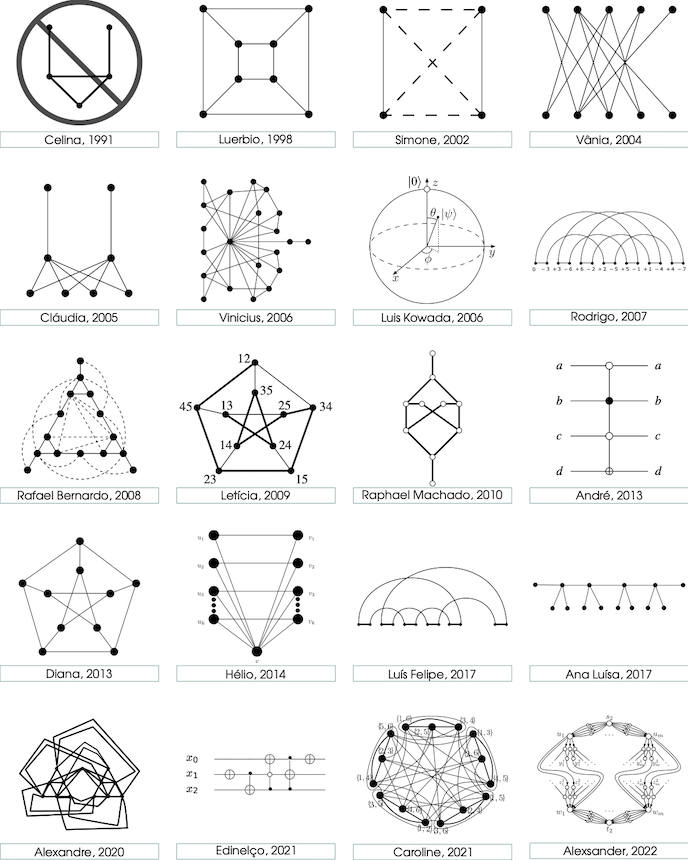
Celina Miraglia Herrera de Figueiredo is a full Professor at the Systems Engineering and Computer Science Program (PESC) of COPPE, the Alberto Luiz Coimbra Institute for Graduate Studies and Research in Engineering at the Federal University of Rio de Janeiro (UFRJ). She holds a PhD in systems and computer engineering from UFRJ and a postdoctoral degree from the University of Waterloo, Canada. She is a CNPq Level 1A Research Fellow and a FAPERJ Cientista do Nosso Estado awardee, and leads the algorithms and combinatorics research group at COPPE/UFRJ. University: Federal University of Rio de Janeiro School: Alberto Luiz Coimbra Institute for Graduate Studies and Research in Engineering Department: Systems Engineering and Computer Science Program Academic Rank: Professor Email: celina@cos.ufrj.br Her research centers on theoretical computer science, with a focus on graph theory, algorithms, computational complexity, and combinatorial optimization. She has made significant contributions to the understanding of graph classes such as perfect graphs and snarks, algorithm design, and computational complexity. Her work is grounded in the Mathematics Subject Classification codes 05-XX (Combinatorics), 68-XX (Computer Science), and 90-XX (Operations Research). The most recent publications indicate a strong trend in analyzing the computational complexity of graph problems (e.g., MaxCut, Steiner Tree, total coloring) on structured graph classes such as interval, permutation, and path graphs. Her work frequently involves proving NP-completeness results, developing parameterized algorithms, and studying graph invariants like pebbling numbers and chromatic numbers. She consistently publishes in high-quality journals such as Discrete Mathematics , Discrete Applied Mathematics , and RAIRO Operations Research . Giulio Massarani Award for Academic Merit (2006) COPPE Fifty Years Award (2013) CNPq Research Fellowship (Level 1A) FAPERJ Cientista do Nosso Estado Member of the Brazilian Academy of Sciences (2023) Celina has advised numerous students, including Raphael Machado, Vinícius de Sá, Alexsander Melo, and Ana Silva, and has secured significant research funding from CNPq and FAPERJ. She is deeply involved in the academic community, serving on the editorial boards of RAIRO Theoretical Informatics and Applications, Bulletin of the Brazilian Mathematical Society, and Matemática Contemporânea. She has also been a key organizer and committee member for major international conferences such as LAGOS, WG, LATIN, and FCT, reflecting her leadership in the fields of algorithms and combinatorics. She coordinates the Center of Excellence in Randomized, Quantum, and Approximative Algorithms and has been a driving force in promoting women in science, serving on the jury of the L'Oréal–UNESCO–ABC Program for Women in Science. Her Erdős number is 2, highlighting her extensive collaborative network in mathematics and computer science.
Antoni Lozano Boixadors is an Associate Professor in the Department of Computer Sciences at the Faculty of Computer Science of Barcelona (FIB), Universitat Politècnica de Catalunya (UPC). He is a member of the DCCG research group, focusing on Discrete, Combinational, and Computational Geometry. His academic work spans theoretical computer science and discrete mathematics. His research interests lie primarily in Graph Theory , Computational Complexity , Graph Labeling , and Complexity Theory . He investigates structural properties of graphs, including antimagic labelings, symmetry breaking in tournaments, and combinatorial optimization problems. His work often bridges abstract theory with algorithmic applications. The recent publications reveal a strong trend in antimagic labelings of trees and caterpillars , oriented graph coloring , and computational hardness of discrete problems . His articles appear in respected journals such as Discrete Applied Mathematics and Electronic Journal of Combinatorics , reflecting contributions to theoretical graph algorithms and discrete geometry. He has received recognition including the Primer Concurs Internacional d'(Auto)biografies lingüístiques . Scientific Awards: Primer Concurs Internacional d'(Auto)biografies lingüístiques Lozano is actively involved in competitive R&D+i projects, such as Grafos Geométricos y Abstractos: Teoría y Aplicaciones and Discrete, Combinatorial and Computational Geometry , indicating sustained grant funding. He collaborates closely with researchers like Mercè Mora, Carlos Seara, and Joaquín Tey, suggesting a mentorship role in guiding junior researchers and students. He is a core member of the DCCG - Discrete, Combinational, and Computational Geometry research group at UPC, which drives his work in theoretical and computational aspects of discrete structures.
Ramyaa is an Assistant Professor in the Department of Computer Science & Engineering at New Mexico Tech. Her research focuses on the intersection of computation, logic, and emerging models of computation, including implicit complexity theory and biologically inspired neural networks. She also explores machine learning applications in real-world problems and interpretable AI. Education: Ph.D. in Computer Science, with a focus on theoretical foundations. Research Interests: Implicit complexity (relating logical complexity to computational resource constraints), formalization of computational models (e.g., biological neural networks), machine learning (including neural network training, adversarial robustness, and program synthesis), and applications in healthcare, security, and education. Her work emphasizes adaptable complexity measures for novel computational frameworks. Recent Trends in Publications: Recent work includes reinforcement learning for astrophysical data workflows, biologically inspired sleep algorithms for neural networks, and machine learning applications in nutritional epidemiology. She also explores educational technology, such as games for teaching logic and interactive programming tutorials. Grants & Advising: Advises research in machine learning, theoretical computer science, and interdisciplinary applications. Active in grant-seeking for projects at the intersection of theory and applications. No listed students, but collaborates widely with researchers globally. Affiliations: Fellow at the Simons Institute for the Theory of Computing (Berkeley), organizer of conferences like ICALT and CSR, and contributor to initiatives like WiCS at NMT. Teaches courses in formal languages, automata theory, and reinforcement learning.
Harm Derksen is affiliated with Northeastern University and is an active researcher in mathematics and theoretical computer science. He presented recent work on Invariant Theory and Complexity at the CodEx Seminar in January 2025, highlighting deep connections between algebra and computational complexity. His research interests include Invariant Theory, Representation Theory, Algebraic Geometry, and Computational Complexity. His work explores fundamental questions such as orbit equivalence under group actions and closure relations, with applications to problems like Graph Isomorphism. The article presented in 2025 focuses on orbit problems in linear group actions and their implications in complexity theory. These topics reflect a strong trend in geometric and algebraic approaches to foundational questions in computing. Affiliation: Northeastern University There are no listed scientific awards in the available data. Harm Derksen has not been mentioned in relation to advising students or securing grants in the provided texts. No specific labs or research teams are referenced.
Professor Anuj Dawar is a leading academic in Theoretical Computer Science at the University of Cambridge's Department of Computer Science and Technology. He holds a PhD from the University of Pennsylvania (1993) and has been a faculty member since 1999. His research focuses on computational complexity via logic, descriptive complexity, and finite model theory, with applications to databases, verification, and games. Education: PhD in Computer Science, University of Pennsylvania (1993) Masters, University of Delaware Bachelor's, Indian Institute of Technology (Delhi) Research Interests: His work bridges logic and computation, investigating limits of symmetric algorithms and complexity through formal languages. Notable themes include: Descriptive complexity and homomorphism preservation Finite model theory and its applications Algorithmic model theory and constraint satisfaction Professional Activities: Editor-in-Chief, ACM Transactions on Computational Logic Former president of European Association for Computer Science Logic Committee roles for Gödel Prize, Church Award, and Nerode Award Advising & Teaching: Supervised over 15 PhD students and taught advanced courses like Quantum Computing, Complexity Theory, and Foundations of Functional Programming. Currently on sabbatical (2024–25).
Rolf Fagerberg is a Professor in the Department of Mathematics and Computer Science at the University of Southern Denmark (SDU). His research centers on algorithms, data structures, and their applications in computational biology and cheminformatics. His research interests include: Algorithms and data structures, particularly dynamic and geometric data structures Graph theory with emphasis on subgraphs, Yao graphs, and hypergraphs Algorithmic cheminformatics and modeling of chemical reaction networks Computational biology, including metabolic pathway analysis Theoretical computer science and discrete mathematics Recent publications highlight a strong trend toward interdisciplinary research combining computer science with chemistry and biology, particularly in modeling chemical reaction networks using hypergraphs and mixed-integer linear programming. His work also includes algorithmic solutions for palindromic subsequence problems and efficient extraction of reaction rules from large databases, reflecting a blend of theoretical and applied algorithm design. Rolf Fagerberg has served as senior coordinator on multiple research projects, including 'Algorithmic Cheminformatics' and 'Fundamental Data Structures', funded by the Danish Ministry of Higher Education and Research. He has also contributed to peer review and editorial work for major conferences such as the ACM Symposium on Parallelism in Algorithms and Architectures and the International Symposium on Experimental Algorithms. He has supervised PhD students and is actively involved in academic service, including membership in assessment committees at Aarhus University and IT University of Copenhagen. His research has received media attention, including coverage of a 'mathematical breakthrough' and applications in understanding intestinal systems in obesity.
Karol Koziol is an Assistant Professor in the Mathematics Department at Baruch College, City University of New York (CUNY), where his office is located in the Newman Vertical Campus. His research focuses on various aspects of the (local) Langlands Program, specifically representation theory of p-adic reductive groups, associated Hecke algebras, and Galois representations. His work is partially supported by NSF grant DMS-2310225. Dr. Koziol's academic journey includes: Ph.D. from Columbia University under Rachel Ollivier Undergraduate degree from NYU NSF Postdoctoral Fellowship at University of Toronto with Florian Herzig EPDI Postdoctoral Fellowship at Institut des Hautes Études Scientifiques and Max Planck Institute Postdoctoral positions at University of Michigan and University of Alberta His research bridges algebra, number theory, and representation theory with significant contributions to understanding modular representations of p-adic groups. Dr. Koziol's work examines supersingular representations, Hecke module structures, and cohomological aspects of representation theory in characteristic p, advancing knowledge in the modular local Langlands correspondence. Analysis of his publications reveals consistent focus on representation theory of p-adic groups across multiple dimensions: structural properties of Hecke algebras, cohomological behavior of representations, classification problems for specific group types, and connections to broader Langlands program objectives. His collaborative work with leading mathematicians demonstrates strong integration within the international research community. As an educator, Dr. Koziol teaches Elementary Probability (Math 3120) and Graph Theory (Math 4140) at Baruch College. He has mentored multiple undergraduate researchers through REU programs on topics including modular representations of division algebras and quaternion algebras, often collaborating with other prominent mathematicians like Tasho Kaletha and Charlotte Chan. Dr. Koziol actively contributes to the mathematical community through organizational roles including: Co-organizing the Baruch Distinguished Lecture Series Co-founding the CARTOON (Cross Atlantic Representation Theory and Other topics ONline) conference Participating in POINT: New Developments in Number Theory Contributing to MANTIS 2021 and other specialized workshops Preparing materials for the 2025 Arizona Winter School
Shulim Kaliman is a Professor and Graduate Director in the Department of Mathematics at the College of Arts and Sciences, University of Miami. His research focuses on Algebraic Geometry, Automorphisms, and Affine Varieties. Email: s.kaliman@miami.edu Phone: (305) 284-2195 ORCiD: 0000-0003-3652-0801 His work explores topics such as affine toric varieties , cancellation theory , flexible varieties , and algebraic vector fields , with applications to automorphism groups and complex manifolds. Key contributions include studies on embeddings, deformations, and structural properties of algebraic surfaces. The analysis of his publications reveals trends in Algebraic Geometry and Complex Manifolds , particularly in automorphism groups, group actions, and classification problems. His research bridges theoretical insights with practical classifications in affine geometry.
Nutan Limaye is a Professor at the Department of Theoretical Computer Science , IT University of Copenhagen , specializing in Algorithms , Computational Complexity , and Algebraic Circuits . She actively contributes to research on polynomial complexity, quantum computation, and lower bound techniques. Key Research Areas : Algebraic Circuit Complexity, Polynomial Computation, Graph Isomorphism, Boolean Satisfiability Current Projects : FLows : Formula complexity and lower bounds (2024-2026) DIREC: OnlineAlgo : Digital research initiatives (2022-2025) BARC2 : Basic Algorithms Research Copenhagen (2024-2029) Scientific Recognition includes the FOCS Best Paper Award (2022) . Her work frequently appears in top conferences like CCC , FSTTCS , and SIGACT News , with recent collaborations in Denmark and international institutions. She contributes to public understanding through media appearances on topics like basic computer science research and BARC's initiatives .
Prof. Dr. Karsten Borgwardt is Director of the Research Department of Machine Learning and Systems Biology at the Max Planck Institute of Biochemistry in Martinsried, Germany. A leading figure in the intersection of machine learning, bioinformatics, and systems biology, he heads a multidisciplinary team that develops novel computational methods to extract knowledge from large biomedical data sets. Research Mission: The Borgwardt lab converges big data analytics and biomedical research . Two overarching goals drive their work: (1) Automatically generating new biological and medical knowledge from massive data via state-of-the-art machine-learning algorithms. (2) Understanding the molecular underpinnings of biological system function, with emphasis on personalized medicine and biomarker discovery. Their methodological toolbox spans graph neural networks, kernel methods, conformal prediction, deep learning on sequences and structures, and topological data analysis . Application domains include antimicrobial resistance prediction, protease engineering, acute-kidney-injury forecasting, coronary-artery-disease diagnostics, single-cell spatial proteomics, and Long-COVID immune profiling. Recent Publication Landscape (2023-2025): The group’s latest articles demonstrate a clear trend toward translationally relevant machine learning . High-impact venues such as Nature Communications , Science , ICLR , and RECOMB feature their work on: Data-driven protein engineering using DNA-recorded deep mutational scanning. Guaranteed antimicrobial resistance detection from MALDI-TOF spectra via conformal prediction. Graph-based biomarker discovery with theoretical guarantees. Deep phenotyping of human iPSC-derived neuronal networks to study disease mutations. Multi-modal learning that fuses genomics, proteomics, and clinical data for patient stratification. These contributions collectively advance both the theoretical foundations and real-world deployment of machine learning in medicine. Scientific Awards & Honors: While no explicit award list is provided, the breadth and impact of publications, invited book chapters, and keynote-level conference presentations (ICLR, RECOMB, ISMB/ECCB) testify to sustained international recognition. Laboratory & Collaboration Ecosystem: The Borgwardt lab operates at the Max Planck Institute of Biochemistry —a world-leading biomedical research campus. Collaborations span multiple Max Planck centers, university hospitals across Europe, and international consortia such as the EyeConic study on optogenetics therapy. The lab’s open-source footprint includes the Multi-SConES R package for multi-task network-regularized feature selection, fostering reproducible science across the community.
Dmitriy (Tim) Kunisky is an Assistant Professor in the Department of Applied Mathematics and Statistics at Johns Hopkins University's Whiting School of Engineering. He is also affiliated with the Data Science and AI Institute, the Department of Mathematics, and the Algorithms and Complexity Group at Johns Hopkins. Dr. Kunisky received his bachelor's degree in mathematics from Princeton University, worked as a software engineer for Google, earned his PhD in mathematics from the Courant Institute at NYU under the supervision of Afonso Bandeira and Gérard Ben Arous, and was a postdoctoral associate in computer science at Yale University before joining Johns Hopkins. His research broadly concerns how probability theory and mathematical statistics interact with computational complexity and the theory of algorithms. He investigates the mathematical phenomena that govern the power and limitations of algorithms processing massive and high-dimensional inputs, drawing on asymptotic statistics, convex geometry, random matrix theory, statistical physics, and representation theory. His work includes studying convex relaxation algorithms on combinatorial optimization problems, computational intractability in high-dimensional statistics, pseudorandomness, and experimental approaches to number theory and combinatorics. His recent publications demonstrate a consistent focus on the intersection of computational complexity, statistical inference, and random matrix theory. There's a clear trajectory from theoretical foundations to practical algorithmic applications, with particular emphasis on information-computation gaps, spectral methods, and the sum-of-squares hierarchy. His work often bridges theoretical computer science with statistical physics approaches. Dr. Kunisky actively advises graduate students at Johns Hopkins, including PhD candidates in Applied Mathematics and Statistics. He has taught courses on Random Matrix Theory in Data Science and Statistics, Probability Theory, Sum-of-Squares Optimization, and Modern Probability for Theoretical Computer Science, demonstrating his commitment to both research and education in mathematical data science.