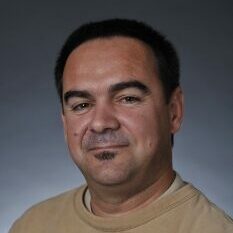
Debarati Das is an Assistant Professor in Computer Science and Engineering , specializing in Clustering Algorithms , Edit Distance , and Approximation Algorithms . Her research focuses on theoretical computer science, particularly in algorithm design for data streams, permutation clustering, and sequence alignment. Grants: NSF CAREER Award (2024), NSF Student Travel Grant (2023). Her work includes breakthroughs in consensus clustering, achieving sub-2-approximation, and developing space-efficient algorithms for edit distance in distributed models. Recent projects explore dynamic shortest paths in planar graphs and pseudorandomness extraction. Her publications span journals like the Journal of the ACM and conferences such as SODA, STOC, and FOCS. Collaborations include researchers from institutions in the U.S. and Europe, with applications in computational biology and parallel computing.
Elena Grigorescu is an Adjunct Associate Professor in the Department of Computer Science at Purdue University, where she has been a faculty member since Fall 2012. Her research program spans theoretical computer science with a focus on foundational algorithmic challenges in large-scale data processing and computational limits, maintaining strong connections to cryptography, communications, and optimization applications. Her educational background includes a PhD from the Massachusetts Institute of Technology (MIT), establishing her expertise in rigorous theoretical frameworks. Professor Grigorescu's research emphasizes designing algorithms that operate in sublinear time or space for massive datasets, analyzing complexity of error-correcting codes and lattices, and exploring information-theoretical computation limits. Current investigations integrate differential privacy with learning-augmented techniques to solve online optimization problems, network design challenges, and data stream processing bottlenecks. Her work bridges abstract theory with practical implementations in cryptographic systems and quantum computing paradigms, demonstrating consistent innovation in algorithmic foundations. Analysis of her recent publications (2022-2025) reveals a dominant focus on sublinear-time algorithms, particularly at the intersection with differential privacy and machine learning augmentation. Key contributions include novel spanner constructions for network design, privacy-preserving clustering frameworks, and breakthroughs in trace reconstruction and coding theory. A pronounced trend shows increasing integration of learning-based predictions to enhance classical online algorithms for packing/covering problems while maintaining theoretical guarantees, alongside sustained contributions to error-correcting code analysis and graph-theoretic foundations. No specific scientific awards or major fellowships were documented in the provided materials, though her publication record in premier venues like STOC, FOCS, and APPROX/RANDOM indicates significant peer recognition. Professor Grigorescu actively mentors graduate students in theoretical computer science research, guiding investigations in sublinear algorithms, complexity theory, and coding theory. Her collaborative projects involve interdisciplinary teams across institutions, focusing on cryptographic applications and quantum information theory, though specific grant details were not included in the source texts. Ongoing work suggests expansion into quantum algorithm design and privacy-preserving machine learning frameworks. While dedicated laboratory facilities were not specified, her research operates within Purdue's theoretical computer science group, leveraging university-wide computational resources and fostering collaborations through conference participation and workshop organization.
Emily Kyle Fox is an Associate Professor in the Department of Computer Science at The University of Texas at Dallas (UTD), affiliated with the Erik Jonsson School of Engineering and Computer Science. She holds a Ph.D. in Computer Science from the University of Illinois at Urbana-Champaign (UIUC, 2013), followed by postdoctoral positions at Duke University and Brown University’s Institute for Computational and Experimental Research in Mathematics (ICERM). Her research focuses on algorithmic foundations with an emphasis on computational geometry, topology, and graph algorithms, particularly leveraging topological methods to design efficient algorithms for complex problems. Education Ph.D. in Computer Science, University of Illinois at Urbana-Champaign (2013) M.S. in Computer Science, University of Illinois at Urbana-Champaign (2010) B.S. in Computer Science, University of Illinois at Urbana-Champaign (2008) Research Interests Computational Geometry & Topology Graph Algorithms & Optimization Algorithm Design for Surface-Embedded and Geometric Networks Applications of Topology in Algorithm Development Publications Trends Her work includes breakthroughs in geometric transportation problems, minimum cut algorithms on hypergraphs/surface graphs, and efficient approximation schemes for transshipment and Fréchet edit distance. Recent contributions emphasize deterministic algorithms with near-linear time complexity and applications of topology to graph algorithm design. Awards NSF CAREER Award (2020) Best Teacher in Computer Science (UTD, 2020) Stutzke Dissertation Completion Fellowship (UIUC, 2013) Grants & Affiliations Dr. Fox secured a $586,654 NSF CAREER grant (2020) for topology-driven algorithm design. She serves on UTD’s Graduate Admissions Committee and actively contributes to the Algorithms and Theory Group. Labs/Teams Active in the Algorithms and Theory Group at UTD, focusing on foundational algorithm research with geometric and topological applications.
Dr. Carlo Cavicchia is an Assistant Professor of Statistics at the Econometric Institute, Erasmus School of Economics, Erasmus University Rotterdam. He holds a PhD in Methodological Statistics from La Sapienza University of Rome and has held roles such as Research Fellow at UnitelmaSapienza University and Consultant for NGOs in Zanzibar. His research focuses on latent variable models, composite indicators, and unsupervised classification, with applications in environmental policy, sports analytics, and teacher job satisfaction. Cavicchia teaches statistics and data science courses at undergraduate and graduate levels and actively contributes to academic communities through journal reviewing, conference organizing, and editorial roles. Education: PhD in Methodological Statistics (La Sapienza University of Rome, 2020) MSc in Statistics and Decision Sciences (La Sapienza University of Rome, 2016) BSc in Statistics (La Sapienza University of Rome, 2013) Dutch University Teaching Qualification (BKO, 2022) Research Interests: Cavicchia’s work emphasizes hierarchical models, non-parametric statistics, and data science applications. He develops methodologies for composite indicators, including ultrametric Gaussian mixture models and disjoint principal component analysis. His research bridges theoretical advancements with real-world problems, such as waste management in Italian municipalities and ranking European football teams using composite metrics. Grants & Awards: 2024: IFCS Chikio Hayashi Award 2023: ESE Starter Grant (€300,000) 2017: Research Grant for Junior Researchers (€1,270) 2016: PhD Scholarship, La Sapienza University Academic Engagement: Cavicchia serves as IASC Data Analysis Competition Officer (2023–2025), co-edits the ISI Magazine , and organizes conferences like DSSV 2020 and DSSV-ECDA 2021. He is an elected member of the International Statistical Institute and contributes to SVQS’s Sustainability initiatives. Labs & Teams: He co-organizes the Econometrics internal seminars at Erasmus University and collaborates with researchers at University of Naples Federico II on hierarchical models and convex clustering.
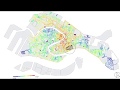
Professor Sophia Psarra is a faculty member at The Bartlett School of Architecture within University College London . Her research and teaching focus on the interplay between spatial configuration, architecture, and sociopolitical dynamics, particularly in parliamentary buildings and urban environments. She directs the Architectural and Urban History and Theory PhD Programme and has authored significant works including Architecture and Narrative (2009) and The Venice Variations (2018), along with co-editing Parliament Buildings: The Architecture of Politics in Europe (2023). PhD in Architecture from University College London (1997) MSc in Architecture (Research) from University College London (1986) Diploma in Architecture from National Technical University of Athens (1985) Her research spans transdisciplinary fields such as architectural history and theory , space syntax , urban morphology , and social/political philosophy . Recent work examines parliamentary architecture and its role in political culture, supported by collaborations with the UCL European Institute and international conferences. Her publications highlight spatial cognition, power dynamics, and the impact of digital media on urban design. Key trends in her recent articles include: Spatial modeling of parliamentary buildings and political culture Space syntax applications in museums and urban environments Interdisciplinary analysis of architecture, language, and institutions Urban resilience strategies during pandemics Scientific recognition includes: First prizes in EUROPAN architectural competitions Parliament Buildings (2023) shortlisted for the Colvin Prize University College London Publication Award (2003) She has supervised 11 PhD students to completion and served as external examiner for 19 PhDs internationally. Her work has received funding from the Leverhulme Trust , NSF (USA) , Onassis Foundation , and UCL Grand Challenges . She collaborates with institutions like the Natural History Museum and Museum of Modern Art to explore spatial design impacts on human experience.
Faiz Hamid serves as an Associate Professor in the Department of Management Sciences at Indian Institute of Technology Kanpur. With a Ph.D. in Decision Sciences & Information Systems from IIM Lucknow (2012) and a B.Tech. in Computer Science and Engineering from Institute of Engineering & Management (2007), he brings strong technical and analytical expertise to his academic position. His research interests span Operations Research, Combinatorial Optimization, Network Optimization, and Data Science, with particular focus on transportation systems, pandemic response modeling, and revenue management applications. Dr. Hamid's scholarly work demonstrates consistent publication in high-impact journals including European Journal of Operational Research, Omega, Transportation Research, and IEEE Transactions on Signal Processing. His recent publications reveal a strong trend toward applying optimization techniques to real-world problems, particularly addressing pandemic-related challenges in transportation systems and developing sophisticated mathematical models for railway operations. His 2024 edited volume 'Optimization Essentials: Theory, Tools, and Applications' demonstrates his leadership in the field. Ph.D. Thesis recognized as runner-up for 2014 Best Dissertation Award by The INFORMS Technical Section in Telecommunications Best Paper Award at COSMAR 2010 Doctoral Conference, Indian Institute of Science, Bangalore Professor Dipak C Jain Best Paper Award at IMR Doctoral Conference 2010, IIM Bangalore Silver Medal, National Mathematics Olympiad 2002 Dr. Hamid has advised numerous students and collaborated extensively with researchers globally, particularly in transportation optimization problems. His professional journey includes industry experience as Associate Functional Architect at JDA Software and post-doctoral research at Telecom SudParis, France, before joining IIT Kanpur's faculty.
Ioan Todinca is a Professor of Computer Science at the University of Orléans, France, affiliated with the LIFO (Laboratoire d'Informatique Fondamentale d'Orléans) research laboratory. His academic career spans over two decades, with significant contributions to theoretical computer science, particularly in graph algorithms and distributed computing. Faculty of Science, University of Orléans LIFO Research Laboratory Member of Institut thématique pluridisciplinaire Modélisation, Systèmes, Langages (since 2014) Former director of MIPTIS doctoral school (2012-2014) Former head of Computer Science degree program (2007-2011) Former leader of LIFO Graphs, Algorithms and Computational Models team (2008-2012) Todinca's research focuses primarily on graph algorithms, with expertise in exact algorithms (moderately exponential), parameterized algorithms, and algorithms for specific graph classes. He has made significant contributions to techniques involving tree decompositions, treewidth, minimal separators, and potential maximal cliques. More recently, his work has expanded into distributed algorithms, especially in communication-constrained models like the broadcast congested clique. His research bridges theoretical foundations with practical algorithmic approaches for NP-hard problems. The analysis of his recent publications reveals a strong trend toward distributed computing problems, particularly in congested network models. His work spans from fundamental graph theory problems (cycle detection, graph modification) to applications in quantum computing and model checking. The consistent focus on communication complexity, verification, and efficient algorithms across different computational models demonstrates his ability to adapt theoretical computer science principles to emerging computational paradigms. Todinca has supervised numerous PhD students and has been actively involved in the theoretical computer science community through conference organization and editorial work. His publications appear consistently in top-tier venues including SIAM Journal on Computing, Algorithmica, and proceedings of major conferences like STACS, WG, and DISC. Teaching responsibilities include algorithms, graph theory, and discrete structures for undergraduate and graduate students, with previous experience teaching databases, programming, and software engineering. His educational materials are hosted on the university's Celene platform.
Christian Blouin is a Professor and Associate Dean, Academic in the Faculty of Computer Science at Dalhousie University. His interdisciplinary research bridges computer science and molecular biology, with a strong focus on bioinformatics and computational biophysics. Education: Ph.D. in Computer Science, Dalhousie University (2001) B.Sc. in Computer Science, Université Laval (1997) His research interests lie at the intersection of algorithms, phylogenetics, protein evolution, and molecular modeling. He develops computational methods to analyze protein structure evolution, multiple sequence alignments, and phylogenetic tree reconstruction. His work integrates high-performance computing and statistical mechanics to model biophysical properties of proteins, particularly in conformational dynamics and electrostatic interactions. The most recent publications reveal a consistent trend in developing algorithmic solutions for biological problems—especially in text mining for biological events, phylogenetic distance computation, and 3D mapping of evolutionary data. His work emphasizes automation, accuracy, and scalability in bioinformatics pipelines. Scientific Awards and Honors: TULA Fellow Dr. Blouin has secured significant research funding from NSERC, the TULA Foundation, and the CFI. His research group has contributed to tools like GenGIS for geospatial genomics and libcov for bioinformatics programming. He has advised students such as Haibin Liu and Vlado Keselj, who have co-authored key publications in text mining and phylogenetics. His lab integrates algorithm development with biological validation, aiming to bridge computational innovation with real-world biological insights.
Romain Raveaux is an Associate Professor at the LIFAT Computer Science Laboratory, University of Tours, affiliated with Polytech Tours. His research focuses on Image Analysis, Machine Learning, Structural Pattern Recognition, Graph Matching, Graph Neural Networks, Discrete Optimization, Reinforcement Learning, and Transfer Learning . Email: romain.raveaux@gmail.com , romain.raveaux@laposte.net Address: 64 av. Jean Portalis, Tours, France, 37200 Phone: +33 (0)2 47 36 14 27 Research Interests Graph Matching and Neural Networks Discrete Optimization for Pattern Recognition Transfer Learning in Graph-Based Models Historical Document Analysis Scientific Trends His recent work bridges Graph Neural Networks with Mixed-Integer Programming , focusing on Image Semantic Segmentation and Graph Cycle Detection . Earlier studies emphasize Genetic Algorithms for graph classification and Graph Edit Distance optimization in pattern recognition.
Benjamin Raichel is an Associate Professor in the Department of Computer Science at the University of Texas at Dallas, affiliated with the Erik Jonsson School of Engineering and Computer Science. His research focuses on computational geometry and geometric approximation algorithms, with contributions to areas such as Voronoi diagrams, Fréchet distance, clustering, and algorithmic efficiency. Dr. Raichel holds a PhD from the University of Illinois Urbana-Champaign under the supervision of Sariel Har-Peled. He currently teaches Computational Geometry (CS 6319) and has advised multiple PhD students, including Md. Billal Hossain and Jonathan James Perry. His work is supported by NSF grants such as 'Shape Matching in a Messy World Using Fréchet Distance' and 'Metric Violation Distance: Hardness and Approximation.' He is a member of the Algorithms and Theory Group at UT Dallas.
Dr. Johan Pauwels is a Lecturer in Audio Signal Processing at Queen Mary University of London's School of Electronic Engineering and Computer Science, where he is affiliated with the Centre for Digital Music and the Centre for Multimodal AI. His educational background includes: Master of Science in Electrical/Electronics Engineering from KU Leuven (2006) Master of Science in Artificial Intelligence from KU Leuven (2007) PhD from Ghent University (2016) on automatic harmony recognition from audio Johan's research focuses on making machines understand audio to the level of a trained professional. His work combines machine learning, signal processing, data science, and music theory to develop tools for musicians, listeners, and music learners. He has been working on narrowing the gap between academic research and user-centric applications, web-based music services, and the personalization of spatial and immersive audio. His specific interests include machine learning for audio, audio signal processing, music information retrieval, and binaural audio. His recent publications show a strong focus on music representation learning, with particular attention to limited data scenarios, multimodal approaches, and spatial audio processing. His work bridges theoretical music concepts with practical machine learning applications, especially in chord recognition, beat detection, and instrument recognition. He has made significant contributions to HRTF (Head-Related Transfer Function) research and development of tools for spatial audio processing. Dr. Pauwels is actively involved in research funding, with current grants including the AIM CDT Internship with Sofilab (2025), AIM CDT Studentship - Stem (2024), and AIM CDT Internship with stem.tech (2024). He currently supervises multiple PhD students, primarily through the UKRI Doctoral School in AI and Music, with research topics spanning intelligent audio editing, neural drum synthesis, source separation, graph neural networks for music recommendation, and more. In addition to PhD supervision, he typically guides 8-10 undergraduate and 8-10 master's students through their final year projects. His teaching responsibilities include ECS7013P Deep Learning for Audio and Music (MSc/PhD level) and ECS411U Signals and Information (first-year undergraduate).
Bongwon Suh is a Professor in the Department of Computer Science at the Korea Advanced Institute of Science and Technology (KAIST), College of Computing. With a prolific publication record spanning over two decades, Suh has established himself as a leading researcher in Human-Computer Interaction, Social Computing, and Artificial Intelligence applications. His research interests focus on Human-Computer Interaction, Social Computing, Artificial Intelligence, Large Language Models, Information Visualization, Recommender Systems, Multi-Agent Systems, and Accessibility Technologies. Suh's work often explores the intersection of social dynamics and technological systems, examining how AI and interactive systems can enhance human experiences in diverse contexts including education, entertainment, communication, and accessibility. Recent publications (2023-2025) demonstrate a strong focus on Large Language Model applications, with significant contributions in social simulation for education, conversational AI systems, multi-agent coordination, and accessibility technologies. His work frequently appears in top-tier venues including CHI, CSCW, UIST, and SIGIR, reflecting the high impact of his research. Suh has collaborated extensively with researchers across KAIST and internationally, with frequent co-authors including Changhoon Oh, Kyusik Kim, Hyungwoo Song, and Jeongwoo Ryu. His research program consistently bridges theoretical insights with practical applications, particularly in developing systems that enhance human social experiences through technology.
George Kollios is a Professor and Chair of the Computer Science Department at Boston University. He holds a PhD in Computer Science from Polytechnic University, New York (2000), an M.Sc. from the same institution (1998), and a Diploma in Electrical and Computer Engineering from the National Technical University of Athens, Greece (1995). His research focuses on temporal/spatio-temporal indexing, database security, privacy-preserving technologies, and large-scale data management. His work is supported by NSF (including an NSF CAREER Award) and IARPA. Education: PhD, Polytechnic University, New York (2000) M.Sc., Polytechnic University, New York (1998) Diploma in Electrical and Computer Engineering, National Technical University of Athens (1995) Research Interests: His expertise spans data mining , secure database systems , and privacy-preserving algorithms . He develops methods for efficient query processing on encrypted data, spatio-temporal data management, and scalable clustering techniques. Recent Research Trends: His publications emphasize differential privacy , secure encryption schemes , and large-scale graph algorithms . Notable contributions include optimizing privacy in database queries and evaluating encryption protocols for secure data access. Awards: NSF CAREER Award Grants & Collaborations: Recipient of NSF-funded projects on access pattern privacy and IARPA-supported research. He collaborates on interdisciplinary initiatives to bridge theoretical foundations with practical security frameworks.
Krzysztof Onak is the Shibulal Family Career Development Assistant Professor in the Faculty of Computing & Data Sciences at Boston University. His research focuses on theoretical foundations of algorithms for big data, including applications in AI, parallel/distributed systems, and sublinear-time algorithms. He holds a PhD from MIT (2010) and a master's from the University of Warsaw (2005). Before academia, he worked at IBM T.J. Watson Research Center and was a Simons Postdoctoral Fellow at CMU. Education PhD in Computer Science, Massachusetts Institute of Technology (2010) Master of Science in Computer Science, University of Warsaw (2005) Bachelor of Science in Mathematics and Computer Science, University of Warsaw (2003-2004) Research Interests Dr. Onak specializes in algorithms for modern computational challenges, including: Sublinear-time algorithms and property testing Streaming and sketching techniques Parallel and distributed algorithms Graph algorithms and optimization Applications to machine learning and data science Recent Work His publications emphasize scalable solutions for large-scale data problems, with contributions to: Efficient parallel graph algorithms (STOC 2020, STOC 2018) Streaming algorithms for dynamic graphs (SODA 2019) Fair clustering methods (ICML 2019) Awards & Recognition Simons Postdoctoral Fellowship (2010-2012) World Champion in ACM ICPC (2003) Gold Medal in International Olympiad in Informatics (2000) Teaching & Service He teaches graduate and undergraduate courses on algorithms for data science and programming. Currently advises 4 PhD students. Active in organizing theory workshops (e.g., WOLA 2022, STOC 2023 PC member). Former research roles include IBM Research Staff Member (2012-2020) and visiting positions at Microsoft Research and Google Research.
Michael Saks is a Distinguished Professor of Mathematics at Rutgers, The State University of New Jersey . He is affiliated with both the Department of Mathematics and the Computer Science Department as a graduate faculty member. His research focuses on theory of computation and discrete algorithms , with applications in computational complexity, combinatorics, and algorithmic analysis. His recent publications include work on edit distance approximations , randomized algorithms , discrepancy of random matrices , and Boolean function analysis , reflecting a strong emphasis on theoretical foundations. He has contributed to journals such as Combinatorica , Journal of Graph Theory , and Discrete Applied Mathematics , and served on editorial boards and conference program committees, including the 2014 IEEE Conference on Computational Complexity . Michael Saks maintains active research and teaching pages , including guidance for graduate applicants and links to seminars like the Discrete Mathematics/Theory of Computing Seminar . He also participates in initiatives such as the Center for Computational Intractability and DIMACS .