Sebastian Philipp Adam is a PreDoc Researcher at the Department of Knowledge-Based Systems within the Faculty of Informatics at TU Wien. His research focuses on advanced visualization techniques, particularly hypergraph representation using dynamic and spatial methods. Education: Bachelor of Science (BSc) His work emphasizes improving the clarity and interactivity of complex data visualizations through innovative approaches such as 'fat edges' and dynamic object positioning. His 2023 thesis explores elastic set visualization methodologies. Grants & Advising: No grants or advising roles explicitly stated in available information. Labs/Teams: Affiliated with the Knowledge-Based Systems research group at TU Wien, contributing to interdisciplinary projects in computational logic and information systems.
Thomas Depian is a PreDoc Researcher affiliated with the Faculty of Informatics at Technische Universität Wien, specializing in the Department of Algorithms and Complexity. His research focuses on computational geometry, graph algorithms, parameterized complexity, and data visualization, with particular emphasis on boundary labeling, dynamic map labeling, and linear layout optimization. Current projects: Engineering Linear Ordering Algorithms for Optimizing Data Visualizations (2020–2025) Past projects: HumAlgo (2018–2023) His work spans theoretical algorithm design, complexity analysis, and practical applications in geographic information systems and data visualization. Publications include contributions to top-tier conferences such as ISAAC, GD, GIScience, and WALCOM. Areas of investigation include constraint satisfaction, geometric optimization, and parameterized algorithm frameworks. Depian completed his Diploma Thesis at TU Wien in 2023, focusing on grouping and ordering constraints in boundary labeling. His academic output demonstrates expertise in solving complex computational problems with interdisciplinary applications.
Alexander Dobler is a PreDoc Researcher at the Algorithms and Complexity Department of Technische Universität Wien. His research focuses on algorithmic visualization, graph drawing, and combinatorial optimization. He contributes to optimizing layout algorithms for diagrams, treemaps, and storylines, with a particular emphasis on minimizing crossings and corners in geometric representations. Key projects include 'Engineering Linear Ordering Algorithms' (2020–2025) and participation in the PACE competition with solver 'Touiouidth'. His work bridges theoretical computer science with practical visualization challenges, addressing both discrete mathematics and computational geometry. Education: BSc, Dipl.-Ing. (engineering degree) Labs/Teams: Part of the Algorithms and Complexity group at TU Wien Grants: Involved in HumAlgo (2018–2023) and REVEAL-AI (2020–2024) His recent publications (2023–2025) address topics like cluster vertex splitting complexity, hoop diagrams for set visualization, and optimizing linear diagrams. He has supervised Marcel Holzmüller’s 2025 diploma thesis on expanding planar storyplan problems.
Jaakko Peltonen is a Professor of Statistics and Data Analysis at Tampere University, Faculty of Information Technology and Communication Sciences, Department of Computing Sciences. He leads the Statistical Machine Learning and Exploratory Data Analysis (SMiLE) research group and is affiliated with the Tampere Research Center in Information and Systems and the Academy of Finland Center of Excellence in Game Culture Studies. His research focuses on statistical machine learning, exploratory data analysis, and their applications in diverse domains including healthcare, social media analytics, gaming, and political discourse analysis. Notable projects include developing algorithms for transparent AI systems (e.g., TraQuLA, Flow of Trust framework) and analyzing online communities through platforms like Twitch and Steam. Recent work emphasizes ethical AI integration in education and healthcare, predictive modeling for emergency department management, and game studies involving player behavior analysis. Peltonen collaborates across disciplines, leveraging text mining, graph theory, and visualization techniques to address complex societal challenges. Key contributions span methodological advancements (e.g., constrained non-negative matrix factorization) and interdisciplinary applications in policy analysis, digital humanities, and health informatics. His work bridges technical innovation with real-world societal impact through collaborative research initiatives.
Bei Wang is an instructor in the Department of Computer Science at the University of Utah, School of Computing. She teaches CS 6210: Advanced Scientific Computing I, focusing on numerical methods and algorithms for scientific computing. Her research interests span topological data analysis, scientific visualization, and algorithm design for data compression and analysis. She contributes to the Computational Engineering and Science (CES) program, supporting interdisciplinary scientific computing education. Her work emphasizes integrating topology into computational frameworks and advancing visualization techniques for complex scientific data. Education: Not explicitly stated in the provided materials. Research Focus: Numerical algorithms, topological methods, and visualization tools for scientific computing. Her recent articles explore topics such as lossy compression with topological guarantees, harmonic chain analysis, and uncertainty-driven visualization. These contributions highlight her expertise in merging computational efficiency with topological rigor. She actively participates in academic initiatives like the CES program, fostering collaboration in scientific computing education and research. Bei Wang’s academic contributions include developing algorithms for topological data structures and enhancing visualization techniques for fluid dynamics and astronomical data. Her work bridges theoretical foundations and practical applications, advancing the analysis of complex datasets in multiple domains.
Dorothea Maria Anna Wagner is a Full Professor of Informatics at the Karlsruhe Institute of Technology (KIT), with a distinguished career spanning multiple institutions. Her research focuses on the design and analysis of algorithms, algorithm engineering, graph algorithms, computational geometry, and discrete optimization, particularly applied to transportation systems, network analysis, data mining, and visualization. Current: Full Professor at KIT Previous: University of Konstanz (1994-2003), TU Berlin (1993-1994), RWTH Aachen (1983-1988) Her work has been supported by significant research grants, including leadership roles in DFG priority programs and participation in EU projects such as AMORE, COSIN, DELIS, CREEN, ARRIVAL, and eCompass. She has held editorial leadership positions, including Editor-in-Chief of the Journal on Discrete Algorithms and OASIcs , and has contributed extensively to international conferences and Dagstuhl seminars. 2012 Google Focused Research Award 2011 KIT Research Professorship 2008 GI Fellow
Amandine Staircase is an Associate Professor at the Claude Bernard University, Lyon 1 , affiliated with the Camille Jordan Institute . Her research focuses on Geometric Group Theory and Measured Group Theory , exploring topics such as rigidity, orbit equivalences, and metric structures. She holds a PhD from Paris Cité and Montpellier Universities (2021), supervised by Romain Tessera and Jérémie Brieussel. Her academic journey includes teaching roles at Lyon 1, Paris-Saclay, and Münster, covering linear algebra, group theory, and functional analysis. Recent work includes contributions to Groups, Geometry, and Dynamics and the Annales de l'Institut Fourier . Upcoming presentations include the YGGT XIII conference in Copenhagen (April 2025) and a seminar at ENS Lyon (June 2025). She has developed visualization tools for mathematical structures, including Diestel-Leader graphs, using TikZ. Her research emphasizes quantitative aspects of group actions and geometric constructions, bridging algebraic and topological perspectives.
Gerhard Weiss is a Professor at the Department of Data Science and Knowledge Engineering (DKE) at Maastricht University in the Netherlands. With a research career spanning over three decades, he has made significant contributions to the fields of multiagent systems, artificial intelligence, and machine learning. His work bridges theoretical foundations with practical applications across diverse domains including healthcare, social networks, and negotiation systems. Professor Weiss's research interests center around autonomous systems, particularly those inspired by biological principles. He has extensively explored multiagent coordination, negotiation frameworks, and transfer learning techniques. His work often combines theoretical rigor with practical implementations, as evidenced by his involvement in projects like Swarmlab@Work for RoboCup competitions. More recently, his research has expanded into medical informatics, focusing on drug-drug interactions, adverse reaction prediction, and semantic enhancement of biomedical datasets. An analysis of his recent publications reveals a clear trajectory from fundamental multiagent systems research toward applied data science with significant impact in healthcare domains. While maintaining strong theoretical foundations in areas like reinforcement learning and entity resolution, Weiss has increasingly focused on solving real-world problems through interdisciplinary collaboration with medical researchers and data scientists. Throughout his career, Professor Weiss has maintained an active research program with numerous collaborators, most notably Karl Tuyls with whom he has co-authored over 30 publications. His work demonstrates a consistent pattern of bridging theoretical computer science with practical applications across various domains. Professor Weiss leads research in the Swarmlab at Maastricht University, focusing on swarm intelligence and multi-robot systems. His team develops innovative approaches to complex coordination problems, often drawing inspiration from biological systems and social dynamics.
Alex Newcombe serves as a Lecturer in the College of Science and Engineering at Flinders University, where he also holds a Research Staff position with the Centre for Defence Engineering Research and Training. His academic profile shows strong connections between theoretical mathematics and practical defense applications. His educational background includes: PhD in Mathematics from Flinders University (2019) Bachelor of Science with First Class Honours in Mathematics from Flinders University (2015) Newcombe's research centers on graph theory and combinatorics, with particular expertise in domination problems, crossing numbers, and Cartesian graph products. His work bridges theoretical mathematics with practical applications in defense and geolocation systems through collaborations with the Centre for Defence Research and Training. His publications demonstrate sophisticated approaches to complex graph structures using methods like cross-entropy optimization and binary programming formulations. Analysis of his recent publications reveals a consistent research trajectory focused on domination variants and graph product structures. His work shows increasing sophistication in handling complex graph problems with applications to network security and optimization. The publications span specialized mathematics journals including Entropy, Journal of Combinatorial Mathematics and Combinatorial Computing, and Ars Mathematica Contemporanea. His notable achievements include: Vice Chancellor's Award for Doctoral Thesis Excellence (2019) Participation in the Artificial Intelligence for Decision Making Initiative through the Defence Innovation Partnership (2020-2022) Newcombe teaches several engineering mathematics courses including ENGR2711 Engineering Mathematics, MATH3703 Optimisation, and ENGR8761 Engineering Mathematics. His research grants indicate strong institutional support for his work at the intersection of theoretical mathematics and defense applications. The Centre for Defence Engineering Research and Training serves as his primary research hub, facilitating collaborations between academic mathematics and practical defense challenges. His research activities are centered at the Tonsley campus of Flinders University, working within the College of Science and Engineering's research ecosystem. The Centre for Defence Engineering Research and Training provides the institutional framework for his defense-related collaborations, connecting mathematical theory with real-world security applications.
Petr Hliněný is a Professor at the Faculty of Informatics, Masaryk University in Brno, Czech Republic, where he also serves as the Vice-dean for research, development, and doctoral studies. He is affiliated with the Department of Computer Science and leads the Discrete Methods and Algorithms (DIMEA) research group. His research interests span Graph Theory , Discrete Mathematics , Theoretical Computer Science , with a focus on structural and topological graph theory, parameterized complexity, logic in computer science, twin-width, crossing numbers, and discrete geometry. His recent work includes structural results on planar graphs, visibility graphs, and logical aspects of graph classes. His recent publications exhibit a strong trend in analyzing structural width parameters such as twin-width and clique-width, their logical transductions, and algorithmic implications. He has published extensively on planar graphs, crossing numbers, and geometric graphs, often in top venues like European Journal of Combinatorics , Journal of Combinatorial Theory , and LIPIcs conference proceedings. Professor, Faculty of Informatics, Masaryk University Vice-dean for Research, Development and Doctoral Studies Head of DIMEA Research Group Guarantor of Doctoral Study Programme in Computer Science He actively supervises PhD and master’s students, including current doctoral candidates Filip Pokrývka, Shubhang Mittal, Jakub Balabán, and Jan Jedelský. He has led multiple research grants funded by the Czech Science Foundation (GAČR), including project 20-04567S on tractable instances of hard graph algorithmic problems. He also organizes seminars such as IV119 and IV131, and offers thesis topics in discrete mathematical methods.
John Maharry is a Professor of Mathematics and Assistant Dean of Academic Opportunities at the Ohio State University Marion campus. He holds a PhD from The Ohio State University (1996). His research focuses on graph theory and combinatorics, particularly graph decompositions, tree structures, surface embeddings, and minor/topological inclusions. He has organized numerous conferences, including MIGHTY LXII (2019) and the SIAM Conference on Discrete Math (2004). His teaching spans courses like Excursions in Mathematics and Calculus I. Education: PhD in Mathematics, The Ohio State University (1996) Research interests emphasize applying graph structures to networks, including computer/social networks and scheduling problems. Recent publications (2017–2019) explore projective planar graphs, flexibility of embeddings, and Wagner graph exclusion. No scientific awards explicitly listed. Advising/grants section highlights roles in undergraduate research and Honors Programming. Active in campus committees (e.g., Faculty Advisory Network, Senate Representative) and curriculum development.
Dimitrios Zoros holds the position of Lecturer at the Department of Mathematics of the National and Kapodistrian University of Athens (NKUA). His primary affiliations include NKUA and the MPLA (MPLA's formal English name?). He is actively involved in teaching courses such as Recursion Theory and Data Structures. His research focuses on Graph Theory, Parameterized Complexity, and related areas. Education: BSc in Mathematics from NKUA, MSc in Logic, Algorithms, and Computation from MPLA, and a PhD in Logic and Algorithms from NKUA under Prof. Dimitrios M. Thilikos. Research Interests: Graph Obstruction Sets, Graph Searching, Parameterized Complexity, Computability, Algorithms, Logic/Set Theory, and Discrete Mathematics. His work contributes to theoretical foundations of algorithms and graph theory applications.
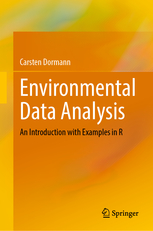
Carsten Dormann is a Full Professor at the University of Freiburg since 2011, working in the Department of Biometry and Environmental System Analysis within the Faculty of Biology. His work bridges statistical methodology with ecological applications, focusing on improving analytical approaches in environmental science. He leads research on statistical ecology, species distribution modeling, and plant-pollinator interactions, with a strong emphasis on methodological rigor and evidence-based environmental science. Professor Dormann completed his Diploma (equivalent to an MSc) in Biology at the University of Kiel (1996), followed by a PhD in Plant Ecology from the University of Aberdeen (2001) under Dr. Sarah Woodin and Prof. Steve Albon. He earned his Habilitation at the University of Göttingen (2008), and worked as a PostDoc and Senior Research Scientist at the Helmholtz Center for Environmental Research-UFZ (2002-2011) before joining Freiburg. Dr. Dormann's research focuses on comparing, challenging and improving the toolbox of statistical ecology . He investigates how ecological datasets, often small but complex, can be properly analyzed when common statistical approaches may fail. His work emphasizes formal statistical integration of ecological models and data , advocating for rigorous representation of ecological understanding through quantitative predictions. He champions an evidence focus in environmental science , drawing parallels with evidence-based medicine to promote transparent evaluation of causal mechanisms. Specific areas include spatial autocorrelation, null models, collinearity, species distribution modeling, and plant-pollinator interactions. His recent publications reveal a strong focus on ecological network analysis, species distribution modeling under climate change, and methodological improvements in ecological statistics. The research spans theoretical developments in network topology and practical applications in conservation, with increasing integration of machine learning approaches while maintaining ecological interpretability. A notable trend is the emphasis on temporal dynamics in ecological systems and developing more robust methods for predicting ecological responses to environmental change. Professor Dormann currently supervises twelve PhD students across various ecological and statistical topics, with an extensive record of past supervision spanning over thirty doctoral candidates. His teaching contributions include authoring the textbook Environmental Data Analysis: An Introduction with Examples in R (2017) and developing statistics courses for environmental sciences. He maintains an active scholarly blog discussing methodological challenges in ecology, with recent posts addressing species richness metrics, bias-variance trade-offs, and the relationship between ecological science and policy. His work bridges theoretical statistical development with practical ecological applications, emphasizing scientific credibility and methodological rigor throughout.
Giordano Da Lozzo is an Associate Professor at Roma Tre University in Rome, Italy, where he is part of the Graph Algorithms and Network Visualization research group. His academic career spans theoretical computer science with a focus on practical applications in graph theory and network analysis. His educational background includes: Associate Professor Habilitation (09/H1 - Information Processing Systems), from 2022 to 2031, awarded by the Italian Ministry of Education, Universities and Research (MIUR) PhD in Computer Science and Automation Engineering, 2015, from Roma Tre University MEng in Computer Science (110/110 cum laude), 2010, from Roma Tre University Da Lozzo's research lies at the intersection of algorithm engineering and computational complexity, with particular focus on graph and network analysis and visualization. His work spans several interconnected fields including graph drawing, computational geometry, topology, combinatorics, parameterized complexity, and more recently quantum computing applications to graph problems. His research combines theoretical rigor with practical implementation considerations, aiming to develop efficient algorithms for real-world network analysis challenges. His publication record shows a consistent focus on graph drawing problems, with recent work expanding into quantum approaches to graph visualization. His research demonstrates progression from foundational graph theory problems toward more complex constrained visualization scenarios, often addressing NP-hard problems with novel algorithmic approaches. His scientific achievements have been recognized with several prestigious awards: Best Student Paper Award at the 18th International Conference and Workshops on Algorithms and Computation (WALCOM 2024) Best Paper Award at the 14th International Symposium on Parameterized and Exact Computation (IPEC 2019) Best Paper Award at the 42nd International Conference on Current Trends in Theory and Practice of Computer (SOFSEM 2016) Best Poster Award at the 23rd International Symposium on Graph Drawing & Network Visualization (GD 2015) Best MCS Thesis Award by Confindustria Servizi Innovativi e Tecnologici–AICA (CSIT 2011) Da Lozzo actively mentors PhD students including Giordano Andreola (working on constrained graph embeddings, expected 2025) and Susanna Caroppo (working on quantum graph drawing, 2023). His research is supported by multiple grants including AHeAD (funded by the Italian Ministry of University and Scientific Research), CONNECT (funded by EU Horizon 2020 Programme), MODE, STACS (funded by the U.S. Defense Advanced Research Projects Agency), AMANDA, NextGRAAL, GraDR, and AlgoDEEP. He is a key member of the Graph Algorithms and Network Visualization research group at Roma Tre University, which focuses on developing efficient algorithms for networked data analysis and visualization. The group collaborates internationally on projects addressing both theoretical and practical challenges in graph representation.
Walter Didimo is a Full Professor of Computer Engineering at the University of Perugia, with a career spanning over two decades. His expertise lies in Graph Drawing, Network Visualization, and Algorithm Engineering, contributing to advancements in Computational Geometry and Big Data. Researcher in Graph Algorithms (1996-2000) Assistant Professor (2001-2004), Associate Professor (2005-2024), Full Professor (2024-) Director of Research Unit CINI (2019-2022) His research focuses on hybrid graph visualization models (e.g., ChordLink), distributed graph processing (e.g., GiViP), and practical applications in cultural heritage (e.g., CHIP) and web analytics (e.g., COWA). Recent work includes scalable algorithms for heterogeneous networked data and visual analytics for genomics (GGB Consortium). Scientific Awards: Best Paper Award - Track 2, Graph Drawing 2021 He has been instrumental in technology transfer, co-founding Vis4 Srl (2009) and contributing to the GGB Consortium. His editorial roles include Associate Editor of IEEE Access and guest editorships for CGTA and JGAA.