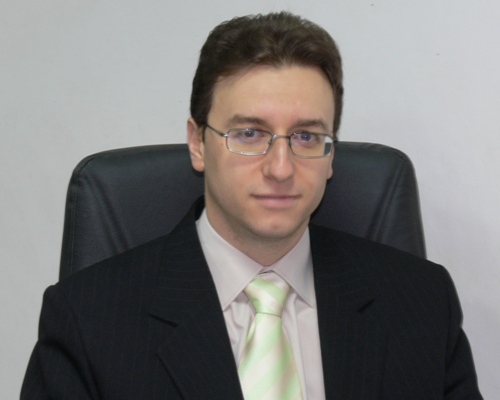
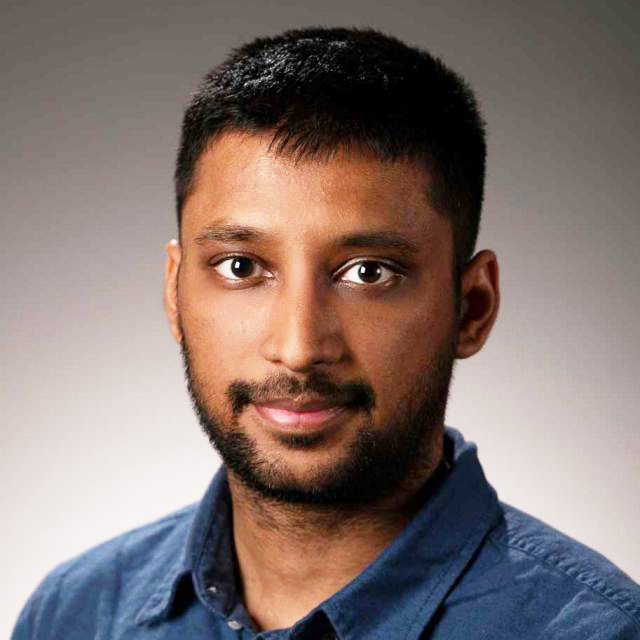
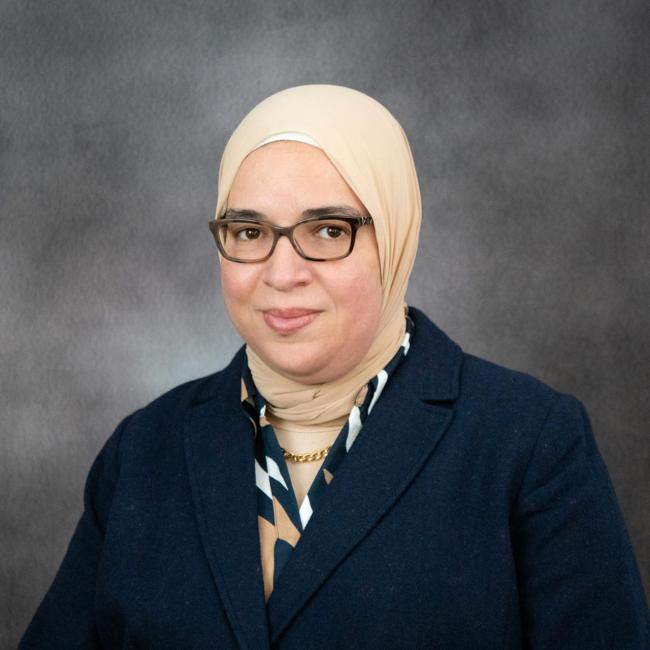
Dr. İlhan Mutlu is a postdoctoral researcher at the Helmholtz Centre for Environmental Research - UFZ in the Department of Computational Biology and Chemistry since 2023. Previously, he worked at TU Dresden (2021-2023) and IAV GmbH (2017-2021). He holds a PhD in Control and Automation Engineering (Istanbul Technical University, 2017) and focuses on data integration , graph databases , and machine learning models for toxicology prediction . His research bridges environmental data analysis with automated systems , particularly in freshwater toxicity assessment and optimal control techniques . Recent projects include ChEOS (toxicity prediction in European waters) and SafePol (pollinator protection). His technical expertise spans Neo4j , CleanGeoStreamR , and ecoKI platform development. Publications emphasize data curation for environmental monitoring, graph-based toxicity tools , and ML-driven chemical risk assessment . His work also involves automated driving systems , including model-free trajectory planning and robust control algorithms . Though no scientific awards are listed, his contributions span interdisciplinary domains combining environmental science with computational engineering .
Dorota Jarecka is a Research Scientist at the McGovern Institute for Brain Research at the Massachusetts Institute of Technology (MIT). Her work focuses on developing open-source software tools and frameworks to enhance reproducibility and scalability in neuroimaging research. She is a core contributor to initiatives like BIDS Apps, NiMARE, and Pydra, which aim to standardize and streamline neuroimaging data analysis workflows. Her research interests span neuroinformatics, reproducible research practices, computational neuroscience, and the development of scalable data management solutions. She actively contributes to consortia such as the NMIND consortium and the BRAIN Initiative Cell Census Network, promoting collaborative approaches to neuroimaging challenges. Jarecka’s publications highlight her expertise in large-scale neuroimaging analysis, meta-analysis techniques, and the integration of open science tools like DataLad and Datalad. She emphasizes the importance of human-in-the-loop systems and agentic frameworks (e.g., STRUCTSENSE) to improve structured information extraction in scientific workflows. Her work has advanced reproducibility through ontologies and provenance tracking (e.g., NIDM Experiment) and has addressed technical challenges such as software variability across operating systems. She is also involved in educational efforts, including Software Carpentry workshops on version control with Git. Jarecka’s contributions bridge computational methods with neuroscience, fostering collaboration between researchers, developers, and institutions to tackle complex neuroimaging and atmospheric science problems.
Weng Fai WONG is an Associate Professor and Deputy Head of the Department of Computer Science at the School of Computing, National University of Singapore (NUS). With over three decades of academic experience at NUS, he has established himself as a leading researcher in computer systems, with particular expertise in the interface between hardware and software stacks. Dr. Wong received his B.Sc. (First Class Honors) and M.Sc. from the National University of Singapore in 1989 and 1991 respectively, followed by a Dr.Eng.Sc. from the University of Tsukuba in 1993. His academic journey began at NUS (then DISCS) in 1985, where he progressed from student to Senior Tutor in 1989, and later returned from Japan as a Lecturer in 1993. Dr. Wong's research focuses on systems and networking, with special emphasis on hardware-software co-optimization. His current research interests include approximate computing , neuromorphic computing , and hardware acceleration for deep learning. His work spans computer architecture , embedded systems , compilers and runtime systems , and programming languages . He has made significant contributions to optimizing software for novel hardware including FPGAs, GPUs, and non-volatile memory technologies. His recent publications (2023-2025) demonstrate a strong focus on energy-efficient AI computing, with particular emphasis on spiking neural networks, large language model acceleration, and FPGA-based solutions for graph processing and machine learning workloads. His research shows a clear trajectory toward green AI through hardware-software co-design that minimizes energy consumption while maintaining computational effectiveness. Dr. Wong is a Member of ACM and a Senior Member of IEEE. His paper "Exploiting half precision arithmetic in Nvidia GPUs" was a Best Paper Finalist at the IEEE High Performance Extreme Computing Conference (HPEC 2017). As Deputy Head of the Department of Computer Science at NUS, Dr. Wong plays a key leadership role in academic administration while maintaining an active research program. His work has been supported by numerous research grants, though specific details are not provided in the available information. Dr. Wong leads research in the Systems & Networking area at NUS, with particular focus on the Hardware-Software Interface Laboratory. His team explores innovative approaches to bridge the gap between theoretical computer science and practical hardware implementation, with applications spanning from edge computing to large-scale data centers.
Viswa Viswanathan is a Professor of Computing and Decision Sciences at the Stillman School of Business, Seton Hall University. He specializes in data analytics, machine learning, artificial intelligence, and software engineering. His research focuses on leveraging IT and analytics to enhance online learning environments, particularly through intelligent tutoring systems and educational technology innovation. He has authored numerous books on R programming, SAP certification, and business analytics course materials. Research Contributions: Dr. Viswanathan has published extensively in operations research, algorithm design, and educational technology. Notable work includes stochastic greedy algorithms, constraint-based intelligent tutoring architectures, and optimization models for pooled testing during pandemics. His work bridges theoretical computing with practical applications in business education. Teaching: Teaches advanced courses like Business Applications of Machine Learning, Business Intelligence, and Big Data Analytics. Known for integrating emerging technologies like Ruby on Rails and GPT-3 into pedagogical frameworks. Professional Impact: Co-developed SAP certification guides (TS410 and TERP10) widely used in enterprise education. His books on R programming (e.g., R Data Analysis Cookbook) are standard references in data science education.
Barbara M. Anthony is the Lord Chair and Professor of Computer Science at Southwestern University. She holds a PhD from Carnegie Mellon University (2008) and a BA from Rice University (2001). Her expertise spans Approximation Algorithms, Network Design, Operations Research, Graph Theory, and Algorithmic Game Theory. She teaches courses ranging from introductory programming to advanced topics like Theory of Computation and supervises academic internships. Dr. Anthony is actively involved in student research mentorship, leading projects such as algorithm development for course scheduling, transportation optimization, and educational tools like the Surad.io streaming platform. She has secured grants including an NSF S-STEM Award ($614k) and a Google CS Engagement Award ($5k). Notable awards include recognition as an ACM Senior Member and contributions to diversity initiatives like NCWIT Extension Services. She advises UPE (Computer Science Honor Society) and collaborates with nonprofits like Faith in Action Georgetown. Research highlights include work on Doodle Poll voting equilibria (AAMAS 2018), Dial-a-Ride optimization (ATMOS 2019), and bottleneck matching algorithms (COCOA 2022). Over 30 students have conducted research under her guidance, many presenting at conferences like Texas Academy of Sciences and SIGCSE. Her pedagogical innovations include integrating real-world datasets (e.g., UCSC Genome Browser) into coursework and promoting parallel computing concepts in first-year seminars. Affiliations: Department of Computer Science, Southwestern University Grants: NSF S-STEM, Google CS Engagement, NCWIT Labs/Teams: Collaborations with local nonprofits (Faith in Action), tech startups (Surad.io), and interdisciplinary student projects Future Work: Expanding AI ethics education, optimizing university timetabling systems, and fostering diversity in computing
Kent Jones is a Professor in the Department of Math/Computer Science at Whitworth University since 1995. His academic career includes roles as site director for the ACM Intercollegiate Pacific Northwest Programming Competition and judge/problem writer since 2000. He has collaborated on medical technology grants and taught over 15 courses ranging from introductory programming to advanced topics in computer architecture and graph theory. Education: Ph.D./M.S. from Washington State University, B.S. from Walla Walla College Research focuses on machine learning applications in medical technology, genetic algorithms, and computational networks. His work includes developing an endoscopic guidance system for neurosurgery and exploring fuzzy retrieval systems in spatial databases. Jones emphasizes interdisciplinary collaboration, demonstrated through international presentations in India and Australia. Grants include $15K for neurosurgery technology (2000) and $4.4K for hardware/software (2001). He co-organized computing outreach seminars for high-school students (2007) and maintains industry ties through prior roles at Boeing and McDonald's.
Yanlei Diao is a Professor of Computer Science at Ecole Polytechnique in France and also holds a professorship at the University of Massachusetts Amherst. She joined Ecole Polytechnique in September 2015 and leads the CEDAR research team focusing on Rich Data Exploration at Cloud Scale. Her work bridges theoretical computer science with practical big data systems that address real-world challenges in data analytics. Professor Diao's research spans big data analytics, scalable intelligent information systems, and cloud data processing infrastructure. Her work emphasizes practical solutions for explainable anomaly detection, interactive data exploration, and uncertain data management. She has pioneered systems like UDAO (a next-generation optimizer for cloud analytics), EXAD (explainable anomaly detection), AIDEme (interactive data exploration), and GESALL (genomic scalable analysis) that have influenced both academia and industry. Her recent publications reveal a strong focus on making big data analytics more explainable, efficient, and accessible. She has developed frameworks for unsupervised anomaly detection across heterogeneous domains, created benchmarks like Exathlon for evaluating explainable anomaly detection systems, and advanced human-in-the-loop approaches for interactive database exploration. Her work consistently bridges theoretical foundations with practical implementations in distributed systems. Selected Awards: ERC Consolidator Award (2017-2023) for "Charting a New Horizon of Big and Fast Data Analysis through Integrated Algorithm Design" CRA-W Borg Early Career Award (2013) NSF CAREER Award (2008) IBM Innovation Award on Scalable Data Analytics (2010) Professor Diao actively mentors PhD and Master's students, with former students now holding positions at top technology companies including Google, Facebook, Amazon, Netflix, and Huawei. Her research is supported by diverse funding sources including the European Research Council, National Science Foundation, ANR, and industry partners like Google, IBM, and Alibaba. She serves as PC Co-Chair of PVLDB 2025-2026 and has delivered keynotes at major industry events including Amazon Machine Learning Workshop (2024), SWIFT AI Forum (2023), and Berlin Institute for the Foundations of Learning and Data (2022). Her CEDAR research team at Inria/LIX develops cutting-edge technologies for big data analytics, with current projects focusing on foundation models for big data, explainable AI for anomaly detection, and genomic data analysis at scale. The team maintains strong collaborations with industry partners including Alibaba Cloud, where joint work has led to significant publications at top database conferences.
Dr. Sotirios Batsakis is a Senior Research Fellow at the University of Huddersfield, School of Computing and Engineering. He holds a diploma in Computer Engineering and Informatics from the University of Patras (Greece) with highest distinction, and a Master’s/Ph.D. in Electronic & Computer Engineering from the Technical University of Crete. His work contributes to UN Sustainable Development Goals through research in knowledge representation, semantic web, and spatio-temporal reasoning. Centre for Planning, Autonomy and Representation of Knowledge Centre of Artificial Intelligence for Mental Health Centre for Autonomous and Intelligent Systems His research spans knowledge representation, semantic technologies, spatio-temporal reasoning, and AI applications in mental health. Recent work focuses on large language models for formal verification, defeasible reasoning, and compliance checking in legal contexts. He has contributed to qualitative spatial reasoning frameworks, temporal representation in OWL, and semantic IoT systems. Active in academic service as a programme committee member for IEEE conferences, he has published extensively on semantic web technologies, ontologies, and AI applications. His research fingerprint includes ontology engineering (100%), semantic web (66%), and temporal reasoning (15%) across 63 publications since 2009.
Paolo Coletti is a researcher and faculty member at the Free University of Bozen-Bolzano, specifically within the Faculty of Economics and Business Administration . His academic journey spans computational fluid dynamics, computational linguistics, and computational finance. He currently teaches courses such as Big Data and Blockchain and Financial Trading and Algorithms . His research focuses on financial network analysis, data organization of Italian public companies, mass customization, and cryptocurrency technology. Coletti has contributed to the construction of a historical financial database of the Italian stock market (1973–2011), ensuring data accuracy by addressing corporate actions like dividends and mergers. His work on minimum spanning trees and correlation networks of the Italian stock market has provided insights into sectoral clustering and crisis impacts. He has also explored cross-cultural consumer behavior, including the effects of product-harm crises on brand perception. Key projects include analyzing stock market dynamics during the 2008–2011 financial crises, where petroleum and utilities sectors formed distinct clusters. His research bridges computational methods with financial and economic systems, emphasizing practical applications in portfolio diversification and risk management.
Prof. Dr. Erich Grädel is a full professor in the Mathematical Foundations of Informatik group at RWTH Aachen University, where he conducts research at the intersection of logic, computer science, and mathematics. His work lies in the Department of Mathematics, Computer Science and Natural Sciences, focusing on logic and theoretical computer science. Institution: RWTH Aachen University Department: Mathematical Foundations of Informatik Research Focus: Logic in Computer Science, Algorithmic Model Theory, Semiring Semantics, Dependence Logic His primary research interests include logic and games, algorithmic model theory, fixed-point logics, and semiring semantics for provenance analysis. He has pioneered work in logics of dependence and independence, extending classical logical frameworks to model information flow and uncertainty. His recent publications emphasize semiring-based provenance in first-order and fixed-point logic, Büchi games, and team semantics, often in collaboration with Val Tannen and Matthias Naaf. The trend in his recent articles (2021–2025) reveals a deep and sustained investigation into the algebraic and semantic foundations of logic, particularly through semiring semantics. His work applies logical methods to database theory, verification, and game theory, focusing on how information and strategies can be tracked and analyzed via algebraic structures. Topics include provenance in infinite structures, locality theorems, zero-one laws, and logical characterizations of computational phenomena. Erich Grädel has held significant editorial responsibilities in the logic community: Editor, Logical Methods in Computer Science (since 2004) Editor, Mathematical Logic Quarterly (since 2012) Editorial Board Member (Corner Editor for Logic and Games), Journal of Logic and Computation (since 2007) Editor, Journal of Symbolic Logic (2008–2013) He chaired the European GAMES Research-Training Network (2002–2013) and has co-edited five books, including Lectures in Game Theory for Computer Scientists (Cambridge University Press, 2011). He has advised numerous PhD students, including Faried Abu Zaid, Łukasz Kaiser, and Wied Pakusa. His research group has included long-term collaborators and former members such as Dietmar Berwanger, Martin Otto, and Richard Wilke. He has received no explicitly listed scientific awards in the provided text, but his sustained editorial roles and leadership in major research networks indicate high recognition in the field. His research group, associated with the Mathematical Foundations of Informatik, has been active for decades, with current members including Sophie Brinke and former members forming a substantial list of researchers in logic and theoretical computer science. The group has contributed significantly to algorithmic model theory, automata, and logic games.
Dr. Popirlan Claudiu Ionut is a Lecturer in the Computer Science Department at the Faculty of Exact Sciences, University of Craiova, Romania. He has been actively involved in academic and research activities since 2004, progressing from Assistant Lecturer to Assistant Professor and currently serving as a Lecturer. He holds a Ph.D. in Computer Science from the University of Pitesti and has extensive teaching experience in advanced programming, databases, GIS, and software engineering. His educational background includes: Ph.D. in Computer Science, University of Pitesti (2005–2009) Master in Artificial Intelligence, University of Craiova (2003–2004) B.Sc. in Computer Science, University of Craiova (1999–2003) Secondary Education, Fratii Buzesti National College (1995–1999) Dr. Popirlan's research is centered on Artificial Intelligence, with a strong emphasis on Mobile Agents and Multiagent Systems. His work explores knowledge representation, processing, and management using agent-based architectures, with applications in robotics, contact centers, and virtual organizations. He has also contributed to web-based 3D visualization and modeling in mechanical engineering. His technical expertise spans Java technologies, databases, and software engineering. The analysis of his recent publications reveals a consistent focus on mobile agents for knowledge processing, distributed systems, and intelligent control. Themes include agent architectures, knowledge base management, pathfinding algorithms, and simulation systems, indicating a deep and sustained research trajectory in autonomous and intelligent software systems. He has received research grants such as TD CNCSIS and CNCSIS IDEI, where he served as director and team member respectively, focusing on mobile agents and knowledge management. His editorial roles include Scientific Referent for INFO-PRACTIC and Editorial Secretary for the Annals of the University of Craiova. Dr. Popirlan is an active member of the academic community, affiliated with IEEE, IEEE Computer Society, ACM, IBM Academic Initiative, Microsoft Faculty Connection, and the Romanian Mathematical Society. He is also part of the Research Center of Artificial Intelligence in Craiova.
Trinabh Gupta is an Associate Professor in the Department of Computer Science at the University of California, Santa Barbara (UCSB). Previously, he was a postdoctoral researcher at Microsoft Research Redmond. He holds a PhD from The University of Texas at Austin and a BTech from IIT Delhi. His research focuses on secure systems, privacy-preserving technologies, and applying cryptographic techniques to real-world systems. Education: PhD in Computer Science (UT Austin, 2017); BTech in Computer Science and Engineering (IIT Delhi, 2009). Research Interests: Building systems with strong security and privacy guarantees, including private information retrieval, federated learning, and cryptographic protocols. He emphasizes practical implementations, such as systems for secure media delivery and email privacy. Teaching: Courses include CS170 (Operating Systems), CS178 (Cryptography), and CS293G (Advanced Topics in Computing on Encrypted Data). Courses emphasize hands-on labs and critical analysis of cryptographic systems. Key Contributions: Developed systems like HADES, Coeus, and Addra, which apply theoretical constructs to real-world privacy challenges. His work spans secure distributed systems, federated learning, and oblivious data retrieval.
Alexandra Christina is affiliated with the Department of German Language and Literature at the National and Kapodistrian University of Athens. Her work bridges computational linguistics, human-computer interaction (HCI), and political/journalistic text analysis. She specializes in natural language processing (NLP), sentiment analysis, terminology management, and multilingual applications. Her research focuses on extracting implicit information from spoken and written texts, with applications in medical chatbots, aircraft maintenance communication, and political discourse analysis. Notable projects include the 'Athena' medical chatbot, Gricean maxim modeling in NLP, and HCI design for international conferences. Key Areas: Generative AI, ethical AI frameworks, cross-lingual dialogue systems, and cognitive bias analysis in ancient/modern texts. Publications: Over 100 peer-reviewed articles since 2007, including works on terminology databases, HCI conference proceedings, and sentiment analysis platforms. Her recent work emphasizes socially responsible AI, integrating NLP with ethical guidelines, and leveraging crowd-sourced data for unspoken sentiment detection. She collaborates on multilingual terminology projects like TERMONLINE and CNCTST database initiatives.
Nicolas Eduardo Mylonakis Pascual is a Computer Science researcher at the Department of Computer Science, Barcelona School of Informatics, Universitat Politècnica de Catalunya. With a Doctorate in Computer Science, he maintains active research in formal methods for service-oriented computing, specializing in graph-based approaches to system modeling and verification. His research interests focus on service-oriented programming , recommendation systems , and graph transformation . He has developed theoretical frameworks for business process modeling using symbolic graphs, created semantics for ambient calculus variants applicable to service-oriented computing, and contributed to formal verification methods for graph transformation systems. His work bridges theoretical computer science with practical applications in distributed systems and business process management. Analysis of his publication trends reveals a consistent focus on graph-based formal methods spanning over three decades. His research evolved from foundational work on type checking and semantic verification in the 1990s to sophisticated graph transformation systems for service-oriented computing in the 2000s and 2010s, culminating in recent work on logical approaches to graph databases. His publications demonstrate strong collaboration patterns, particularly with Fernando Orejas (15 joint publications) and other researchers in the ALBCOM research group. As a member of the ALBCOM research group (Algorithms, Bioinformatics, Complexity and Formal Methods), he contributes to the Department of Computer Science's research profile in theoretical computer science and formal methods. His work has been supported by competitive R&D projects including 'Modelos y métodos basados en grafos para la computación en gran escala' and 'Modelos y métodos computacionales para datos masivos estructurados' under Spain's National Research Plan.
Thanaa Ghanem is an Associate Professor in the Department of Computer Science and Cybersecurity at Metropolitan State University's College of Engineering. With a PhD from Purdue University (2014), she has held academic positions at Umm Al-Qura University (Assistant Professor, 2013-2014) and Qatar Computing Research Institute (Scientist, 2017-2018). Her research focuses on data science, social media analytics, spatio-temporal data processing, and geotagged microblog analysis. Education includes: PhD, Computer Science, Purdue University, West Lafayette MS, Computer Science, Purdue University, West Lafayette BS, Computer Science, Alexandria University, Egypt Research interests emphasize: Social network analysis for health communication Big data query language pedagogy Geotagged microblog visualization systems (Taghreed/VisCAT) Language diversity mapping in social media Spatio-temporal data processing Cloud DBMS architectures and tradeoffs Her recent publications demonstrate expertise in social media epidemiology, data visualization, and database systems. She has also contributed to educational curriculum design in data science. Scientific awards: No specific awards mentioned in available data