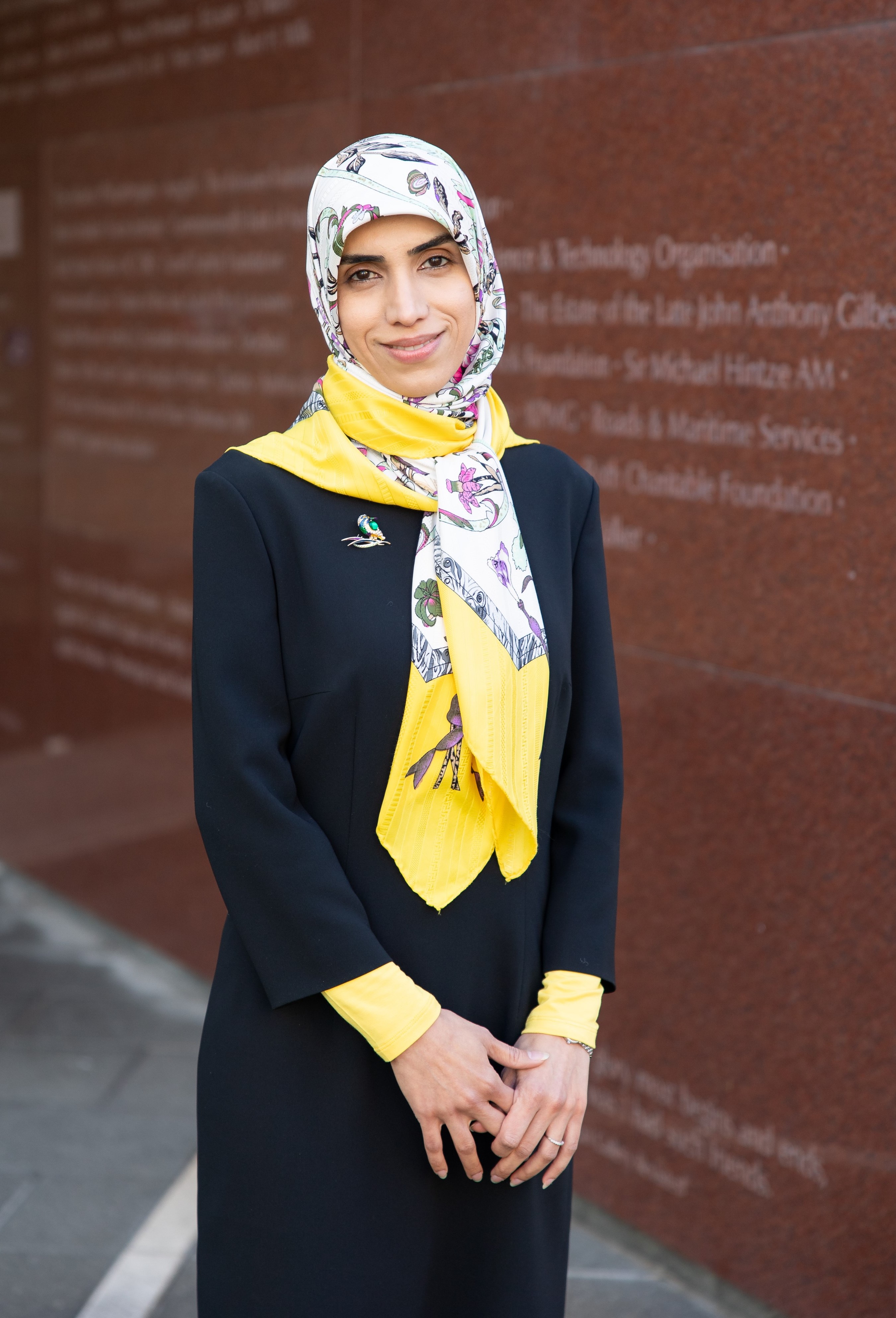
Dr. Agnes Haryanto is a Research Fellow in the Embodied Visualisation Group at Monash University's Faculty of IT. Her work focuses on improving healthcare quality through live-streaming clinical analytics and dashboards for accreditation. She holds a PhD from Monash University (2015) in Spatial and Graph Databases. Education: Doctor of Philosophy, Monash University Research interests span Big Data Management, Geospatial Databases, and Health Informatics. Her current projects include a digital health intervention for Emergency Department clinicians (2023–2026), funded by Australia's Department of Health and Aged Care. She has contributed to advancing spatial query optimization and clinical data warehouse systems. Collaborations involve interdisciplinary teams addressing SDGs like quality education and health equity. Teaching commitments include units like FIT3003 (Business Intelligence) and FIT5137 (Advanced Database Technology). Key projects include developing real-time clinical analytics systems to bridge gaps in healthcare data utilization. Her work aligns with UN SDG 3 (Good Health) and SDG 4 (Quality Education).
Associate Professor Fatemeh Vafaee is a leading researcher at the University of New South Wales (UNSW) , holding appointments as Associate Professor in the School of Biotechnology and Biomolecular Sciences (BABS) and Deputy Director (Science) of the UNSW AI Institute . She previously served as Deputy Director of the UNSW Data Science Hub (uDASH) and has held academic positions at the University of Toronto and the University of Sydney. PhD in Artificial Intelligence from University of Illinois at Chicago Postdoctoral Fellowships at University of Toronto and University of Sydney Founded the AI-Enhanced Biomedicine Laboratory in 2017 Her research focuses on deploying advanced AI techniques to address biomedical challenges through: Biomarker Discovery for cancer and neurodegenerative diseases Single-Cell Multi-Omics data integration and analysis Computational Drug Repositioning and network pharmacology Multi-Omics Data Fusion and temporal network modeling Recent publications demonstrate expertise in liquid biopsy development , single-cell imaging , and AI-driven cancer diagnostics . Her methodological contributions include novel deep learning architectures for omics data analysis and graph neural networks for drug synergy prediction. Scientific accolades include: Winner, Women in AI Asia-Pacific Health Award (2023) Runner-Up, WAI-APAC Innovator of the Year (2023) Top 10 Women in AI in Asia-Pacific (2023) Australian Bioinformatics and Computational Biology Society Research Excellence Award (2023) She supervises PhD candidates across computational biomedicine and AI in healthcare , with significant grant achievements exceeding $17M in competitive funding, including schemes from ARC Discovery , NHMRC , and Medical Research Future Fund .
Tim French is an Associate Professor in the Department of Computer Science and Software Engineering at the University of Western Australia's School of Physics, Maths and Computing. He is affiliated with the UWA Oceans Institute and serves as Regional Contest Director for the South Pacific Programming Contest and Programme Chair for the Australasian Conference on Artificial Intelligence 2022. His research focuses on logic, artificial intelligence, knowledge representation, and reasoning about uncertainty in multi-agent systems, probabilistic reasoning in games, and industrial applications like automated planning and machine learning for complex processes. French holds a PhD in Computer Science (2007) and BSc in Computer and Mathematical Sciences (1999), both from UWA. His expertise spans algorithms, automated reasoning, formal methods in software, and temporal logic verification systems. He has led or contributed to 6 major research projects including the ARC Research Hub for Transforming Energy Infrastructure and the ARC Training Centre for Transforming Maintenance through Data Science. His research outputs include 118 publications covering topics like aleatoric logic for probabilistic reasoning, semantic knowledge extraction from industrial maintenance systems, and deep learning applications in wastewater treatment. He has developed novel methods for knowledge graph construction, state estimation in complex systems, and user interface design informed by work characteristics models. Key grants: 6 active/finished projects totaling $M+ funding Leadership roles: Programming contest director, conference chair Interdisciplinary focus: Combines formal logic with industrial automation challenges French's work contributes to UN Sustainable Development Goals through education and innovation in sustainable industrial processes and environmental systems modeling. His team has developed practical solutions for maintenance procedure digitization, wastewater plant optimization, and robust agent-based systems for uncertain environments.
Associate Professor Wong Kok Sheik is the Deputy Head (Research) at the School of Information Technology, Monash University Malaysia. He holds a Doctor of Engineering from Shinshu University (Japan) and advanced degrees in Computer Science and Mathematics from Utah State University (USA). His research focuses on multimedia signal processing, cybersecurity, and digital health, with contributions to data hiding, encryption, and smart grid security. He leads a EU-funded WAge project on post-pandemic workplace health interventions. Education: PhD in Engineering, Shinshu University, Japan (2009) Masters in Computer Science & Mathematics, Utah State University, USA (2005-2004) Bachelor of Science, Utah State University, USA (2002) Professional Roles: Associate Editor, IEEE Signal Processing Letters Member, IEEE Signal Processing Society’s IFS Technical Committee Board Member, APSIPA Multimedia Security and Forensics (MSF) Committee His research interests span multimedia forensics, encrypted domain processing, and cybersecurity frameworks. Notable projects include recovery of missing coefficients in compression standards and HDR imaging enhancement. Recent work integrates digital health, addressing workplace mental/physical health in post-pandemic environments. Publications reflect expertise in watermarking, encryption, and biometric security. Key contributions include encryption-resistant data embedding and secure smart grid analytics. Awards include IEEE CES Service Awards (2015, 2016) and Best Paper recognitions. He supervises over 20 PhD/MSc students, focusing on topics like biometric recognition, data hiding, and anomaly detection. Grants include a €2M EU Horizon 2020 project (IDENTITY) and a RM146k smart grid initiative. His teaching emphasizes foundational IT research methods and theoretical computer science.
Soon Lay Ki is an Associate Professor at the School of Information Technology, Monash University Malaysia, where she also serves as Associate Head (Graduate Research) since November 2018. Her academic journey began with roles at Multimedia University (MMU), where she was a Senior Lecturer and Deputy Dean (Research and Innovation) from 2016 to 2018. PhD in Web Engineering, Soongsil University, Korea Master of Science in Database, Universiti Putra Malaysia Bachelor of Computer Science, Universiti Putra Malaysia Her research centers on applied natural language processing and data management , with a focus on analyzing domain-specific and social media content. Her work spans aspect-based sentiment analysis , cyberbullying detection , misinformation detection , and relation extraction from conversational texts. Recently, her research has expanded into digital health , particularly emotion-aware mental health chatbots and emotion detection via video data. The most recent articles highlight a strong trend in AI for social good , including legal reasoning, mental health, accessibility, and public health. Her publications appear in high-impact journals and conferences such as Artificial Intelligence and Law , IEEE Transactions on Dependable and Secure Computing , and ACL-affiliated workshops. She has received notable scientific awards, including: ITEX'24 Silver Award for 'MOBOT' mental health chatbot (2024) Silver Medal at Malaysia Technology Expo 2023 for the same innovation The Incubator Grant: Bolster Category (2023) Dr. Soon has graduated seven PhD and three Master’s students, one of whom received the MMU Best Master Thesis Award in 2015. She leads multiple research grants, including FRGS-funded projects and industry collaborations with Telekom Malaysia and Intel . She is currently a Chief Investigator or Primary Chief Investigator on six active projects, including WHinc, WAge, and Epsilon, often in collaboration with Monash Australia and SEACO. She is part of key research teams such as the Action Lab at Monash University Australia and the South East Asia Community Observatory (SEACO) , contributing to inclusive research infrastructure and public health data access initiatives.
Dr. Conrad Sanderson is a Researcher and Team Leader at the Data61 division of CSIRO , focusing on artificial intelligence, machine learning, AI ethics, and high-performance numerical computing. He is also an Adjunct Professor at Griffith University . With over 150 publications and 11,000+ citations, he is renowned for developing influential open-source libraries like Armadillo and RcppArmadillo . Research Interests Artificial Intelligence & Deep Learning Responsible AI, Safe AI, and Ethical Trade-offs Numerical Linear Algebra and High-Performance Computing Recent Publications highlight advancements in: Dynamic graph anomaly detection via extreme value theory Fire propagation uncertainty estimation using neural emulators Resolving ethical tensions in AI implementation GPU-accelerated machine learning Scientific Awards Most cited paper award for thesis-based article Armadillo framework: 30+ million downloads Collaborations include researchers from Facebook, NASA, Boeing, and institutions like MIT and Stanford. His work bridges academia and industry through open-source contributions and interdisciplinary applications.
Khandakar Ahmed is an Associate Professor of Information Technology at Victoria University's College of Arts, Business, Law, Education & IT (CoABLEIT) and Discipline Leader for Emerging Trends in Science, IT & Engineering at the Institute for Sustainable Industries and Liveable Cities (ISILC). His career spans roles at Victoria University (2017–present), RMIT University (2015–2017), and Shahjalal University of Science and Technology (2007–2015). Education: PhD in Electrical and Computer Engineering (RMIT University, 2014), MSc in Networking and e-Business Centered Computing (University of Reading, 2009), BSc in Computer Science and Engineering (Shahjalal University of Science and Technology, 2007) His research expertise includes Artificial Intelligence, Cyber Security, Digital Health, Federated Learning, Quantum Computing, and the Internet of Things . He has published over 100 refereed papers with 4,200+ citations (h-index 32) and secured $3.4 million+ in funding since 2018 from partners like Australia's Economic Accelerator and Western Health. His recent work focuses on AI-driven mental health analysis , blockchain security frameworks , and edge computing optimizations . He serves as lead supervisor for 6 PhD and 1 Master of Research student and has mentored over 100 students through industry-linked projects. Dr Ahmed actively contributes to editorial roles for leading journals such as Scientific Reports , IEEE Transactions , and ACM Computing Surveys . His research aligns with UN Sustainable Development Goals 3 (Good Health), 9 (Industry Innovation), and 11 (Sustainable Cities).
Professor Seokhee Hong is a distinguished academic at the School of Computer Science, The University of Sydney. With prestigious appointments including an ARC Future Fellowship (2013-2016) and Humboldt Fellowship (2013-2014), she has emerged as a leading researcher in graph drawing and visual analytics. Her research focuses on developing scalable algorithms for information visualization of massive complex networks, with applications spanning security analytics, computational biology, and software engineering. Key contributions include the creation of open-source visual analytics software GEOMI and foundational work in 2.5D graph visualization. 2013-2016: ARC Future Fellowship 2008-2012: ARC Research Fellowship 2013-2014: Humboldt Fellowship Recent publications demonstrate her ongoing innovation in graph drawing algorithms, network fairness, and computational geometry. She has served on editorial boards of key journals and as program chair for major conferences in her field. 2006: CORE Chris Wallace Award 2012: Eureka Prize Finalist Multiple Graph Drawing Competition wins Her work bridges theoretical algorithm development with practical applications, addressing challenges in biological network analysis, dynamic graph visualization, and cluster-preserving layouts. With over 140 publications and significant research funding, she continues to shape network visualization research.
Daniel Harabor is an Associate Professor in the Department of Data Science & AI at Monash University, Australia. He holds a PhD and BSc (Honours) in Computer Science from the Australian National University (ANU). His research focuses on pathfinding algorithms, multi-agent systems, and optimization, with notable contributions to multi-agent pathfinding (MAPF), transportation routing, and constraint-based reasoning. He leads or collaborates in projects like the 2023 MAPF Competition and the Future of Urban Routing initiative. Education: PhD in Computer Science, ANU (2014) BSc (Honours) in Computer Science, ANU (2007) Research Interests: His work emphasizes practical and efficient solutions for combinatorial search problems, including real-time pathfinding, public transport optimization, and large-scale multi-agent coordination. He develops algorithms for dynamic environments with applications in robotics, urban planning, and logistics. Awards: DECRA Research Fellowship (Australian Research Council) Projects & Grants: He has secured funding for projects such as 'Personalised Public Transport' (2019–2025) and 'Improved Constraint Reasoning for Robust Multi-agent Path Planning' (2021–2024). His work often involves collaboration with global experts in AI and robotics. Labs & Teams: Active in the Data Science & AI research group at Monash, contributing to MAPF competitions and open-source pathfinding tools like JPS (Jump Point Search).
Professor Chengfei Liu is a faculty member at Swinburne University of Technology, leading the Web and Data Engineering research group and serving as focus area leader for Knowledge and Data Intensive Systems in the SUCCESS Centre. His research focuses on web data management, advanced database systems, graph data, and workflow models. He has held academic positions at the University of South Australia, University of Technology Sydney, and the University of Queensland's DSTC. His work spans data management, distributed systems, and information systems, with notable contributions to cohesive subgraph discovery and efficient algorithms. Research interests include keyword queries, uncertain data, graph databases, and artifact-centric workflows. His awards include the Vice-Chancellor's Research Excellence Award (2007) and multiple best paper/demo awards at top conferences. Professor Liu supervises numerous PhD students and holds grants from the Australian Research Council (ARC), including projects on dynamic networks, heterogeneous graphs, and information resilience. He has authored over 297 publications, with recent work addressing topics like Bitcoin transaction prediction, federated subspace clustering, and multimodal eating disorder detection. His professional roles include program committee memberships at SIGMOD, ICDM, and CIKM, reflecting his influence in data science and database research.
Simon Turner is a Research Fellow at Monash University’s School of Public Health and Preventive Medicine, affiliated with the Methods in Evidence Synthesis Unit. He holds a PhD (2021) from Monash University, focusing on statistical methods for interrupted time series analyses. His expertise includes biostatistics, meta-analysis, and evidence synthesis, particularly applied to public health interventions. He contributes to the Cochrane Collaboration as a biostatistician. Educational Background PhD in Biostatistics, Monash University (2017–2021) Masters of Biostatistics (Star Graduate), University of Melbourne (2015) Masters of Science (Astronomy), Swinburne University of Technology (2008) Bachelor of Teaching (Honours), University of Melbourne (1999) Bachelor of Science (Honours), Monash University (1997) Research Interests Simon’s work centers on improving statistical methodologies for interrupted time series (ITS) analyses and meta-analyses. He develops tools like the Banksia plot for visualizing ITS data and collaborates on search filters to identify ITS studies in literature. His research aligns with UN Sustainable Development Goals related to public health and health equity. Awards & Contributions Star Graduate Award (Masters of Biostatistics, University of Melbourne) Leading author on methods for ITS analysis, including datasets and graphical techniques Labs & Collaborations Active in the Methods in Evidence Synthesis Unit and collaborates internationally on public health research. His work emphasizes methodological rigor in evaluating intervention impacts.
Dr. Shri Rai is a Lecturer in the School of Information Technology at Murdoch University, affiliated with the College of Science, Technology, Engineering and Mathematics. His work bridges machine learning applications in medical diagnostics and ecological conservation, with a focus on spinal cord injury prediction and biodiversity management. Education details are not explicitly provided in the text, but his research spans interdisciplinary areas combining IT with healthcare and environmental science. He has contributed to studies on neurological deterioration prediction using machine learning, post-fire reptile succession, and habitat restoration strategies for endangered species. Key research interests include machine learning for medical imaging (e.g., MRI standardization), ecological succession patterns post-disturbance, and conservation strategies for threatened reptiles. His work often integrates technological solutions with ecological challenges, such as developing algorithms for early disease detection and habitat recovery metrics. Publications highlight a dual focus on clinical medical research (e.g., cervical myelopathy prognosis) and ecological restoration (e.g., post-mining rehabilitation). While no awards are listed, his contributions to interdisciplinary research demonstrate significant academic engagement. Advising and grants information are not detailed in the provided text, but his involvement in collaborative projects like the Canadian Spine Society and Australian conservation programs suggests active participation in academic networks. Rai’s affiliation with Murdoch University’s IT school positions him to advance computational methods for solving complex ecological and healthcare challenges, emphasizing data-driven solutions in both medical and environmental domains.
Nicolo Malagutti is a Senior Lecturer at the Australian National University (ANU), affiliated with the School of Engineering. He also works as a biomedical engineer at the Canberra Sleep Clinic. His roles include course convenor for multiple engineering courses and leading research projects. Dr. Malagutti holds a Doctor of Philosophy (PhD) from ANU, awarded in 2013, with a thesis titled On the automatic closed-loop administration of medicinal drugs . His research interests focus on medical engineering applications biomechanical modeling medical device development systems physiology sleep science data-driven clinical analysis . He leads The Big Sleep ACT , a multidisciplinary initiative to create a sleep research dataset by curating clinical records from the ACT region. Current supervisory projects explore knee joint morphology for personalized surgery, artificial knee mechanics, and graph database-driven medical data inference. A professional highlight includes his role as course convenor for: ENGN2217 Mechanical Systems and Design ENGN4811 Biomechanics and Biomaterials ENGN6213 Digital Systems and Microprocessors Nicolo advises students on biomechanical and medical engineering research projects, emphasizing translational research between engineering and healthcare. He actively collaborates with the Canberra Sleep Clinic, integrating biomedical engineering expertise into clinical practice.
Sharma Chakravarthy is a Professor in the Department of Computer Science and Engineering at The University of Texas at Arlington (UTA) since January 2000. He is an ACM Distinguished Scientist, IEEE Senior Member, and Fulbright Specialist, recognized for his contributions to stream data processing, active databases, and graph mining. He established the Information Technology Laboratory (IT Lab) and an NSF-funded Distributed and Parallel Computing Cluster at UTA, and has supervised 15 PhD theses and 85 MS theses. His research spans semantic query optimization, scalability in graph mining, social network analysis, and multimedia databases. Education: B.E. in Electrical Engineering (Indian Institute of Science), M.Tech (IIT Bombay), M.S. and Ph.D. (University of Maryland, College Park) Prior affiliations: University of Florida (10 years), Computer Corporation of America (CCA, 3 years), Xerox Advanced Information Technology (1 year) Research Interests : His work focuses on adapting map/reduce paradigms for scaling graph mining algorithms to large networks, machine learning applications in Q-A social networks, and InfoSift—a classification system for text, email, and web data. He also explores stream data processing across domains like video analysis. Scientific Awards : 2003 Creative Outstanding Researcher (UTA) 2002 Department-Level Senior Outstanding Researcher ACM Distinguished Scientist IEEE Senior Member Fulbright Specialist Inclusion in Who's Who Among South Asian Americans and Who's Who Among America's Teachers He co-organized the 13th ACM International Conference on Distributed Event-Based Systems (DEBS 2013) and has authored over 200 refereed papers/book chapters. He has given tutorials on graph mining, active/real-time databases, and heterogeneous databases globally.
Luke Mathieson is a Senior Lecturer and Deputy Head of School (Teaching and Learning) in the School of Computer Science at the University of Technology Sydney. His academic career spans theoretical computer science with a focus on computational complexity and its applications. Dr. Mathieson's educational background includes a PhD in Theoretical Computer Science from Durham University, a Masters and Postgraduate Diploma in Higher Education from Macquarie University, and dual Bachelor's degrees in Computer Science (Honors) and Science (Chemistry) from the University of Newcastle Australia. His research interests are centered on parameterized complexity and its applications, extending to various areas of complexity theory, algorithmics, quantum computing, graph theory, and related mathematics. A major theme of his research is the complexity of graph editing problems, a topic in which he specializes. His recent work bridges theoretical complexity with practical applications in AI education, network science, and quantum computing. Dr. Mathieson has taught an extensive range of computer science subjects, particularly focusing on the theory of computation, computational complexity, and algorithmics. At UTS, he teaches or has taught subjects including Data Structures and Algorithms, Applications Programming, Computing Science Studio, Theory of Computing Science, Programming, and Advanced Algorithms. He serves as the Course Director for the Bachelor of Science in Information Technology suite of degree programs and the Course Coordinator for the IT Core. Senior Lecturer, University of Technology Sydney, School of Computer Science (2022-present) Lecturer, University of Technology Sydney, School of Computer Science (2021-2022) Scholarly Teaching Fellow, University of Technology Sydney, School of Computer Science (2017-2021) Research Associate, University of Newcastle Australia, Centre for Information Based Medicine (2014-2017) Adjunct Lecturer, Macquarie University, Department of Computer Science (2014) Postdoctoral Fellow, Macquarie University, Department of Computer Science (2011-2013) Research Associate, University of Newcastle Australia, School of Electrical Engineering and Computer Science (2010-2011) His research demonstrates consistent productivity across theoretical computer science with notable contributions to parameterized complexity and network controllability. Recent publications show an expanding scope incorporating quantum computing applications and educational technology innovations. The QB-suite: a framework for quantum algorithm design and benchmarking (2024-2027) National Industry PhD Program: Improving biosecurity through livestock history recording (2024-2028) Random Number Generation and Analytics for Client Understanding (2018-2019) He maintains active research collaborations across multiple institutions and is affiliated with the Faculty Centre for Quantum Software and Information (QSI) at UTS, reflecting his growing involvement in quantum computing research.