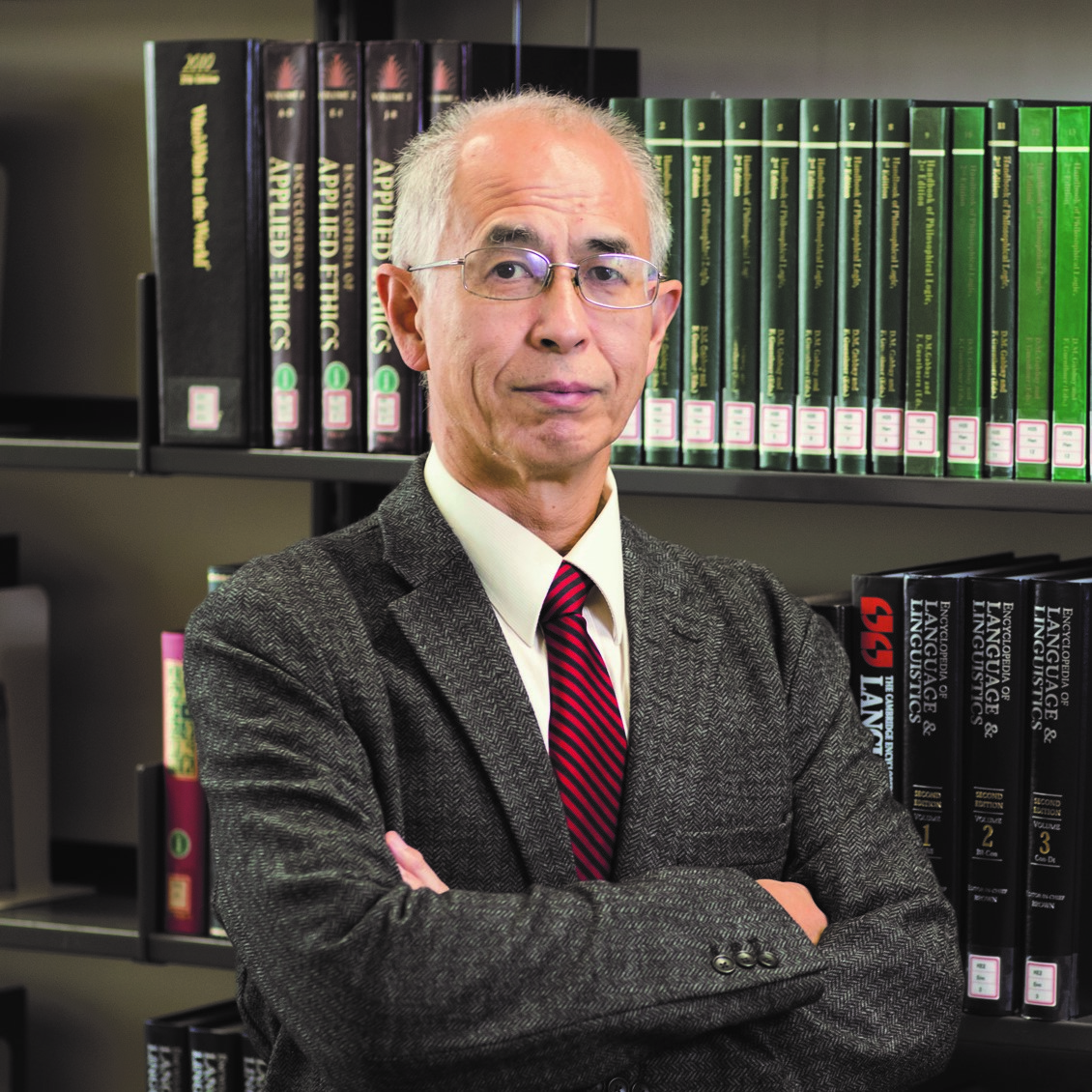
Zaiwen Feng is a researcher actively contributing to data governance, semantic modeling, and causal inference. His work focuses on knowledge graphs, graph-based methods, and service-oriented architectures through collaborations with institutions like the University of Queensland and universities in China. Research Focus : Graph Differential Dependencies, Entity Resolution, Causal Effect Estimation, and Ontology Alignment Methodologies : Machine Learning, Variational Autoencoders, Prompt Engineering, and Semantic Retrieval Application Areas : Biomedical Data, Property Graph Recommendation, and Process Model Repositories Key trends in his publications include automated semantic modeling , neural approaches for entity resolution , and causal inference with graph structures . He frequently collaborates with researchers like Keqing He, Wolfgang Mayer, and Selasi Kwashie across conferences such as HPCC, BIBM, and WISE.
Jun Liu is a Professor in the Department of Statistics at Harvard University, renowned for his contributions to computational statistics, bioinformatics, and Bayesian methods. He leads research in statistical genetics, genomic data analysis, and algorithm development for biological systems. His work integrates advanced statistical theory with computational tools, such as the Gibbs Motif Sampler and Bayesian Aligner, widely used in bioinformatics. Research interests include Monte Carlo methods, statistical genetics, and machine learning applications in biology. He has developed influential software tools like BPPS, MDScan, and CLIC, addressing problems in motif discovery, genomic sequence analysis, and pathway expansion. Liu’s interdisciplinary approach bridges statistics and computational biology, with applications in cancer genomics, immune repertoire analysis, and evolutionary biology. Notable recognition includes fellowships from the American Statistical Association, Institute of Mathematical Statistics, and International Society for Bayesian Analysis. He advises numerous Ph.D. students and postdoctoral researchers, many of whom hold academic and industry positions globally. His lab collaborates internationally, organizing workshops on Monte Carlo methods and statistical forums in China. Liu’s publications span statistical methodology, computational biology, and genetics, with recent work on genomic element evolution, immune cell profiling, and algorithmic advancements in high-dimensional data analysis. He emphasizes inverse modeling and Bayesian approaches to tackle complex biological questions.
Tao Yang is a Professor in the Department of Computer Science at the University of California, Santa Barbara, where he has been a faculty member since 1993. His research spans web search and mining, database and information systems, machine learning and data mining, parallel and distributed systems, and cloud computing. He serves as an active educator, teaching courses including CS170 Operating Systems (Spring 2024), CS291A Neural Information Retrieval (Fall 2024), and CS140 Parallel Computing (Winter 2025). PhD in Computer Science, Rutgers University ME in Artificial Intelligence, Zhejiang University MS in Computer Science, Rutgers University BS in Computer Science, Zhejiang University Professor Yang's research focuses on advancing the field of information retrieval with particular emphasis on neural approaches to search and ranking. His recent work explores neural document ranking, privacy-aware search systems, and versioned data search. He has led significant projects including Neptune clustering infrastructure, Sorrento self-organizing storage cluster, and TMPI for MPI execution optimization. His research bridges theoretical advances with practical implementations, particularly in scaling search architectures to handle billions of documents while maintaining relevancy, performance, and freshness. His publication record shows a clear evolution from foundational work in parallel and distributed systems toward contemporary research in neural information retrieval. Recent publications demonstrate expertise in optimizing both sparse and dense retrieval methods, with particular focus on efficiency improvements for multi-vector representations. His work consistently addresses real-world challenges in search scalability and privacy preservation. Faculty Research Award, Google Research Research Initiation Award, NSF (1994) UC Regents' Junior Faculty Award (1994) Computer Science Faculty Teacher Award (1995) CAREER Award, NSF (1997) Noble Jeeviant Award, AskJeeves (2002) Professor Yang has supervised numerous graduate students, many of whom have gone on to prominent positions at companies like Google, Apple, and Coursera, or academic positions at universities worldwide. His industry experience as Chief Scientist for Ask.com (2001-2010) and founding Chief Scientist for Teoma (2000-2001) has informed his research direction and provided valuable practical context for his academic work. He has served on program committees for major conferences including WWW, SIGIR, KDD, WSDM, CIKM, ECIR, and EMNLP. His research group maintains active projects in neural information retrieval, privacy-aware search, similarity computing, and parallel computing systems. The group collaborates closely with industry partners, particularly in the search technology space, and has developed systems that power major search engines serving over 100 million users.
Abdulkadir Celikkanat is an Assistant Professor in the Department of Computer Science at Aalborg University, Denmark. He is affiliated with The Technical Faculty of IT and Design and the Data, Knowledge and Web Engineering research group. His research focuses on graph representation learning, network analysis, bioinformatics, and machine learning applications in dynamic systems. Key projects include the Villum Foundation-funded 'DarkScience: Illuminating microbial dark matter through data science,' which explores metagenomic binning and microbial ecology using advanced data science techniques. He has been recognized with the Best Paper Award (2023) for contributions to temporal graph analysis and modeling. His work spans continuous-time dynamic node representations, scalable genome profiling, and polarization detection in social networks. Celikkanat collaborates widely, contributing to interdisciplinary research at the intersection of computer science, biology, and environmental science. Recent publications highlight innovations in graph embeddings, citation network modeling, and hybrid membership latent distance models. His research addresses challenges in low-dimensional graph representations, efficient kernel methods, and integrating biological networks for protein analysis.
Dr. Zhiqiang Lin is an Associate Professor in the Computer Science Department at the University of Texas at Dallas (UT Dallas), affiliated with the Erik Jonsson School of Engineering and Computer Science. He holds a PhD in Computer Science from Purdue University (2011). His research focuses on software security, cloud computing security, and memory data analysis, with applications in vulnerability discovery, malware analysis, and virtualization security. He has received prestigious awards including the NSF CAREER Award and Air Force YIP Award. Education: PhD in Computer Science, Purdue University, 2011 Research Interests: Software Security: Binary code analysis, kernel malware detection, and vulnerability discovery. Cloud Computing: Virtual machine introspection, cloud security mechanisms, and data protection in distributed systems. Memory Analysis: Data structure identification in memory/disk, forensic recovery, and semantic data extraction. Teaching: CS 4393: Computer and Network Security (Spring 2013) CS 6324: Information Security (Fall 2012) CS 6V81: Systems Security/Binary Code Analysis (Spring 2012) CS 6V81: Advanced Digital Forensics (Fall 2011) Grants & Projects: Lead researcher on DARPA-funded project to transition legacy system data to secure platforms (collaboration with Purdue University). Developed "space travel" technique for cross-VM monitoring, enhancing cloud security. Air Force-funded framework to protect computer cores from advanced threats. Service & Leadership: NSF proposal review panel member (2012+) Publication Chair for IEEE IPCCC (2012) TPC member for ICDCS, AsiaCCS, CCGrid, and other conferences.
Pei-Chi Lo serves as Assistant Professor in the Department of Information Management at National Sun Yat-sen University (NSYSU), Taiwan, where she leads research at the intersection of information retrieval, computational linguistics, and user profiling. Her work leverages knowledge graphs and large language models to advance contextual understanding systems and social media analysis. Education: PhD in Computer Science, Singapore Management University (supervised by Prof. Ee-Peng Lim) Research Focus: Dr. Lo pioneers knowledge-based information retrieval systems including contextual path generation and knowledge graph reasoning. Her computational linguistics work spans task-specific language models, Singlish (English Creole) processing, and LLM-based knowledge extraction. User profiling research examines behavior-based modeling, adaptive crowdsourcing, and social media personality analysis through community-specific language features. Publication Trends: Her 14 publications (2017-2025) reveal evolving expertise from foundational knowledge graph embeddings to contemporary LLM integration. Recent work (2023-2025) emphasizes causal reasoning with LLMs, judicial document analysis, and temporal knowledge discovery, while maintaining core strengths in contextual retrieval and low-resource language processing. Academic Leadership: Dr. Lo advises 8 Master's students across 2024-2025 cohorts and supervises undergraduate research teams. She has secured multiple competitive grants including NSTC projects on LLM-based causal reasoning (2025-2027) and temporal knowledge discovery (2024-2026), plus institutional funding for sustainable e-commerce and elderly care technology initiatives. Laboratory: Her NSYSU research lab actively recruits students for projects spanning judicial reasoning analysis, personalized travel planning systems, and Singlish processing tools, maintaining strong industry and community engagement through practical NLP applications.
Nguyen Thanh Son is a Research Scientist at the Artificial Intelligence Initiative under the Institute of High Performance Computing (IHPC), Agency for Science, Technology and Research (A*STAR), Singapore. He holds a PhD in Information Systems from the School of Information Systems, Singapore Management University (SMU), where he was advised by Associate Professor Hady Lauw. His research focuses on natural language processing, opinionated text mining, and multimodal deep learning. Previously, he completed a visiting PhD program at Carnegie Mellon University (CMU) and an internship at IBM Research Lab in Dublin, Ireland. He also earned a Bachelor of Information Systems from the University of Engineering and Technology (UET), Vietnam National University, Hanoi, with academic distinctions in research. Research Interests: His work spans natural language processing, emotion recognition, knowledge base systems, and agentic AI. He has contributed to advancements in large language models, multimodal encoding, and retrieval-augmented systems. Grants & Awards: He secured a Singapore Aerospace Programme grant (SGD 360,000) as PI and co-led an A*STAR grant (SGD 6 million). His accolades include the SMU Presidential Doctoral Fellowship and top research prizes during his undergraduate studies. Labs & Teams: Active in IHPC's AI initiatives and collaborated with CMU and IBM on projects like sentiment analysis and ontology building. His work bridges academic research and industrial applications in AI.
Kyle J. Hunt is an Assistant Professor in Management Science and Systems at the School of Management, University at Buffalo. He is affiliated with the Institute for Artificial Intelligence and Data Science and focuses on interdisciplinary research bridging academia and industry. Education: PhD in Industrial Engineering (Operations Research), University at Buffalo BS in Industrial Engineering, University at Buffalo His research integrates operations research, machine learning, and empirical methods to address challenges in security and defense, healthcare analytics, information management, and technology management. Key areas include attacker-defender games, pandemic decision-making, and misinformation detection during crises. Recent publications analyze adversarial belief formation, counterterrorism technology signaling, and open-set recognition algorithms. Research trends highlight interdisciplinary approaches combining game theory, machine learning, and policy analysis in security and public health contexts. Grants: STTR Phase 2: Machine Learning Detection and Response for Space Force Ground Systems ($540,000, Air Force Research Lab, 2024–2025) AMiRA: Assessing and Mitigating Risks in the Arctic ($460,000, Department of Homeland Security, 2024–2025) NSF DDRIG: Multi-target Technology Deployment in Attacker-Defender Settings ($15,325, 2022–2023) Professional affiliations include INFORMS, Association for Information Systems, INFORMS Information Systems Society, and INFORMS Decision Analysis Society.
Pauli Miettinen is a Professor of Data Science at the University of Eastern Finland, affiliated with the School of Computing within the Faculty of Science, Forestry and Technology. His research focuses on data science methodologies, including matrix and tensor decompositions, redescription mining, and social network analysis. Key applications span ecological niche modeling, health data analysis, and parliamentary candidate opinion analysis. He leads the Algorithmic Data Analysis research group and contributed to the Neuro-Innovation project (2021–2026). Recent work includes advancements in differentially private redescription mining and hyperbolic community graph generation. His publications emphasize efficient algorithms for data mining tasks like biclustering and non-negative matrix factorization. Selected achievements include developing the HyGen graph generator and pioneering techniques for interpretable data representation. His research bridges theoretical method development with practical applications in diverse domains.
Jun. Prof. Dr. Ziyue Li is a Junior Professor in Machine Learning in Smart Markets at the Information Systems Department of WiSo Faculty, University of Cologne, Germany (2022–present). They also serve as Chief Machine Learning Scientist at EWI, Germany. Their academic career includes researcher positions at Hong Kong Science and Technology Park Corporation/SenseTime (2021–2022), Nokia Bell Labs (2019), and doctoral studies at The Hong Kong University of Science and Technology (2017–2021). Dr. Li's research focuses on high-dimensional data mining , machine learning , and smart mobility . Their work combines tensor analysis, graph modeling, and spatiotemporal prediction to solve complex problems in transportation systems and data analytics. They have developed innovative approaches for passenger flow prediction and travel pattern analysis. Their publications demonstrate a strong focus on tensor-based machine learning methods applied to mobility data. Key trends include Integration of graph theory with tensor decomposition Development of spatiotemporal prediction models Applications in urban transportation analytics Hybrid transfer learning approaches Multi-clustering methods for travel pattern analysis Data completion techniques for complex networks Scientific recognition includes Multiple INFORMS Data Mining Section awards IEEE CASE Best Conference Paper Award Hong Kong Ph.D. Fellowship Scholarship HKUST Excellent Research Award Three Minute Thesis Competition recognition
Gao Min is a Professor and Doctoral Supervisor at the School of Big Data and Software, Chongqing University. He is a member of IEEE, CCF, and CAAI, and has held visiting scholar positions at Arizona State University and Reading University. His research focuses on personalized recommendation systems, anomaly detection, and social media mining, with strong emphasis on security aspects such as shilling attacks and fake news detection. His research interests include: Personalized Recommendation Systems Anomaly and Attack Detection in Recommender Systems Social Media Mining and Fake News Detection Graph-based and Contrastive Learning for Recommendations Domain Adaptation and Meta-Learning Time Series and Behavioral Forecasting The recent articles highlight a consistent trend in adversarial and robust learning for recommender systems and misinformation detection. His team leverages contrastive learning, graph neural networks, and meta-learning to enhance model robustness against poisoning and shilling attacks. There is a growing focus on simulating user behaviors, modeling fine-grained discrepancies, and applying domain adaptation techniques, particularly in detecting fake news and securing recommendation platforms. His scientific awards are primarily reflected through the recognition of his students, including multiple recipients of the National Graduate Scholarship, Huawei Scholarship, and Chongqing Outstanding Master’s Thesis Award. National Graduate Scholarship (awarded to students: Tian Renli, Yu Junliang, Song Yuqi, Zhao Zehua, Zhang Junwei, Wang Jia, Peng Lin, Ma Hao) Huawei Scholarship (awarded to students: Tan Kan, Wang Jia, Huang Yinqiu) Chongqing Outstanding Master's Thesis Award (awarded to students: Yu Junliang, Zhao Zehua, Zhang Junwei) Aerospace Scholarship (awarded to student: Zhang Junwei) Gao Min has secured significant research funding as principal investigator, including two National Natural Science Foundation projects, a sub-project of the National Key R&D Project, two Chongqing Natural Science Foundation projects, and one China Postdoctoral Fund project. He has also contributed as a main researcher in major national programs such as the 973 Program, National Key R&D Program, and National Science and Technology Support Program. He advises a vibrant research group that values autonomy, academic freedom, and practical research, with students regularly publishing in top venues and securing top-tier industry and academic positions. His team has developed key research platforms including QRec (Recommendation Algorithm Experiment Platform), Yue (Music Recommendation), ARLib (Data Pollution Attack Platform), and SDLib (Shill Attack Detection Platform). He serves as a reviewer for major journals and is a PC member of top conferences including CIKM, IJCAI, and AAAI.
Umberto Villano is a Full Professor at the Department of Engineering of the University of Sannio in Italy. His academic specialization is in the field of Information Processing Systems (ING-INF/05), where he conducts research and teaching activities focused on cybersecurity, machine learning applications for security, and network analysis. Professor Villano's research interests span multiple cutting-edge areas in computer science and security. His primary focus is on cybersecurity , particularly in the domains of intrusion detection systems, IoT security, and cloud security. He has made significant contributions to the application of machine learning techniques for security purposes, especially deep learning approaches using autoencoders for anomaly detection. Another major research stream involves fake news and misinformation analysis , where he applies topic modeling and graph-based approaches to understand information propagation patterns. His work bridges theoretical foundations with practical implementations in real-world security systems. An analysis of Professor Villano's recent publications (2023-2025) reveals a strong focus on advanced security techniques using artificial intelligence. His work demonstrates a consistent pattern of addressing contemporary security challenges through innovative machine learning approaches. The publications show particular emphasis on intrusion detection systems, with numerous papers exploring deep learning methods, especially autoencoders, for identifying network anomalies. There's also a significant thread of research on misinformation analysis, where he applies graph theory and topic modeling to understand fake news propagation. His work often bridges multiple domains, such as combining cybersecurity with IoT systems or applying AI techniques to cloud security challenges. Professor Villano has supervised numerous graduate students through their research in cybersecurity and related fields. His research has been supported by various grants focused on cybersecurity, machine learning applications, and information systems security. His work has contributed to the development of practical security tools and methodologies that address real-world security challenges in networked systems. Professor Villano leads or participates in research groups focused on cybersecurity and machine learning applications. These teams work on developing advanced security solutions, creating benchmark datasets for security research, and investigating novel approaches to information security challenges. His laboratory environment emphasizes both theoretical research and practical implementation, with projects often resulting in open-source tools and publicly available datasets that benefit the broader security research community.
Quentin Stiévenart is a researcher at Université du Québec à Montréal, focusing on abstract interpretation, concurrency, and static analysis. His work spans programming language design, software verification, and tool development for WebAssembly and functional languages like Racket and Scheme. Active in organizing and reviewing for conferences including SPLASH, ICFP, ECOOP, and SAS Developed tools such as Wassail for WebAssembly static analysis and RacketLogger for educational purposes Contributions include theoretical work on effect-driven flow analysis and practical advancements in concolic execution abstraction His research addresses challenges in concurrency verification, cyclic reinforcement in incremental analysis, and security-focused taint tracking across multiple language paradigms.
Ruhul Amin is an Assistant Professor at Fordham University's Department of Computer and Information Science, where he explores the intersection of Artificial Intelligence , Data Science , and Public Health . His work spans multiple domains including Bioinformatics , Natural Language Processing , and Computational Social Science . PhD in Computer Science (Stony Brook University, 2019) MS in Computer Science (Stony Brook University, 2015) BSc in Computer Science (Shahjalal University, 2007) His research focuses on developing deep learning algorithms for genome annotation, anomaly detection in high-cardinality spaces, and assistive technologies for visually impaired users. Notably, he designed the Mongol Dip bilingual screen reading software and the Pipilika Bengali text search engine. Recent publications (2025-2024) demonstrate his expanding interests in large language model alignment , sentiment analysis across languages, and distributed reinforcement learning for cybersecurity applications. His work frequently appears at IEEE conferences and in journals like PLOS One. Scientific Recognition BASIS National ICT Award (Bangladesh) Best Poster Awards at IEEE R10 HTC and CEWIT conferences Bangladesh Prime Minister’s Award (2012) mBillionth South Asia Award (2010) He maintains active collaborations with research teams at University of Toronto , University of British Columbia , and Stony Brook University . Contact: moamin@cs.stonybrook.edu
Ken Satoh is a full Professor at the National Institute of Informatics (NII) and Sokendai (The Graduate University of Advanced Studies), Japan. He leads the Center for Juris-Informatics within the Joint Support-Center for Data Science Research (ROIS-DS). Previously, he worked at Fujitsu (1981-1995) and was an Associate Professor at Hokkaido University until 2001. He holds a law degree from the University of Tokyo (2006-2009) and passed the Japanese bar exam in 2017. Roles: Director of Center for Juris-Informatics, Principal Investigator in multiple AI/Law projects Research Focus: Juris-informatics (merging informatics and law), logical foundations of AI, legal debugging, and compliance mechanisms for AI systems His work bridges AI and legal systems, including developing the PROLEG framework for legal reasoning and organizing international workshops like JURISIN. Key contributions include applying logical inference to detect legal conflicts in algorithmic governance systems and advancing AI ethics through compliance checks with regulations like GDPR. He has authored over 130 publications, including works on legal norm reasoning, multi-agent systems, and formal methods in law. His research group collaborates globally, hosting competitions like COLIEE to advance legal AI technologies.