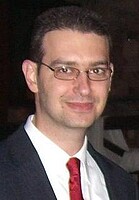
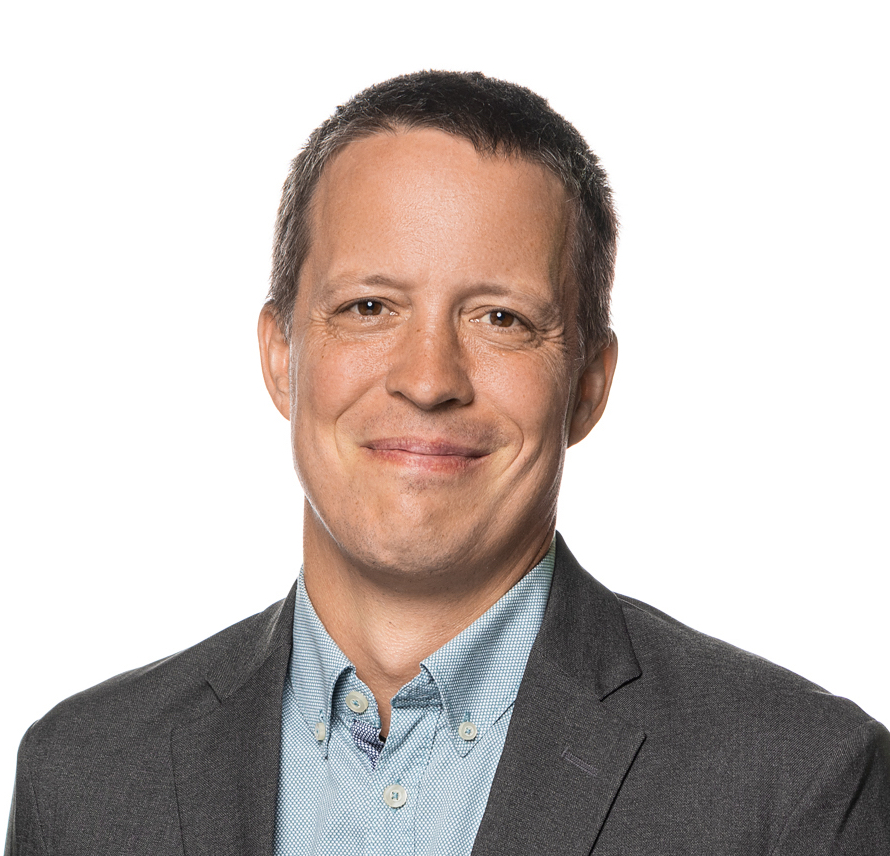
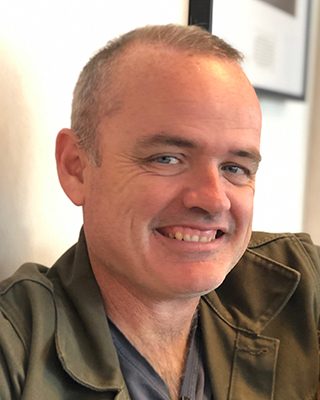
Andrea Simonetto is a Research Professor at the Applied Mathematics Unit (UMA) , ENSTA Paris, Institut Polytechnique de Paris. His work spans optimization, control theory, and learning algorithms for large-scale and streaming data , with applications in smart grids, intelligent transportation, personalized health, and quantum computing. Current research focuses on online algorithms for time-varying optimization , personalized optimization for cyber-physical systems , and variational quantum algorithms . Past contributions include theoretical and algorithmic advances in convex/non-convex optimization, distributed optimization (robotic networks, smart grids), and signal processing for sparse reconstructions and parallel computing in particle filtering. Key application domains include renewable energy integration , quantum state preparation , and human-in-the-loop control systems . His research is published in journals like ACM Transactions on Quantum Computing , IEEE Control Systems Letters , and Automatica .
Xiaoyang Wang is a Senior Lecturer in the School of Computer Science and Engineering (CSE) at the University of New South Wales (UNSW). He holds a Bachelor's and Master's degree in Computer Science from Northeastern University, China, and earned his PhD from CSE UNSW. Dr. Wang's research focuses on database systems with a special emphasis on query processing and data mining on large-scale graph, spatial, and streaming data. His expertise extends to data-driven machine learning, smart contract analysis on blockchain, and FinTech with financial network analysis. His work spans Graph Processing, Graph Neural Networks, Spatial Data Processing, AI for Databases (AI4DB), Database for AI (DB4AI), and FinTech applications. His publication record shows significant contributions to the field with 7 book chapters, 56 journal articles, 61 conference papers, 7 edited conference proceedings, and 4 conference abstracts. Recent publications (2022-2025) demonstrate his strong research trajectory in advanced graph processing techniques, neural network applications, and innovative database approaches. Key themes include hierarchical contrastive learning, robust attack frameworks, temporal graph processing, influence maximization, knowledge graph-enhanced reasoning, and rumor mitigation. Dr. Wang actively recruits PhD students interested in pursuing research in related fields and encourages current undergraduate and master's students at UNSW to contact him about research opportunities. He maintains an active research agenda with practical implications for industries dealing with large-scale network data, financial technology applications, and data-intensive systems. He can be reached at xiaoyang.wang1@unsw.edu.au and is located in Engineering building K17-501D at UNSW.
Antonios Deligiannakis is a Professor at the School of Electronic and Computer Engineering of the Technical University of Crete, specializing in database systems and distributed data processing. His academic career includes a postdoctoral position at the National and Kapodistrian University of Athens (2006-2007) and a visiting researcher role at AT&T Labs-Research (2003). His educational background includes: PhD in Computer Science, University of Maryland, USA (2005) Master's Degree in Computer Science, University of Maryland, USA (2001) Diploma in Electrical and Computer Engineering, National Technical University of Athens (1999) Professor Deligiannakis's research spans Databases , Stream Processing , and Sensor Networks , with pioneering work in Approximate Query Evaluation for massive datasets and Complex Event Processing in distributed environments. His contributions enable efficient analytics in resource-constrained settings through techniques like synopses-based engines and windowed outlier detection. His 15 most recent publications (2020-2025) reveal a dominant focus on distributed streaming analytics, with recurring themes of cross-platform integration, federated learning, and extreme-scale interactive systems. Key innovations include the INFORE framework for interactive analytics, DAG* for IoT workflow optimization, and communication-efficient federated learning techniques—demonstrating consistent translation of theoretical advances into production-ready platforms. Scientific Awards: No specific awards were listed in the provided material. Information about advisees and research grants was not provided in available documentation, though his leadership in the Distributed Information Systems and Applications laboratory suggests active mentorship and project direction. He directs research in the Distributed Information Systems and Applications laboratory, developing systems for real-time analytics across domains including maritime surveillance, financial technology, and IoT platforms, with emphasis on scalability and fault tolerance in geo-distributed environments.
Jamie Ferrill is a Senior Lecturer and Discipline Lead of Financial Crime Studies at the Australian Graduate School of Policing and Security , Charles Sturt University. She holds a PhD in Organizational Behavior (Loughborough University), an MPS in Homeland Security Leadership (University of Connecticut), and a BCJ in Criminal Justice (Mount Royal University). Her research focuses on financial crime, money laundering, transnational organized crime, and national/economic security. 2025 : 7 publications including metaverse policing, cryptocurrency scandals, and cannabis regulations 2024 : 3 publications on AML law, green trade initiatives, and cannabis policy 2023 : 7 publications covering trade-based money laundering, cannabis legalization, and police wellbeing Jamie’s recent work includes systematic reviews on trade-based money laundering (2025) and metaverse policing (2025), alongside policy analysis of cannabis regulations (2024) and beneficial ownership registries (2025) to combat financial crime. She also contributed to the edited volume Dirty Money: Financial Crime in Canada (2022) as co-editor.
Sean Hanna is a Professor of Design Computing at The Bartlett School of Architecture , University College London , and a member of the UCL Space Syntax Laboratory . His interdisciplinary work bridges architecture, computational modeling, and machine learning.
Axel Polleres is a full professor at the Institute for Data, Process and Knowledge Management in Vienna University of Economics and Business (WU Wien). He leads the department of Information Systems and Operations Management while maintaining active research in knowledge graphs, semantic web technologies, and ontology engineering. PhD and Habilitation from Vienna University of Technology Former positions at University of Innsbruck, Universidad Rey Juan Carlos, DERI Ireland, and Siemens AG Co-chair of W3C SPARQL working group Editorial board member for Semantic Web Journal and IJSWIS His research focuses on: Querying and reasoning over ontologies Graph schema languages (SHACL, SPARQL) Wikidata constraint formalization Ontology reuse in collaborative platforms Crisis management knowledge graphs FAIR data principles implementation Recent publications analyze knowledge graph evolution, constraint validation methodologies, and semantic web standardization efforts. Key topics include: OWL/RDF interoperability solutions Unit conversion systems for Wikidata Partition-based query processing frameworks Network resilience analysis for urban planning Open data platform discovery tools Temporal analysis of collaborative knowledge graphs He has co-organized major conferences like ISWC2023 and ESWC workshops while maintaining active roles in European research projects. Current work involves spatiotemporal knowledge graphs for city resilience and semantic web infrastructure development.
Prof. Thomas H. Kolbe serves as Chair of Geoinformatics at the Technical University of Munich (TUM), where he leads research in spatial, temporal, and semantic modeling of urban environments. His work focuses on developing foundational frameworks for 3D/4D city models, digital twins, and smart city applications through international standardization efforts including CityGML and IndoorGML. His research spans virtual city modeling, urban system simulation, and GIS integration with emerging technologies. Current projects emphasize AI-driven urban scenario generation, semantic streetspace modeling, and IoT integration in digital twin ecosystems. Recent publications demonstrate strong interdisciplinary connections between computer vision, urban planning, and geospatial data science, with particular emphasis on practical implementations of 3D city models for sustainability challenges. Prof. Kolbe actively contributes to professional organizations including the Round Table GIS eV (as Chairman since 2013) and the Munich Data Science Institute (as core member since 2021). His leadership extends to the Leonhard Obermeyer Center for digital methods in the built environment and the Hans Eisenmann Forum for agricultural sciences. His work bridges theoretical geoinformatics with practical urban applications through numerous collaborative projects with municipal governments and industry partners.
Heyuan Shi is an Associate Professor at the School of Electronic Information, Central South University since 2023. He earned his B.S. (2015) and Ph.D. (2020) from Central South University and Tsinghua University respectively. His research focuses on software quality assurance with emphasis on kernel fuzz testing , open source software security , and AI application security . Presided over 10+ projects including NSFC General Program (No.62472448) and National Key R&D Sub-Project Published 30+ CCF-A/B papers across software security, machine learning, and quantum testing Supervised 15+ graduate students in software quality assurance areas His recent 2024-2025 publications demonstrate expertise in: LLM-enhanced patch classification Quantum neural network verification Hypergraph adversarial attacks RTOS fuzzing techniques Scientific recognition includes: 2024 Beijing Science & Technology Progress Award (First Prize) Hunan Province Xiaohe Sci-Tech Talent (2023) China Association for Science & Technology Young Talent (2025-2027) Active in academic service as PC member for FM2024 and reviewer for IEEE Transactions journals. Leads industry collaborations with Alibaba and Beijing Institute of Aerospace Metrology.
Paweł Pilarczyk is an Associate Professor at the Institute of Applied Mathematics within the Faculty of Applied Physics and Mathematics at Gdańsk University of Technology, where he has been employed since 2018. His research spans multiple mathematical disciplines with applications across various scientific fields. Dr. Pilarczyk's research interests include dynamical systems , computational topology , rigorous numerics , and applications of advanced computational techniques . His work bridges theoretical mathematics with practical applications in neuroscience, cardiology, ecology, and epidemiology. Analyzing his publication record from 2025 back to 2007 reveals a consistent focus on rigorous mathematical approaches to understanding complex systems. His recent work shows increasing interdisciplinary applications, particularly in medical diagnostics (sleep apnea detection, heart rate variability analysis) and neuroscience (neuron modeling), while maintaining strong foundations in pure dynamical systems theory. As project manager for the OPUS-funded "Topological and numerical methods in dynamical systems" (since 2022), he leads significant research initiatives at the Department of Differential Equations and Mathematical Applications. Dr. Pilarczyk maintains an active research program with collaborators across multiple institutions, evidenced by his extensive publication record and research data sets available through Gdańsk Tech's Bridge of Knowledge platform.
Prof. Dr. Haris Gačanin is a faculty member at RWTH Aachen University, affiliated with the Institute for Distributed Signal Processing under the College of Electrical Engineering. His research focuses on integrating machine learning with wireless communication systems, particularly in industrial IoT, edge computing, and network optimization. Current academic rank: Professor Contact: harisg@dsp.rwth-aachen.de Research Interests: Wireless systems, machine learning, signal processing, and network optimization. Key contributions include: Adaptive resource allocation in IIoT and vehicular networks AI-driven channel estimation and feedback mechanisms Security-oriented emitter identification via metric learning Federated/transfer learning for edge environments Hardware-efficient deep learning models for mmWave and THz communications Methodological Focus: Combines reinforcement learning, attention mechanisms, and robust neural architectures with practical implementations on FPGA and vehicular systems.
Tijs Slaats is an Associate Professor in the Software, Data, People & Society section at the Department of Computer Science, University of Copenhagen. His research focuses on Business Process Management with particular emphasis on declarative and hybrid process notations to provide flexible workflow support for knowledge workers, funded by the Danish Council for Independent Research. His educational background includes: M.Sc. in Information Technology from IT University of Copenhagen Ph.D. in Computer Science from IT University of Copenhagen (supervised by Thomas Hildebrandt) Dr. Slaats specializes in declarative process modeling, particularly Dynamic Condition Response (DCR) graphs which enable flexible workflow systems. His work bridges theoretical foundations with practical applications in cross-organizational settings. Recent research extends into blockchain technologies, smart contracts, and applications in sensitive domains like asylum processing and refugee law. He combines formal methods with empirical evaluation to ensure both correctness and usability of workflow systems. His publication pattern shows increasing application of process mining techniques to blockchain technologies and socially impactful domains, while maintaining core research in Business Process Management. Notable trends include integration of DCR graphs with smart contracts, privacy-preserving techniques for asylum data, and object-centric approaches to process discovery. Research funding includes: Hybrid Business Process Management Technologies project (Danish Council for Independent Research) Technologies for Flexible Cross-organizational Case Management Systems (FLExCMS) industrial Ph.D. project Alongside his academic work, Dr. Slaats maintains strong industry connections through Exformatics A/S where he developed the DCR Graphs workflow solution (www.dcrgraphs.net), and previously worked as a software engineer in the Dutch e-commerce sector. His dual expertise in academia and industry ensures his research addresses real-world workflow challenges while maintaining theoretical rigor.
Mark Oskin is an Adjunct Professor at the School of Computer Science and Engineering , University of Washington , focusing on Software & Hardware Systems . He leads the Sampa Group and collaborates on projects like HammerBlade and BlackParrot. University: University of Washington School: School of Computer Science and Engineering Department: Department of Electrical & Computer Engineering His research spans Computer Architecture , Parallel Computing , and Graph Processing , with additional expertise in Quantum Computing , Open Source Hardware , and Distributed Shared Memory . Ongoing work includes custom manycore devices for graph execution and open-source RISC-V designs. Past projects like Grappa and WaveScalar advanced distributed memory and dataflow execution. Recent publications include BlackParrot: An Agile Open Source RISC-V Multicore for Accelerator SoCs (IEEE Micro 2020) and Perceptual Compression of Video Storage and Processing Systems (SoCC 2019), reflecting trends in hardware-software co-design, quantum systems, and energy-efficient video processing. Best Paper Award , USENIX ATC 2015 IEEE Micro Top Picks , 2009 Mark has advised numerous students, including Amrita Mazumdar (IoT video compression startup), Brandon Lucia (CMU), and Steve Swanson (UC San Diego). He co-founded Corensic, a startup exploring deterministic multithreaded execution.
Gaang Lee is an Assistant Professor in the Department of Civil and Environmental Engineering at the University of Alberta's Faculty of Engineering, where he joined in 2022 after earning his Ph.D. from the University of Michigan. His research pioneers 'sympathetic' built environments that enhance safety, health, productivity, and comfort for workers and users through integration of wearable biosensors, AI, extended reality, and robotics with psychophysiological theories. Education: Ph.D in Civil and Environmental Engineering, University of Michigan, Ann Arbor (2022) - Emphasis: Construction Engineering and Management; Graduate Certificate in Computational Discovery and Engineering Graduate Certificate in Computational Discovery and Engineering, University of Michigan, Ann Arbor (2022) M.S. in Architectural Engineering, Yonsei University, South Korea (2012) - Emphasis: Construction Engineering and Management B.S. in Architectural Engineering, Yonsei University, South Korea (2010) Dr. Lee combats technological exclusion for marginalized groups (construction workers, older adults) by developing empathetic technologies for workplaces, buildings, and urban spaces. His work applies human sensing, AI, and digital twins to create environments that adapt to diverse human needs, with key projects spanning psychophysiological safety monitoring, human-robot collaboration, and inclusive urban design. He integrates psychophysiological and socio-cognitive theories to address real-world gaps in construction engineering and computer science. His recent publications (2023-2025) reveal strong trends in AI-driven safety hazard identification, biosensor-based stress/fatigue monitoring, and virtual reality for construction team dynamics. A critical emerging focus is equity-centered technology design, with increasing publications addressing inclusive built environments and technological access for vulnerable populations through graph-based algorithms, domain adaptation, and interpretable AI models. Scientific Awards: No awards mentioned in the provided text. Dr. Lee actively recruits students for his 'Empathetics' research group starting in 2026, prioritizing candidates with empathy, research motivation, and commitment to diversity and inclusion. While specific grants are not detailed, his research program receives institutional support from the University of Alberta and likely external funding given its interdisciplinary scope and industry relevance. He leads the 'Empathetics' research group (part of Attentive Hub) which emphasizes diversity as fundamental to innovation. Current projects include psychophysiological monitoring for occupational safety, trustable human-robot collaboration systems, and extended reality frameworks for empathetic built environments. The group collaborates with IHT LAB (https://www.iht-lab.com/) and focuses on deploying technologies that make daily surroundings safe, healthy, and truly inclusive for all individuals.
Betül Boz is an Assistant Professor at the Department of Computer Hardware, Faculty of Engineering, Marmara University. She holds a B.Sc. and M.Sc. in Computer Engineering from Marmara University, and a Ph.D. in Computer Engineering from Boğaziçi University. Her research focuses on computer architecture, optimization, and evolutionary computing. B.Sc., M.Sc., and Ph.D. in Computer Engineering Her research interests include computer architecture, parallel algorithms, optimization techniques, and evolutionary algorithms applied to graph coloring and scheduling. Recent work explores cloud computing scheduling, register allocation, and bioinformatics applications like circRNA-disease prediction. She has published extensively in these areas, utilizing evolutionary computing and machine learning. Key trends in her publications include evolutionary algorithms for graph coloring (2015–2025), register allocation (2004–2024), and cloud computing optimization (2023). She also investigates biomedical applications such as circRNA-disease association prediction. She has advised one thesis, managed one project, and her work aligns with UN Sustainable Development Goals. Her research outputs include 14 WoS-indexed publications, 11 WoS citations, and an h-index of 25 on WoS.
Haining Wang is a Professor in the Bradley Department of Electrical and Computer Engineering at Virginia Tech. His research focuses on cybersecurity, networking systems, cloud computing, and cyber-physical systems. He holds a Ph.D. from the University of Michigan (2003). His work addresses critical challenges in network security, IoT device fingerprinting, drone navigation security, and 5G/6G infrastructure vulnerabilities. Notable contributions include developing frameworks for detecting deceptive reviews, securing industrial IoT devices, and enhancing geofencing systems with 6G technologies. Wang's IEEE Fellow award (2020) recognizes his contributions to network and cloud security. His research also explores cloud gaming security, data center thermal vulnerabilities, and DNS privacy risks. He actively publishes on topics like container registry typosquatting, acoustic indoor localization, and encrypted DNS censorship analysis. Education: Ph.D., University of Michigan, 2003 Awards: IEEE Fellow (2020) Key Research Areas: Cybersecurity, Network Measurement, IoT Security, 5G/6G Systems Wang's recent work emphasizes securing emerging technologies like drone navigation systems and optimizing sensor placements in indoor environments. His projects often bridge theoretical frameworks with practical implementations in real-world networks and cloud infrastructures.