Penghe Chen is an active researcher in the field of educational technology and artificial intelligence applications in learning systems. His work focuses on knowledge tracing, cognitive diagnosis, intelligent tutoring systems, and adaptive learning technologies. He has contributed extensively to conferences like AIED, ICCE, and AAAI, as well as journals such as IEEE Transactions on Learning Technology. Co-author in 37+ peer-reviewed publications Collaborator with Yu Lu, Yang Pian, Qinggang Meng, and other leading researchers Research Trends: Penghe Chen's work integrates machine learning, reinforcement learning, and large language models to enhance educational systems. Key areas include: Knowledge Tracing Model Interpretation Problem Behavior Diagnosis Social Robotics in Education Context-Aware Learning Technologies Personalized Learning Pathways His recent publications (2024-2025) emphasize explainable AI for educational counseling, response time integration in cognitive models, and LLM-enhanced tutoring systems. No explicit information about awards, students, or institutional affiliations was found in the provided data.
Philip James is a researcher affiliated with Newcastle University (School of Engineering) and the University of Salford (School of Environment and Life Sciences). His work bridges computer science , urban infrastructure , and geospatial analytics . Key research themes include Internet of Things (IoT) , edge computing , smart city applications , and disaster management . Recent projects involve developing simulation frameworks like IoTSim-Edge and IoTSim-Osmosis for modeling IoT and edge environments. His publications show a strong focus on sensor networks , geospatial data , and urban resilience . He has contributed to advancing ontology-based systems for emergency response and smart transport solutions using CCTV and stereo cameras. Philip James collaborates extensively with researchers like Rajiv Ranjan , Stuart Barr , and Tejal Shah , working on applications ranging from landslide detection to social media analytics in crises .
Dr. Michaela Kümpel is a postdoctoral researcher at the Institute of Artificial Intelligence (IAI) at the University of Bremen, working in the Department of Computer Science within the Faculty of Mathematics/Computer Science. She received her PhD (Dr.-Ing.) from the University of Bremen on March 19, 2024, after being a PhD student at the IAI group under Prof. Michael Beetz from 2020 to 2024. She joined the Institute of Artificial Intelligence in 2017 as a research associate and has been actively involved in multiple research projects including Knowledge4Retail, EASE DFG CRC, and H2Media. Her educational background includes a Master of Science in Management Information Systems from the University of South Florida (specializing in statistics and data mining), a Bachelor of Science in Information Systems, and a pre-diploma in business administration from the University of Osnabrueck, Germany. Before her academic career, she completed an apprenticeship as a qualified IT specialist, working at Bankhaus Carl F. Plump and IBM Germany. Dr. Kümpel's research focuses on creating actionable knowledge graphs that bridge Web information with real-world applications for robots and users. Her work spans several key areas: Actionable Knowledge Representation, Flexible action execution on robots, Semantic Digital Twins, Augmented Reality applications, and Machine Learning and Data Mining. She has developed frameworks for creating knowledge graphs from Web information and grounding them in the real world using semantic digital twins to make knowledge actionable for various applications. Her publication record shows a strong progression in robotics and knowledge representation research, with recent work focusing on actionable knowledge graphs for robot manipulation, semantic digital twins for retail environments, and knowledge engineering methodologies for flexible robot manipulation. Her research has particular emphasis on practical applications in retail scenarios, meal preparation tasks, and omni-channel user assistance. Dr. Kümpel actively contributes to the academic community through teaching, having lectured courses like 'Actionable Knowledge Representation' at the University of Bielefeld and Informatica Feminale. She has also received funding for her individual project 'Actionable Knowledge Representation for Robots' (AKR4R) through the Central Research Development Fund of the University of Bremen. She supervises numerous students across bachelor's and master's levels, with thesis topics ranging from robot manipulation to knowledge graph applications. Her work has been presented at major conferences including ICRA, ESWC, FOIS, and AAMAS, demonstrating her active engagement in the robotics and knowledge representation research communities.
Prof. Dr. Thilo Meyer-Brandis is a full-time professor at the Mathematical Institute of Ludwig Maximilian University of Munich (LMU), specializing in stochastic differential equations and financial mathematics. His research focuses on mean-field SDEs, systemic risk modeling, and applications of stochastic processes to finance and insurance. Stochastic Differential Equations Financial Mathematics Systemic Risk Modeling Insurance Mathematics Lévy Processes Market Microstructure His recent publications analyze: 2025: Mean-field equations driven by G-Brownian motion and deep learning applications for asset bubble detection 2024: McKean-Vlasov SDE stability and systemic risk in financial networks 2023: Liquidity-driven bubble modeling via random matching 2022: Fire sale dynamics and contagion mechanisms 2021: Risk transfer equilibria and delayed market models He leads the Financial and Insurance Mathematics workgroup and offers courses like Finanzmathematik III and Advanced Topics in Mathematical Finance . Contact: Theresienstr. 39, Room B228, D-80333 Munich | Tel: +49 (0)89 2180-4489 | Email: Meyer-Brandis@math.lmu.de
Niklas Weber is a Researcher in the Department of Mathematics at Ludwig Maximilian University of Munich (LMU), affiliated with the Workgroup Financial and Insurance Mathematics. His office is located at Theresienstr. 39, Room B235, Munich (D-80333), with contact details including telephone +49 (0)89 2180-4579 and email weber@math.lmu.de. He holds weekly office hours every Tuesday from 13:00 by appointment. Research Interests: Graph Neural Networks with Applications in Finance Machine Learning Techniques for Systemic Risk Stochastic Modeling in Financial Systems Insurance Mathematics Weber's publication trend reveals a concentrated focus on integrating graph-based deep learning with financial risk assessment, specifically targeting systemic risk in interconnected economic networks. His 2024 work demonstrates how machine learning algorithms can quantify cascading failures in finance, signaling a shift toward AI-driven solutions in traditional financial mathematics. He actively contributes to LMU's quantLab, which delivers specialized workshops and lectures in quantitative finance, supporting both bachelor's and master's programs in Business Mathematics and Financial Mathematics.
Dr. Michael Reyer is a Professor and holds the Chair of Intelligent Control Systems at the Faculty of Electrical Engineering and Information Technology, RWTH Aachen University. He serves as Deputy Chair and is based at the ICT Cube 1 in the Electrical Engineering building (room 302) at Kopernikusstr. 16, Aachen. His primary research areas include: Control Systems and Intelligent Automation Wireless Communications (LTE, OFDM, MIMO) Network Optimization and Resource Allocation Machine Learning for Communication Networks Natural Language Processing for Social Media His publication record from 2011 to 2021 demonstrates a dual focus: advancing wireless network technologies (including cognitive radio, LTE planning, and MIMO channel modeling) and developing NLP techniques for social media analysis. This interdisciplinary work bridges electrical engineering and computer science, with applications in 4G/5G networks and user-generated content processing. As head of the Chair of Intelligent Control Systems, he leads research efforts in intelligent control and communication systems at RWTH Aachen University.
Prof. Dr. Marc Rittberger serves as Deputy Managing Director of the Leibniz Institute for Research and Information in Education (DIPF) since April 2025, concurrently holding a Professorship for Information Management at DIPF and Darmstadt University of Applied Sciences since 2005. His institutional leadership spans multiple directorial roles including Managing Director (2008-2012) and current oversight of the Education Information Center. Rittberger's research focuses on open science infrastructure development , digital educational architectures , and information management systems . His work examines practical implementations of Open Educational Resources (OER), bibliographic database optimization for systematic reviews, and metadata standards for distributed learning environments. Recent publications demonstrate growing emphasis on AI-driven knowledge graphs and machine learning applications in scholarly communication. Analysis of his 15 most recent publications reveals consistent engagement with Open Science implementation challenges Systematic review methodology in educational research Teacher practices in digital resource sharing Quality metrics for research infrastructures His work bridges theoretical informatics with practical educational applications, particularly in K-12 digital transformation contexts. Rittberger actively shapes research policy through key committee roles including: Spokesperson of Leibniz Association's Open Science Strategy Forum (since 2023) Deputy Spokesperson of Standing Commission for Scientific Infrastructure Facilities (since 2024) Former Scientific Advisory Board positions at GESIS, ZBW, and Know Center His academic supervision extends through leadership in major research initiatives including Digi-EBF (Digitalization in Education), ABIBA (reducing educational barriers), and EduArc (digital educational architectures). Current projects emphasize open scholarship quantification, AI-based search infrastructures, and internationalization of educational research infrastructures.
Nicole Schweikardt is a Professor at the Institute of Computer Science within Humboldt University of Berlin . Her research focuses on Theoretical Computer Science , particularly in Database Theory , Formal Logic , and Algorithmic Meta-Theorems . Academic Rank: Professor Contact: schweikn@informatik.hu-berlin.de Research Interests : Nicole investigates logical characterizations of database query languages, algorithmic meta-theorems for sparse graphs, and efficient enumeration techniques. Her work bridges formal logic, computational complexity, and practical database systems. Scientific Awards : 2018 ACM PODS Alberto O. Mendelzon Test-of-Time Award Recent Article Trends : Nicole's recent publications emphasize schema matching , spanner evaluation , first-order logic extensions , and query enumeration . Her work spans theoretical foundations (e.g., counting quantifiers, Hanf normal forms) and practical applications (e.g., event stream analysis, document compression).
Xing David Wang is a Researcher at the Institute of Computer Science within the Faculty of Mathematics and Natural Sciences at Humboldt University of Berlin . His work focuses on knowledge management in bioinformatics , with core research areas spanning biomedical natural language processing, large language models, and data quality assessment. Recent publications highlight expertise in: Biomedical named entity recognition ( HunFlair2 ) Scientific workflow optimization ( Ponder ) Knowledge base construction for complex biological relationships LLM applications in precision oncology Statistical methods for data integrity evaluation Notable trends in his 2023-2024 work include: Integration of dense retrievers with re-ranking models for knowledge curation Development of memory-efficient systems for scientific workflows Application of question-answering frameworks to biomedical event extraction Exploration of LLMs in clinical evidence labeling and decision support
Jan-Willem van de Meent is an Associate Professor at the University of Amsterdam , where he co-directs the AMLab with Max Welling. He holds an Assistant Professor position (on leave) at Northeastern University , continuing to advise students and collaborate remotely. His research focuses on combining probabilistic programming and deep learning to develop models that generalize from limited data. Key areas include inductive biases through physical simulators, causal structures , and symmetries , with applications in robotics , NLP , healthcare , and physical sciences . Recent work includes Variational Flow Matching for graph generation Equivariant neural models for physical systems Entropy coding of complex data structures Goal-contrastive reinforcement learning for robotics Awards NSF CAREER award (2021) Students & Postdocs Robin Walters (Postdoctoral Fellow) Ondrej Biza (Ph.D. Candidate) Babak Esmaeili (Ph.D. Candidate) Sam Stites (Ph.D. Candidate) Hao Wu (Ph.D. Candidate) Xiongyi Zhang (Ph.D. Candidate) Heiko Zimmermann (Ph.D. Candidate) Jered McInerney (Ph.D. Candidate) Eli Sennesh (Ph.D. Candidate)
Cees Snoek is a researcher at the University of Amsterdam specializing in AI foundation models, multimodal learning, and video analysis. His work focuses on advancing self-supervised learning, generalized category discovery, and multimodal interaction. Research Highlights: Developing revolutionary self-coding models for test-time category discovery Creating methods for generalized multimodal learning with unseen modality combinations Pioneering Bayesian approaches to improve prompt learning in vision-language models Innovating end-to-end graph refinement for object detection Advancing motion-focused video representations through tubelet-contrastive learning His recent work at NeurIPS 2023 and ICCV 2023 demonstrates leadership in solving fundamental challenges in category delineation, multimodal generalization, and 3D point cloud processing. All publications emphasize practical implementation with theoretical foundations. Scientific Awards: Recipient of the Netherlands Prize for ICT research (2012), recognizing innovative contributions to semantic video search technology
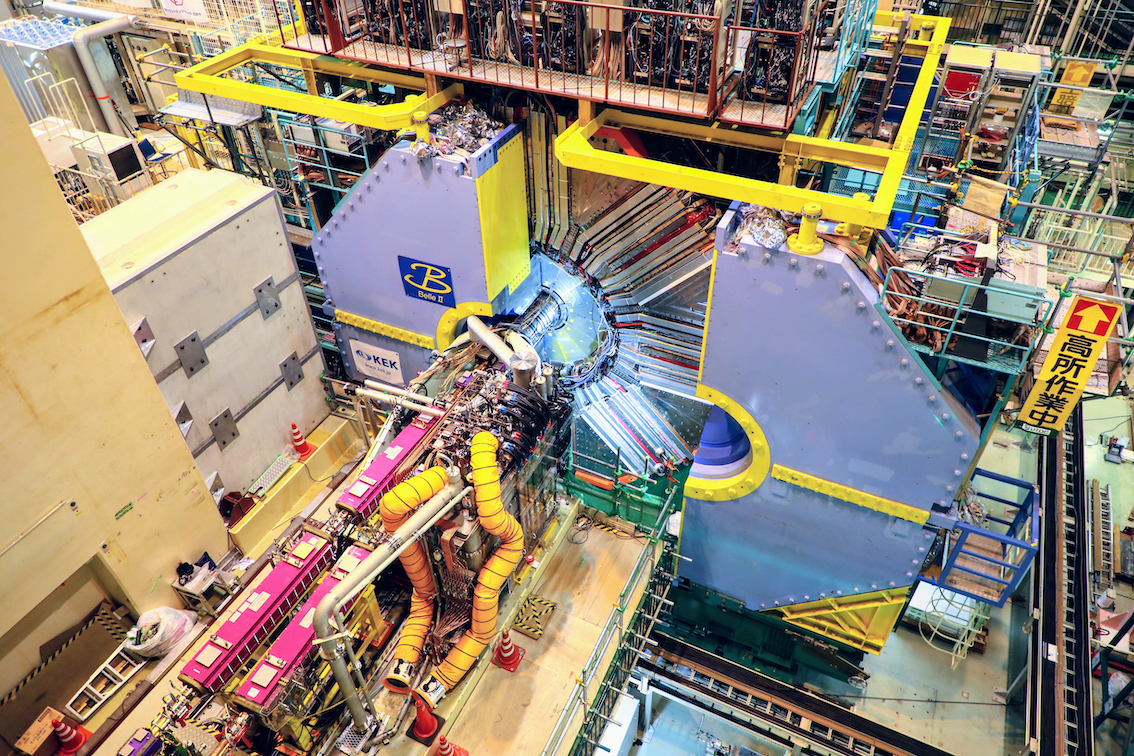
Prof. Dr. Torben Ferber is a Professor at the Karlsruhe Institute of Technology (KIT), leading the Institute of Experimental Particle Physics (ETP). His research focuses on flavor physics in B-meson decays, searches for dark photons, axion-like particles, and long-lived particles at the Belle II experiment, and future projects like LUXE and DELIGHT. He contributes to detector software development and real-time machine learning algorithms for tracking systems. Teaching responsibilities include undergraduate courses on programming, statistics, and particle physics, as well as advanced graduate courses on flavor physics and modern data analysis methods. His group actively collaborates on Belle II's electromagnetic calorimeter reconstruction and explores cutting-edge technologies like GPU acceleration and FPGA-based tracking. Research trends in recent articles emphasize machine learning applications in track reconstruction, CP-violation studies in B-meson decays, and searches for dark matter signatures. His work addresses unresolved questions in the Standard Model, such as discrepancies in CKM matrix element measurements and the origin of matter-antimatter asymmetry. Outreach activities include VR particle detector demonstrations, LEGO models, and masterclasses for students. Supervision of theses spans topics like GPU-accelerated algorithms, FPGA hardware design, and Belle II data analysis. The group adheres to a Code of Conduct promoting inclusivity and respect in academic collaboration.
Rinu Chacko is a researcher at the Institute for Chemical Technology and Polymer Chemistry, Karlsruhe Institute of Technology (KIT). She holds a Master of Technology in Chemical Engineering from the Indian Institute of Technology Madras (2016–2018) and a Bachelor of Technology in Chemical Engineering from the National Institute of Technology Calicut (2011–2015). Her research focuses on chemical recycling of polymers, catalysis optimization using digital tools, and data-driven modeling in materials science. Education: Master of Technology in Chemical Engineering, IIT Madras (2016–2018) Bachelor of Technology in Chemical Engineering, NIT Calicut (2011–2015) Research interests include sustainable polymer recycling techniques, computational catalyst design, odor perception modeling, and formulated product development. Her work emphasizes integrating digital solutions, such as electronic lab notebooks and LSTM-based neural networks, to enhance material science research. Publications highlight contributions to catalytic reaction modeling, digital tools for reaction engineering, and data management systems. She has also presented research on sustainable recycling of carbon fiber-reinforced polymers (CFRP) at conferences like RECYCLE 2018. As part of the Prof. Deutschmann group, she collaborates on interdisciplinary projects bridging catalysis and materials science. No specific grants or awards are listed, though her extensive publication record reflects active engagement in cutting-edge research areas.
Prof. Frank Schultmann is a Professor at the Karlsruhe Institute of Technology (KIT), holding a position at the Institute for Industrial Production - Chair of Business Administration, Production and Operations Management. He serves as Deputy Spokesperson for the KIT Climate and Environment Center, focusing on Circular Economy and Environmental Technologies. His research integrates operations research, environmental engineering, and AI-driven solutions to address challenges in sustainable supply chains, disaster logistics, and resource management. Key research areas include: circular economy strategies, stochastic network optimization, AI applications in production systems, and life cycle assessment of industrial processes. He has extensively published on topics such as battery recycling economics, federated learning for urban thermal analysis, and crisis collaboration frameworks for essential goods. Educational background: While specific degree details are not explicitly provided, his academic role implies a doctoral qualification in industrial engineering or related field. Professional affiliations include the KIT Climate and Environment Center and the Institute for Industrial Production. Grant and advisory activities are not explicitly listed in the provided text, though his publications suggest ongoing projects in EU-funded initiatives related to circular economy and disaster resilience. His work often collaborates with industry partners to bridge academic research with practical industrial applications.
Andrej Bogdanov is a Professor in the Department of Computer Science at the Weizmann Institute of Science's Faculty of Mathematics and Computer Science. With a prolific publication record spanning over two decades from 2002 to 2025, he has established himself as a leading researcher in theoretical computer science and cryptography. His research interests span multiple areas of theoretical computer science, with a particular focus on cryptography, computational complexity, pseudorandomness, and secret sharing. His work often bridges theoretical foundations with practical cryptographic applications, exploring the mathematical underpinnings of secure computation and cryptographic primitives. His research has evolved to address contemporary challenges in quantum computing security and machine learning evaluation. Bogdanov's publication record shows consistent contributions to top-tier conferences including FOCS, STOC, CRYPTO, TCC, and ITCS. His work demonstrates deep theoretical insights while maintaining relevance to practical cryptographic applications. Recent publications indicate expanding interests into quantum computing security and machine learning evaluation frameworks. Bogdanov has collaborated extensively with leading researchers in theoretical computer science, most notably with Alon Rosen (31 joint publications), as well as Siyao Guo, Yuval Ishai, and Chin Ho Lee. His collaborative work spans multiple institutions and reflects the interdisciplinary nature of modern theoretical computer science research. His academic contributions include foundational work on pseudorandom generators, secret sharing schemes, hardness amplification, and more recently, contributions to post-quantum cryptography and quantum security. His research has been supported by multiple grants that have enabled his team to explore the theoretical boundaries of cryptographic security.