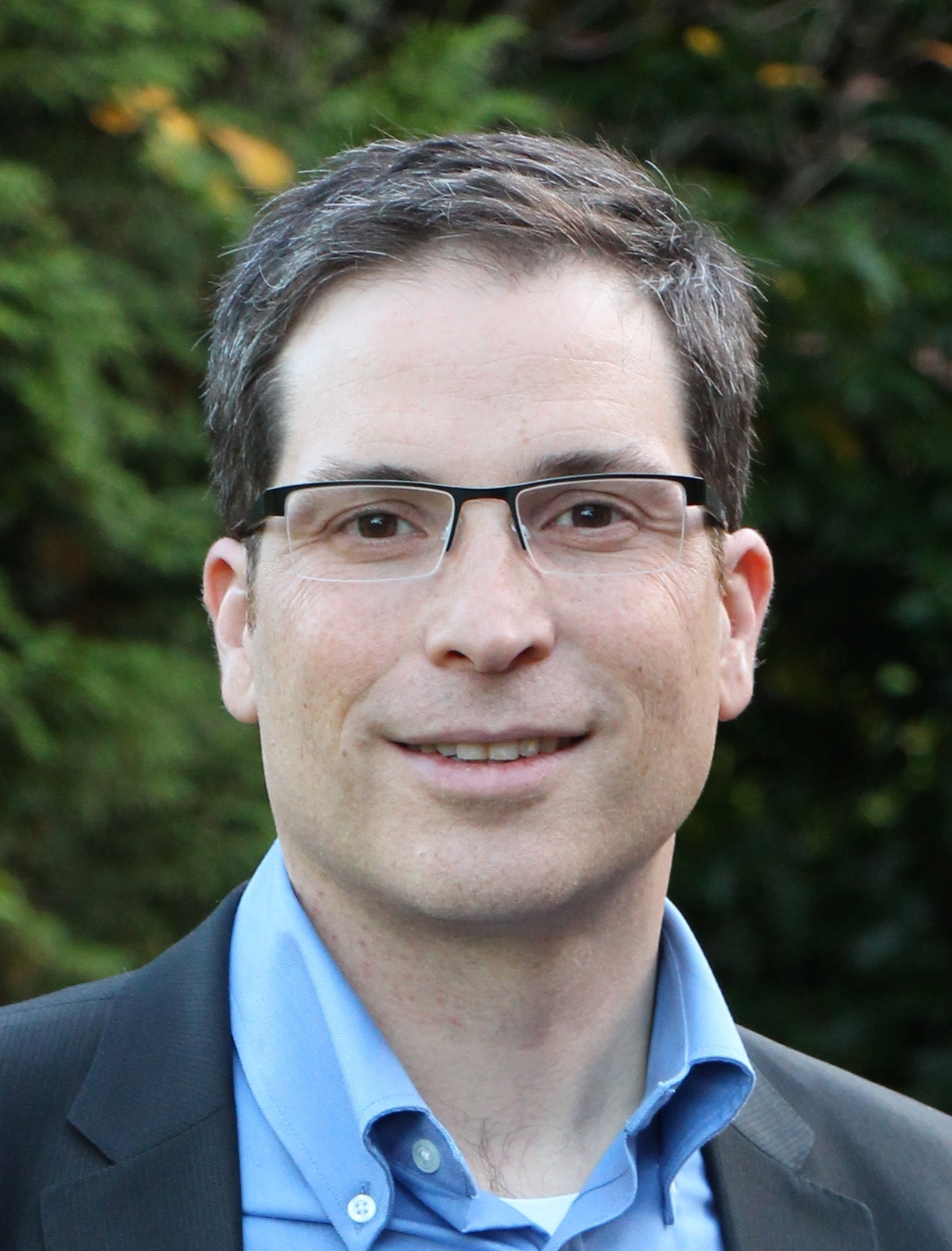
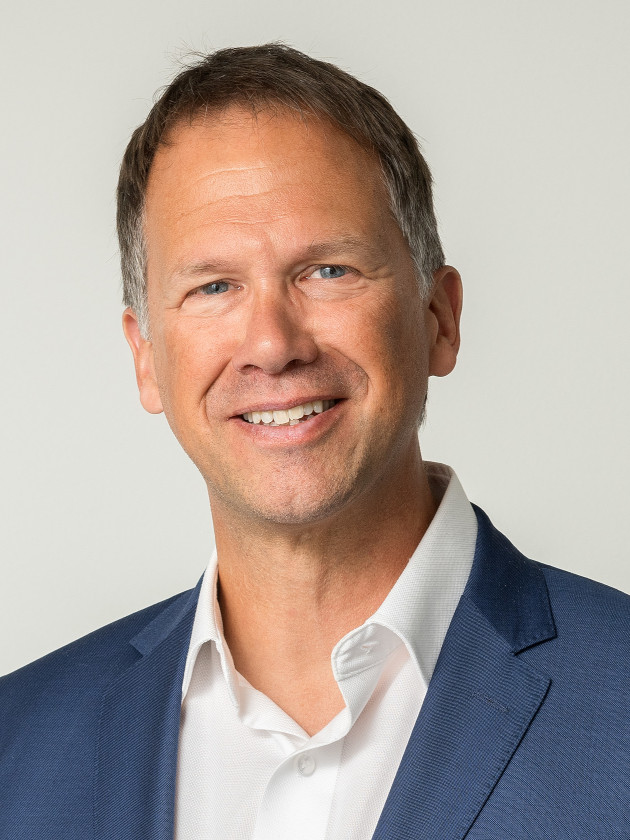
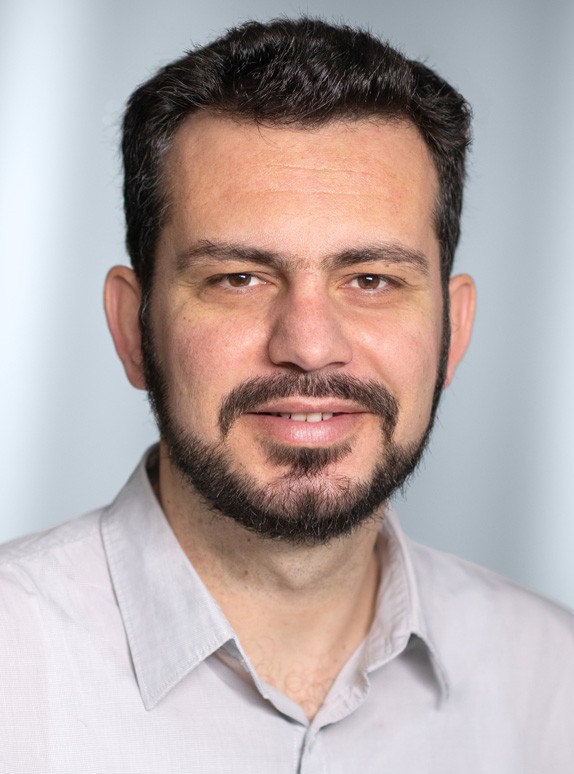
Dr. Alessia PANNESE is an Associate Professor at the University of Milan , affiliated with the College of Science and the Department of Computer Science . Her expertise spans Artificial Intelligence, Machine Learning, and Data Science. Fields of Interest: Artificial Intelligence, Machine Learning, Data Science Key Research: Multi-modal data integration, graph-based knowledge discovery Her recent publications focus on deep learning architectures , big data algorithms , and graph analytics , reflecting interdisciplinary applications in AI and database systems. Notable accolades include the ACM Best Paper Award (2020) and IEEE Rising Star Award (2021) . She advises PhD candidates in data-driven research and leads the Data Intelligence Lab , specializing in real-time analytics and scalable solutions.
Michael David König is a Lecturer at the Department of Management, Technology, and Economics at ETH Zürich, specializing in Innovation Economics within the KOF Swiss Economic Institute. His research focuses on the intersection of network theory and economics, particularly examining R&D networks, technology spillovers, and innovation dynamics. König maintains an active research profile with publications spanning economics, network science, and computer science. König's research spans multiple domains including economic network analysis, innovation economics, and technology diffusion. He has made significant contributions to understanding how firms form R&D collaborations and how knowledge flows through these networks. His work combines theoretical modeling with empirical analysis of large-scale network data, revealing patterns such as oscillatory dynamics in R&D collaboration intensity. Recent research has also addressed practical economic issues, including firm responses to the COVID-19 pandemic and factors influencing R&D investment decisions in Switzerland. His interdisciplinary approach bridges economics with computational methods, reflecting his background in both theoretical and applied network analysis. König's publication record demonstrates a strong interdisciplinary trajectory, beginning with contributions to wireless network protocols and distributed systems before focusing more intensively on economic applications of network theory. A consistent theme across his career has been the study of how networks evolve and how these structures influence outcomes in various domains, from technology diffusion to economic fluctuations. His research often employs sophisticated modeling techniques to analyze the coevolution of networks and economic behavior, with particular attention to the dynamics of knowledge creation and diffusion. König teaches Introduction to Microeconomics at ETH Zürich, as evidenced by his listing in the Autumn Semester 2025 course catalog. His office is located at LEE G 224, Leonhardstrasse 21, 8092 Zürich, Switzerland. He is affiliated with the KOF Innovation Economics research group, which focuses on innovation, technological change, and their economic implications.
Abraham Bernstein is a Full Professor of Informatics at the University of Zurich (UZH), where he serves as Head of the Dynamic and Distributed Information Systems Group and Director of the UZH Digital Society Initiative. He leads a university-wide initiative with over 180 faculty members investigating the interplay between society and digitalization. His work bridges social science foundations (organizational psychology/sociology/economics) and technical disciplines (computer science, artificial intelligence), creating a unique interdisciplinary approach to digital transformation challenges. Education: Diploma in Computer Science from ETH Zurich Ph.D. in Management with concentration in Information Technologies from MIT's Sloan School of Management Professor Bernstein's research spans the Semantic Web, data mining/machine learning, recommender systems, crowd computing, and collective intelligence. His work uniquely integrates social science perspectives with technical computer science approaches, examining how social and technical elements interact in digital systems. Recent work focuses on explainable AI, ethical decision-making with AI systems, and the societal implications of digital transformation, reflecting his commitment to addressing both technical challenges and their broader societal context. His publication record shows a strong trajectory in multimodal information retrieval, knowledge representation, and human-AI collaboration, with increasing focus on ethical considerations and societal impact of AI technologies. The research demonstrates consistent innovation in bridging technical AI capabilities with human-centered design principles, particularly in areas like explainable recommender systems and democratic applications of AI. Scientific Recognition: Nominated Digital Shaper by Bilanz magazine (2017) Professor Bernstein has supervised over 30 PhD students whose work spans semantic technologies, data mining, recommender systems, and human-AI interaction. His research group has secured significant funding for projects related to digital society, knowledge representation, and AI ethics. As Director of the Digital Society Initiative, he coordinates cross-disciplinary research across UZH's faculties, bringing together scholars from humanities, social sciences, law, economics, and STEM fields to address complex digital transformation challenges. He leads the Dynamic and Distributed Information Systems Group at UZH, which maintains strong international collaborations and contributes significantly to both theoretical advances and practical applications in information systems. The group's work has influenced standards in semantic web technologies and continues to shape discourse on responsible AI development and deployment in society.
Rui Yao is a Lecturer at École Polytechnique Fédérale de Lausanne (EPFL), affiliated with the College of Engineering (ENAC) and the Department of Civil Engineering. Additionally, he works as a Scientist in the Laboratory for Human-Oriented Mobility Eco-system (HOMES) within EPFL. His research focuses on large-scale equilibrium modeling in multi-modal transport systems, individual mobility choice modeling, and demand management strategies. Education: B.Sc. in Civil Engineering, Technion – Israel Institute of Technology Direct-track Ph.D. in Transportation Engineering, Technion – Israel Institute of Technology His research spans both theoretical and applied domains, including stochastic traffic equilibrium , multi-passenger ridesharing systems , perturbed utility models , and deep learning for choice analysis . He has contributed to advancements in data-driven route choice modeling , integrated equilibrium models for electrified logistics , and stable matching frameworks for mobility platforms . Rui Yao is affiliated with the Human-Oriented Mobility Eco-system (HOMES) lab at EPFL, which focuses on innovative transportation solutions. His work bridges theoretical modeling with real-world applications in smart mobility and transportation policy.
Matthias Grossglauser is a Full Professor at the School of Computer and Communication Sciences at École Polytechnique Fédérale de Lausanne (EPFL), where he co-directs the Information and Network Dynamics lab. He serves on the Federal Communications Commission (ComCom), Switzerland's telecommunications regulatory authority, and previously directed EPFL's Doctoral School in Computer and Communication Sciences (2016-2019). His career includes positions at Nokia Research Center (Internet Laboratory lead), AT&T Research, and EPFL (Assistant Professor). Education Ph.D. in Computer Science from Sorbonne Universités M.Sc. in Electrical Engineering from Georgia Institute of Technology Engineering degree in Communication Systems from EPFL Research Focus Grossglauser's research integrates machine learning, stochastic networks, and discrete choice models to address challenges in artificial intelligence, network science, computational social sciences, and recommender systems. His work emphasizes both theoretical foundations and practical applications, including political forecasting, climate communication, and network dynamics. Publication Trends Recent articles demonstrate strong focus on causal inference, optimal learning algorithms, and social network analysis. Dominant themes include reinforcement learning optimization, graph-based modeling, and NLP applications in political science. Methodological innovations in matrix factorization, Bayesian modeling, and stochastic processes recur throughout. Awards & Honors Fellow of IEEE and ELLIS Cor Baayen Award (1998) CoNEXT/SIGCOMM Rising Star Award (2006) Best Paper Awards: ACM COSN (2014), IEEE INFOCOM (2001) Nokia Mobile Data Challenge Winner (2012) Academic Leadership Has advised 16+ PhD students to completion and currently supervises 4 doctoral candidates. Secured research funding for projects including dynamic recommender systems, network alignment algorithms, and computational social science tools (e.g., Predikon.ch vote prediction platform). Leads the Information and Network Dynamics lab, focusing on AI-driven network analysis.
Prof. Dr. Kurt Stockinger is a Professor of Computer Science at ZHAW School of Engineering and holds a doctorate at the University of Zurich . He serves as Head of the MAS Data Science program and co-leads the ZHAW Datalab . His research focuses on Intelligent Information Systems , bridging information systems, natural language processing, and machine learning. Affiliated with the University of Zurich, he contributes to Quantum Machine Learning and Open Data Exploration initiatives. Stockinger's educational background includes a PhD in Computer Science (University of Vienna & CERN), a Master in Business Informatics (University of Vienna), and a CAS in Didactics & Methodology (ZHAW). He has taught courses in Quantum Computing , Big Data for Natural Sciences , and Data Science programs at ZHAW and University of Zurich. His research spans Data Science , Big Data , Natural Language Query Processing , Knowledge Graphs , and Quantum Machine Learning . Recent publications focus on quantum autoencoders , hybrid quantum neural networks , and prompt engineering for knowledge graph question answering. He has developed frameworks like ScienceBenchmark for real-world NL-to-SQL evaluation and NQuest for natural language query exploration. Scientific awards include the Best Paper Award at 7th Swiss Conference on Data Science (2020) He leads major projects such as DataGEMS (Data Discovery Platform, Horizon Europe) Digital Health Zurich (Clinical Innovation Lab) INODE4StatBot.swiss (NL-to-SQL Translation) GraphQueryML (Graph Database Optimization) ScienceBenchmark (NL-to-SQL Evaluation) Stockinger's work intersects with computer vision , biomedical data , and industrial applications , demonstrated through collaborations with institutions like Lawrence Berkeley National Laboratory, CERN, and University of Washington. He has contributed to establishing QuantumBasel and ZHAW Datalab as research hubs.
Dr. Anastasios Kouvelas is a Lecturer at ETH Zurich, where he serves as head of the Road Traffic Engineering research group at the Institute of Transport Planning and Systems (IVT), Department of Civil, Environmental and Geomatic Engineering. He has held this position since August 2018, succeeding Dr. Monica Menendez who moved to New York University in Abu Dhabi. Prior to joining ETH Zurich, he was a research associate at the Urban Transport Systems Laboratory (LUTS) at EPFL (2014-2018) and a postdoctoral fellow at Partners for Advanced Transportation Technology (PATH) at the University of California, Berkeley (2012-2014). Dr. Kouvelas' research focuses on modeling, simulation, optimization and traffic flow control. His work aims to develop real-time solutions based on control theory and operations research methods. The Road Traffic Engineering group develops algorithmic solutions that are components of intelligent transportation systems used in traffic control centers. Recent technological advances in autonomous vehicles have expanded their research topics as the industry seeks efficient operational solutions for autonomous mobility. They are particularly interested in extending their work to the design of advanced management strategies for urban networks that utilize connected vehicles to improve traffic operations and develop network-wide control strategies that minimize environmental impacts. His recent publications (2023-2025) demonstrate strong focus on traffic prediction using deep learning techniques, bike lane allocation impacts on urban networks, transit network resilience against disruptions, vehicle trajectory extraction from aerial recordings, and traffic control for mixed traffic systems with connected and autonomous vehicles. His work bridges theoretical developments in control theory with practical traffic engineering challenges. Scientific Awards No specific scientific awards were mentioned in the provided information. Advising and Grants Dr. Kouvelas supervises PhD and Master's students in traffic engineering and intelligent transportation systems. His research is supported by various grants including a grant from the Hong Kong Research Grant Council (Grant No. GRF 11216323) for research on traffic speed prediction. Laboratories and Teams Dr. Kouvelas leads the multidisciplinary Road Traffic Engineering research group at IVT, which consists of researchers with backgrounds in civil engineering, electrical engineering, mechanical engineering, computer science, control, and operations research. The group's work spans multiple areas including traffic flow theory, traffic operations, connected and automated vehicles, and intelligent transportation systems.