Andreas Fischer is an Ordentlicher Professor at the Fribourg School of Engineering and Architecture (HES-SO), specializing in Pattern Recognition, Machine Learning, and Document Analysis. His research focuses on handwriting recognition, graph-based methods, and applications in cultural heritage preservation and medical imaging. Education: BSc in Computer Science from Fribourg School of Engineering and Architecture Research Interests: Graph Neural Networks for automata universality analysis Hybrid systems for Vietnamese stele keyword spotting Medical image analysis (colorectal cancer, tumor budding) Large language models for post-OCR correction Key Projects: TAINA Technology (handwriting validation for tax forms) Swisscom (Swiss German to High German translation) Hasler Foundation (Vietnamese stele graph-based analysis) Publications: Over 30 peer-reviewed articles in top journals/conferences (IEEE Access, Medical Image Analysis, Pattern Recognition, etc.), with focus on graph-based methods, handwriting recognition, and medical applications. Grants & Roles: Principal Applicant for multiple industry-funded projects (TAINA, Swisscom) Co-developer of DIVA-DAF deep learning framework
Dimosthenis Pasadakis is a Research Fellow at the Institute of Computing (CI) of the Università della Svizzera italiana (USI), where he serves as the Principal Investigator (PI) of the Huawei Research Center Zürich-funded project on Directed Acyclic Graph Partitioning for Scheduling Tasks. His research focuses on graph learning, combinatorial optimization, and large-scale algorithms for clustering, anomaly detection, and data analysis. He also holds the role of Chief Operating Officer (COO) at Panua Technologies Sagl, a Lugano-based software company specializing in high-end solutions for graph analytics and optimization. His academic journey includes a PhD successfully defended in 2023, supported by the Swiss National Science Foundation (SNSF) project on Balanced Graph Partition Refinement. He has organized minisymposia at SIAM LA 24 and PASC 24, and his work has been recognized with awards such as the IEEE HPEC Outstanding Paper Award (2024) and the IEEE SDS24 Best Poster Award (2024). Key research interests include spectral clustering, graph-based fraud detection, and high-performance computing. He actively collaborates with industry through grants and maintains an academic-industrial bridge through Panua Technologies.
Prof. Gunnar Rätsch is a Full Professor in the Department of Computer Science at ETH Zürich and Deputy Head of the Institute for Machine Learning. His research focuses on developing machine learning methods for biomedical applications, including genomics, medical imaging, and clinical decision support systems. He specializes in integrating multi-omics data, spatial transcriptomics, and time-series analysis to address challenges in precision medicine and critical care. His work emphasizes ethical AI frameworks, algorithmic fairness, and robust clinical prediction models. Key research areas include: Deep learning for medical imaging and histopathology Single-cell analysis and tumor profiling Reinforcement learning for treatment optimization in ICUs Multimodal data integration for clinical applications Recent work highlights advancements in: Standardizing single-cell cytometry readouts for clinical use Developing foundation models for critical care time-series analysis Creating interpretable survival models for ICU patients His contributions span foundational machine learning theory and applied healthcare technologies, with a focus on translational research to improve clinical outcomes. Current projects include the Tumor Profiler Study for multi-omic tumor analysis and ethical frameworks for clinical AI systems.
Markus Püschel is a Professor of Computer Science at ETH Zurich, leading the Advanced Computing Laboratory. He previously served as Head of the Department of Computer Science at ETH from 2013 to 2016. Before joining ETH in 2010, he was a Professor at Carnegie Mellon University (CMU) and retains adjunct status there. He holds a PhD in Computer Science (1998) and a Mathematics Diploma (1995) from the University of Karlsruhe. His research focuses on program generation for performance, Fourier analysis, signal processing, machine learning, and compiler optimization. He pioneered the SPIRAL system for generating optimized signal processing libraries and has contributed to algebraic signal processing theory. His work bridges mathematical foundations with practical high-performance computing, emphasizing automated code generation and domain-specific languages. Research trends in his articles include causal inference on directed acyclic graphs, quantized neural network inference, and efficient compiler techniques. His work on graph signal processing and causal analysis has led to novel methods in time-series data and DAG learning. Awards: IEEE Fellow (2020), Golden Owl Teaching Award (2015), NSF Discovery Grant (2008), and multiple best paper awards. Grants/Projects: Co-PI for Making Program Analysis Fast (SNF), SPIRAL GPU projects, and collaborations with industry partners like Intel and AMD. He advises over 40 PhD and master’s students, many of whom contribute to impactful projects in compilers, machine learning, and signal processing. His lab also co-founded the Swiss Data Science Center.
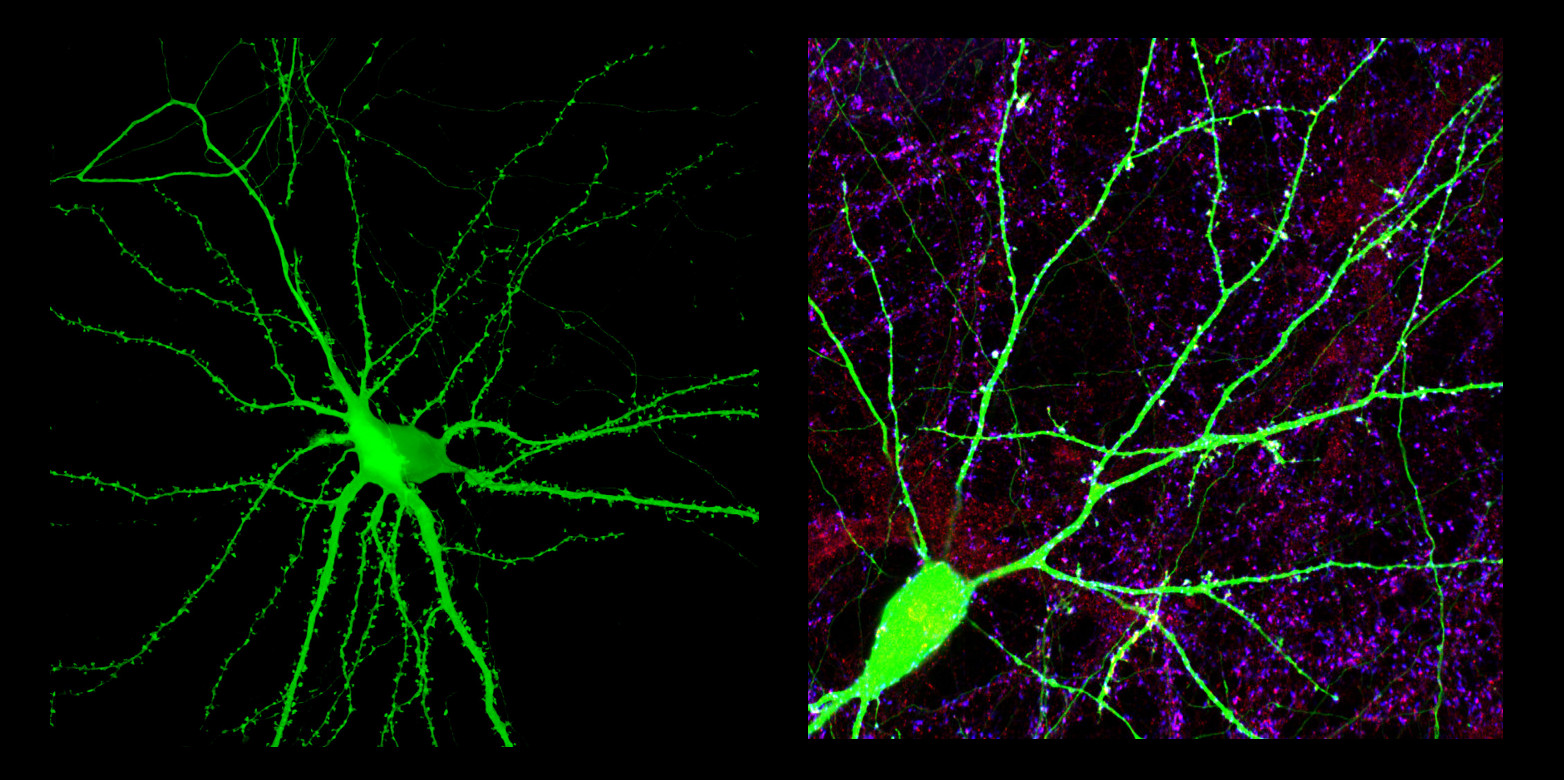
Gerhard Schratt is Full Professor and Head of the Institute for Neuroscience at ETH Zürich. His laboratory investigates molecular mechanisms of synapse development and plasticity, with emphasis on non-coding RNA regulation in neurological disorders. Research integrates molecular neurobiology with computational approaches to study microRNA functions in neuronal development, synaptic homeostasis, and stress responses. Current projects examine RNA-based therapies for neurodegenerative conditions and computational pathology platforms for digital histology. Professor Schratt's group develops AI frameworks for neurological assessment including multimodal dementia diagnosis, voice-based cognitive testing with privacy protection, and digital pathology for kidney disease. Collaborative projects with the Chan Zuckerberg Initiative explore mitochondrial regulation by microRNAs. He teaches molecular neurophysiology and neuroscience courses, supervising doctoral candidates in systems neuroscience approaches.
Kai Hormann is a full professor in the Faculty of Informatics at Università della Svizzera italiana (USI Lugano). He earned his Ph.D. in computer science from the University of Erlangen-Nürnberg in 2002 and has held positions at Clausthal University of Technology, Caltech, and the CNR in Pisa. His research focuses on mathematical foundations of geometry processing, including barycentric coordinates, subdivision algorithms, and rational interpolation. Hormann has authored over 100 publications and serves as an associate editor for journals like Computer Aided Geometric Design and Dolomites Research Notes on Approximation . In 2024, he received the prestigious John A. Gregory Award for his contributions to geometric modeling. Education : Ph.D. in Computer Science, University of Erlangen-Nürnberg (2002) Diploma in Mathematics, University of Erlangen (1997) Abitur, Leibniz-Gymnasium Bad Schwartau (1992) Research Interests : Hormann’s work bridges computer science, applied mathematics, and engineering. His current projects include interactive shape deformations, time-dependent object processing, 3D visualization, and GPU-accelerated algorithms. His research areas encompass geometry processing, computational sciences, and numerical analysis. Publications : His recent articles focus on barycentric coordinates, subdivision schemes, and surface reconstruction. Themes include transfinite coordinates, curvature continuity, and efficient interpolation methods. Awards : John A. Gregory Award (2024) Chair of SIAM Activity Group on Geometric Design (2017–2018) Advising & Grants : He has advised numerous PhD students, including work on barycentric rational curves and subdivision schemes. He has organized conferences such as the SIAM GD and GMP series, reflecting his leadership in computational geometry. Labs & Teams : Hormann is affiliated with the Dalle Molle Institute for Artificial Intelligence (IDSIA USI-SUPSI), collaborating on interdisciplinary projects in AI and geometry processing.
Cesare Alippi is a Full Professor at the Faculty of Informatics, Università della Svizzera italiana (USI), and also holds a professorship at Politecnico di Milano, Italy. He serves as a visiting Professor at Guangdong University of Technology (China) and Consultant Professor at Northwestern Polytechnic of Xi'an (China). His academic leadership extends to multiple international institutions where he has served as a visiting researcher including UCL (UK), MIT (USA), ESPCI (France), CASIA (China), A*STAR (Singapore), and University of Kobe (Japan). Professor Alippi's research interests center around graph-based learning, adaptation and learning in non-stationary environments, and intelligence for embedded, cyber-physical systems and IoT. His work bridges theoretical foundations with practical applications in sensor networks, environmental monitoring, and industrial processes. He has established significant research infrastructure including the Wireless Embedded Systems (WEmSy) Lab and the Internet of Things Lab, with notable deployments for marine environment monitoring in Queensland, Australia and the Fiji Islands, as well as rockfall and landslide monitoring systems across Italy and Switzerland. His research output shows a clear evolution toward graph-based deep learning approaches for time series analysis, anomaly detection, and spatiotemporal forecasting, reflecting the growing importance of graph neural networks in handling complex relational data in non-stationary environments. Major Awards: IEEE CIS Enrique Ruspini Meritorious Service Award (2024) IEEE CIS Outstanding Computational Intelligence Magazine Paper Award (2018) Gabor Award from International Neural Network Society (2016) IBM Faculty Award (2013) IEEE Instrumentation and Measurement Society Young Engineer Award (2004) Professor Alippi has held significant leadership roles including Past Board of Governors member of the International Neural Network Society, Past member of the Administrative Committee of the IEEE Computational Intelligence Society, and Past Vice-President for Education of the IEEE Computational Intelligence Society. He has served as Associate Editor for Proceedings of IEEE and several other prestigious journals. His research has been supported through numerous grants including an IBM Faculty Award in 2013 specifically for research on Intelligent Embedded Systems working in non-stationary environments. His research infrastructure includes the Wireless Embedded Systems (WEmSy) Lab and the Internet of Things Lab, with notable deployments including a sophisticated automatic, adaptive, sustainable and reliable wireless monitoring system for marine environments deployed in Queensland, Australia (2007) and under deployment at the Fiji Islands (2014-2015). He has also led several top-world deployments for rockfall and landslide monitoring across Italy and Switzerland since 2010, demonstrating the practical impact of his research in real-world harsh environments.
Marco Zaffalon is Professor and Scientific Director at IDSIA (Istituto Dalle Molle di Studi sull'Intelligenza Artificiale), affiliated with the Università della Svizzera italiana's Faculty of Informatics. He leads a 30-member research group on probabilistic machine learning and has published over 150 papers. Education: M.Sc. in Computer Science (Università degli Studi di Milano) Ph.D. in Applied Mathematics (Università degli Studi di Milano) Research spans probabilistic machine learning, causal AI, imprecise probabilities, and quantum computation. His work develops theoretical foundations for uncertainty reasoning and applies them to AI systems. Recent publications focus on causal inference with LLMs, counterfactual computation, and quantum decision models. Articles consistently explore intersections of probability theory, computational methods, and real-world applications like healthcare. Trends include advancing tractability in causal queries and bridging logical frameworks with machine learning. Administrative roles include co-founding Artificialy (as Chief Scientist) and directing IDSIA since 2019. He teaches courses in Causal AI, Uncertain Reasoning, and Probability.
Ola Svensson is an Associate Professor at the School of Computer and Communication Sciences, EPFL. His research focuses on approximation algorithms, combinatorial optimization, computational complexity, and scheduling. He has been supported by grants including the ERC Starting Grant "OptApprox" (2014-2019), SNF grants, and the ERC Consolidator Grant "POTCO" (2023-). He teaches courses such as Advanced Algorithms and Approximation Algorithms and Hardness of Approximation. Education: PhD from IDSIA - Universita della Svizzera italiana (2009) and Master's from Uppsala University (2005). Research Interests: Design and analysis of approximation algorithms for NP-hard problems, scheduling, and computational complexity. He explores limitations of approximation techniques through hardness results and contributes to theoretical computer science. Publications span clustering, scheduling, and graph problems like the Traveling Salesman Problem. Recent work includes learning-augmented algorithms and robust optimization. Awards: I&C teaching award and best paper awards at FOCS (2017) and STOC (2018). Over a dozen PhD students advised, many entering postdocs or industry roles. Labs/Teams: Part of the theory group at EPFL, collaborating on academic projects and course development.
Prof. Ingo Scholtes is a Full Professor of Machine Learning for Complex Networks at Julius-Maximilians-Universität Würzburg's Center for Artificial Intelligence and Data Science (CAIDAS). He holds a doctorate in computer science and mathematics from the University of Trier and has held roles including SNSF Professor at the University of Zurich, Full Professor at Bergische Universität Wuppertal, and Senior Assistant at ETH Zürich. His research focuses on higher-order graph analytics for temporal networks, machine learning, and computational social science. Education: PhD in Computer Science (University of Trier, Germany), Postdoctoral Research at ETH Zürich (2011–2016), and prior roles at Karlsruhe Institute of Technology and CERN. Research Interests: Machine learning on graphs, temporal network analysis, higher-order network models, and their applications in software engineering and social systems. He develops open-source tools like pathpy and git2net for network analysis. Recent Work: Focuses on causality-aware graph neural networks, temporal graph isomorphism, and network science applications in AI. Recent articles include studies on temporal network dynamics, path prediction, and Bayesian inference of network transitions. Awards: SNSF Professorship (2018), Junior-Fellowship (2014), and German Academic Scholarship Foundation (2004-2005). Active in editorial roles for EPJ Data Science and leadership in GI's Computational Social Science working group.
Paul Büschl is a doctoral candidate in the Department of Quantitative Biomedicine at the University of Zurich , advised by Prof. Dr. Bjoern Menze and Prof. Dr. César Nombela-Arrieta. His research focuses on developing machine learning algorithms for biomedical applications, emphasizing heterogeneous graph learning, causality, unsupervised/self-supervised learning, and 3D medical image segmentation. Before his PhD, he earned a Master's in Electrical Engineering and Information Technology from the Technical University of Munich (TUM) , specializing in medical engineering and IT security. His work bridges healthcare and technology, with contributions to antibody engineering and neurovascular graph analysis. His current projects explore interdisciplinary challenges in biomedical AI, including applications in oncology and neuroscience. Despite no listed awards, his publications highlight innovative approaches in graph-based machine learning and biomedical data analysis. Paul collaborates closely with Prof. Menze’s team and contributes to projects like the Whole Brain Vessel Graphs benchmark dataset. He has not yet advised students or reported grants in the provided texts.
Eric Taillard is a Full Professor and Head of the Cross-functional Skills Group 'Optimization & Sustainability' at the School of Engineering and Management of the Canton of Vaud (HES-SO), part of the University of Applied Sciences and Arts Western Switzerland (HES-SO). He holds degrees in Computer Science, Engineering, and Production Management from HES-SO institutions. His research focuses on combinatorial optimization, metaheuristics, and algorithm design, with notable contributions to the Travelling Salesman Problem (TSP) and automated map labeling. Education: BSc in Computer Science and Communication Systems MSc in Engineering (Algorithms and Data Structures) MA in Production and Logistics Management Key Projects: Big Data in Combinatorial Optimization (2017–2020): Explored optimization techniques for large-scale problems. Parallel Computing on GPU Clusters (2010–2012): Enhanced combinatorial optimization via GPU parallelization. Automated Label Placement (2007–2008): Developed the PAL library for efficient cartographic labeling. Research Interests: Metaheuristics, TSP algorithms, POPMUSIC framework, algorithmic efficiency, and applications in logistics and cartography. His work has been published in journals like the EURO Journal of Operational Research and presented at Metaheuristics International Conferences. He leads interdisciplinary teams and collaborates with academic and industrial partners globally.
Prof. Alexandros Kalousis holds the position of Ordinarius HES Professor at the Geneva School of Economics and Management (HES-SO). His primary affiliation is within the Department of Management Information Systems under the School of Economics and Services. His research focuses on machine learning, data mining, and their applications in biomedical systems, cybersecurity, and generative modeling. Key projects include SimGait (SNSF-funded), which develops neuromechanical models for pathological gait analysis using machine learning, and RAWFIE (EU-funded), creating a mixed network testbed for autonomous vehicle experimentation. He has also led projects on time series forecasting, olfactory modeling for perfume creation, and metric/kernel learning optimization. Notable contributions span graph generative models like DGAE and GLAD, cybersecurity implications of LLMs, and reproducible indoor positioning systems. His work integrates theory-driven models with deep learning, emphasizing interpretability and extrapolation capabilities. Research collaborations include EPFL's Biorobotics Lab, Geneva University Hospitals, and industry partners like Firmenich. Total funding exceeds CHF 3M across projects like SimGait (CHF 2.1M) and RAWFIE (CHF 623K).
Mateo Dujić is a PhD student at the Database Technology Group (DBTG) of the Department of Informatics, University of Zürich, joining in September 2023. Advisors: Prof. Dr. Michael Böhlen and Prof. Dr. Sven Helmer Research Focus: Development of algorithms for Directed Acyclic Graphs (DAGs), with a core application in the Software Heritage Graph , emphasizing graph traversal and optimization techniques Teaching: Lecturer for Database Systems (Spring 2024 and Spring 2025) Education: B.Sc. in Mathematics (University of Zagreb, 2021), followed by an M.Sc. in Computer Science and Mathematics (University of Zagreb, 2023). His work intersects computer science and mathematics , with technical expertise in graph theory and database systems .
Haozhe Zhang is a Postdoctoral Researcher in the Data Systems and Theory (DaST) group at the Department of Informatics, University of Zurich, supervised by Prof. Dan Olteanu. His career bridges theoretical research and practical implementation in database systems. Education: DPhil in Computer Science, University of Oxford (2023) MSc in Computer Science, University of Oxford (2017) BSc in Computer Science, University of Nottingham (2016) Research Focus: Haozhe's work centers on database theory, emphasizing incremental view maintenance and cardinality estimation . His research explores efficient algorithms for dynamic relational data, theoretical foundations of conjunctive queries, and robust cardinality estimation techniques like LpBound. Publications & Trends: His contributions include theoretical analyses of conjunctive queries under updates, practical systems like F-IVM for analytics over evolving data, and worst-case optimal algorithms for triangle counting. Recent work at SIGMOD 2025 and ICDT/AMW workshops highlights advancements in dynamic query evaluation and cardinality estimation guarantees. Scientific Recognition: Best Paper Award, SIGMOD 2025 Best Paper Award, ICDT 2019 Teaching Contributions: Instructor, Foundations of Data Sciences (UZH, Fall 2024) Teaching Assistant for Foundations of Data Sciences (UZH, Fall 2020–Fall 2023), Efficient Algorithms (UZH, Spring 2021–Spring 2025), and Modern Data Analytics (UZH, Fall 2023).