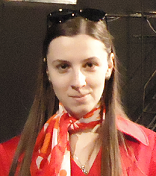
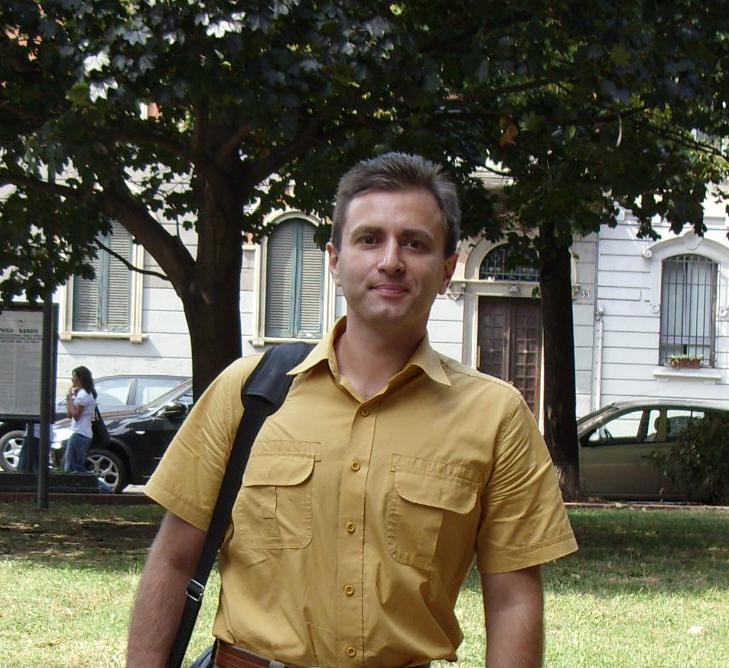
Dr. Onet-Marian Zsuzsanna is a Lecturer in the Department of Computer Science at Babes-Bolyai University in Cluj-Napoca, Romania. Her research focuses on applying machine learning techniques to software engineering challenges, particularly software defect prediction and restructuring. Academic Rank: Lecturer Affiliation: Babes-Bolyai University Department: Computer Science Email: zsuzsanna.onet@ubbcluj.ro Research Interests : Dr. Marian specializes in developing machine learning models (clustering, association rules, reinforcement learning) for software defect detection, package-level restructuring, and test order optimization. She also explores applications of Formal Concept Analysis in text summarization and music pattern discovery. Recent Publications highlight her work in source-code embeddings, unsupervised learning for software analysis, and comparative studies of online/traditional learning environments. Her methods often integrate domain-specific metrics and AI-driven optimization. Contact : zsuzsanna.onet@ubbcluj.ro | Office: Teodor Mihaly street, Room 440
Mirel Cosulschi is an Associate Professor in the Department of Computer Science at the University of Craiova, Romania, where he has been a faculty member since 1997. He is affiliated with the Faculty of Automation, Computers and Electronics and teaches courses in Graph Algorithms, Software Engineering, Web Data Management, and Fundamentals of Programming at both undergraduate and master's levels. PhD in Computer Science, University of Craiova, 2006 MSc in Artificial Intelligence, University of Craiova, 1998 BSc in Computer Science, University of Craiova, 1997 His research interests include algorithms and complexity, software engineering, web data management, semantic web, distributed programming, and cloud computing. He has supervised numerous BSc and Master’s theses focusing on web applications, mobile development, data processing, and software modeling. His teaching emphasizes algorithmic thinking, structured programming, and modern software development practices. While no formal scientific publications are listed, his academic contributions include authored textbooks such as Algoritmica grafurilor si aplicatii (2014) and Practica programarii in C (2014), indicating active engagement in curriculum development and educational materials. He is involved with the MSDN Academic Alliance and utilizes tools like Windows Installer MSI and Advanced Web Ranking. Mirel Cosulschi has advised over 100 students in thesis projects related to software development, data management, and web technologies. Although no external grants or awards are mentioned, his long-standing academic career and consistent supervision reflect sustained scholarly activity. He maintains a professional web presence at http://inf.ucv.ro/~mirel and can be contacted via email at mirelc@central.ucv.ro . He is currently active in teaching and academic supervision, with no indication of retirement or part-time status.
Assoc. Prof. Balázs Vass is an Associate Professor at University Babeș-Bolyai (Cluj-Napoca, Romania) and holds a Marie Skłodowska-Curie Postdoctoral Fellowship for his QoSeRM project. Previously, he conducted postdoctoral research at Budapest University of Technology and Economics (BME) under Gábor Rétvári and visited institutions in Vienna, Jerusalem, and Bucharest. His research focuses on network resiliency, programmable packet scheduling, and discrete optimization in backbone networks. Education: BSc/MSc in Mathematics/Applied Mathematics (ELTE University), PhD in Future Internet Research at BME under János Tapolcai. Postdoctoral work included collaborations with Stefan Schmid (TU Berlin), David Hay (Hebrew University), and Costin Raiciu (UPB). Research priorities include disaster-aware network design, SRLG-disjoint path algorithms, and compiling packet programs for reconfigurable switches. Recent grants include a Romanian Young Teams grant (2025) and a Marie Curie fellowship (2024-2026). Teaching responsibilities at UBB include courses on algorithms, data structures, and communication networks. Supervises PhD students Zoltán Tasnádi and Nándor Bándi, with student advisees winning multiple awards at national informatics competitions. Key projects: SMR-A-DRT (disaster-resilient routing), QoSeRM (QoS optimization), and contributions to frameworks like eFRADIR for network resilience. Active in conference organizing (INFOCOM TPC since 2023) and journal reviewing (ToN, TNSM).
Mihai Mocanu is a Lecturer at the University of Craiova, affiliated with the Faculty of Automatic Control, Computers and Electronics. His work spans machine learning, educational data mining, and medical imaging technologies. Research Interests: He focuses on developing interpretable machine learning models, particularly using decision trees for educational data mining and GIS analysis. His work also includes designing e-learning systems with personalized recommendation workflows and enhancing engagement through data-driven approaches. Notable Contributions: Mihai has pioneered segmentation techniques for 3D medical imaging, created adaptive learning systems with stacked models, and explored social network impact on education. His research integrates pedagogical agents and usability evaluation frameworks in e-learning platforms.
Adriana Sirbu is a Professor at the Department of Telecommunications, Technical University of Iasi. She holds a Doctorate in Engineering (Electronics) and has conducted research at institutions in Italy (Politecnico di Torino), the UK (Southampton Institute), and France (Université de Lille). Her expertise spans power electronics, coding theory, and hybrid systems modeling. Key research areas include power converter design, error-correcting codes, and MATLAB/Simulink-based simulation tools. She has authored over 50 scientific articles and three books, including Proiectarea asistata de calculator a convertoarelor electronice de putere . Her work emphasizes energy-efficient control systems and robust Fourier analysis in dynamic systems. She is affiliated with the I.C.S.I.T.E. research institute in Bucharest. Research interests include computer-aided design of electronic circuits, hybrid system theory, and optimizing power converter performance. Her publications span journals like European Transactions on Electrical Power Engineering and conferences such as IMACS and EPE. Notable contributions include hybrid rectifier designs and genetic algorithm applications in sensor networks and robotics. She has collaborated internationally on projects involving bond graph frameworks and nonlinear control systems.
Dr. Popirlan Claudiu Ionut is a Lecturer in the Computer Science Department at the Faculty of Exact Sciences, University of Craiova, Romania. He has been actively involved in academic and research activities since 2004, progressing from Assistant Lecturer to Assistant Professor and currently serving as a Lecturer. He holds a Ph.D. in Computer Science from the University of Pitesti and has extensive teaching experience in advanced programming, databases, GIS, and software engineering. His educational background includes: Ph.D. in Computer Science, University of Pitesti (2005–2009) Master in Artificial Intelligence, University of Craiova (2003–2004) B.Sc. in Computer Science, University of Craiova (1999–2003) Secondary Education, Fratii Buzesti National College (1995–1999) Dr. Popirlan's research is centered on Artificial Intelligence, with a strong emphasis on Mobile Agents and Multiagent Systems. His work explores knowledge representation, processing, and management using agent-based architectures, with applications in robotics, contact centers, and virtual organizations. He has also contributed to web-based 3D visualization and modeling in mechanical engineering. His technical expertise spans Java technologies, databases, and software engineering. The analysis of his recent publications reveals a consistent focus on mobile agents for knowledge processing, distributed systems, and intelligent control. Themes include agent architectures, knowledge base management, pathfinding algorithms, and simulation systems, indicating a deep and sustained research trajectory in autonomous and intelligent software systems. He has received research grants such as TD CNCSIS and CNCSIS IDEI, where he served as director and team member respectively, focusing on mobile agents and knowledge management. His editorial roles include Scientific Referent for INFO-PRACTIC and Editorial Secretary for the Annals of the University of Craiova. Dr. Popirlan is an active member of the academic community, affiliated with IEEE, IEEE Computer Society, ACM, IBM Academic Initiative, Microsoft Faculty Connection, and the Romanian Mathematical Society. He is also part of the Research Center of Artificial Intelligence in Craiova.
Mihoc T. D. serves as a Lecturer at Babeș-Bolyai University in Cluj Napoca, Romania, teaching Artificial Intelligence, Computer Graphics, and Quantum Computing. He earned his Ph.D. in Computer Science from the same institution in 2011 with a dissertation on evolutionary approaches to game-theoretic equilibria under Prof. D. Dumitrescu. His academic career includes prior service as an Assistant Professor (2012-2017) and foundational experience as a Mathematics and Computer Science Teacher (2000-2008). His educational background features: Ph.D. in Computer Science, Babeș-Bolyai University (2011) Research centers on optimization and game theory, with evolutionary algorithms for Nash equilibrium detection in large-scale games. His work extends to quantum computing implementations, computer graphics applications, and human-computer interaction systems for education and healthcare. Recent publications demonstrate a strategic pivot toward educational technology, examining student perceptions of AI ethics and learning behavior analytics in computer science education. Publication trends reveal a clear evolution: 2010-2017 focused on computational game theory foundations (Cournot oligopolies, equilibrium refinements), while 2023-2025 articles emphasize AI education (ethics perception, assessment techniques, entrepreneurship training). This trajectory shows deliberate expansion from theoretical game theory to applied educational technology solutions. No scientific awards were documented in available sources. Information regarding student advising, research grants, and laboratory affiliations was not provided in the source material. His current teaching responsibilities include course delivery, seminars, and laboratory sessions across three advanced computing domains.
Professor Anna Volodymyrivna Bakurova is a distinguished academic at Zaporizhzhia Polytechnic University, serving as Professor of the Department of Systems Analysis and Computational Mathematics within the Faculty of Computer Science and Technologies. With a Doctor of Economics degree and extensive experience since 2015 (and as adjunct faculty from 2004-2015), she has established herself as a leading expert in mathematical modeling and socio-economic systems analysis. Zaporizhia State Pedagogical Institute (1985): Mathematics and Physics, Teacher of Mathematics and Physics Zaporizhia State University (1999): Finance, Economist Classical Private University (2015): Systems Software, Programming Engineer Professor Bakurova's research focuses on artificial intelligence methods, modeling of socio-economic processes, self-organization of socio-economic systems, and reflexive management. Her work bridges computer science with economic applications, creating sophisticated models for complex systems analysis and decision support. She has developed innovative approaches to fuzzy logic, ontology modeling, and energy consumption analysis in industrial settings. Her recent publications reveal a strong emphasis on practical applications of theoretical models, particularly in Ukraine's current context. She has made significant contributions to war impact analysis, post-conflict reconstruction modeling, and economic resilience during crisis periods. Her work demonstrates a consistent trajectory from theoretical mathematical models toward increasingly applied research addressing Ukraine's contemporary challenges. Professor Bakurova teaches systemic analysis of socio-economic processes, artificial intelligence methods, time series analysis, methodology and organization of scientific research, intelligent decision support systems, and risk analysis of complex systems. Her teaching reflects her interdisciplinary approach, connecting theoretical foundations with practical applications. Since 2012, she has served on specialized academic councils related to mathematical methods and information technologies in economics at both Classical Private University and Dnipropetrovsk National University. Her professional activities demonstrate deep engagement with both academic governance and practical applications of her research.
Prof. Violeta Leoreanu Fotea is a Professor at the Faculty of Mathematics, Al.I.Cuza University in Iasi, Romania. She has held this position since 1994, after graduating with merit in Mathematics in 1993 and earning her Ph.D. from Babes Bolyai University in 1998. Her research focuses on hyperstructures, fuzzy mathematics, algebra, and their applications in combinatorics and biology. She has received notable awards, including the Grigore Moisil Award (2011) and the 2024 Diploma of Excellence. Education: BSc in Mathematics (1993), Ph.D. in Hypergroup Theory (1998, supervised by Prof. Ioan Purdea). Research Interests: Algebraic hyperstructures, fuzzy sets, lattice theory, and applications in genetics and decision-making systems. Grants & Visits: Multiple grants in Italy, NATO fellowships, and visiting professorships at universities in Italy, Canada, Thailand, and Turkey. Organized conferences like the 14th AHA Conference (2020). Her work includes over 100 publications on hypergroups, fuzzy hyperrings, and applications in combustion modeling. She is an editor for journals like the Italian Journal of Pure and Applied Mathematics and has authored textbooks on Galois theory and module theory.
Bogdan Mursa serves as a Lecturer in the Department of Computer Science at the Faculty of Mathematics and Computer Science, Babeş-Bolyai University in Cluj-Napoca, Romania. His academic profile centers on complex networks research with specialized expertise in network motifs, evidenced through extensive publications spanning theoretical foundations to biological applications. His primary research focuses on network motifs as fundamental building blocks for understanding complex systems, with investigations into motif-topology correlations, dynamic flow across network layers, and efficient detection methodologies. This work integrates graph theory, machine learning, and high-performance computing to address challenges in community detection, node selection, and multi-scale network analysis. His research bridges theoretical network science with practical applications in biological systems and rehabilitation technology. Analysis of his publication trajectory (2014-2024) reveals evolving methodological sophistication: from early biomechanical applications (tongue tracking for stroke rehabilitation) to advanced motif-centric frameworks. Recent work emphasizes evolutionary algorithms for network generation (2024), automated model training techniques (2023), and ant colony social behavior modeling (2022), demonstrating consistent innovation in motif-based network analysis while expanding into interdisciplinary domains. No scientific awards were documented in the provided materials. Available information does not specify graduate student supervision, research grants, or collaborative projects. His current work appears centered on algorithmic development for network motif applications across computational and biological domains, with emerging exploration of automated techniques in model training.
Adriana Birlutiu is a Lecturer in the Computer Science Department at 1 December 1918 University of Alba Iulia , Romania. Her expertise lies in machine learning, computer vision, bioinformatics, and transfer learning, with a recent focus on porcelain-industry optimisation. Education Ph.D., Radboud University Nijmegen, Netherlands (2011) M.Sc., Babeș-Bolyai University of Cluj-Napoca & University of Lorraine (Erasmus), 2005 B.Sc., Babeș-Bolyai University of Cluj-Napoca, 2004 Research Interests Adriana's research spans machine learning , deep learning , computer vision , and bioinformatics . She has contributed to preference learning, domain adaptation, protein–protein interaction prediction, and automated quality control in porcelain manufacturing. Her recent projects integrate deep neural networks with industrial computer-vision systems to detect defects and recognise characters on ceramic surfaces. Publication Trends Across 15 recent publications (2010-2019), Adriana has consistently explored transfer learning , multi-task learning , and Bayesian methods . Articles cluster around two major axes: biomedical applications (protein networks, cancer relapse prediction, respiratory-motion modelling for radiotherapy) and industrial AI (porcelain defect detection, character recognition). The work shows a clear evolution from theoretical machine-learning foundations to practical, domain-specific implementations. Grants & Projects SIVAP (2016-2018): Intelligent ML & computer-vision system for porcelain manufacturing optimisation, UEFISCDI PN-III-P2-2.1-BG-2016-0333. CMRCC (2017-2018): Computational Models for Reproducing Ceramics Colors, UEFISCDI PN-III-P2-2.1-PED-2016-1835. Student Supervision & Mentoring Adriana has supervised more than 25 undergraduate and master’s theses. Her students have won multiple awards at national conferences such as In-Extenso and SCCSS-IEECC , covering topics from automated defect detection to web applications for academic scheduling. Teaching Responsibilities She teaches courses including Machine Learning , Mathematical Software , Fundamental Algorithms , Object-Oriented Databases , and Modelling and Simulation at both undergraduate and master levels.
Paul Diac serves as an Assistant Professor at the Faculty of Computer Science, Alexandru Ioan Cuza University of Iași, Romania. His office is located in room C414b. His research focuses on Natural Language Processing and Web Service Composition, with significant contributions during his PhD work. The QuoVadis project (2013-2014) involved comprehensive annotation of a Romanian novel, including 24,636 entities, 22,301 referential relations, 227 kinship relations, 229 affect relations, and 298 social relations. Dr. Diac teaches multiple advanced computer science courses including Algorithm Design (offered spring 2021-2025), Multiprocessor Programming (fall 2021-2024), Graph Algorithms (fall 2020-2024), and Competitive Programming. His teaching spans both theoretical and practical aspects of computer science. His scholarly work appears in repositories on GitHub, with projects like WebServiceComposition (focusing on automatic web service composition models) and QuoVadis (entity and relation annotation system). These repositories contain Java and C implementations of his research work.
Liana Stanescu is a Professor at the Faculty of Automatic Control, Computers and Electronics at the University of Craiova, Romania. Her research spans interdisciplinary domains at the intersection of computer science and medical technology. Email: liana.stanescu@ucv.ro Her research interests focus on artificial intelligence applications in software engineering and medical imaging, including: Automated testing frameworks Deep learning for medical image classification Graph-based volumetric segmentation techniques Comparative database analysis Recent publications highlight trends in AI-driven testing methodologies, hybrid medical-educational systems, and advanced database architectures. Key technologies explored include Petri Nets for dynamic system modeling and LiFi communication protocols. No formal scientific awards are publicly documented. She has developed practical tools for hospital automation, educational platforms, and medical data analysis systems.
Mihai V. Micea is a Professor and Head of the Department of Computer and Information Technology at the Politehnica University of Timisoara. He also serves as Director of the CCCTI Research Center and Coordinator of the DSPLabs. With a B.Sc., M.Sc., and Ph.D. (Cum Laude) from Politehnica University of Timisoara, he has been a faculty member since 1996. His research focuses on intelligent robotic environments, energy management, embedded systems, and real-time hardware/software systems. He has supervised 4 completed PhD theses and currently oversees multiple doctoral candidates. Micea has authored over 125 publications, 3 patents, and managed over 50 R&D projects worth €1.88M. His awards include the 'Eminent Young Researcher of Timisoara' (2006) and the IEEE Outstanding Reviewer Distinction (2017). Education: B.Sc. in Computer Engineering (Politehnica University of Timisoara, 1995) M.Sc. in Computer Engineering (Politehnica University of Timisoara, 1996) Ph.D. in Computer Engineering (Politehnica University of Timisoara, 2005) Habilitation Degree (2015) Research Interests: His work spans intelligent robotic systems, energy optimization, signal processing, and real-time embedded systems. Key areas include cyber-physical systems, sensor networks, and secure IoT communication protocols. His recent projects include RoNaQCI (Quantum Communication Infrastructure) and TEEFIOS (Time-Efficient Framework for Smart Devices). Grants & Projects: As Principal Investigator/Manager, he has led 29 projects with total funding exceeding €1.88M. Notable projects include CloudPUTing (High-Performance Cloud Platform) and MELISSEVS (Robotic-Sensor Collaboration Models). Awards & Recognition: 2006: Eminent Young Researcher of Timisoara (ANCS) 2017: IEEE T-IM Outstanding Reviewer Labs & Teams: Founder and Coordinator of DSPLabs (Digital Signal Processing Laboratories), focusing on real-time systems and smart sensing. Active in IEEE SSIT Romanian Chapter (2013–2022) and international conference organization (e.g., IEEE ROSE 2014).
Radu MICULESCU is a Professor in the Department of Mathematics and Computer Science at the Faculty of Mathematics and Computer Science, Transilvania University of Brașov. His research focuses on fractal geometry, Lipschitz functions, and iterated function systems (IFS). Notable contributions include studies on Hutchinson-Barnsley fractals, Lipschitz spaces, and invariant measures of fractal systems. He has authored influential works such as the book Lipschitz Functions (2019, Springer), which explores Lipschitz analysis in depth. His research interests emphasize theoretical aspects of fractal interpolation, metric space dynamics, and operator theory. Recent work includes advancements in generalized IFS frameworks, fuzzy fractal structures, and applications of Markov-type operators to fractal measures. MICULESCU’s publications span over three decades, with key contributions in Proceedings of the American Mathematical Society , Journal of Mathematical Analysis and Applications , and Annales Academiae Scientiarum Fennicae . His work bridges pure mathematics with geometric modeling, offering foundational insights into fractal geometry and functional analysis. He collaborates on topics such as Lipschitz function extensions, invariant measures, and fractal surface interpolation. His research often emphasizes the interplay between topology, metric spaces, and algebraic structures in fractal systems.