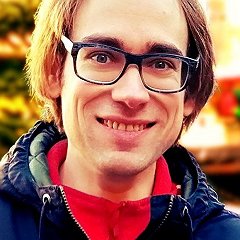
Andreas C. Schneider is a researcher at the Max Planck Institute for Dynamics and Self-Organization in Göttingen, Germany. His work focuses on understanding the fundamental principles of intelligence through the lens of physics, neural networks, and information theory. Key research questions include how intelligence emerges from simple components, the interplay between memory and computation in neural systems, and the role of locality constraints in shaping neural structures. His research combines information-theoretic measures to analyze the development of structure and information flow in neural networks, aiming to uncover biases and improve the safety of AI applications. Recent work introduces locally learning neurons via information-theoretic rules. Deep Learning for Computer Vision (Winter 2022/23) Machine Learning (Summer 2022) Physics of Complex Systems (Winter 2019/20) Physics preparatory course for life sciences (Fall 2019) Scientific computing (Summer 2019) His recent publications emphasize interpretable neural learning, partial information decomposition, and complexity metrics. Despite no explicit awards listed, his work targets critical challenges in AI safety and neural computation.
Dr. Abdullah Makkeh is a Senior Scientist at the University of Göttingen's Department of Data-driven Analysis of Biological Networks, headed by Michael Wibral, and a Guest Scientist at the Max Planck Institute for Dynamics and Self-Organization in Göttingen under Viola Priesemann's Complex Systems Theory group. Previously, he served as a Postdoc at the University of Tartu in both Theoretical Computer Science (Dirk Oliver Theis) and Computational Neuroscience (Raul Vicente) groups. Education: PhD in Informatics (2018, University of Tartu, Supervisor: Dirk Oliver Theis) MSc in Mathematics (2013, Lebanese University, Supervisor: Bassam Mourad) BSc in Mathematics (2011, Lebanese University) His research focuses on extending information theory to study computation in intelligent systems like the brain and artificial neural networks (ANNs). He has developed interpretable information-theoretic learning rules for ANNs (Makkeh et al., 2025) and analyzed reinforcement learning agents to reveal emergent computation mechanisms (Engel et al., 2022; Ehrlich et al., 2023). Current work applies these methods to enhance large language model (LLM) interpretability. His publications span information-theoretic frameworks, predictive coding, and neural oscillation analysis, with a 2024 Royal Netherlands Academy of Arts and Sciences (KNAW) recognition. He co-teaches courses in Bayesian Inference, Information Theory, and Discrete Mathematics, and organizes annual workshops on information theory in computational neuroscience. Scientific Awards: Royal Netherlands Academy of Arts and Sciences (KNAW) (2024) Dr. Makkeh contributes to open-source research tools via GitHub and collaborates with interdisciplinary teams across neuroscience, computer science, and mathematics. His work bridges theoretical foundations with applied machine learning through rigorous mathematical frameworks.
Timo Kaiser is a doctoral researcher at the Institute of Information Processing (TNT) within the Faculty of Electrical Engineering and Computer Science at Leibniz University Hannover. He has been working towards his Dr.-Ing. degree since May 2020, conducting research in computer vision with a focus on object detection and tracking systems. His educational background includes a Master of Science in Mechatronics from Leibniz University Hannover, where he focused on digital image processing. His master's thesis addressed the multiple people tracking problem using Conditional Random Fields. His undergraduate studies emphasized robotics. Kaiser's research interests span object detection, multiple object tracking, and person re-identification, with recent work extending into uncertainty quantification, biomedical image analysis, and neural network optimization. His projects include Multiple People Tracking and GreenAutoML4FAS, demonstrating both theoretical and applied research directions. Analysis of his publication record reveals a strong focus on advancing multiple object tracking methodologies, with recent work (2023-2025) expanding into uncertainty quantification, cell tracking for biomedical applications, and novel neural network architectures. His research shows increasing sophistication, moving from traditional tracking algorithms to incorporating deep learning and uncertainty modeling. As a researcher actively contributing to the computer vision community, Kaiser has established collaborations with prominent researchers like Bodo Rosenhahn and has published in top-tier venues including ICML, ICLR, ICCV, and IEEE Transactions. His GitHub activity demonstrates commitment to reproducible research with code repositories supporting his publications.
Oliver Baumann is a doctoral student and research associate at the University of Bayreuth , affiliated with the Chair of Data Modeling and Interdisciplinary Knowledge Generation and the Excellence Cluster "Africa Multiple." He studied computer science at Ludwig Maximilian University of Munich and completed his master's thesis at the Technical University of Munich under the supervision of Prof. Dr. Jürgen Pfeffer and Prof. Dr. Mirco Schönfeld. Current research focuses on contextualized ontologies, natural language processing, and data mining Applies methods like metadata mining, social network analysis, and topic modeling Specializes in linking and visualizing latent structures in research datasets His recent publications highlight trends in knowledge graphs, data management systems, and recommendation algorithms. Key themes include complex network metrics (2024), interdisciplinary data integration (2022), and serendipity in recommendation systems (2022). Earlier work (2013) explored route optimization using external data sources. Oliver contributes to the Excellence Cluster "Africa Multiple" through research on metadata mining and knowledge generation. Contact: oliver.baumann@uni-bayreuth.de
Prof. Dr. Fatih Gedikli is a full-time Professor of Artificial Intelligence and Big Data at the Institute of Computer Science, Ruhr West University of Applied Sciences . His academic work spans software engineering, web engineering, and applied artificial intelligence, with a focus on recommendation systems . Key research areas: Recommender Systems , Big Data Analytics , Natural Language Processing , Deep Learning Contribution: Development of AI-based data pipelines for unstructured data analysis from news, social media, and scientific publications Entrepreneurial Activities : Co-founder and Co-CEO of graphworks.ai , a German AI startup offering student internships. Regular speaker at workshops and keynotes, including events on entrepreneurship and sustainable supply chains.
Dr. Christoph von Tycowicz serves as Head of the Research Group "Geometric Data Analysis and Processing" at the Zuse Institute Berlin (ZIB), within the "Visual and data-centric computing" department of the "Mathematics of Complex Systems" division. His research bridges advanced mathematical theory with practical applications in medical imaging, biomechanics, and cultural heritage analysis. He leads multiple interdisciplinary projects connecting mathematics, computer science, and biomedical engineering, with funding from major research initiatives. Dr. von Tycowicz earned his doctoral degree from Freie Universität Berlin in 2014 with a dissertation titled "Concepts and Algorithms for the Deformation, Analysis, and Compression of Digital Shapes" under the supervision of Konrad Polthier. His educational background established the foundation for his current work in geometric data analysis and computational shape modeling. His primary research interests center on Geometric Data Analysis , Shape Analysis , and Manifold-valued Data Processing . He develops mathematical frameworks for analyzing complex shapes in medical imaging, biomechanics, and cultural heritage applications. His work bridges differential geometry with machine learning to create robust methods for shape comparison, classification, and prediction. Dr. von Tycowicz has made significant contributions to Riemannian statistical shape modeling and geometric deep learning, with applications spanning knee osteoarthritis assessment, Alzheimer's disease progression analysis, and archaeological artifact analysis. Analysis of his publication trajectory reveals a sophisticated evolution from foundational geometric methods toward integrated approaches combining differential geometry with deep learning. His recent work increasingly focuses on manifold-valued graph neural networks, shape-based disease grading systems, and longitudinal analysis of anatomical changes. There's a clear trend toward clinical translation, with growing emphasis on applying these methods to specific medical problems like osteoarthritis assessment using data from the Osteoarthritis Initiative and Alzheimer's disease progression modeling. Dr. von Tycowicz has received significant recognition for his contributions: Best Paper Honorable Mention Award @ Eurographics (2016) Best Paper Award (2020) Student Travel Award (2020) Special Mention @ ICLR Computational Geometry & Topology Challenge (2022) As a mentor, Dr. von Tycowicz has supervised doctoral and master's students including Felix Ambellan (doctoral thesis on Efficient Riemannian Statistical Shape Analysis with Applications in Disease Assessment) and Martha Paskin (master's thesis on Estimating 3D Shape of the Head Skeleton of Basking Sharks). He currently leads multiple substantial research projects including WEAR (mathematical solutions for analyzing ancient tools), Model-Regularized Learning of Complex Dynamical Behavior, and Geometric Learning for Single-Cell RNA Velocity Modeling, demonstrating strong grant acquisition capabilities across interdisciplinary domains. The Geometric Data Analysis and Processing research group, which Dr. von Tycowicz heads, develops the open-source Morphomatics library (v4.0) for statistical shape analysis. This Python library implements intrinsic manifold-based methods that maintain geometric consistency while avoiding bias from arbitrary coordinate choices. The group participates in major research networks including MATH+ and BIFOLD, and collaborates extensively with medical researchers at Charité - Universitätsmedizin Berlin and other institutions. Their work spans medical imaging (particularly knee osteoarthritis analysis), biomechanics, archaeology, and machine learning, with a unifying focus on creating geometrically principled methods for analyzing complex shape data.
Prof. Dr. Bjoern Andres holds the position of Professor of Machine Learning for Computer Vision at Technische Universität Dresden . He is a Principal Investigator at the Center for Scalable Data Analytics and Artificial Intelligence and an Academic Fellow at the School of Embedded Composite Artificial Intelligence. His work bridges theoretical computer science, applied mathematics, and biomedical imaging through innovative graph algorithms. Education : PhD in Physics (Heidelberg University), Diploma in Physics (Heidelberg), Pre-Diploma in Physics and Computer Science (Technical University Dortmund) Research Interests : His research focuses on graph-based methods for computer vision and biomedical image analysis, including: Lifted multicut and correlation clustering algorithms Integer programming for anatomical network reconstruction 3D segmentation of neural tissue Optimal tracking of cellular lineages Partial ordering and quantum-inspired optimization Scientific Contributions : His recent publications emphasize: Advancing multicut polytope analysis (2023-2025) Quantum alternating operator ansatz for correlation clustering (2025) 4-approximation algorithms for Min Max correlation clustering Medical imaging applications for organoid segmentation Biomedical applications in vascular network reconstruction Development of scalable graph decomposition methods Awards & Recognitions : IEEE CVPR Outstanding Reviewer (2022) NIPS Best Reviewer (2017) MICCAI Best Paper (2015) DAGM Best Paper Runner-Up (2008) Heidelberg International Exchange Scholarship (2005) Studienstiftung Scholarship (2000-2007) Software Development : Maintains andres::graph , a C++ library for graph algorithms and multi-dimensional arrays, featuring: Efficient graph data structures with constant-time access Implementations of Prim's algorithm and max-flow methods Applications in medical imaging and computer vision
Manuel Gößwein is a researcher at the Technical University of Munich (TUM) , affiliated with the Associate Professorship Simulation of Nanosystems for Energy Conversion under Prof. Alessio Gagliardi. His work focuses on computational modeling of electrochemical systems and energy conversion devices. Research Interests Teaching Activities Collaborative Projects Research Areas : Gößwein specializes in developing and applying advanced computational methods including Kinetic Monte Carlo , Density Functional Theory (DFT) , and Multiscale Modeling to study energy materials and interfaces. His work addresses challenges in solid-state electrolytes , organic solar cells , and electrocatalysis , with applications in lithium-ion batteries and hybrid energy devices. Teaching Contributions : He supervises Master, Bachelor, and Diploma theses while supporting research and engineering practices at TUM.
Zhenzhang Ye is a researcher affiliated with the Computer Vision Group at the Technical University of Munich (TUM) , part of the TUM School of Computation, Information and Technology. His work focuses on Photometry-Based Reconstruction , Optimization , and Geometry Processing , with additional interests in Visual SLAM , Deep Learning , and Biomedicine . Research Interests : Optimization techniques, Photometry-Based Reconstruction, and geometric processing for computer vision tasks. Publications : Active contributor to conferences like CVPR, AISTATS, AAAI, and ICCV, with recent works on 3D human motion prediction, hypergradient estimation, and photometric stereo. Contact: yez@in.tum.de
Dr. Marcel Köster is a researcher affiliated with the Ubiquitous Media Technology Lab at the German Research Center for Artificial Intelligence (DFKI) and the Saarland Informatics Campus. His work focuses on GPGPU computing, particle simulations, compilers, and optimization techniques. Email: Marcel.Koester@dfki.de Phone: +49 681 85775 7750 Location: Gebäude D3 1, Room 0.13, Saarbrücken Research Interests Dr. Köster's research integrates GPU computing with simulation algorithms and compiler optimization. He contributes to advancements in parallel processing, domain-specific languages, and scientific visualization through both theoretical exploration and practical implementations. His publications highlight innovative applications of GPU acceleration to heuristic optimization, state generation, and particle simulations. These works demonstrate expertise in thread compaction, shared memory utilization, and warp scheduling. Teaching Experience Dr. Köster has taught multiple courses at HBK Saar, including: Artificial Intelligence (Summer 2019) Grundlagen der Medieninformatik (Winter 2016/17) Physical Simulations on Media Facades (Winter 2015/16) Core Lecture: Compiler Construction (Winter 2013/2014)
Anusch Taraz is a Professor at the Institute of Mathematics , Hamburg University of Technology. His research focuses on Discrete Mathematics , particularly in Graph Theory , Hypergraphs , and Combinatorics . He holds the Chair of Discrete Mathematics and has contributed extensively to topics like Ramsey Theory , Random Graphs , and Algorithmic Complexity . Education : International Baccalaureate (United World College of the Atlantic, UK), MSc in Mathematics (University of Bonn), PhD in Theoretical Computer Science (Humboldt-University of Berlin, supervisor: Hans Jürgen Prömel) His research explores Size-Ramsey Numbers , Graph Embeddings , and Resilience in random graphs. Recent publications emphasize Random Graphs , Hypergraph Theory , and Extremal Graph Problems . No specific scientific awards are highlighted in the provided texts. Email: taraz@tuhh.de .
Alice C. Niemeyer is a University Professor at RWTH Aachen University, holding the Chair B for Mathematics and specializing in Algebra. She is also affiliated with the Centre for the Mathematics of Symmetry and Computation at the University of Western Australia. Her research spans Group Theory, Finite Classical Groups, and Combinatorics, with interdisciplinary applications in 3D concrete printing and topological interlocking assemblies.
Burcu Kulahcioglu Ozkan is an Assistant Professor at Delft University of Technology (TU Delft), Netherlands, where she leads the FORSE (Lightweight Formal Methods for Software Engineering) lab and co-directs Ripple's UBRI blockchain research initiative. Her research bridges formal methods and software engineering to enhance reliability in concurrent/distributed systems, blockchain, and software testing. Research Focus: Her work spans model checking, fuzzing, concurrency debugging, and distributed systems verification. Key interests include developing automated tools for testing blockchain implementations, randomized testing methodologies, and fault injection techniques. She integrates runtime data with AI to improve software quality through the TU Delft-JetBrains AI4SE collaboration. Recent Publication Trends: Her 15 most recent articles emphasize fuzzing techniques (e.g., model-guided fuzzing), blockchain consensus testing (Ripple, Byzantine fault tolerance), concurrency bug analysis (Kotlin Coroutines), and graph database verification. Work consistently applies formal methods to real-world distributed systems. Awards & Honors: Amazon Research Award (2023) for coverage-directed testing of distributed systems Stellar Academic Research Grant (2023) for blockchain fault injection Best Software Science Paper at ICGT'25 for graph database fuzzing Students & Funding: Advises PhD/Master's students (e.g., Melchior Oudemans, Levin Winter) on distributed systems testing. Research supported by Amazon, Stellar Development Foundation, and Ripple. Leads teams in FORSE lab and UBRI blockchain projects. Leadership: Regularly serves on PCs for ICSE, OOPSLA, CAV; keynote speaker at FORTE'25; co-chairs workshops (e.g., DEBT'25). Develops open-source tools like DSTest for concurrency testing.
Kristóf Marussy is an Assistant Professor at the Department of Artificial Intelligence and Systems Engineering, Budapest University of Technology and Economics. His work bridges model-driven engineering , dependability analysis , and logic solvers to address challenges in critical cyber-physical systems (railway, automotive, aerospace). He leads research in formal verification , automated reasoning , and graph generation , integrating AI with logic-based techniques for system reliability. His recent publications focus on stochastic analysis , abstraction algorithms , and distributed ledger architectures , often leveraging his tool Refinery for constraint-based model generation. Notable awards include the 2024 University Researcher Scholarship Programme (EKÖP) and the 2023 Josef Heim Award . He has served on program committees for OOPSLA, ECOOP, and MODELS. Education: PhD in Computer Science, Budapest University of Technology and Economics (2018–2023) MSc and BSc in Computer Science, Budapest University of Technology and Economics Professional Highlights: 2025–: Assistant Professor at BME, leading research in formal verification and graph-based logic reasoning 2020–2023: Assistant Research Fellow in Hungarian national projects (railway/automotive verification) 2018–2019: Assistant Research Fellow at MTA-BME Lendület Cyber-Physical Systems Research Group Scientific Contributions: Developed Refinery , an open-source graph solver for model generation Contributed to European Space Agency's VAMPIR project for positioning systems Created formal verification methods for critical subsystems in railway/automotive industries Awards: 2024 EKÖP Postdoctoral Scholarship Multiple ÚNKP Excellence Program grants (2016–2023) 2023 Josef Heim Award for innovation Conferences & Journals: Published 15+ papers in top venues (ICSE, ASE, MODELS, IEEETSE, etc.) Active in program committees for OOPSLA, ECOOP, and LLM4MDE Teaching: Course Coordinator for Critical Systems Laboratory since 2024 TA for 9 years, supervising 7 BSc and 4 MSc theses Advising Scientific Students' Association (5 Gold, 5 Silver awards)
Pascal Weisenburger is a researcher at the School of Computer Science , University of St. Gallen. His work focuses on programming languages for distributed systems , emphasizing multitier programming, reactive paradigms, and type-driven placement reasoning. Research Themes : Multitier programming languages, CRDTs, dynamic placement type systems, reactive microservices, compiler correctness, and domain-specific scheduling. Recent Articles : Explored E-graphs for disequality reasoning (POPL 2025), array type duality in functional languages (ECOOP 2024), and formal verification of CRDTs (PLDI 2023). Committee Roles : Participated in program/steering committees for ECOOP, SPLASH, APLAS, and IEEE BigData conferences. Key Contributions : Developed the ScalaLoci language for multitier systems, proposed Propel for algebraic property verification, and introduced Dyno for static reasoning in dynamic placement scenarios.