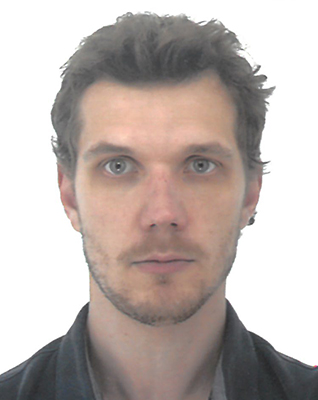
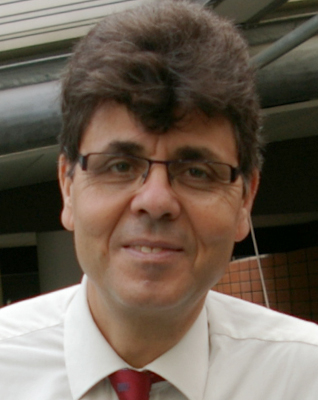
Vincent Itier serves as a Lecturer at IMT Nord Europe, where he is affiliated with the CRIStAL research laboratory (UMR CNRS 9189). His office is located in Building ESPRIT, Scientific City, at the Villeneuve d'Ascq campus. He is a member of the SIGMA research team and actively contributes to the academic community through teaching, research supervision, and scholarly publications. Dr. Itier's research interests span across multimedia security, digital forensics, and machine learning, with particular emphasis on detecting and understanding image manipulations. His work addresses critical challenges in digital media authenticity, including deepfake detection, photomontage identification, and steganalysis. He investigates how machine learning techniques can be leveraged to improve robustness against increasingly sophisticated image manipulation methods, with applications in combating 'fake news' and verifying digital content authenticity. His publication record demonstrates a consistent focus on digital image forensics, with recent work exploring deep learning approaches for detecting splicing, analyzing noise residuals in deepfakes, and developing robust steganalysis techniques. His research shows a clear evolution from traditional image processing methods toward more sophisticated deep learning frameworks that can handle the complex challenges of modern digital media manipulation. Supervised Minh Thong Doi's thesis on 'Deepfake detection: combining noise and semantic features and improving generalization to new generators' Currently offering M2 Internships and Post-doc positions for 2025-2026 Leading research within the ANR TSIA CI2(IA) project which aims to develop new tools for detecting and understanding image manipulation Dr. Itier maintains an active research presence through his GitHub profile (vitier) and professional website, and can be contacted via email at vincent.itier@imt-nord-europe.fr for potential collaborations or research opportunities.
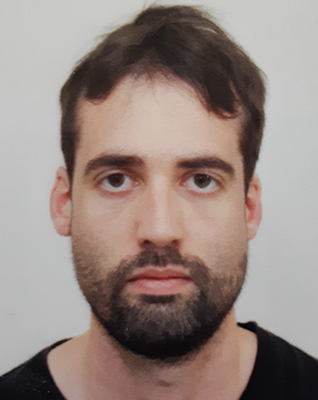
Pierre-Antoine Thouvenin is an Assistant Professor at Centrale Lille, a prestigious engineering school within the University of Lille community in France. He is a member of the SigMA team from the CRIStAL laboratory (Centre de Recherche en Informatique, Signal et Automatique de Lille), where he conducts research on inverse problems with applications to remote sensing and astronomy. His academic journey began with an Engineering degree in Electronics and Signal Processing from INP - ENSEEIHT Toulouse in 2014, followed by a Master of Science in "Signal, Image, Acoustics" from the same institution. He completed his Ph.D. in "Signal, Image, Acoustics" from Institut National Polytechnique de Toulouse between 2014 and 2017, with research focused on modeling spatial and temporal variabilities in hyperspectral image unmixing. Thouvenin's research interests span several interconnected areas in signal processing and computational imaging. His primary focus is on solving inverse problems, particularly in the context of radio-interferometric imaging for astronomy and hyperspectral image unmixing for remote sensing applications. He has made significant contributions to developing advanced algorithms for handling spectral variability in hyperspectral data and for image reconstruction in radio astronomy. His work often combines Bayesian statistical methods with optimization techniques to address challenging high-dimensional problems. A distinctive aspect of his research is the development of distributed and parallel computational methods that enable processing of extremely large datasets that would be intractable with conventional approaches. An analysis of his recent publications reveals a strong trend toward developing distributed and parallel computational methods for large-scale inverse problems. His work increasingly integrates machine learning approaches, particularly neural networks, with traditional signal processing techniques. There's a clear progression from theoretical developments in hyperspectral unmixing to practical applications in astronomy, particularly through his involvement in the ORION-B project where he applies statistical methods to infer physical conditions in star-forming regions. His most recent work demonstrates sophisticated integration of spatial regularization techniques with Bayesian inference for astrophysical parameter estimation. Prix Léopold Escande from Institut National Polytechnique de Toulouse (2017) - awarded to the best PhD theses defended at INPT Prix de l'Institut National Polytechnique de Toulouse (2014) - awarded for outstanding academic achievement during engineering studies Thouvenin is actively involved in mentoring the next generation of researchers. He currently co-supervises the PhD thesis of Pierre Palud on "Statistical methods for model inversion and spatial distribution of physico-chemical properties of the molecular cloud Orion B" as part of the CNRS 80|Prime project OrionStat. His research is supported through various academic collaborations and projects, including the ORION-B project led by Jérôme Pety, which involves molecular line observations from the IRAM-30m Large Program. He has established productive international collaborations, particularly with researchers at Heriot-Watt University in Edinburgh where he worked as a Research Associate from 2017-2019. Thouvenin is a key member of the SigMA team within the CRIStAL laboratory, a joint research unit between Centrale Lille, INRIA, and University of Lille. His work often intersects with the ORION-B project, where he collaborates with astrophysicists to develop statistical methods for inferring properties of Galactic and extra-galactic star forming regions. This interdisciplinary environment fosters innovation at the intersection of signal processing, statistics, and astronomy. He has developed expertise in translating complex statistical methodologies into practical computational tools that address real-world challenges in both remote sensing and astronomical imaging.
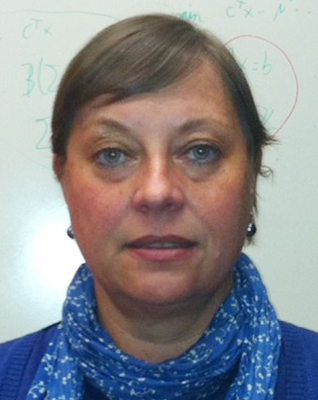
Martine Labbé is a Researcher at Inria, working within the INOCS research team at the Inria Building B in Haute Borne. She holds an academic position supervising doctoral theses through the CRIStAL laboratory (Centre de Recherche en Informatique, Signal et Automatique de Lille), a joint research unit involving Inria, CNRS, and the University of Lille. Her research spans Optimization, Algorithms, Operations Research, Graph Theory, Combinatorial Optimization, and Stochastic Optimization, with a focus on developing advanced mathematical models and solution methods for complex combinatorial problems. Key areas include cluster testing frameworks and prohibition problems in network optimization, particularly minimum spanning tree variations requiring innovative algorithmic approaches. Dr. Labbé has supervised two doctoral students: Tifaout Almeftah completed work on 'Advanced optimization algorithms for cluster testing', while Luis Alberto Salazar Zendeja defended his thesis 'Models and algorithms for the minimum spanning tree prohibition problem' in November 2022. Her supervision occurs within the structured PhD framework of CRIStAL, indicating formal academic mentorship responsibilities. As a core member of the INOCS team (Integration of Optimization, Constraints and Stochasticity), she contributes to research that bridges theoretical optimization with practical applications, emphasizing the interplay between deterministic constraints and stochastic elements in decision-making models.
Jean-Stéphane VARRÉ is a Professor in the Computer Science Department at the University of Lille and a core member of the BONSAI bioinformatics research team. His administrative leadership includes: Vice-head of the Computer Science Department (since 2018) In charge of the B.Sc. in Computer Science (since 2015) Former head of the MOCAD master's degree in Computer Science (2010-2015) His research centers on algorithmic solutions for genomic challenges, specializing in genomic rearrangements with duplicated markers, transcription prediction (splicing/orthology), third-generation sequencing assembly, and GPU-accelerated bioinformatics. Key contributions include ProCARs for ancestral genome reconstruction and the TFM suite for sequence comparison using position weight matrices. Recent publications (2019) demonstrate dual expertise in microbial genomics (bacterial assembly graph analysis) and clinical virology (coronavirus OC43 sequencing protocols), reflecting his team's capacity to bridge theoretical algorithm design with high-impact biomedical applications through scalable computational frameworks. Professor VARRÉ has co-supervised six doctoral candidates across 17 years: Pierre Marijon: Assembly graph analysis (current) Antoine Thomas: Genomic rearrangements with duplicates Tuan Tu Tran (2009-2012): Manycore architecture data structures Aude Darracq (2006-2010): Plant mitochondrial genome rearrangements Aude Liefooghe (2004-2008): Transcription factor binding site algorithms Martin Figeac (2002-2005): Constrained genomic rearrangement scenarios The BONSAI team maintains an active software repository for genomic analysis tools, including GPU-optimized string matching implementations and breakpoint region analyzers, supporting both academic research and clinical applications through open-source computational pipelines.
Bertrand JOUVE is a CNRS Research Director affiliated with the Interdisciplinary Laboratory for Solidarity, Societies, Territories (LISST) at the University of Toulouse. With a career spanning over two decades in academic research, he has held positions as Professor of Mathematics at University Lyon 2 (2011-2013) and Lecturer at University Toulouse 2 (1999-2011). His academic leadership includes serving as Deputy Scientific Director at InSHS CNRS (2011-2016) and President of the GIS National Network of Human Sciences Houses (2016-2018). Professor Jouve's research expertise centers on graph theory and network analysis, with significant contributions to mathematical models for network analysis, complex networks, and social networks. His work demonstrates strong interdisciplinary connections between pure mathematics and practical applications in urban mobility systems, pandemic modeling, and digital media impacts. Recent publications highlight his focus on bicycle mobility during the pandemic, theoretical advances in matrix operations, and the societal implications of digital technologies. His research output shows consistent productivity with publications spanning mathematics, computer science, transportation science, and social sciences. The interdisciplinary nature of his work is evident in co-authorship patterns spanning institutions in France, Australia, and Israel. His 2024 publications in Linear Algebra and its Applications and Transportation journals demonstrate continued theoretical and applied contributions. As a CNRS Research Director, Professor Jouve supervises research projects and likely mentors junior researchers, though specific student information isn't detailed in available sources. His leadership roles in national research infrastructure suggest significant administrative responsibilities alongside his research activities. Professor Jouve's laboratory affiliation with LISST provides a rich interdisciplinary environment for studying societal structures through mathematical lenses. The laboratory's focus on solidarity, societies, and territories aligns with his research interests in social networks and urban systems, creating opportunities for collaborative research across disciplinary boundaries.
National Graduate School of Mechanics and AerotechnicsFrance
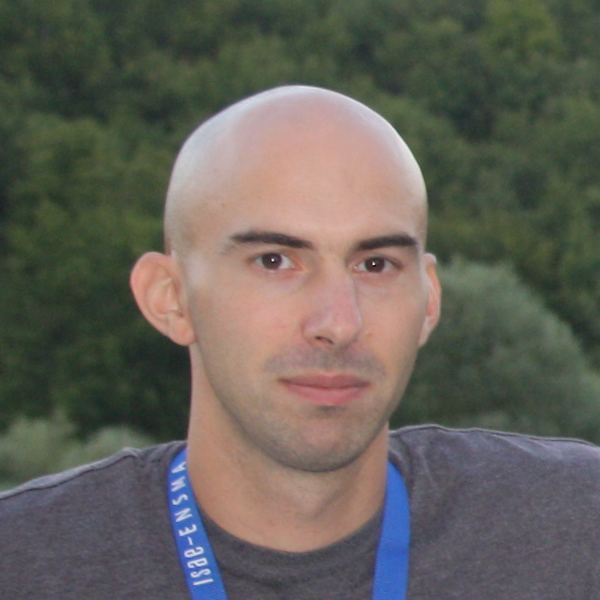
Brice Chardin is an Associate Professor in Data Engineering at ISAE-ENSMA since 2013, affiliated with the LIAS (Laboratoire d'Ingénierie des Applications de la Connaissance et des Systèmes) Data and Model Engineering team. His work bridges academic research and industrial applications, focusing on data management solutions for critical systems. His research spans clustering algorithms under dissimilarity constraints , RDF query relaxation for explaining empty/overabundant results, pattern mining through the RQL language, and energy data management . Key projects include Chronos (a NoSQL system for industrial sensor data) and collaborations with energy companies SRD and Nexeya for predictive consumption analysis. Recent publications (2021-2024) emphasize constrained clustering techniques and cooperative query processing for RDF knowledge bases, revealing a strong trend toward practical solutions for industrial data challenges. His work integrates machine learning with database theory to address real-world data imperfections. PhD in Computer Science from INSA Lyon (2011) Postdoctoral position at LIRIS (2012-2013) on ANR DAG project Specialized in industrial data management since 2011 EDF collaboration Chardin actively supervises academic projects including drone simulation with Ardupilot and Smart Data mining initiatives. His industrial partnerships focus on energy sector applications, particularly predictive analysis for electricity distribution and storage systems. Current work involves developing clustering algorithms with error bounds and query relaxation frameworks for semantic web technologies.
Belkacem OULD BOUAMAMA is a full Professor of automatic control at Polytech Lille (Graduate School of Engineering) of the University of Lille, France. He serves as Director of Research and International Relations at Polytech Lille and leads the PERSI research team at the CRIStAL laboratory (CNRS). His research focuses on integrated design for supervision of system engineering using multiphysics Bond graph modeling, with industrial applications in process engineering, renewable energies, and green hydrogen production systems. His primary research spans Automatic Control, System Supervision, and Bond Graph Modeling, with specialized expertise in robust diagnostic/prognostic algorithms for hybrid dynamic systems. Key application domains include fuel cells, electrolyzers, renewable energy integration, and green hydrogen infrastructure. His work bridges theoretical advances in multiphysics modeling with practical industrial implementation. No specific scientific awards are mentioned in the source text. Professor OULD BOUAMAMA has supervised 16 documented PhD theses covering bond graph applications in energy systems, fault diagnosis, and green hydrogen production. His scholarly output exceeds 65 peer-reviewed journal articles, 180 conference papers, and 20 books/book chapters. The text does not specify research grants or funding sources. He directs the PERSI research team at CRIStAL laboratory (UMR 9189, CNRS), focusing on integrated supervision system design for complex engineering applications.