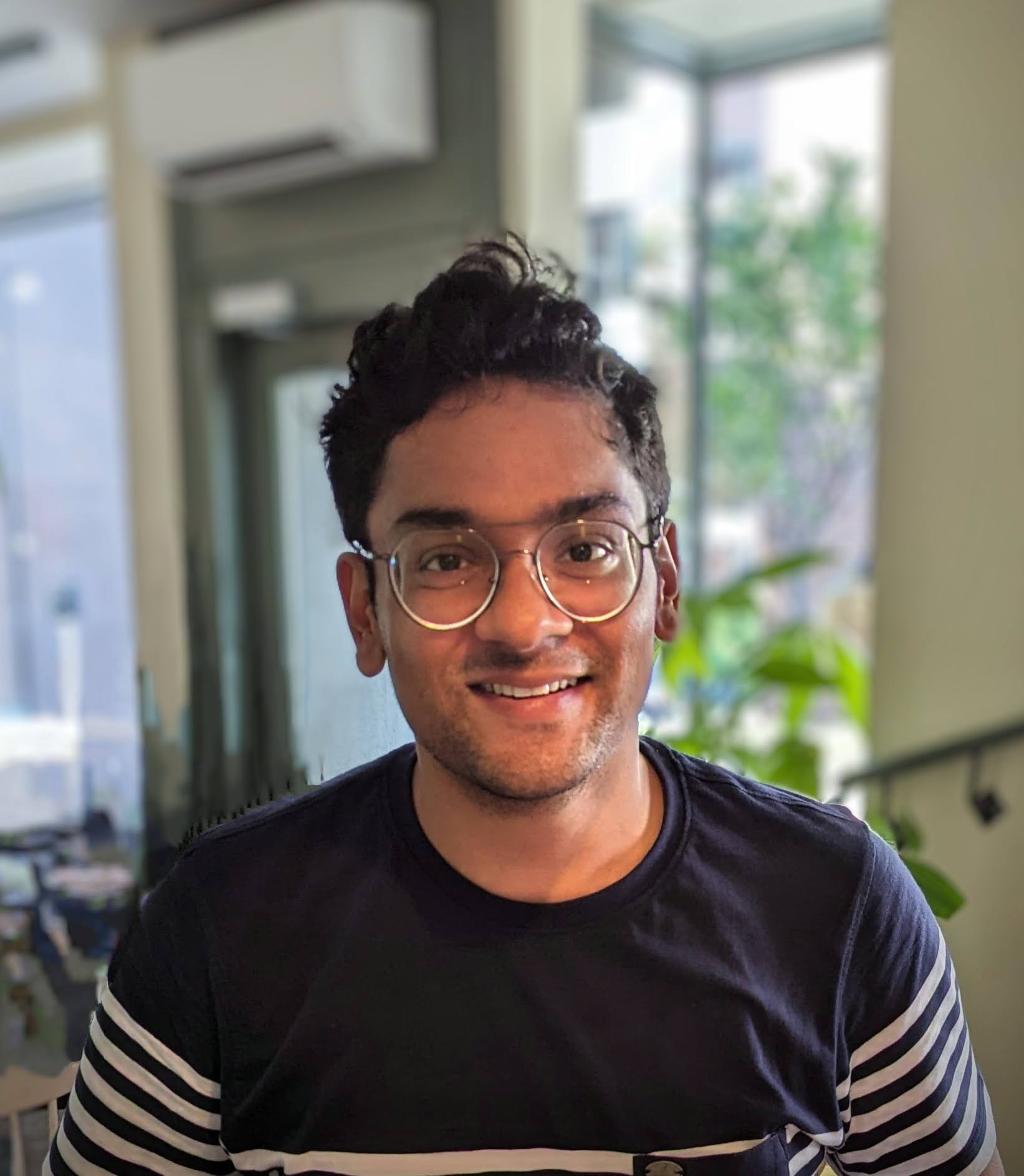
Søren Debois is an Associate Professor at the IT University of Copenhagen , specializing in the intersection of process technologies and IT security . His research focuses on technical solutions for trust between parties, including applications of blockchain to process management and declarative process models for legal-compliant municipal systems. He is a principal author on the DCR process modelling notation and architect of the DCR Workbench , contributing to the commercial dcrgraphs.net engine. He leads a work package in the Innovation Fund Denmark -funded EcoKnow project, aiming to align municipal case-management with legal compliance. A frequent expert in Danish media on IT security, he teaches Distributed Systems , Security I , and Security II at ITU. His accolades include the 2017 ITU Excellence in Teaching Award and a BPM '18 Best Paper Honorable Mention .
Mark Strembeck is an Associate Professor at the New Media Lab, part of the Institute for Information Systems at the Vienna University of Economics and Business (WU). He is also a faculty member at the Complexity Science Hub and a key researcher at the Secure Business Austria research center, reflecting his interdisciplinary engagement in complex systems and information security. His research focuses on the analysis of complex systems, particularly in social media environments. Key interests include emotion detection, bot-human interactions, structural communication patterns during crises, and misinformation dynamics. His work combines network science, data analytics, and computational social science to understand human behavior in digital spaces. Mark's recent publications (2017–2024) reveal a strong trend in analyzing emotional motifs, community structures, and information diffusion during high-impact events such as wars, elections, and natural disasters. His studies often involve multiplex and temporal network models applied to platforms like Twitter, Facebook, and YouTube. He has collaborated extensively with researchers such as E. Kušen and M. Moser, contributing to journals like Computers in Human Behaviour , Applied Network Science , and IEEE Internet Computing . His methodological expertise spans sentiment analysis, motif detection, and network modeling. Mark Strembeck received his doctoral degree in business informatics from WU in 2003 and completed his habilitation in 2008. He holds two diploma degrees from the University of Essen, Germany. Prior to his academic career, he worked as a software developer and researcher in Germany and Austria. Scientific Contributions and Affiliations: Associate Professor, New Media Lab, WU Vienna Faculty Member, Complexity Science Hub Key Researcher, Secure Business Austria Active contributor to COMPLEXIS, ASONAM, and SNAMS conferences He has advised no students listed in the provided text and has not received any explicitly mentioned scientific awards. His work is supported by participation in national and international research projects, though specific grants are not detailed. He is involved in teams focusing on crisis informatics, bot detection, and emotional dynamics in social networks.
Michael Szell is Assistant Professor in the Department of Computer Science at the IT University of Copenhagen and External Faculty at the Complexity Science Hub Vienna. His interdisciplinary work bridges physics, mathematics, and computer science to study collective human behavior through large-scale data analysis and network modeling. Research Interests: His work centers on urban mobility, sustainability, and data visualization, with a focus on understanding how people interact with urban and online environments. Using computational and network-based methods, he investigates bicycle infrastructure, multimodal transport systems, sidewalk networks, and the social impacts of urban highways. His recent publications reveal a strong trend in urban sustainability and network science , particularly in optimizing bicycle networks and analyzing how urban design affects social connectivity. Articles in journals like Scientific Reports and PNAS highlight his impact in computational urban analytics. Award-winning developer of the massive multiplayer online game 'Pardus' Michael leads innovative research projects involving data-driven urban planning and has contributed to public discourse through media features and press highlights. His work often involves interdisciplinary collaboration and has practical implications for sustainable city development. He has developed interactive data visualization platforms and tools like BikeDNA for assessing cycling infrastructure.
Johannes Wachs is an Associate Professor at the Institute of Data Analytics and Information Science, Corvinus University of Budapest, and a Research Fellow at the Centre for Economic and Regional Studies. He is affiliated with the Complexity Science Hub Vienna, where he has been a faculty member since April 2020. His interdisciplinary research bridges data science, network science, and complexity to study digital economies, open source software, and societal challenges. PhD in Network Science, Central European University (2019) MS in Applied Mathematics, Central European University (2012) BS in Mathematics and Economics, Tulane University (2009) His research focuses on the application of network and data science to understand social, economic, and technical systems. Key interests include open source software ecosystems, AI’s impact on knowledge sharing, corruption detection, urban inequality, and digital innovation. He uses large-scale digital trace data to model complex behaviors in online communities, software development, and public policy. His recent publications reveal a strong trend in analyzing digital platforms such as GitHub and Stack Overflow, studying brain drain in tech, and assessing climate and health risks in Austria. His work combines network modeling, machine learning, and empirical analysis to uncover patterns in human behavior and systemic risk. IMF Anti-Corruption Challenge Winner (2020) Principal Investigator, CRISP Project (2021–2024), funded by FFG Grants from Hungarian Research Funding Agency (OTKA), City of Vienna, and WU Projects Johannes Wachs actively supervises PhD and Master’s students, including Hannah Schuster and Brigi Németh. He has taught courses in computational social science, social networks, and data mining at institutions including RWTH Aachen, CEU, and WU Vienna. He is launching a new MSc in Social Data Science at Corvinus in 2025. He leads the CRISP project, which builds semantic data pools for real-time crisis response and intervention, integrating heterogeneous data sources for impact forecasting and policy transparency.
Michele Coscia is an Associate Professor in the Department of Computer Science at the IT University of Copenhagen (ITU), where he conducts research at the intersection of network science, digital humanities, and data analytics. He leads the NERDS research group and supervises PhD students and postdoctoral researchers working on financial crime detection, archaeological networks, and work environment modeling. PhD in Computer Science, University of Pisa (2012) Former researcher at the Center for International Development (CID), Harvard University (6 years) Visiting researcher at Barabási Lab, Northeastern University His research focuses on developing and applying network science methodologies such as noise-corrected backboning , node attribute analysis , and network variance to study complex systems. His work spans diverse domains including: Archaeology : Inferring social and biological relationships from material culture at Neolithic sites like Çatalhöyük. Cultural Analytics : Mapping Italian music networks, analyzing Wikipedia’s gender bias, and studying ideological polarization on social media. Social Media Dynamics : Investigating meritocracy vs. topocracy, intolerance feedback loops, and information virality on platforms like Reddit and Twitter. Sports Analytics : Analyzing predictability trends in team sports and the impact of economic systems on league competitiveness. His publications appear in high-impact journals such as Science Advances , EPJ Data Science , and Applied Network Science . He is the author of The Atlas for the Aspiring Network Scientist , a comprehensive open-access textbook now in its second edition, which covers graph theory, machine learning on graphs, and statistical foundations of network analysis. Recent trends in his work show a growing emphasis on interdisciplinary applications of network science, particularly in archaeology and cultural studies, often in collaboration with institutions such as Aarhus University and the National Research Center for Work Environment. His research consistently promotes open science, with datasets and code publicly shared. Co-PI on a Villum Synergy project applying network analysis to Roman Empire archaeological data Active contributor to the CUDAN (Cultural Data Analytics) community Developing methods for uncertain and incomplete network data Michele Coscia’s work demonstrates a strong commitment to methodological innovation and real-world impact across the humanities, social sciences, and computational domains.
Christian Graugaard is a Professor of Sexology at Aalborg University, affiliated with the Faculty of Medicine and the Department of Clinical Medicine. He is a key member of the Center for Sexology Research and leads Project SEXUS, aiming to study Danish sexual behavior comprehensively. His work emphasizes the intersection of biological, psychological, and cultural factors in human sexuality, challenging simplistic gender-based stereotypes. Research interests include gender differences in sexual behavior, societal norms influencing sexual health, and the cultural dimensions of human sexuality. He actively participates in public discourse, as seen in his DR-podcast interview on 'Ramt af kærlighed,' where he discussed the complex interplay between biology and culture in shaping sexual identities. Though no specific awards or grants are detailed here, his publications span advanced technical domains like spatiotemporal data analysis, federated learning, and trajectory modeling, suggesting interdisciplinary research collaborations. His work on systems like OneDB and SWASH highlights contributions to distributed computing and data science, which may underpin his methodologies in large-scale sexual behavior studies. He currently holds no listed students or formal advisees in the provided texts, and his involvement in labs/teams is limited to the Center for Sexology Research and Project SEXUS.
Kim Skak Larsen is a Professor in the Department of Mathematics and Computer Science at the University of Southern Denmark, Faculty of Science. He serves as Head of Section and is affiliated with the Algorithms VIP group and the Digital Democracy Centre, reflecting his dual focus on theoretical algorithmics and societal applications of computing. His research lies in online algorithms, data structures, database systems, and algorithmics , with a strong emphasis on competitive analysis and performance measures. Key research themes include competitive ratio optimization, online matching, knapsack problems, and the integration of predictions into algorithmic frameworks. His recent work explores algorithmic trade-offs under uncertainty and misinformation on social media. His recent publications (2023–2024) reveal a consistent focus on online algorithms with predictions , spanning scheduling, matching, and knapsack problems. These works analyze competitive ratios and performance under prediction errors, contributing to the growing field of learning-augmented algorithms. His interdisciplinary engagement includes contributions to public discourse on digital trust and news authenticity. Project: Trade-Offs for Algorithms Facing Uncertainty (2025–2027) Project: Online Algorithms with Predictions - DIREC (2022–2025) Project: Algorithmic Challenges (2014–2017) Project: Trust and News Authenticity (ongoing) He has supervised PhD students and contributed to academic service as a peer reviewer, conference participant, and series editor. He teaches courses such as Formal Languages, Advanced Data Structures, and Geometric Algorithms, and has been active in public outreach through media contributions on combating scam articles online.
Rolf Fagerberg is a Professor in the Department of Mathematics and Computer Science at the University of Southern Denmark (SDU). His research centers on algorithms, data structures, and their applications in computational biology and cheminformatics. His research interests include: Algorithms and data structures, particularly dynamic and geometric data structures Graph theory with emphasis on subgraphs, Yao graphs, and hypergraphs Algorithmic cheminformatics and modeling of chemical reaction networks Computational biology, including metabolic pathway analysis Theoretical computer science and discrete mathematics Recent publications highlight a strong trend toward interdisciplinary research combining computer science with chemistry and biology, particularly in modeling chemical reaction networks using hypergraphs and mixed-integer linear programming. His work also includes algorithmic solutions for palindromic subsequence problems and efficient extraction of reaction rules from large databases, reflecting a blend of theoretical and applied algorithm design. Rolf Fagerberg has served as senior coordinator on multiple research projects, including 'Algorithmic Cheminformatics' and 'Fundamental Data Structures', funded by the Danish Ministry of Higher Education and Research. He has also contributed to peer review and editorial work for major conferences such as the ACM Symposium on Parallelism in Algorithms and Architectures and the International Symposium on Experimental Algorithms. He has supervised PhD students and is actively involved in academic service, including membership in assessment committees at Aarhus University and IT University of Copenhagen. His research has received media attention, including coverage of a 'mathematical breakthrough' and applications in understanding intestinal systems in obesity.
Gerth Stølting Brodal is a Professor in the Department of Computer Science at Aarhus University, Denmark, holding this position since January 2016. Previously, he served as an Associate Professor (tenured) at the same department from 2004 to 2015. His career includes a PostDoc at the Max-Planck-Institute for Computer Science in Saarbrücken, Germany (1997-1998) and long-term affiliations with research centers BRICS (1998-2005) and MADALGO (2007-2017). Education: PhD in Computer Science, Aarhus University (1997). Thesis: "Worst Case Efficient Data Structures". Research Focus: Brodal specializes in the design and analysis of algorithms and data structures. His work spans fundamental data structures (dictionaries, priority queues, persistent structures), computational geometry, graph/string algorithms, I/O-efficient and cache-oblivious methods, algorithm engineering, and computational biology. He is renowned for worst-case efficient solutions and external memory algorithm contributions, with a fingerprint emphasizing data structures (100%), worst-case analysis (42%), and I/O efficiency (27%). Recent Publication Trends: His 2024-2025 output reveals sustained innovation in advanced data structures—dynamic convex hulls, binary search trees with finger search capabilities, strict Fibonacci heaps, and cache-oblivious selection algorithms—demonstrating theoretical rigor with practical engineering applications in massive data processing. Academic Leadership: Brodal has supervised PhD students (evidenced by one thesis in his output) and contributed to major collaborative initiatives. His 141 research outputs include journal articles, conference papers, and book chapters, reflecting deep engagement with algorithmic theory and its real-world implementations.
Hans-Jörg Schulz serves as an Associate Professor in the Department of Computer Science at Aarhus University, Denmark, specializing in visual analytics and information visualization. His research bridges computer science with interdisciplinary applications in food science, neuroscience, and material engineering. He earned his Doctorate in Computer Science (2010) and Diplom (Master's equivalent, 2004) from the University of Rostock, focusing on explorative graph visualization and visual data mining for complex structures. His academic trajectory reflects deep expertise in transforming complex data into actionable visual insights through innovative methodological frameworks. Schulz's research centers on advancing visual analytics methodologies, particularly progressive visual analytics where data processing and user interaction occur simultaneously. His work establishes foundational techniques for visual guidance systems, explainable AI interfaces, and specialized visualization tools for domains like EEG analysis and food rheology. Recent publications demonstrate a strategic expansion into haptic feedback integration, agent-based visualization design, and cross-disciplinary applications requiring novel visual fingerprinting techniques. Analysis of his 2023-2025 publications reveals three dominant trends: (1) Human-centered progressive analytics with focus on trust calibration and cognitive load management, (2) Domain-specific visualization frameworks for complex data like anisotropic food structures and EEG artifacts, and (3) Novel interaction paradigms incorporating force feedback and malleable interfaces. His work consistently emphasizes practical usability while pushing technical boundaries in visual representation. Schulz's contributions have been recognized with significant awards including IEEE InfoVis Best Poster (2010), EuroVis 3rd Best Paper (2012), VDA Best Paper (2015), Cybercartography Competition 1st Place (2022), and IEEE SciVis Contest 2nd Place & Most Innovative Work (2023). These accolades highlight both theoretical innovation and practical impact in the visualization community. As an educator, he supervises PhD candidates and teaches core visualization courses including Data Visualization, Information Visualization, and Visual Analytics. His current ArtiPlex project (2024-present) develops multiplex analytics for EEG artifact detection, securing active research funding while demonstrating his commitment to translating visualization research into domain-specific solutions. Collaborative patterns across his 79 publications indicate strong partnerships with food scientists, neuroscientists, and HCI researchers.
Prateek Dwivedi is a postdoctoral researcher in the Theory Group at the IT University of Copenhagen , collaborating with Prof. Nutan Limaye. He earned his Ph.D. in 2025 from the Indian Institute of Technology Kanpur under Prof. Nitin Saxena. His research focuses on Theoretical Computer Science , particularly Algebraic Complexity Theory , Graph Theory , and Computational Number Theory . Research interests include circuit complexity, polynomial identity testing, border complexity, and group testing problems. His work bridges algebraic methods with algorithmic challenges, emphasizing explicit polynomial constructions and bounded-depth circuit analysis. Recent publications highlight advancements in monotone bounded-depth circuits, deterministic identity testing for depth-4 circuits, and exploration of border complexity in algebraic circuits. These contributions span conferences like STOC, FOCS, MFCS, and CCC, reflecting both depth and breadth in his theoretical investigations. Collaborations frequently involve co-authors such as C. S. Bhargav, Nitin Saxena, and Pranjal Dutta. He has presented at international venues including workshops in Zinal (Switzerland), STOC, and online seminars, demonstrating active engagement with the global academic community.
Holger Dell is a Lecturer in Theoretical Computer Science and Algorithms at the IT University of Copenhagen. His research focuses on computational complexity, graph theory, and algorithmic efficiency. Active in polynomial-time algorithms and oracle-based methods Contributions to edge estimation in hypergraphs and fairness in node embeddings Key collaborations with BARC (Basic Algorithms Research Copenhagen) project Research trends show expertise in causal modeling, finite field polynomial solving, and graph embedding techniques. Recent work emphasizes algorithmic fairness and abstract causal relationships. Participated in a major project funded by the Villum Foundation (2017-2024) as a collaborator.
Nutan Limaye is a Professor at the Department of Theoretical Computer Science , IT University of Copenhagen , specializing in Algorithms , Computational Complexity , and Algebraic Circuits . She actively contributes to research on polynomial complexity, quantum computation, and lower bound techniques. Key Research Areas : Algebraic Circuit Complexity, Polynomial Computation, Graph Isomorphism, Boolean Satisfiability Current Projects : FLows : Formula complexity and lower bounds (2024-2026) DIREC: OnlineAlgo : Digital research initiatives (2022-2025) BARC2 : Basic Algorithms Research Copenhagen (2024-2029) Scientific Recognition includes the FOCS Best Paper Award (2022) . Her work frequently appears in top conferences like CCC , FSTTCS , and SIGACT News , with recent collaborations in Denmark and international institutions. She contributes to public understanding through media appearances on topics like basic computer science research and BARC's initiatives .
Paloma Thomé de Lima is a Lecturer in Theoretical Computer Science at IT University of Copenhagen. Her research focuses on graph theory, algorithms, and computational complexity, particularly in chordal graphs, induced subgraphs, and graph modification problems. Her work includes studies on bounded degree constraints, matching numbers, and polynomial time algorithms. Recent publications address problems in claw-free graphs, min-cut optimization, and structural graph theory. She has received the Best Paper Award at IPEC 2022 for collaborative research. Current projects include Unifying Theories for Graph Modification Problems funded by Danmarks Frie Forskningsfond (2023–2027).
Roberto Naboni is an Associate Professor and Head of Centre at the SDU CREATE and a member of the SDU Climate Cluster . Affiliated with the Department of Technology and Innovation at the University of Southern Denmark, his work bridges advanced digital design, robotic fabrication, and sustainable construction methodologies. Research Interests include: Additive manufacturing in architecture and construction Low-carbon concrete and timber structures Algorithmic design and computational methods Space architecture applications (e.g., lunar habitats) Behavioral robotics for construction automation Material innovation for climate resilience Scientific Awards Villum Young Investigator Grant (2022) Teaching & Supervision spans courses on architectural geometry, digital fabrication, and sustainable materials. He leads PhD projects like Bio-Inspired Behavioural Additive Construction and collaborates on interdisciplinary initiatives such as FSSoV: Football as Health and Welfare Innovator . His research output includes 76 publications and active participation in 3 projects focused on adaptive robotics and sustainable construction systems.