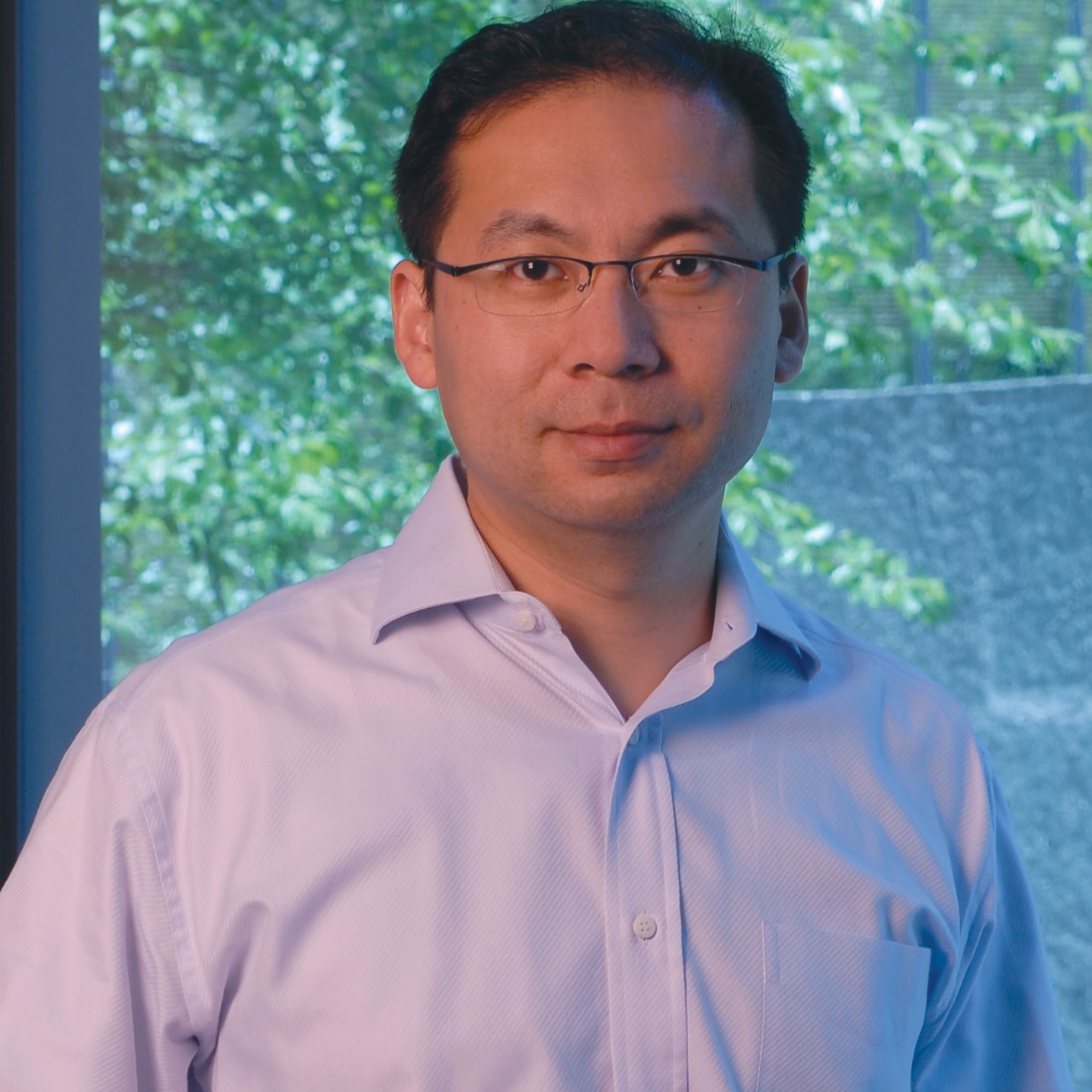
Neesha Kodagoda is a researcher at Middlesex University’s Department of Computer Science, specializing in Human-Computer Interaction, Visual Analytics, and Intelligence Analysis. Her work bridges cognitive science and technology to enhance digital tools for criminal investigations and intelligence operations. Key Research Areas: Human-Computer Interaction, Visual Analytics, Conversational Agents, Machine Learning, Criminal Network Analysis, User Experience Design Collaborations: Co-authored studies with B L William Wong (Middlesex), Chris Rooney (Genetec), Sharmin Choudhury (Monash), Kai Xu (Nottingham), and Phong Nguyen (RedSift). Her recent publications focus on algorithmic transparency in conversational agents, task analysis for criminal intelligence, and tactile interfaces for argument construction. Notably, she has pioneered tools like Pan for digital investigations and POLAR for movement pattern analysis. Despite no explicit awards listed, her interdisciplinary work impacts forensic technology, low-literacy user design, and cognitive engineering.
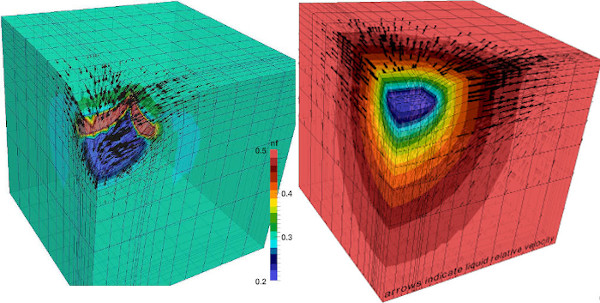
Ondřej Souček is an Associate Professor at the Mathematical Institute, Faculty of Mathematics and Physics, Charles University in Prague, Czech Republic. He has been with the university since 2011, progressing from Junior Researcher to Assistant Professor (2012-2024) and currently serving as Associate Professor since 2024. His academic journey spans mathematical modeling with applications in planetary geophysics and continuum mechanics. Ph.D. (2010): Charles University, Faculty of Mathematics and Physics, Department of Geophysics, thesis: "Numerical modelling of ice sheet dynamics" Mgr. degree (2005): Charles University, Faculty of Mathematics and Physics, Department of Geophysics, thesis: "Thermomechanical polythermal ice-sheet model" Dr. Souček's research spans three primary areas: Mathematical modelling in planetary geophysics , focusing on tidal deformation and dissipation in icy moons like Europa and Enceladus; Thermodynamics and mechanics of continua , particularly constitutive theory for complex materials and thermomechanics on surfaces; and Theory of multi-component materials , including heterogeneous catalysis and porous media flow. His work bridges rigorous mathematical frameworks with real planetary systems, demonstrating exceptional interdisciplinary expertise. His recent publications (2021-2025) reveal a strong concentration on icy moon geophysics, particularly Enceladus' ice shell dynamics and plume activity. The research combines mathematical modeling with planetary science to understand complex processes like tidal deformation, water transport in ice shells, and stress distribution in planetary surfaces. His collaborative approach is evident in numerous multi-author papers with international teams. While specific awards aren't listed in the provided information, Souček has secured multiple competitive research grants as Principal Investigator for Czech Science Foundation projects, demonstrating recognition of his research excellence. Souček has supervised numerous students and collaborators, as evidenced by his extensive publication record. He has led significant research projects including GACR 22-20388S (2022-2024) on "Evolving Ice Shells" and GACR 15-14263Y (2015-2017) on meltwater generation in Europa's ice shell. His grant portfolio demonstrates sustained funding for innovative research at the intersection of mathematics and planetary science. As part of the Mathematical Institute at Charles University, Souček contributes to the University Centre for Mathematical Modelling, Applied Analysis and Computational Mathematics (UNCE). He maintains active international collaborations, particularly with researchers at Université de Nantes in France and planetary science teams across Europe working on icy moon research. His research stays abroad, including extended periods in France and Ireland, have strengthened these international partnerships.
Dr. Stephan Kolassa is an Honorary Researcher at Lancaster University's Management Science department within the Management School (LUMS). He also works at SAP Switzerland AG as a developer of forecasting and replenishment solutions for retail, balancing industrial innovation with academic research. Retail forecasting at granular SKU×store×day levels Inventory control for perishable goods Intermittent demand modeling Development of forecast accuracy metrics His recent publications in Foresight: The International Journal of Applied Forecasting explore topics ranging from algorithmic interactions to machine learning limitations in forecasting contexts. He maintains editorial involvement in multiple forecasting journals while advancing practical applications through industry partnerships. Fellow of the International Institute of Forecasters Editorial board member of International Journal of Forecasting Editorial contributor to Foresight journal Dr. Kolassa supervises M.Sc. theses and internships, while his research is associated with the Centre for Marketing Analytics & Forecasting . His work bridges academic theory with real-world implementation through both academic collaboration and SAP's development activities.
Gabriele Albertini is an Assistant Professor in Structural Engineering at the University of Nottingham, UK. He specializes in fracture mechanics, friction dynamics, and earthquake source mechanics, combining numerical models with experimental validation to address challenges in infrastructure resilience and sustainability. Research Focus: His work explores dynamic fracture propagation in heterogeneous materials, frictional rupture mechanisms, and multi-scale mechanics of engineering and geophysical systems. Current projects include 3D numerical models of crack propagation, hydraulic fracturing for sustainable energy, and rubber friction analysis. Collaborations: He collaborates with institutions like Harvard University, ETH Zurich, and Sorbonne Université, integrating mechanics with computational methods. His lab offers funded PhD positions in dynamic fracture and friction modelling, emphasizing interdisciplinary approaches with scientific computing and data science. Software: He co-developed the open-source spectral-boundary-integral code 'uguca' for fracture and friction simulations.
Dr. Dorival Pedroso is a Senior Lecturer at the School of Civil Engineering, The University of Queensland , Australia. His expertise lies in numerical and computational methods for solid mechanics, porous media modeling, and geotechnical engineering. Research spans porous media dynamics , molecular dynamics , and evolutionary algorithms . Recipient of the Argyris Lecture Award (2016) , recognizing contributions to finite element method (FEM) for modeling porous media. Developed open-source software libraries (Gosl, Russell) for scientific computing and optimization. Research Themes include: Computational mechanics for unsaturated soils and granular materials . Development of Hencky bar-grid models and isogeometric shell formulations . Multi-objective optimization via parallel evolutionary algorithms. Recent Trends in publications focus on finite element methods , porous media dynamics , and reliability analysis using genetic algorithms. Scientific Awards Argyris Lecture Award (2016): Top honor for FEM innovation in porous media modeling. Grants & Collaborations ARC-DECRA (2012): Highly competitive early-career award. Advance Queensland Project: $2M+ funding as Chief Investigator. ARC Discovery Projects, Linkage Grants, and industry sponsorships. Teaching includes Advanced Soil Mechanics (CIVL4230) and Ground Improvement (CIVL6215) , covering topics like consolidation, liquefaction, and reinforcement techniques.
Dr. Thierry Bore is a Senior Research Fellow at the School of Civil Engineering , University of Queensland, specializing in electromagnetic measurement methods for civil and geotechnical applications. He obtained his PhD from Conservatoire National des Arts et Metiers in Paris and focuses on dielectric spectroscopy for moisture and density analysis in porous media like concrete and clayrock. Key research areas: Electromagnetic monitoring systems CO2 mineralisation in ultramafic rocks Time-domain reflectometry for soil studies Dielectric modeling of cementitious materials His recent publications (2023-2025) emphasize broadband dielectric characterization , CO2 sequestration geomechanics , and multiscale particle migration analysis , with applications in mining residue, nuclear waste, and sustainable construction. Collaborations span Australia, New Zealand, and international conferences like ISEMA. Scientific recognition ARC DECRA Fellowship Multiple competitive grants (Technological Resources Pty Ltd, Geosyntec, Australian Coal Association) As associate advisor, he supervises PhD candidates in topics including bauxite residue behavior , soft soil improvement , and multi-physics CO2 mineralisation . His lab develops non-invasive sensors for real-time monitoring of soil organic carbon and slurry pipelines.
Jianbo Shi is a Professor in the Department of Computer and Information Science at the University of Pennsylvania . He leads research in computer vision with additional interests in artificial intelligence and machine learning . Key projects: First Person Vision , Human Recognition , Image Segmentation , Medical Imaging Developed Normalized Cuts algorithm for image segmentation Research Interests : Focus on first-person vision for social interaction modeling, human behavior analysis through motion and pose estimation, and advanced segmentation techniques using spectral graph theory. His work bridges AI with robotic applications and medical imaging solutions. Scientific Contributions : Received IEEE Longuet-Higgins Prize (2007) NSF CAREER Award (2005) for foundational work in vision algorithms Academic Legacy : Advised 12+ PhD students including Stella Yu (Computational Models of Perceptual Organization) and Katerina Fragkiadaki (Multi-Granularity Human Interaction Models) Developed CIS581 (Computer Vision & Computational Photography) and CIS580 (Machine Perception) courses Software Contributions : Created publicly available Normalized Cuts MATLAB code for image segmentation and data clustering applications.
Ye Xu serves as Associate Senior Lecturer in the Department of Computer and Electrical Engineering at Mid Sweden University, Sundsvall, specializing in energy harvesting systems for autonomous sensing applications. Based in room S220, Xu's work bridges electrical engineering and mechanical design to develop self-powered monitoring solutions for industrial systems. Education: PhD in Electrical Engineering, Mid Sweden University (2022), Thesis: Rotational Electromagnetic Energy Harvesting Through Variable Reluctance Xu's research centers on variable reluctance energy harvesting, with expertise in rotational and vibration systems. Key contributions include Halbach array optimization, multi-phase harvester design, and ortho-planar spring mechanisms for vibration energy conversion. Recent work integrates edge computing for structural health monitoring, enabling on-device crack segmentation in resource-constrained environments. Analysis of Xu's 15 most recent publications (2018-2025) reveals consistent focus on rotational energy harvesting, evolving from fundamental modeling (2019-2021) to smart bearing applications (2024-2025). The research trajectory shows increasing integration of mechanical design, electromagnetic theory, and embedded systems for industrial IoT solutions, particularly in vehicle electrification through the DeHigh project. Scientific Awards: No major awards documented in available sources Advising and Grants: While Xu completed doctoral studies in 2022 and holds a faculty position, specific student supervision details are unlisted. Current research is supported through the DeHigh project (electrification of work vehicles), though granular grant information isn't publicly detailed. Xu likely mentors graduate students in energy harvesting system design based on publication patterns. Xu operates within the STC Research Centre at Mid Sweden University, collaborating on low-voltage electrification projects. The DeHigh initiative represents a key current effort, developing variable reluctance harvesters for work vehicle monitoring systems. Future work appears directed toward industrial implementation of self-powered sensors for predictive maintenance in rotating machinery.
Martyn Drury is a Professor at Utrecht University's Faculty of Geosciences, Department of Structural Geology and Electron Microscopy. His research focuses on understanding nano-scale processes governing Earth dynamics through advanced electron microscopy and micro-beam analysis techniques. Scanning Electron Microscopy (SEM) Transmission Electron Microscopy (TEM) Microstructural Analysis of Minerals, Rocks, and Ice Sheets Mechanical Strength and Transport Properties High-Pressure Geology Impact Geophysics His work addresses reservoir compaction, surface subsidence, and seismicity through projects like DeepNL (NWO-funded) and contributions to the EPOS Multi-scale Laboratories framework. Key publications span ice core analysis, fault rock mechanics, and salt deformation. Queen Elizabeth II Fellowship (1992) NWO PIONIER Fellowship (1995) Current research integrates 4D imaging, cathodoluminescence mapping, and computational modeling to unravel deformation mechanisms in geological materials.
Dr. Ronald Pijnenburg is a Project Manager at the Faculty of Geosciences , Utrecht University , specializing in Structural Geology and Reservoir Geomechanics . He is affiliated with the European Plate Observing System - Netherlands (EPOS-NL) , a national research infrastructure involving Utrecht University, TU Delft, and KNMI, aimed at addressing geo-societal challenges such as geo-energy resource exploration , subsurface storage , and natural/induced earthquakes . University: Utrecht University Faculty: Geosciences Department: Earth Sciences Email: r.p.j.pijnenburg@uu.nl His research focuses on the mechanical behavior of sandstones in seismogenic reservoirs, particularly in the Groningen Gas Field , with emphasis on inelastic deformation , induced seismicity , and subsurface energy resource management . He has conducted experimental studies on grain-scale deformation mechanisms , clay film influence , and 4D X-ray tomography of reservoir rocks. His recent publications highlight multi-scale deformation analysis , synchrotron imaging , and compaction creep in sandstones . He contributes to European research infrastructure (EPOS) development and data transparency in solid earth science.
Dr.-Ing. Dong Wu is a faculty researcher in the Chair of Aerodynamics and Fluid Mechanics at the Technical University of Munich . His work focuses on smoothed particle hydrodynamics (SPH) for solid and fluid dynamics, with applications in biomechanics, granular flows, and aerospace engineering. Research Interests Computational mechanics for aerospace structures SPH method development Multi-physics simulations (e.g., fluid-structure interaction, cardiac modeling) Granular flow analysis Publications (2021–2025) reflect expertise in SPH algorithms, non-hourglass formulations, and multi-scale simulations for aerospace and biomedical applications. Collaborators include Dr.-Ing. habil. Xiangyu Hu (academic supervisor) and researchers from institutions such as TUM and international universities.
María Nieves Rodríguez Brisaboa is a Professor in the Computer Science and Information Technology Department at the University of A Coruña. She is affiliated with the SUXI research group and has been active in teaching and research since 1994. 2025/2026: Final Degree Project (Computer Science) 2024/2025: Introduction to Databases (Bioinformatics) 2023/2024: Database Modeling (Data Science) Her research focuses on Databases , Data Science , Information Systems , and GIS Applications . She has contributed to the development of spatial and temporal databases, efficient data structures, and web-based GIS solutions. Recent publications include work in Information Sciences , Geo-spatial Information Science , and International Journal of Geographical Information Science , covering topics like spatial query optimization, data compression, and bioinformatics databases. Scientific contributions include: Patent: Eduardo Rodriguez López et al. (2013) Software Registration: Universidad da Coruña (2009) Software Registration: Gándara Portela et al. (2003) She has supervised multiple final degree and master's theses since 2013, including projects on film dubbing industry systems, elderly care organization management, and public transport analysis.
Prof. Dr.-Ing. habil. Rüdiger Schwarze serves as Full Professor of Fluid Mechanics and Turbomachinery at the Institute of Mechanics and Fluid Dynamics within the Faculty of Mechanical, Process and Energy Engineering at Freiberg University of Mining and Technology. He has directed the Institute since 2019 and currently serves as Dean of the Master's program in Energy Engineering (since 2022), following his deanship of the Computational Science and Engineering program (2017-2022). His academic credentials include: Diploma in Physics, University of Hanover (1988-1995) Doctorate in Fluid Mechanics, TU Bergakademie Freiberg (2000) Habilitation in Fluid Mechanics (2012) Prof. Schwarze's research centers on multiphase flow phenomena with specialization in particle/bubble-laden systems, metallurgical hydrodynamics, and granular mechanics. His work bridges fundamental fluid dynamics with industrial applications in energy systems and material processing, particularly through computational modeling of complex reactive flows. He has led significant collaborative research initiatives including Collaborative Research Center SFB 920 'Multifunctional Filters for Metal Melt Filtration' (2015-2023), SFB 799 'TRIP-Matrix Composite' (2008-2020), and Priority Program SPP 2005 'Opus Fluidum Futurum' (2018-2024). His teaching encompasses core fluid mechanics, thermofluid dynamics, turbomachinery, and computational methods across multiple degree programs.
Dr Sumit Birwa is a Research Fellow at the University of Cambridge's Department of Applied Mathematics and Theoretical Physics. His work bridges theoretical and applied physics with a focus on granular systems, fluid dynamics, and combustion phenomena. Current affiliation: Department of Applied Mathematics and Theoretical Physics (Cambridge) Academic rank: Research Fellow Research interests center on: Fluid dynamics in industrial systems Granular material mechanics Combustion and flame stabilization Computational modeling of physical phenomena His recent publications examine wall friction effects in granular flows, ergodicity breaking in arch collapse, fluid-solid collision mechanics, and diffusion flame dynamics. These works demonstrate interdisciplinary applications of applied mathematics to physical systems. Contact details: Email: skb61@maths.cam.ac.uk Room: H0.08 Phone: 01223 339734
Akio Yamazaki serves as a Visiting Associate Professor in the Department of Economics at McMaster University, specializing in empirical analysis of environmental policy impacts. His research bridges public economics and climate policy through rigorous examination of real-world policy implementations. Dr. Yamazaki's primary research interests encompass Public Economics, Environmental Economics, and Resource Economics, with concentrated expertise in carbon taxation systems. His work investigates employment effects, emissions reductions, and productivity impacts using granular firm-level and plant-level data from Canadian manufacturing sectors, particularly focusing on British Columbia's pioneering revenue-neutral carbon tax framework. His recent publications (2017-2023) reveal consistent methodological approaches analyzing carbon policy through empirical lenses, demonstrating how environmental regulations interact with economic outcomes. These studies collectively establish evidence-based connections between climate policy design and socioeconomic impacts, emphasizing context-specific policy evaluation in regional economies. Dr. Yamazaki's scholarly contributions have generated significant academic and policy attention, with citations in Wikipedia entries, policy documents, news media coverage, and substantial engagement across academic platforms like Mendeley, reflecting the practical relevance of his environmental economics research.