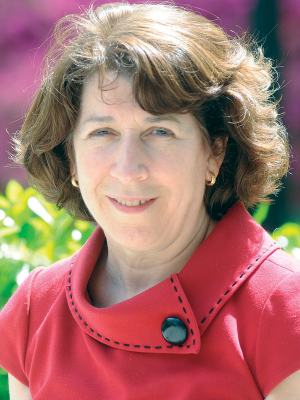
Kathleen R. McKeown is the Henry and Gertrude Rothschild Professor of Computer Science at Columbia University and the Founding Director of Columbia's Data Science Institute (2012-2017). She has been a faculty member since 1982 and served as Department Chair (1998-2003) and Vice Dean for Research in the School of Engineering and Applied Science. Her research focuses on natural language processing , text summarization , natural language generation , and social media analysis . Current projects include neural methods for extractive/abstractive summarization, electricity usage message generation via reinforcement learning, and social media sentiment analysis in low-resource languages like Uyghur. She leads the Columbia NLP Group and developed the long-running Newsblaster system (2001-present) for automated news tracking and multi-document summarization. Key scientific awards include NSF Presidential Young Investigator (1985) NSF Faculty Award for Women (1991) AAAI Fellow (1994) ACM Fellow (2003) ACL Founding Fellow (2012) Columbia Great Teacher Award (2010) Anita Borg Woman of Vision Award (2010) She has held leadership roles in major academic organizations: President of the Association for Computational Linguistics (1992), Vice President (1991), Secretary-Treasurer (1995-1997), and board member of the Computing Research Association with secretary role.
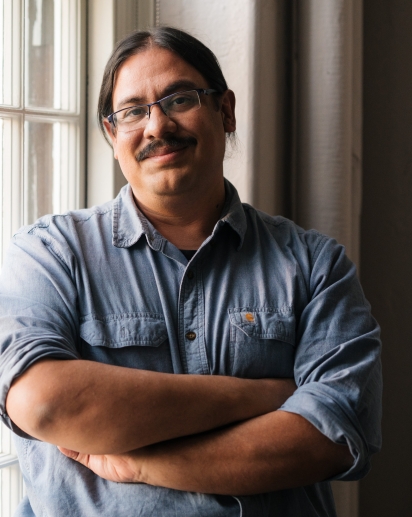
Lev Michael is a Professor of Linguistics at the University of California, Berkeley, in the Department of Linguistics within the College of Letters and Science. His research focuses on anthropological linguistics, typology, and the documentation and description of Amazonian languages, particularly in Peru. He is actively engaged in fieldwork, language revitalization, and the study of South American historical and contact linguistics. Research Interests: Lev Michael's work spans a wide range of topics in linguistic anthropology and descriptive linguistics. He specializes in the documentation of endangered Amazonian languages such as Iquito and Nanti, examining grammatical phenomena like evidentiality, negation, and subject-verb agreement. His research integrates fieldwork with computational methods, particularly in phylogenetic classification of language families like Tupí-Guaraní and Arawakan. He is deeply committed to language revitalization and community-based lexicography, contributing to school dictionaries and literacy materials. Recent Research Trends: His recent publications (2017–2022) reflect a strong emphasis on lexicography, computational phylogenetics, and the sociocultural dimensions of language use. Articles span from dictionary compilation to Bayesian modeling of language evolution, demonstrating a unique blend of traditional fieldwork and cutting-edge quantitative analysis. There is a consistent focus on Arawakan and Tukanoan languages, evidentiality, poetic structure in oral traditions, and the historical relationships among South American language families. Scientific Contributions: Co-developer of lexicographic resources for Iquito and other endangered languages Pioneer in applying computational phylogenetics to South American language classification Contributor to the understanding of evidentiality and reported speech in Amazonian languages Advocate for language revalorization and community-led documentation Advising and Grants: While specific students and funded grants are not listed in the provided text, Lev Michael frequently collaborates with students and community members on documentation projects. His extensive co-authorship with scholars like Christine Beier and Jaime Pacaya Inuma suggests a collaborative, team-based research model involving students, local speakers, and interdisciplinary partners. His work likely involves external funding given the scale of fieldwork and publication output, though specific grants are not mentioned. Labs and Research Teams: Lev Michael is associated with the Fieldwork and Language Documentation group and the Language and Social Context faculty at UC Berkeley. His collaborative projects involve multidisciplinary teams including linguists, anthropologists, and native speaker consultants, particularly from Peruvian Amazonian communities. He contributes to digital language archiving and lexicography using tools like FLEx (FieldWorks Language Explorer), indicating involvement in computational language documentation initiatives.
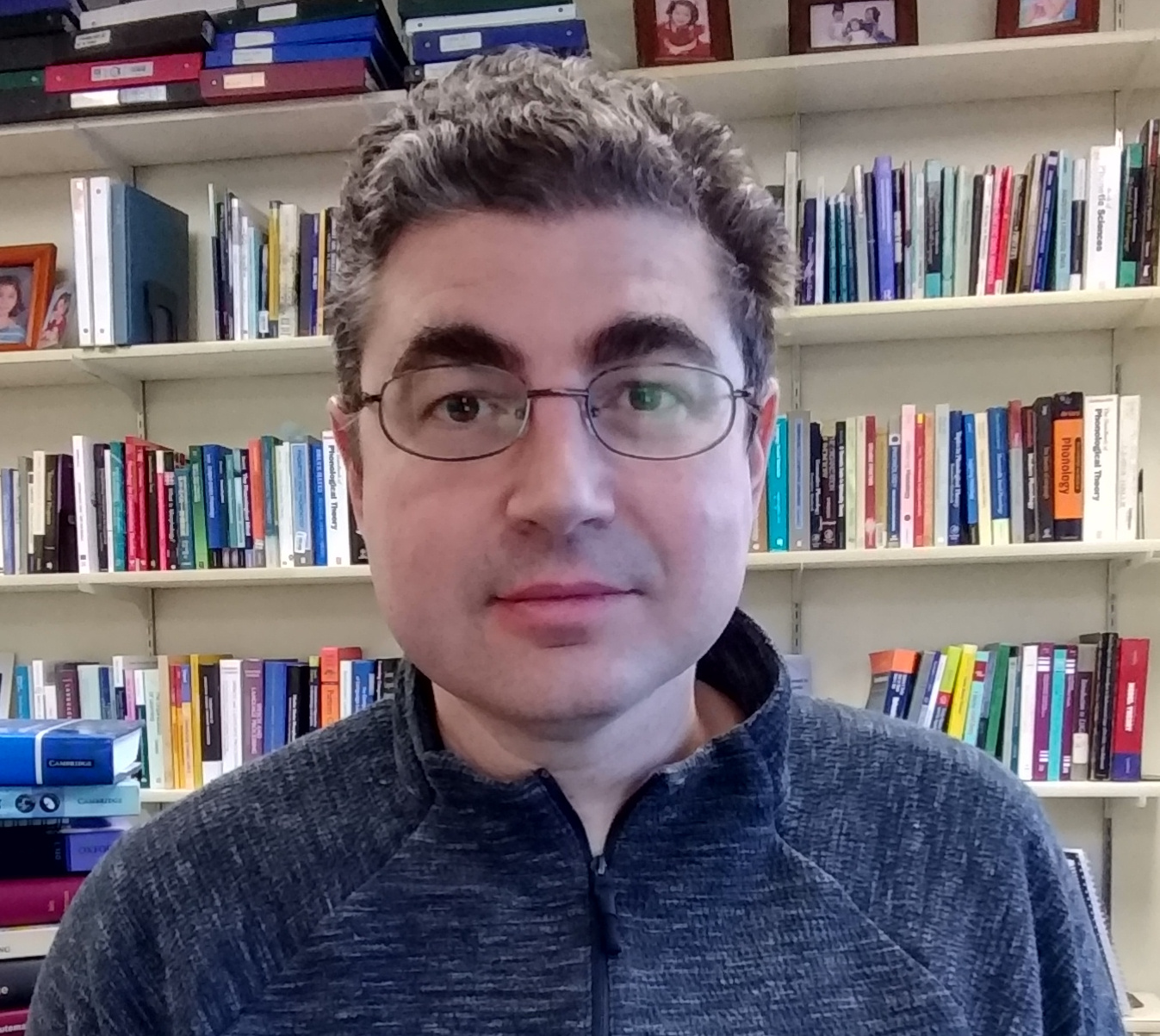
Stuart Shieber is the James O. Welch, Jr. and Virginia B. Welch Professor of Computer Science in the School of Engineering and Applied Sciences at Harvard University. He is a prominent researcher in computational linguistics and natural language processing, with significant contributions across multiple related fields including theoretical linguistics, computer-human interaction, automated graphic design, and the philosophy of artificial intelligence. Professor Shieber's research interests focus primarily on computational linguistics, examining natural language from the perspective of computer science. His work spans scientific and engineering goals, utilizing foundational formal and mathematical tools. He has made significant contributions to grammar formalisms, psycholinguistics, semantics, and synchronous grammars with applications in machine translation and sentence compression. Beyond computational linguistics, his research extends to automatic layout of charts and maps, novel interaction techniques for document reading and diagram layout, online auction mechanisms, library book access prediction, biological evolution tree reconstruction, and the philosophical basis for Turing's test for machine intelligence. His recent publications demonstrate a continued focus on neural language models, syntactic agreement mechanisms, readability assessment, conversational understanding, and bias detection in language models. His research has evolved from traditional grammar formalisms to incorporate modern neural network approaches while maintaining a strong theoretical foundation. The trend shows increasing attention to ethical considerations in NLP, particularly around bias detection and mitigation, alongside continued theoretical work on language structure. Presidential Young Investigator award (1991) Presidential Faculty Fellow (1993) John L. Loeb Associate Professorship in Natural Sciences (1993) Harvard College Professorship (2001) Fellow of the American Association for Artificial Intelligence (2004) Fellow of the Association for Computing Machinery (2014) Fellow of the Association for Computational Linguistics (2017) Professor Shieber has advised numerous PhD students who have gone on to successful careers at institutions including UCSD, Cornell University, Microsoft Research, Google, and various academic institutions. His work on open access and scholarly communication policy, particularly his development of Harvard's open-access policies, led to his appointment as the first director of the university's Office for Scholarly Communication. He is also the founding director of the Center for Research on Computation and Society and a faculty co-director of the Berkman Center for Internet and Society. His laboratory work has focused on advancing computational linguistics through both theoretical and applied research, with numerous patents and co-founding of Cartesian Products, Inc., a high-technology research and development company. His future work appears to be focusing on the intersection of neural network approaches with traditional linguistic theory, particularly in understanding and mitigating bias in language models, while continuing his long-standing interest in the theoretical foundations of language processing.
Rolando Coto Solano is an Assistant Professor of Linguistics at Dartmouth College , with an Adjunct Assistant Professor appointment in Computer Science and an Affiliate Professor role in the Quantitative Social Science Program (QSS) . He focuses on creating computational tools to document and revitalize Indigenous languages like Cook Islands Māori and Bribri. Education : PhD and MA in Linguistics from the University of Arizona; BA in Computer Science from the University of Costa Rica. Research Interests include: Natural Language Processing for Indigenous and Under-Resourced Languages Tonal Phonetics and Phonology, with a focus on tonal reduction Sociophonetics, particularly interisland variation in Cook Islands Māori Publication Trends show expertise in automatic speech recognition (ASR) for Indigenous languages, computational sociophonetics, tonal priming, and metadata standards in academic publishing. He collaborates on tools like Universal Dependencies treebanks and the ELPIS pipeline . Scientific Awards : Fulbright Foreign Student Program (Master’s Degree) National Science Foundation (NSF) Consultant Royal Society of New Zealand Marsden Fund Ship for World Youth Program (Office of the Prime Minister of Japan)
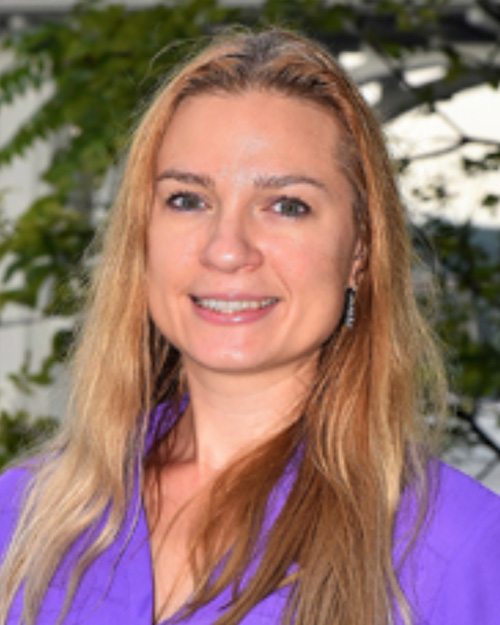
Malihe Alikhani is an Assistant Professor at Khoury College of Computer Sciences , Northeastern University , a Visiting Fellow at the Brookings Institution specializing in AI policy, and serves as the Ethics Chair of the Association for Computational Linguistics . She is also a member of the Northeastern Ethics Institute . Her research focuses on developing AI systems that enhance communication, decision-making, and knowledge-sharing through rigorous integration of cognitive and social sciences with machine learning. Her work spans academic, policy, and applied research domains, emphasizing contextual AI systems. She leads the Contextual AI Lab , which develops models capturing human interpretation to support collaborative meaning construction between humans and machines. Her recent publications address uncertainty modeling in dialogue systems, bias mitigation in sign language processing, and ethical AI frameworks. Key contributions include: Advancing sign language understanding in NLP Developing uncertainty-aware dialogue systems Creating discourse-coherent task-oriented dialogue frameworks Formalizing equity in text generation Scientific Awards: Best Theme Paper Award (ACL 2021) Best Paper Award (UAI 2022) She mentors students and researchers in areas spanning sign language processing, dialogue systems, and ethical AI. Her lab collaborates with Deaf and Hard-of-Hearing communities and cognitive science experts to ensure inclusive AI development.
Pascal Mark Gygax is a faculty member at the University of Fribourg , specifically within the Faculty of Philosophy under the Department of Psychology . His academic career spans psycholinguistics, cognitive psychology, and gender studies, focusing extensively on how language structures influence gender perceptions and cognitive biases. With a research profile marked by experimental methodologies, Gygax has published 64 works, including a 2021 book Does the Brain Think Masculine? that critically examines the psycholinguistic impacts of gender-fair language reforms. Role: Researcher at Department of Psychology, University of Fribourg Key Collaborations: Sandrine Zufferey, Ute Gabriel, Anton Öttl Research Focus: Gygax investigates the cognitive mechanisms behind gender representation in language, particularly how grammatical gender systems (e.g., French, German) perpetuate male-dominated mental models. His work explores: Experimental validation of gender-neutral pronouns Discourse connective processing across age groups Impact of language reform on occupational stereotypes Cross-linguistic comparisons of gender perception Implicit bias in performance evaluation (e.g., magic tricks) Recent Publications (2023-2025) demonstrate methodological rigor in studying: Neological intuition in Romance languages Temporal focus and spatial cognition Connective mastery in L2 contexts Participant variability in experimental linguistics Gender ratio norms across global languages Pragmatic constraints on causal connectives Scientific Contributions: While no explicit awards are listed, Gygax's work has significantly advanced: Development of experimental paradigms for gender perception studies Creation of multilingual datasets on role noun norms Validation of facial feedback mechanisms through collaborative research Understanding of discourse coherence in educational contexts Advising & Collaborations: Though specific students aren't named, Gygax collaborates with: Development of the Routledge Handbook of Experimental Linguistics Leadership in SNSF-funded projects Contributions to debates on inclusive language policies
Paul Portner is a Professor in the Department of Linguistics at Georgetown University. He holds a Ph.D. from the University of Massachusetts and a B.A. from Princeton University. His research focuses on semantics and pragmatics, particularly their interfaces with syntax, exploring topics such as verbal mood, speaker-addressee relations, and modality. He has led NSF-funded projects on clause types and gradable modal expressions, collaborating with researchers like Raffaella Zanuttini and Aynat Rubinstein. His book Mood (2018) and numerous articles in journals like Natural Language Semantics and Language reflect his contributions to formal semantics and pragmatics. Current projects include studies on speech style and politeness, and a book under contract with Oxford University Press. Portner teaches courses such as Semantics and Pragmatics and frequently participates in summer schools globally. Education : - Ph.D. in Linguistics, University of Massachusetts - B.A. in Linguistics, Princeton University Research Interests : - Syntax-semantics interface - Modality and mood systems - Pragmatics of discourse - Cross-linguistic variation in speech styles Funded Projects : - NSF BCS-0234278: 'Clause Types: Form and Force in Grammatical Theory' (with Zanuttini and Pak) - NSF BCS-1053038: 'The Semantics of Gradable Modal Expressions' (with Katz, Herburger, and Rubinstein) Advising & Grants : - No formal student advisees listed in the provided materials. - Collaborations with international scholars in computational linguistics and formal semantics. Labs/Teams : - Active participation in interdisciplinary research groups at Georgetown and global institutions, focusing on mood systems and linguistic pragmatics.
Maria Averintseva-Klisch is a Senior Lecturer at the Department of German Linguistics, Faculty of Humanities, University of Tübingen. She specializes in text coherence (particularly referential coherence), semantics and pragmatics (especially demonstrative pronouns), syntax (right displacement), and linguistic applications in school education. Her research bridges linguistic theory with pedagogical practice, focusing on text grammar, literary analysis, and language education. University of Tübingen Department of German Linguistics Senior Lecturer since 2018 Her work emphasizes the integration of linguistic theory into school curricula, particularly through the Topological Model and referential coherence in texts. She has published extensively on German syntax-discourse interfaces, anaphoric demonstratives, and aesthetic reading strategies. Recent publications focus on pragmatic inferences in medieval literature, reference resolution in educational texts, and demonstrative pronouns in discourse. She actively contributes to academic conferences and collaborates with institutions like the German Society for Linguistics (Deutsche Gesellschaft für Sprachwissenschaft).
Jeffrey Heinz is a Professor at Stony Brook University , holding a joint appointment in the Department of Linguistics and the Institute for Advanced Computational Science . He has been at Stony Brook since 2017, following a decade at the University of Delaware. His research focuses on computational linguistics, formal language theory, grammatical inference, and phonology, with applications to robotics and artificial intelligence. He earned his Ph.D. in Linguistics from UCLA in 2007. Heinz’s work bridges theoretical linguistics and computational methods, emphasizing the learnability of linguistic patterns through formal models. He has contributed to understanding phonological typology, reduplication, and the mathematical foundations of language learning. His research has been published in Science , Phonology , and Machine Learning , among others. He was honored with the 2017 Early Career Award from the Linguistic Society of America for his contributions to computational learning theory in linguistics. He teaches advanced courses in computational phonology and linguistics, including a course at the LSA Summer Institute. He actively organizes academic sessions and serves on steering committees for conferences like ICGI. His interdisciplinary approach integrates linguistics with computer science, robotics, and mathematical logic. Award highlights include: 2017 Early Career Award (Linguistic Society of America) He advises students in linguistics and computational fields, though specific names are not listed here. His research labs and collaborations involve computational linguistics and robotics projects, such as stress pattern databases and grammatical inference benchmarks.
Andrew McKenzie is an Associate Professor in the Department of Linguistics at the University of Kansas, where he also serves as Director of Graduate Studies. He specializes in formal semantics and theory-driven language documentation with a focus on Native American languages, particularly Kiowa. His research interests include formal semantics, Native American languages (especially Kiowa), language documentation methodologies, switch-reference systems, noun incorporation phenomena, and grammatical complexity in polysynthetic languages. He maintains active research projects in Kiowa linguistics and extraterrestrial communication frameworks. Dr. McKenzie's publications demonstrate sustained focus on semantic theory, Native American language analysis, and innovative applications of linguistics. His recent work explores semantic structures across human and hypothetical alien languages, Kiowa grammatical systems, and pedagogical approaches in linguistics education. Articles frequently incorporate cross-linguistic comparison and formal theoretical frameworks. Honors include serving as invited plenary speaker at multiple international conferences (WSCLA, WECOL, WCCFL), recognition as Five-Minute Linguist runner-up, and receiving the DEL Grant from the National Science Foundation. He teaches courses including Semantics, Field Methods, Structures of Kiowa, and North American Indian Languages. Dr. McKenzie has developed educational tools like a LaTeX package for linguistics and pedagogical games including 'f(x): A Euro-style game for the λ-calculus'.
Rodica Frimu is an Assistant Professor of French specializing in Second Language Acquisition at the University of Tennessee, Knoxville. She holds a Ph.D. from Indiana University, Bloomington, and serves as the Language Program Director for lower-division French courses. Ph.D., Indiana University Her research focuses on the interplay between grammatical organization and working memory limitations in real-time deployment of L2 grammatical knowledge. Key areas include error detection mechanisms, subject-verb agreement, and phonological phenomena like liaison and enchaînement in French. Publications analyze computational cycles in language processing and inferencing strategies in native and non-native speakers. Recent articles explore feature-based vocabulary selection in the French future tense, inference-driven error detection in subject-verb agreement, and instructional impacts on L2 phonology. These works span journals like Glossa and Lingua , emphasizing morphosyntactic and phonetic challenges in French acquisition.
Eve Vivienne Clark is the Richard W. Lyman Professor of Humanities in the Department of Linguistics at Stanford University. She has been a faculty member at Stanford since 1971, rising from Assistant Professor to her current position as full Professor. Her extensive academic career includes numerous visiting professorships at institutions across Europe and North America. Clark's research focuses on first language acquisition, particularly examining how children acquire meaning, develop semantic understanding, and construct verb paradigms. Her work investigates pragmatic information in adult-child interactions, how children make inferences about unfamiliar words, and how they learn to distinguish homophones. She has made significant contributions to understanding how children place information in common ground during communication. Her recent scholarly output shows a consistent focus on pragmatic principles in language acquisition, with particular attention to conversational dynamics, common ground establishment, and how children process linguistic input. Her research spans multiple languages and examines both theoretical and applied aspects of language development. Foreign Member, Royal Netherlands Academy of Arts and Sciences (1991) Guggenheim Fellow (1983-1984) Fellow of multiple prestigious organizations including the American Association for the Advancement of Science, Association for Psychological Science, Cognitive Science Society, and Linguistic Society of America Richard W. Lyman Professorship in the Humanities (2007–) Clark has mentored numerous graduate students and has been instrumental in organizing the Child Language Research Forum, an influential annual conference that has shaped research in language acquisition. She has served on editorial boards for major journals including Language , Cognition , and Journal of Child Language , and has held leadership positions in professional organizations including President of the International Association for the Study of Child Language (2011-2014).
Dr. Angeliek van Hout is a faculty member at the University of Groningen's Faculty of Arts, where she leads the Acquisition Lab within the Center for Language and Cognition Groningen (CLCG). Her academic profile centers on experimental research into first language acquisition in typically developing monolingual children, employing a crosslinguistic perspective to investigate fundamental aspects of language development. Her research expertise spans multiple interconnected domains of linguistic development: Temporal reference (tense and aspect, telicity, event culmination) Nominal reference (definiteness, quantification) Syntactic structures (questions, passives, pronouns) Pragmatic reasoning (scalar implicatures, theory of mind) Dr. van Hout's methodological approach integrates formal linguistic theory with empirical experimentation, examining how children acquire complex linguistic structures across different languages. Her recent work demonstrates particular focus on logical operators and their interpretation in child language, with extensive crosslinguistic comparisons examining how children process disjunction under negation in Dutch, French, Hungarian, and Italian. She investigates the cognitive mechanisms underlying these linguistic phenomena, bridging theoretical linguistics with cognitive science. Her publication record shows consistent productivity with 89 research outputs including 25 articles, 23 conference contributions, and 20 book chapters. Notable recent publications include work on prosodic disambiguation in Dutch, free choice interpretation in French children, and crosslinguistic patterns in quantifier acquisition. Dr. van Hout actively contributes to the academic community through: Supervision of PhD students (4 supervised works documented) Editorial work including the TABU Festschrift for Jack Hoeksema Organizing academic events such as "Novel Semantic Research in Theory, Processing and L1 Acquisition" Presenting research at international conferences including the Boston University Conference on Language Development Her research has practical applications in understanding typical language development trajectories, which she communicates to broader audiences through public engagement activities. She has presented on language development in twins at multiple public events and participated in the NEMO Science Live initiative from 2016-2018, demonstrating commitment to knowledge transfer beyond academic circles. As leader of the Acquisition Lab, Dr. van Hout directs research examining how children develop linguistic competence across various domains, with particular attention to the interface between syntax, semantics, and pragmatics in early language development.
Gregory Scontras is Associate Professor and Undergraduate Director in the Department of Language Science at UC Irvine's School of Social Sciences. His research examines mental representations of language through formal semantics, experimental psychology, and computational cognitive science approaches. Research focuses on quantification, measurement semantics, context in ambiguity resolution, and heritage language acquisition. Recent work (2023-2025) investigates adjective ordering preferences across languages, multi-generational heritage language complexity, and computational models of social inference. Collaborations include researchers at Stanford, MIT, and Osnabrück. Current projects explore subjectivity in pragmatic inference, cross-linguistic scope ambiguity, and Rational Speech Act frameworks.
Dr. Hüseyin YUSUF is a Lecturer in the Department of Translation and Interpreting (Arabic) at 29 Mayis University. He holds a PhD in Arabic Language from Al-Azhar University (2013), following a Master's (2010) and Bachelor's (2005) from the same institution. His academic career includes roles as assistant professor (2014), researcher/supervisor for the Doha Historical Dictionary (2017), and supervisor of Arabic preparatory students in Jordan (2019). Education: B.A. in Arabic Language, Al-Azhar University (2005) M.A. in Arabic Language (2010) Ph.D. in Arabic Language (2013) His research focuses on Arabic grammar, historical lexicography, Quranic exegesis, and comparative analysis of classical texts. He has published extensively on topics including Prophetic Sunnah's linguistic influence, morphological irregularities in poetry, and grammatical mediation theories. His work with the Doha Historical Dictionary highlights his expertise in lexical evolution and historical semantics. Scientific awards and grants are not explicitly mentioned in available records. His publications demonstrate a strong emphasis on analyzing classical Arabic grammar through Quranic recitation variations, poetic structures, and historical dictionaries, with particular attention to particles like 'illa' (except) and syntactic mediation between opposites.