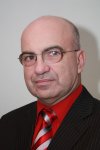
Miki Hermann is a CNRS Researcher at the Laboratory of Computer Science (LIX) at École Polytechnique, France. He is affiliated with the Algorithms and Complexity research group and maintains an active research program in theoretical computer science and computational logic. His research interests span computational complexity, constraint satisfaction problems, satisfiability, and logic in computer science. Hermann's work focuses on the theoretical foundations of computational problems, particularly examining complexity classifications, counting problems, and algorithmic solutions for logical and combinatorial structures. His research bridges theoretical computer science with practical applications in artificial intelligence and data analysis. The analysis of his recent publications reveals a consistent focus on computational complexity across various logical frameworks. His work demonstrates expertise in classifying the complexity of constraint satisfaction problems, propositional logic systems, and graph-theoretic problems. Notable research directions include minimal inference problems, counting complexity, and applications of satisfiability to big data transformation through his MCP project. Hermann is part of the Algorithms and Complexity research group at LIX (CNRS, UMR 7161), where he contributes to theoretical computer science research. He has developed significant software projects including MCP (Multi-Classification Project) for transforming datasets into propositional formulas and GYT (Generalized Young Tableaux) for solving variadic polynomial equations over non-negative integers.
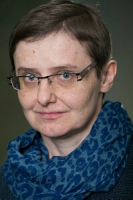
Professor Kasia Jaszczolt is Professor of Linguistics and Philosophy of Language at the University of Cambridge, where she is affiliated with the Faculty of Modern and Medieval Languages and Linguistics and the Department of Theoretical and Applied Linguistics. She is also a Professorial Fellow at Newnham College, where she serves as Director of Studies in Linguistics. Joining Cambridge in 1995 as an Assistant Lecturer, she progressed through the ranks to become a full Professor in 2010. She previously taught at Oxford, Brighton, and Sussex universities. Her educational background includes Master's degrees in English and Linguistics (1987) and Philosophy (1988) from the University of Łódź, Poland, followed by a D.Phil. in Linguistics and Philosophy from the University of Oxford (1992), where she was a Rawnsley Scholar at St Hugh's College and previously a Soros Scholar at Somerville College. Jaszczolt's research sits at the intersection of linguistics and philosophy, with particular focus on semantics, pragmatics, and the philosophy of language. She developed the influential theory of Default Semantics, which proposes 'dynamic functional propositions' as a way to capture meaning as it evolves in discourse. Her recent work centers on two major projects: (i) dynamic meaning in discourse, where she develops the concept of a functional, dynamic proposition, and (ii) the semantics, pragmatics, and metaphysics of time, particularly human concepts of time and time flow as externalized in different languages. Her research bridges linguistic analysis with philosophical inquiry, examining how language reflects and shapes our understanding of fundamental concepts. Her scholarly output shows a clear evolution from foundational work on propositional attitude reports and semantic ambiguities toward more expansive investigations of self-expression across languages and cultures, and most recently to comprehensive examinations of time representation. The articles demonstrate increasing interdisciplinary engagement, connecting linguistics with philosophy of mind, cognitive science, anthropology, and healthcare communication. Member of Academia Europaea (2012) Alumnus VIP, University of Łódź (2015) Throughout her career, Jaszczolt has secured significant research funding, including from The Leverhulme Trust for projects on Default Semantics (2003-4) and Expressing the Self: Cultural Diversity and Cognitive Universals (2014-17). She currently collaborates on the CHRONOS project 'Rethinking and Communicating Time' with Universitat Autònoma de Barcelona. She serves as General Editor of the Oxford Studies of Time in Language and Thought book series and sits on numerous editorial boards including Journal of Pragmatics and Intercultural Pragmatics. Her academic leadership includes serving as President of the Cambridge Institute of Language Research and Head of Department of Linguistics (2009-11). Based at Newnham College, Jaszczolt maintains an active research group focused on time representation and discourse meaning. She collaborates internationally, particularly with researchers in Barcelona on temporal linguistics, and with scholars across Europe on cross-cultural aspects of self-expression. Her work has created a distinctive approach that bridges formal linguistic analysis with philosophical inquiry into fundamental concepts.
Dr. Lecturer Ahmed Nureddin KATTAN is a scholar at Kastamonu University, Faculty of Theology, Department of Fundamental Islamic Sciences . Holding a PhD in Fundamental Islamic Sciences (2022) and MSc (2017) from the same institution, his work focuses on Arabic linguistics, Quranic exegesis, and rhetorical analysis . PhD: Linguistic Inferences in Qadi Abduljabbar's 'Mutashabih al-Qur'an' MSc: Linguistic Issues in Sunni Exegesis His research examines semantic shifts in Arabic morphology , Quranic translation challenges , and historical linguistic frameworks . He supervises research on linguistic polysemy in Quranic texts and leads projects analyzing medieval Islamic linguistic theories, including works by Ibn al-Shatir and Al-Zamakhshari. Recent publications include: 2025: 'Pronoun Placement in Bursawi's Exegesis' 2024: 'Lexical Redundancy in Quranic Turkish Translations' 2023: 'Linguistic Expansion in Ghazali's Commentaries' He serves as Editorial Board Member for journals like Kastamonu University Faculty of Theology Journal and BALAGH Journal , while mentoring graduate students in Arabic language and exegesis. His work bridges classical Arabic semantics with contemporary theological translation issues .
Florian Schwartz is an Associate Professor of Linguistics at the University of Pennsylvania , where he also serves as the Undergraduate Chair and Associate Director for Education at mindCORE . His research integrates formal semantics and pragmatics with psycholinguistic experimentation to study how linguistic content and contextual information interact during language comprehension. Research Focus : Presupposition projection, scalar implicatures, definiteness systems, and social identity effects on interpretation. Methodology : Uses eye-tracking (visual world paradigm), truth value judgments, and online experiment platforms like PCIbex . Grants & Awards : Funded by NSF, ESF, XPRAG.de, and Penn’s URF. Mercator Fellow sponsored by DFG. Collaborations : Active with labs at Goethe-University Frankfurt, MIT, and University of Konstanz. Recent Publications (2023) explore covariation in processing, social identity effects on imprecision, and presupposition projection asymmetry. His edited work Experimental Perspectives on Presuppositions (2015) remains influential in theoretical psycholinguistics.
Benjamin Spector is a Research Director at the CNRS and an Associate Professor at École Normale Supérieure (ENS-PSL) , affiliated with the Institut Jean-Nicod (CNRS/ENS/EHESS). His work bridges natural language interpretation , formal logic , and experimental psychology , focusing on the interplay between compositional semantics and pragmatic reasoning . Research Interests: Syntax-semantics interface, scalar implicatures, presuppositions, plural predication, quantification, vagueness, and polarity sensitivity. Teaching: Courses on logic, semantics, and the Rational Speech Act (RSA) framework, including at ENS and ESSLLI. Collaborations: Extensive co-authorship with scholars like Paul Egré, Danny Fox, and Emmanuel Chemla, exploring topics from exhaustivity in RSA to trivalent logic for presuppositions . Labs: Associate Director of the CONCEPTS, LOGIC, REASONING research network at Institut Jean-Nicod.
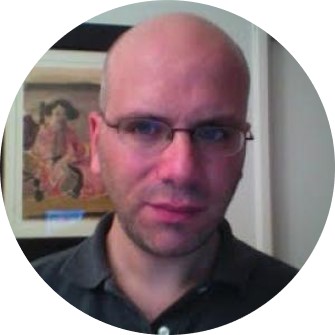
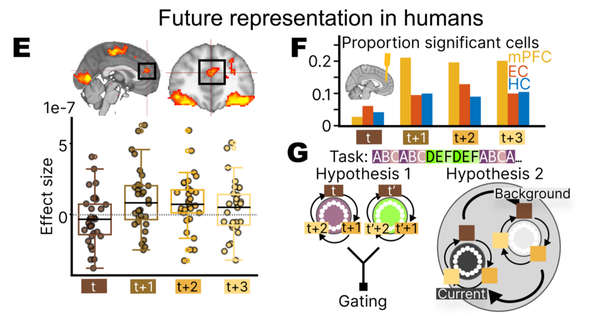
Mathias Sablé-Meyer is a Postdoctoral Researcher at University College London's Sainsbury Wellcome Centre, working in Tim Behrens's lab. He completed his PhD under the supervision of Stanislas Dehaene at PSL/Collège de France and NeuroSpin, CEA, where he investigated humans' ability to manipulate highly abstract structures, particularly focusing on the perception of geometry. His research spans cognitive neuroscience, computational modeling, and experimental psychology, with a focus on understanding the mechanistic implementation of compositional mental representations. He employs methodologies including MEG, fMRI, behavioral experiments, and computational models to investigate how humans mentally represent abstract structures like geometric shapes, language, and mathematical concepts. Sablé-Meyer's work reveals fascinating insights about human cognitive uniqueness, particularly in geometric perception compared to non-human primates. His recent research examines sequence processing mechanisms and aims to establish foundations for mechanistic implementations of Language of Thought models. He has published in top journals including Cognitive Psychology , Trends in Cognitive Sciences , PNAS , and Journal of Neuroscience . Glushko Dissertation Prize from the Cognitive Science Society (2023) As a supervisor, he co-advises Master's students including Maxime Cauté, who is exploring cross-modal representation of sequences, and is involved with several other students including Svenja Kuchenhoff, Amy Wong, and others. His lab follows open science principles, with code systematically published on the Open Science Framework alongside articles. His research program bridges cognitive science, neuroscience, and artificial intelligence, with implications for understanding both human cognition and developing more human-like AI systems. He maintains active collaborations across institutions including UCL, Collège de France, MIT, and École Normale Supérieure.
Mayumi Masuko is a Professor at the School of International Liberal Studies, International Christian University, specializing in Theoretical Linguistics with a focus on Semantics and Pragmatics. She holds a PhD in Linguistics from the University of Cambridge and has maintained an active research profile since the 1990s. PhD in Linguistics, University of Cambridge MPhil in Linguistics, University of Cambridge BA in Liberal Arts (English Linguistics), International Christian University Her research centers on the syntax-semantics-pragmatics interface, particularly examining lexical meaning extension, valence change, and argument suppression in Japanese and English. She investigates how contextual factors influence grammatical acceptability, with notable work on politeness formalization, connectives, and cross-linguistic comparisons of verb behavior. Her studies often bridge theoretical linguistics with applied concerns in academic writing and language education. Her publication record from 1995-2006 reveals consistent engagement with lexical semantics and pragmatic interfaces, demonstrating methodological diversity through corpus analysis, theoretical modeling, and cross-linguistic comparison. Key themes include the role of context in meaning determination, the fluidity of verb valence, and the pragmatic constraints on grammatical structures. JACET Award (Academic), 1998 Dr. Masuko has led multiple internal research projects including “Pragmatics of Politeness Formalization” (2006) and “Verb Meaning Reclassification in Japanese” (2002), receiving institutional support for her investigations into linguistic theory. Her teaching portfolio includes advanced seminars on pragmatics and semantics, reflecting her research expertise. She maintains affiliations with the Global Education Center and has participated in international collaborations, including a visiting researcher position at Cambridge University (2007-2009). Her work connects theoretical linguistics with practical applications in language education, particularly through analyses of academic vocabulary and plagiarism in second-language writing. Current research directions appear focused on computational approaches to contextual meaning and the formalization of pragmatic phenomena in Japanese grammar.
Dr. Anna Socka is an Assistant Professor at the Institute of German Philology within the Faculty of Languages at the University of Gdańsk, a position she has held since December 2003. Her academic work focuses on theoretical and contrastive linguistics with special emphasis on modality, evidentiality, and Polish-German language comparison. Education: PhD in German Linguistics from University of Cologne (1995-2003), nostrified by University of Gdańsk MA in German Philology from Catholic University of Lublin (1988-1994) Dr. Socka's research centers on the intricate relationships between modality and evidentiality, particularly reportative expressions, and their connections to aspectuality. Her work extensively explores pragmatic dimensions including conversational implicatures, contrastive Polish-German linguistics, and specialized areas like Mennonite cemetery epigraphy. She employs both theoretical frameworks and corpus-based methodologies to analyze how modal and evidential markers function across discourse contexts and grammatical structures. Her publication record demonstrates consistent scholarly output with significant contributions to understanding reportative constructions, hearsay particles, and the syntax-semantics interface in German and Polish. Recent work (2020-2025) shows increasing focus on corpus-based analysis of modal-aspectual interactions and evidential marking systems. Scientific Recognition: Individual Rector's Award of the third degree for doctoral dissertation Dr. Socka maintains active scholarly engagement through numerous international conference presentations (over 25 between 2004-2025), particularly at events organized by the Societas Linguistica Europaea and German linguistics associations. She has served on research teams with notable linguists like Prof. Björn Wiemer and participates in multiple scholarly organizations including the Mitteleuropäischer Germanistenverein and Societas Linguistica Europaea. Her methodological approach combines rigorous theoretical analysis with empirical corpus studies, contributing significantly to the understanding of modal and evidential phenomena in Germanic and Slavic languages.