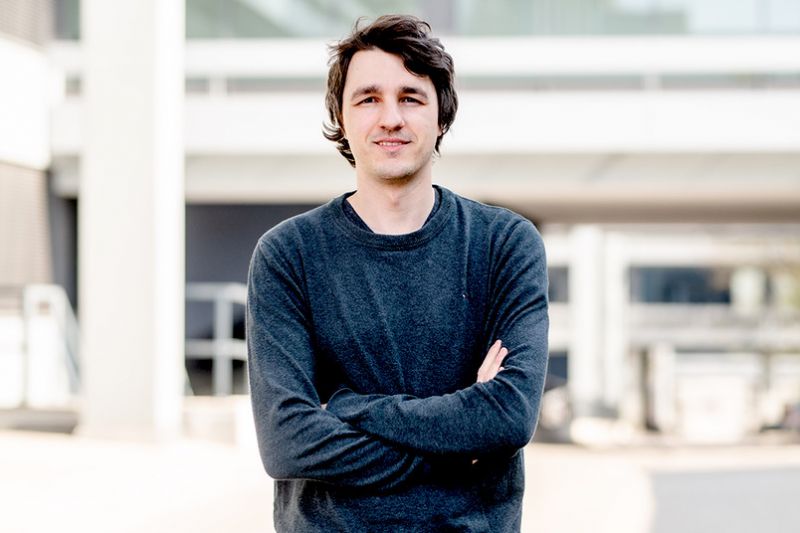
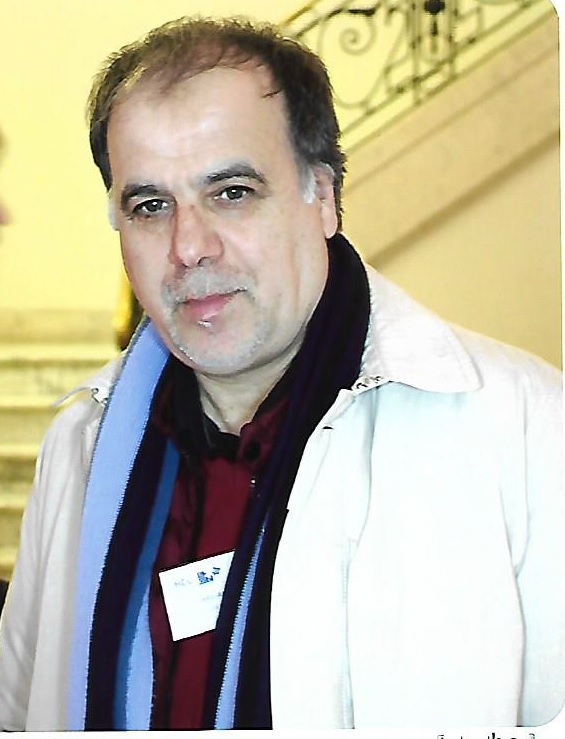
Prof. Dr. Jonathan Bedford is a leading researcher in physical geodesy at Ruhr-Universität Bochum's Institute of Geology, Mineralogy and Geophysics. Previously, he worked at the German Research Centre for Geosciences (GFZ) in Potsdam and the Free University of Berlin. His research focuses on subduction zone dynamics, coseismic/postseismic deformation, and machine learning applications in geophysics. University of Leeds (BSc Geosciences) Colorado School of Mines (MS Geosciences) Free University of Berlin (PhD 2015) His work spans: Subduction zone mechanics and earthquake cycles Viscoelastic relaxation and afterslip modeling Machine learning for earthquake prediction Geodetic data analysis with GPS and InSAR Fault interaction and seismic hazard assessment Power-law rheology in crustal deformation Research trends from his publications show emphasis on: Pre-earthquake deformation patterns (wobbling, gradual unlocking) Postseismic processes (afterslip, viscoelastic relaxation, poroelasticity) Integration of geodetic and seismic data Physics-based and data-driven earthquake analog models Notable collaborations include GFZ Potsdam, Free University of Berlin, and Chilean institutions. His work combines numerical modeling with observational data to understand megathrust earthquake mechanisms and improve seismic hazard assessments.
Reid Holmes is a Professor in the Software Practices Lab at the University of British Columbia's Department of Computer Science, Faculty of Science. With over 15 years of academic experience, he has progressed from Assistant Professor at the University of Waterloo (2010-2015) to Associate Professor (2015-2022) and now full Professor (2022-present) at UBC. His research spans multiple dimensions of software engineering with a strong emphasis on the human aspects of development. Dr. Holmes' research interests focus on understanding the problems software engineers encounter when creating and evolving software systems. His work examines software testing and validation, source code reuse, code search, context-sensitive example location, API understanding, speculative analysis, code review, and team awareness. He believes that by better understanding how people create, explore, evolve, and reason about software systems, we can enhance developers' effectiveness and improve software quality. His research is characterized by its practical application to real-world software development challenges. His recent publications demonstrate a consistent focus on improving developer productivity through better tools and understanding of developer behavior. The publications reveal a trajectory from traditional software engineering topics toward newer areas involving AI-assisted development, with particular attention to how generative AI affects workflow and collaboration. His work consistently bridges theoretical software engineering concepts with practical developer experience considerations. ACM SIGSOFT Distinguished Paper Award (multiple times) FSE 2024 Most Impactful Paper Award 2024 ICSE Most Influential Paper Award Winner of the 2008 MSR Mining Challenge As an educator and mentor, Dr. Holmes has supervised numerous graduate students who have gone on to successful careers in academia and industry. He has served on program committees for major software engineering conferences including ICSE, FSE, and MSR, and has been an Associate Editor for TSE since 2016. His work on developer tools like CodeShovel, Devy, and Baker demonstrates his commitment to creating practical solutions that address real developer pain points.
Stefan Funke is a researcher at the University of Stuttgart, Germany, with a focus on algorithms and computational geometry. His work spans wireless communication, route planning, and trajectory analysis. Research Interests: Algorithms, Computational Geometry, Wireless Communication, Route Planning, Trajectory Segmentation His recent publications (2024-2025) explore topics like 3D epithelial cell dynamics, graph radius computation, and polyline simplification, emphasizing scalability and efficiency. Earlier works (2017-2019) investigate contraction hierarchies, energy-efficient routing, and trajectory storage systems. Stefan collaborates frequently with Sabine Storandt, Claudius Proissl, and Tobias Rupp. He applies geometric methods to problems in wireless networks, road systems, and data structures, with a recurring emphasis on optimization and robustness.
Allel Hadjali is a Full Professor in Computer Science specializing in Data Engineering at ISAE-ENSMA (École Nationale Supérieure de Mécanique et d'Aérotechnique) in Poitiers, France. He is affiliated with the Laboratory LIAS (Laboratoire d'Ingénierie des Applications de la Connaissance et des Systèmes) at ISAE-ENSMA. His academic career includes progression from Associate Professor to his current Full Professor position, with extensive teaching experience across multiple computer science domains. Professor Hadjali's research falls within the data science domain, with particular focus on Exploitation, Extraction, and Recommendation (E2R). His work applies Computational Intelligence and Soft Computing techniques to massive data exploitation and analysis, including flexible querying approaches (Skyline, Gradual, and Bipolar queries), modeling and querying uncertain/incomplete data, cooperative answering techniques, and data reduction through linguistic summaries. He also conducts research in recommendation systems (learning-based and group recommendation) and extraction techniques (mining gradual patterns), along with related interests in data quality, intelligent systems, and crowdsourced data management. His publication record demonstrates consistent contributions to top-tier journals and conferences, with recent work focusing on skyline query processing, uncertain data management, RDF knowledge bases, and explainable AI. His research shows a clear trajectory from foundational work in fuzzy logic and uncertain databases toward more applied research in semantic web technologies and machine learning explainability. Professor Hadjali serves on the editorial boards of several prestigious journals including the Journal of Smart Environments and Green Computing, Sensors Journal, and the Universal Journal of Aeronautics and Aerospace Research. He has also organized special issues on topics such as uncertainty in cloud computing and managing uncertain data. At ISAE-ENSMA, Professor Hadjali teaches courses including Formal aspects of software engineering, Language interpretations and compilation, Programming languages, and Data management and exploitation. Previously as an Associate Professor, he taught courses on object modeling, distributed algorithms, operating systems, and advanced databases focusing on preferences and uncertainty. He leads the Data Engineering team within the Laboratory LIAS, which focuses on developing computational intelligence approaches for modern data challenges. His current projects include work on data quality (QDoSSI project funded by CNRS Mastodons 2016-2018) and research actions in GDR MADICS 2018 related to scientific data quality.
Hugues Bersini is a Professor at Université Libre de Bruxelles (ULB) and Co-Director of the IRIDIA laboratory, the Artificial Intelligence research laboratory of ULB. His academic career spans over three decades, with significant contributions to the fields of artificial intelligence, complex systems, and biological networks. Bersini earned his MS degree in 1983 and his Ph.D. in engineering in 1989, both from Université Libre de Bruxelles. After working as a researcher with an EEC grant from the JRC-CEE in Ispra (1984-1987), he joined the IRIDIA laboratory at ULB, where he has remained throughout his career, eventually becoming a full professor. His research spans a diverse range of topics within artificial intelligence and complex systems. Bersini is particularly known for his work on modeling and control of complex systems, neural networks, fuzzy control, data mining, autonomous agents, and biological networks. He pioneered the exploitation of biological metaphors, especially from the immune system, for engineering and cognitive sciences applications. His research has evolved to include computational chemistry, immune engineering, cognitive sciences, bioinformatics, and object-oriented technology. In recent years, he has focused on business intelligence applications and public goods through the Brussels Institute FARI. Throughout his career, Bersini has published approximately 300 papers, demonstrating consistent productivity and evolving research interests. His early work focused on optimization algorithms and immune-inspired computing, which gradually expanded to include fuzzy and neuro control systems, biological networks, and more recently, applications to real-world problems through spin-off companies and the FARI institute. His publications show a clear trajectory from theoretical foundations to practical applications, with growing emphasis on interdisciplinary approaches that bridge computer science with biology, chemistry, and cognitive sciences. Bersini has been actively involved in the academic community, having co-organized major conferences including the Parallel Problem Solving from Nature (PPSN), European Conference on Artificial Life (ECAL), European Workshops on Reinforcement Learning (EWRL), and International Competitions on Evolutionary Optimization (ICEO). He also organized tributes to Francisco Varela and the International Conference on Artificial Immune Systems (ICARIS). As an educator, Bersini teaches artificial intelligence, object-oriented programming (C++, Java, .Net, Kotlin, UML, Django/Python), and design patterns to both university students at Solvay and Polytechnic Schools and for industry professionals. He has authored fourteen French books covering computer science fundamentals, complex systems, and the intersection of computer science with other fields. His books range from technical manuals to philosophical explorations of complex systems and emergence. Bersini has coordinated significant research projects including the FAMIMO LTR European Project on fuzzy control for multi-input multi-output processes and participated in ESPIRIT projects NEMORETS and METHODS. His work has led to practical applications through spin-off companies such as Cluepoints, Tevizz, and In Silico DB, and more recently through the Brussels Institute FARI which addresses public goods like mobility, epidemics, access to jobs and schools, and energy transition.
Stefan Funke is a Professor at the University of Stuttgart's Institute for Formal Methods in Computer Science, part of the Faculty of Computer Science, Electrical Engineering and Information Technology. His work focuses on algorithm design and computational geometry with applications in road networks, trajectory analysis, and geographic information systems. He leads the Algorithmics Group, developing efficient algorithms for shortest path planning, network optimization, and privacy-preserving queries. Research interests include geometric algorithms, graph theory, and practical implementations of theoretical results in transportation and spatial data analysis. Notable contributions involve contraction hierarchies for fast shortest path queries, trajectory mining techniques, and methods for preserving privacy in network-based computations. Recent work emphasizes scalable solutions for large-scale road networks, including simplification methods that preserve topological features and energy-efficient routing strategies for electric vehicles. His research often bridges theoretical foundations with real-world applications in navigation systems and smart mobility solutions. Awards and grants are not explicitly listed in the provided data, but his extensive publication record indicates sustained recognition in algorithmic research. He advises on multiple interdisciplinary projects involving spatial data processing and algorithm engineering.
Niels Seidel is a computer scientist and researcher at FernUniversität in Hagen, where he serves as the Lead of project APLE II at the CATALPA research center and as an alternate/deputy member of the CATALPA executive board. He works within the Faculty of Mathematics and Computer Science, focusing on the development of adaptive personalized learning environments for higher education. His work bridges computer science and educational technology, with particular emphasis on supporting self-regulated learning, reading comprehension, and assessment activities across diverse student populations. Seidel's research interests span multiple interconnected domains in educational technology. His primary focus is on Adaptive Learning Environments , where he designs, develops, and evaluates systems that support learners in self-regulated learning, reading, and assessment. His work in Learning Analytics involves analyzing and visualizing learning behavior at individual, group, and organizational levels while accounting for learner diversity. He has made significant contributions to Video-Based Learning , examining how video content can be structured and presented to optimize learning outcomes. His research increasingly incorporates Artificial Intelligence to create more responsive and personalized educational experiences, as evidenced by his recent work on generative AI applications for evaluating self-regulated learning skills. His publication record shows a clear trajectory toward increasingly sophisticated adaptive learning systems. Early work focused on foundational aspects of video-based learning and interaction design patterns, while recent publications demonstrate sophisticated integration of AI, learning analytics, and adaptive techniques. His research consistently addresses practical challenges in distance education while contributing to theoretical frameworks in educational technology. The 2024-2025 publications reveal particular emphasis on self-regulated learning assessment, reading comprehension support, and the application of generative AI in educational contexts. As an academic advisor, Seidel has supervised numerous bachelor's, master's, and diploma theses since 2018, mentoring students working on diverse projects related to educational technology. His current leadership roles include serving as spokesman for the Working Group Learning Analytics within the SIG Educational Technology of the German Informatics Society since 2021. He has secured funding for multiple projects, including the Google.org-funded Theresienstadt explained project and the BMBF-funded Life Long Learning Open Operating Platform (L³OOP). Seidel leads the APLE II project at CATALPA research center, which aims to develop domain-independent adaptive personalized learning environments for higher education. His work leverages the research infrastructure at FernUniversität in Hagen, particularly the Moodle-based learning management system, to implement and test innovative educational technologies with large student cohorts in real-world settings.
Badran Raddaoui is a Senior Lecturer (Maître de Conférences) at Telecom SudParis, where he conducts extensive research in artificial intelligence with a focus on knowledge representation, reasoning under uncertainty, and data mining. His work bridges theoretical foundations with practical applications in knowledge management and pattern discovery. His primary research interests include: Argumentation frameworks and logical reasoning systems Measurement and quantification of inconsistencies in knowledge bases SAT-based approaches for data mining problems Ontology reasoning under uncertainty Community detection in complex networks High utility itemset mining from transaction databases Dr. Raddaoui's recent publications demonstrate a strong emphasis on symbolic AI techniques for pattern extraction and robust reasoning with imperfect information. His work on inconsistency measurement through minimal inconsistent subsets and prime implicates has established him as a notable contributor to the field. He frequently applies constraint programming and SAT solving to problems in data mining and knowledge representation. His publication record shows consistent output from 2010 through 2024, with numerous papers in top-tier AI venues including IEEE Intelligent Systems, IJCAI, ECAI, and AAMAS. His research often involves collaborations with Saïd Jabbour and other researchers across multiple institutions. As an academic, Dr. Raddaoui contributes to the scholarly community through conference reviewing and participation in research projects focused on AI theory and applications. His current work continues to advance frameworks for knowledge base repair and conceptual clustering through pattern mining techniques.
Victor Jose Gallego Fontenla is an Assistant Professor at the University of Santiago de Compostela, affiliated with the Department of Electronics and Computing within the Higher Technical School of Engineering. He holds a Doctorate from the same institution with a 2023 thesis titled Conformance Checking-based Concept Drift Detection in Process Mining , supervised by Dr. Manuel Lama Penín and Dr. Juan Carlos Vidal Aguiar. His research focuses on Process Mining , specifically in Concept Drift Detection through advanced conformance checking techniques. Key areas include business process analysis, cloud-based process monitoring, and gamification applications in educational processes. He leads the GSI Group (Intelligent Systems Group), developing cutting-edge tools like dynamik for real-time drift detection. Publications span 2018-2025, emphasizing tool development, synthetic log generation, and cloud integration for scalable process analytics. His work addresses sudden and gradual drift phenomena in organizational workflows with applications in decision support systems and anomaly detection. No scientific awards are listed, but his contributions to process intelligence frameworks are notable. He maintains an active collaboration network and advises research projects focused on process automation and predictive analytics.
Didier Dubois is a CNRS Research Director (DR2) at the Institut de Recherche en Informatique de Toulouse (IRIT) within Université Paul Sabatier, Toulouse. He leads the ADRIA team (Argumentation, Decision, Reasoning, Uncertainty, Learning) in the 'Reasoning and Decision' thematic group. His work focuses on fuzzy sets, possibility theory, imprecise probability, decision theory, and uncertainty management in AI and operational research. Education: Ingénieur Civil de l'Aéronautique from ENSAE (1975) Docteur Ingénieur from ENSAE (1977) Docteur d'Etat from Université de Grenoble (1983) Habilitation à diriger des recherches from Université Paul Sabatier (1986) Research Interests: Explores mathematical models for uncertainty and vagueness, including numerical/qualitative possibility theory, risk analysis under partial ignorance, generalized possibilistic logic, qualitative decision theory, and applications in scheduling, information retrieval, and soft constraints. Key Contributions: Co-developed fuzzy set theory applications, edited influential volumes on uncertainty and decision-making, and pioneered formal frameworks for combining probability and possibility. Current research emphasizes bipolar knowledge representation and epistemic reasoning. Editing Roles: Co-Editor-in-Chief of Fuzzy Sets and Systems since 1999, and series editor for the Handbooks of Fuzzy Sets . Awards: Docteur Honoris Causa, Polytechnic School of Mons (1997) IFSA Fellow (1999) ISI Most Cited French Scientist (2001) IEEE Neural Network Society Pioneer Award (2002) Advising: Supervised numerous PhD students since 2005, including work on possibility theory, risk analysis, and decision fusion. Collaborates with institutions like IRSN, ONERA, and Airbus.
Benjamin Lee Greenman is an Assistant Professor at the Kahlert School of Computing , part of the John and Maria Price College of Engineering at the University of Utah. His research focuses on programming languages, gradual/migratory type systems, formal methods, and human factors in software development. He holds a Ph.D. from Northeastern University (2020), a CIFellows postdoc at Brown University (2020–2022), and degrees from Cornell University (B.S. in ILR, M.Eng. in CS). Key projects include: Forge: A tool for teaching formal methods with lightweight model finding. FlowFPX: Tools for debugging floating-point exceptions in scientific computing. LTL Tutor: An adaptive learning system addressing temporal logic misconceptions. Gradual Typing Benchmarks: Evaluating performance and guarantees of type systems. His work emphasizes rigorous methods for language design, including empirical studies, performance evaluation, and human-centered approaches. Recent contributions include exploring misconceptions in LTL education and advancing type system interoperability between typed and untyped code. Teaching roles include courses on compilers, software verification, and programming languages. He advocates for practical tools like Rhombus (Python-like syntax with Lisp macros) and Static Python ’s sound gradual typing system.