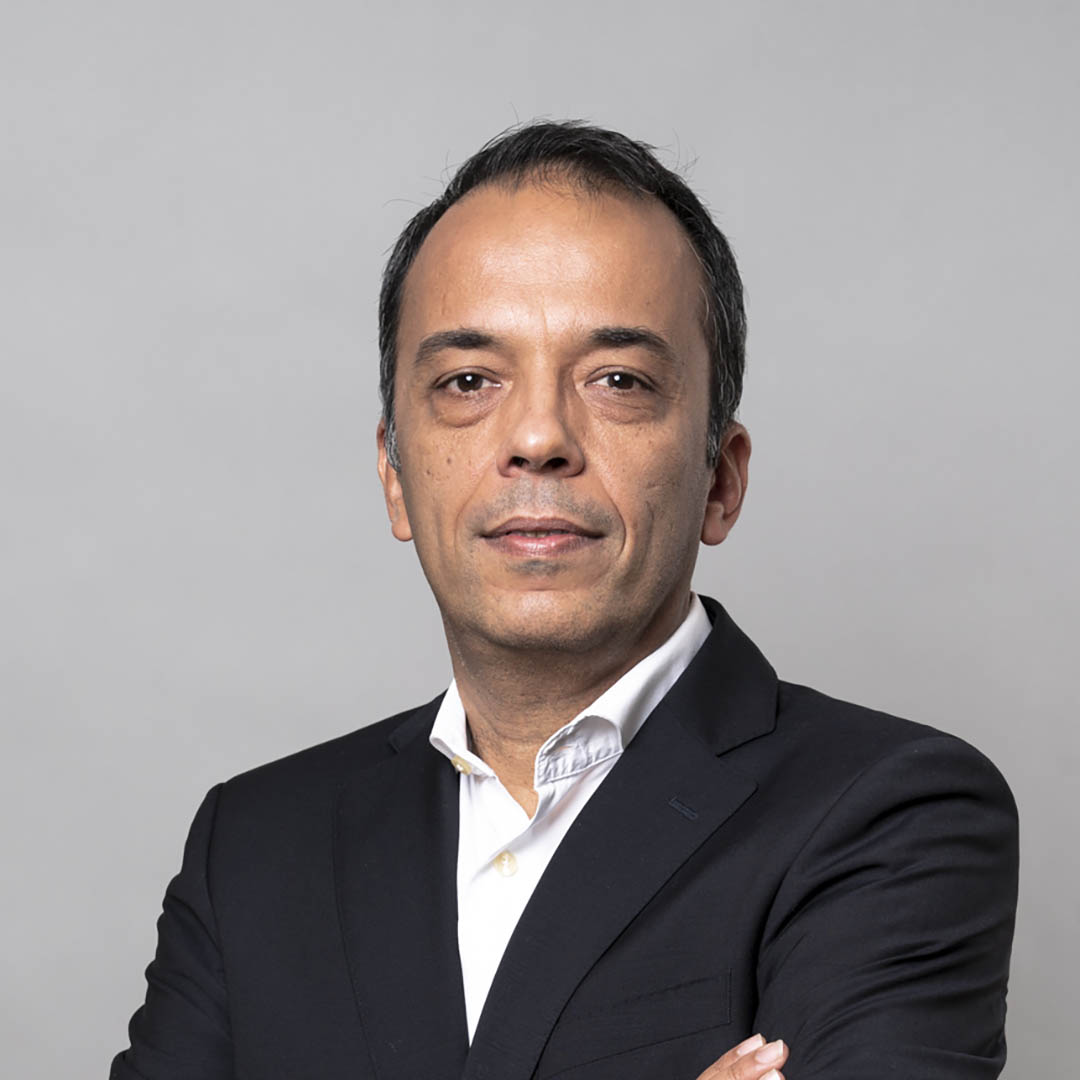
Anna Bernard is an Assistant Professor at the Department of Microeconomics , Universidade Católica Portuguesa (CATÓLICA-LISBON). Her work bridges Behavioral Economics , Experimental Economics , and Cultural Economics , focusing on crowdfunding dynamics, charitable giving, and diversity in cultural industries. Education: PhD in Economics, Paris School of Economics - Université Panthéon-Sorbonne Masters in Economics, Paris School of Economics - Université Panthéon-Sorbonne Her research combines empirical methods with experimental designs to explore public goods crowding effects, risk perception in crowdfunding, and socioeconomic impacts of policies like R&D tax credits. She has collaborated with the French Ministry of Culture and startups. Recent publications highlight trends in digital economy and cultural consumption , with a focus on teenager behavior , crowdfunding incentives , and redistribution dynamics . Despite no explicit awards listed, her work has been published in journals such as Revue Économique and Journal of Cultural Economics .
Luisa Domingues is an Assistant Professor in the Department of Information Science and Technology at ISCTE - University Institute of Lisbon. She serves as an Integrated Researcher at ISTAR-Iscte - Research Center in Information Sciences, Technologies and Architecture, specializing in Information Systems research. Her academic qualifications include a PhD in Information Science and Technology from ISCTE-IUL (2013). Her primary research interests focus on: Project Management : Methodologies, risk assessment, and knowledge sharing Database Systems : Management, interoperability, and standardization e-Government Solutions : Public sector information systems and shared services Ontological Frameworks : Particularly for architectural heritage documentation Educational Technologies : Blended learning approaches in higher education Her recent publications (2016-2024) demonstrate a strong focus on project management methodologies, knowledge transfer, and information systems in public sector contexts. Key thematic trends include PMBOK framework applications, agile methodology adoption challenges, data science project risks, and technological solutions for cultural heritage preservation. Most works employ case study research and empirical validation methods. Dr. Domingues maintains an active advising portfolio with 1 doctoral candidate and 36 master's students, primarily focusing on topics in project management, information systems, and data science applications. She has held significant academic leadership positions including: 4th Year Coordinator for Bachelor's in Computer Science and Business Management (2020-2027) Program Director for the same degree (2017-2019) At ISTAR-Iscte research center, she contributes to projects involving information systems architecture, data standardization, and knowledge management frameworks.
Luís Miguel Mendonça Rato is an Associate Professor at the Universidade de Évora and a Senior Researcher with a PhD at Centro ALGORITMI. He is affiliated with the CST R&D Group and VISTA Lab R&D Lab, focusing on interdisciplinary research at the intersection of Electrical Engineering, Computer Science, and Agricultural/Biomedical applications. Academic Degree: PhD Current Position: Associate Professor Labs: VISTA Lab Researcher IDs: ORCID 0000-0003-4492-7548, ResearcherID A-9152-2013, CiênciaID A914-6344-CD2D His research spans machine learning applications in Agricultural Engineering (Sentinel-2 satellite data for nutrient analysis), Biomedical Imaging (MRI-ADC texture analysis for tumor classification), and Control Systems (predictive control algorithms for water delivery canals and solar fields). With an h-index of 11 and 51 publications, his work emphasizes hybrid systems combining traditional engineering with computational innovation. Recent publications highlight trends in SLAM efficiency (2024), cloud service optimization (2022), and deep learning for medical imaging (2022-2023). He has contributed to Smart Cities initiatives through projects like M-Traffic (2006) and NanoSen-AQM (2020). As a senior researcher, he leads projects in the CST R&D Group and VISTA Lab , with notable work in the Universidade de Évora ecosystem.
Henrique O'Neill is an Associate Professor (with Habilitation) in the Department of Marketing, Operations and General Management at ISCTE - University Institute of Lisbon, Portugal. He is an Integrated Researcher at ISTAR-Iscte - Research Center in Information Sciences, Technologies and Architecture. His research focuses on information systems adoption, organizational strategy, and process optimization in healthcare, finance, and public administration. Education: PhD in Business Organization and Management - University of Cranfield (1995) Master's in Electrical and Computer Engineering - Higher Technical Institute (1987) Bachelor's in Electrical Engineering - Higher Technical Institute (1983) Research Interests: His work spans business/IT strategy, systems modeling, process analysis, and technology implementation. Key domains include healthcare informatics, banking systems, and Industry 4.0 applications. He emphasizes practical solutions for organizational performance through technology integration. Publication Trends: Recent articles explore intelligent business systems, telemedicine, design science methodologies, and supply chain innovation. His work consistently bridges theoretical frameworks with sector-specific applications in healthcare, education, and logistics. Professional Engagement: Member: Portuguese Telemedicine Association, Order of Engineers Commissioner: INEM (National Institute of Medical Emergency) reform study Director: Center for IT Development (2010-2014) Advising & Projects: Supervises 7 graduate students (1 PhD, 6 Master's). Leads EU-funded projects including: Atlantic Crossing (2024-2025): US-Portugal academic collaboration in AI/cybersecurity AAL4ALL (2011-2015): Ambient Assisted Living ecosystem UNITE (2000-2002): Ubiquitous teamwork platforms
Rui Pedro Figueiredo Marques is a Professor at the Higher Institute of Accounting and Administration, University of Aveiro, where he teaches Information Systems across technical, bachelor's, master's, and doctoral programs. He serves as course director for the Professional Higher Technical Course in Organizational Informatics and Communication and holds a board position at the Institute of Accounting and Administration, University of Aveiro. As a Full Researcher at GOVCOPP's Competitiveness, Innovation and Sustainability (CIS) group, his work focuses on Information Systems for Business, with recent emphasis on AI, Blockchain, and Business Intelligence applications in auditing and accounting contexts. Marques' academic credentials include a Ph.D. in Computer Science (2014, Universities of Minho/Aveiro/Porto), a Master's degree (2008), and a Bachelor's in Electronics and Telecommunications Engineering (2005, University of Aveiro). He has authored/co-authored over 50 publications, including journal articles, conference papers, and book chapters on topics ranging from ERP systems in auditing to digital transformation in low-density territories. He is editor-in-chief of the International Journal of Business Innovation and actively participates in funded research projects addressing governance, competitiveness, and public policies. His research explores intersections between technology and business practices, with notable contributions to AI in auditing, blockchain's role in financial transparency, and sustainable development frameworks for social economy entities. Notable projects include evaluations of ERP systems' impact on internal audit maturity and frameworks promoting accountability in private social solidarity institutions. Marques' work frequently emphasizes practical applications of technology in audit processes, education, and public sector modernization. He collaborates with institutions like the Portuguese Social Solidarity Sector and has advised on digital transformation strategies for tourism and hospitality industries.
Jesualdo Cerqueira Fernandes is an Assistant Professor at ISEG - Lisbon School of Economics and Management , part of the University of Lisbon. He also serves as a researcher at the ADVANCE Centre for Advanced Research in Management, contributing to studies in information systems and management. Education: PhD in Management (ISEG, 2018), Master’s in Information Management (University of Sheffield/Universidade Minho, 1994), and Bachelor’s in Computer Science (Faculty of Sciences, University of Lisbon, 1989) His research focuses on information systems strategy , agile methodologies , gamification , and benefits management . He has explored applications of these topics in environmental sustainability, banking, and insurance sectors. His work often bridges technical implementation with organizational impact. Recent publications highlight his interdisciplinary approach, with studies on gamification for sustainability and benefits management in insurance and banking sectors. Collaborative efforts span industries such as finance, energy, and education. Scientific Award: Commendation by ISEG Dean (2022) for advisory excellence in information systems He has supervised over 40 Master’s students and contributed to curriculum development, including coordination of the Master in Information Systems Management at ISEG.
Daniel W. Green is an Assistant Professor of Business Administration in the Finance Unit at Harvard Business School , Harvard University. He teaches Finance II to MBA students and pursues research at the intersection of corporate finance, capital markets, and financial intermediation. Education: PhD in Financial Economics – MIT Sloan School of Management BA in Economics & Mathematics – University of Rochester Research Interests: Professor Green’s scholarship centers on how the organization of financial markets shapes firm capital structure and broader economic activity. Current projects explore socially responsible capital allocation, bank exit policies in energy lending, transaction-tax externalities in real-estate markets, and retirement-income innovation. His work spans both theoretical modeling and empirical analysis, drawing on settings as diverse as high-yield debt markets and microfinance. Publications Profile: Across 16 refereed articles, working papers, and Harvard cases, Green’s recent output tackles pressing policy and market questions—from the fiscal impact of Los Angeles’ mansion tax to the real effects of bank divestment from coal. Collectively, these studies illuminate how financing frictions, regulatory policies, and investor preferences jointly determine capital flows, firm behavior, and household welfare. Teaching & Case Development: In addition to Finance II, Green has authored or co-authored multiple award-winning HBS cases covering divestment strategy (Harvard Endowment), retirement product design (RTX Lifetime Income), and competitive bidding (Anadarko Petroleum). Contact: Email: dgreen@hbs.edu Office: 235 Baker Library, Harvard Business School, Boston, MA 02163
Luis Amaral is an Associate Professor at the School of Engineering, University of Minho, where he has served since 1998. He holds a PhD in Computer Science (Information Systems) from the University of Minho (1995) and has extensive experience in teaching, research, and administrative leadership. His research focuses on Information Systems in social and organizational contexts, particularly in public administration, with over 400 publications including books, journal articles, and conference papers. Key roles include Vice-Rector for Organizational Transformation and Administrative Simplification, Director of the Information Systems Department (2005–2006, 2010–2012), and leadership in projects like the Virtual Campus (e-UM). He has held numerous administrative positions, including President of the School of Engineering’s Council (2013–2016) and Pro-Rector (2006–2009). His work emphasizes e-government, digital transformation, and public procurement systems. Recent research trends include digitalization of public services, regulatory compliance (e.g., GDPR in higher education), and optimization of renewable energy systems. He has contributed to international initiatives such as the ICEGOV conference and projects in Mozambique and Timor-Leste. His publications highlight innovation in administrative processes, citizen engagement, and institutional digital readiness. Luis Amaral has coordinated postgraduate programs, including the Master’s in Information Systems (2001–2002, 2016–2017), and led research centers like IDITE Minho. His career reflects a balance between academic rigor and practical impact in technology-driven governance and organizational change.
Paulo Sérgio Teixeira Costa is a professor in higher education and researcher at the University of Aveiro (Portugal), pursuing a PhD in Tourism. He specializes in Marketing, Tourism, and Planning/Management of Major Events. His research focuses on co-creation processes, touristic experiences, and cultural event strategies. Previously, he served as councillor for Tourism, Culture, and Marketing in Ílhavo Municipality (2002–2017). He is affiliated with the GOVCOPP research unit (Governance, Competitiveness, and Public Policy) and UNIDCOM/IADE. Education: PhD candidate in Tourism (University of Aveiro) Professional Titles: Specialist Professor in Marketing (2019) and Tourism (2021) Research interests include leveraging co-creation in cultural festivals, destination branding, and sustainable tourism strategies. His work emphasizes innovation in event redevelopment and the interplay between cultural heritage and visitor experiences. Key publications analyze case studies like the Bacalhau Festival and explore storytelling in maritime tourism. His contributions address effective event management and territorial strategies anchored in cultural assets.
University of Trás-os-Montes and Alto DouroPortugal
Adriano Lucena da Silva is a Professor at IFPB Campus João Pessoa, teaching in Environmental Management and Environmental Control programs. Holding degrees in Geography (1999), Law (2009), and an MSc in Oil and Gas Engineering (2013), his work focuses on Environmental Law, Licensing, and Management Systems. His research explores socio-environmental development dynamics in Brazil's semiarid regions through Private Natural Heritage Reserves, evaluated via tools like FMEA for environmental risk analysis. Publications emphasize policy-science-actor interactions and higher education curriculum design in environmental fields. Education: BSc Geography - UERN (1999) LLB Law - UERN (2009) MSc Oil & Gas Engineering - UNIT (2013) Current projects include a PhD on socio-environmental dynamics in Brazil's semiarid regions (UTAD, Portugal) and FMEA-based environmental risk analysis at IFPB João Pessoa campus.
Ricardo Cabral is an Associate Professor with tenure at ISEG (Institute for Economics and Management), University of Lisbon, where he teaches and conducts research in public finance, macroeconomics, currency and banking, and economic policy. He holds a PhD in Economics from the University of South Carolina and is a prolific author with over 40 scholarly publications, including journal articles, books, and policy papers. PhD in Economics – University of South Carolina (1998) His research interests span public finance , macroeconomic policy , banking union mechanisms , renewable energy economics , and fiscal sustainability in the Eurozone . He frequently contributes to public discourse through analytical writing, having published around 700 opinion pieces, notably in Público . His scholarly work critically examines the economic and monetary union, public debt management, and structural changes in the Eurozone. The most recent articles highlight a strong focus on Euro Area fiscal and monetary integration , banking regulation , and Portugal’s economic trajectory . His work combines empirical analysis with policy relevance, often using synthetic control methods and historical reviews to assess economic policies. Topics include the Dutch Disease in peripheral Euro countries, bail-in vs. bailout strategies, and the macroeconomic effects of renewable energy investments. Ricardo Cabral has co-authored significant policy proposals on restructuring Portugal’s external debt and has participated in public hearings at the Assembly of the Republic, the Legislative Assembly of Madeira, and the European Parliament, underscoring his role as a public intellectual and policy advisor. Co-authored two proposals for restructuring Portugal's external debt Regular contributor to national and international policy debates Testified before multiple legislative committees He actively supervises graduate students, including Master’s theses on public debt management and public sector wage expenditure, and a PhD on macroeconomics and structural change in the Eurozone. His teaching includes courses such as Macroeconomics II , Public Economics and Finance , and Economic Policy at both undergraduate and postgraduate levels. He is also involved in educational material development, including course reports and Euro Banking Union analyses.
University of Trás-os-Montes and Alto DouroPortugal
Maria Albertina Almeida Barreiro Rodrigues is an Adjunct Professor at Universidade Europeia since 2012 and invited Adjunct Professor at Lisbon Accounting and Business School (ISCAL–IPL) since 2017. She has held roles as a financial manager, auditor, and board member, combining academic and professional expertise in corporate governance and sustainability reporting. Professional Affiliations: Member of the Board of Auditors of Bank of Portugal (2023–present) Financial and Statutory Auditor since 2012 Former Chair of Audit Committees for public sector entities (5 years) Her research focuses on integrated reporting frameworks, non-financial信息披露, audit practices, corporate governance, and ethics. Recent work addresses stakeholder perspectives on sustainability disclosures and risk management in listed companies. Publications span topics like SME non-financial reporting standards, risk disclosure in emerging markets, and educational approaches to integrated assurance. Her work bridges theoretical frameworks with practical applications in European and Brazilian contexts. No scientific awards explicitly listed but maintains active participation in audit-related committees and professional bodies. Labs/Teams: Member of Territorial Transitions & Wellbeing (T2WELL) research group and involved in projects like Douro SocioEcoLL and Data4LowDensity initiatives.
Dr. Dirk C. Moosmayer is a Professor in the Strategy Department at KEDGE Business School, Bordeaux, specializing in responsible management and sustainability. He holds a PhD from the University of Hannover and previously spent eight years at the University of Nottingham Ningbo in China, with visiting positions at Imperial College London. His educational background includes: PhD from University of Hannover Moosmayer's research integrates business, consumer, and civil society perspectives around responsible management, with a focus on supply chain responsibility and Chinese consumer behavior regarding social/environmental concerns. His work examines how cosmopolitan values influence brand perception and explores humanistic leadership in German 'Hidden Champion' firms. He investigates the dual role of guanxi in Chinese sustainable supply chains and the psychological drivers of ethical consumption in Confucian contexts. His 15 most recent publications reveal a dominant focus on business ethics (60%), sustainability education (25%), and consumer behavior (15%), with emerging trends in virtue ethics frameworks and mobile technology for responsible management learning. Key thematic clusters include Chinese market dynamics, transdisciplinary competence development, and the practical implementation of sustainability in operations. Moosmayer serves as Associate Editor for Business Ethics: A European Review and previously for Academy of Management Learning & Education (2015-17). He is on the editorial boards of Journal of Business Ethics , Business & Society , and Journal of Management Inquiry , shaping discourse in responsible management scholarship.
Natalia Yakovleva is a Professor of Strategy and Sustainable Development at KEDGE Business School, where she leads the Sustainable Development Center of Excellence. She has held academic positions at Newcastle University, the University of Surrey, the University of Winchester, and Cardiff University in the UK. Her research focuses on sustainable development, circular economy, corporate social responsibility, and extractive industries, with fieldwork in Brazil, Ghana, India, and Russia. Education: PhD in Environmental Studies Her work examines sustainability in food systems, extractive industries, and waste management, emphasizing stakeholder engagement and policy innovation. She has published extensively in journals like the Journal of World Business and Journal of Business Ethics , and edited the Routledge Handbook of Extractive Industries and Sustainable Development . Current projects explore transitions to circular economy in developing economies, Indigenous socioecological resilience, and gender equality in artisanal mining. She collaborates globally with institutions on sustainable resource governance and community-focused mining practices. At KEDGE, she integrates sustainable development into strategic management education, advocating for systemic change through research and policy analysis. Her leadership in the Sustainable Development Center of Excellence drives cross-disciplinary initiatives addressing environmental and social challenges in extractive sectors.
Lusophone University of Humanities and TechnologiesPortugal
André Inácio is a Lecturer at Lusófona University , with a focus on public law, criminology, and urban security. He holds a Bachelor's degree in Right, a Higher Education Diploma in 2nd Degree Studies in Public Law, and postgraduate qualifications in Economic and European Criminal Law and Criminology. Research Interests: Public Law, Criminology, Corruption Prevention, Urban Security, Predictive Modeling, Migration Studies Publications: Explores intersections between law, security, and predictive analytics in peer-reviewed journals and book chapters.