Dr. Matthew Adams is Senior Lecturer in Mathematical Sciences at QUT, focusing on environmental and ecological modelling for conservation decision-making. As co-leader of QUT Centre for Data Science's Environment theme, he develops mathematical frameworks to analyze ecosystem responses to anthropogenic stressors, particularly in coastal and marine systems. Core research areas: Seagrass resilience under light/temperature stress Bayesian model calibration with expert knowledge Ecosystem feedback dynamics Publications demonstrate methodological innovations in uncertainty quantification, ensemble modeling, and ecological network analysis. Applied work informs Great Barrier Reef management and rangeland conservation through collaborations with CSIRO and government agencies. Adams leads the Applied Mathematical Ecology Group and creates open-source tools like EEMtoolbox for ecosystem forecasting.
Francisco M. Delicado is an Associate Professor in the Department of Sistemas Informáticos at Universidad de Castilla-La Mancha, Spain, where he has been employed since 2007. He earned his PhD in Computer System from the same institution, with his doctoral work beginning in 1999. His research spans several key areas in computer science and engineering, particularly focusing on Internet of Things (IoT) , Wireless Networks , Quality of Service (QoS) , and Environmental Monitoring . He has developed low-cost IoT ecosystems for detecting glyphosate in water and monitoring agrochemical spray drifts. Additionally, his work extends to medical IoT (IoMT), blockchain applications in e-government, and machine learning for vector monitoring. His recent publications show a strong trend toward applying IoT and machine learning to environmental and public health challenges. Earlier works focus on QoS mechanisms in wireless and mobile networks, including WiMAX (IEEE 802.16), TDMA/TDD, and HIPERLAN/2, with contributions to bandwidth allocation, contention resolution, and video transmission resilience. He has no listed scientific awards in the provided data. Francisco M. Delicado has collaborated extensively with researchers such as Teresa Olivares, Javier Aira, and Luis Orozco-Barbosa. While no formal advising roles or grants are mentioned, his long-standing publication record suggests active research leadership. There is no mention of specific labs or research teams, but his work implies involvement in networking and IoT-focused research groups at his university.
Asgeir Johan Sørensen is a Professor at the Department of Marine Engineering, Faculty of Engineering at NTNU. He holds a Dr. Eng. in Technical Cybernetics (1993) and an M.Sc. in Marine Engineering (1988), both from NTH (now NTNU). His research focuses on control engineering, hydrodynamics, autonomous systems, and marine robotics. He leads projects like Oppdrag Mjøsa , advancing autonomous marine operations and environmental monitoring. Key contributions include risk-based path planning, hydrogen fuel cell systems for marine propulsion, and hyperspectral imaging for underwater mapping. Research interests emphasize autonomous systems integration, underwater vehicle control, and sustainable marine technologies. He co-founded the Marine Cybernetics Laboratory (MC-lab) and Applied Underwater Laboratory (AUR-Lab) . His work bridges academia and industry, addressing challenges in marine robotics, energy systems, and satellite-based Earth observation. Recent publications highlight advancements in marine autonomy, including collision avoidance algorithms, hybrid power systems, and Arctic satellite missions. He collaborates widely, contributing to national and international initiatives in marine technology and environmental data governance.
Dr. Larry Hughes is an Instructor in the Department of Finance, Banking and Real Estate at the University of Nebraska at Omaha’s College of Business Administration. With over two decades of academic experience, he has held roles including dean and interim vice president. His professional background includes service in the U.S. Marine Corps and a career in software industry human resources. He holds a PhD in Business Administration (2005) from the University of Nebraska-Lincoln, an MBA, and a graduate credential in Finance (2018) from Northcentral University. His teaching focuses on finance principles, investment psychology, international finance, real estate, and personal financial planning. Research interests emphasize active learning methodologies in finance education and motivational strategies in classroom settings. He has contributed to peer-reviewed journals addressing organizational behavior, leadership authenticity, and curriculum design impacts. Dr. Hughes currently serves as a Master Reviewer/Team Chair for Quality Matters, a certification body for online education quality. He previously held roles such as Committee Member on the EMBA Taskforce and Board Member of the Sarpy County Sanitary Improvement District. His work integrates military discipline, industry human resources expertise, and academic leadership to foster innovative educational practices.
Dr Athar Qureshi is a Senior Lecturer at the School of Public Health within the Faculty of Health and Medical Sciences at the University of Adelaide. He holds a PhD, Master in ICT Management, and an Honours in Computer Sciences, complemented by a Certified Knowledge Manager credential. His primary affiliations include teaching and research roles focused on healthcare innovation and digital transformation. Dr Qureshi's academic journey includes over 20 years of experience across four countries in curriculum development and educational delivery. He specializes in enterprise transformation, leadership, and organisational change within healthcare contexts. His research emphasizes digital transformation strategies, knowledge management, and innovation pathways in healthcare organizations. His teaching philosophy integrates strategy and systems thinking, achieving high student outcomes through participatory learning methods. He leads interdisciplinary research on digital healthcare transformation with industry partners, supported by a dedicated research grant. Key publications address digital business frameworks, chatbot applications, and trust-based innovation models. Dr Qureshi actively engages in professional activities such as consultancies, masterclasses, and keynote speaking. His work bridges theory and practice, fostering innovation through resilience-building and boundary-pushing methodologies.
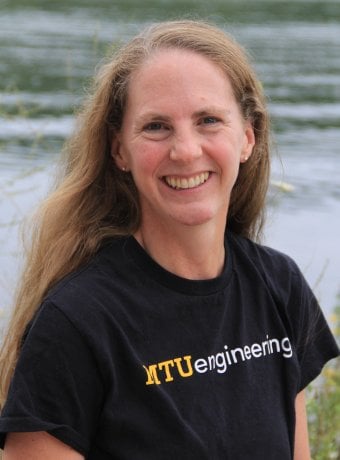
AJ Hamlin is a Teaching Professor in the Department of Engineering Fundamentals at Michigan Technological University (MTU). She holds a PhD in Environmental Engineering and MS/BS degrees from MTU as well. Her roles include overseeing the First-Year Engineering Program and conducting research on educational methods, spatial visualization, and environmental pollutants. Her research focuses on improving engineering education through spatial training, first-year program development, and remote learning strategies. Notable projects include modeling atmospheric chemistry and evaluating team evaluation software like Team+ and CATME. She has received awards such as the Media Showcase Award (2018) and Distinguished Service Award (2016). Dr. Hamlin's work emphasizes student success in engineering pathways, including studies on gender impacts in coding environments, near-peer mentoring effectiveness, and hybrid course engagement. Her publications span over two decades, addressing topics from spatial visualization pedagogy to Arctic troposphere pollutant transport.
Thomas Maillart is a Senior Lecturer and researcher at the Research Institute for Statistics and Information Science at the University of Geneva. His work bridges complex systems, collective intelligence, and cybersecurity, with a focus on modeling human dynamics and digital risks. Education: PhD in Science, ETH Zurich (2011) Master’s degree, EPFL (2005) His research centers on understanding how incentives, structures, and social interactions shape collective behavior in online and physical environments. He investigates topics such as cyber risks, privacy, resilience, and technological innovation. His work often applies statistical physics and data science to socio-technical systems, including open-source software development, cybersecurity policy, and human behavior modeling. His recent publications reflect a strong trend toward interdisciplinary research, combining insights from computer science, economics, psychology, and public policy. He explores how machine learning can forecast digitization labor needs, how collective action enhances cybersecurity, and how bio-sensors can aid in medical diagnosis. His work frequently appears in high-impact journals such as Science , PLOS ONE , and Physical Review . Scientific Awards: Zurich Dissertation Prize (2012) for pioneering work on cyber risks Thomas Maillart has advised and collaborated with numerous researchers and students, though specific names are not listed in the provided text. He has been involved in significant research grants and initiatives, including cybersecurity consulting for governmental and private organizations and co-founding a cybersecurity startup in 2005. His academic service includes organizing and presenting at international conferences such as WEIS and ACM conferences. He is associated with several research platforms, including ResearchGate, Google Scholar, LinkedIn, and Twitter, and has contributed to both peer-reviewed and practitioner-oriented publications. His recent editorial work includes co-editing a book on critical information infrastructure security.
Zhongxia (Shelly) Ye is an Associate Professor in the Department of Accounting at the University of Texas at San Antonio's Carlos Alvarez College of Business. Her research focuses on auditing, corporate governance, internal controls, and financial accounting. She holds a Ph.D. from Temple University and degrees from Southwestern University of Finance and Economics in China. Education: Ph.D. in Accounting, Temple University M.Acc., Southwestern University of Finance and Economics, P.R. China B.A., Southwestern University of Finance and Economics, P.R. China Research Interests: Auditing methodologies and practices Corporate governance structures and board processes Internal control frameworks and regulatory compliance Financial reporting standards and their implications Her recent work examines strategic planning committees in public companies, governance committee processes, and shareholder proposals related to auditor independence. She serves on editorial boards for Journal of Accounting and Public Policy and Current Issues in Auditing , previously holding editorial roles at International Journal of Accounting, Auditing, and Performance Evaluation and Accounting Horizons . Key Contributions: Analyzed relationships between internal control disclosures and financial misstatements Explored cross-cultural governance practices between India and the U.S. Examined SOX Act compliance impacts on audit quality and shareholder behavior Her research bridges theoretical frameworks with practical governance challenges, emphasizing regulatory frameworks and board-level decision-making processes.
Dr. Péter Kovács is an Associate Professor and Chair of the Department of Statistics and Demography at the University of Szeged, serving as Dean of the Faculty of Economics and Business Administration since 2017. Previously, he was Vice Dean (2014–2017). He holds a PhD and habilitation in Economics and an MA in Mathematics. His research focuses on statistical and financial literacy, multivariate statistical methods, and education technology. He leads the Financial Literacy Research Group and participates in initiatives like ProCivicStat. He has extensive editorial roles, including membership in the editorial boards of Pakistan Journal of Statistics and Operation Research , Journal of Applied Economics and Business , and others. He chairs the Hungarian Academy of Science's Statistics Scientific Subcommittee and holds leadership roles in international organizations like the International Association for Statistical Education (IASE) and the International Statistical Literacy Project (ISLP). His research interests bridge statistical methodology with societal issues, including the acceptance of autonomous vehicles, maternal mortality in sub-Saharan Africa, and the integration of visualization tools in education. He has been awarded the Péter György Award (2006) for teaching and recognized as Ambassador of Financial Literacy (2021). Teaching responsibilities include courses on statistics, econometrics, and business software. He emphasizes modern pedagogy, including technology-driven methods and collaborative learning approaches. His work addresses both theoretical advancements and practical applications in education and policy.
Bhuvanesh Unhelkar is a Professor of Information Technology at the School of Information Systems and Management, part of the Muma College of Business at the University of South Florida's Sarasota-Manatee campus. He specializes in Big Data strategies, AI applications, and Agile methodologies. Currently teaching IT and Project Management courses at both undergraduate and graduate levels, he also oversees IT program design and online education initiatives. Education: Ph.D. and M.S. in Information Technology (University of Technology Sydney, 1997/1992) Masters Diploma in Business Administration (IMDR, Pune, 1986) Bachelor of Engineering (Electronic Engineering, Maharaja Sayajirao University of Baroda, 1982) Research Interests: Dr. Unhelkar’s work focuses on leveraging technology for business agility, including: Big Data analytics and AI-driven decision-making Cybersecurity in healthcare and IoT Agile project management frameworks Blockchain applications in finance and supply chains Cloud computing optimization IT education and curriculum development Awards & Recognition: Computerworld Object Developers Award (1995) Consensus IT Professional ‘Service to Industry’ Award (2006) Consensus IT Writer’s Award (2010) Service & Leadership: Active in academic governance through roles like: Member, Academic Programs Committee (APC) [2018–2019] Member, Faculty Professional Development Committee (FPDC) [2000–present] Search Committee Lead for Assistant Professor positions Publications: Authored/co-authored over 27 books and 109 research outputs, including seminal works like Artificial Intelligence for Business Optimization and Adoption and Adaption in Digital Business .
Katrien De Moor is an Associate Professor at the Department of Information Security and Communication Technology, Norwegian University of Science and Technology (NTNU), with research focusing on socio-technical approaches in ICT. Her work bridges user experience, digital ethics, and cybersecurity, particularly in immersive environments and next-generation networking. Co-Editor-in-Chief, Quality and User Experience (Springer) Steering Committee, QoMEX Member, Young Academy of Norway Her research spans Quality of Experience (QoE) , User Engagement , and Digital Ethics , with projects like TufiQoE (2020-2024) on ecological validity in immersive media evaluation, and Digital Carbon Footprint studies. Since 2023, she leads NTNU's 5-year Master program in Cybersecurity and Data Communication. She supervises multiple PhD students including Camille Sivelle (Secure XR Experiences), Kaja Ystgaard (Smart Environments), and Ole Martin Edstrøm (Cryptology Modeling). Current projects like Amplify (EU-funded) and Societal Security and Digital Identities (NFR-funded) emphasize ethical AI and human agency. Scientific Recognition: Founding member, Young Academy of Norway Editorial roles in TOMM and QoMEX Conference leadership at ACM IMX and MMSys Her lab collaborates with the Department of Sociology and Political Science at NTNU on cryptology's social dimensions, while mentoring early-career researchers through the PERSEUS Doctoral Programme.
Laurence Hirsch is a Senior Lecturer in the Computing department at Sheffield Hallam University since 2009. His research focuses on evolutionary algorithms, text classification, fog computing, and crisis management. He has contributed to advancements in document clustering using genetic programming and developed decision support systems for cloud migration in SMEs. His work spans interdisciplinary areas including healthcare technology, transportation safety, and organized crime detection. Key research interests include: Evolutionary search techniques for information retrieval Interpretable machine learning models Fog computing applications in surgical environments Social media analytics for disaster response Cloud adoption strategies for small businesses Notable publications include groundbreaking work on evolved search query classifiers (2004–2021), fog computing in anaesthesia monitoring (2024), and crisis management systems leveraging crowdsourced data (2016–2017). His research bridges theoretical computer science with practical applications in healthcare, transportation, and public safety domains. He has collaborated on multi-disciplinary projects involving SME cloud migration decision tools (CMDSSI system) and formal concept analysis for crime detection. His work emphasizes human-centric approaches to technology, including motorcycle safety perceptual countermeasures and argumentative learning tools.
Dr. Shuo Niu is an Assistant Professor in Computer Science at Clark University, specializing in human-computer interaction and social computing. His research focuses on analyzing collaborative and community activities on video-sharing platforms like YouTube and TikTok, with particular interest in socio-technical infrastructure, mental health implications, and AI algorithm impacts. Ph.D. in Computer Science, Virginia Tech (2019) B.S. and M.E. in Computer Science/Digital Media, Shandong University (2012-2013) His research employs machine learning, natural language processing, and crowdsourcing to analyze vast video datasets, investigating creator-fan dynamics, misinformation patterns, and platform design ethics. Recent work includes studies on substance abuse misinformation, disability disclosure, and generative AI in content creation. Dr. Niu has published at top-tier conferences including ACM CHI, CSCW, and GROUP. Current projects examine racism/racial movements, mental health support mechanisms, and socio-technical aspects of video-sharing platforms. He received multiple grants including the NEBHE North Star Fellowship and Clark University Academic Innovation Fund. Faculty Development Award, Clark University (2025) Professor David A. Stevens Fund (2025) LEEP Student Fellows Grant (2022) Academic Innovation Fund (2022) NEBHE North Star Fellowship (2022) He teaches courses in web development, mobile software development, data science, and computing fundamentals, emphasizing hands-on learning and real-world applications. Dr. Niu previously worked at Virginia Tech's Center for Human-Computer Interaction and has advised on multiple research projects.
Nick Malleson is a Professor of Spatial Science and Cluster Leader of the Institute for Spatial Data Science (ISDS) at the School of Geography, University of Leeds. His research integrates computer science, statistics, and machine learning to address social issues with strong geographical dimensions. Research Interests: His primary focus lies in agent-based modelling (ABM), geographical information science (GISc), and urban simulation. He applies these techniques to domains such as criminal justice, urban mobility, public health, and environmental policy. His work emphasizes data-driven simulation and the integration of novel 'big data' sources. Recent Research Trends: His recent publications and projects reveal a strong trajectory in enhancing ABMs with real-time data assimilation, integrating large language models (LLMs) for spatial reasoning, and applying simulation to urban health and sustainability. Projects like DUST and SURF exemplify his focus on dynamic, realistic urban simulations for policy impact. Royal Geographical Society (RGS) Gill Memorial Award ERC Starting Grant (€1.5M) – DUST ESRC Future Research Leaders Grant (£312k) – SURF Supervision & Grants: Malleson supervises postgraduate researchers and leads major interdisciplinary grants involving collaboration with police, local government (e.g., Leeds City Council), and other universities. His work often involves co-production of knowledge and the development of tools for policy evaluation. He leads research strands in the Consumer Data Research Centre and the N8 Policing Research Partnership. Labs & Teams: He is central to the Institute for Spatial Data Science (ISDS) at Leeds and leads the SURF and DUST research teams. His GitHub presence indicates active software development for urban analytics and crime modelling.
Prof. Horst Hellbrück is an esteemed academic at the Lübeck University of Applied Sciences , where he holds a professorship in Communication Systems and Distributed Systems since 2008. He leads the Center of Excellence CoSA (Communications - Systems - Applications) and focuses on wireless mobile networks, sensor networks, and their applications in medical and underwater technologies. His work bridges theoretical research with practical implementations, including projects like 5G-TELK-NF (autonomous driving/flying), Baltic Future Port (5G drone-based data optimization), and DAVE (digital twin for inland vessel navigation). Education: Diplom (equiv. to Master’s) in Electrical Engineering (1994, University of Saarland); PhD in Computer Science (2004, TU Braunschweig). Research Interests: Modern network structures, sensor systems for healthcare, underwater object detection, and 5G/AI integration. Scientific Contributions: His recent publications focus on UWB-based localization, 5G industrial deployments, and multisensor platforms for underwater applications. He has developed tools like ANSim (Ad-Hoc Network Simulator) and JGPSMap (GPS visualization). Leadership Roles: Active in GI/ITG Fachgruppe KuVS , program committee memberships, and long-term support for internationalization as part of the university’s governance bodies.