Roland Greene is the Mark Pigott KBE Professor and Anthony P. Meier Family Professor of the Humanities at Stanford University, holding dual appointments in the Department of English and the Department of Comparative Literature. He serves as Director of the Stanford Humanities Center and co-chair of the Renaissances and Poetics Workshop research groups. Educated at Brown University (A.B., 1979) and Princeton University (Ph.D., 1985), his academic career includes prior roles at Harvard and Oregon universities. His research focuses on Renaissance literatures of England, Latin Europe, and the transatlantic world, with expertise in poetry and poetics from the Renaissance to the present. Major works include Five Words: Critical Semantics in the Age of Shakespeare and Cervantes (2013) and editing the Princeton Encyclopedia of Poetry and Poetics (2012). Recent lectures address topics like Juan Caramuel’s Metametrica , Baroque aesthetics, and digital humanities challenges. Greene has advised over 50 Ph.D. students, many of whom hold academic positions globally. Awards include American Academy of Arts and Sciences membership and leadership roles like MLA President (2015–2016). His work engages with interdisciplinary themes such as colonial baroque, digital humanities, and global literary history.
Dale Shuger is a Professor of Spanish & Portuguese in the School of Liberal Arts at Tulane University. His academic career includes roles as Visiting Assistant Professor (2012-2013), Assistant Professor (2013-2023), and Associate Professor (2018-2023) before his current position since 2023. He holds a Ph.D. from New York University (2008) and a B.A. from Harvard University (2001). Shuger’s research focuses on early modern Spanish literature, heterodox religions, and popular culture in Spain and colonial Latin America. His work bridges literary analysis with cultural history, exploring topics such as mysticism, the Inquisition, and symbolic practices in early modern texts. His publications include God Made Word: An Archaeology of Mystic Discourse in Early Modern Spain (2021) and articles on Cervantes, puppetry, and religious symbolism. His research has been supported by grants like the COR International Travel Fund and the Lurcy Award. Shuger has led Tulane’s Program in Medieval and Early Modern Studies (2014-2017) and currently serves on the School of Liberal Arts Curriculum Committee. He advises Spanish majors and has supervised one thesis in the past five years.
University of North Carolina at Chapel HillUnited States
Lucia Binotti is a Professor of Spanish and Digital Humanities at the University of North Carolina at Chapel Hill (UNC-CH), with dual affiliations in the Department of Romance Studies and interdisciplinary Digital Humanities initiatives. She serves as Graduate Advisor for Hispanic Linguistics and Director of the Honors Study Abroad Program in Rome. Her work bridges traditional philology with cutting-edge digital scholarship, emphasizing immersive learning experiences through virtual reality (VR) and augmented reality (AR) technologies. Binotti holds a Ph.D. from UC Santa Barbara (1990), an MA (1985), and a BA (1984) in Romance Philology from the Università degli Studi di Pisa. Her research focuses on linguistic identity, cultural heritage preservation, and innovative educational platforms like Amirabilia—the world’s first experiential learning platform. Notable projects include nXimena (healthcare training for Latinx abuse survivors) and Entiendelo (a linguistic/cultural navigation app for Latinx communities). Her scholarly interests span Early Modern Spanish literature, digital humanities applications, and the intersection of technology with social justice. She has directed grants totaling over $500K for projects involving AR/VR integration in education, including collaborations with the UNC Health Science Library and NCSU’s DELTA initiative. Recent awards include the John K. Walsh Award (2010) and Digital Innovation Fellow status (2014). Grants & Leadership: CFE-Lenovo Technology Grants (2018–2019) for AR/VR expansion iLRN 2020 International Co-Chair XR Faculty Learning Community Leader (UNC) Teaching: Courses span from introductory Hispanic literature to advanced topics like medieval intellectual history and digital humanities methodologies. Binotti’s work emphasizes ‘place, presence, and perspective’ in Cyber-Humanities education, particularly addressing marginalized communities through technology-driven solutions.
University of California, Los AngelesUnited States
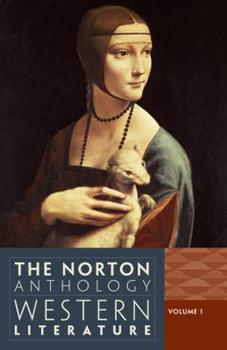
Barbara Fuchs is a Professor in the Department of English at the University of California, Los Angeles, specializing in early modern European literature across Spanish, English, French, and Italian traditions from the 15th to 17th centuries. Her work emphasizes transnational contexts, theater and performance studies, and cultural production within imperial frameworks, with significant contributions to Mediterranean and transatlantic studies. Education Ph.D. in Comparative Literature, Stanford University (1997) B.A./M.A. in Comparative Literature (English, French, Spanish), summa cum laude, Yale University (1992) Research Interests Professor Fuchs' scholarship centers on transnationalism in early modern literature, examining how theater and performance negotiated imperial identities across Mediterranean and transatlantic contexts. Her work critically engages with race and religion in the early modern world, picaresque traditions, and Cervantes studies, revealing how cultural encounters shaped literary production. She bridges historical analysis with contemporary relevance through public humanities initiatives focused on classical Hispanic theater. Publication Trends Her recent publications demonstrate interdisciplinary innovation, merging literary analysis with performance studies and material culture. Recurring themes include transnational exchange mechanisms, racial formation processes, and textual materiality, while recent work addresses pandemic-era digital performance and modern adaptations of classical works. This trajectory highlights her commitment to connecting historical scholarship with current social and artistic practices. Scientific Awards Premio Ñ from the Instituto Cervantes (inaugural award) for promotion of Spanish language and culture Advising and Leadership Professor Fuchs mentors undergraduate and graduate students in early modern studies, translation, and performance. She leads the UCLA "Diversifying the Classics" initiative and LA Escena festival, securing institutional support for these collaborative projects. Her editorial leadership includes serving as articles editor for Renaissance Quarterly and co-editing the Norton Anthology of World Literature , demonstrating field-wide influence. Projects and Teams She directs the "Diversifying the Classics" initiative, which collaborates with theater professionals to adapt Hispanic classical works for contemporary Los Angeles audiences, and founded LA Escena—the biennial festival of Hispanic classical theater. These projects unite scholars, artists, and communities to explore historical texts through modern performance lenses, emphasizing accessibility and cultural relevance.
Alani Hicks-Bartlett is an Assistant Professor in the Departments of Comparative Literature, French and Francophone Studies, and Hispanic Studies at Brown University. She holds affiliations with the Department of Italian Studies, the Program in Early Cultures, the Program in Medieval Studies, the Center for the Study of the Early Modern World, and the Institute at Brown for Environment and Society. Her research integrates gender, race, disability studies, and critical theory, focusing on Medieval and Early Modern literature across English, French, Italian, Portuguese, and Spanish traditions. She explores themes like artistic failure, disability representation, and (proto)feminist writing. Educated at Bryn Mawr College (BA, MA), Middlebury College (MA, DML), and UC Berkeley (PhD), her work has been supported by the Mellon Foundation, Ford Foundation, and others. Recent publications analyze race in Shakespeare, disability in Arthurian Romance, and exemplarity in Petrarchan intertexts. She teaches courses on Early Modern theater, medieval gender studies, and literary theory. Her current book project examines disability narratives in Petrarch, Montaigne, and Cervantes, linking bodily diversity to selfhood and political health. She has held fellowships at UCL’s Institute of Advanced Studies and the Consortium for History of Science, Technology and Medicine.
John Slater is a Professor in the Department of Languages, Literatures and Cultures at Colorado State University, specializing in Early Modern Hispanic Literatures, History of Science, and History of Medicine. His research focuses on knowledge production in 17th-century Spain, particularly how literature disseminated ideas about health and healing. He examines print genres like sermons and drama as vehicles for scientific and medical discourse, highlighting conflicts between religious and medical practices. Slater joined CSU in 2020 after roles at UC Davis, University of Colorado, and Indiana University. He holds a PhD from Brandeis University and a BA from Earlham College. His research explores Jesuit and Franciscan healing practices, their impact on medical reforms, and intersections between literature and science. Awards include the 2023 Interdisciplinary Scholarship Award and 2025 Excellence in Teaching Award (CLA). Key publications analyze alchemy in sermons, venereal disease in Baroque Spain, and transatlantic medicinal plant trade. His edited works include studies on Cervantes and medical drama. Slater’s pedagogical contributions include annotated editions of works by Lope de Vega, Juana Inés de la Cruz, and María de Zayas. He has been honored for innovative mentorship models and career advising. His interdisciplinary approach bridges literary analysis with historical, scientific, and cultural studies, emphasizing early modern Spain’s intellectual networks and global exchanges.
Lena Retamoso Urbano is a poet and scholar currently serving as a Visiting Assistant Professor of Spanish at Bennington College since Fall 2021. She earned her PhD in Latin American, Iberian, and Latino Cultures from The Graduate Center of CUNY . Research Focus : 20th/21st century Latin American and Spanish poetry, transnational surrealism, queer theory, avant-garde movements, and transatlantic cultural connections Creative Output : Three poetry collections ( Light of Debris , Miracles of Absence , Blank is the Dream of the Night ) Her academic work explores intertextuality and the poetics of Eros, with publications on Garcilaso de la Vega, Blanca Varela, César Moro, and Luis Cernuda. Her article Sacralizing the Ephemeral (under contract with Vernon Press) examines the dialectic between lovers and the beloved in Cernuda and Moro. She received the NeMLA Creative Writing Award (2022) for her poem and the body rises . Key trends in her scholarship include: cross-Atlantic surrealist dialogues, phenomenological approaches to poetic spatiality, and intersections between literature, film, and music. Her teaching spans Hispanic literature, culture, and creative writing at the college level.
Florida Atlantic University - Boca RatonUnited States
Yolanda Gamboa is a Professor of Spanish at Florida Atlantic University (FAU), where she has taught since 2001. She holds a Licenciatura in English Philology from the Universidad de Barcelona, an MA in Comparative Literature, and a PhD in Spanish from Purdue University. Previously, she taught at the University of South Africa (UNISA). Her research focuses on early modern Spanish literature and culture, with a specialization in women’s cultural production during the 16th and 17th centuries, including studies on María de Zayas, colonial St. Augustine, and the Spanish imaginary’s engagement with Naples. She is a literary translator whose work has been recognized with a nomination for the MLA Scaglione Award. Her current book project, Spanish Women and Culture in Early Modern St. Augustine , combines cultural analysis with archival research. Education: Licenciatura en Filología Inglesa, Universidad de Barcelona MA in Comparative Literature, Purdue University PhD in Spanish, Purdue University Research Interests: Golden Age Spanish literature and cultural production Translation theory and practice Early modern women’s roles in transatlantic contexts Colonial history of Florida and St. Augustine Literary translation as canon interrogation Publications highlight her expertise in literary translation (e.g., El fin del mundo como obra de arte ), edited volumes on Spanish comedia criticism, and interdisciplinary studies of early modern gender and colonial spaces. Her recent translations include Combatir el insomnio , an adaptation of a health guide. Awards: Nomination for MLA Aldo & Jean Scaglione Award (2006) Her work bridges literary analysis with historical and cultural studies, emphasizing the marginalized voices of women in early modern Spain and its colonies. She also contributes to pedagogical initiatives through FAU’s Owlingua program.
Ariadna García-Bryce is Professor of Spanish and Humanities at Reed College , where she has taught since 2001. A leading scholar of early-modern Spanish literature and culture, her work interrogates the intersections of time, politics, gender, religion, and visual culture in the Hispanic Baroque. Education: Diplôme Supérieur, Université de Paris, Sorbonne (1985) BA, Comparative Literature, Yale University, magna cum laude (1989) MA, Spanish Literature, Princeton University (1993) PhD, Spanish Literature, Princeton University (1997) Research Focus: García-Bryce’s scholarship centers on how sixteenth- and seventeenth-century Spanish and trans-Atlantic authors re-imagined temporality, authority, and the body in the wake of global Catholic expansion and mechanical clock time. Her monograph Experiencing Time in the Early Modern Hispanic World: After Apocalypse (2023) explores eschatological anxiety and new temporal regimes, while Transcending Textuality: Quevedo and Political Authority in the Age of Print (2011) examines the political stakes of Baroque poetics. She has published extensively on drama, visual culture, rhetoric, gender, and the afterlives of Baroque aesthetics in Latin America. Teaching: At Reed, she offers courses ranging from Female Sinners and Saints in the Early Modern Transatlantic World and Visual Art in Spanish Baroque Literature to the foundational Humanities sequence (HUM 110 & 211). Previously she taught at Hamilton College and Columbia University. Articles & Scholarly Impact: Her recent articles (2011–2023) cluster around three major veins: (1) re-readings of Quevedo that foreground temporality, masculinity, and political crisis; (2) studies of Calderón and visual culture that probe the politics of spectacle and royal iconography; and (3) feminist analyses of early-modern women’s writing and representation. Together these works chart a trajectory from Baroque Spain to twentieth-century Latin America, emphasizing the enduring resonance of Golden Age aesthetics. Conference Activity & Outreach: García-Bryce is an active presence at international venues such as the Renaissance Society of America, the Asociación Internacional de Hispanistas, and specialized Quevedo and Baroque symposia. Her invited talks at Princeton, Cambridge, King’s College London, and other institutions disseminate her research to diverse scholarly communities.
Gustavo Herrera Diaz is an Assistant Professor of Romance Studies at Brandeis University, specializing in the intersection of classical traditions and Latin American cultural production. His academic journey spans institutions in Cuba and the United States, with current research focusing on transnational circuits of material and symbolic mediations across the Iberian Atlantic. His educational background includes a Ph.D. and M.A. from Pennsylvania State University and a B.A. from Universidad de la Habana. This foundation supports his interdisciplinary approach to classical reception studies in the Latin American context. Herrera Diaz's research interests center on how ancient Greek traditions encounter syncretic religions like Candomblé, Santería, Espiritismo, and Palo Monte in Latin America. He challenges traditional associations between classics and whiteness, exploring the Africanization of mythical figures such as Dionysus, Orpheus, and Medea in Cuban and Brazilian cultures from the 1940s to the present. His work examines media technologies, performance practices, and artifacts involved in these cultural intersections and their implications for identity, race, gender, religion, and human agency. His publications reveal a consistent focus on classical reception in Latin American theater and literature, with particular attention to Cuban cultural production. The research demonstrates how Greek mythology has been transformed within Afro-diasporic religious contexts and how these transformations challenge conventional narratives about cultural heritage and identity formation in the Americas. Brandeis Career Hero 2024 Theodore and Jane Norman Fund for Faculty Scholarship (2023) Herrera Diaz's academic trajectory demonstrates significant engagement with both teaching and research in Romance Studies, with particular emphasis on how classical traditions are reimagined in contemporary Latin American contexts. His work bridges disciplinary boundaries between classical studies, theater studies, religious studies, and postcolonial theory, creating innovative frameworks for understanding cultural exchange across the Atlantic world. His institutional affiliations with Brandeis University and previous connections to Universidad de la Habana highlight his transnational scholarly perspective, which informs both his research methodology and pedagogical approach to teaching Latin American literature and culture.
University of California , Santa Barbara (UCSB)United States
Leo Cabranes-Grant is a Professor in the Department of Theater and Dance at the University of California, Santa Barbara. He holds a Ph.D. in Golden Age Spanish Drama from Harvard University (1996). His scholarly work bridges historical analysis with contemporary performance studies, focusing on intercultural dynamics in colonial and modern contexts. Education: Ph.D. in Golden Age Spanish Drama, Harvard University, 1996 Research Interests: Cabranes-Grant examines how performance constructs cultural identity, particularly in colonial Mexican and Caribbean contexts. His scholarship integrates early modern Spanish theater with modern Latino/a dramaturgy, emphasizing networks of influence between Spain, the Americas, and the Caribbean. His current projects explore intercultural transformations in colonial Mexico (1566-1690) and contemporary Caribbean performance practices. Awards: ATHE Award for Outstanding Article (2012) Asunción Award (2011) Lambda Literary Award Finalist (2007) Editorial Work: Served as Editor (2010-2012) and Associate Editor (2008-2010) of Theatre Survey , a leading journal in theater studies published by Cambridge University Press. Future Projects: Developing Networks of Performance , Re-Possessed Islands: The Poetics of Caribbean Drama , and The Carnival of Philosophy , exploring Kierkegaard and Deleuze's theatrical concepts.
Rafael Cabañas is an Assistant Professor in the Spanish Department at Saint Louis University-Madrid, part of the College of Arts and Sciences. He holds a Ph.D. and MA in Hispanic Language and Literature from Boston University and a BA in English Literature from the University of Barcelona. Accredited by ANECA as an Assistant Professor with a Doctorate, he actively contributes to the academic community through research, teaching, and international conferences. Ph.D. in Hispanic Language and Literature (2000), Boston University MA in Hispanic Language and Literature (1998), Boston University BA in English Literature (1993), University of Barcelona His research centers on 20th-century Spanish literature, Golden Age literature, and translation studies, with a particular focus on Ramón Gómez de la Serna, Rosa Montero, and Chicano poetry. He explores narrative parody, the fantastic, surrealism, and cultural translation, often analyzing the interplay between madness, identity, and literary innovation. His work frequently engages with Cervantine themes and feminist perspectives in Hispanic literature. The recent publications reflect a consistent scholarly trajectory: deep textual analysis of Spanish modernist and avant-garde authors, especially Gómez de la Serna, alongside critical engagement with Chicano literature and translation theory. His articles span literary criticism, narrative theory, and cultural studies, often published in peer-reviewed journals and collected volumes across Spain, Latin America, and Europe. Summer Grant, Saint Louis University-Madrid (2011) Teaching Fellowships (7) for M.A. and Ph.D. studies, Boston University (1993–1999) Humanities Foundation Award: The Angela J. and James Rallis Memorial Award, Boston University (1998) Outstanding Teaching Fellow Award, Boston University (1996) Rafael Cabañas has advised numerous academic events and conferences, particularly on Hispanic modernism and the fantastic. His work is supported by institutional grants and reflects sustained scholarly productivity. He has presented at international colloquia in Spain, Italy, Germany, France, Portugal, Hungary, Senegal, and the United States, demonstrating a broad academic network. His translation work, especially on Tino Villanueva’s poetry, bridges linguistic and cultural divides. He is actively involved in research groups such as the Literary and Comparative Studies Group on the Unusual and Gender Perspectives and has participated in academic forums at institutions like Boston University, Universidad de León, and the University of Aberdeen. His ongoing projects include studies on the fantastic in Spanish literature and the cultural dimensions of literary translation.
Christina H. Lee is Professor of Spanish and Portuguese and Acting Chair of the Humanities Council at Princeton University (2025-26). She serves as Acting Director of the Program in Humanistic Studies and holds affiliations with the Center for Culture, Society and Religion's Executive Committee, Indigenous Studies, Latin American Studies, and the Princeton Institute for International and Regional Studies. Lee is a Faculty Advisory Board member for the Emma Bloomberg Center for Access and Opportunity and a Princeton Alumni Weekly board member. Ph.D. in Romance Languages and Literatures from Princeton University Her research examines early modern Iberian and Spanish Transpacific cultural productions, focusing on colonial Philippines' religious practices, iconography, and resistance strategies. She explores intersections of race, identity, and missionary dynamics through literary analysis and archival recovery projects. Recent publications include the 2024 volume of The Spanish Pacific primary sources, Saints of Resistance (2021), and The Anxiety of Sameness (2015, 2018). Her work reveals how colonized communities preserved indigenous spirituality through saint devotions despite Spanish rule. Scientific Awards: Humanities Council Special Grant (Philippine archival work) Novogratz Bridge Year Faculty Fellow Lee co-directs the Reclaiming the Lost Archive of the Convento de San Agustin digital repatriation project with Cristina Martínez-Juan, and co-edits the Connected Histories in the Early Modern World book series with Julia Schleck. She is currently investigating 18th-century shifts in Philippine Chinese identity construction.
Dinorah Cortés-Vélez is a Professor of Spanish at Marquette University , specializing in Colonial Latin American literatures and cultures, with a secondary focus on Puerto Rican literature and culture. She is recognized for her interdisciplinary work bridging gender studies, queer theory, and pedagogical innovation. Research Focus : Sor Juana Inés de la Cruz studies, Caribbean postcolonial theory, affective pedagogy, and Latin American Baroque aesthetics. Creative Work : Award-winning author of Suma de los adioses: cementerio poético (2021) and Fugas de duermevela: prosas heridas (2018). Publications span critical analyses of Sor Juana’s philosophical contributions, contemporary Puerto Rican cultural discourses, and pedagogical frameworks integrating anti-racism and Ignatian values. Her forthcoming monograph explores Sor Juana’s gender philosophy. Scientific Awards : National Poetry Prize (2021, PEN Club International of Puerto Rico) Honorable Mention (2018, PEN Club International of Puerto Rico) Pedagogical Leadership : Creator of the biennial Calibans and Caribbeanisms conference since 2018. Developed anti-racist pedagogical tools like the Teaching-from-the Heart Toolkit (2024) and Ignatian, Anti-Racist Instructional Template (2024), emphasizing radical vulnerability and critical dialogue in Jesuit education.
Elena Casey is an Associate Professor of Spanish at the University of Wisconsin-Eau Claire (College of Arts and Sciences, Languages Department). She serves as Program Advisor for the Spanish for Health Professions Minor, Affiliate of the Latin American & Latinx Studies Program, Advisory Board Member for the Health Humanities program, and Core Member of the Wisconsin Latinx History Collective. Her work bridges Spanish language, literature, and health sciences, emphasizing interdisciplinary research and community engagement. PhD in Romance Studies, University of North Carolina at Chapel Hill (2019) MA in Hispanic Studies, Middlebury College School in Madrid, Spain (2013) BA in Spanish & English, Messiah University (2012) Dr. Casey’s research focuses on Spanish for Health Professions, Health Humanities, and Early Modern/Colonial Spanish Literature. She explores intersections of language, healthcare access, disability, and mental illness across historical and contemporary contexts, from early modern Spain and colonial Americas to modern Midwestern Hispanic and Latinx communities. Her recent publications emphasize interdisciplinary approaches, combining literary analysis with health sciences and disability studies. Themes include historical epidemiology, patient advocacy during pandemics, and the role of language services in equitable healthcare. She trains students in oral history methods, translation, and community-based research through projects like Voces del Campo / Rural Voices. Dr. Casey is actively involved in grants and collaborative research, including a UWEC–Mayo Clinic Health System project analyzing language services during the pandemic and a practicum with Communication Sciences and Disorders students. She advocates for equitable healthcare practices as a member of the Chippewa Valley Free Clinic’s Community Advisory Board and the Eau Claire City-County Health Department’s Community Health Equity workgroup. She is a core member of the Wisconsin Latinx History Collective and previously co-led the Artes Latinas Cultural Arts Oral History Project. Her ongoing projects emphasize community engagement, linguistic equity, and the application of Spanish language skills in healthcare settings.