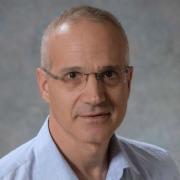
William L. Goffe is a Professor in the Department of Economics at Pennsylvania State University within the College of the Liberal Arts. His career focuses on computational economics, econometrics, and technology-enhanced teaching methods. His research interests include: Computational Economics Econometrics Optimization Algorithms Technology in Economics Education Statistical Computing Online Education Teaching Methods Dynamic Economic Modeling Recent publications highlight his work in educational technology and cognitive science applications in economics teaching. Notable trends include: Advancements in computational methods (multi-core CPUs, clusters, grid computing) Global optimization using simulated annealing Metadata standards for economics web resources Interactive digital tools for economic education Behavioral approaches to teaching economics
Dr. Abu Alam is a Lecturer at the University of Gloucestershire, with a PhD in Computer Science and Engineering (2015). A member of the British Computer Society (MBCS), his career spans software development, architecture, and academic research. His technical expertise includes programming languages, database systems, and cybersecurity frameworks. PhD, Computer Science and Engineering, University of Gloucestershire (2015) Research focuses on cybersecurity , blockchain , and malware analysis , with recent work exploring Docker-based database security, cyber-biosecurity intersections, and AI-driven authentication systems. Earlier contributions include cloud latency optimization and functional programming paradigms. Academic output trends include: Cybersecurity mechanisms for emerging technologies Integration of blockchain in medical and artistic domains Docker virtualization vulnerabilities Malware detection frameworks for resource-constrained environments Agile methodologies in computer science education Contact: aalam@glos.ac.uk
Prof. Yuval Shavitt is a Professor at Tel Aviv University's School of Electrical Engineering within the Iby and Aladar Fleischman Faculty of Engineering. His research focuses on Internet measurement, network mapping, and security, where he leads the globally recognized DIMES project for large-scale Internet topology analysis. Based in the Computer and Software Engineering department, he maintains an active research program with continuous publications and international collaborations. His primary research interests encompass Internet measurement and characterization, network mapping and modeling, Internet routing security (particularly IP hijack attacks), artificial intelligence applications in networking, network motifs, transportation networks, QoS routing, peer-to-peer network data mining, and active networks. This work has established him as a leading figure in Internet topology research, with methodologies adopted by major scientific initiatives. His research bridges theoretical algorithms and practical network infrastructure challenges, emphasizing real-world applicability through distributed measurement systems. Analysis of his 2009-2018 publications reveals consistent focus on Internet topology mapping, IP geolocation accuracy, and network security vulnerabilities. Key trends include the development of structural approaches for PoP-level geolocation, quantification of measurement biases in topology mapping, and analysis of geopolitical impacts on network infrastructure (notably the 2011 Arab events). His work demonstrates increasing integration of AI techniques for networking challenges and growing emphasis on infrastructure security. Scientific Recognition: Best Student Paper Award at ConTel 2009 He has secured significant research funding, including an 8-year Israel Science Foundation Center of Excellence grant for Internet modeling (with Danny Dolev, Shlomo Havlin, and Sarit Kraus), and led DIMES through EU projects EVERGROW, MOMENT, OneLab II, and GN3. While student advisement isn't explicitly detailed in the source material, his extensive publication record suggests substantial mentorship activity. Current grants focus on AI-driven network analysis and infrastructure security. He directs the DIMES project, a volunteer-driven distributed measurement system with global reach that has generated foundational Internet topology data. The project operates through an international consortium including EU partners and has been featured in Science Magazine for its innovative approach. Current work involves AI4Net (Artificial Intelligence for Networking) and network motif analysis within the Computer and Software Engineering infrastructure at Tel Aviv University.
Andreas Forø Tollefsen is an Associate Professor at the Department of Sociology and Human Geography, University of Oslo, and a Senior Researcher at the Peace Research Institute Oslo (PRIO) since 2016. His research focuses on the intersection of peace and conflict studies with migration, political geography, and advanced spatial analysis techniques. He leads the NFR-funded project CONMIG, examining conflict-induced migration through mixed-method approaches, and contributes to the TRUST project analyzing refugee impacts on host communities in the Global South. Academic background includes a Master's and Bachelor's in Geography from NTNU (2008-2010 and 2005-2008 respectively), followed by a PhD from the University of Oslo (2011-2016). He has taught GIS and spatial data analysis at all academic levels, including doctoral courses at the European University Institute and NTNU, and developed specialized training modules for conflict researchers at PRIO. Peace and Conflict Research Migration Dynamics Political Geography Geographic Information Systems (GIS) Spatial Data Analysis Quantitative Methodology His recent publications address conflict- and climate-induced displacement, refugee health outcomes, agricultural landownership in conflict zones, and machine learning applications for violence prediction. Articles demonstrate methodological expertise in integrating GIS, spatial statistics, and mixed methods to analyze micro-level conflict impacts on migration patterns, healthcare utilization, and societal resilience, with field specializations spanning Syria's climate-conflict nexus, South Sudan-Uganda refugee infrastructure, and Ukraine's wartime resistance dynamics. Professionally, Tollefsen has developed GIS training programs for institutions including Statistics Norway (SSB), ETH Zurich, and PRIO. His technical skills encompass R, Python, PostGIS/SQL, ArcGIS/QGIS, and statistical software (STATA/SPSS). He co-developed the PRIO-GRID spatial data framework (2012) and has published in venues like PNAS, JPR, and World Development.
Peter Axel Nielsen is a Professor and Head of the Department of Computer Science at Aalborg University's Technical Faculty of IT and Design. His research spans computer science, IT project management, software development, and big data analytics, with a focus on agile methodologies, environmental assessment, and sustainable development goals. Institutional Affiliation: Aalborg University, Denmark Research Interests: Nielsen's work addresses the intersection of technology and sustainability. Key areas include risk management in agile software teams, big data analytics for societal benefits, and digital transformation in energy systems like district heating. Recent projects explore UAV routing, predictive maintenance for offshore wind farms, and AI integration in multimodal service systems. Trends in Publications: His 2024–2025 articles emphasize Digital transformation for sustainability UAV operations and routing algorithms Big data analytics in healthcare and energy Ageism in labor markets Maintenance optimization for renewable energy Scientific Awards: Best Paper Award at SCIS 2021 (Scandinavian Conference on Information Systems) Collaboration & Projects: Active in interdisciplinary collaborations, Nielsen leads initiatives like DREAMS (digitally supported environmental assessment) and SB3D (security by design in Digital Denmark). He has been a principal investigator in over 26 projects since 1995, including district heating research and digital educational material development.
Peter A. Gloor is a Research Scientist at the Center for Collective Intelligence at MIT's Sloan School of Management, where he leads research on Collaborative Innovation Networks (COIN). He also serves as Founder and Chief Creative Officer of galaxyadvisors, applying academic insights to practical business applications. Additionally, he holds Honorary Professor positions at University of Cologne and Jilin University in China, and has taught at numerous institutions worldwide including University of Bamberg, Universidad Cattolica, Aalto University, and University of Rome Tor Vergata. His educational background includes a Ph.D. in Computer Science and a Master's degree in Mathematics, both from the University of Zurich. Earlier in his career, he was a postdoctoral fellow at the MIT Lab for Computer Science, working on hypertext before the Web emerged. Gloor's research focuses on Collaborative Innovation Networks, swarm creativity, and sociometrics. His work examines how communication patterns, network structures, and social dynamics influence creativity, innovation, and organizational performance. He has developed Condor software for dynamic social network analysis and created the Happimeter for measuring human emotions through smartwatch sensors. His research spans multiple domains including business, healthcare, education, and online communities like Wikipedia. His publications reveal a consistent focus on how social networks drive innovation across diverse contexts. His work examines everything from Wikipedia editing patterns to clinical care teams, from jazz musicians to startup entrepreneurs. A recurring theme is identifying 'honest signals' of innovation through network analysis, and understanding how collective intelligence emerges from decentralized networks. His research increasingly integrates AI and machine learning to analyze emotional states and predict organizational outcomes. Gloor has written nine books, including 'Swarm Leadership and the Collective Mind' (2017), 'Sociometrics and Human Relationships' (2017), 'Coolfarming' (2010), 'Coolhunting' (2007), and 'Swarm Creativity' (2005). He has organized numerous international conferences on Collaborative Innovation Networks (COINs) around the world, from Tokyo to Warsaw. Through his COIN research projects, Gloor examines how to build organizations that are more creative, productive, and efficient by applying principles of creative collaboration and social networking. His Happimeter project measures human emotions through smartwatch sensors with over 90% accuracy. The Wikimaps project maps global knowledge across different cultures through Wikipedia analysis. His work bridges academic research with practical applications through galaxyadvisors, where he helps clients analyze social networking patterns for coolhunting and coolfarming.
Dr. Gareth Cabourn Davies is a Research Software Engineer at the Institute of Cosmology & Gravitation within the Faculty of Technology at the University of Portsmouth. His work focuses on gravitational wave physics, black hole binaries, neutron star dynamics, and multi-messenger astronomy. Active in gravitational wave detection via LIGO-Virgo-KAGRA collaborations Specializes in signal processing, transient event analysis, and detector network optimization Recent research includes premerger black hole characterization and fast radio burst correlations Scientific Activities Participated in LISA UK Ground Segment Meeting (2024) Contributed to National Astronomy Meeting 2023 (Rubin-LSST era surveys) Presented poster at Gravitational Wave Physics and Astronomy Workshop 2022 Delivered oral presentations on gravitational wave methodology
Mykhailo Petrovych Gorsky serves as Assistant Professor in the Department of Computer Science at Yuriy Fedkovych Chernivtsi National University, specializing in computational modeling of physical systems and high-performance computing. He holds a Candidate of Physical and Mathematical Sciences degree (2012) and Associate Professor certification (2017). His educational credentials include: Bioengineer from Yuriy Fedkovych Chernivtsi National University (2002) Candidate of Physical and Mathematical Sciences in Optics and Laser Physics (2012) Professional development certificates in cloud services and distributed systems from Ternopil National Technical University (2021) Gorsky's research centers on computer modeling of physical phenomena with emphasis on parallel, distributed, and cloud computing applications. His work bridges optical physics, digital image processing, and material science, developing algorithms for 3D polarization mapping, polycrystalline structure reconstruction, and statistical analysis of microscopic images. Key application areas include printing industry quality control and biomedical diagnostics. Analysis of his 2022-2024 publications reveals a strong trend toward cloud-based optical computation (particularly AWS infrastructure), interdisciplinary biomedical tomography, and industrial applications of polarization mapping. His work consistently integrates computer science with optics and material science, demonstrating technical depth in both algorithm development and practical implementation. Professionally, Gorsky serves as Team Lead at OSF GLOBAL UKRAINE and participates in the Chernivtsi IT Cluster 'Cluster Bit' since 2020. He has authored multiple textbooks on distributed systems and cloud computing, including 'Technologies of Distributed Systems and Parallel Computing' (2022) and 'Applied Programming: From Theory to Practice' (2021).
Juan Hernandez Santisteban is a Lecturer at the School of Physics and Astronomy , University of St Andrews, UK. His research focuses on multi-wavelength studies of accreting compact objects (white dwarfs, neutron stars, black holes) and transient astronomy . University: University of St Andrews Education: PhD in Multiwavelength Observations of Accreting Compact Objects (University of Southampton, 2016) MSc in Photometric/Spectroscopic Study of Cataclysmic Variables (UNAM, 2014) BEng in Heat Transfer Analysis for ESOPO Spectrograph (UNAM, 2009) He leads the Las Cumbres Observatory Key Project for reverberation mapping of Active Galactic Nuclei , using global telescope networks to study supermassive black hole environments. His work also involves developing the PyTICS software for photometric calibration. Recent publications highlight his expertise in X-ray reverberation , accretion disk dynamics , and frequency-resolved mapping of AGN systems like Mrk 817 and NGC 7469. Collaborations span institutions in the US, Mexico, and Europe. He contributes datasets to platforms like Zenodo and GitHub, emphasizing open science practices.
Paul Schmiedmayer is a researcher at the Chair I1 (Applied Software Engineering) within the Faculty of Informatics at Technische Universität München (TUM) . He focuses on bridging software engineering research with interdisciplinary applications, particularly through domain-specific languages and Swift-based frameworks. Research Interests : Applied software engineering, domain-specific languages, networking patterns, Swift programming, fog computing, and cloud-native applications Teaching : Swift/iOS development, agile project management, distributed programming, and software engineering education Frameworks Developed : Apodini, Corvus, Grebe, ELBRUS, and Pythia Key Publications address evolvable web services, fog computing architectures, and global software engineering education. His open-source projects include tools for API development, deployment, and observability.
Andreas Larsson serves as an Associate Professor at the Department of Mechanical Engineering at Blekinge Institute of Technology (BTH) in Karlskrona, Sweden. He divides his time between his academic position and a vice-chancellor's assignment regarding strategic partnerships at the university. His primary research focus is in Product Development and Innovation Engineering within the Product Development Research Lab. Dr. Larsson's research interests span across several interconnected domains in engineering design and innovation. He specializes in Product-Service Systems (PSS) design, with particular emphasis on value-driven approaches to creating smart, integrated solutions. His work in Design Thinking explores how collaborative processes can enhance innovation outcomes, especially in global contexts. He has made significant contributions to Design for Wellbeing, investigating how engineering design can improve user experiences and address societal challenges. His research in User Experience Design focuses on creating more intuitive and effective interactions between users and complex engineering systems. Additionally, he explores Innovation Engineering methodologies that bridge theoretical frameworks with practical implementation in industry settings. Dr. Larsson's publication record reveals a strong focus on the transformation of traditional manufacturing toward service-oriented business models, particularly through digital technologies. His recent work (2023-2025) shows increasing emphasis on digital twins, natural language processing applications, and value co-creation frameworks in product-service system design. A notable trend is his exploration of global innovation processes, examining how distributed teams can overcome communication barriers to achieve breakthrough innovation. His research consistently bridges academic theory with practical industry applications, particularly in the automotive sector where he has conducted multiple case studies on smart product-service system implementation. Dr. Larsson actively collaborates with industry partners and has participated in numerous research projects including S3 Kickstart, RESIST, and Deep Tech programs focused on climate change resilience and technological innovation. His work demonstrates a commitment to translating academic research into practical solutions for real-world engineering challenges.
Dr. Ellen-Wien Augustijn is an Assistant Professor at the Department of Geo-Information Processing, Faculty of Geo-Information Science and Earth Observation, University of Twente. She combines teaching, research, and international capacity development projects, focusing on GIS, agent-based modeling (ABM), and geocomputation for health applications. Her work bridges technical innovation with real-world problem-solving in coastal management, disease diffusion, and educational technology. Research Interests: Ellen-Wien specializes in spatial agent-based models integrating geographical environments and human behavior. Her keywords include Agent-Based Modeling, Geocomputation, and Disease Modeling, with current projects applying artificial intelligence to ABMs for behavior change analysis. She uses methods like Self-Organizing Maps (SOMs), Bayesian Networks, and clustering for spatiotemporal disease pattern detection. Recent Publications: Her 2025 work on wastewater-based epidemiology frameworks and beach visitation patterns highlights trends in collaborative modeling and sustainable coastal design. Earlier studies (2024-2023) cover topics like visceral leishmaniasis in Kenya, recreational risk perception, and AI-enhanced disease simulations. Scientific Awards: 1st place: TU Delft | Water for Impact Best Paper Award (2024) Education & Capacity Development: She contributes to the Living Textbook project and has developed MOOCs and international courses in India, the Netherlands, and beyond. Her educational work spans GIMA, GFM, and ITC E-Core modules, emphasizing innovative teaching methods for geospatial concepts. International Projects: Active in Asia and Africa, she designs GIS curricula and delivers training on GeoHealth applications. Recent assignments include a Nuffic refresher course in India (2016) and sabbaticals at Purdue University (2013).
Tatiana Zudilova is an Associate Professor at the Faculty of Infocommunication Technologies and Deputy Director of the IT Education Center at ITMO University. With over 30 years of experience, she leads Russia's first International Authorized Training Center for Information Technologies, collaborating with global IT giants like Microsoft, Oracle, Cisco, and IBM.
Dr. James Gopsill is an Associate Professor in the Circular Economy at the University of Bristol, working within the School of Electrical, Electronic and Mechanical Engineering and the Department of Mechanical Engineering. His research bridges digital engineering, additive manufacturing, and sustainable design practices, with a strong focus on applying artificial intelligence to engineering design processes. His research interests span additive manufacturing systems, AI-driven design methodologies, circular economy principles, and digital engineering tools. Gopsill investigates how digital technologies can enhance traditional engineering practices, particularly in optimizing manufacturing processes, improving prototyping methods, and enabling more sustainable product development. His work often focuses on the intersection of physical and virtual design spaces, examining how mixed reality and digital twins can transform engineering workflows. Analysis of his recent publications reveals a strong trend toward agent-based manufacturing systems, AI integration in design processes, and sustainability-focused engineering solutions. His work increasingly combines machine learning with traditional engineering domains, particularly in energy monitoring, supply chain optimization, and additive manufacturing. The publications demonstrate a consistent focus on practical applications of theoretical concepts, with numerous industry collaborations. Dr. Gopsill leads multiple research projects including the UKRI Researcher-in-Residence project on AI-Agent Based Supply Chains and the Brokering Additive Manufacturing project. His work involves significant industry partnerships with organizations including Airbus, Rolls-Royce, and Ultimaker, demonstrating strong translation of academic research into practical industrial applications. His technical expertise spans both software development and mechanical engineering principles. His laboratory work centers around the development of digital tools for engineering design, including simulation-as-a-service platforms, agent-based manufacturing systems, and digital thread implementations. The research group actively develops open-source tools for 3D printing management, design analytics, and knowledge capture in engineering projects, reflecting a commitment to democratizing advanced engineering technologies.
Tarek Abdelzaher is the Sohaib and Sara Abbasi Professor and Willett Faculty Scholar in the Department of Computer Science at the University of Illinois at Urbana-Champaign. He leads research in multiple cutting-edge areas including cyber-physical systems, Internet of Things, social sensing, and edge AI. His work has significant applications in smart cities, defense systems, and social media analysis. Abdelzaher received his Ph.D. in Computer Science and Engineering from the University of Michigan, Ann Arbor in 1999. His educational background laid the foundation for his extensive research career spanning real-time systems, distributed computing, and intelligent sensing. His primary research interests focus on understanding and influencing performance and temporal properties of networked embedded, social, and software systems in the face of increasing complexity, distribution, and degree of interaction with external physical environments. Key areas include: Real-time computing and cyber-physical systems Internet of Things (IoT) and sensor networks Machine learning for IoT/CPS applications Social sensing and social media analysis Edge AI and deep learning for resource-constrained environments Battlefield IoT for defense applications Abdelzaher's recent publications demonstrate a strong trend toward integrating machine learning with cyber-physical systems, particularly focusing on edge computing applications. His work bridges theoretical foundations with practical implementations in smart cities, transportation systems, and defense applications. The research shows increasing emphasis on social sensing, where social media data is analyzed to understand real-world events and human behavior patterns. His scientific achievements have been recognized with numerous prestigious awards: IEEE Outstanding Technical Achievement and Leadership Award in Real-time Systems (2012) Xerox Award for Faculty Research (2011) Willett Faculty Scholar (2010) Multiple best paper awards at top conferences including IEEE/ACM International Conference on Cyber-physical Systems (2017), International Conference on Mobile Ad hoc and Sensor Systems (2016), and International Conference on Autonomic Computing (2015) Fellow of both IEEE and ACM NSF CAREER Award (2001) Abdelzaher has advised numerous graduate students who have gone on to make significant contributions in academia and industry. His research has been generously supported by major funding agencies including the National Science Foundation (NSF), Defense Advanced Research Projects Agency (DARPA), Army Research Lab (ARL), and others. He leads several major research projects including the $25M Internet of Battlefield Things (IoBT) collaboration between the Army Research Lab, academia, and industry. His research group operates several specialized labs and projects including: GreenGPS: A participatory sensing system for fuel-efficient navigation Apollo: A real-time social media data analysis toolkit for situation understanding Edge AI project: Developing deep learning capabilities for embedded IoT devices Social Mathematics and Information Dynamics project: Establishing laws of information dynamics in social spaces Internet of Battlefield Things (IoBT): Connecting soldiers with smart technology for enhanced defense capabilities