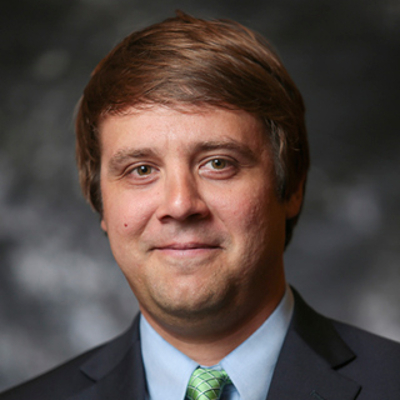
Professor John Parnell is the Chair in Geology & Petroleum Geology at the University of Aberdeen , affiliated with the School of Geosciences and Department of Geology and Petroleum Geology . His research focuses on geochemistry, paleoenvironmental reconstruction, trace element cycling, and sedimentary systems , with significant contributions to studies of the Rhynie Chert, Bowland Shale, and Lewisian Complex. Research Interests Professor Parnell's work spans: Geochemical analysis of Paleoproterozoic and Neoproterozoic systems Trace metal mobility in sedimentary and metamorphic environments Organic carbon burial and its tectonic implications Planetary analog studies for Mars exploration Shale resource characterization and environmental impact assessment Recent Publications His recent articles highlight investigations into: Graphitization processes in Scottish Highlands marbles Sulphur isotope records in Precambrian successions Trace element dynamics in the Bowland Shale Biogeochemical cycling at the Precambrian-Cambrian boundary Labs & Collaborations He leads research in the Geofluids Group and collaborates with the Planetary Sciences Department on Mars analog studies.
Prof. Dr. Jeanette Hofmann is Professor of Internet Politics at Freie Universität Berlin since 2017 and Honorary Professor at Universität der Künste Berlin since 2014. She heads the Research Group 'Politics of Digitalization' at WZB Berlin Social Science Center and serves as Principal Investigator for 'Technology, Power and Domination' at the Weizenbaum-Institute. Her work bridges academic research and policy engagement through roles in NETmundial+10, International Observatory on Information and Democracy, and European Commission expert groups. Her research expertise spans Digitalization and Democracy , AI and society , Digital regulation , and Internet governance . Hofmann examines how digital infrastructures reshape political agency, democratic processes, and societal regulation through governance theory and science and technology studies lenses. Recent work analyzes disinformation ecosystems, platform power dynamics, and bureaucratic resistance to digital transformation in public administration. Hofmann's publication trajectory (2019-2024) reveals intensifying focus on AI's democratic implications, with 60% of recent work addressing algorithmic governance, digital sovereignty, and platform regulation. Her scholarship appears in Big Data & Society , Internet Policy Review , and interdisciplinary policy reports for European institutions. Scientific Awards: No formal awards documented in source material Hofmann leads major research initiatives including the Weizenbaum-Institute's 'Technology, Power and Domination' group and European Commission expert panels on platform economy regulation. Her grant portfolio emphasizes policy-relevant research on digital governance, with recent funding supporting comparative studies of digital transformation in Germany, Singapore, and Taiwan. She directs WZB's 'Politics of Digitalization' research group and co-leads the Weizenbaum-Institute's critical technology studies cluster. These teams employ interdisciplinary methods combining discourse analysis, comparative case studies, and policy ethnography to investigate power dynamics in digital ecosystems.
Suzanne M. Carbotte is a Bruce Heezen Lamont Research Professor at the Lamont-Doherty Earth Observatory (LDEO) and affiliated with the Columbia Climate School . She holds a PhD in Marine Geophysics from the University of California, Santa Barbara (1992), an M.Sc. in Geophysics from Queen's University (1986), and an H.B.Sc. in Geology and Physics from the University of Toronto (1982). Marine and Polar Geophysics Department, LDEO Key focus areas: Mid-ocean ridges, subduction zones, seismic imaging, geoinformatics Research Interests : Carbotte specializes in marine geophysical studies of oceanic crust formation, subduction zone dynamics, and cyberinfrastructure development for geoscience data. Her work integrates seismic reflection, sonar mapping, and geoinformatics tools to analyze crustal evolution, magma chamber processes, and sediment dynamics in regions like the East Pacific Rise, Juan de Fuca Ridge, and Hudson Estuary. Scientific Trends : Recent publications highlight 3D/4D seismic imaging of magmatic-hydrothermal systems, sediment consolidation in subduction zones, and data infrastructure innovations. Key subfields include melt sill dynamics, fault distribution in oceanic plates, and mantle temperature gradients. Scientific Awards 2015 AGU Fellow 2010 Ridge2000 Distinguished Lecturer 2008 Birch Lectureship & UCSB Distinguished Alumni Award 2007 Bruce C. Heezen Research Chair 1982 Governor General's Silver Medal Grants & Projects : Her career spans funding for initiatives like the Rolling Deck to Repository (R2R) program, EarthCube Building Blocks , and Integrated Earth Data Applications (IEDA) . She has led 16 marine expeditions, emphasizing seismic studies from ridge to trench.
Ben Amor is a Full Professor in the Department of Civil Engineering at the Faculty of Engineering, Université de Sherbrooke, where he serves as Director and Founder of the CIRMIB (Integrated Research Center on Sustainable Materials, Infrastructure and Buildings) and Director of Sustainable Development for the Faculty of Engineering. Previously, he held associate professor positions at Université Laval and Université de Sherbrooke. His research focuses on Life Cycle Assessment (LCA) methodologies applied to sustainable construction, circular economy implementation in building sectors, and building decarbonization strategies. He has pioneered regionalized LCA approaches for Arctic regions and developed frameworks for carbon budgeting in building sectors. His work bridges environmental science with practical engineering solutions for sustainable infrastructure. His recent publications reveal strong trends in building decarbonization pathways, material circularity in construction, and the integration of biogenic carbon accounting. He emphasizes both technological solutions and behavioral change strategies for achieving net-zero emissions in the built environment. ACLCA 2018 Life Cycle Assessment Leadership Award Life Cycle Academy Awards 2019 (two awards) Quebec Public Administration Excellence Prize 2023 for Scientific Collaboration Multiple university teaching awards including the Jacques-Bazinet Merit Award Professor Amor leads significant research grants totaling over $20 million, including NSERC Alliance grants for sustainable building materials and a $2 million Research Chair on Net Zero Strategies and Life Cycle Assessment. He directs the CIRMIB research center and the LIRIDE (Interdisciplinary Research Laboratory in Sustainable Engineering and Eco-design), supervising multiple doctoral candidates. His work includes developing LCA tools for Quebec's construction industry and advising government bodies on sustainable procurement policies.
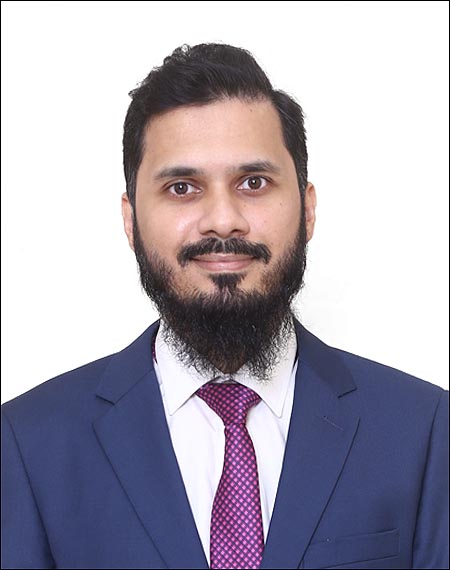
Dr. Anas Iftikhar is an International Lecturer (Assistant Professor) in Logistics and Supply Chain Management at Lancaster University's Management School, United Kingdom. He is affiliated with the Centre for Productivity and Efficiency and contributes to the Supply Chain Management department with research focusing on contemporary supply chain challenges. Dr. Iftikhar completed his Ph.D. in Economics, Management, and Quantitative Methods from the University of Salento, Italy in May 2021. During his doctoral studies, he held visiting researcher positions at Ghent University (Belgium) and Cardiff Business School at Cardiff University (UK), gaining valuable international research experience. Prior to his academic career, he accumulated industry experience in inventory planning and operations management. Dr. Iftikhar's research primarily investigates how supply chain capabilities enhance resilience in disruptive and complex environments. His work explores the intersection of supply chain complexity, digital technologies, and resilience strategies. He employs methodological approaches including systematic literature reviews, meta-analysis, and structural equation modeling. His research has significant implications for organizations navigating geopolitical uncertainties, digital transformation, and supply chain disruptions. His publication portfolio demonstrates a clear evolution from foundational work on network trust and ripple effects to more sophisticated examinations of digital transformation's role in supply chain resilience. Recent publications increasingly focus on the synergistic effects of multiple capabilities (network capability, innovation ambidexterity) in addressing complex challenges like geopolitical turmoil. The research trajectory shows a progression from single-factor analyses to more complex, integrated models that better reflect real-world supply chain dynamics. Dr. Iftikhar actively participates in the academic community through presentations at major conferences including the European Operations Management Association (EUROMA) annual conference, IFAC Conference on Manufacturing Modelling, Management & Control, and Industrial Engineering Operations Management (IEOM) society events. He has also delivered invited talks such as 'Contemporary Issues in Logistics Management' at Bukhara State University. As an educator, Dr. Iftikhar is willing to supervise PhD students in supply chain resilience, disruption management, supply chain complexity, and innovative technologies in supply chain management. His industry experience enriches his teaching approach, bridging theoretical concepts with practical applications. His research outputs have been published in leading Operations and Supply Chain Management journals including International Journal of Production Research, Production Planning and Control, Annals of Operations Research, and Journal of Business Research.
Nayanika Mathur is a Professor of Anthropology and South Asian Studies at the University of Oxford, affiliated with Wolfson College. Educated at the Universities of Delhi and Cambridge, she specializes in the anthropology of politics, development, environment, law, and human-animal relations. Her work combines ethnographic fieldwork in India with critical theoretical interventions. Education: B.A. and M.A. from University of Delhi; MPhil and Ph.D. from University of Cambridge Her research explores bureaucratic practices in South Asia, the Anthropocene, and climate crisis implications. She co-directs the TORCH research network on Climate Crisis Thinking in Humanities and Social Sciences. Her publications analyze developmental states, human-animal conflicts, and knowledge production under ecological collapse. Key themes from her 15 most recent articles include critiques of bureaucratic transparency, climate crisis impacts on human-animal relations, and conspiracy theories in governance. Awards include the Sharon Stephens Prize for her first monograph. Current projects examine technology-government intersections and climate crisis impacts on anthropological knowledge. Scientific Awards: Sharon Stephens Prize (American Ethnological Society) for Paper Tiger She has contributed extensively to public discourse through media outlets like The Times of India and The Conversation, addressing topics such as human-animal conflict, bureaucratic corruption, and climate crisis governance.
Professor Maia Chankseliani is Professor of Comparative and International Education at the University of Oxford and a Governing Body Fellow of St Edmund Hall. She serves as Editor-in-Chief of the International Journal of Educational Research and Chair of the Executive Committee of the Education and Development Forum (UKFIET), and is a Trustee of the University of Bahrain. She leads the International Mobility and World Development research project funded by the U.S. Department of State. Her educational background includes: BA and MA from Tbilisi State University MA from the University of Warwick EdM from Harvard University PhD from the University of Cambridge Professor Chankseliani's research explores the public role of tertiary education in diverse settings, examining how universities contribute to social, economic, and political development, and how international engagement shapes both institutions and societies. Her work spans international student mobility and its developmental impact, academic freedom, university contributions to sustainable development, and higher education in post-Soviet contexts. Her monograph What Happened to the Soviet University? (OUP, 2022) offers insights beyond the former Soviet context, addressing contemporary debates around academic freedom and institutional autonomy. Her major international study International Mobility and World Development represents the first global mixed-methods project examining how international education contributes to societal development. Her recent publications (2023-2025) demonstrate a consistent focus on the ripple effects of international student mobility, particularly examining poverty reduction mechanisms, intercultural competence development, and systemic impacts on home countries. Based on extensive qualitative data from over 700 interviews across 70 countries combined with quantitative analysis, her research reveals how internationally mobile individuals become agents of change through knowledge transfer, policy influence, and institutional reform. This body of work shows that returnees adapt, translate, and embed reform through multiple mechanisms far beyond simple skill transfer. Professor Chankseliani has secured significant research funding from diverse sources including the U.S. Department of State, UKRI/ESRC, British Council, World Bank, Qatar Foundation, and European Commission. Her research has informed policy dialogue in areas such as poverty reduction, education and health systems, gender equality, and civic life. She regularly engages with governments and international audiences, and her work is frequently featured in global media outlets including Nature and University World News. At Oxford, Professor Chankseliani convenes the Comparative and International Education Research Group and previously led the department's MSc in Comparative and International Education from 2017 to 2024. She supervises multiple doctoral students and has worked on numerous externally funded research projects involving UK government departments, international organizations, and academic institutions. Her current research portfolio includes examining how international education experiences translate into societal development outcomes, with particular emphasis on poverty reduction mechanisms and the long-term impacts of mobility on home countries.
David M Feldshuh is a Professor in Performing and Media Arts at Cornell University with over 40 years of service, uniquely combining a board-certified emergency medicine physician career with theater artistry. As founding Artistic Director of the Schwartz Center for the Performing Arts, he leads a resident company of professional actors collaborating with students across Cornell. His education spans Dartmouth College (B.A. Philosophy, Phi Beta Kappa, cum laude), London Academy of Music and Dramatic Arts, and dual Ph.D. (Theatre) and M.D. (Medicine) from the University of Minnesota, followed by Emergency Medicine residency at Hennepin County Medical Center and board certification. Feldshuh’s research centers on theater as a vehicle for social change, particularly at the arts-healthcare intersection. He pioneers creativity training methodologies derived from Zen meditation, Gestalt Therapy, and martial arts to enhance professional presence. His work examines ethical dilemmas in medical practice through performance, with emphasis on cultural bias mitigation and historical trauma processing. His creative output reveals consistent focus on social justice narratives, evolving from historical adaptations like Antigone to contemporary explorations of systemic inequity. Recent works demonstrate increasing formal innovation through multi-role performance structures and transmedia storytelling approaches that bridge academic and public engagement. Major honors include: Pulitzer Prize Finalist and 5 Emmy Awards for Miss Evers' Boys Cornell’s Stephen H. Weiss Presidential Fellowship (highest teaching honor) Distinguished Service Award from Tuskegee University’s National Bioethics Center AMA “Freddy” Award for medical film excellence CINE Golden Eagle for documentary work Feldshuh mentors through honors tutorials and developed the globally adopted eCornell course Acting in Public , teaching 1,600+ students across 15 countries. His Schwartz Center leadership established institutional grant frameworks supporting large-scale productions like Bernstein’s Mass with 138 performers. Current initiatives include leadership workshops for Cornell Tech and corporate clients, extending his presence-training methodology beyond academia. He maintains active creative practice through the Schwartz Center’s resident company, directing major productions while integrating medical ethics into performance pedagogy. His stadium announcing role at Cornell commencements for 20+ years exemplifies his commitment to institutional community engagement.
Taylor Ware is an Associate Professor in Biomedical Engineering and Materials Science & Engineering at Texas A&M University's College of Engineering, holding the Cain Faculty Fellowship. Her research focuses on designing structured biomaterials and medical devices using stimuli-responsive polymers for clinical applications. Education: Ph.D. in Materials Science and Engineering, The University of Texas at Dallas, 2013 Research Interests: Dr. Ware pioneers the development of liquid crystal elastomers as artificial muscles and implantable electronics substrates, engineered living materials for infection treatment, and directed self-assembly of hydrogels. Her lab specializes in polymer formulation, thermomechanical testing, and microfabrication. Key research thrusts include: Smart elastomers, hydrogels, and composites for dynamic medical devices Programming liquid crystalline polymers for shape-morphing applications Engineered living materials that respond to biomolecular cues in urinary tract environments Publication Trends: Recent work (2023-2025) demonstrates convergence of materials science, microbiology, and medical device engineering. Her group advances liquid crystal elastomers for soft robotics and implantable electronics, develops engineered living materials for UTI treatment using microbial competition, and creates novel hemostats and urethral support devices. Publications emphasize translational applications in urology, wound healing, and neural interfaces. Scientific Awards: Invited Participant, NAE Japan-USA Frontiers of Engineering Bilateral (2023) Senior Member, National Academy of Inventors (2022) NSF CAREER Award (2018) Air Force Young Investigator Award (2017) NSF Graduate Research Fellowship (2011) Fellow of AIMBE (American Institute for Medical and Biological Engineering) Advising and Grants: Dr. Ware leads the Ware Lab with significant funding including an NIH R01 grant (with UT Dallas and Case Western collaborators) and the NSF CAREER award. Her lab mentors postdoctoral fellows like Mustafa (winner of a prestigious postdoctoral fellowship) and graduate students. Current projects are supported by the NSF Engineering Research Center HAND, focusing on advanced materials for healthcare applications. Laboratory and Teams: The Ware Lab collaborates globally and is featured in Texas Monthly, Houston Chronicle, and National Geographic for breakthroughs in engineered living materials. As part of the NSF HAND ERC, the lab develops dynamic materials for stress urinary incontinence treatment and collaborates with medical institutions on UTI therapies using engineered E. coli strains.
Dr. Kai Li serves as Professor of Finance at the University of British Columbia's Sauder School of Business, holding the Canada Research Chair in Corporate Governance and W. Maurice Young Endowed Chair in Finance. Elected Fellow of the Royal Society of Canada (2022), she is Managing Editor of the Journal of Financial and Quantitative Analysis and previously served on editorial boards of Review of Financial Studies, Management Science, and Journal of Finance. Her academic foundation includes a BSc from Jiaotong University, MA from Concordia University, and PhD from the University of Toronto. Dr. Li's research examines corporate governance through three interconnected lenses: gender dynamics in finance (board diversity, analyst performance), corporate culture quantification (using generative AI and machine learning), and green innovation (environmental governance). Her methodology pioneers computational approaches to analyze textual data from corporate disclosures, bridging finance, computer science, and social sciences. Analysis of her recent publications reveals a distinct trajectory toward interdisciplinary research, increasingly integrating artificial intelligence with traditional finance to study culture and sustainability. This shift demonstrates growing emphasis on empirical measurement of intangible governance factors through NLP and generative models. Her accolades include: Fellow of the Royal Society of Canada (2022) UBC Killam Research Award Sauder Research Excellence Award (junior/senior) Barclays Global Investors Canada Research Award John L. Weinberg/IRRCi Best Paper Award (2024) Best Paper Award at 2024 China International Conference in Finance While the provided materials confirm her editorial leadership and research impact, specific details regarding graduate student supervision and grant funding portfolios were not disclosed. Dr. Li maintains affiliations with the Asian Bureau of Finance and Economic Research (Senior Fellow), European Corporate Governance Institute (Research Member), and FinTech at Cornell Initiative (Research Fellow).
Jeff Linderoth is the Harvey D. Spangler Professor in the Department of Industrial and Systems Engineering at the University of Wisconsin-Madison. His research focuses on large-scale numerical optimization, mixed-integer nonlinear programming, and stochastic programming, with applications in energy systems, global routing, and industrial processes. Education: BS in General Engineering (highest honors) from University of Illinois at Urbana-Champaign, MS in Operations Research from Georgia Institute of Technology, PhD in Industrial Engineering from Georgia Institute of Technology. Linderoth's work addresses theoretical and applied challenges in optimization, including developing algorithms for mixed-integer programming, analyzing knapsack polytopes, and creating tools like the Minotaur optimization toolkit. His recent publications explore integer programming techniques for subspace clustering, complementarity constraints, and customized coverage instrumentation. Selected trends in his research include advancements in stochastic programming, orbital branching for symmetric integer programs, and congestion analysis in power systems. His group contributes to optimization software and data-driven libraries like MIPLIB. Scientific Award: Harvey D. Spangler Professor.
Joost de Moor is an Assistant Professor in Political Science at Sciences Po’s Centre for European Studies and Comparative Politics (CEE) . His research bridges Environmental Politics , Social Movements , and Political Participation , with a focus on climate activism, lifestyle politics, and post-political strategies. He holds a PhD in Social Sciences: Political Science from the University of Antwerp (2016) and has held postdoctoral positions at Keele University (2016-2018) , Stockholm University (2018-2021) , and Leiden University (2021) . A visiting scholar at the University of Mannheim (2015) , his work spans urban environmentalism, climate summit dynamics, and strategic movement adaptation.
Dr. Pranita Shrestha is a Researcher at the University of Sydney's School of Architecture, Design and Planning. Her work focuses on urban planning, housing policy, and informal settlements, with particular attention to platform-mediated housing markets and their socio-economic impacts. Her research spans topics such as cultural heritage management, rural community resilience, and policy responses to urban housing challenges. Shrestha has contributed to significant studies including analyses of Airbnb's impact on housing markets, post-disaster rehabilitation in Kathmandu Valley's World Heritage Sites, and the role of digital platforms in enabling informal housing practices. Her work often intersects with issues of equity, policy effectiveness, and spatial justice. Key projects include the AHURI-funded study on short-term rental accommodations and collaborative research on social housing marketization in New South Wales. Her research outputs include peer-reviewed articles, book chapters, and policy reports addressing global urban challenges. Shrestha's expertise is reflected in her interdisciplinary approach, combining policy analysis with field studies in diverse contexts such as Kathmandu, Sydney, and Turkey's Behramkale region. She actively engages with both academic and policy communities to advance evidence-based solutions for urban sustainability and affordability.
Professor Stuart James Khan is an Adjunct Professor in the School of Civil & Environmental Engineering at the University of New South Wales (UNSW). He previously served as Director of the Australian Graduate School of Engineering (AGSE). His research focuses on sustainable urban water management, water treatment processes, and chemical contaminant analysis. Khan holds a PhD in Environmental Engineering from UNSW (2003) and a BSc (Hons 1 in Organic Chemistry) from the University of Sydney (1995). His research interests include water recycling, desalination, disinfection byproduct formation, and the safe management of chemical contaminants. He has advised over 15 PhD students on topics ranging from advanced treatment technologies to risk assessment frameworks. Khan has published extensively, with over 200 journal articles and 18 book chapters, emphasizing interdisciplinary approaches to water quality challenges. Key contributions include advancing membrane bioreactor performance, optimizing water recycling systems, and assessing risks associated with emerging contaminants. His work bridges fundamental science and practical engineering solutions, addressing global water security challenges. Current projects explore wastewater-based epidemiology, PFAS remediation, and climate-resilient water infrastructure. Khan collaborates internationally on water reuse strategies and has contributed to policy frameworks for safe water management. His teaching spans courses like Water & Wastewater Treatment and Environmental Risk Analysis, reflecting his commitment to educating future engineers in sustainable practices.
Dr. Frederick Li is an Associate Professor in the Department of Computer Science at Durham University, UK. He holds editorial roles as Associate Editor of Frontiers in Education (Digital Education) and Editorial Board Member of Virtual Reality & Intelligent Hardware. His research focuses on Computer Graphics, Machine Learning, Geometric Modelling, Collaborative Virtual Environments, Visual Aesthetics, and Educational Technologies. He earned his B.A. (Hons) and M.Phil. from The Hong Kong Polytechnic University and his Ph.D. in Computer Graphics from City University of Hong Kong. Prior roles include Assistant Professor at HK PolyU and project manager of a Hong Kong Government ITF-funded project. **Education**: B.A. (Computing Studies) and M.Phil. from HK PolyU; Ph.D. in Computer Graphics (CityU Hong Kong). **Research Interests**: His work spans mesh saliency detection, human-object interaction recognition, cloud modeling, face beautification, and educational technology. Recent achievements include awards for papers (e.g., Best Paper at ITiCSE 2014) and recognition such as EPSRC Peer Review College membership. He leads Durham's Undergraduate Board of Examiners and has been an external examiner at Northumbria University. **Awards**: Best Paper (ACM ITiCSE 2014), Outstanding Paper (ICALT 2013), EPSRC Peer Review College (2024), Outstanding BMVC 2024 Reviewer. **Grants & Labs**: His research is supported by grants from EPSRC and others. He collaborates with the Centre for Vision and Visual Cognition, VIViD, and AIHS group at Durham.