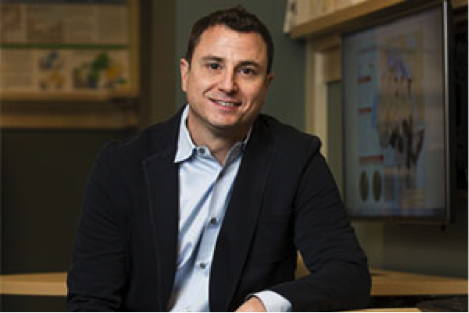
Tabitha Hart is a Professor in the Department of Communication Studies at San Jose State University's College of Social Sciences. Her work focuses on the Ethnography of Communication and Speech Codes Theory, emphasizing inductive, immersive methodologies for understanding cultural communication norms. She has contributed to intercultural communication pedagogy and digital ethnography research. University: San Jose State University School: College of Social Sciences Department: Communication Studies Email: tabitha.hart@sjsu.edu Her research explores cultural navigation in life transitions, from graduate school to workplace integration, informed by her seven years teaching English abroad. She emphasizes unspoken communication rules alongside linguistic mechanics for true cultural competency. Recent publications focus on speech codes in diverse contexts, cultural pedagogy, and qualitative software tools. She has also examined intercultural communication in Starbucks' customer service and telecentre impacts on digital inclusion globally. Her methodological toolkit bridges traditional ethnography with digital research, including online community analysis and virtual interaction design. She advocates for rigorous interpretive fieldwork to decode cultural communication systems across physical and virtual environments.
Pascal O. Title serves as an Assistant Professor in the Department of Ecology and Evolution at Stony Brook University, leading the macroEEB Lab focused on large-scale evolutionary and ecological dynamics. His research integrates phylogenetic, trait, and spatial data to unravel biodiversity patterns across continents and through time. His educational background includes: Ph.D. from University of Michigan (2018) Dr. Title's work centers on four interconnected research pillars: Large-scale biodiversity patterns through analysis of museum collections and observational databases for Australian reptiles, marine fishes, and Neotropical birds Species responses to climate change via geographic range shift analyses linked to phylogenetic history Species distribution modeling methodology development addressing data biases and environmental variables Diversification rate quantification through simulation-based evaluation of macroevolutionary metrics His approach leverages global biodiversity networks and computational tools to address fundamental questions in evolutionary ecology. Analysis of his 2014-2025 publication record reveals consistent focus on macroevolutionary processes across diverse taxa, with increasing emphasis on climate change impacts and methodological innovations. Key thematic threads include latitudinal diversity gradients, adaptive radiation mechanisms, and computational tool development for integrating phylogenetic and spatial data. The macroEEB Lab operates as a collaborative hub for researchers investigating evolutionary dynamics across spatial and temporal scales, recently participating in the 2025 Evolution conference.
James Lindner serves as an Alumni Professor of Agriscience Education within the Department of Curriculum and Teaching at Auburn University's College of Education. He has held this position since 2019, following his prior service as a Professor at Auburn University from 2015 to 2019. His academic work centers on advancing agricultural education through rigorous research and innovative pedagogical approaches. Dr. Lindner's research focuses on agricultural literacy development, multilingual education in agricultural contexts, and methodological advancements in educational assessment. His work emphasizes culturally responsive teaching practices and the integration of technology to enhance student learning outcomes. Key areas include survey instrumentation, reliability coefficient analysis, and the application of AI-driven solutions to address educational challenges in agricultural settings. Analysis of his 2023-2025 publications reveals a strong trend toward AI integration in agricultural education, particularly for improving literacy and supporting multilingual learners. His methodological contributions to survey research and scale development have significantly strengthened empirical rigor in agricultural education scholarship, while his recent work on peer review processes and journal reporting demonstrates leadership in academic publishing standards.
Benjamin Rifkin is Professor of Russian and University Provost & Senior Vice President for Academic Affairs at Fairleigh Dickinson University, where he previously served as Dean of the Maxwell Becton College of Liberal Arts and Education. Earlier he spent fifteen years on the faculty of Slavic Languages and Literatures at the University of Wisconsin–Madison and held academic leadership roles at Temple University, The College of New Jersey, Ithaca College, and Hofstra University. Education: Ph.D. in Slavic Languages and Literatures, University of Michigan M.A. in Slavic Languages and Literatures, University of Michigan M.A. in Russian and East European Studies, Yale University B.A. in Russian and East European Studies, Yale University Research & Teaching Interests: Rifkin’s scholarship integrates world-language pedagogy, curriculum design, and assessment of learning outcomes with content in Russian language, literature, and film. Recent work explores compassion and global citizenship as explicit learning outcomes within the liberal arts. He regularly teaches courses on Russian literature in translation, Russian film history, Russian history, sociolinguistics (Language and Discrimination), and methods of teaching world languages. Across four decades his publications have addressed communicative and performance-based language instruction, advanced proficiency attainment, study-abroad integration, digital listening resources (RAILS), and textbook authoring ( Panorama , Advanced Russian through History ). His 2024 article on training literature-in-translation faculty exemplifies ongoing engagement with graduate pedagogical preparation. Grants & Projects: Rifkin has secured millions of dollars in grants from private foundations and the U.S. Department of Education to develop oral-history interview programs, faculty-led study tours with community-engaged learning, and award-winning instructional materials for Russian language, history, and culture. Current Focus: As Provost he collaborates across schools and colleges to expand transformative learning opportunities—undergraduate research, internships, study abroad, and community-based projects—while continuing to write and speak on Russia’s war against Ukraine and the role of compassionate global citizenship in higher education.
Sanjoy Paul is an Associate Professor at the University of Technology Sydney (UTS) Business School, specializing in supply chain management and operations research. He holds roles as Associate Editor of Business Strategy and the Environment and Global Journal of Flexible Systems Management . His research focuses on supply chain resilience, risk modeling, and sustainable practices, with applications to global disruptions like pandemics and IT outages. Paul has published in top-tier journals such as the European Journal of Operational Research and secured grants from government bodies including the Department of Defence. Education and Career: Prior to UTS, he worked at RMIT University and Bangladesh University of Engineering and Technology. He holds a PhD from UNSW, recognized with the Stephen Fester Prize for outstanding thesis. His career spans academic roles from Lecturer (2017) to Senior Lecturer (2019) before his current position since 2023. Research Contributions: Paul’s work bridges theoretical models and real-world applications, including recovery frameworks for supply chains during crises and strategies for sustainable practices in post-pandemic contexts. He frequently advises media on supermarket pricing, supply chain disruptions, and business strategies, appearing in outlets like The Guardian and ABC News . Awards and Recognition: His honors include the ASOR Rising Star Award, Research with Relevance Award, and inclusion in the top 2% global scientists (2020–2023). He has contributed to policy debates on supermarket competition, EV market dynamics, and Australia’s industrial strategies.
David Boyce is an Adjunct Professor of Civil and Environmental Engineering at Northwestern University's McCormick School of Engineering. His expertise spans metropolitan transportation planning, urban travel forecasting models, and transportation network analysis. He holds a BS from Northwestern University, an MCP from the University of Pennsylvania, and a PhD in Regional Science from the University of Pennsylvania (1965). BS: Civil Engineering, Northwestern University (1961) MCP: City and Regional Planning, University of Pennsylvania (1963) PhD: Regional Science, University of Pennsylvania (1965) His research focuses on integrating transportation networks with land use, discrete choice theory, and entropy-based methods. Notable contributions include work on the TAPAS traffic assignment model and user-equilibrium route choice problems. Boyce has authored over 50 publications, emphasizing network equilibrium models, historical analyses of transportation theory, and policy applications. His articles highlight advancements in urban travel forecasting, multi-class models, and algorithmic solutions for traffic assignment. Recent work explores the historical foundations of transportation science and computational impacts on planning practices. Robert Herman Lifetime Achievement Award (2003) Fellows Awards from ASCE (2009), INFORMS (2003), and RSAI (2002) Boyce has advised on large-scale transportation projects and contributed to interdisciplinary teams advancing regional science. His research bridges theoretical models with practical urban planning challenges, emphasizing sustainable infrastructure and policy innovation.
Dan Benardot is a Professor of Practice at Emory University’s Center for the Study of Human Health, following his tenure as a tenured full Professor at Georgia State University (GSU), where he remains a Professor Emeritus. He holds a BS in Foods and Nutrition from SUNY Plattsburgh and a PhD in Human Service Studies and Nutrition Sciences from Cornell University. A Fellow of the American College of Sports Medicine (ACSM) and a Registered Dietitian, he has been recognized with awards including the American Dietetic Association’s Sports Nutrition Achievement Award (1993) and an honorary doctorate from Marywood University. Roles: Professor of Practice (Emory), Former Chair of Nutrition at GSU, Former Director of the Laboratory for Elite Athlete Performance (GSU). Research Focus: Within-day energy balance in athletes, sports nutrition strategies, and nutritional impacts on athletic performance and health. Key Contributions: Co-author of the joint ACSM/AND position paper on Nutrition and Athletic Performance, inventor of NutriTiming® software, and author of seminal textbooks like Advanced Sports Nutrition and ACSM’s Nutrition for Exercise Science . His research emphasizes practical applications of nutrition for athletes, including optimizing energy timing, protein intake, and preventing energy deficits. Recent work explores youth athlete nutrition, fatigue management, and metabolic adaptations in endurance sports. Funding & Grants: Supported by the US Olympic Committee, Georgia Research Foundation, Gatorade Sports Science Institute, and others. Awards: Highlighted awards include the USA Gymnastics Outstanding Educator Award (1996) and his role as nutritionist for US Olympic teams (e.g., USA Gymnastics, USA Track and Field). Benardot’s interdisciplinary approach bridges academia and practice, influencing policies in sports medicine and nutrition education.
Irina Lyublinskaya is a Professor of Mathematics and Education at Teachers College, Columbia University. She is affiliated with the Mathematics, Science & Technology department and specializes in STEM education, mathematics education, and educational technology. Her research interests include teacher education, international education, and curriculum development. Lyublinskaya holds a Ph.D. and M.S. in Theoretical and Mathematical Physics from Leningrad State University (now St. Petersburg State University). Her scholarly work spans over three decades, with a focus on integrating technology into mathematics and science education. Notable contributions include co-authoring textbooks such as Geometry investigations with GeoGebra and Exploring precalculus with The Geometer’s Sketchpad . Her recent research emphasizes culturally responsive teaching, TPACK framework applications, and robotics integration in elementary education. Lyublinskaya’s publications explore topics like teacher professional development, special education technology competency, and cross-cultural STEM pedagogy. She has mentored students such as Xiang Du and Alyssa Kaplon-Schilis, who co-authored impactful studies on TPACK trajectories and culturally relevant mathematics tasks. Her work bridges theoretical research and practical classroom applications, advocating for innovative educational technologies.
Nancy Leveson is the Jerome C. Hunsaker Professor of Aeronautics and Astronautics and Professor of Engineering Systems at the Massachusetts Institute of Technology (MIT) within the School of Engineering. An elected member of the National Academy of Engineering, she pioneered a paradigm-changing approach to system safety that enables engineering safer critical systems globally. Her educational background includes: B.A. from UCLA M.S. from UCLA Ph.D. from UCLA Leveson's research revolutionized system safety through interdisciplinary work spanning software safety, organizational safety culture, and human-computer interaction in complex systems. Her methodologies address safety in software-controlled systems where traditional engineering approaches fail, particularly in aerospace, medical devices, and transportation. This work established foundational principles for preventing catastrophic failures in increasingly autonomous systems. Her major honors include: Member of the National Academy of Engineering (2000) ACM Allen Newell Award for outstanding computer science research (1999) AIAA Information Systems Award for developing software safety practices (1995) ACM Fellow (1995) ACM Faculty Award for Women (1990) ACM Sigsoft Outstanding Research Award (2005) Leveson consults extensively with aerospace, automotive, and healthcare industries on accident prevention methodologies. She has supervised numerous graduate students and led research initiatives translating theoretical safety frameworks into practical engineering standards. Her advisory work informs regulatory policies for safety-critical systems worldwide. She directs research through the MIT Partnership for Systems Approaches to Safety and Security (PSASS) and the Engineering Systems Lab, focusing on next-generation safety engineering for autonomous systems and AI-driven technologies.
Professor Sue Black is a Professor of Computer Science and Technology Evangelist at Durham University's Department of Computer Science. She is renowned for leading the successful social media campaign to save Bletchley Park, a pivotal site in computing history, and for founding BCSWomen, the UK's first online network for women in tech. Holding an OBE for services to technology, she advises the UK government and sits on Comic Relief's board. Her research focuses on software engineering, AI ethics, digital inclusion, and equity in tech. She has pioneered tech training programs for underrepresented groups through initiatives like TechUP. A public speaker and author, her book Saving Bletchley Park chronicles her campaign's impact. She balances academic rigor with grassroots activism, advocating for inclusive technology ecosystems globally. Education: BSc(Hons) Computing Studies (London South Bank University, 1993), PhD in Software Engineering (2001). Single mother of three by 25, she pursued education while overcoming significant personal challenges. Awards: OBE (2016), Forbes Top 50 Women in Tech, International Social Impact Award (2017). Grants & Impact: Leads digital skills programs reaching thousands in underserved communities. Advises on national digital strategies and chairs panels on AI ethics. Her work bridges academia, industry, and social justice.
Herbert Bos is a Full Professor at Vrije Universiteit Amsterdam, holding positions in the Faculty of Science (Computer Systems department), the Network Institute, and the Systems and Network Security group. His research focuses on hardware and software security, including transient execution attacks, memory exploitation, and vulnerability detection. He has authored over 229 research outputs, including influential papers on Spectre mitigation, Rowhammer attacks, and fuzzing techniques. Notable contributions include frameworks like PANDAcap and BinRec. Bos teaches courses such as Binary and Malware Analysis and Operating Systems. His work aligns with UN Sustainable Development Goals related to innovation and infrastructure security. Education details are not explicitly provided, but his academic titles (prof. dr. ir.) suggest advanced degrees in computer science and engineering. Ancillary activities include roles as an author for Pearson textbooks and a member of the Kiesraad in The Hague. Research interests emphasize cutting-edge hardware vulnerabilities (e.g., Spectre, Rowhammer), memory safety, and automated testing (fuzzing). Recent work highlights practical defenses against transient data leaks (Phantom Trails) and data-only attacks. Collaborations span international institutions, reflecting his global influence in cybersecurity. Publications since 2016 showcase advancements in CPU architecture security, kernel exploitation, and embedded device defenses. His datasets (e.g., PANDAcap SSH Honeypot) provide foundational resources for the security community. Grants and lab affiliations are inferred through his research outputs and teaching roles.
Roman Lukyanenko is an Associate Professor of Commerce at the University of Virginia’s McIntire School of Commerce. He teaches courses in global strategy, systems, and business analytics. Prior to academia, he worked in IT roles including web programming, database development, and consulting for organizations like ExxonMobil and CapitalOne. His research focuses on conceptual modeling, information quality, AI/ML, and design science research. Notable contributions include work on citizen science data quality and transparency in design science. His research has been published in top journals like Nature , MIS Quarterly , and Information Systems Research . Education : Ph.D. in Operations and Information Management (University of Newfoundland), Bachelor of Technology, and IT Diploma (New Brunswick Community College). Key awards include the Gold Medal from Canada’s Governor General, INFORMS Design Science Research Award, and AIS Dissertation Award. He has led professional organizations, serving as Vice President and President of the AIS Special Interest Group on Systems Analysis & Design. Lukyanenko’s work bridges academic and practical domains, emphasizing information systems’ societal impact. He contributes to interdisciplinary initiatives at UVA’s Centers for Business Analytics and Management of IT. His prior industry experience enriches his teaching and research on real-world IT challenges.
Patrick Florance is the Director of Research Technology at Tufts University, where he leads Tufts Technology Services’ support for High-Performance Computing, research storage, scientific instrumentation, and data science. He is concurrently an affiliate of the Department of Urban & Environmental Policy & Planning in the School of Arts and Sciences and a senior instructor at the Fletcher School of Law and Diplomacy. Education Bachelor of Arts, University of Oregon, Eugene, United States Master of Arts, Geography – Geographic Information Science, City University of New York – Hunter College, New York, United States Research & Scholarly Interests Florance’s scholarship and service converge on the design, deployment, and governance of open-source geospatial infrastructures. His work encompasses: Global and humanitarian mapping, crisis mapping, and geospatial support for disaster response Development of the Open Geoportal (OGP) Federation — a Sloan-funded collaborative platform for sharing geospatial data across universities 3D GIS, remote sensing, UAV/drone workflows, and spatial data infrastructures for urban modeling Digital humanities, natural language processing, and data-mining approaches to historical and textual geodata Geospatial pedagogy, open-data advocacy, and capacity-building in the developing world Publications & Intellectual Trajectory Across more than two decades, Florance has authored or co-authored scholarly articles, software reviews, and special journal issues that advance both technical architectures and sociotechnical practices for geospatial information curation. His writings trace a trajectory from foundational concerns of GIS collection development in academic libraries to contemporary challenges of real-time, open, and ethical crisis mapping. Scientific Awards & Grants Alfred P. Sloan Foundation – Open Geoportal Cloud (OGP) Federation (US$ grant, 2013) University Service & Leadership Patrick chairs or serves on multiple university committees driving data-intensive research strategy: Data Analytics Steering Committee, School of Arts & Sciences Digital Humanities Steering Committee, Tufts University Data-Intensive Scholarship Center (DISC) Advisory Committee on Infrastructure and Services (ACIS) GIS Steering Committee Research Data Services Committee Labs, Teams & Infrastructure He directs the Tufts Data Lab , a campus hub for GIS, statistics, visualization, and machine-learning services, and oversees the Open Geoportal Project , a multi-institutional consortium providing federated discovery and access to geospatial data sets. His team supports thousands of researchers university-wide with high-performance compute clusters, research storage arrays, and discipline-specific scientific instrumentation.
Prof. Emile Rugamika Chimusa is a Professor at Northumbria University , College of Engineering and Science, specializing in Computational Population Genomics and Bioinformatics . Previously, he served as Associate Professor and Programme Director at the University of Cape Town for postgraduate programs in Computational Health Informatics and Human Genetics. His research focuses on genomic methodologies for analyzing large-scale genomic data, including Genome-wide association studies Admixture mapping in mixed-ancestry populations Pharmacogenetics of disease treatments Multi-omics integration for disease-drug associations Development of bioinformatics tools Population-specific disease risk prediction He has received over £17.7 million in research funding from organizations like the NIH , Wellcome Trust , and National Research Foundation . His work spans translational genomics in both non-communicable and infectious diseases .
Jung-ran Park is an Associate Professor in the Department of Information Science at Drexel University's College of Computing & Informatics. Her research focuses on knowledge organization systems, metadata standards, multilingual information access, and cross-cultural communication in digital environments. She holds a Ph.D. in Linguistics (University of Hawaii, 2003) and an MLIS (2000), along with prior degrees from institutions in South Korea. Her work bridges linguistics and information science, addressing challenges in semantic interoperability, metadata quality, and professional development for cataloging and metadata specialists. Notable projects include studies on BIBFRAME implementation, RDA adoption barriers, and automated metadata generation systems for digital repositories. Research trends in her publications emphasize: 1) Metadata standardization (e.g., BIBFRAME, Dublin Core) and their practical applications; 2) Cross-cultural communication dynamics in social media and virtual reference services; 3) Professional training needs for evolving library technologies. Though no formal awards are listed, her contributions to metadata education and digital library systems are significant. Her advising focuses on preparing professionals for evolving information organization challenges, reflected in collaborative projects like metadata harvesting tools and continuing education resource repositories. Labs/Teams: Involved in digital repository development initiatives, metadata workflow optimization studies, and cross-cultural communication analysis teams within the College of Computing & Informatics.