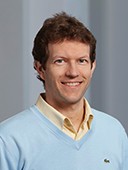
Adrian Perrig is a Full Professor at the Department of Computer Science at ETH Zürich. He leads research in network security, distributed systems, and internet architecture, focusing on projects like the SCION secure internet architecture and its commercialization through Anapaya Systems. His work emphasizes secure communication, denial-of-service defense, and public key infrastructure (PKI) innovations. Affiliations: ETH Zürich, Institute for Information Security Key Contributions: SCION, SAGE, RHINE, F-PKI Research interests include path-aware networks, cryptographic protocols, and resilient systems. His publications span over 295 results since 2005, with notable awards including the Best Paper Award (CoNEXT 2021) and ANRP 2023. He has contributed to foundational work in secure routing, DNS security, and GPU attestation. Scientific awards include Best Paper Awards at CoNEXT and ACM SIGCOMM, as well as recognition for applied networking research. His work bridges academia and industry, addressing challenges in global network security and scalability.
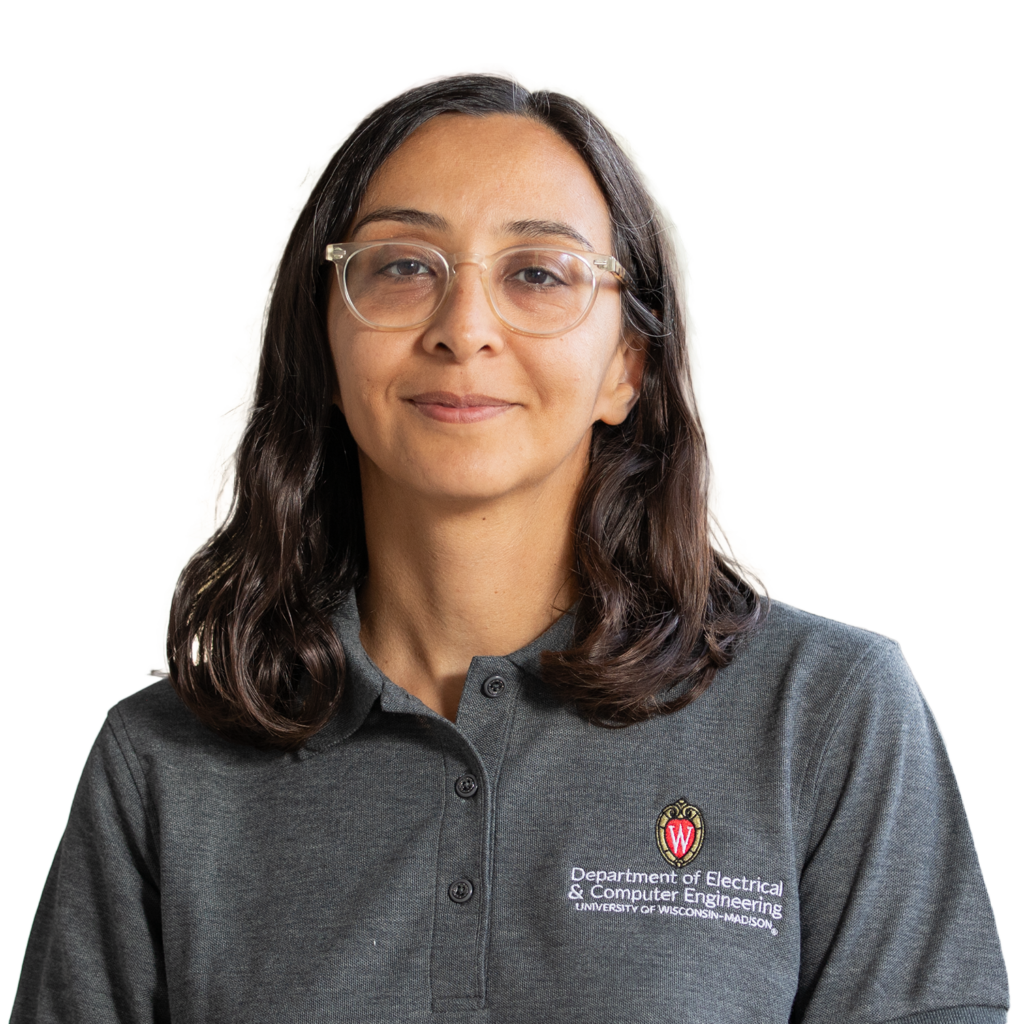
Azadeh Davoodi is a Vilas Distinguished Achievement Professor and Associate Chair of Undergraduate Studies in the Department of Electrical and Computer Engineering at the University of Wisconsin-Madison. Her research focuses on Electronic Design Automation (EDA), integrated circuit debug, and machine learning applications in VLSI design. She holds editorial roles in journals like IEEE TCAD and ACM TRETS, and has chaired major conferences such as ISPD 2015 and served on technical program committees for DAC, ICCAD, and others. Education: PhD in Electrical Engineering, University of Maryland-College Park (2006) Research Interests: Machine learning for VLSI chip design VLSI design automation for machine learning IC-CAD for emerging nanotechnologies Hardware security Recent Research Trends: Her work bridges machine learning and hardware design, with publications on neural network optimization, distributed inference, and explainable AI for circuit design. She emphasizes energy-efficient CNNs, latency reduction in edge computing, and security in split manufacturing. Awards: 2025 DATE Best Paper Candidate 2024 Vilas Distinguished Achievement Professor 2015 ACM Best Paper Award 2011 NSF CAREER Award Service and Grants: Leads NSF-funded projects on explainable ML for CAD and holds grants for distributed neural network synthesis. Her service includes roles as IEEE HKN member and editorial board positions. Labs/Teams: Engages in interdisciplinary research teams at UW-Madison, focusing on EDA innovation and hardware-software co-design.
Professor Meng Tao is a full Professor in the School of Electrical, Computer and Energy Engineering at Arizona State University (ASU), Tempe campus. He also holds the concurrent appointment of Senior Global Futures Scientist within ASU’s Global Futures Scientists and Scholars initiative. Since joining ASU in 2011, he has led the Laboratory for Terawatt Photovoltaics and played a pivotal role in founding the U.S. Photovoltaic Manufacturing Consortium under SEMATECH. Education: Ph.D. Materials Science and Engineering, University of Illinois at Urbana-Champaign, 1998 M.S. Semiconductor Materials, Zhejiang University, China, 1986 B.S. Ferrous Metallurgy, Jiangxi Institute of Metallurgy, China, 1982 Research Focus: Professor Tao’s research is broadly centered on the science and engineering challenges of scaling photovoltaics to the terawatt level while ensuring sustainability and cost-effectiveness. His group investigates earth-abundant chalcogenide semiconductors and transparent conducting oxides for thin-film devices, substitutes silver with low-cost aluminum in Si solar cell metallization, develops energy-efficient electro-refining routes to upgrade metallurgical-grade silicon to solar-grade purity, pioneers value-added recycling technologies for end-of-life Si modules, and explores solar-powered electrolysis using metal/metal-oxide loops for long-term electricity storage. Grant Portfolio & Trends: Recent funding from NSF and DOE has supported projects on high-efficiency Schottky-barrier silicon cells, theoretical/experimental studies of iron oxysulfide absorbers, doping of cuprous oxide in electrolytes, and CVD-based valence-mending passivation for crystalline silicon. These grants underscore a consistent emphasis on materials innovation, process intensification, and circular-economy solutions for PV. Teaching & Mentoring: Professor Tao teaches and mentors across the EEE, MSE and CHE programs, offering courses ranging from introductory circuits to advanced photovoltaic energy conversion and doctoral dissertation supervision. While specific advisee names are not disclosed, the extensive thesis and research course listings indicate a large, active graduate group. Laboratory & Collaborative Networks: The Laboratory for Terawatt Photovoltaics under his direction serves as the central hub for experimental work on solar cell fabrication, electroplating, electrochemical recycling, and materials characterization. The lab collaborates closely with national consortia such as SEMATECH and leverages ASU’s advanced clean-room and analytical facilities.
Nicola Calabretta is a Full Professor in Electro-Optical Communication Systems and Senior Research Fellow at Eindhoven University of Technology (TU/e). His work focuses on smart optical networks, high-speed electronics, FPGA implementations for scheduling algorithms, and photonic integrated circuits. He holds a PhD from TU/e (2004) and previously conducted research at DTU Fotonik and the Sant'Anna School of Advanced Studies. His expertise spans optical signal processing, multi-level modulation formats, and applications in data center and metro networks. Key research areas include optical switching architectures (e.g., SOA-based switches), WDM systems, and low-latency interconnect networks. He has led projects like ADAPTOR (resource optimization), SmartTWO (future telecom technologies), and 5G-MOBIX (cross-border mobility). His courses include 'Optical Fibre Communication Technology' and 'Optical Interconnection Networks.' Collaborations involve institutions globally, with recent work emphasizing photonic integration for neural networks, ultra-fast switching, and edge computing. His contributions align with UN SDGs through sustainable telecom infrastructure advancements.
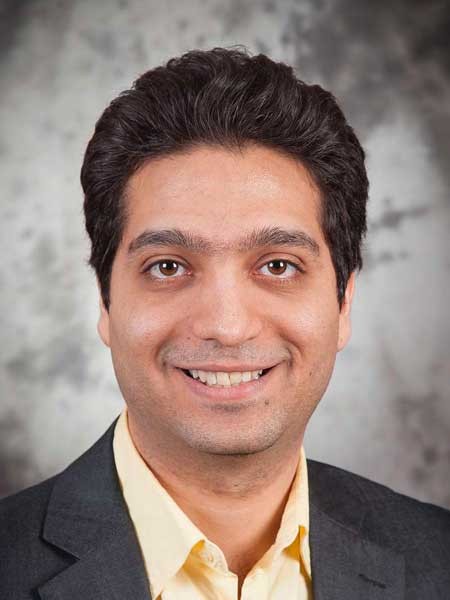
Dr. Hossein Zolfagharinia is an Associate Professor in the Department of Global Management Studies at the Ted Rogers School of Management, Toronto Metropolitan University. He holds a PhD in Operations and Supply Chain Management from Wilfrid Laurier University and has a strong academic and professional background in Industrial Engineering and logistics. BSc in Industrial Engineering MSc in Industrial Engineering PhD in Operations and Supply Chain Management, Wilfrid Laurier University His research focuses on Supply Chain Management, Sustainable Operations, Collaborative Transportation, and Green Product Development . He applies advanced operations research and optimization techniques to real-world logistics and sustainability challenges across industries such as trucking, maritime, healthcare, and reverse logistics. His work emphasizes environmental performance, regulatory impacts, and operational resilience. The recent publications reveal a strong trend in integrating sustainability into transportation and supply chain systems, with a focus on green trucking, carbon reduction, healthcare logistics, and reverse supply chains. His methodological expertise lies in robust optimization, scenario-based modeling, and handling uncertainty in dynamic environments. Dean's Scholarly, Research, and Creative Activity Award (2017) TRSM Research Recognition Awards (2018, 2020) Best Paper Award at ASAC (2019) Best Paper Award at RAMS Conference (2020) TRSM Outstanding Research Recognition Funding Awards (seven times) Nominated for CAGS/ProQuest-UMI Distinguished Dissertation (2016) OCE Research Award (2015) Dr. Zolfagharinia has successfully secured over $500,000 in research funding from major agencies including NSERC, SSHRC, FedDev Ontario, and Ontario Centres of Excellence . His grants support innovative work in sustainable logistics, healthcare operations, and supply chain resilience. He has supervised research projects involving PhD students and postdoctoral researchers and has collaborated extensively with industry partners in trucking, logistics, and maritime sectors. He is actively involved in academic and professional communities, presenting at conferences such as INFORMS, DSI, CORS, and ASAC. He also contributes to scholarly discourse through editorial roles, including co-editing a book and authoring a book chapter on facilities location.
Synnøve Kristine Nepstad Bendixsen is a Professor and Head of Department at the Department of Social Anthropology, University of Bergen (UiB), Faculty of Social Sciences. She is a leading scholar in migration, bordering, and welfare state dynamics, with extensive research on irregular migration, humanitarianism, and belonging in Nordic and European contexts. Her research interests include: Migration and bordering practices Welfare state exclusion and inclusion Irregular migrants' access to healthcare Humanitarian governance and encampment Transnational kinship and mobility Gender, religion, and identity among migrants Digitalization of welfare and borders Her recent publications (2022–2024) reflect a strong focus on the Nordic welfare model’s role in controlling migration through bordering practices, the moral economies of healthcare for irregular migrants, and the lived experiences of displacement. Themes across her work include precarity, slow violence, deservingness, and the paradoxes of egalitarian societies producing hierarchical belonging. Scientific contributions and outreach include: Keynote speaker at international conferences (e.g., University of Iceland, EASA) Invited lectures at Princeton, Oxford (COMPAS), Humboldt University, and others Public engagement through op-eds (Bergens Tidende, Morgenbladet), podcasts, and media interviews Documentary film co-creation: Birthdayparents (2018) She has advised PhD candidates such as Elina Niinivaara and Signe Aarvik and has led major research projects including: PrecaNord (2022–2025): Tackling Precarious and Informal Work in the Nordic Countries EQUALPART (2021–2025): Migrant Women’s Participation in Labour Supercamp (2019–2022): Genealogies of Humanitarian Containment Energethics (2015–2019): Norwegian Energy Companies Abroad She has organized academic events such as the Bergen Summer Research School and participates in public discourse on deep sea mining, inclusion, and migration policy. Her work bridges academic research, policy critique, and public anthropology.
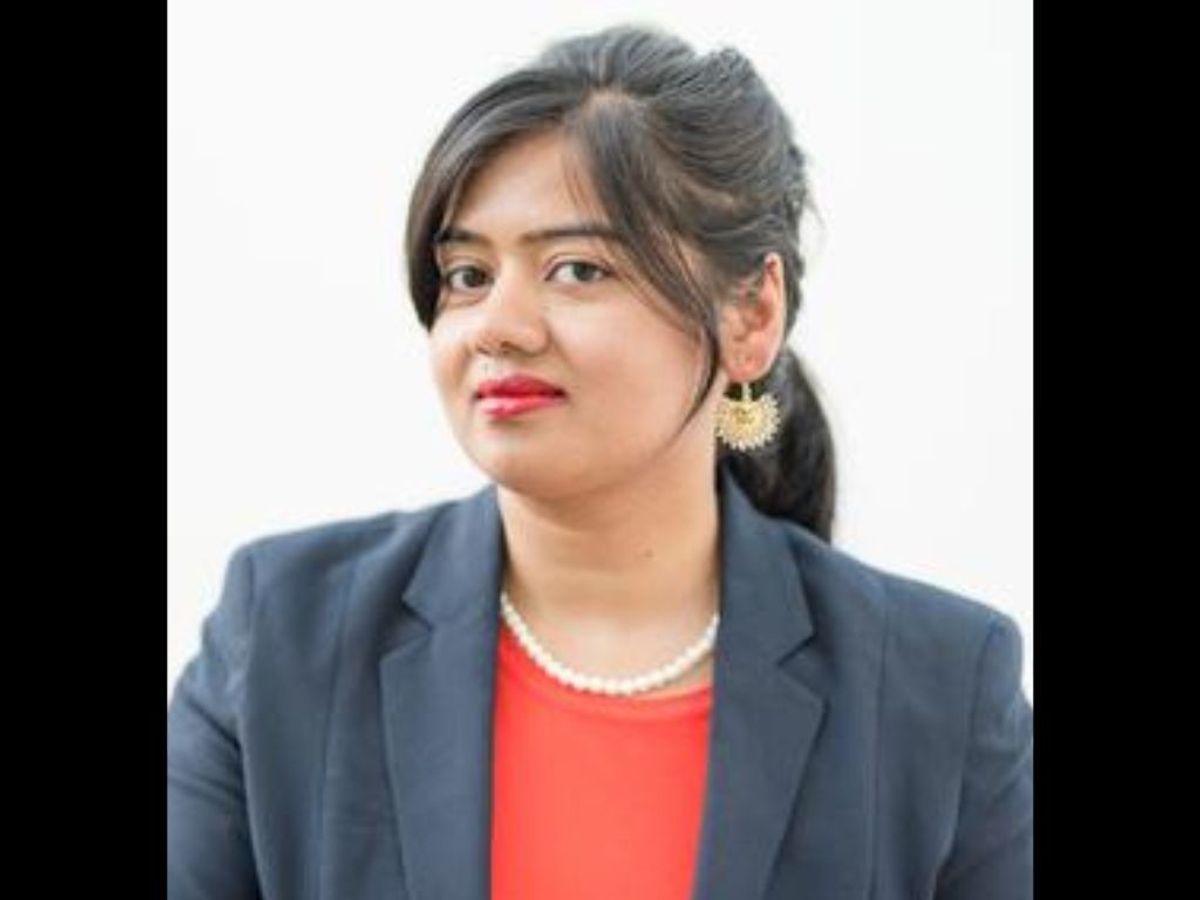
Dr. Shweta Singh serves as an Assistant Professor of Information Systems and Management at Warwick Business School, University of Warwick. She concurrently holds prestigious appointments as a Fellow at the Warwick Institute for Global Sustainability Development (IGSD) and a Behavioral Data Science researcher at The Alan Turing Institute in London. Her academic journey includes a Ph.D. in Information and Decision Sciences from the Carlson School of Management at the University of Minnesota, complemented by dual Master's degrees in Computer Science and Applied Economics from the same institution. Ph.D. in Information and Decision Sciences, University of Minnesota Master's in Computer Science, University of Minnesota Master's in Applied Economics, University of Minnesota Dr. Singh's research centers on developing ethical and responsible artificial intelligence systems that address societal challenges. Her work specifically targets mitigating AI bias, creating explainable AI frameworks, and leveraging technology to combat societal injustice. She investigates how digital platforms, sharing economy models, and IT outsourcing create business value while ensuring these technologies promote sustainability and reduce inequalities. Her innovative approach combines technical AI expertise with deep social awareness, particularly focusing on gender equality and child protection in digital spaces. Her publication record demonstrates consistent high-impact contributions to Information Systems Research, International Conference on Information Systems, and related venues. The trajectory of her work shows increasing focus on practical applications of responsible AI, with recent projects addressing online child safety and human trafficking prevention. Her research increasingly intersects with policy development, as evidenced by her contributions to UK Parliamentary Office of Science and Technology briefs. Doctoral Dissertation Fellowship, University of Minnesota McNamara Fellowship, University of Minnesota Social Impact Project of the Year shortlist (2023) Asian Women of Achievement Award finalist (2023) British Indian Awards finalist (2019) Top 5 Women in Tech for Good Award shortlist (2022) Inspiring 50 UK recognition (2025) Dr. Singh actively mentors students and has been recognized with the Staff Social Inclusion Award (2024) for her teaching excellence. Her advisory roles extend beyond academia to include the UN Women UK delegation for the Commission on the Status of Women and the Advisory Board of AI retail company 'Love the Sales'. She serves as an external collaborator for Boston Consulting Group's Henderson Institute, bridging academic research with industry applications. Through her leadership in the ISM-Analytics (ISMA) Group at Warwick, Dr. Singh fosters interdisciplinary collaboration focused on creating socially responsible technological solutions. Her work with the IGSD specifically targets UN sustainability goals related to reducing inequalities and promoting inclusive societies through responsible AI implementation.
Dr. Masum Billah is a Senior Lecturer at Staffordshire University, affiliated with the Digital, Tech, Innovation & Business School. He joined the university in 2022 after teaching full-time at other universities since 2019. His academic journey includes a B.Sc. in Engineering from Bangladesh, an M.Sc. in Computer & Network Engineering from the University of Greenwich (UK), and a PhD in Electrical and Electronic Engineering from Staffordshire University. He also holds postgraduate certificates in Higher Education and Research Methods. As a course leader for the B.Sc. Embedded Electronic Systems Design and Development Engineer program, he teaches both undergraduate and postgraduate courses such as IoT Devices, Artificial Intelligence, and Communications. His research focuses on data analytics, telecommunications, IoT security, and healthcare research, with a particular interest in wireless sensor networks and machine learning applications. He actively promotes STEM education as a STEM Ambassador and contributes to initiatives like university competitions and school outreach. Masum’s professional memberships include Fellow of The Higher Education Academy (FHEA), IEEE, and roles in academic leadership. His work integrates flipped learning methodologies and spans engineering consultancy, short courses, and enterprise-focused projects. Recent recognitions include Whatuni Student Choice Awards 2023 for Facilities and Social Inclusion, reflecting his commitment to educational excellence.
Benjamin Lev is a Professor in the Department of Decision Sciences and Management Information Systems (DS&MIS) at the LeBow College of Business, Drexel University. He previously served as Trustee Professor (2014–2021) and Department Head (2009–2014) at Drexel. His academic leadership extends to prior roles as Professor, Department Head, and Dean at the University of Michigan-Dearborn (1990–2009), Professor and Department Head at Worcester Polytechnic Institute (1987–1990), and Professor and Department Head at Temple University (1970–1987). He has held short appointments at institutions in China and the U.S., including the Wharton School and Tel Aviv University. Lev’s research spans Operations Research, Management Science, and Decision Sciences , with expertise in mathematical programming, operations planning, inventory control, supply chain management, and optimization under uncertainty. His recent work focuses on applications in disaster management, sustainable supply chains, AI in operations, water resource allocation, and emergency logistics. He has published over 150 journal articles and authored or edited 18 books, with a strong emphasis on real-world problem-solving using quantitative methods. The trends in his recent publications (2022–2025) reflect a focus on complex optimization under uncertainty , particularly in humanitarian logistics, environmental sustainability, and digital commerce. His work frequently employs advanced methodologies such as bi-level programming, stochastic optimization, fuzzy logic, and data envelopment analysis (DEA), often applied to critical societal challenges like disaster response, air pollution, and resource scarcity. Lev is an INFORMS Fellow (2003) and has received several honors, including the 2023 Top Cited Article award in Naval Research Logistics and the 2023 First Prize from the Jiangxi Province Social Science Outstanding Achievement Award. His editorial leadership is most notably demonstrated by his 23-year tenure as Editor-in-Chief (2002–2025) of OMEGA – The International Journal of Management Science , one of the premier journals in the field. He has advised numerous scholars and presented his work globally, particularly on his experience as EiC of OMEGA . He has been actively involved in academic collaborations, especially in China, serving on advisory boards and as an external reviewer for institutions like Sichuan University. He has also received significant grant funding from the U.S. National Institutes of Health, U.S. Public Health Service, and U.S. Air Force for research in medical information systems and operations research applications. Lev has been instrumental in organizing major international conferences and has served on the editorial boards of over 20 journals, including Interfaces, IIE Transactions, OR Journal, and Financial Innovation . His role as Vice President of TIMS and INFORMS further underscores his leadership in the global operations research community.
Juan Camilo Castillo is an Assistant Professor in the Department of Economics at the University of Pennsylvania, focusing on Industrial Organization, Microeconomic Theory, and Market Design. His work bridges theoretical insights with real-world applications in digital platforms, urban transportation, and public health economics. Ph.D., Economics, Stanford University (2020) M.S., Economics, Universidad de Los Andes (2013) B.S., Physics and Industrial Engineering, Universidad de Los Andes (2012) Castillo's research spans two primary domains: Online platforms and digital economy (e.g., market power in web search, service quality in ride-hailing) Market design for social challenges (e.g., vaccine distribution, drug market violence) Recent publications examine platform competition in web search, surge pricing impacts, and pandemic response strategies. His methodological approach combines field experiments, econometric modeling, and network analysis.
Constantin Grigo is a PhD researcher at the Technical University of Munich (TU Munich), actively engaged in the Continuum Mechanics group. His work focuses on Uncertainty Quantification (UQ) and Machine Learning (ML), particularly for applications in maritime safety, bicycle traffic modeling, and stochastic systems. He has presented his research at major conferences like SIAM UQ and WCCM, and has been recognized with Student Travel Awards from SIAM UQ 2018 and SIAM CSE 2019. Education: Master of Science in Physics, LMU Munich (2015) Bachelor of Science in Physics, LMU Munich (2012) Year abroad at Grenoble INP (2010-2011) Research Interests: Probabilistic machine learning for coarse-graining high-dimensional systems Bayesian model and dimension reduction Stochastic differential equations in heterogeneous media Microscopic traffic simulation for bicycles and autonomous vehicles Digital twin applications for maritime and urban mobility Reduced-order modeling of random materials Selected Awards: SIAM UQ 2018: Student Travel Award Winner SIAM CSE 2019: Student Travel Award Winner His publications span topics such as data-driven scenario specification for autonomous vehicles, bicycle maneuver prediction using neural networks, and physics-constrained surrogates for UQ. He also contributes to open-source simulation tools like SUMO for traffic modeling.
Peng Hu is an Adjunct Professor at the University of Waterloo, focusing on cutting-edge research in satellite networks, 5G/6G non-terrestrial networks, and AI-driven solutions for space sustainability. His work emphasizes autonomous network management, edge computing in space, and IoT applications for industrial and healthcare systems. Research interests span satellite mega-constellations, space object detection via deep learning, and optimizing free-space optical (FSO) communication. He explores challenges in latency management, energy efficiency, and fault tolerance across heterogeneous networks, including UAV-assisted systems and industrial IoT. Key contributions include the SatAIOps framework for autonomous satellite operations and the SatNetOps multi-layer networking scheme. He has pioneered datasets like Satellite Object Detection (SOD) and developed anomaly detection methods using genetic algorithms and Monte Carlo dropout. Peng Hu’s recent work addresses global connectivity gaps via non-terrestrial networks and reviews reinforcement learning algorithms for space-air-ground integration. His technical leadership is reflected in workshops like the 5th IEEE ICC 2025 Satellite Mega-Constellations workshop.
Dr. Mehmet Gumus is a Professor of Operations Management and Academic Director of the Master of Management in Analytics (MMA) at the Desautels Faculty of Management, McGill University. He holds the Desautels Chair in Supply Chain Management and Business Analytics (2024–2029). His research focuses on supply chain dynamics, consumer behavior, and risk management, with publications in top journals like Management Science and Operations Research . Education : PhD (2007), Industrial Engineering and Operations Research, University of California, Berkeley MA (2007), Economics, UC Berkeley MS (2002), Industrial Engineering and Operations Research, UC Berkeley BSc (1997), Control Systems Engineering and Naval Science, Turkish Naval Academy Research Interests : Supply chain risk management, consumer behavior models, dynamic pricing, supply chain contracting, and mechanism design. His work integrates game theory, dynamic programming, and data analytics to address real-world operational challenges. Recent Article Trends : Recent work explores payment method impacts on urban mobility, channel profit optimization, and personalized delivery systems. Themes include sustainability, digital transformation, and ethical consumerism in retail and logistics. Awards : Bensadoun Faculty Scholar Award (multiple terms) M&SOM iFORM Best Paper Award (2015) MDIIM Faculty Fellow (2015–2017) Grants & Leadership : Principal Investigator on NSERC grants totaling CAD 400K+ for supply chain and pricing research Co-investigator in SSHRC grants for supply chain risk management and sustainable agriculture Academic Contributions : Leads the MMA program, teaches courses in operations analytics and statistics, and collaborates on initiatives like the Marcel Desautels Institute for Integrated Management.
Krishnendu Chakrabarty is the John Cocke Distinguished Professor of Engineering and Professor of Computer Science at Duke University, chairing the Department of Electrical and Computer Engineering. His research focuses on integrated circuits testing, microfluidics, biochips, and cyberphysical systems. He holds honorary titles from institutions globally and has received over a dozen best-paper awards. Education: B.Tech from IIT Kharagpur (1990), M.S.E. and Ph.D. from University of Michigan (1992, 1995). Awards include Humboldt Research Award (2013), IEEE Computer Society Technical Achievement Award (2015), and AAAS Fellowship (2018). Research explores fault diagnosis in hardware, smart manufacturing, and biochip automation. His cyberphysical systems work includes hybrid microfluidic platforms for single-cell analysis and droplet-based bioassays. Collaborations with TUM-IAS focus on Microfluidic Design Automation (MDA). Editor-in-Chief of IEEE Transactions on VLSI Systems and former Editor of ACM Journal on Emerging Technologies. Active in academic leadership and interdisciplinary projects, emphasizing sustainability and advanced manufacturing.
Dr. Debajyoti Mondal is an Associate Professor in the Department of Computer Science at the University of Saskatchewan. His research focuses on algorithms, network visualization, computational geometry, and visual analytics. He holds a PhD from the University of Manitoba and has held postdoctoral positions at the University of Waterloo and Microsoft Research. Mondal's work spans interdisciplinary applications, including collaborations with Saskatoon Transit and academic medicine. He has authored over 100 peer-reviewed publications and secured grants such as NSERC Discovery, CFI, and Canada First Research Excellence grants. His awards include the 2023 New Scholar RSAW Award. Education: Ph.D. in Computer Science, University of Manitoba, 2016 MSc in Computer Science, University of Manitoba, 2012 BSc. Engg. in Computer Science, Bangladesh University of Engineering and Technology, 2009 Research Interests : Algorithms, graph drawing, computational geometry, visual analytics, and interdisciplinary applications in software engineering, transportation, and bioinformatics. His lab (VGA Lab) develops visualization systems for big data analysis. Key Contributions : Advanced theoretical foundations in computational geometry and graph drawing, developed practical visualization tools, and contributed to climate-related projects like Global Water Futures. Grants & Awards : NSERC Discovery Grant (2018-2024) CFI Grant (2021-2025) Microsoft Research Internship (2015-2016) New Scholar RSAW Award (2023) Labs/Teams : Leads the VGA Lab, collaborating with interdisciplinary teams on projects like Clone-World (software clone visualization) and SET-STAT-MAP (mixed data visualization).